On This Page
Description
In their continuing adventures, magician's apprentice Nathaniel, now fourteen years old, and the djinni Bartimaeus travel to Prague to locate the source of a golem's power before it destroys London.Tags
Recommendations
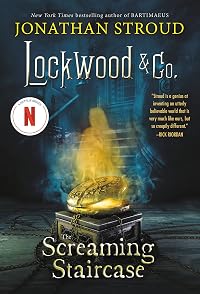

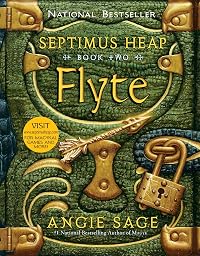
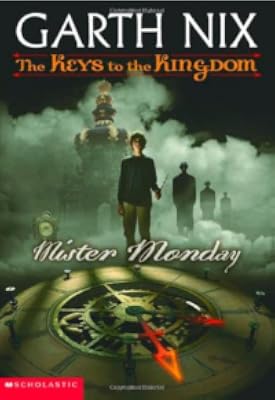
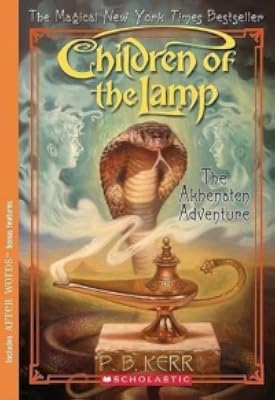








Member Recommendations
Member Reviews
Considering that when I last read this book I found it so mediocre that I never finished reading the series, I was a bit surprised at how much I enjoyed re-reading it. Which really shouldn’t have been a surprise at all, since it’s filled with much of the same draws as the first novel, but takes them to a whole other level. Not only do we get further into the workings of the magicians’ world in London, but we also get a hearty dose of magical history as Bartimaeus recalls the last major historical event when golems were used as a means of magical warfare - the battle of Prague in which the Czech’s seceded their domination of the world to the English magicians led by Gladstone. Nathaniel (aka John Mandrake) is now well ensconced show more in his place in magical society - a new master, a high profile job with the Ministry of the Interior, and a bevy of imps at his command - , but he must rescind his promise to not summon the wily, sardonic, and endlessly entertaining Bartimaeus when mysterious semi-magical beings (revealed to be the golems) and the Resistance prove to be more than he can handle. Off again our at-odds protagonists are, as they travel to Prague, investigate magical happenstance, and once again put a stop to the shadowy characters trying to bring down the British Government - I can’t wait to read the next (and final) book in the trilogy! show less
The Golem’s Eye is a darker, more politically intense, and deeply engaging sequel to The Amulet of Samarkand. Set two years later, the novel shows how much Nathaniel has changed as he rises in the ranks of the magician’s government, becoming more ambitious—and more conflicted. The book’s expanding perspective, especially through Kitty’s storyline, adds powerful insight into the oppressed commoners who resist magical rule.
Jonathan Stroud expertly increases the stakes, weaving together mystery, rebellion, and a terrifying magical threat: a golem unleashed on London. Bartimaeus remains as sharp, sarcastic, and lovable as ever, delivering humor even in tense moments. Meanwhile, the moral complexity grows, pushing readers to show more question power, loyalty, and justice.
Richly plotted, emotionally layered, and full of action, The Golem’s Eye delivers a compelling middle chapter that strengthens the trilogy and sets up a powerful finale in Ptolemy’s Gate. show less
Jonathan Stroud expertly increases the stakes, weaving together mystery, rebellion, and a terrifying magical threat: a golem unleashed on London. Bartimaeus remains as sharp, sarcastic, and lovable as ever, delivering humor even in tense moments. Meanwhile, the moral complexity grows, pushing readers to show more question power, loyalty, and justice.
Richly plotted, emotionally layered, and full of action, The Golem’s Eye delivers a compelling middle chapter that strengthens the trilogy and sets up a powerful finale in Ptolemy’s Gate. show less
Nathaniel has established himself among the magician's government, and has been placed in charge of containing the Resistance. Scale of the acts of terrorism suggest to him that a greater power than the rebels is afoot, but he needs to prove it - and apprehend the culprit - before his career and freedoms are quenched by his overseers. A large chunk of the story also shifts away from Nathaniel's troubles to introduce Kitty as a new narrator. She presents an insider's perspective of the Resistance, which is struggling to raise its profile and achieve impact.
I was pleased to see the political and sociological story hinted at in the first novel now come to the foreground. Nathaniel's story fascinates as everything likeable about him is show more being subsumed. Bartimaeus continues to serve as entertaining comic relief, but also as the author's mouthpiece concerning the changes that have come over Nathaniel and what a true hero should be by contrasting him with Kitty. Here we see the difference underlined between adult novels and YA fiction: an adult rendition of this trilogy would not have Bartimaeus' guidance for our interpretations of character development. Rather than disparage this transparent device as an adult reader, I'm pointing to this trilogy as presenting a wonderful argument for YA fiction's place in the literary cannon. This novel, hence the trilogy, serves as a critical thinking tutorial for younger readers even as it entertains, encouraging them to judge the actions of leading characters, and simultaneously the presented society, rather than accept these at face value as always representing 'the good'.
The overarching storyline appears tied to Nathaniel's descent into immorality, so I hope we'll see some redemption of his character in the trilogy's final third. It would also be nice to see the society turning a page, or at least the setting up of some sure course for the Resistance to eventually succeed by. Whatever's to come, I'm sure it will be conveyed in the same fast-paced, action-filled format with liberal doses of humour thrown in. show less
I was pleased to see the political and sociological story hinted at in the first novel now come to the foreground. Nathaniel's story fascinates as everything likeable about him is show more being subsumed. Bartimaeus continues to serve as entertaining comic relief, but also as the author's mouthpiece concerning the changes that have come over Nathaniel and what a true hero should be by contrasting him with Kitty. Here we see the difference underlined between adult novels and YA fiction: an adult rendition of this trilogy would not have Bartimaeus' guidance for our interpretations of character development. Rather than disparage this transparent device as an adult reader, I'm pointing to this trilogy as presenting a wonderful argument for YA fiction's place in the literary cannon. This novel, hence the trilogy, serves as a critical thinking tutorial for younger readers even as it entertains, encouraging them to judge the actions of leading characters, and simultaneously the presented society, rather than accept these at face value as always representing 'the good'.
The overarching storyline appears tied to Nathaniel's descent into immorality, so I hope we'll see some redemption of his character in the trilogy's final third. It would also be nice to see the society turning a page, or at least the setting up of some sure course for the Resistance to eventually succeed by. Whatever's to come, I'm sure it will be conveyed in the same fast-paced, action-filled format with liberal doses of humour thrown in. show less
Nearly three years after the events described in The Amulet of Samarkand, Nathaniel has gone up in the world: he's now a junior minister in the Department for Internal Affairs and apprenticed to the eminent magician and Security Minister Jessica Whitwell, and tasked with capturing the ringleaders of the Resistance. When several shops catering for a magician clientele in Piccadilly are raided - their ground floors virtually destroyed and several officers of the Night Police killed - the general suspicion immediately falls on the Resistance. But Nathaniel has doubts, and summons Bartimaeus once again to find the real perpetrator.
A worthy (and improved) follow-up to The Amulet of Samarkand, The Golem's Eye oozes atmosphere, tension, style, show more wit and a few heart-stopping moments of sheer terror. The action takes place both in London and Prague, and the stakes are raised considerably. The reader learns more about the beginnings of the Resistance and about Kitty Jones in particular, and it was Kitty's story and her independent spirit and bravery that was the big surprise for me; unfortunately Nathaniel doesn't come away from this as a very empathetic character, and I hope the rest of the series won't shape up in such a way as to make the reader choose between Kitty and Nathaniel. Where its predecessor was one mad chase after another, this title had quite a different pace to it, which may not endear it to those who expect more action as that featured in The Amulet of Samarkand, but in my opinion the darker mood of the entire book and its predominant focus on the three major characters made this a superior, intelligent and very enjoyable read. Not everything is tied up neatly at the end, and I can't wait how the story progresses. The next volume in the sequence, Ptolemy's Gate, is already lined up. show less
A worthy (and improved) follow-up to The Amulet of Samarkand, The Golem's Eye oozes atmosphere, tension, style, show more wit and a few heart-stopping moments of sheer terror. The action takes place both in London and Prague, and the stakes are raised considerably. The reader learns more about the beginnings of the Resistance and about Kitty Jones in particular, and it was Kitty's story and her independent spirit and bravery that was the big surprise for me; unfortunately Nathaniel doesn't come away from this as a very empathetic character, and I hope the rest of the series won't shape up in such a way as to make the reader choose between Kitty and Nathaniel. Where its predecessor was one mad chase after another, this title had quite a different pace to it, which may not endear it to those who expect more action as that featured in The Amulet of Samarkand, but in my opinion the darker mood of the entire book and its predominant focus on the three major characters made this a superior, intelligent and very enjoyable read. Not everything is tied up neatly at the end, and I can't wait how the story progresses. The next volume in the sequence, Ptolemy's Gate, is already lined up. show less
Audiobook. Reader is excellent!
Initial thoughts: Still not a fan of Nathaniel, but Bartimaeus and Kitty make up for him so far!
Finished now: Loved this! I enjoyed the first book in the series but I think this is so much better -- mostly because of the introduction of Kitty as a POV character. Nathaniel is (I believe intentionally) an unlikeable character, but Kitty is a girl I can cheer on happily. And Bartimaeus himself continues to be compelling, especially with the various hints of his past and his friendship with Ptolomy (which I am hoping to find out more about in book 3).
This book also features what I think may be one of the BEST examples of growing tension I've read (in the crypt scene). Will have to try to analyze why it worked show more so well for me and blog about it. show less
Initial thoughts: Still not a fan of Nathaniel, but Bartimaeus and Kitty make up for him so far!
Finished now: Loved this! I enjoyed the first book in the series but I think this is so much better -- mostly because of the introduction of Kitty as a POV character. Nathaniel is (I believe intentionally) an unlikeable character, but Kitty is a girl I can cheer on happily. And Bartimaeus himself continues to be compelling, especially with the various hints of his past and his friendship with Ptolomy (which I am hoping to find out more about in book 3).
This book also features what I think may be one of the BEST examples of growing tension I've read (in the crypt scene). Will have to try to analyze why it worked show more so well for me and blog about it. show less
I seem to be constitutionally incapable of taking a break between volumes of a series. No sooner had I finished Jonathan Stroud's The Amulet of Samarkand than I picked up the second book in the Bartimaeus Trilogy, The Golem's Eye. And to think, my plan was to take a month's break in between (that lasted about eight seconds).
Stroud's characters, including the overly-ambitious Nathaniel/John Mandrake, the wonderfully-irreverent Bartimaeus (whose footnoted asides remain one of the best parts of the book), and erstwhile Resistance figure Kitty Jones continue their adventures, taking on vicious dark magic in the form of a very destructive golem, a demented demon stuck inside the skeleton of a long-dead prime minister, and hordes of werewolf show more cops. Their powers and capacities for good will be stretched to the limits as they struggle against their enemies known and unknown, and, occasionally, against each other.
A bit more darkly comical than The Amulet of Samarkand, which I enjoyed, but with perhaps a touch too much adolescent angst (there were a couple Harry Potter volumes in the middle of the series where this bothered me too). Nonetheless, it was another fine installment in the series and I look forward to the third (which I'll probably pick up later tonight).
http://philobiblos.blogspot.com/2008/09/book-review-golems-eye.html show less
Stroud's characters, including the overly-ambitious Nathaniel/John Mandrake, the wonderfully-irreverent Bartimaeus (whose footnoted asides remain one of the best parts of the book), and erstwhile Resistance figure Kitty Jones continue their adventures, taking on vicious dark magic in the form of a very destructive golem, a demented demon stuck inside the skeleton of a long-dead prime minister, and hordes of werewolf show more cops. Their powers and capacities for good will be stretched to the limits as they struggle against their enemies known and unknown, and, occasionally, against each other.
A bit more darkly comical than The Amulet of Samarkand, which I enjoyed, but with perhaps a touch too much adolescent angst (there were a couple Harry Potter volumes in the middle of the series where this bothered me too). Nonetheless, it was another fine installment in the series and I look forward to the third (which I'll probably pick up later tonight).
http://philobiblos.blogspot.com/2008/09/book-review-golems-eye.html show less
The second book in Jonathan Stroud's Bartimaeus Trilogy, The Golem's Eye finds Nathaniel almost three years later as an important member of the government despite his youth. Some of his governmental duties include tracking down the Resistance, an elusive group of commoners challenging the magicians' power. Kitty, who was introduced briefly in the first book, becomes an important character in this story as the heart of the Resistance movement. She and several other young people have been born with a partial resilience to magic that enables them to resist magical attack. Other powers are also afoot in London with the advent of a mysterious clay golem. Who is controlling it? Nathaniel has to find out, and quick. Cue Bartimaeus!
This story show more really zooms in on the cutthroat political scene of the magicians' bureaucratic government, and I can't help but be reminded of the Ministry of Magic in Rowling's Harry Potter series. But unlike Rowling, Stroud is unrelievedly pessimistic about those in power. On the way to the top you have to step on a lot of people, magician and commoner alike — and positively crush the lower orders of magical slaves like djinni. I've always been a bit skeptical of the apparent lack of ambition on the part of the Rowling's wizards. Let's be honest here: would powerful magicians really be content to sit on the sidelines in secret and play at having their own cute little magical government while the non-magical people rule the world? Uh, no. Power corrupts and what else is magic? Or at the very least, think of all the good the magicians could do by ruling the world! (At least, start out by doing.) Stroud's oligarchical society reflects a more accurate view of human nature and is therefore more believable.
Another similarity between the Bartimaeus and Harry Potter books is how the boy-magician's role model (Gladstone for Nathaniel and Dumbledore for Harry) is deconstructed somewhat from a hero to a very flawed human being. Stroud takes it farther than Rowling does, revealing Gladstone as an oppressor and conqueror. Dumbledore gets off with a streaky history, it's true, but he's redeemed himself by years of service to others. It's interesting because Gladstone is set up as Nathaniel's inspiration in the first book when we don't know his real nature... and he's still that hero in the second even when we learn about his misdeeds. Nathaniel is learning to value power over everything else, and his hero keeps pace.
The characters are deepened in this story, and again I was surprised to find how much I cared about their fates. Bartimaeus is hilarious, as usual, and though he is probably an unreliable narrator where his own interests are concerned, he does have some good insights on what is happening in Nathaniel. I absolutely love the character of Kitty. She's one of Stroud's best creations; she could walk off the page. With the development of her character we now have three different viewpoints on the story, Bartimaeus's first-person narration and two third-person voices following Nathaniel and Kitty in alternating chapters. Stroud keeps all the reins of his plotlines taut and takes his readers on quite a ride.
I read this in a day, almost in a sitting, and when I finished it I couldn't wait to start the last book. Funny, sad, dark, and wry all at the same time — there's a reason this series made the bestseller lists. And don't forget the footnotes! Good stuff. show less
This story show more really zooms in on the cutthroat political scene of the magicians' bureaucratic government, and I can't help but be reminded of the Ministry of Magic in Rowling's Harry Potter series. But unlike Rowling, Stroud is unrelievedly pessimistic about those in power. On the way to the top you have to step on a lot of people, magician and commoner alike — and positively crush the lower orders of magical slaves like djinni. I've always been a bit skeptical of the apparent lack of ambition on the part of the Rowling's wizards. Let's be honest here: would powerful magicians really be content to sit on the sidelines in secret and play at having their own cute little magical government while the non-magical people rule the world? Uh, no. Power corrupts and what else is magic? Or at the very least, think of all the good the magicians could do by ruling the world! (At least, start out by doing.) Stroud's oligarchical society reflects a more accurate view of human nature and is therefore more believable.
Another similarity between the Bartimaeus and Harry Potter books is how the boy-magician's role model (Gladstone for Nathaniel and Dumbledore for Harry) is deconstructed somewhat from a hero to a very flawed human being. Stroud takes it farther than Rowling does, revealing Gladstone as an oppressor and conqueror. Dumbledore gets off with a streaky history, it's true, but he's redeemed himself by years of service to others. It's interesting because Gladstone is set up as Nathaniel's inspiration in the first book when we don't know his real nature... and he's still that hero in the second even when we learn about his misdeeds. Nathaniel is learning to value power over everything else, and his hero keeps pace.
The characters are deepened in this story, and again I was surprised to find how much I cared about their fates. Bartimaeus is hilarious, as usual, and though he is probably an unreliable narrator where his own interests are concerned, he does have some good insights on what is happening in Nathaniel. I absolutely love the character of Kitty. She's one of Stroud's best creations; she could walk off the page. With the development of her character we now have three different viewpoints on the story, Bartimaeus's first-person narration and two third-person voices following Nathaniel and Kitty in alternating chapters. Stroud keeps all the reins of his plotlines taut and takes his readers on quite a ride.
I read this in a day, almost in a sitting, and when I finished it I couldn't wait to start the last book. Funny, sad, dark, and wry all at the same time — there's a reason this series made the bestseller lists. And don't forget the footnotes! Good stuff. show less
Members
- Recently Added By
Lists

Best Fantasy Novels
821 works; 357 members

Best Young Adult
399 works; 101 members

NPRs your favorites: 100 Best Ever Teen Novels
237 works; 49 members

Female Protagonist
1,056 works; 56 members

Nonhuman Protagonists
235 works; 34 members

Favourite Books
1,817 works; 316 members

Books Read in 2014
2,343 works; 89 members

Kindle Action/Adventure - Junior and Teenage Re-Read
247 works; 1 member
Author Information

Jonathan Stroud, best selling fantasy fiction author, was born in Bedford, England on October 27, 1970. While growing up he experimented with different kinds of writing. He went on to read English Literature at York University. After graduation he worked in editing at Walker Books, in London and continued there for several years. His first novel, show more When Buried Fire, was published in 1999. In 2001 he began writing full-time. He is the author of the wildly popular Bartimaeus Sequence and Lockwood and Co, series. (Bowker Author Biography) show less
Some Editions
Awards and Honors
Awards
Distinctions
Notable Lists
Series

Belongs to Publisher Series
blanvalet (37003)
Work Relationships
Common Knowledge
- Canonical title
- The Golem's Eye
- Original title
- The Golem's Eye
- Original publication date
- 2004
- People/Characters
- Bartimaeus (djinni); Nathaniel (John Mandrake); Kitty Jones (Kathleen Jones | Resistance); Quentin Makepeace (playwright); Rupert Devereaux (Prime Minister | Great Britain); Jessica Whitwell (Security Minister) (show all 25); Carl Mortensen (Home Security); Henry Duvall (Chief of Police); Mamaduke Fry (Foreign Secretary); Helen Malbindi (Information Minister); Julius Tallow (Head of Internal Affairs); George Ffaukes (Magician 4th level); Jane Farrar (Police Chief Assistant); Sholto Pinn (Merchant); Jakob Hyrnek; T.E. Pennyfeather (Resistance); Anne Stephens (Resistance); Frederick 'Fred' Weaver (Resistance); Stanley Hake (Resistance); Nicholas Drew (Resistance); Clem Hopkins (Resistance); Queezle (djinn); Shubit (djinn); Nemaides (djinn); Simkin (foliot)
- Important places
- London, England, UK; Prague, Czechoslovakia
- Dedication
- For Philippa
- First words
- At dusk, the enemy lit their campfires one by one, in greater profusion than on any night before. (Prologue)
London: a great and prosperous capital, two thousand years old, which in the hands of the magicians aspired to be the center of the world. - Last words
- (Click to show. Warning: May contain spoilers.)Quite soon she was hidden by the crowd.
- Blurbers
- Jones, Nicolette; Tucker, Nicholas
- Original language
- English UK
Classifications
- Genres
- Fiction and Literature, Fantasy, Teen, Young Adult
- DDC/MDS
- 823.914 — Literature & rhetoric English & Old English literatures English fiction 1900- 1901-1999 1945-1999
- LCC
- PZ7 .S92475 .G — Language and Literature Fiction and juvenile belles lettres Fiction and juvenile belles lettres Juvenile belles lettres
- BISAC
Statistics
- Members
- 6,538
- Popularity
- 1,850
- Reviews
- 119
- Rating
- (4.10)
- Languages
- 20 — Czech, Danish, Dutch, English, Estonian, Finnish, French, German, Hungarian, Indonesian, Italian, Latvian, Lithuanian, Norwegian (Bokmål), Polish, Portuguese, Romanian, Spanish, Swedish, Turkish
- Media
- Paper, Audiobook, Ebook
- ISBNs
- 74
- UPCs
- 2
- ASINs
- 13