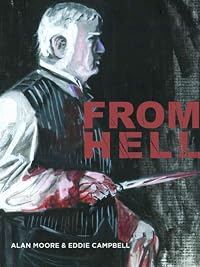
From Hell
by Alan Moore, Eddie Campbell (Illustrator)
From Hell (Collections and Selections — 01-11), Taboo Comic (Collections and Selections — )
On This Page
Description
Originally issued in serial form in Taboo, an anthology comic book published by SpiderBaby Press. Legendary comics writer Alan Moore and artist Eddie Campbell have created a gripping, hallucinatory piece of crime fiction about Jack the Ripper. Detailing the events that led up to the Whitechapel murders and the cover-up that followed, From Hell has become a modern masterpiece of crime noir and historical fiction.Tags
Recommendations


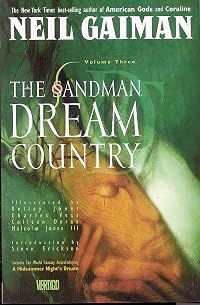
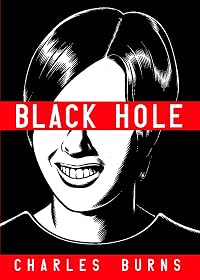
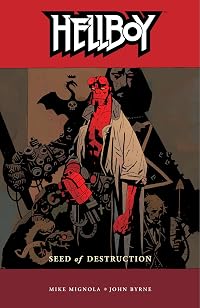
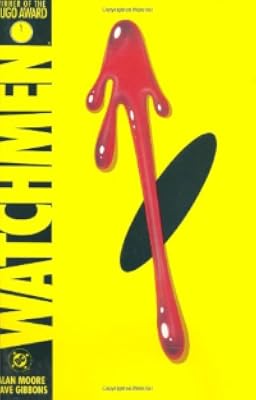
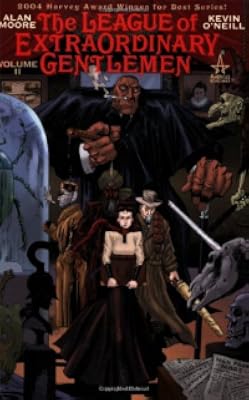
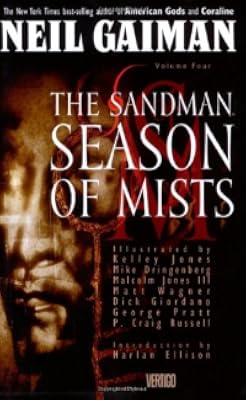
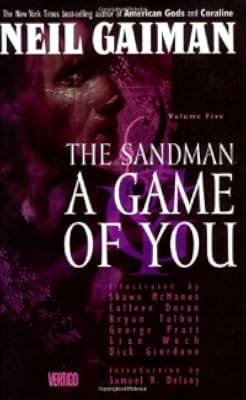
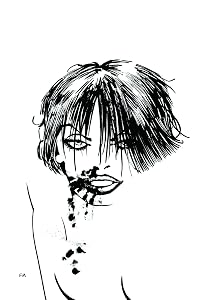
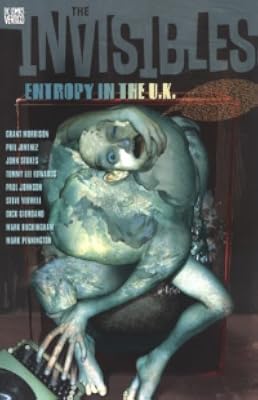
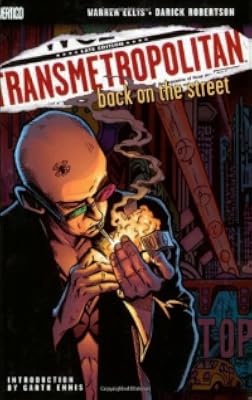
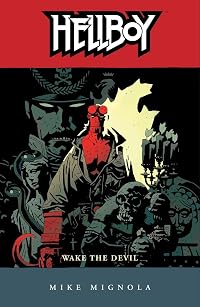
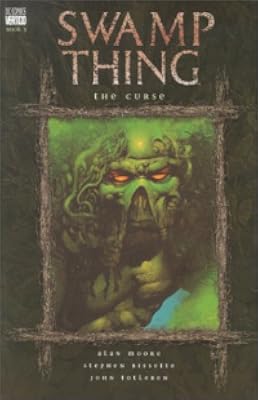

Member Recommendations
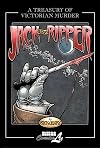
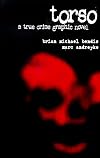
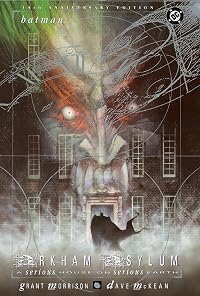
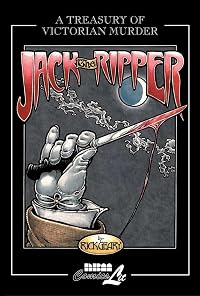
Lucky-Loki While nowhere near as complex or ambitious as "From Hell", the similarities are obvious -- both are black and white true crime graphic novels based on the investigations of one of the first prolific media-covered real life serial killers. Both are for mature readers only, with horrific displays of the violence involved. And both are quite good. The art style is much superior in "From Hell" (though of course that's somewhat a matter of taste), and being many times as long the story is accordingly deeper and more satisfying, but keeping that in mind, I see no reason the reader of one shouldn't enjoy the other.
20
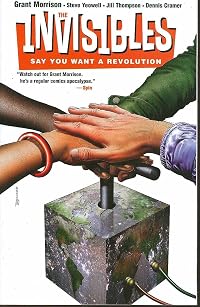
wandering_star ALL psychogeography should be written as graphic novels - these two show why.
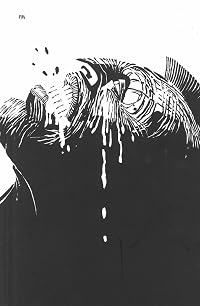
raudakind This might be a good read for those interested in how From Hell fits in cultural history, as it gives more details on previous occult analyses of British society and about occultism in 19th and 20th century Britain.
Member Reviews
This graphic novel was a bit too graphic for me. The subject matter, about a vast conspiracy being at the root of the Jack the Ripper murders, is fascinating and the research notes at the end of the volume really add to the book. I just found the murder scenes themselves to be too gory and gratuitous. I guess I'm a wimp when it comes to violence. In that regard, I much prefer implication to detail. Still, the artwork, (all black & white pencil sketches), is gorgeous and the brooding atmosphere of late 19th-century London comes to life on the page. There is no denying that the work is brilliant - but I much preferred Moore's Watchmen to this one - if only due to the subject matter.
a stunning accomplishment. a radical example of what "comic books"/"graphic novels" can do. i finished it this morning after a night of nightmares - i had just read the panels about the murder of Mary Kelly. How frightening. I could not sleep, I literally shook with fear, kept rising to check the door. It does not matter now to take apart the "correctness" of the theory, of the conspiracy, because like the Manson Family murders of the 60s, Jack the Ripper was the end of an age, a period at the end of an outrageous sentence! and the birth of a century that has seen atrocities that make Jack and his disassembled bodies look quaint. Absolutely astounding, one of the finest books I have ever read.
Some time back I watched the movie based upon this graphic novel. It left me confused and disappointed (I could go on about unfortunate casting choices but I won’t). Since then I’ve wanted to read the graphic novel to get my footing back. Through maybe the first quarter of FROM HELL I was still confused and disappointed but then things clicked. I sunk into the atmosphere, felt a part of 1880’s London and was moved by the rhythms of poverty and power grappling in darkness. The dingy but distinct art work adds to the feel for old timey, grimy London. I have read complaints that the characters are difficult to tell apart. I did have some issues but for the most part enough clues were given to keep things straight (this can be an show more issue for any graphic novel not dealing with superheroes). This may have been designed to add to the anonymity of the poor as the more well off characters are much easier to distinguish. The artist Eddie Campbell also had to deal with period detail and an extensive dive into 1880’s London architecture and geography—his work highlighting a fantastic insanity laced jaunt around night time London touring the touchstones of Masonic power. In fact, this sequence is when I felt totally locked into the book. I tapped into Dr. Gull’s madness and the inevitability of it’s expression. At 3 or 4 lbs and over 500 pages it is an immersion. Moore masterfully unfolds this complicated tale of madness. There is no rush in the story, unfolding naturally, in rich mostly historical detail. The infamous murders at the heart of this story don’t come close to overshadowing the rest—and there is no rush to them or from them. Following the graphic novel there is 43 oversized addendum pages detailing where most every thoroughly researched detail in the graphic novel came from. This is so well done it’s like watching a making of documentary after a film. Moore tells you what is fact, what is interpretation and what is created to flesh out a readable tale. Fascinating. Then that is followed by a spirited gathering in graphic form of Moore and the authors of his resource materials battling the demons that arose from handling the subject matter. All marvelous stuff and a great way to wrap this story up. show less
In From Hell, Alan Moore and Eddie Campbell tell a novel about the Whitechapel Murders, focusing on the identity and motives of Jack the Ripper. Moore and Campbell draw upon the theory Joseph “Hobo” Sickert, the alleged illegitimate son of artist William Sickert, conveyed to Stephen Knight including a conspiracy involving Queen Victoria and various other senior members of the British government, all Freemasons, to enlist Sir William Gull, one of the Physicians-in-Ordinary to Victoria, in murdering women who had knowledge of an illegitimate heir to the throne fathered by Prince Albert Victor. Most historians and experts have since rejected Knight’s story, with even Joseph Sickert recanting in the Sunday Times in June 1978.
Moore and show more Campbell use Gull and Freemasonry to engage with metaphysical ideas, adding a touch of fantasy that blends with the realistic horror and changing times to imbue the story with an atmosphere more intense than mere murder mystery. In 1887, Gull suffered the first of a series of strokes. Drawing on the mysticism associated with Freemasonry in popular culture, Moore and Campbell portray this as Gull seeing the true face of god and seeking to achieve greater wisdom through blood rituals. When tasked to eliminate women with knowledge of Prince Albert Victor’s secret marriage and child, he draws upon concepts of London’s sacred geometry to use his murders for this knowledge.
In the midst of killing Mary Jane Kelly, Gull has a vision of a twentieth-century office. Looking about him at the changing fashions and how people interact, he pontificates, “It would seem we are to suffer an apocalypse of cockatoos… morose, barbaric children playing joylessly with their unfathomable toys. Where comes this dullness in your eyes? How has your century numbed you so? Shall man be given marvels only when he is beyond all wonder? Your days were born in blood and fires whereof in you I may not see the meanest spark! Your past is pain and iron! Know yourselves! With all your shimmering numbers and your lights, think not to be inured to history. Its black root succours you. It is INSIDE you. Are you asleep to it, that cannot feel its breath upon your neck, nor see what soaks its cuffs?” (chapter 10, pg. 21, punctuation in the original). His judgment reflects his previous discussion of the importance of blood and ritual. Having glimpsed the future, he stats, “It is beginning, Netley. Only just beginning. For better or worse, the twentieth century. I have delivered it” (chapter 10, pg. 33).
Tying into ideas about metaphysics and fourth dimensionality, the Ripper’s crimes and spirit influence Robert Louis Stevenson’s Strange Case of Dr. Jekyll and Mr. Hyde (chapter 14, pg. 15), William Blake’s painting, The Ghost of a Flea (chapter 14, pg. 16), and inspires Peter Sutcliffe and Ian Brady (chapter 14, pg. 14). Further, Gull witnesses the London Monster, who attacked women between 1788 – 1790 and who several characters referenced earlier in the book. In this, Moore further develops themes about the nature of time that he first explored in Watchmen. Unlike Watchmen, however, where Doctor Manhattan actually can exist across time, Moore maintains an air of ambiguity and artistic license, where Gull’s visions may simply be the result of the strokes he continued to have following his first in 1887.
In his second appendix, Alan Moore describes his approach to writing a story about Jack the Ripper and how he embraced ambiguity and did not set out to tell an authoritative story, but rather to elucidate its deeper meaning. He writes, “By autumn 1988 I’m thinking seriously about writing something lengthy on a murder. The Whitechapel Killings aren’t even considered. Too played-out. Too obvious. Publicity around the crimes’ centennial, however, leads me to Knight’s book. Ideas coalesce. Deciding on a serial in Steve Bissette’s Taboo, I contact Eddie Campbell. The rest is dodgy, pseudo-history. Slowly it dawns on me that despite the Gull theory’s obvious attractions, the idea of a solution, any solution, is inane. Murder isn’t like books. Murder, a human event located in both space and time, has an imaginary field completely unrestrained by either. It holds meaning, and shape, but no solution” (Appendix II, pg. 16). The collected volume’s first appendix includes significant notes, demonstrating Moore and Campbell’s efforts to faithfully recreate the world of London in the late nineteenth century while also disclosing which elements Moore invented for the sake of a good story.
The graphic novel later inspired a film of the same name in 2001. While the film maintains several of the elements surrounding William Gull, Johnny Depp’s portrayal of Inspector Frederick Abberline radically departs from the source material to the point of essentially being an original character created for the film. Also, unlike the film which is more of a mystery, the graphic novel is clear about Gull’s involvement from the start and uses it to tell and far grander story than a comparatively simple conspiracy. show less
Moore and show more Campbell use Gull and Freemasonry to engage with metaphysical ideas, adding a touch of fantasy that blends with the realistic horror and changing times to imbue the story with an atmosphere more intense than mere murder mystery. In 1887, Gull suffered the first of a series of strokes. Drawing on the mysticism associated with Freemasonry in popular culture, Moore and Campbell portray this as Gull seeing the true face of god and seeking to achieve greater wisdom through blood rituals. When tasked to eliminate women with knowledge of Prince Albert Victor’s secret marriage and child, he draws upon concepts of London’s sacred geometry to use his murders for this knowledge.
In the midst of killing Mary Jane Kelly, Gull has a vision of a twentieth-century office. Looking about him at the changing fashions and how people interact, he pontificates, “It would seem we are to suffer an apocalypse of cockatoos… morose, barbaric children playing joylessly with their unfathomable toys. Where comes this dullness in your eyes? How has your century numbed you so? Shall man be given marvels only when he is beyond all wonder? Your days were born in blood and fires whereof in you I may not see the meanest spark! Your past is pain and iron! Know yourselves! With all your shimmering numbers and your lights, think not to be inured to history. Its black root succours you. It is INSIDE you. Are you asleep to it, that cannot feel its breath upon your neck, nor see what soaks its cuffs?” (chapter 10, pg. 21, punctuation in the original). His judgment reflects his previous discussion of the importance of blood and ritual. Having glimpsed the future, he stats, “It is beginning, Netley. Only just beginning. For better or worse, the twentieth century. I have delivered it” (chapter 10, pg. 33).
Tying into ideas about metaphysics and fourth dimensionality, the Ripper’s crimes and spirit influence Robert Louis Stevenson’s Strange Case of Dr. Jekyll and Mr. Hyde (chapter 14, pg. 15), William Blake’s painting, The Ghost of a Flea (chapter 14, pg. 16), and inspires Peter Sutcliffe and Ian Brady (chapter 14, pg. 14). Further, Gull witnesses the London Monster, who attacked women between 1788 – 1790 and who several characters referenced earlier in the book. In this, Moore further develops themes about the nature of time that he first explored in Watchmen. Unlike Watchmen, however, where Doctor Manhattan actually can exist across time, Moore maintains an air of ambiguity and artistic license, where Gull’s visions may simply be the result of the strokes he continued to have following his first in 1887.
In his second appendix, Alan Moore describes his approach to writing a story about Jack the Ripper and how he embraced ambiguity and did not set out to tell an authoritative story, but rather to elucidate its deeper meaning. He writes, “By autumn 1988 I’m thinking seriously about writing something lengthy on a murder. The Whitechapel Killings aren’t even considered. Too played-out. Too obvious. Publicity around the crimes’ centennial, however, leads me to Knight’s book. Ideas coalesce. Deciding on a serial in Steve Bissette’s Taboo, I contact Eddie Campbell. The rest is dodgy, pseudo-history. Slowly it dawns on me that despite the Gull theory’s obvious attractions, the idea of a solution, any solution, is inane. Murder isn’t like books. Murder, a human event located in both space and time, has an imaginary field completely unrestrained by either. It holds meaning, and shape, but no solution” (Appendix II, pg. 16). The collected volume’s first appendix includes significant notes, demonstrating Moore and Campbell’s efforts to faithfully recreate the world of London in the late nineteenth century while also disclosing which elements Moore invented for the sake of a good story.
The graphic novel later inspired a film of the same name in 2001. While the film maintains several of the elements surrounding William Gull, Johnny Depp’s portrayal of Inspector Frederick Abberline radically departs from the source material to the point of essentially being an original character created for the film. Also, unlike the film which is more of a mystery, the graphic novel is clear about Gull’s involvement from the start and uses it to tell and far grander story than a comparatively simple conspiracy. show less
A priori la historia es bastante simple: un doctor al servicio de la Corona Inglesa asesinó a cinco prostitutas para encubrir que un duque había tenido un hijo con una plebeya. Pero estos crímenes se van de las manos porque el doctor al que se
Hay tropocientos personajes más o menos indistinguibles, y sin una buena guía es complicado de seguir pese a la aparente simplicidad de la trama, ya que la sociedad entera del siglo XIX se ve representada. Londres es un personaje más aquí, y un capítulo entero se dedica a los significados ocultos de los edificios de la capital británica, una historia más antigua que el hombre mismo.
Moore deja claro que, aunque el trabajo de investigación ha sido importante, el crimen no está resuelto ni lo estará nunca, y que Jack forma ya parte de los mismos mitos que el doctor Gull recordaba en sus visiones. Es un cómic que cuesta, pero que da lo que promete, siempre y cuando se tenga un estómago resistente y una mentalidad propicia a ver cosas horrorosas.
http://shawjonathan.wordpress.com/2010/01/04/from-hell/
From Hell, in which Alan Moore and Eddie Campbell tackle Jack the Ripper, makes an interesting companion read to R Crumb's Genesis. Both books have ample sex, violence and uncanniness. Both deal in multiple versions of the same events. Both feature self portraits by the illustrator that are charmingly at odds with the rest of the book (Crumb on the dust jacket flap in his 'lounge pants'; Campbell in an Appendix as a gangly stay-at-home dad). And both have notes up the back that exert a fascination of their own.
Alan Moore immersed himself in Ripperology and hammered it into a vast, complex web of story, incorporating court records, newspaper accounts, speculation, rumour, show more architectural history, literary history, Masonic ritual, unexpected historical connections and just plain invention, with appearances by Queen Victoria, William Blake, William Morris, Aleister Crowley, Hitler's parents – the list goes on. I can't say it was a pleasant read, but it's a very impressive one. Likewise Eddie Campbell's art (in this book) is rarely pleasant, but it's darkly powerful. There's a lot of hatching, and it's often hard to tell exactly what is being shown – which at the more grisly moments is a great blessing!
I started out reading the main narrative in tandem with the notes that constitute the first appendix, but gave up about a third of the way in, because the plethora of information about sources was slowing the story down terribly. However, it's good to know how little of the narrative is pure invention on Moore and Campbell's part, and I'm reasonably sure that without the notes some bits of the story would have remained completely mysterious to me. And there's one fabulous twist in the tail that would certainly have bypassed me if the last couple of notes (I skipped to the end) hadn't first told me that the 'scene on page 23' was cryptic, second told me to work it out for myself, and third given me a big hint that transformed the meaning of one of the many subplots into something almost redemptive.
In the first few pages, a convenient warning to parents to put the book on a high shelf, there's a sex scene that exemplifies Eddie Campbell's genius by managing to be very explicit (by which I mean anatomically specific), not at all soft-focus prurient, and also joyful. This scene is what sets the whole ghastly plot into action, which according to one school of Biblical interpretation brings me back to the similarities to Genesis.
In short, I don't know who I'd recommend this book to, but it's very good. show less
From Hell, in which Alan Moore and Eddie Campbell tackle Jack the Ripper, makes an interesting companion read to R Crumb's Genesis. Both books have ample sex, violence and uncanniness. Both deal in multiple versions of the same events. Both feature self portraits by the illustrator that are charmingly at odds with the rest of the book (Crumb on the dust jacket flap in his 'lounge pants'; Campbell in an Appendix as a gangly stay-at-home dad). And both have notes up the back that exert a fascination of their own.
Alan Moore immersed himself in Ripperology and hammered it into a vast, complex web of story, incorporating court records, newspaper accounts, speculation, rumour, show more architectural history, literary history, Masonic ritual, unexpected historical connections and just plain invention, with appearances by Queen Victoria, William Blake, William Morris, Aleister Crowley, Hitler's parents – the list goes on. I can't say it was a pleasant read, but it's a very impressive one. Likewise Eddie Campbell's art (in this book) is rarely pleasant, but it's darkly powerful. There's a lot of hatching, and it's often hard to tell exactly what is being shown – which at the more grisly moments is a great blessing!
I started out reading the main narrative in tandem with the notes that constitute the first appendix, but gave up about a third of the way in, because the plethora of information about sources was slowing the story down terribly. However, it's good to know how little of the narrative is pure invention on Moore and Campbell's part, and I'm reasonably sure that without the notes some bits of the story would have remained completely mysterious to me. And there's one fabulous twist in the tail that would certainly have bypassed me if the last couple of notes (I skipped to the end) hadn't first told me that the 'scene on page 23' was cryptic, second told me to work it out for myself, and third given me a big hint that transformed the meaning of one of the many subplots into something almost redemptive.
In the first few pages, a convenient warning to parents to put the book on a high shelf, there's a sex scene that exemplifies Eddie Campbell's genius by managing to be very explicit (by which I mean anatomically specific), not at all soft-focus prurient, and also joyful. This scene is what sets the whole ghastly plot into action, which according to one school of Biblical interpretation brings me back to the similarities to Genesis.
In short, I don't know who I'd recommend this book to, but it's very good. show less
Mary Kelly was just an unusually determined suicide. Why don't we leave it there?
Well, that was that. From Hell is overflowing with sublime images, there is also a strident lyricism to the prose, My appreciation for both was hampered by my bullshit alarm ringing incessantly. There's this London school of the subversive, to which Moore belongs: Iain Sinclair and Peter Ackroyd are also practicing partners. They parse and weave, finding anecdote and parallel in the accrued centuries of history along the banks of the Fleet and the Thames. The ancient grit and whispered airs both haunt and charge, maintaining spectral currents which cross the city. Everything from the Druids to Oscar Wilde to the Final Solution is duly linked. It does tax show more and test, but the assemblage is admirable, the loud warnings of a bus stop prophet. So much is recycled and applied elsewhere -- an conservation of totems, a self organizing oracle down pissy alleys amid take-away menus and lottery tickets -- therein lies the true eschatological -- away from the louche plastic of muggle money. Away.
I have seen the film adaptation a number of times, so the arc was familiar. The detail revealed within the text was at times spellbinding, the sepia charm of gaslight and decomposition. show less
Well, that was that. From Hell is overflowing with sublime images, there is also a strident lyricism to the prose, My appreciation for both was hampered by my bullshit alarm ringing incessantly. There's this London school of the subversive, to which Moore belongs: Iain Sinclair and Peter Ackroyd are also practicing partners. They parse and weave, finding anecdote and parallel in the accrued centuries of history along the banks of the Fleet and the Thames. The ancient grit and whispered airs both haunt and charge, maintaining spectral currents which cross the city. Everything from the Druids to Oscar Wilde to the Final Solution is duly linked. It does tax show more and test, but the assemblage is admirable, the loud warnings of a bus stop prophet. So much is recycled and applied elsewhere -- an conservation of totems, a self organizing oracle down pissy alleys amid take-away menus and lottery tickets -- therein lies the true eschatological -- away from the louche plastic of muggle money. Away.
I have seen the film adaptation a number of times, so the arc was familiar. The detail revealed within the text was at times spellbinding, the sepia charm of gaslight and decomposition. show less
Members
- Recently Added By
Lists

Best Historical Fiction
620 works; 261 members

Recommended Comics / Graphic Novels
595 works; 122 members

Best Science Fiction Comics and Graphic Novels
144 works; 11 members

Best Books Set in London
157 works; 42 members

Jones and Newman's Horror: Another 100 Best Books
100 works; 7 members

Best Stand-Alone Graphic Novels
107 works; 19 members

Top Five Books of 2014
1,064 works; 397 members

100 Mysteries and Thrillers to Read in a Lifetime
99 works; 22 members

70 of the Best Horror Comics
178 works; 5 members

seedy victorian novels
16 works; 4 members

Read This Twice's Best Horror Books
94 works; 2 members
Best Horror Mega-List
342 works; 6 members

MysteryCAT: Historical Crime
27 works; 7 members

Reedsydiscovery 100 Best Horror Books of All Time
100 works; 5 members

Books Read By artturnerjr - 2014
34 works; 1 member

Books I Read Before The Invention Of The Internet.
144 works; 1 member

Wyrd as Folk
43 works; 4 members

Franklit
95 works; 1 member

Top Five Books of 2025
954 works; 304 members

Books Read in 2021
5,361 works; 114 members
Drawn Out: The 50 Best Non-Superhero Graphic Novels
175 works; 8 members

Overdue Podcast
808 works; 9 members

We all go a little mad sometimes
27 works; 2 members

Books Read in 2001
199 works; 4 members

Significant works of postmodern fiction
86 works; 25 members

XB-1: Osobnosti zanru doporucuji
67 works; 1 member

NTS Book Channel
316 works; 1 member

Books Set in Great Britain
191 works; 13 members
Best Horror Books
281 works; 85 members
Author Information

1,124+ Works 96,689 Members
Multiple award-winning author Alan Moore is universally considered the best writer of graphic novels in the medium's history. Among his many awards are the Hugo Award, the Bram Stoker Award, the Eisner Award, and the International Horror Guild Award

All Editions
Some Editions
Awards and Honors
Series


Work Relationships
Is contained in
Contains
Is an adaptation of
Has the adaptation
Has as a reference guide/companion
Common Knowledge
- Canonical title
- From Hell
- Original title
- From Hell
- Original publication date
- 1989 - 1998 (original issues) (original issues); 1999 (collected) (collected)
- People/Characters
- Jack the Ripper; Aleister Crowley; William Gull; Joseph Merrick; Victoria, Queen of the United Kingdom; Frederick Abberline (inspector)
- Important places
- Whitechapel, London, England, UK; London, England, UK; England, UK
- Important events
- Whitechapel Murders; Victorian Era; 19th century; 1880s; 1888
- Related movies
- From Hell (2001 | IMDb)
- Dedication
- This book is dedicated to Polly Nicholls, Annie Chapman, Liz Stride, Kate Eddowes, and Marie Jeannette Kelly. You and your demise: of these things alone are we certain. Goodnight, ladies
- First words
- Bournemouth, September 1923
- Last words
- (Click to show. Warning: May contain spoilers.)I think there's going to be another war.
(Click to show. Warning: May contain spoilers.)We were looking at the naked woman dancing when it flew away. - Appendix II - Canonical DDC/MDS
- 741.5942
- Disambiguation notice
- The is the book; please do not combine with the video.
Classifications
- Genres
- Horror, Graphic Novels & Comics, Fiction and Literature, Historical Fiction
- DDC/MDS
- 741.5942 — Arts & recreation Drawing & decorative arts Drawing Comic books, graphic novels, fotonovelas, cartoons, caricatures, comic strips History, geographic treatment, biography European England & Wales
- LCC
- PN6737 .M66 .F77 — Language and Literature Literature (General) Literature (General) Collections of general literature Comic books, strips, etc.
- BISAC
Statistics
- Members
- 4,278
- Popularity
- 3,550
- Reviews
- 92
- Rating
- (4.15)
- Languages
- 14 — Catalan, Czech, Danish, Dutch, English, French, German, Hungarian, Italian, Norwegian (Bokmål), Norwegian, Portuguese, Croatian, Spanish
- Media
- Paper, Ebook
- ISBNs
- 34
- UPCs
- 1
- ASINs
- 8