
On This Page
Description
From the author of Reese Witherspoon's Book Club pick The Scent Keeper comes a “heartbreakingly delicious” national bestseller about a chef, her students, and the evocative lessons that food teaches about life.Once a month on a Monday night, eight students gather in Lillian's restaurant for a cooking class. Among them is Claire, a young woman coming to terms with her new identity as a mother; Tom, a lawyer whose life has been overturned by loss; Antonia, an Italian kitchen designer show more adapting to life in America; and Carl and Helen, a long-married couple whose union contains surprises the rest of the class would never suspect.
The students have come to learn the art behind Lillian's soulful dishes, but it soon becomes clear that each seeks a recipe for something beyond the kitchen. And soon they are transformed by the aromas, flavors, and textures of what they create.... show less
Tags
Recommendations


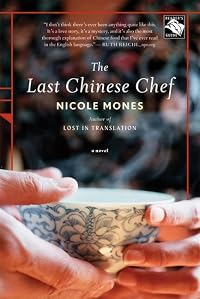
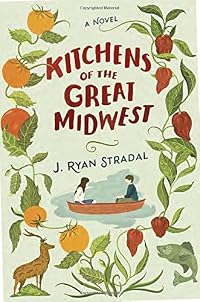
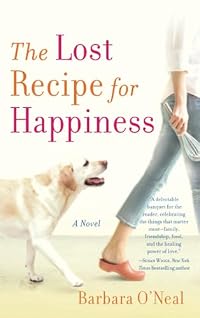
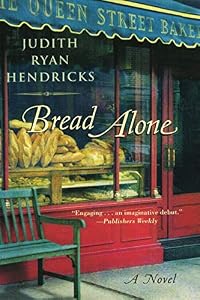





Member Recommendations

The Kitchen Counter Cooking School: How a Few Simple Lessons Transformed Nine Culinary Novices into Fearless Home Cooks by Kathleen Flinn
DetailMuse Both books are about a series of group cooking lessons, set in Seattle. Bauermeister's is fiction; Flinn's is nonfiction.
Alone in the Kitchen with an Eggplant: Confessions of Cooking for One and Dining Alone by Jenni Ferrari-Adler
fyrefly98 One's fiction and the other's a collection of essays, but they're both easy-to-read food writing that evoked very similar reactions.
Member Reviews
The School of Essential Ingredients captures the moments of connection between food and life in the lives of the eight students that take part in an 8 month cooking class. The class is taught by Lillian, the owner of the restaurant where the class is held. The lessons that they learn release sensations and feelings that allow the students to connect to their inner selves. They learn about love and life and how food connects to the various meanings of love. Each chapter focuses on a student and their life and process of learning through the cooking classes.
This is a book that touches the depth of your heart and soul, if you let it. Just as the students in Lillian's cooking class must learn and grow and allow the lessons to seep through, show more so do we as readers. It is easy to open your heart and mind while reading this story that sparks the senses so easily that you can envision in your mind the smell of lavender, the taste of dark chocolate melting on your tongue or the feel of the knife slicing an heirloom tomato.
Erica Bauermeister has a gift of writing beautiful prose that is lyrical and sensual. She is able to use words in a manner to describe the simple beauty of food, life and relationships. She captures the essence of life and connects it so perfectly to food. Through the story, Lillian leads the students to connect to what is essential and to the importance of showing your love for others through choosing and preparing the food you serve them. It has made me want to connect more to the food that nourishes us and apply some of the lessons that Lillian has taught through her cooking classes.
Reading The School of Essential Ingredients is like finding the perfect recipe to escape the mundane day to day fast food pace of life and cooking that many of us subscribe to. It will allow you to vicariously savor the varied ingredients in the dishes that the class create and it may even inspire you to create some of your own.
The School of Essential Ingredients is definitely going to be on the list of my most favorite books that I've read this year. It is the kind of book that I can imagine reading over again. I didn't want the book to end. I loved reading every morsel. I enjoy cooking, but this book took cooking to a different level and has challenged me to expand my own skills. I want to find a cooking class like Lillians. This is the first novel written by Erica Bauermeister and I look forward to her next work. I can envision a sequel to The School of Essential Ingredients and certainly hope that the author is considering this.
Posted on my blog at Redlady's Reading Room. show less
This is a book that touches the depth of your heart and soul, if you let it. Just as the students in Lillian's cooking class must learn and grow and allow the lessons to seep through, show more so do we as readers. It is easy to open your heart and mind while reading this story that sparks the senses so easily that you can envision in your mind the smell of lavender, the taste of dark chocolate melting on your tongue or the feel of the knife slicing an heirloom tomato.
Erica Bauermeister has a gift of writing beautiful prose that is lyrical and sensual. She is able to use words in a manner to describe the simple beauty of food, life and relationships. She captures the essence of life and connects it so perfectly to food. Through the story, Lillian leads the students to connect to what is essential and to the importance of showing your love for others through choosing and preparing the food you serve them. It has made me want to connect more to the food that nourishes us and apply some of the lessons that Lillian has taught through her cooking classes.
Reading The School of Essential Ingredients is like finding the perfect recipe to escape the mundane day to day fast food pace of life and cooking that many of us subscribe to. It will allow you to vicariously savor the varied ingredients in the dishes that the class create and it may even inspire you to create some of your own.
The School of Essential Ingredients is definitely going to be on the list of my most favorite books that I've read this year. It is the kind of book that I can imagine reading over again. I didn't want the book to end. I loved reading every morsel. I enjoy cooking, but this book took cooking to a different level and has challenged me to expand my own skills. I want to find a cooking class like Lillians. This is the first novel written by Erica Bauermeister and I look forward to her next work. I can envision a sequel to The School of Essential Ingredients and certainly hope that the author is considering this.
Posted on my blog at Redlady's Reading Room. show less
This was a light, pleasant book about a cooking class--the food they prepare and the lives of the members of the class. The descriptions of the food are evocative and sensuous; Lillian, who gives the class and owns a restaurant, has the ability to draw her students into both memories and new experiences. It's a bit hard at first to keep all the characters straight, but each has a section of the book to take center stage. There's a woman in the early stages of Alzheimer's, an older couple solidifying their recovery from adultery, a widower mourning his loss, a man and a woman beginning to connect, and a young girl finding herself.
The book is at its best when simply describing the process of making the dishes and the transitory wonder show more that is good food--the scent and feel and look of food, the way in which intuition is at least as important as knowledge in preparing it. Lillian doesn't use recipes, even making a wonderfully light white cake without one.
There's a certain facile quality to the way that food has the desired effect on each person, whatever the circumstance; it's a nice conceit, but not entirely believable. show less
The book is at its best when simply describing the process of making the dishes and the transitory wonder show more that is good food--the scent and feel and look of food, the way in which intuition is at least as important as knowledge in preparing it. Lillian doesn't use recipes, even making a wonderfully light white cake without one.
There's a certain facile quality to the way that food has the desired effect on each person, whatever the circumstance; it's a nice conceit, but not entirely believable. show less
Summary: The School of Essential Ingredients gives us a series of interconnected slice-of-life vignettes, revolving around the participants in a cooking class. Chef and restaurant owner Lillian has a knack of feeding people exactly what they need - both in a meal and in life. The participants in her class initially seem to have little in common: a older married couple, a young Italian woman, a frazzled young mother, an elderly woman in the early stages of memory loss, a software engineer, a teen-aged busgirl, and a quiet man with an impenetrable air of sadness. However, as the course progresses, the miracle of the food they are preparing reaches them - and they reach out to each other.
Review: This book takes the idea that scent (and show more therefore food) is the strongest link to memory (and therefore emotion) and runs with it. Through the metaphor of food and cooking, we’re given access into the lives, memories, and emotions of each of the participants in the class, and through that filter, into our own lives and loves. This slim novel wears its heart on its sleeve - love of food, love of cooking, love of friends and family, love of everything that is slow and beautiful, love of love - and the result is a story simultaneously a joy for the senses and incredibly touching (and yes, I got misty-eyed more than once). My only real complaint is that sometimes the writing gets a little simile-happy, but this is a forgivable flaw. Seeing as we don’t have very many words in the English language to describe flavors and smells, a book that is so focused on the sensual experience of food really doesn’t have many other options. Ultimately, this book winds up feeling like a good meal - deserving of being savored, light enough to be easily digestible, but leaving you feeling completely satisfied. 4.5 out of 5 stars.
Recommendation: Not just for serious foodies, I think this book would appeal to anyone who likes modern literary fiction and appreciates the good things in life. I would NOT recommend reading this if you haven’t eaten for a while, though, because if you’re not hungry going into this, you most definitely will be by the time you’re done. show less
Review: This book takes the idea that scent (and show more therefore food) is the strongest link to memory (and therefore emotion) and runs with it. Through the metaphor of food and cooking, we’re given access into the lives, memories, and emotions of each of the participants in the class, and through that filter, into our own lives and loves. This slim novel wears its heart on its sleeve - love of food, love of cooking, love of friends and family, love of everything that is slow and beautiful, love of love - and the result is a story simultaneously a joy for the senses and incredibly touching (and yes, I got misty-eyed more than once). My only real complaint is that sometimes the writing gets a little simile-happy, but this is a forgivable flaw. Seeing as we don’t have very many words in the English language to describe flavors and smells, a book that is so focused on the sensual experience of food really doesn’t have many other options. Ultimately, this book winds up feeling like a good meal - deserving of being savored, light enough to be easily digestible, but leaving you feeling completely satisfied. 4.5 out of 5 stars.
Recommendation: Not just for serious foodies, I think this book would appeal to anyone who likes modern literary fiction and appreciates the good things in life. I would NOT recommend reading this if you haven’t eaten for a while, though, because if you’re not hungry going into this, you most definitely will be by the time you’re done. show less
This lovely book spins tales around the centrality of food in our lives, suggesting that heightened awareness about what, how and with whom we eat will translate into a more fulfilling existence, with the recognition of our needs and wants becoming as palpable to us as the aroma, shapes, feel and taste of an artfully prepared meal.
The characters in the this book are students at a cooking school run by Lillian, a woman whose father left when she was age four and whose mother retreated into the more congenial and controllable world of literature. Lillian, largely on her own in life, discovered the magic of cooking.
As an adult, she starts a restaurant, and on Monday evenings, when the restaurant is closed, she runs “The School of show more Essential Ingredients” for culinary aficionados.
Each chapter tells the story of one of the students in the class; the interconnections among others in the class; and how both the class and the food prepared in it changed the life of each student.
From the beginning, Lillian insists that the students close their eyes and experience the smells and feel of the food. She asks them to slow down and experience and enjoy. She seems to know that, through this sensual exercise, they would reclaim their sensual selves.
Bauermeister’s prose is as exquisite as the meals her protagonist prepares. At the class in which they make white wedding cake, the author describes the tasting:
“The class stood companionably around the wooden counter, trying to navigate forkfuls of cake into their mouths without losing a crumb to the floor. The frosting was a thick buttercream, rich as a satin dress laid against the firm, fragile texture of the cake. With each bite, the cake melted first, then the frosting, one after another, like lovers tumbling into bed.”
The act of cooking, for all the characters, becomes a way to connect with their pasts, with each other, and above all, to express their feelings. You should cook, Lillian tells one of her students, in a way that shows what you want from another person; how you feel about him or her. And you should eat in a way that celebrates that feeling.
Sometimes we get so caught up in the mundane, and in seeing aspects of daily living as a series of chores, that we forget to enjoy living and to enjoy each other. (“We’re all just ingredients,” one character says to the other, “what matters is the grace with which you cook the meal.”) This book helps us remember that life is as much about the little things as the big things, and that sensuality and excitement need not be any more distant from our lives than a walk to the market, or a tentative finger thrust in a bowl of batter. show less
The characters in the this book are students at a cooking school run by Lillian, a woman whose father left when she was age four and whose mother retreated into the more congenial and controllable world of literature. Lillian, largely on her own in life, discovered the magic of cooking.
As an adult, she starts a restaurant, and on Monday evenings, when the restaurant is closed, she runs “The School of show more Essential Ingredients” for culinary aficionados.
Each chapter tells the story of one of the students in the class; the interconnections among others in the class; and how both the class and the food prepared in it changed the life of each student.
From the beginning, Lillian insists that the students close their eyes and experience the smells and feel of the food. She asks them to slow down and experience and enjoy. She seems to know that, through this sensual exercise, they would reclaim their sensual selves.
Bauermeister’s prose is as exquisite as the meals her protagonist prepares. At the class in which they make white wedding cake, the author describes the tasting:
“The class stood companionably around the wooden counter, trying to navigate forkfuls of cake into their mouths without losing a crumb to the floor. The frosting was a thick buttercream, rich as a satin dress laid against the firm, fragile texture of the cake. With each bite, the cake melted first, then the frosting, one after another, like lovers tumbling into bed.”
The act of cooking, for all the characters, becomes a way to connect with their pasts, with each other, and above all, to express their feelings. You should cook, Lillian tells one of her students, in a way that shows what you want from another person; how you feel about him or her. And you should eat in a way that celebrates that feeling.
Sometimes we get so caught up in the mundane, and in seeing aspects of daily living as a series of chores, that we forget to enjoy living and to enjoy each other. (“We’re all just ingredients,” one character says to the other, “what matters is the grace with which you cook the meal.”) This book helps us remember that life is as much about the little things as the big things, and that sensuality and excitement need not be any more distant from our lives than a walk to the market, or a tentative finger thrust in a bowl of batter. show less
Lillian’s father deserts his wife and young daughter literally, and then her mother deserts her figuratively -- disappearing deeply into the solace of books as a coping mechanism. As Lillian takes on the management of the household, she discovers an intuition for cooking and uses food alchemy to try to reach her mother. Later, when grown, Lillian applies this intuition to operating a first-class restaurant and conducting an annual series of cooking classes called the School of Essential Ingredients.
Through themes associated with a particular food or meal, each chapter explores one class and the life of one of the students: a mother lost in the needs of young children; a long-married couple; a kitchen designer; a young widower; a show more misfit teenager; an engineering geek; and a woman moving into the middle stages of dementia.
The writing is sensual and lush, the stories tender and hopeful, with a magical realism evocative of Laura Esquivel’s Like Water for Chocolate. Since I finished the book, I’ve wanted nothing more than to read the stories of the next year’s class. Highly recommended. show less
Through themes associated with a particular food or meal, each chapter explores one class and the life of one of the students: a mother lost in the needs of young children; a long-married couple; a kitchen designer; a young widower; a show more misfit teenager; an engineering geek; and a woman moving into the middle stages of dementia.
The writing is sensual and lush, the stories tender and hopeful, with a magical realism evocative of Laura Esquivel’s Like Water for Chocolate. Since I finished the book, I’ve wanted nothing more than to read the stories of the next year’s class. Highly recommended. show less
"Watching the other members of the class, he found himself wondering where they had come from, what it was they brought with them, as if they, too, were recipes he might come to understand."
The School of Essential Ingredients isn't just a monthly cooking lesson, it's a time for Lillian to work her mojo on her students. It's not about learning a recipe but about the transformative catalyst of food. By opening themselves up to new experiences, new sensations, they rectify the deficiencies in their lives.
"She felt about her zester the way some women do about a pair of spiky red shoes - a frivolous splurge, good only for parties, but oh so lovely."
This book reminded me very much of the Joanne Harris phase I went through last year. The way show more both women write about food is so seductive and charming. You should definitely read it, but eat something before you do. I was ravenous when I finally put it down! show less
The School of Essential Ingredients isn't just a monthly cooking lesson, it's a time for Lillian to work her mojo on her students. It's not about learning a recipe but about the transformative catalyst of food. By opening themselves up to new experiences, new sensations, they rectify the deficiencies in their lives.
"She felt about her zester the way some women do about a pair of spiky red shoes - a frivolous splurge, good only for parties, but oh so lovely."
This book reminded me very much of the Joanne Harris phase I went through last year. The way show more both women write about food is so seductive and charming. You should definitely read it, but eat something before you do. I was ravenous when I finally put it down! show less
Lillian recognizes from an early age that food is powerful. For Lillian, flavors can heal, spices can seduce, and even an ordinary apple can be magical for someone who eats it at just the right moment. During a monthly cooking class at her restaurant, Lillian sets out to show that cooking is much more than simply following directions in a recipe and eating is much more than a practical action to stave off hunger. As her students come from their seperate walks of life, each of their personal stories is illuminated and each of their lives is impacted by lessons they learn under Lillian's perceptive tutelage, lessons that extend far beyond how to bake a good cake or prepare Thanksgiving dinner. Slowly but surely, Lillian's students come to show more discover the power of a good meal to bring people together, to heal past hurts, and to alter the course of current struggles.
The School of Essential Ingredients is a briliant blend of the obvious and the subtle just like the flavors that change the lives of Bauermeister's characters. Bauermeister's writing is a rare and sensual treat as her writing brings scents, flavors, and textures to life right alongside the poignantly rendered moments in the lives of each of the characters. Each of the students is fleshed out and all are having experiences that are easy for readers to relate to their own lives. Their stories are both sweet and sad, but above all, genuine. Bauermeister's debut is a delicious story about food, about love, and about life that left me totally satisfied, even as I wiped a tear or two from my eye. show less
The School of Essential Ingredients is a briliant blend of the obvious and the subtle just like the flavors that change the lives of Bauermeister's characters. Bauermeister's writing is a rare and sensual treat as her writing brings scents, flavors, and textures to life right alongside the poignantly rendered moments in the lives of each of the characters. Each of the students is fleshed out and all are having experiences that are easy for readers to relate to their own lives. Their stories are both sweet and sad, but above all, genuine. Bauermeister's debut is a delicious story about food, about love, and about life that left me totally satisfied, even as I wiped a tear or two from my eye. show less
Members
- Recently Added By
Lists

SantaThing 2014 Gifts
299 works; 17 members

Food Fiction
24 works; 7 members

A Smorgasbord of Culinary Fiction
221 works; 94 members
Author Information

11 Works 4,929 Members
Erica Bauermeister is the bestselling author of The School of Essential Ingredients, Joy for Beginners, The Lost Art of Mixing, and The Scent Keeper. She currently Lives in Port Townsend, Washington, in the house she renovated with her family.
Series

Common Knowledge
- Canonical title
- The School of Essential Ingredients
- Original publication date
- 2009-01-22
- People/Characters
- Lillian; Claire; Carl; Helen; Ian; Tom (show all 9); Isabelle Parish; Chloe; Antonia
- Dedication
- For Heidi, Karin, and Dad
- First words
- Lillian loved best the moment before she turned on the lights.
- Last words
- (Click to show. Warning: May contain spoilers.)Then she turned off the light, and left the kitchen.
- Blurbers
- Jacobs, Kate; Allen, Sarah Addison
- Disambiguation notice
- Published under two titles: The School of Essential Ingredients, The Monday Night Cooking School
Classifications
Statistics
- Members
- 1,955
- Popularity
- 10,790
- Reviews
- 147
- Rating
- (3.76)
- Languages
- 9 — Chinese, Dutch, English, Finnish, French, German, Italian, Portuguese, Spanish
- Media
- Paper, Audiobook, Ebook
- ISBNs
- 35
- ASINs
- 14