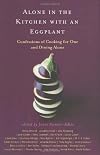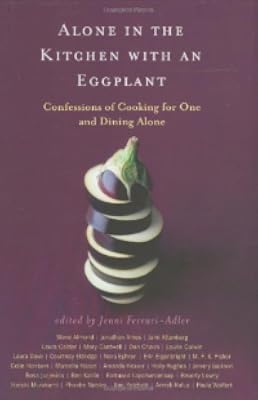
Alone in the Kitchen with an Eggplant: Confessions of Cooking for One and Dining Alone
by Jenni Ferrari-Adler (Editor) 
On This Page
Description
Presents a collection of essays on cooking and eating for one by twenty-six top writers and foodies, including Ann Patchett, Marcella Hazan, Haruki Murakami, Courtney Eldridge, and Nora Ephron.Tags
Recommendations




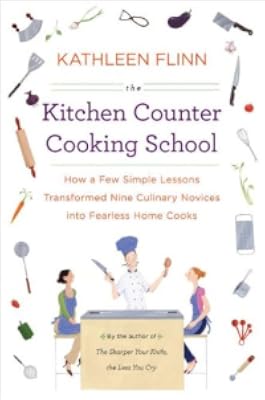
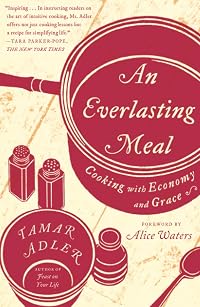
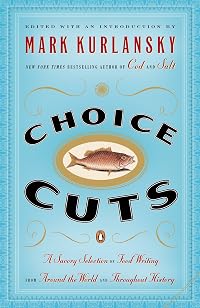
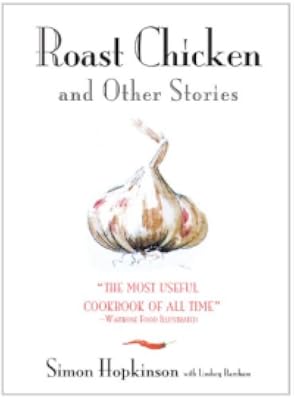

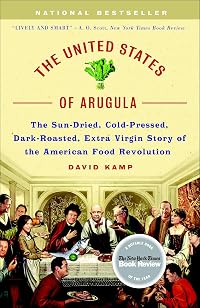
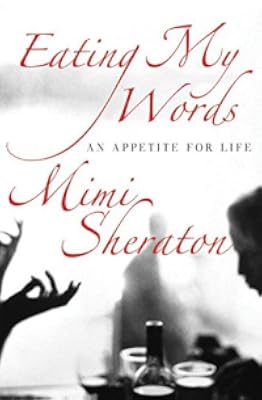
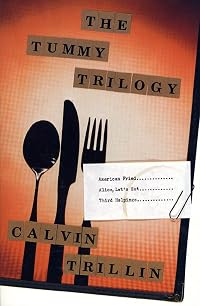
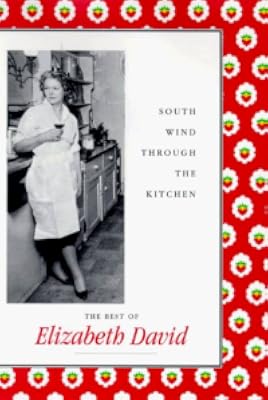




Member Recommendations

Member Reviews
A collection of essays by food writers and fiction writers about their thoughts on and experiences in cooking and/or eating alone, whether it's trying to make elaborate meals in a tiny apartment, taking yourself out to a fancy restaurant, or eating cold refried beans out of a can while standing in the kitchen.
I bought this one because something about the title snagged my attention and wouldn't let it go, and because I found it at one of those library sales where everything is so cheap that there seems to be no reason not to just grab every book with a title that tickles you. Once I got it home, though, I wondered if that might have been a mistake, as it didn't really seem like my sort of thing at all. I am basically the antithesis of a show more foodie. I don't cook much to speak of, my tastes are utterly pedestrian, and I tend to look askance at food snobs. I also, as an inveterate loner, have very little patience for the common belief that dining alone is somehow weird or sad or socially unacceptable.
And, sure enough, there's quite a bit of food snobbery here, and several folks insisting that eating really should be a social activity, and a bunch of recipes that I couldn't cook if my life depended on it and probably wouldn't eat if you paid me. And yet, to my surprise... I liked it. Most of these essays are very well-written and thoughtful, and they provided some interesting little glimpses into people with lives and relationships with food that are very different from mine. So, hey, good job, Past Me, on that grabbing-books-with-eye-catching-titles strategy! show less
I bought this one because something about the title snagged my attention and wouldn't let it go, and because I found it at one of those library sales where everything is so cheap that there seems to be no reason not to just grab every book with a title that tickles you. Once I got it home, though, I wondered if that might have been a mistake, as it didn't really seem like my sort of thing at all. I am basically the antithesis of a show more foodie. I don't cook much to speak of, my tastes are utterly pedestrian, and I tend to look askance at food snobs. I also, as an inveterate loner, have very little patience for the common belief that dining alone is somehow weird or sad or socially unacceptable.
And, sure enough, there's quite a bit of food snobbery here, and several folks insisting that eating really should be a social activity, and a bunch of recipes that I couldn't cook if my life depended on it and probably wouldn't eat if you paid me. And yet, to my surprise... I liked it. Most of these essays are very well-written and thoughtful, and they provided some interesting little glimpses into people with lives and relationships with food that are very different from mine. So, hey, good job, Past Me, on that grabbing-books-with-eye-catching-titles strategy! show less
Summary: Alone in the Kitchen with an Eggplant is a collection of essays from cooks, chefs, writers, and others, all on the theme of eating alone. There's a broad range of topics that fall under that heading - essays confessing what people crave when no one is watching, essays from people who make eating alone a celebration, essays from people who avoid eating alone whenever possible, essays from people who love cooking for themselves, essays from people who wish they got the chance to cook just for themselves, essays from people who can't stand cooking but have mastered the art of dining out for one, and so on. There's humor, commiseration, advice, soul-baring, and plenty of recipes for one.
Review: This was fantastic; a treat for the show more senses, and a balm for the soul of someone who habitually eats alone. While you can make the argument that eating is meant to be a social activity, almost everybody eats alone at some point in their lives, and this book sets out to remind us that while we might not be sharing our meal with anyone, we are never really alone in our solo eating. What I enjoyed most about this book was the sense of connection I found with the authors in almost each and every essay: Ann Patchett shares my love for Saltines spread with butter when no one is watching. Jeremy Jackson shares my love of canned black beans and the Moosewood Cookbook. Anneli Rufus and I share a craving for starch in all forms. Courtney Eldridge and I both have a food-snob ex in our past. Jonathan Ames and I have both made ourselves ill with poorly-cooked eggs. Beverly Lowry and I will both crave the same simple foods over and over again for weeks if not months at a time. Laura Dave's essay is about moving to and cooking in New York City, but it sounded to me like she was talking exactly about grad school. And so on. The connections I made are not going to be the same ones that other people find, but there's a wide enough variety that I bet everyone will find something they relate to. Not all essays will resonate with every reader - and for sure, some of them worked for me more than others - but there's enough here that everyone will find something to enjoy. 4.5 out of 5 stars.
Recommendation: If you even vaguely enjoy food writing, read it. It's funny, easy to read, full of tasty-sounding recipes, thought-provoking, and thoroughly enjoyable. show less
Review: This was fantastic; a treat for the show more senses, and a balm for the soul of someone who habitually eats alone. While you can make the argument that eating is meant to be a social activity, almost everybody eats alone at some point in their lives, and this book sets out to remind us that while we might not be sharing our meal with anyone, we are never really alone in our solo eating. What I enjoyed most about this book was the sense of connection I found with the authors in almost each and every essay: Ann Patchett shares my love for Saltines spread with butter when no one is watching. Jeremy Jackson shares my love of canned black beans and the Moosewood Cookbook. Anneli Rufus and I share a craving for starch in all forms. Courtney Eldridge and I both have a food-snob ex in our past. Jonathan Ames and I have both made ourselves ill with poorly-cooked eggs. Beverly Lowry and I will both crave the same simple foods over and over again for weeks if not months at a time. Laura Dave's essay is about moving to and cooking in New York City, but it sounded to me like she was talking exactly about grad school. And so on. The connections I made are not going to be the same ones that other people find, but there's a wide enough variety that I bet everyone will find something they relate to. Not all essays will resonate with every reader - and for sure, some of them worked for me more than others - but there's enough here that everyone will find something to enjoy. 4.5 out of 5 stars.
Recommendation: If you even vaguely enjoy food writing, read it. It's funny, easy to read, full of tasty-sounding recipes, thought-provoking, and thoroughly enjoyable. show less
An interesting collection of essays on the joys or fears of cooking and eating alone. I think I will most remember this book for learning that Ann Patchett shares my guilty love of Spaghetti-Os. As someone who enjoys cooking but has lived alone for much of my adult life, I found a lot here that resonated with me.
Sometimes I think I'm in the minority with how comfortable I am eating alone, be it at home or in restaurants. But if the authors collected here are in fact a representative sample, I'm not alone--not even close. The essays here range from memories of the first restaurant meal taken solo to the joys of eating crackers over the kitchen sink, and as an anthology, it holds together surprisingly well. There's only one essay in here that I'd consider a dud, and that's mostly because it's written in this sanctimonious, pitying tone by someone who believes anyone who says they enjoy dining alone sometimes must be lying.
Many of the essays (probably about half) have recipes with them. I'm planning to photocopy several of these before returning show more the book to the library--impressive when so many of these authors are preparing foods Princess Pickypants (AKA, me) doesn't like. Pasta in a tomato cream sauce? Yes please. Italian-style grilled cheese and ham? Sign me up. There's an interesting-looking chili recipe, several ways of preparing black beans, and at least two versions of crispy potatoes I'll be trying soon. The down side of food writing: I've been hungry all weekend.
As an example of the humor that appears consistently throughout this collection, I present this paragraph, from Jeremy Jackson's "Beans and Me":
"Most beans are lowly, of course, but it seems to me that the pinto, the lentil, and the black bean are the lowliest of them all, and all the more charming because of it. Sometimes I picture these three beans holding hands and chiming together, 'We're lowly! We're of the earth! We're beans for the people!' And sometimes, when I envision this trio, the black-eyed pea waddles into view and says, 'Whaddabout me, guys?' and the pinto, the lentil, and the black bean say, 'Hiya, black-eyed pea! Get in here! We didn't forget you!' Then they all sing some kind of bean song." show less
Many of the essays (probably about half) have recipes with them. I'm planning to photocopy several of these before returning show more the book to the library--impressive when so many of these authors are preparing foods Princess Pickypants (AKA, me) doesn't like. Pasta in a tomato cream sauce? Yes please. Italian-style grilled cheese and ham? Sign me up. There's an interesting-looking chili recipe, several ways of preparing black beans, and at least two versions of crispy potatoes I'll be trying soon. The down side of food writing: I've been hungry all weekend.
As an example of the humor that appears consistently throughout this collection, I present this paragraph, from Jeremy Jackson's "Beans and Me":
"Most beans are lowly, of course, but it seems to me that the pinto, the lentil, and the black bean are the lowliest of them all, and all the more charming because of it. Sometimes I picture these three beans holding hands and chiming together, 'We're lowly! We're of the earth! We're beans for the people!' And sometimes, when I envision this trio, the black-eyed pea waddles into view and says, 'Whaddabout me, guys?' and the pinto, the lentil, and the black bean say, 'Hiya, black-eyed pea! Get in here! We didn't forget you!' Then they all sing some kind of bean song." show less
Summary: So often is food treated as a communal experience, one doesn’t often hear of cooking and eating alone. Well, that changes with this collection of essays from writers and cooks that talk about their solitary experiences both good and bad.
Summary: As I am a university student, I do most of my cooking and eating alone. I do have a roommate but she’s often out of the apartment and besides, our tastes are so different that I don’t think we could cook and eat together even if we wanted to. So I definitely know the struggles and joys of putting food out for myself. I’m a terrible cook, by the way, but I love food and have a growing interest in food writing that this book delves right into. After reading this book, I want to go show more straight to the library and see what else the food section has.
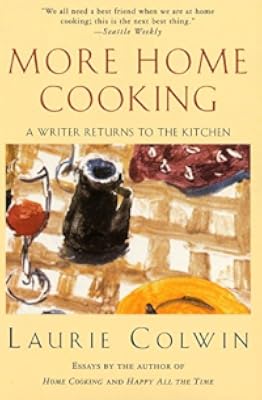
It really is a solid, entertaining collection that manages to strike a balance between a variety of moods. Some authors don’t like cooking and eating alone; others adore it. I veer towards the latter, so I was happy to read about Holly Hughes’ desire to cook for herself after cooking for a large family, or Laurie Colwin’s love of eggplant. Those were some of my favourite essays, as well as Phoebe Noble’s, Colin Harrison’s, Erin Ergenbright’s, and Rattawut Lapcharoensap’s (packaged instant noodles for the win!). With that said, there isn’t a bad essay in the bunch. All of them are easily re-readable (although I have to admit, Haruki Murakami’s was the one I was looking forward to the most and thus the one that let me down. It was more literary than confessional, which didn’t fit in with the general theme, in my opinion).
If you’re looking for recipes, Alone in the Kitchen with an Eggplant has some, but not a great deal. I did try out Jeremy Jackson’s suggestion of mixing shredded cheese with rice. But mostly this is a prose collection, and I love that more than I love rice with cheese.
Conclusion: A great place to begin my education in food writing. Plus it whets my appetite for more. show less
Summary: As I am a university student, I do most of my cooking and eating alone. I do have a roommate but she’s often out of the apartment and besides, our tastes are so different that I don’t think we could cook and eat together even if we wanted to. So I definitely know the struggles and joys of putting food out for myself. I’m a terrible cook, by the way, but I love food and have a growing interest in food writing that this book delves right into. After reading this book, I want to go show more straight to the library and see what else the food section has.
It really is a solid, entertaining collection that manages to strike a balance between a variety of moods. Some authors don’t like cooking and eating alone; others adore it. I veer towards the latter, so I was happy to read about Holly Hughes’ desire to cook for herself after cooking for a large family, or Laurie Colwin’s love of eggplant. Those were some of my favourite essays, as well as Phoebe Noble’s, Colin Harrison’s, Erin Ergenbright’s, and Rattawut Lapcharoensap’s (packaged instant noodles for the win!). With that said, there isn’t a bad essay in the bunch. All of them are easily re-readable (although I have to admit, Haruki Murakami’s was the one I was looking forward to the most and thus the one that let me down. It was more literary than confessional, which didn’t fit in with the general theme, in my opinion).
If you’re looking for recipes, Alone in the Kitchen with an Eggplant has some, but not a great deal. I did try out Jeremy Jackson’s suggestion of mixing shredded cheese with rice. But mostly this is a prose collection, and I love that more than I love rice with cheese.
Conclusion: A great place to begin my education in food writing. Plus it whets my appetite for more. show less
Eating alone is not a regular occurrence for me anymore, but it does happen occasionally, and it did happen a lot when I was in college. I expect it will happen more in the future.
I have a love/hate relationship with eating alone. I like that I can be selfish when choosing foods when I’m alone, especially since my partner is very picky when it comes to fruits and vegetables. (He is trying new things lately despite his aversion to them. I’m very grateful to him for that.) This is also one of the reasons I love eating out: I can be selfish without being alone. (I’m envisioning the deliciously sour and potent lemon tart I had at Thomas Keller’s Bouchon in Yountville, CA, a dessert reserved for selfish occasions.) When I’m eating show more alone, I dislike the fact that I have no one to share my joy with, no one to cook for besides myself, no one to Ooh and Aah at my efforts, no one to talk to.
These short stories encompass those feelings through many different voices, some with more love than hate for eating alone than others (and vice versa), and all with different experiences and reasons for eating alone.
As a collection, this book is lovely. The stories can be read individually or in one fell-swoop. I adopted the latter strategy, and I enjoyed it very much. I felt as though I was being let in to these authors’ lives, voyeuristically watching them alone in their homes or out to eat, being let in on the secret of their habits. It’s terribly interesting, and I almost feel guilty for enjoying it. Almost. show less
I have a love/hate relationship with eating alone. I like that I can be selfish when choosing foods when I’m alone, especially since my partner is very picky when it comes to fruits and vegetables. (He is trying new things lately despite his aversion to them. I’m very grateful to him for that.) This is also one of the reasons I love eating out: I can be selfish without being alone. (I’m envisioning the deliciously sour and potent lemon tart I had at Thomas Keller’s Bouchon in Yountville, CA, a dessert reserved for selfish occasions.) When I’m eating show more alone, I dislike the fact that I have no one to share my joy with, no one to cook for besides myself, no one to Ooh and Aah at my efforts, no one to talk to.
These short stories encompass those feelings through many different voices, some with more love than hate for eating alone than others (and vice versa), and all with different experiences and reasons for eating alone.
As a collection, this book is lovely. The stories can be read individually or in one fell-swoop. I adopted the latter strategy, and I enjoyed it very much. I felt as though I was being let in to these authors’ lives, voyeuristically watching them alone in their homes or out to eat, being let in on the secret of their habits. It’s terribly interesting, and I almost feel guilty for enjoying it. Almost. show less
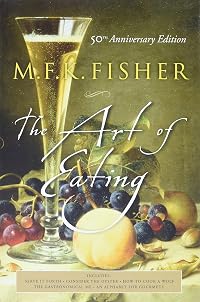
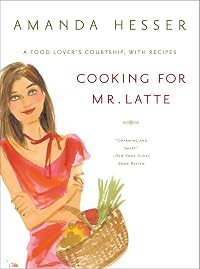
Alone In The Kitchen With An Eggplant is a collection of essays and stories written on the theme of eating alone. Some deplore this situation others look to it with longing. The meals range from relatively elaborate to a bowl of noodles with cottage cheese. Bookended with essays by mother and daughter Laurie Colwin and Rosa Jurjevics, the authors include: Courtney Eldridge, Nora Ephron, M.F.K. Fisher, Marcella Hazen, Amanda Hesser, Ben Karlin, Rattawut Lapcharoensap, Haruki Murakami, Ann Patchett and Paula Wolfert. The eponymous story was written by Laurie Colwin and sent me to the bookstore to search out more of her writing. Courtney Eldridge's entry was an acerbic look back at her marriage to a chef and I spent a couple of hours show more trying to find out who he was by searching on the internet (alas no luck). Murakami offers a fictional story and there may be other fiction. He is the only one who specifies. Some of the essays stick strictly to the subject of eating alone; in others you get the author's backstory as well. There are recipes attached to almost all the pieces but here the term recipe is used loosely. Whether you have ever cooked just for yourself you can imagine that, depending on your view of the matter, you will want absolute bliss or speedy dispatch. I tend to the former view. I love to eat alone - anywhere - which does not mean I don't love eating with others as well. Great read, great ideas - Alone In The Kitchen can be picked up and browsed through anytime in the future and will be. show less
Members
- Recently Added By
Lists

Books With the Most Memorable Titles
478 works; 158 members
Author Information

Jenni Ferrari-Adler is a LibraryThing Author, an author who lists their personal library on LibraryThing.
All Editions
Awards and Honors
Common Knowledge
- Canonical title
- Alone in the Kitchen with an Eggplant: Confessions of Cooking for One and Dining Alone
- Original publication date
- 2007
- Important places
- Ann Arbor, Michigan, USA; Caribbean Region; Italy; Ithaca, New York, USA; Jamaica; Japan (show all 16); Massachusetts, USA; Michigan, USA; New York, USA; New York, New York, USA; Oregon, USA; Portland, Oregon, USA; Provincetown, Massachusetts, USA; Seattle, Washington, USA; Thailand; Washington, USA
- Epigraph
- It is the privilege of loneliness; in privacy one may do as one chooses. Virginia Woolf, Mrs. Dalloway
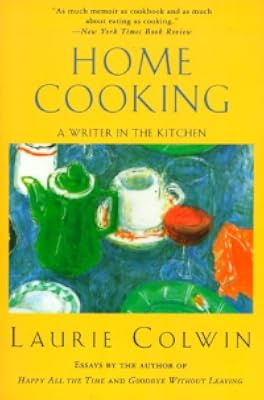
Dinner alone is one of life's pleasures. Certainly cooking for oneself reveals man at his weirdest. People lie when you ask them what they eat when they are alone. A salad, they tell you. But when you persist, they confess to... (show all) peanut butter and bacon deep fried and eaten with hot sauce, or spaghetti with butter and grape jam. Laurie Colwin, "Alone in the Kitchen with an Eggplant," Home Cooking. - Dedication
- For Jofie
- First words
- Call it seven-thirty on a Wednesday night. No one else is home. A slight hunger hums in your body, so you wander into the kitchen.
- Quotations
- I have friends who begin with pasta, and friends who begin with rice, but whenever I fall in love, I begin with potatoes. Sometimes meat and potatoes and sometimes fish and potatoes, but always potatoes. I have made a lot of ... (show all)mistakes falling in love, and regretted most of them, but never the potatoes that went with them. —Nora Ephron, "Potatoes and Love: Some Reflections"
After the visitors had left, I would stand over the sink and eat whatever was around, whatever I needed in order to go and do the work that I love. Even now it is a picture of heaven to me, an evening spent alone and well fed... (show all) in the tradition of my own low standards. —Ann Patchett, "Dinner for One, Please, James"
To begin: buy yourself some raw tiger-tail shrimp, medium size, two pounds at least. Why tiger tail? Because they are the coolest to order. —Steve Almond, "Que Sera Sarito" - Last words
- (Click to show. Warning: May contain spoilers.)No matter how fastidiously I followed my mother's recipe for instant noodles, these were entirely different noodles, and I knew that I would need to learn, with time, to find comfort in their flavors, lest I resign myself to bitterness. - Rattawut Lapcharoensap 'Instant Noodles"
- Publisher's editor
- Lynch, Megan (Riverhead)
Classifications
- Genres
- Food & Cooking, Nonfiction, General Nonfiction, Biography & Memoir
- DDC/MDS
- 641.561 — Applied science & technology Home economics & family management Food, Cooking & Recipes / Meals, Picnics Cooking; cookbooks Cooking, Specialized Situations Cooking for Singles, Couples
- LCC
- TX652 .A46 — Technology Home economics Home economics Cooking
- BISAC
Statistics
- Members
- 586
- Popularity
- 50,186
- Reviews
- 31
- Rating
- (3.64)
- Languages
- English
- Media
- Paper, Ebook
- ISBNs
- 5
- ASINs
- 3