
On This Page
Description
Dive into a masterpiece of American satirical writing. The Devil's Dictionary, compiled by famed American journalist and fiction writer Ambrose Bierce, offers readers a compendium of words and phrases with dictionary-style definitions that are blisteringly hilarious and packed with spot-on cynicism and dark humor. The format makes this book a great text for dipping into any time you need a quick laugh..
Tags
Recommendations


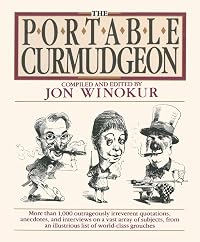
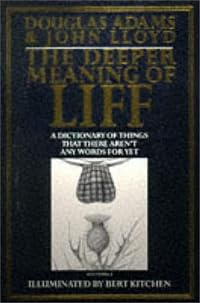

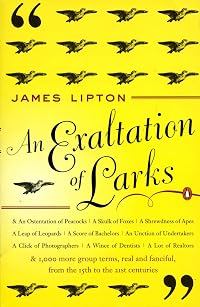


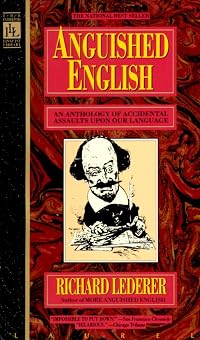












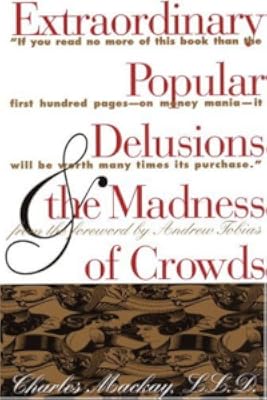
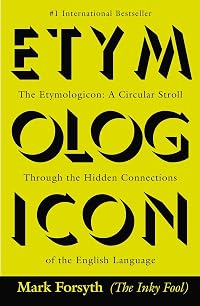
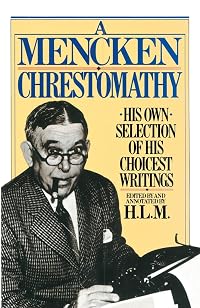
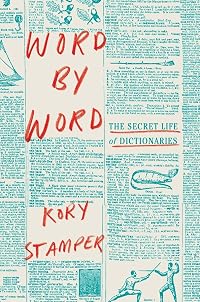
Member Recommendations



Member Reviews
Brilliant. Bierce is biting and never tongue-in-cheek, always cynical, and always funny. This is a great work to pick up and flip through whenever one is feeling sad, bored, or a little too warm-hearted.
Ambrose Bierce fu un giornalista e scrittore dell'Ohio nato nel 1842, autore di un famoso "Dizionario del diavolo". Lo posseggo in lingua inglese da diversi anni, per le splendide edizioni della "Folio Society". Ambrose scomparve sui campi di battaglia della guerra civile americana dopo di avere vissuto in maniera avventurosa la sua esistenza terrena. In maniera altrettanto misteriosa, scomparve dalla scena della vita.
Il suo "Dizionario" è tutto intessuto di battute fulminanti, spesso provocatorie, sempre pronte a cogliere quella zizzania che avvelena l'anima degli uomini. In realtà il suo essere diavolo è più ironia che perversione, impregnata di una robusta dose di pessimismo. Come quando alla voce "aiutare" dice: "Crearsi un show more ingrato" oppure alla definizione di "cultura" così si esprime: "Tipo di ignoranza che caratterizza lo studioso".
Bierce ha ragione a smorzare la retorica delle illusioni, specialmente quelle che fioriscono con le intenzioni di ogni anno e ogni giorno. Ci si fanno gli auguri di rito che sono il condimento della politica, della pubblicità, della religione, sperando di consolarci e di illuderci, ma anche di ingannarci in maniera inconsapevole, più spesso consapevole.
Del resto già Demostene, oltre duemila anni orsono, disse “Nulla è più facile che illudersi. Perchè l’uomo crede vero ciò che desidera”. Anche l’inglese Alexandre Pope del resto ha avuto modo di dire in merito: “Beato colui che non si aspetta nulla perchè non sarà mai deluso”.
Ma non dovremmo però mai estinguere i desideri del cuore e spegnere il piacere dell’attesa: perderemmo la voglia di vivere e con essa il seme della felicità se lo facessimo. Un libro del genere serve per difenderci dalle ipocrisie che ogni giorno siamo costretti ad affrontare.
Qualcuno dirà che questo atteggiamento va sotto il nome di cinismo, ed io sono pronto a dire che nessuno è mai morto di questa "malattia". Malattia non è, infatti. E' soltanto una delle tante facce della "condizione umana.
Quando, giorni fa, qualcuno in "cattedra" ha detto che "è meglio essere non credenti che ipocriti", credo abbia in un certo qual modo bene interpretato la definizione di ipocrita che lo stesso Ambrose Bierce dà di questa personalità nel suo "Dizionario del Diavolo": "One who, professing virtues that he does not respect, secures the advantage of seeming to be what he despises". "Colui che professa virtù che non rispetta e si assicura i vantaggi che dovrebbe respingere". show less
Il suo "Dizionario" è tutto intessuto di battute fulminanti, spesso provocatorie, sempre pronte a cogliere quella zizzania che avvelena l'anima degli uomini. In realtà il suo essere diavolo è più ironia che perversione, impregnata di una robusta dose di pessimismo. Come quando alla voce "aiutare" dice: "Crearsi un show more ingrato" oppure alla definizione di "cultura" così si esprime: "Tipo di ignoranza che caratterizza lo studioso".
Bierce ha ragione a smorzare la retorica delle illusioni, specialmente quelle che fioriscono con le intenzioni di ogni anno e ogni giorno. Ci si fanno gli auguri di rito che sono il condimento della politica, della pubblicità, della religione, sperando di consolarci e di illuderci, ma anche di ingannarci in maniera inconsapevole, più spesso consapevole.
Del resto già Demostene, oltre duemila anni orsono, disse “Nulla è più facile che illudersi. Perchè l’uomo crede vero ciò che desidera”. Anche l’inglese Alexandre Pope del resto ha avuto modo di dire in merito: “Beato colui che non si aspetta nulla perchè non sarà mai deluso”.
Ma non dovremmo però mai estinguere i desideri del cuore e spegnere il piacere dell’attesa: perderemmo la voglia di vivere e con essa il seme della felicità se lo facessimo. Un libro del genere serve per difenderci dalle ipocrisie che ogni giorno siamo costretti ad affrontare.
Qualcuno dirà che questo atteggiamento va sotto il nome di cinismo, ed io sono pronto a dire che nessuno è mai morto di questa "malattia". Malattia non è, infatti. E' soltanto una delle tante facce della "condizione umana.
Quando, giorni fa, qualcuno in "cattedra" ha detto che "è meglio essere non credenti che ipocriti", credo abbia in un certo qual modo bene interpretato la definizione di ipocrita che lo stesso Ambrose Bierce dà di questa personalità nel suo "Dizionario del Diavolo": "One who, professing virtues that he does not respect, secures the advantage of seeming to be what he despises". "Colui che professa virtù che non rispetta e si assicura i vantaggi che dovrebbe respingere". show less
Raseur, n. : personne qui parle quand vous souhaitez qu'elle écoute. Vieillesse, n. : période de la vie pendant laquelle nous composons avec les vices que nous continuons à chérir en vilipendant ceux auxquels nous n'avons plus l'audace de nous adonner. Politique, moralité, religion ou administration : en sept cents définitions, Ambrose Bierce revisite les lieux communs de l'Amérique du XIXe siècle. La férocité de sa plume est à la hauteur de son combat contre toutes les formes de l'hypocrisie de ses contemporains. Pascale Haas nous offre une traduction inédite d'un antidote aux idées reçues.
Ambrose Bierce's" Devil's Dictionary" is one of the most cynical and sardonic books ever published. Released during the Gilded Age, it takes aim with its definitions at politicians, financiers and hypocrites of all types. His definitions are memorable and as telling today as they were 100 years ago. For example, Bierce defines a cynic as "A blackguard whose faulty vision sees things as they are, not as they ought to be" or diplomacy as "the patriotic art of lying for one's country" of finance as "the art or science of managing revenues and resources for the best advantage of the manager."
I had originally read this and his "Parenticide Club" many years ago and was delighted to find them as freely available e-books. The Devil's show more Dictionary is an ideal book for reading on a Kindle. The Highlighter feature of the Kindle allows you to easily mark the quotes you want to remember and the built-in (normal) dictionary allows you to look up some of Bierce's more obscure words. That said, the formatting of the e-book version I read was less than perfect. show less
I had originally read this and his "Parenticide Club" many years ago and was delighted to find them as freely available e-books. The Devil's show more Dictionary is an ideal book for reading on a Kindle. The Highlighter feature of the Kindle allows you to easily mark the quotes you want to remember and the built-in (normal) dictionary allows you to look up some of Bierce's more obscure words. That said, the formatting of the e-book version I read was less than perfect. show less
This is an irreverent literary foray from a curmudgeon who lived an adventurous life. His civil war experience was put to good use in his stories. His journalistic career lasted until 1913 when, at the age of seventy-one, he left for Mexico and was never heard from again. Fortunately he left behind this book of cynical and satirical definitions that show off the underside of humanity. Some definitions are short essays while others provide an opportunity for Bierce to display some verse. He even included some brief dialogues as demonstration of the definition when it took his fancy.
Charmingly eccentric these definitions often lay bare the truth of human foibles. I find them worth reading and rereading as a reminder of what makes some of show more us tick. show less
Charmingly eccentric these definitions often lay bare the truth of human foibles. I find them worth reading and rereading as a reminder of what makes some of show more us tick. show less
Dejando de lado las ironías sobre lugares comunes harto gastados como "Las mujeres hablan demasiado" o "Los dentistas te sacan las muelas y la plata del bolsillo", la mayoría de las definiciones tienen una vigencia enorme. De 1911 para acá, alguien celoso sigue siendo un "Individuo que se encuentra preocupado indebidamente por atesorar lo que solo se puede perder cuando no vale la pena conservarlo", y la Venganza la "Roca natural sobre la que se levanta el Templo de la Ley".
There may be none, outside of perhaps Rabelais, who may so decorously handle the refuse of the world. The Devil's Dictionary is a guidebook for the mind of man, and perhaps a certain delicacy becomes necessary when exploring something so rude and unappealing. There is perhaps no greater illustration that the answer of 'why do bad things happen to good people' is: because it is much funnier that way.
Members
- Recently Added By
Published Reviews
It is very selective in the words it lists, but is a true dictionary in that it gives definitions, occasional etymologies, and frequent illustrations, often invented by the author.... [There] is a long disquisition on King’s Evil, which is practically a history of the scrofula and its supposed treatment by royal touch, and gives an unexpectedly serious tone to the work. However, mostly the show more definitions are sardonic, curmudgeonly, world-weary, cynical, eccentric, unconventional, rational in a topsy-turvy way, thought-provoking and nearly always very comical.... Put in a thumb anywhere and it will come out with a juicy, refreshing plum, generally on the tart side, but always full of flavour and satisfying. show less
added by KayCliff
Lists

Folio Society
831 works; 48 members

1001 Books You Must Read Before You Die
1,448 works; 1,136 members
Favourite Books
1,820 works; 308 members

Books Read in 2014
2,344 works; 89 members

Authors from the United States
245 works; 3 members
Author Information

555+ Works 15,371 Members
Ambrose Bierce was a brilliant, bitter, and cynical journalist. He is also the author of several collections of ironic epigrams and at least one powerful story, "An Occurrence at Owl Creek Bridge." Bierce was born in Ohio, where he had an unhappy childhood. He served in the Union army during the Civil War. Following the war, he moved to San show more Francisco, where he worked as a columnist for the newspaper the Examiner, for which he wrote a number of satirical sketches. Bierce wrote a number of horror stories, some poetry, and countless essays. He is best known, however, for The Cynic's Word Book (1906), retitled The Devil's Dictionary in 1911, a collection of such cynical definitions as "Marriage: the state or condition of a community consisting of a master, a mistress, and two slaves, making in all, two." Bierce's own marriage ended in divorce, and his life ended mysteriously. In 1913, he went to Mexico and vanished, presumably killed in the Mexican revolution. (Bowker Author Biography) show less
Some Editions
Awards and Honors
Series

Belongs to Publisher Series
Work Relationships
Is contained in
Has the adaptation
Is abridged in
Is expanded in
Has as a supplement
Common Knowledge
- Canonical title
- The Devil's Dictionary
- Original title
- The Cynic's Word Book; The Devil's Dictionary
- Original publication date
- 1906
- First words
- Abasement, n. A decent and customary mental attitude in the presence of wealth or power.
- Quotations
- J is a consonant in English, but some nations use it as a vowel – than which nothing could be more absurd. Its original form, which has been but slightly modified, was that of the tail of a subdued dog, and it was not a let... (show all)ter but a character, standing for a Latin verb, jacere, ‘to throw’, because when a stone is thrown at a dog the dog’s tail assumes that shape. This is the origin of the letter, as expounded by the renowned Dr Jocol Bumer, of the University of Belgrade, who established his conclusions on the subject in a work of three quarto volumes and committed suicide on being reminded that the j in the Roman alphabet had originally no curl. So now we know.
Patriotism, n. Combustible rubbish ready to the torch of anyone ambitious to illuminate his name. In Dr Johnson’s famous dictionary patriotism is defined as the last refuge of a scoundrel. With all due respect to an enlight... (show all)ened but inferior lexicographer I beg to submit that it is the first.
Kill, v.t. To create a vacancy without nominating a successor.
Kilt, n. A costume sometimes worn by Scotchmen in America and Americans in Scotland.
Kiss, n. A word invented by the poets as a rhyme for ‘bliss’. - Last words
- (Click to show. Warning: May contain spoilers.)Two of the science's most illustrious expounders were Buffon and Oliver Goldsmith, from both of whom we learn (L'Histoire générale and A History of Animal Nature) that the domestic cow sheds its horns every two years.
- Original language
- English
- Canonical DDC/MDS
- 817.4
- Disambiguation notice
- The Devil's Dictionary, The Enlarged Devil's Dictionary, and The Unabridged Devil's Dictionary are separate works. Please do not combine.
Classifications
Statistics
- Members
- 4,549
- Popularity
- 3,236
- Reviews
- 55
- Rating
- (4.07)
- Languages
- 14 — Chinese, Czech, Dutch, English, Finnish, French, German, Greek, Hungarian, Italian, Russian, Spanish, Swedish, Portuguese (Portugal)
- Media
- Paper, Audiobook, Ebook
- ISBNs
- 207
- UPCs
- 2
- ASINs
- 96