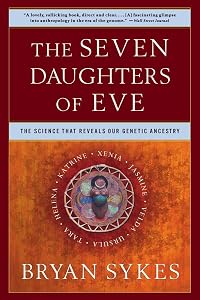
The Seven Daughters of Eve: The Science That Reveals Our Genetic Ancestry
by Bryan Sykes
On This Page
Description
One of the most dramatic stories of genetic discovery since James Watson's The Double Helix-a work whose scientific and cultural reverberations will be discussed for years to come. In 1994 Professor Bryan Sykes, a leading world authority on DNA and human evolution, was called in to examine the frozen remains of a man trapped in glacial ice in northern Italy. News of both the Ice Man's discovery and his age, which was put at over five thousand years, fascinated scientists and newspapers show more throughout the world. But what made Sykes's story particularly revelatory was his successful identification of a genetic descendant of the Ice Man, a woman living in Great Britain today. How was Sykes able to locate a living relative of a man who died thousands of years ago? In The Seven Daughters of Eve, he gives us a firsthand account of his research into a remarkable gene, which passes undiluted from generation to generation through the maternal line. After plotting thousands of DNA sequences from all over the world, Sykes found that they clustered around a handful of distinct groups. Among Europeans and North American Caucasians, there are, in fact, only seven. show lessTags
Recommendations
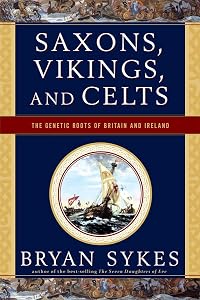
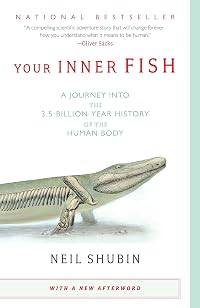
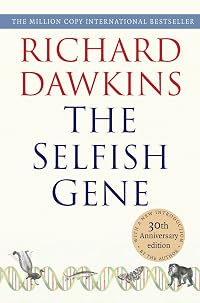
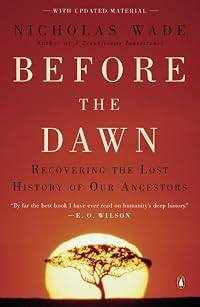
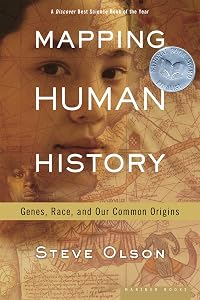
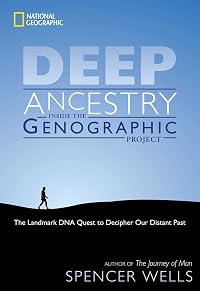
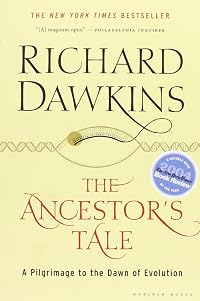
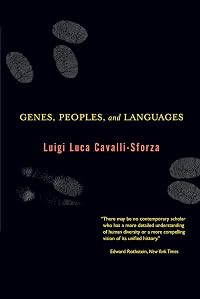
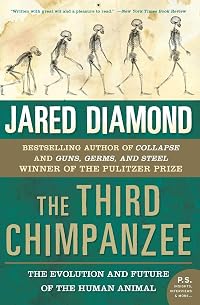
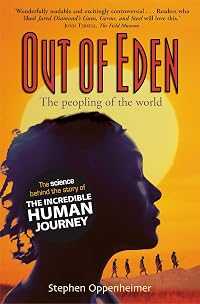
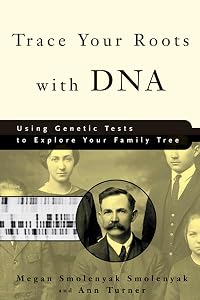
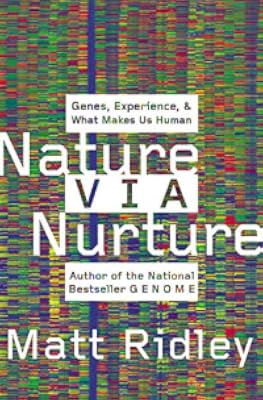

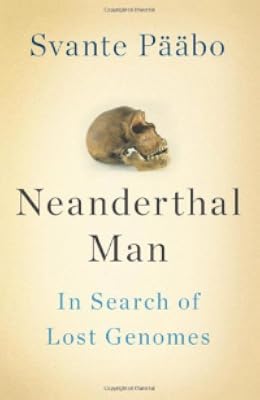
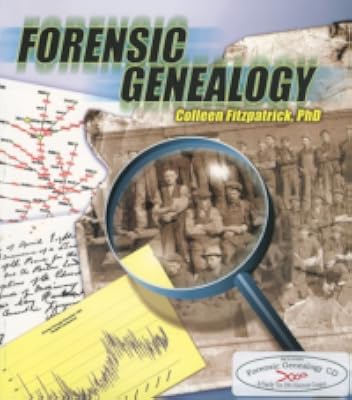
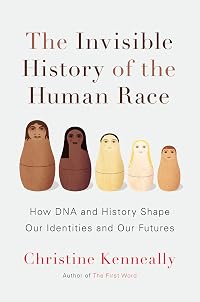
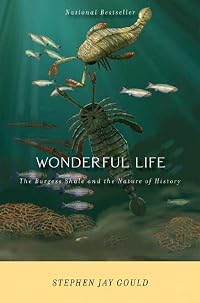



Member Recommendations
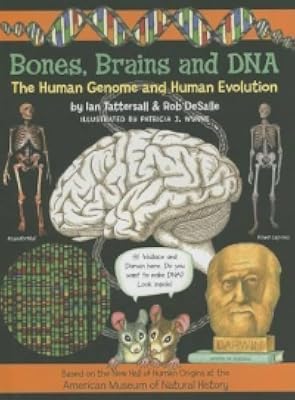
ed.pendragon Another attempt to de-mystify the science of genetics in relation to populations and languages, though on a worldwide basis.
30
Member Reviews
Sykes offers a readable account of his struggles to understand mitochrondrial DNA and his greater struggle to get his work accepted by his peers. Sykes is informative without succumbing to scientific dryness and succeeds in conveying his excitement and urgency as he completes each step in proving his theories about the ancestors of modern Europeans. In order for a scientist to keep her or his funding, he explains, it is necessary to publish research findings on a regular basis, preferably beating others to the punch. So, in addition to the usual ego involvements, competing and being the first to scramble to the finish line is necessary for professional survival. Sykes allowed these rivalries due notice, as they related to his work, show more without dwelling on them to the detriment of his main story. It's an interesting tale, intriguing at its root, with the connotation that all of modern humanity, all of genus homo sapiens, are descended from a single woman, whose daughters and chosen consorts have populated our entire planet in a brief 80,000 years. In his Acknowledgments, Sykes recognizes the work of others in his field who have contributed equally to the current accepted science. I would rather that information had been included in his first chapter where it would be more widely read, where the reader would, at the outset, understand that Sykes is one of a dozen or more scientists contributing to the DNA knowledge base that has made the "Out of Africa" theory the most widely accepted theory of modern mankind's beginnings. But then it's his book and his chance to toot his horn. show less
Now *this* is how a science book is supposed to be written, imo. ?áFocus on the explanation of the actual science - of the theory, of the experiments & tests, of the conclusions. ?áGo into history & personalities only enough to clarify what information you're trying to share. ?áWrite conversationally, but without forced wit. ?áI only wish that 1. this were newer 2. there was more known about the mitochondrial history of the world beyond Europe known at the time this was written, and 3. there was included a list of books recommended for further reading. ?áOf course, one of the strengths of this book is that it was published at exactly the right moment, only months after the theory was fully integrated with data that was made show more available as criticisms of the original release (to academia) were answered. ?áSo it's not the book's fault it's old; it's mine for not reading it sooner. ?áAnd even though it is old, it's still very much worth reading. ?á
Interestingly, I liked the first part of the book best. ?áThe title doesn't become directly relevant until about 2/3 through, when the author describes what the lives of each of these seven women may have been like. ?áToo many suppositions needed to be made, even though, of course, paleoanthropologists have some pretty good ideas that Sykes did use. ?áEven there, though, were some interesting ideas. ?áFor example, Jasmine's story includes an idea that may be relevant to understanding the Great Flood stories.
I particularly like the last chapter, A Sense of Self. ?áIn that chapter Sykes makes it finally fully clear how race is a myth, and how mitochondrial lineages work. ?áHis metaphor of the stage and the string is lovely. ?áIf you want to see whether you want to read the book, at least read that chapter. show less
Interestingly, I liked the first part of the book best. ?áThe title doesn't become directly relevant until about 2/3 through, when the author describes what the lives of each of these seven women may have been like. ?áToo many suppositions needed to be made, even though, of course, paleoanthropologists have some pretty good ideas that Sykes did use. ?áEven there, though, were some interesting ideas. ?áFor example, Jasmine's story includes an idea that may be relevant to understanding the Great Flood stories.
I particularly like the last chapter, A Sense of Self. ?áIn that chapter Sykes makes it finally fully clear how race is a myth, and how mitochondrial lineages work. ?áHis metaphor of the stage and the string is lovely. ?áIf you want to see whether you want to read the book, at least read that chapter. show less
I don’t often read about science, but the field of human evolution fascinates me. I find it almost impossible to imagine the sheer expanse of time that has passed between the development of the first modern humans and the present day. It makes my head hurt. Things that seem so important in everyday life suddenly dwindle into nothingness when confronted with the epic story of humanity. But, if you turn the question on its head, you realise that humans really haven’t been around that long at all compared to other species with much longer innings – the dinosaurs, obviously, but even our extinct cousins the Neanderthals. Keep thinking, though, because the really staggering thought is actually the most obvious. Every single one of us show more alive today has direct ancestors who learned to make fire, who hunted mammoths, who made flint knives. It wasn’t just our general species that descended from these people. You did. I did. If there was a way to trace your family tree back far enough, through the Ice Age and beyond, into a world that looked completely different to the one we know today – if that was possible, you could find out who your ancestors were. Well, it is possible. Bryan Sykes and his fellow geneticists have done it. And this is the story of their work...
For the full review, please see my blog:
https://theidlewoman.net/2019/12/14/the-seven-daughters-of-eve-brian-sykes/ show less
For the full review, please see my blog:
https://theidlewoman.net/2019/12/14/the-seven-daughters-of-eve-brian-sykes/ show less
Were Polynesian islands peopled by Asians or American Indians? Are the skeletons found at Iekaterinburg the ones of the Romanov family? Is Neanderthal really extincted or, does he have any descendants? What about the Europeans? Do they have Croc-Magnon for ancestor or, farmers coming from the Middle-East? Bryan Sykes tells us the discoveries made by genetics thanks to mitochondrial DNA, a bacteria passing from generation to generation through the maternal line only.
Enthusiast, he is like a kid in a sweetshop. His writing style for instance reflects very well his fascination and excitement -it is actually so accessible that, we sometimes have the feeling of reading a novel! This will be a bit puzzling to whose used to science books but, show more the others will thus find him easier to understand.
I just think the last chapters (the reconstitutions of the seven Eves' lives) are completely useless. I understand they are a very easy way of describing nomadic life, the birth of agriculture, the first villages and so on but, are such fictions not ridiculous in a non-fiction book? Why not using an Appendix? Well, as it is targeted for a very wide audience...
Still a good read. show less
Enthusiast, he is like a kid in a sweetshop. His writing style for instance reflects very well his fascination and excitement -it is actually so accessible that, we sometimes have the feeling of reading a novel! This will be a bit puzzling to whose used to science books but, show more the others will thus find him easier to understand.
I just think the last chapters (the reconstitutions of the seven Eves' lives) are completely useless. I understand they are a very easy way of describing nomadic life, the birth of agriculture, the first villages and so on but, are such fictions not ridiculous in a non-fiction book? Why not using an Appendix? Well, as it is targeted for a very wide audience...
Still a good read. show less
In 1994 Bryan Sykes examined the frozen remains of the Ice Man, found buried in glacial ice in northern Italy. From the DNA he was able to extract, he successfully linked the 5000 year old Ice Man to Europeans living today. This historic discovery set in motion years of research, testing, deliberation, setbacks, and surprises in the field of genetics, as Sykes and his team trudged forward in the (then) relatively new field of DNA testing. This amazing book tells the story of us all - how we are linked through our maternal genes to 7 pre-historic women, the mothers of the world. In fascinating and easily-understood detail, Sykes explains what DNA is and how it works in our bodies; how mitochondrial DNA, passed down to us from our show more mothers, can be used to extract the gene sequences that connect us uniquely to people with similar sequences; how these gene sequences can be used to support or to dispel archaeological debates; and how genetics has come to rival and to compliment the archaeological finds of both the past and the present.
Sykes does not present his evidence in a condescending or absolute manner - he freely admits that his discoveries are based upon what has been researched SO FAR, and that in the future, more research may shed a different light on our genetic ancestries. But it is pretty fascinating to read about how he proved that the Polynesians originated in Asia and not America - a long-debated point in archaeology and history; how he discovered that the pre-historic remains found in Cheddar Gorge, Great Britain, can be traced to a butler living on that same property today; how the study of thousands of European DNA sequences proved that farmers did not overtake and wipe out the hunter-gatherers, as was previously thought, but that these same hunter-gatherers eventually adopted the farming methods, over the years turning more and more to agriculture; how, among the thousands of DNA samples examined, not one (so far) has matched that of a Neanderthal, suggesting that these peoples were not our ancestors but a race of humans that died out; and how, after DNA from the executed Russian Imperial family was extracted and examined, Sykes discovered that he is genetically linked to Tsar Nicholas II.
This book is full of enthralling tidbits that capture the imagination. I never thought science could be so fun or so easily understood. There is so much information packed into these pages that reading them can get a little overwhelming, but a short break from the book will cure any stalling brain, and then it's right back to reading this intriguing information. And, seriously, where was this book when I was in high school "learning" all this stuff? It probably would have been a lot easier... show less
Sykes does not present his evidence in a condescending or absolute manner - he freely admits that his discoveries are based upon what has been researched SO FAR, and that in the future, more research may shed a different light on our genetic ancestries. But it is pretty fascinating to read about how he proved that the Polynesians originated in Asia and not America - a long-debated point in archaeology and history; how he discovered that the pre-historic remains found in Cheddar Gorge, Great Britain, can be traced to a butler living on that same property today; how the study of thousands of European DNA sequences proved that farmers did not overtake and wipe out the hunter-gatherers, as was previously thought, but that these same hunter-gatherers eventually adopted the farming methods, over the years turning more and more to agriculture; how, among the thousands of DNA samples examined, not one (so far) has matched that of a Neanderthal, suggesting that these peoples were not our ancestors but a race of humans that died out; and how, after DNA from the executed Russian Imperial family was extracted and examined, Sykes discovered that he is genetically linked to Tsar Nicholas II.
This book is full of enthralling tidbits that capture the imagination. I never thought science could be so fun or so easily understood. There is so much information packed into these pages that reading them can get a little overwhelming, but a short break from the book will cure any stalling brain, and then it's right back to reading this intriguing information. And, seriously, where was this book when I was in high school "learning" all this stuff? It probably would have been a lot easier... show less
A good introduction to the concept of mitochondrial Eve, and the women that became the founding mothers of Europeans. The author does a very good job of explaining his topic, so for all of those who incredulously greet the concept of the 7 mothers with, "Oh, yeah, like we can know that", my answer will be to read this book. He explains it clearly and lucidly, without a lot of technical jargon, so it's possible to understand just how we traced the lineages backward. He has some interesting stories about identifying the bodies of the Tsar and his family from remains found decades after the revolution. The main weak points of the book are the way he shorthands certain topics, important topics, that lead to misleading information. For show more instance, his work states that Watson and Crick discovered that DNA was the substance of inheritance, but in fact, that was not the case; they merely discovered the structure of DNA (important enough, but let's not rewrite history). Especially annoying was when he gave James Watson the credit for thinking up and performing crystallography on DNA to look at the compound - even Watson doesn't claim that, giving the credit somewhat grudgingly to Rosalind Franklin. One other wholly annoying part of the book was when he constructed fictional histories for the 7 women, creating parents, husbands, and children for them out of whole cloth. There are ways to present this sort of information in an interesting way without resorting to such total fiction, totally out of place in a non-fiction work. It was also interesting that, with one exception, his women's histories all met the standards of acceptable moral behavior among modern, 21st century Europeans (and the one soon corrected her behavior, and began to lead a good Christian life, god rest her soul). This grated. Who's to say our ancestors were so good, so kind, and so intelligent? Is it not possible that at least one of them could have been a thief? A murderer? A prostitute? C'mon, give me a break! Other than that, a good, solid work that should be read widely by those who have preferred not to understand how we know the things we know. show less
Bryan Sykes made several breakthroughs in the extraction of DNA from ancient remains and in the use of mitochondrial DNA to map human origins. While this book is no longer at the cutting edge of genetic research, it retains its value as historical documentation of genetic research. This book won't add names to the branches of your family tree, but it will help you think about the ancient past and your connection to it. Of course, there are always exceptions. I learned that Sykes belongs to mitochondrial haplogroup T. I also belong to haplogroup T, which means that Sykes and I share a common maternal ancestor within the last 17,000 years.
Members
- Recently Added By
Lists

Best Science Books for Non-Scientists
113 works; 57 members

For Science!
39 works; 5 members

Books Read in 2016
4,666 works; 199 members

Books Read in 2024
4,727 works; 128 members

Works Cited in The History of White People by Nell Irvin Painter
321 works; 2 members
Author Information

8 Works 3,771 Members
Bryan Sykes is professor of genetics at the Institute of Molecular Medicine at Oxford University & was the editor of "The Human Inheritance: Genes, Language, & Evolution". (Bowker Author Biography)
Awards and Honors
Common Knowledge
- Canonical title
- The Seven Daughters of Eve: The Science That Reveals Our Genetic Ancestry
- Original title
- The Seven Daughters of Eve
- Original publication date
- 2001
- Dedication
- To my mother
- First words
- Where do I come from?
- Last words
- (Click to show. Warning: May contain spoilers.)Not 'just a chemical' after all, but the most precious of gifts.
Classifications
- Genres
- Anthropology, Science & Nature, General Nonfiction, Nonfiction, History
- DDC/MDS
- 599.935 — Natural sciences & mathematics Animals Mammals Homo sapiens Genetics, sex and age characteristics, evolution Genetics
- LCC
- GN289 .S94 — Geography, Anthropology and Recreation Anthropology Anthropology Physical anthropology. Somatology Human evolution
- BISAC
Statistics
- Members
- 2,090
- Popularity
- 9,918
- Reviews
- 35
- Rating
- (3.86)
- Languages
- 12 — Dutch, English, French, German, Hebrew, Hungarian, Italian, Japanese, Norwegian (Bokmål), Portuguese, Spanish, Swedish
- Media
- Paper, Audiobook, Ebook
- ISBNs
- 32
- UPCs
- 1
- ASINs
- 9