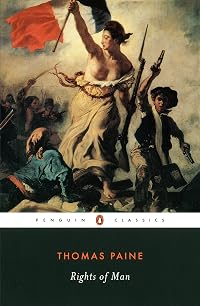
Rights of Man
by Thomas Paine
On This Page
Description
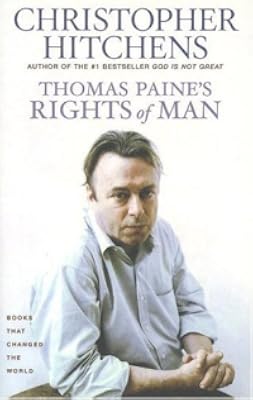
Written in a fit of pique brought about by Edmund Burke's blistering attack of the French Revolution, Paine's The Rights of Man has come to be regarded as one of the most important works in the realm of Western political philosophy. In it, Paine contends that some rights that are granted through natural law, rather than by governments or constitutions. A must-read for those interested in politics, philosophy, and the intersection of the two..
Tags
Recommendations
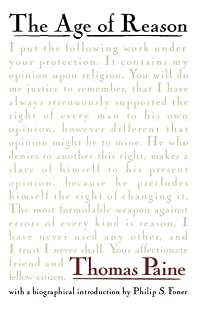














Member Recommendations

Member Reviews
RIGHTS OF MAN:
Dedicated to George Washington, the president of a nation he had encouraged the independence with fervour (seeing in its struggle the triumph of 'natural rights' over the tyranny of a monarchy) 'The Rights of Man' by Thomas Paine is in fact a criticism of 'Reflection on the Revolution in France' by Edmund Burke, published the previous year in 1790.
The thing is, unlike Burke defending a traditional order monarchy-nobility-clergy, Paine, on the contrary, encourages its overthrown to replace it by a representative democracy. As such, he therefore supports the French Revolution, with which he will distances himself only after the execution of Louis XVI.
The title says it all: unlike Burke, he perfectly understood that beyond show more an economic crisis and the violent events it triggered, here was in fact the triumph of a new political ideal, whereas citizens reclaimed their 'natural rights' then denied under an absolutist regime. It's about the sovereignty of the people, incarnated by a government defending the rights of all of its citizens, and overthrowing society as viewed by Burke and his followers that is, where sovereignty is held into the hands of a king, supported by an hereditary aristocracy, and justified by the 'superstitions' of a Church more concerned with its own vested interests than that of its common believers.
Thomas Paine, even, dares going further. Where Burke and the anti-revolutionaries worried about the future of the nobility and the clergy, he remained concerned solely with that of whose oppressed by the Old Regime: the poor. He proposes in fact a whole set of policies, from the education of children to the implementation of pensions for whose unable to sustain themselves, which are striking to read even nowadays!
You bet, anti-monarchist, mocking the idea that a government should be hereditary, a firm supporter of 'natural rights' and representative democracy, and a radical reformer, this 'Rights Of Man' is a punch in the face knocking even the British monarchy! The book, in fact, will be censored, and the author, judged in absentia, will seek refuge in France...
COMMON SENSE:
Following two failed marriages and a chaotic professional life leading him nowhere, Thomas Paine decided, in 1774, to leave England and go to America. This will turn out to be a wise decision; not only it will transform its life, but, also, offer us a great thinker at a time when America is at the throat of an independentist war.
Jumping into the debates, Thomas Paine does more that displaying all the arguments for politically burning the bridges with Europe. In order to better denounce British oppression, he attacks the foundations of the monarchy itself, hereditary and supported by a self-interested aristocracy. Going further, he even draft a new Constitution -a 'Continental Chart'. If the American government shouldn't be tied to a European monarchy, he shouldn't become a monarchy itself...
Published anonymously in Philadelphia back in 1776, 'Common Sense' is a radical pamphlet which will make its author famous (infamous?) on both sides of the Atlantic. Its impact and consequences, in fact, will be major -barely six months after its publication, the Declaration of Independence was proclaimed. After all, wasn't the cause of the American people, a people concerned about its 'natural rights' in the face of the oppression from a foreign monarchy, the cause, also, of humanity as a whole? France, for example, had then only little more than a decade to wait before delivering to the world its own revolution.... show less
Dedicated to George Washington, the president of a nation he had encouraged the independence with fervour (seeing in its struggle the triumph of 'natural rights' over the tyranny of a monarchy) 'The Rights of Man' by Thomas Paine is in fact a criticism of 'Reflection on the Revolution in France' by Edmund Burke, published the previous year in 1790.
The thing is, unlike Burke defending a traditional order monarchy-nobility-clergy, Paine, on the contrary, encourages its overthrown to replace it by a representative democracy. As such, he therefore supports the French Revolution, with which he will distances himself only after the execution of Louis XVI.
The title says it all: unlike Burke, he perfectly understood that beyond show more an economic crisis and the violent events it triggered, here was in fact the triumph of a new political ideal, whereas citizens reclaimed their 'natural rights' then denied under an absolutist regime. It's about the sovereignty of the people, incarnated by a government defending the rights of all of its citizens, and overthrowing society as viewed by Burke and his followers that is, where sovereignty is held into the hands of a king, supported by an hereditary aristocracy, and justified by the 'superstitions' of a Church more concerned with its own vested interests than that of its common believers.
Thomas Paine, even, dares going further. Where Burke and the anti-revolutionaries worried about the future of the nobility and the clergy, he remained concerned solely with that of whose oppressed by the Old Regime: the poor. He proposes in fact a whole set of policies, from the education of children to the implementation of pensions for whose unable to sustain themselves, which are striking to read even nowadays!
You bet, anti-monarchist, mocking the idea that a government should be hereditary, a firm supporter of 'natural rights' and representative democracy, and a radical reformer, this 'Rights Of Man' is a punch in the face knocking even the British monarchy! The book, in fact, will be censored, and the author, judged in absentia, will seek refuge in France...
COMMON SENSE:
Following two failed marriages and a chaotic professional life leading him nowhere, Thomas Paine decided, in 1774, to leave England and go to America. This will turn out to be a wise decision; not only it will transform its life, but, also, offer us a great thinker at a time when America is at the throat of an independentist war.
Jumping into the debates, Thomas Paine does more that displaying all the arguments for politically burning the bridges with Europe. In order to better denounce British oppression, he attacks the foundations of the monarchy itself, hereditary and supported by a self-interested aristocracy. Going further, he even draft a new Constitution -a 'Continental Chart'. If the American government shouldn't be tied to a European monarchy, he shouldn't become a monarchy itself...
Published anonymously in Philadelphia back in 1776, 'Common Sense' is a radical pamphlet which will make its author famous (infamous?) on both sides of the Atlantic. Its impact and consequences, in fact, will be major -barely six months after its publication, the Declaration of Independence was proclaimed. After all, wasn't the cause of the American people, a people concerned about its 'natural rights' in the face of the oppression from a foreign monarchy, the cause, also, of humanity as a whole? France, for example, had then only little more than a decade to wait before delivering to the world its own revolution.... show less
Paine was a freaking genius! I admire him so much -- his life, his writings, his damn brain. He's one of the few from the past that I would pay a fortune for to sit down for a drink with him and just chat, pick his pray, engage, learn. No longer given enough credit these days, but one of the most influential men of his period, ironically more for the US than for France. This is an excellent treatise and if you've not read it, or his other works, by all means, please do!
The French Revolution brought about various reactions across the Channel in Britain, especially after the war in America however the split between English supporters of the American cause in-between supporters and reactionaries against the French Revolution brought about one of the most famous counterrevolution pamphlets of all time and then came the response. Rights of Man by Thomas Paine is a series of essays first to counter Edmund Burke’s Reflections on the Revolution in France and then to propose reforms of the English government.
The first part of the book directly answers Burke’s counter-revolution argument with Paine positing that popular revolution is permissible when a government does not safeguard the natural rights of its show more people. The defense of the French Revolution is expertly done by Paine then he highlights and counters what he perceives to be the weakness of Burke’s argument of hereditary wisdom by the assertion—with examples—of how wisdom does not translate from one generation to another in a monarchy so how could it do so in a whole class. The second part of Paine’s book, which was published a year later than the first, is where the essays start deviating from the defending the French Revolution which was the premise to reforming the English government. While some of Paine’s thoughts and ideas are good, his delving into tax policy and the like it’ll made me wonder why I’m reading Wealth of Nations again. Admittedly I didn’t read Burke’s Reflections before reading Paine, a major oversight, but given that Paine awaited Burke’s response while dismissing lesser writers’ efforts to counter his initial publication—during the time between Parts 1 and 2—I will assume that Paine accurately portrayed Burke’s thesis. Given this assumption, Part 1 is a well written rebuttal to Burke and good defense of the ideals of the early French Revolution. However, the second half of the book and its essays touching on a wide range of subjects that Paine attempts to connect with his theme in an effort to advocate a reform to English system of government to be more like the American republican and French constitutional monarchy forms that the late 18th Century Revolutions had produced to that point, is where things feel scattered and the thrust of Paine’s arguments slacken. Yet, one can’t deny Paine’s way with words especially in defense of causes he believes in.
Rights of Man by Thomas Paine is a defense of the ideals of the early French Revolution against counter-revolutionary arguments by reactionary aristocratic defenders of the “status quo”, when focused it’s very good reading. show less
The first part of the book directly answers Burke’s counter-revolution argument with Paine positing that popular revolution is permissible when a government does not safeguard the natural rights of its show more people. The defense of the French Revolution is expertly done by Paine then he highlights and counters what he perceives to be the weakness of Burke’s argument of hereditary wisdom by the assertion—with examples—of how wisdom does not translate from one generation to another in a monarchy so how could it do so in a whole class. The second part of Paine’s book, which was published a year later than the first, is where the essays start deviating from the defending the French Revolution which was the premise to reforming the English government. While some of Paine’s thoughts and ideas are good, his delving into tax policy and the like it’ll made me wonder why I’m reading Wealth of Nations again. Admittedly I didn’t read Burke’s Reflections before reading Paine, a major oversight, but given that Paine awaited Burke’s response while dismissing lesser writers’ efforts to counter his initial publication—during the time between Parts 1 and 2—I will assume that Paine accurately portrayed Burke’s thesis. Given this assumption, Part 1 is a well written rebuttal to Burke and good defense of the ideals of the early French Revolution. However, the second half of the book and its essays touching on a wide range of subjects that Paine attempts to connect with his theme in an effort to advocate a reform to English system of government to be more like the American republican and French constitutional monarchy forms that the late 18th Century Revolutions had produced to that point, is where things feel scattered and the thrust of Paine’s arguments slacken. Yet, one can’t deny Paine’s way with words especially in defense of causes he believes in.
Rights of Man by Thomas Paine is a defense of the ideals of the early French Revolution against counter-revolutionary arguments by reactionary aristocratic defenders of the “status quo”, when focused it’s very good reading. show less
This book is a classic of democratic theory, of rights theory, and more importantly, of American political thought. Written in the context of the American & French revolutions, and speaking so forcefully against the corruption of political power as to cause its author to be tried & convicted in absentia of seditious libel in England, this book ought to be read by any person who values their civil liberties and has enough experience in the world to recognize their slowly dwindling status in the contemporary political landscape.
Paine was a masterful writer, who successfully blended rhetoric, wit, and philosophy to create a treatise which is both forceful and easily accessible to the lay person. Large chunks of this book are devoted to a show more personal fued between Mr. Paine and Edmund Burke of England, and so the writing tends to go off on tangents at times - however, even those asides addressed to Mr. Burke are brilliantly written and worth the reading if only for the chuckles they elicit. In terms of its theoretical value, Rights of Man cannot be over-praised. This ambitious work sets out to:
- explain the evolution of civil rights out of natural;
- vindicate the contract theory of political authority;
- exterpate the British aristocracy while defending the motivations behind the French Revolution;
- explain and defend the necessity of a constitution to any legitimate, ongoing state;
- highlight the corruption inherent to the pairing of money and political power (a section of the book which bears particular relevance to today's political scene); and
- defend a conception of the state that is minimal in both military might and taxation of the middle and lower classes, in favor of a peaceful coexistence with rival states.
The present political context only adds value to this classic of political thought. A true masterpiece, it has only matured in its wisdom and insight since its writing more than 200 years ago.
A note about this edition (Citadel Press, with a biographical introduction by Philip Foner):
I loved the biographical intro in this edition. It was well-written, and illuminated quite a bit of Paine's history that I was woefully uninformed about. Get your hands on this copy, if you can find it. show less
Paine was a masterful writer, who successfully blended rhetoric, wit, and philosophy to create a treatise which is both forceful and easily accessible to the lay person. Large chunks of this book are devoted to a show more personal fued between Mr. Paine and Edmund Burke of England, and so the writing tends to go off on tangents at times - however, even those asides addressed to Mr. Burke are brilliantly written and worth the reading if only for the chuckles they elicit. In terms of its theoretical value, Rights of Man cannot be over-praised. This ambitious work sets out to:
- explain the evolution of civil rights out of natural;
- vindicate the contract theory of political authority;
- exterpate the British aristocracy while defending the motivations behind the French Revolution;
- explain and defend the necessity of a constitution to any legitimate, ongoing state;
- highlight the corruption inherent to the pairing of money and political power (a section of the book which bears particular relevance to today's political scene); and
- defend a conception of the state that is minimal in both military might and taxation of the middle and lower classes, in favor of a peaceful coexistence with rival states.
The present political context only adds value to this classic of political thought. A true masterpiece, it has only matured in its wisdom and insight since its writing more than 200 years ago.
A note about this edition (Citadel Press, with a biographical introduction by Philip Foner):
I loved the biographical intro in this edition. It was well-written, and illuminated quite a bit of Paine's history that I was woefully uninformed about. Get your hands on this copy, if you can find it. show less
Written during the era of the French Revolution, this book was one of the first to introduce the concept of human rights from the standpoint of democracy. The Rights of Man was actually published as a direct response to a piece written by Edmund Burke attacking the French Revolution. Paine’s book focuses on the positives of that revolution and why it was necessary.
I think it’s important to learn more about the conversation that was happening when our nation was being developed. We were building something from scratch, but we were being influenced by everything that was happening in the countries around us.
“If there is a country in the world where concord, according to common calculation, would be least expected, it is America. show more Made up as it is of people from different nations, accustomed to different forms and habits of government, speaking different languages, and more different in their modes of worship, it would appear that the union of such a people was impracticable; but by the simple operation of constructing government on the principles of society and the rights of man, every difficulty retires, and all the parts are brought into cordial unison. There the poor are not oppressed, the rich are not privileged. Industry is not mortified by the splendid extravagance of a court rioting at its expense. Their taxes are few, because their government is just: and as there is nothing to render them wretched, there is nothing to engender riots and tumults.”
The core argument in the book rings true. A government’s job should be to protect the rights of its people. It’s not the government’s job to create those rights, only to protect them. Paine argues that the more power a government has the more it takes away the rights of its people, the opposite of what it’s supposed to do. He argues that because man is inherently evil, he will default to evil when given too much power.
BOTTOM LINE: Not a book I’d reread for fun, but one that I think it is important to read. Understanding the decisions that were made when your nation was created helps you understand many of the conversations currently happening in our country.
“Independence is my happiness, and I view things as they are, without regard to place or person; my country is the world, and my religion is to do good.” show less
I think it’s important to learn more about the conversation that was happening when our nation was being developed. We were building something from scratch, but we were being influenced by everything that was happening in the countries around us.
“If there is a country in the world where concord, according to common calculation, would be least expected, it is America. show more Made up as it is of people from different nations, accustomed to different forms and habits of government, speaking different languages, and more different in their modes of worship, it would appear that the union of such a people was impracticable; but by the simple operation of constructing government on the principles of society and the rights of man, every difficulty retires, and all the parts are brought into cordial unison. There the poor are not oppressed, the rich are not privileged. Industry is not mortified by the splendid extravagance of a court rioting at its expense. Their taxes are few, because their government is just: and as there is nothing to render them wretched, there is nothing to engender riots and tumults.”
The core argument in the book rings true. A government’s job should be to protect the rights of its people. It’s not the government’s job to create those rights, only to protect them. Paine argues that the more power a government has the more it takes away the rights of its people, the opposite of what it’s supposed to do. He argues that because man is inherently evil, he will default to evil when given too much power.
BOTTOM LINE: Not a book I’d reread for fun, but one that I think it is important to read. Understanding the decisions that were made when your nation was created helps you understand many of the conversations currently happening in our country.
“Independence is my happiness, and I view things as they are, without regard to place or person; my country is the world, and my religion is to do good.” show less
I know that this is a classic, and I should be waxing lyrical about it, particularly as my politics tend to the socialist, BUT, the thing that strikes me most with this book is the naivety. We twenty-first century beings are too World weary to accept that ANY system of government is going to lead to the promised land, let alone this dated set of pie in the sky doctrines.
Paine's main tenet is that less is best on the government front and, whilst I do anguish about some of the nanny knows best mentality of the UK at the moment, it is also painfully true that a sort yourselves out approach only leads to the fittest crushing the minnows.
I also found the constant sniping at Mr. Burke tedious: Paine does not need to decry an alternative show more viewpoint, just give us his own.
I really expected to be uplifted by this work but failed to learn much of anything from its pages (I leave others to decide if this was due to my stupidity or the more streetwise attitudes of the present day). show less
Paine's main tenet is that less is best on the government front and, whilst I do anguish about some of the nanny knows best mentality of the UK at the moment, it is also painfully true that a sort yourselves out approach only leads to the fittest crushing the minnows.
I also found the constant sniping at Mr. Burke tedious: Paine does not need to decry an alternative show more viewpoint, just give us his own.
I really expected to be uplifted by this work but failed to learn much of anything from its pages (I leave others to decide if this was due to my stupidity or the more streetwise attitudes of the present day). show less
Thomas Paine's the Rights of Man is a classic political treatise that defends natural rights in plain, clear, and occasionally funny English. The first part of Rights of Man is a classical liberal defence of the French Revolution and a determined rebuke of Edmund Burke's "Reflections on the Revolution in France." The second part of Rights of Man is a manifesto of political radicalism, split 1/3 of Paine's objection to hereditary government and 2/3 his scheme for a prototypical social welfare state. While I found myself agreeing with Paine more than I disagreed, I think readers should keep in mind that whether we agree with him or not his republican visions have helped to shape modern democratic government. In terms of relevance, to show more understand the foundations of the modern state we must look back at its genesis with Hobbes, Locke, Montesquieu, Rousseau, J. S. Mill, and Thomas Paine. show less
Members
- Recently Added By
Lists

100 Books to Read in a Lifetime (That Are Older Than 200 Years)
415 works; 175 members

Libertarian Books
102 works; 19 members

The Telegraph's 110 Best Books: The Perfect Library
101 works; 18 members
Philip Ward's Lifetime Reading Plan
592 works; 22 members

CCE 100 Great Books List
145 works; 8 members

essential pol.phil
17 works; 1 member

1964 College Preparatory Reading List
202 works; 8 members

Greatest Books, allegedly
484 works; 9 members

Philosophy, Politics and Economics
61 works; 1 member

BitLife
212 works; 4 members

Recommended Reading : 600 Classics Reviewed, Editors of Salem Press, 2015
634 works; 6 members

Book Titles Mentioned In Newberry Medal And Honor Books
884 works; 3 members

Books Read in 2025
4,091 works; 97 members

Works Cited in The Life and Death of Democracy by John Keane
278 works; 1 member
Author Information

208+ Works 17,405 Members
Born to parents with Quaker leanings, Thomas Paine grew up amid modest circumstances in the rural environs of Thetford, England. As the recipient of what he termed "a good moral education and a tolerable stock of useful learning," little in Paine's early years seemed to suggest that he would one day rise to a stunning defense of American show more independence in such passionate and compelling works as Common Sense (1776) and The American Crisis essays (1776-83). Paine's early years were characterized by a constant struggle to remain financially solvent while pursuing a number of nonintellectual activities. Nevertheless, the young Paine read such Enlightenment theorists as Isaac Newton and John Locke and remained dedicated to the idea that education was a lifelong commitment. From 1753 to 1759, Paine worked alternately as a sailor, a staymaker, and a customs officer. Between 1759 and 1772, he married twice. His first wife died within a year of their marriage, and Paine separated amicably from his second wife after a shop they operated together went bankrupt. While these circumstances seemed gloomy, Paine fortuitously made the acquaintance of Benjamin Franklin in London in 1773. Impressed by Paine's self-education, Franklin encouraged the young man to venture to America where he might prosper. Arriving in Philadelphia in 1774, Paine quickly found himself energized by the volatile nature of Revolutionary politics. Working as an editor of Pennsylvania Magazine, Paine found a forum for his passionate radical views. In the years that followed, Paine became increasingly committed to American independence, and to his conviction that the elitist and corrupt government that had ruled over him in England had little business extending its corrosive colonial power to the States. Moved by these beliefs, Paine published Common Sense (1776), a test that proved invaluable in unifying American sentiment against British rule. Later, after joining the fray as a soldier, Paine penned the familiar lines in "The American Crisis": "These are the times that try men's souls." Fifteen years later, Paine wrote his other famous work, Rights of Man (1791). Drawing on his eclectic experiences as a laborer, an international radical politician, and a revolutionary soldier, Paine asserted his Lockeian belief that since God created humans in "one degree only," then rights should be equal for every individual. (Bowker Author Biography) show less
Some Editions
Awards and Honors
Series
Belongs to Publisher Series
Pelican Classics (AC11)
Work Relationships
Is contained in
Is a reply to
Common Knowledge
- Canonical title
- Rights of Man
- Original title
- Rights of man
- Alternate titles*
- Théorie et pratique des droits de l’homme
- Original publication date
- 1791; 1792
- People/Characters
- Edmund Burke
- Important places
- Paris, France
- Important events
- French Revolution (1789)
- Dedication
- To GEORGE WASHINGTON, President of the United States of America
Sir, I present you a small Treatise in defence of those Principles of Freedom which your exemplary Virtue hath so eminently contributed to establish. - That t... (show all)he Rights of Man may become as universal as your Benevolence can wish, and that you may enjoy the Happiness of seeing the New World regenerate the Old, is the prayer of
Sir, Your much obliged, and Obedient humble Servant, THOMAS PAINE - First words
- Among the incivilities by which nations or individuals provoke and irritate each other, Mr Burke's pamphlet on the French Revolution is an extraordinary instance.
- Original language
- English
*Some information comes from Common Knowledge in other languages. Click "Edit" for more information.
Classifications
- Genres
- Politics and Government, Nonfiction, General Nonfiction, History, Philosophy
- DDC/MDS
- 320.5 — Society, government, & culture Political science Types of Government Political ideologies
- LCC
- JC177 .B3 — Political Science Political theory Political theory. The state. Theories of the state Modern state Thomas Paine
- BISAC
Statistics
- Members
- 2,667
- Popularity
- 6,980
- Reviews
- 17
- Rating
- (4.00)
- Languages
- 10 — Danish, Dutch, English, French, Hungarian, Italian, Portuguese, Spanish, Swedish, Turkish
- Media
- Paper, Audiobook, Ebook
- ISBNs
- 132
- UPCs
- 2
- ASINs
- 72