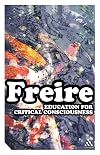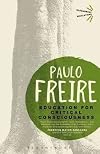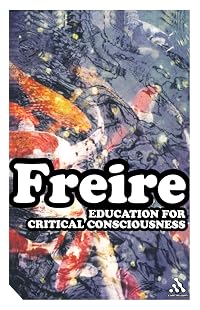
Education for Critical Consciousness
by Paulo Freire
On This Page
Description
"Famous for his advocacy of 'critical pedagogy', Paulo Freire was Latin America's foremost educationalist, a thinker and writer whose work and ideas continue to exert enormous influence in education throughout the world today. Education for Critical Consciousness is the main statement of Freire's revolutionary method of education. It takes the life situation of the learner as its starting point and the raising of consciousness and the overcoming of obstacles as its goals. For Freire, man's show more striving for his own humanity requires the changing of structures which dehumanize both the oppressor and the oppressed" show lessTags
Recommendations
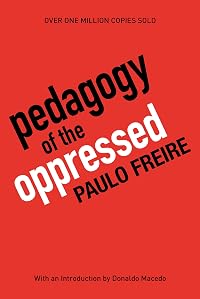
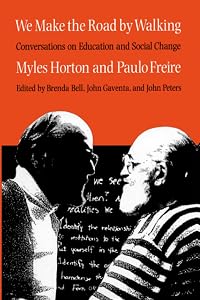
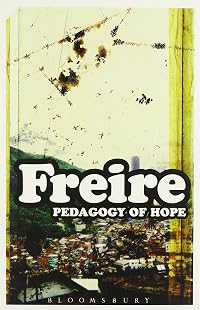
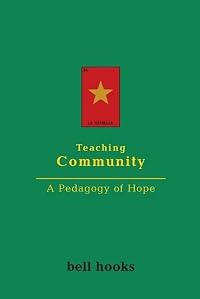





Member Reviews
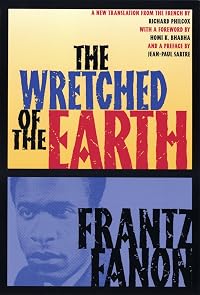
Born to middle class parents in Recife, Brazil, Freire knew poverty and hunger during the Great Depression, an experience that would shape his concern for the poor and his view on education. Paulo Freire contributes a philosophy of education that comes not only from the more classical approaches stemming from Plato, but also from modern Marxist and anti-colonialist thinkers. In fact, in many ways his Pedagogy of the Oppressed may best be read as an extension of or reply to Frantz Fanon's The Wretched of the Earth, which laid strong emphasis on the need to provide native populations with an education which was simultaneously new and modern (rather than traditional) and anti-colonial (that is, that was not simply an extension of the show more culture of the colonizer).
This 164-page book includes two essays by Paolo Freire, the man who introduced the problem-posing technique of popular education to the United States. The essays are Education as the Practice of Freedom and Extension or Communication. The first essay is about Friere's work in Brazil with "illiterates," that explains his process of using "culture circles" and "generative words" instead of the traditional teacher-led learning processes to teach adult literacy. Crucial to his work is the idea of teaching people to have a "critical attitude" toward the world, so that they can make sense of their world and find ways to change it or take action. Included in the appendix are the drawings he used in his "culture circles" and the 17 "generative words" for his work with peasants in Brazil. While the prose can be dense, it presents the origins of the popular education or participatory education techniques which have worked so well in the United States with teaching health in literacy settings. show less
This 164-page book includes two essays by Paolo Freire, the man who introduced the problem-posing technique of popular education to the United States. The essays are Education as the Practice of Freedom and Extension or Communication. The first essay is about Friere's work in Brazil with "illiterates," that explains his process of using "culture circles" and "generative words" instead of the traditional teacher-led learning processes to teach adult literacy. Crucial to his work is the idea of teaching people to have a "critical attitude" toward the world, so that they can make sense of their world and find ways to change it or take action. Included in the appendix are the drawings he used in his "culture circles" and the 17 "generative words" for his work with peasants in Brazil. While the prose can be dense, it presents the origins of the popular education or participatory education techniques which have worked so well in the United States with teaching health in literacy settings. show less
Ratings
Members
- Recently Added By
Author Information

153+ Works 8,626 Members
Paulo Freire (1921-1997) was one of the most significant educational thinkers of the 20th century. He is the author of Education for Critical Consciousness, Pedagogy in Process, Pedagogy of Hope, Pedagogy of the City, and Pedagogy of the Heart, all published by Bloomsbury.
Series
Belongs to Publisher Series
Classifications
- Genres
- Sociology, Nonfiction, General Nonfiction, Philosophy
- DDC/MDS
- 370.19098 — Society, government, & culture Education Education Theory of education; Meaning; Aim Social themes
- LCC
- LC191.8 .L29 .F74 — Education Special aspects of education Special aspects of education Social aspects of education Educational sociology
- BISAC
Statistics
- Members
- 406
- Popularity
- 76,750
- Reviews
- 1
- Rating
- (3.97)
- Languages
- English
- Media
- Paper, Audiobook, Ebook
- ISBNs
- 16
- ASINs
- 5