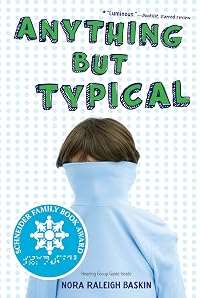
Anything But Typical
by Nora Raleigh Baskin
On This Page
Description
Jason, a twelve-year-old autistic boy who wants to become a writer, relates what his life is like as he tries to make sense of his world.Tags
Recommendations






















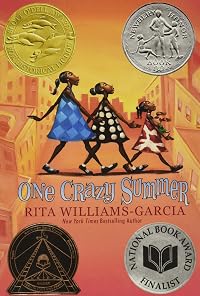
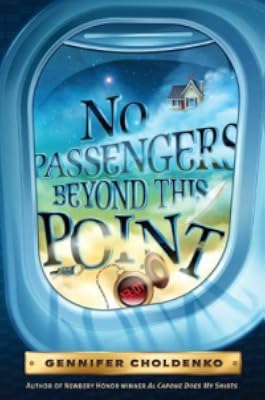
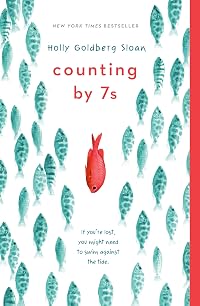
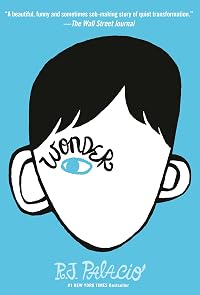








Member Recommendations
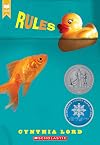
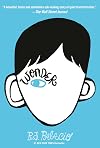
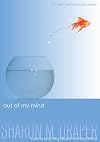
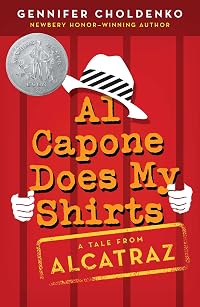
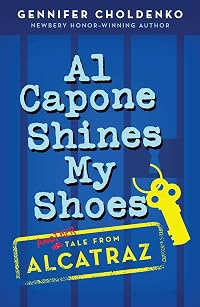
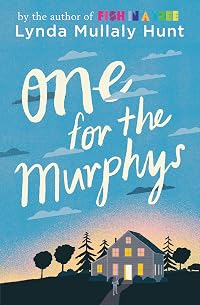
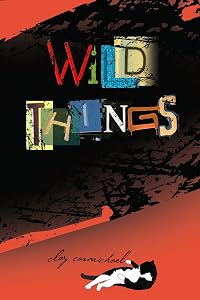
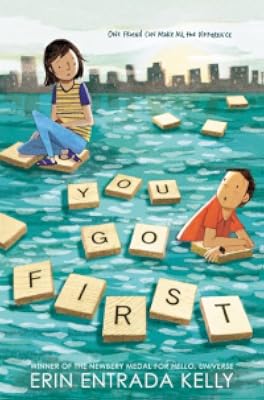
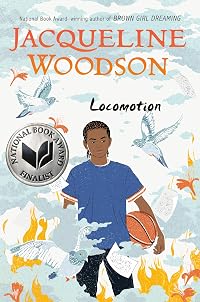
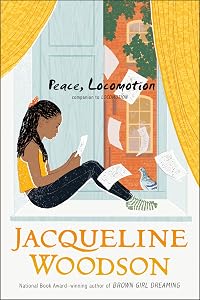
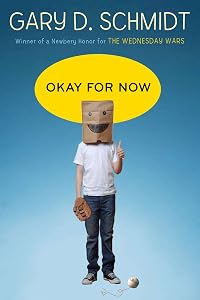
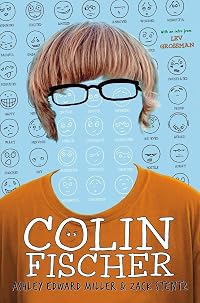
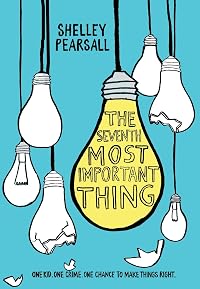
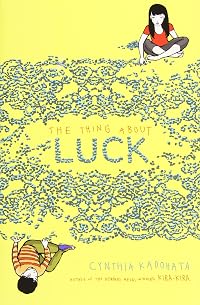
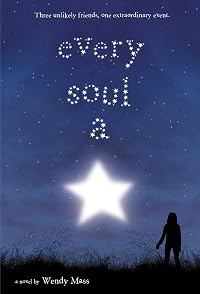
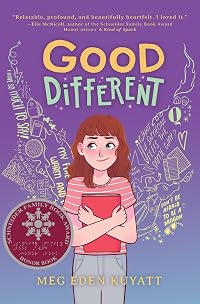
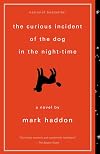
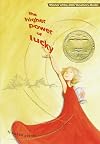
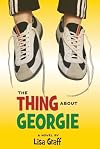
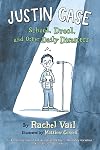
BookshelfMonstrosity Struggling in communities that do not view them positively, the two unique characters in these novels strive for friendship and acceptance. These realistic stories are at times sad but are ultimately hopeful.
by anonymous user
Member Reviews
Narrated by twelve-year-old Jason Blake, an autistic boy "living in a neurotypical world," this humorous and heart-breaking book offers young readers a brief glimpse of life through the eyes of someone who doesn't always know how to interpret the words and actions of the people around him, or how to respond to them, but who - in his own way - understands them all too well. When so many things in his life are such a struggle - when everything from recognizing who people are (certain facial types tend to look all alike, and context becomes everything) to remembering to breathe during stressful situations, can be so difficult - Jason's writing, his stories, which he posts to the Storyboard website, are his retreat from a hurtful world. show more When he makes a friend - a friend who is a girl! - on the site, he thinks that Phoenixbird (real name: Rebecca) may be his first girlfriend. But then he discovers that his parents are planning to take him to a Storyboard convention, where Rebecca will also be in attendance - where Rebecca will see who he really is - and his carefully separated worlds collide...
I know very little of Autism myself, and therefore feel at something of a loss, when it comes to analyzing the authenticity of Baskin's depiction of an autistic boy's view of the world. Friends who are better informed seem to find it convincing, and I myself felt that I was reading something from a perspective I had never encountered before. Jason's musings about the people around him - how they say one thing, but really mean another; how they associate eye-contact with listening, when the two having nothing to do with one another; how they edge away from him, while pretending not to - are so well observed, and so poignant. The conclusion of the plot-line involving Rebecca is not all happiness and light, which I really respected, but the book does not end on a gloomy note either: I appreciated the fact that Jason decides to continue writing, inspired by Hamilton. I don't know that I would ever have picked up Anything But Typical on my own, so I'm grateful that it was chosen for the Children's Fiction Book-Club to which I belong, as I ended up really enjoying it. It's an engaging story, one that emphasizes both the unique experience of being autistic, and the common life experiences and emotions that autistic children share with everyone else. Highly recommended! show less
I know very little of Autism myself, and therefore feel at something of a loss, when it comes to analyzing the authenticity of Baskin's depiction of an autistic boy's view of the world. Friends who are better informed seem to find it convincing, and I myself felt that I was reading something from a perspective I had never encountered before. Jason's musings about the people around him - how they say one thing, but really mean another; how they associate eye-contact with listening, when the two having nothing to do with one another; how they edge away from him, while pretending not to - are so well observed, and so poignant. The conclusion of the plot-line involving Rebecca is not all happiness and light, which I really respected, but the book does not end on a gloomy note either: I appreciated the fact that Jason decides to continue writing, inspired by Hamilton. I don't know that I would ever have picked up Anything But Typical on my own, so I'm grateful that it was chosen for the Children's Fiction Book-Club to which I belong, as I ended up really enjoying it. It's an engaging story, one that emphasizes both the unique experience of being autistic, and the common life experiences and emotions that autistic children share with everyone else. Highly recommended! show less
Jason is twelve and he is autistic. He writes this story as well as he can so that non-autistic people, neurotypicals, can understand it. It's interesting to see what it is like for Jason to be autistic, but it's just as interesting to read all the true statements he makes about neurotypicals that a lot of people never really talk about. Like how most neurotypicals seem to have a lot of trouble listening and saying what they mean - and why do neurotypicals say so much without meaning anything? Jason is smart and funny, and he's brave enough to mention a lot of the bull**** that people don't usually talk about.
Mock Newbery 2010
I really loved what Baskin did with the first-person narration in this book. The main character and narrator, an autistic boy named Jason, tells us his head is flying off of his body and his mother is saying, "Stop doing that to your hair," but we don't know that he's doing anything to his hair, which subtly conveys what Jason is and isn't aware of when he's having a panic attack. This book is full of stuff like that. One of my favorite things about reading is the chance to live in someone else's head, and this book definitely has that going on. Also, I am a sucker for a well-meaning, but unreliable narrator.
Another thing I liked about this book was that Jason is a writer. Baskin does this very meta thing where Jason show more talks about some of the basic rules of writing (e.g. how to use irony) and then something happens in his story where that rule is either conveyed or broken. That kind of thing could come off as overly didactic, but it doesn't, because it seems intentional on Jason's part; it's one of the tricks he uses to tell his story (not something the author is sticking in to teach us something).
There are heartbreaking moments in this book, but it's not a total downer. And at just under 200 pages, it's a quick, fascinating read. If I taught 6th or 7th grade language arts, this it something I'd put in my curriculum. show less
I really loved what Baskin did with the first-person narration in this book. The main character and narrator, an autistic boy named Jason, tells us his head is flying off of his body and his mother is saying, "Stop doing that to your hair," but we don't know that he's doing anything to his hair, which subtly conveys what Jason is and isn't aware of when he's having a panic attack. This book is full of stuff like that. One of my favorite things about reading is the chance to live in someone else's head, and this book definitely has that going on. Also, I am a sucker for a well-meaning, but unreliable narrator.
Another thing I liked about this book was that Jason is a writer. Baskin does this very meta thing where Jason show more talks about some of the basic rules of writing (e.g. how to use irony) and then something happens in his story where that rule is either conveyed or broken. That kind of thing could come off as overly didactic, but it doesn't, because it seems intentional on Jason's part; it's one of the tricks he uses to tell his story (not something the author is sticking in to teach us something).
There are heartbreaking moments in this book, but it's not a total downer. And at just under 200 pages, it's a quick, fascinating read. If I taught 6th or 7th grade language arts, this it something I'd put in my curriculum. show less
Jason Blake is autistic and finds the neuro-typical world around him, but especially school, over-stimulating, often incomprehensible. Most days it is just a matter of time before something goes wrong, before he either does something or says something others find "weird" or inappropriate, or before one of his classmates (and sometimes even his teachers) make fun of him or react negatively to him. Jason's one solace and escape is the Storyboard website, where he can be himself, where he can write his stories and be creative. When Jason actually makes an online friend on the website (Phoenixbird, whose real name is Rebecca), he dares to dream that she might be his first girlfriend. But when Rebecca is going to be at the same Storyboard show more convention as Jason, Jason worries that once she actually meets him, she will, like most others, only see him as someone who is "anything but typical."
I really, really loved [b:Anything But Typical|6948228|Anything But Typical|Nora Raleigh Baskin|http://photo.goodreads.com/books/1266970053s/6948228.jpg|5235729]; Jason's story, Jason's insights into his world and the neuro-typical world around him touched me deeply and lastingly. That is not to say that there is not quite a bit of darkness and even potential despair present within the book, [b:Anything But Typical|6948228|Anything But Typical|Nora Raleigh Baskin|http://photo.goodreads.com/books/1266970053s/6948228.jpg|5235729] is often quite sad and depressing. However, I love Jason's voice, and being inside of his head, partaking of his thoughts, his views, his feelings was not only eye-opening, it was somewhat like being inside of my own head (when I was at school, when I was the same age as Jason).
I might as well admit to the fact that I simply hated the "social" game at school, especially high school. Like Jason, I was always (and often with good reason) expecting something to go wrong (and was it ever difficult to maneuver the social cliques etc. of high school, of interpersonal communication). I always thought that I was just a bit "weird" (and I certainly had that label stuck onto me more than a few times), and I most definitely had (and still somewhat have) the unenviable ability of planting my foot firmly and deeply into my mouth. Just last year, in my early forties, I was assessed as having NLD (Nonverbal Learning Disability), and some of the issues and situations experienced by Jason (not all of them, but definitely some of them) do echo, do ring a very loud bell with me. I do not believe that I am, in fact, autistic, but many of the social challenges for individuals with NLD also seem to be issues with autism (and Jason's mother calls her son's autism NLD, so there likely is a link).
I so understand and can appreciate Jason's constant worry about doing something "wrong" (his fear of the proverbial "shite hitting the fan"). Basically, you are always waiting to crash and burn, and the more you try to adapt (to something you feel you cannot handle, to a world, a society that even at the best of times feels quite alien to you), the more you try to be "typical" the more stress is created and the more you have the tendency to say something inporper, to react in an inappropriate manner (at least according to the dictates of society, a society based and constructed on being neuro-typical, with accepted and expected modes of behaviour and thinking).
Before writing my own review, I decided to read a number of Goodreads reviews for [b:Anything But Typical|6948228|Anything But Typical|Nora Raleigh Baskin|http://photo.goodreads.com/books/1266970053s/6948228.jpg|5235729], both positive and negative. And I find it rather problematic that some reviewers actually fault [a:Nora Raleigh Baskin|280493|Nora Raleigh Baskin|http://photo.goodreads.com/authors/1299275750p2/280493.jpg] for depicting and describing the bullying behaviour Jason experiences at school. Yes, people (neuro-typical individuals) should definitely not bully and harass children with autism, NLD, Asperger's Syndrome and related conditions, but it does happen (and often). If the author had downplayed this, if she had made no mention of this, [b:Anything But Typical|6948228|Anything But Typical|Nora Raleigh Baskin|http://photo.goodreads.com/books/1266970053s/6948228.jpg|5235729] would (I believe) not only have been unrealistic, it would also have trivialised the problems and issues many children (and adults) with challenges and special needs must endure and face on a daily basis.
Other reviewers had (and have) issues with the fact that many of the characters described by Jason feel rather distant and cardboard-like. For me however, this is an ingenious narrative device, as this is precisely how the neuro-typical world often feels to an autistic person, distant and incomprehensible. The neuro-typical world does not understand Jason Blake, but conversely, he also does not understand it all that well either. The alienation Jason experiences and portrays in his musings might make some readers uncomfortable, but it serves the purpose of hopefully making them think, of making them appreciate how an autistic person (or someone with a similar condition) might perceive the world. And for readers who have autism, Asperger's Syndrome, NLD etc., it provides the supportive assurance that they are not alone feeling alienated, at not understanding neuro-typical society. Some reviewers actually complained that they grew tired and frustrated at being in Jason's head. However, have these individuals ever stopped to consider that Jason (and others like him) might also get tired of having to exist and "function" in a world that is both alien and frightening, that people with autism and related conditions might also get tired and frustrated at constantly having to be in the "head-space" of the neuro-typicals.
I really do appreciate that Jason's meeting with Rebecca at the conference is not simply "happily ever after" that it is realistic, without being unduly depressing. Rebecca is not interested in being Jason's girlfriend, but she does want to keep in touch on the Storyboard website. Yes, part of me (my 12 year old self, who struggled with similar issues at that time) wanted Jason and Rebecca to end up as a couple, but I respect and admire [a:Nora Raleigh Baskin|280493|Nora Raleigh Baskin|http://photo.goodreads.com/authors/1299275750p2/280493.jpg] for the fact that she did not resort to a facile and feel-good ending for her story, that she has chosen to not cater to the expectations and desires for a simple, sugary "happy ending" type of tale. [b:Anything But Typical|6948228|Anything But Typical|Nora Raleigh Baskin|http://photo.goodreads.com/books/1266970053s/6948228.jpg|5235729] ends realistically, neither completely sad and depressing, nor entirely happy. Jason still has his writing, and he accepts himself the way he is (this is me, that is the last sentence of the novel, a statement both bold and affirming). show less
I really, really loved [b:Anything But Typical|6948228|Anything But Typical|Nora Raleigh Baskin|http://photo.goodreads.com/books/1266970053s/6948228.jpg|5235729]; Jason's story, Jason's insights into his world and the neuro-typical world around him touched me deeply and lastingly. That is not to say that there is not quite a bit of darkness and even potential despair present within the book, [b:Anything But Typical|6948228|Anything But Typical|Nora Raleigh Baskin|http://photo.goodreads.com/books/1266970053s/6948228.jpg|5235729] is often quite sad and depressing. However, I love Jason's voice, and being inside of his head, partaking of his thoughts, his views, his feelings was not only eye-opening, it was somewhat like being inside of my own head (when I was at school, when I was the same age as Jason).
I might as well admit to the fact that I simply hated the "social" game at school, especially high school. Like Jason, I was always (and often with good reason) expecting something to go wrong (and was it ever difficult to maneuver the social cliques etc. of high school, of interpersonal communication). I always thought that I was just a bit "weird" (and I certainly had that label stuck onto me more than a few times), and I most definitely had (and still somewhat have) the unenviable ability of planting my foot firmly and deeply into my mouth. Just last year, in my early forties, I was assessed as having NLD (Nonverbal Learning Disability), and some of the issues and situations experienced by Jason (not all of them, but definitely some of them) do echo, do ring a very loud bell with me. I do not believe that I am, in fact, autistic, but many of the social challenges for individuals with NLD also seem to be issues with autism (and Jason's mother calls her son's autism NLD, so there likely is a link).
I so understand and can appreciate Jason's constant worry about doing something "wrong" (his fear of the proverbial "shite hitting the fan"). Basically, you are always waiting to crash and burn, and the more you try to adapt (to something you feel you cannot handle, to a world, a society that even at the best of times feels quite alien to you), the more you try to be "typical" the more stress is created and the more you have the tendency to say something inporper, to react in an inappropriate manner (at least according to the dictates of society, a society based and constructed on being neuro-typical, with accepted and expected modes of behaviour and thinking).
Before writing my own review, I decided to read a number of Goodreads reviews for [b:Anything But Typical|6948228|Anything But Typical|Nora Raleigh Baskin|http://photo.goodreads.com/books/1266970053s/6948228.jpg|5235729], both positive and negative. And I find it rather problematic that some reviewers actually fault [a:Nora Raleigh Baskin|280493|Nora Raleigh Baskin|http://photo.goodreads.com/authors/1299275750p2/280493.jpg] for depicting and describing the bullying behaviour Jason experiences at school. Yes, people (neuro-typical individuals) should definitely not bully and harass children with autism, NLD, Asperger's Syndrome and related conditions, but it does happen (and often). If the author had downplayed this, if she had made no mention of this, [b:Anything But Typical|6948228|Anything But Typical|Nora Raleigh Baskin|http://photo.goodreads.com/books/1266970053s/6948228.jpg|5235729] would (I believe) not only have been unrealistic, it would also have trivialised the problems and issues many children (and adults) with challenges and special needs must endure and face on a daily basis.
Other reviewers had (and have) issues with the fact that many of the characters described by Jason feel rather distant and cardboard-like. For me however, this is an ingenious narrative device, as this is precisely how the neuro-typical world often feels to an autistic person, distant and incomprehensible. The neuro-typical world does not understand Jason Blake, but conversely, he also does not understand it all that well either. The alienation Jason experiences and portrays in his musings might make some readers uncomfortable, but it serves the purpose of hopefully making them think, of making them appreciate how an autistic person (or someone with a similar condition) might perceive the world. And for readers who have autism, Asperger's Syndrome, NLD etc., it provides the supportive assurance that they are not alone feeling alienated, at not understanding neuro-typical society. Some reviewers actually complained that they grew tired and frustrated at being in Jason's head. However, have these individuals ever stopped to consider that Jason (and others like him) might also get tired of having to exist and "function" in a world that is both alien and frightening, that people with autism and related conditions might also get tired and frustrated at constantly having to be in the "head-space" of the neuro-typicals.
I really do appreciate that Jason's meeting with Rebecca at the conference is not simply "happily ever after" that it is realistic, without being unduly depressing. Rebecca is not interested in being Jason's girlfriend, but she does want to keep in touch on the Storyboard website. Yes, part of me (my 12 year old self, who struggled with similar issues at that time) wanted Jason and Rebecca to end up as a couple, but I respect and admire [a:Nora Raleigh Baskin|280493|Nora Raleigh Baskin|http://photo.goodreads.com/authors/1299275750p2/280493.jpg] for the fact that she did not resort to a facile and feel-good ending for her story, that she has chosen to not cater to the expectations and desires for a simple, sugary "happy ending" type of tale. [b:Anything But Typical|6948228|Anything But Typical|Nora Raleigh Baskin|http://photo.goodreads.com/books/1266970053s/6948228.jpg|5235729] ends realistically, neither completely sad and depressing, nor entirely happy. Jason still has his writing, and he accepts himself the way he is (this is me, that is the last sentence of the novel, a statement both bold and affirming). show less
I really loved this book. I wish that I had it to read it when my brother, who is autistic. Jason Blake is a twelve year old, intelligent, a creative writer and unsure of himself. I even liked the book for the many writing tips that Jason offered in his narrative. Not wanting to look people in the eyes because it gives too much information to process is something that my brother and Jason share. I remember too that my brother and Jason have a tendency to wear belts too tight. Rocking and flapping hands are very common, especially with younger children with autism.
One of the biggest problems is feeling accepted and bullies can definitey cause great distress! I always that my brother was struggling in our mostly neurotypical world. My show more heart went out for Jason and I immediately knew why he was relieved with his girl friend was blind. Rebecca, definitely would not be looking directly into his. It is bad that her voice in the e-mails was changed when she met him in person. Friendships can be difficult to develop when you are neurotypical but much worse for neuro diverse people.
I really got engaged in this book and wish that the author would continue with Jason Blake as an older person. It would interesting to read about him as a teenager. I would also welcome a book about an autistic person at a much older age!
I highly recommend this book. show less
One of the biggest problems is feeling accepted and bullies can definitey cause great distress! I always that my brother was struggling in our mostly neurotypical world. My show more heart went out for Jason and I immediately knew why he was relieved with his girl friend was blind. Rebecca, definitely would not be looking directly into his. It is bad that her voice in the e-mails was changed when she met him in person. Friendships can be difficult to develop when you are neurotypical but much worse for neuro diverse people.
I really got engaged in this book and wish that the author would continue with Jason Blake as an older person. It would interesting to read about him as a teenager. I would also welcome a book about an autistic person at a much older age!
I highly recommend this book. show less
I really enjoyed this book, and I think that more books should have individuals with disabilities as protagonists. The first-person narration is essential for proper presentation of this subject, and it's very enlightening to step into shoes that may be vastly different from your own. Personally, I talk a lot, and I found myself struggling while reading this because I felt so much could be solved if Jason just said what he was thinking. His thoughts were always very astute. However, I know this wasn't a reasonable demand, and it just deepened my understanding of Jason's frustration with the world around him. Baskin is wonderful with words, and really tied each part together, from the primary plot to the premises of Jason and Rebecca's show more stories. I was most fond of the way time was depicted throughout, there is frequent jumping around between memories, reality, and dreams of past and future. Despite the potential for confusion, it was very easy to track and added lovely layers to the story. show less
This is one of the most beautifully written books I have ever read. Jason is a twelve year old boy with autism, growing up and trying to figure out the neurotypical world around him. Isolated from his peers, Jason loses himself in his writing. He posts his work on a fanfic website, where it draws the attention of a girl his own age. Over the internet, the two form a tenuous friendship, and Jason revels in having a new friend. But when they have the opportunity to meet at a writer's convention, Jason fears that the girl, Rebecca, will only see his autism and not the boy inside.
What is unique about this book is that Raleigh Baskin tells it from Jason's point of view, but she does so in such a way that Jason's voice is at once unique, show more authentic, and completely recognizable to anyone who has ever struggled to fit in. This is a good recommendation both for kids with and without autism, as it will make readers think about what it means to be different, but even the most neurotypical kid will find something to identify with in Jason. A wonderful book for upper grade kids.
For ages 10 and up. show less
What is unique about this book is that Raleigh Baskin tells it from Jason's point of view, but she does so in such a way that Jason's voice is at once unique, show more authentic, and completely recognizable to anyone who has ever struggled to fit in. This is a good recommendation both for kids with and without autism, as it will make readers think about what it means to be different, but even the most neurotypical kid will find something to identify with in Jason. A wonderful book for upper grade kids.
For ages 10 and up. show less
Members
- Recently Added By
Author Information

20+ Works 3,334 Members
Some Editions
Awards and Honors
Awards
Distinctions
Notable Lists
Work Relationships
Has as a student's study guide
Common Knowledge
- Original publication date
- 2009
- People/Characters
- Jason; Jeremy; PhoenixBird
- First words
- Most people like to talk in their own language.
- Last words
- (Click to show. Warning: May contain spoilers.)This is me.
- Publisher's editor
- Cooper, Alexandra
Classifications
Statistics
- Members
- 1,273
- Popularity
- 19,225
- Reviews
- 87
- Rating
- (3.90)
- Languages
- English, German
- Media
- Paper, Audiobook, Ebook
- ISBNs
- 22
- UPCs
- 1
- ASINs
- 3