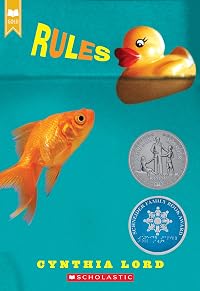
Rules
by Cynthia Lord
On This Page
Description
Frustrated at life with an autistic brother, twelve-year-old Catherine longs for a normal existence but her world is further complicated by a friendship with a young paraplegic.Tags
Recommendations
















Member Recommendations


Member Reviews
I absolutely loved this book for many reasons. First, Rules seamlessly captures the ups and downs of having a sibling with disabilities. Similar to the main character, Catherine, I have a younger sister with Down syndrome. At twelve years old, I too was embarrassed by her antics and outbursts. I could relate with her desire for her brother to "fit in" with the other children. Another reason I loved this book was the characters. They were well-developed and believable. I have worked closely for years with students with Autism and I could see many similarities between those students and David. Catherine was just like me at her age; anxious and desperate to fit in. For example, she doesn't go to the video store with her father and David show more because she is worried what the other customers will think of her brother reading aloud the parental advisory warnings on the back of the movies. I'm sure many other girls reading this book could identify with her as well. A final reason I loved Rules was because of the descriptive language used to describe the setting. What initially drew me into this book were lines like "Low tide smells mud-black and tangy, but high tide smells clean and salty" (pg. 13-14). Lord does a fantastic job setting you right there with the characters, experiencing what they experience. This book perfectly conveys that there is correct way to be normal. Rules focuses on acceptance and love for people with all ability levels. I would recommend this book to anyone who wants to learn more about the impacts of people with disabilities can have on a family and community. show less
From the very first time I read this book, I loved it; and it quickly took a place among my all-time favorite books. RULES lets readers inside Catherine's head to see what it's like having a brother with autism. How many kids have to face some disability or other as a sibling? And how important this book is for them to see that they're not alone. Catherine perceives that she has all these extra duties to care for her brother, and she longs for a normal life, one in which she could have friends over and not worry what her brother will do or say. Let's face it: he's often embarrassing to the protagonist at the cusp of coming of age. Because we're seeing the story through Catherine's eyes, we're getting a slanted view, but we're getting show more the view that kids do see. Adults don't fare well in this book -- not the parents, and not the awful OT therapist who works with Jason. You've got to hate her condescending attitude as she creates insipid words for Jason to communicate. But Catherine gets it; she provides intriguing words and pre-teen lingo that invariably heightens jason's interest in and willingness to communicate. And of course the reason she understands Jason's needs is that she really learned through her brother. It takes Jason, though, to make her come to a greater sense of acceptance of her situation with her brother. show less
I wasn't sure I would like this book at first because it is an "issues" book. I thought it would be about a girl who learns to accept her brother's disabilities, and while this is true, it was more a learning-to-fit-in-and-be-comfortable-with-yourself book. I'm still making it sound cheesy, but it really wasn't. Rather, it was hilarious and well-written. The main character, a twelve-year-old girl named Catherine, is highly relatable, and draws you in from the first chapter by telling you all about her "rules" for behavior that she has written for her autistic brother (which range from practical to laugh-out-loud funny). I couldn't help but love her for doing this for him.
My only problem with the book was that I felt like the main show more character wasn't consistent; it felt like she went from being 12 to being 15 halfway through the book. She initially seems cute and tomboyish, but then all of a sudden begins to show so much maturity and becomes so precise and erudite in her word choices and in her ability to self-analyze that at times I felt very conscious of the author's own voice shining through the narrator's. Such is the problem with first person, I guess.
All in all this was an excellent book and I would highly recommend it. show less
My only problem with the book was that I felt like the main show more character wasn't consistent; it felt like she went from being 12 to being 15 halfway through the book. She initially seems cute and tomboyish, but then all of a sudden begins to show so much maturity and becomes so precise and erudite in her word choices and in her ability to self-analyze that at times I felt very conscious of the author's own voice shining through the narrator's. Such is the problem with first person, I guess.
All in all this was an excellent book and I would highly recommend it. show less
Rules by Cynthia Lord is a simple yet heart felt story. At the age of twelve all Catherine wants is to fit in and be considered normal but this is something that isn’t always possible. Her brother, David, is autistic, and with his special needs and, at times. uncontrollable behavior, he stands out and, Catherine feels, shines a spotlight on her as well. She copes by developing rules for him. Her rules are made to fit every situation, from the simple, No Toys in the Fish Tank and Chew With Your Mouth Closed to the more complicated, Sometimes People Laugh Cause They Like You, But Sometimes They Laugh To Hurt You. Although David can drive her crazy, she loves and cares for him and doesn’t want him exposed to ridicule and teasing.
With show more warmth, love and humor, Rules shows how living with a child that sees life differently from everybody else can be both very rewarding and very frustrating. Catherine is on the brink of learning that she can’t control every situation or person, and at times, it is best to just let things happen without having any rules to get in the way.
Although somewhat contrived, I found Rules to be a touching look at a young girl’s conflicted feelings of living with her autistic brother. The author paints a realistic picture that allows there are no simple answers in life while asking the question "What is normal anyway?". show less
With show more warmth, love and humor, Rules shows how living with a child that sees life differently from everybody else can be both very rewarding and very frustrating. Catherine is on the brink of learning that she can’t control every situation or person, and at times, it is best to just let things happen without having any rules to get in the way.
Although somewhat contrived, I found Rules to be a touching look at a young girl’s conflicted feelings of living with her autistic brother. The author paints a realistic picture that allows there are no simple answers in life while asking the question "What is normal anyway?". show less
Catherine's younger brother David has autism, and she makes up rules to teach him things that other kids would pick up through observation. Catherine is frequently embarrassed by David's behavior, and also sometimes resentful and frustrated that the lion's share of her parents' time and attention goes to him. She is hopeful when a new family moves into their neighborhood, since her best friend is away for the summer and she doesn't have other friends in walking distance, but she can tell that Kristi is going to be popular - she's already friends with the awful Ryan, who teases David and laughs at him, not with him. Catherine's other new friend is Jason, a boy she meets at the clinic where David has occupational therapy. Jason is in a show more wheelchair and can't talk, but he communicates by pointing at cards, and Catherine, an artist, makes him more word cards with pictures. Catherine mentions Jason to Kristi, but omits the fact that he's in a wheelchair. When Kristi asks her to ask Jason to the community center dance, Catherine tries to get out of it - but in the end, she proves a thoughtful and brave friend.
"Just because other people think something, that doesn't make it true." (179)
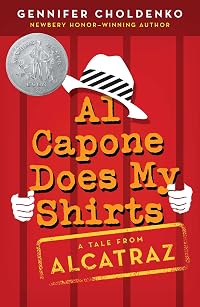
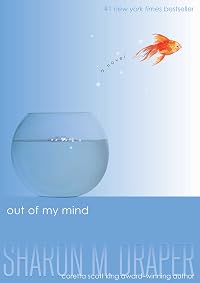
See also: Out of My Mind by Sharon Draper, Say What You Will by Cammie McGovern (YA) show less
"Just because other people think something, that doesn't make it true." (179)
See also: Out of My Mind by Sharon Draper, Say What You Will by Cammie McGovern (YA) show less
I have a really bad case of vertigo, so it's a bit of a struggle to write this, but here it goes. I have a very deep struggle with books and articles and other forms of media like this because I think there's enough story lines about how children with autism and other disabilities are a burden to their family. My brother has autism and I work as an ABA therapist with autistic children, and there stories deserve to be heard more than the "victims" that live with them. I constantly hear autism parents complaining about how hard it is for them, I've heard some wish their child didn't exist, I've heard people say autistic people should be sterilized, and it truly becomes sickening to read over and over how hard allistic's lives are when show more they don't even consider how their autistic family members feel. I want to read more stories from the perspective of the autistic child. We need more autistic media made by autistic writers. I feel like this book shows an important realization that able people should all come to, which is important but at the same time I feel like everything is made for them. Everything is catered to them. I can't help but feel my aggravation, I'm sorry. show less
Catherine's younger brother David has autism and all her life she has had to teach him the rules of living such as "no toys in the fish tank" and "if someone says hi, you say hi back." Living with his disability has become more difficult and embarrassing as Catherine verges on adolescence. She hopes the new girl next door will be the friend she can just take off and do things with without worrying about David. But she feels acceptance isn't guaranteed as long as David acts out. At the same time, Catherine befriends Jason, a patient at David's occupational therapy clinic. They communicate through word cards and she creates new word card pictures for him. Her new friendship with Jason, and the pain she inadvertently causes him, helps show more Catherine view David and his disability through a more compassionate light. (In my opinion, should have won the Newbery Medal for 2007!) show less
Members
- Recently Added By
Lists

Best Newbery Honor Books
257 works; 32 members

Newbery Honor Books By year - II - 1981-2035
143 works; 4 members

Books Read in 2013
1,630 works; 51 members

Mental disabilities -- children's/young adult fiction
24 works; 1 member

BingoDOG - Books About Autism: Fiction
27 works; 14 members

Books Read in 2021
5,361 works; 114 members
Author Information

25 Works 12,745 Members
Awards and Honors
Awards
Distinctions
Series
Belongs to Publisher Series
Common Knowledge
- Canonical title
- Rules
- Original title
- Rules
- Original publication date
- 2006
- People/Characters
- Catherine; David; Jason
- Dedication
- My deepest appreciation to:
Everyone at Scholastic Press, especially Marijka Kostiw, Kristina Albertson, Tracey Mack, and Leslie Budnick.
Tracey Adams, my wonderful agent.
The members of my critique groups... (show all), each of whom possess that rare combination of Charlotte the spider: a true friend and a good writer.
My retreat-mates who put me on the right track: Franny Billingsley, Toni Buzzeo, Sarah Lamstein, Dana Walrath, Mary Atkinson, Carol Peacock, and Jackie Davies.
With special thanks to Amy Butler Greenfield, Nancy Werlin, Amanda Jenkins, Denise Johns, Melissa Wyatt, Lisa Firke, Lisa Harkrader, Laura Weiss, Mary Pearson, Amy McAuley, and Kristina Cliff-Evans.
And to my parents, Earl and Elaine Lord, who gave me wings but always left the porch light on to show the way home.
To John, Julia, and Gregory
I love you more than words. - First words
- "Come on, David." I let go of his sleeve, afraid I'll rip it. When he was little, I could pull my brother behind me if he didn't want to do something, but now David's eight and too strong to be pulled.
- Quotations
- I add another rule to David's list: Sometimes people laugh when they like you. But sometimes they laugh to hurt you.
"I wish everyone had the same chances," I say. "Because it stinks a big one that they don't."
Sometimes I wish someone would invent a pill so David'd wake up one morning without autism, like someone waking up from a long coma, and he'd say, "Jeez, Catherine, where have I been?" - Last words
- (Click to show. Warning: May contain spoilers.)I let that be enough.
Classifications
Statistics
- Members
- 6,664
- Popularity
- 1,818
- Reviews
- 539
- Rating
- (4.24)
- Languages
- Chinese, English, German, Italian
- Media
- Paper, Audiobook, Ebook
- ISBNs
- 33
- ASINs
- 16