On This Page
Description
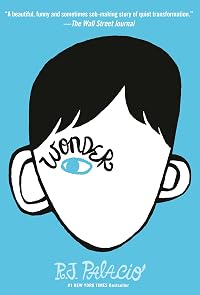
Ten-year-old Auggie Pullman, who was born with extreme facial abnormalities and was not expected to survive, goes from being home-schooled to entering fifth grade at a private middle school in Manhattan, which entails enduring the taunting and fear of his classmates as he struggles to be seen as just another student.Tags
Recommendations
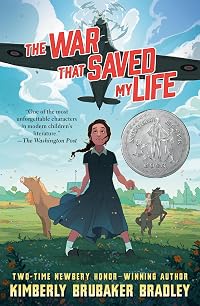
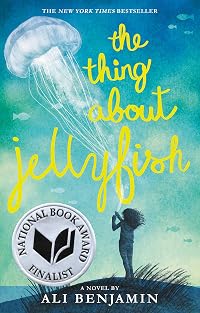
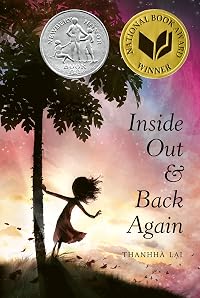
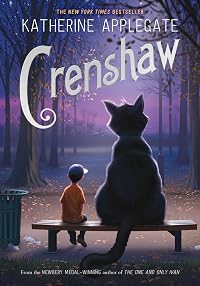
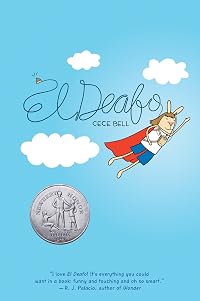
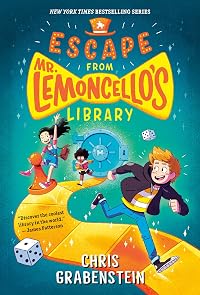
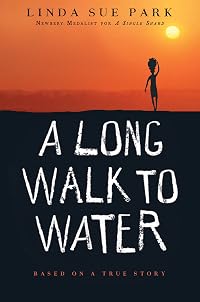
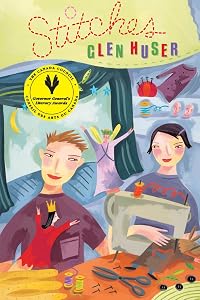

Member Recommendations
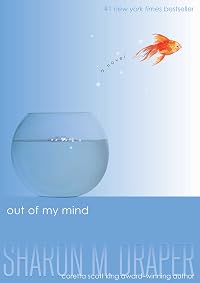
bookwren Both stories involve a highly-challenged child with a supportive family and friends. The girl in Out of My Mind has cerebral palsy.
50
Lagrangesnest They are both well written compassionate, funny and humane books. Although Wonder isn't about a boy with a disability , both books tell the story of two individuals that manage the socially imposed difficulties of their 'conditions'. The narration in both is in first person in Wonder by August Pullman(Auggie ), his friends and family, and in The Curious Incident of The Dog In The Night-time by Christopher Boone, a boy with Asperger's Syndrome.
40

BeckyJG Both are similarly moving stories about approaching difficult issues with kindness and compassion.

2wonderY Success beyond physics with personality.
dara85 True story of boy with facial deformity.
Member Reviews
I know, right? Five stars? I had to, though, because I read this book thinking like a mother of elementary- and middle-school-aged children, and if I were still that woman, I would be totally rejoicing that this lovely novel had crossed my path. Birthday present, for girl or boy? DONE
Wonder is the tale of August Pullmann, born with devastating cranio-facial abnormalities, and his first year at a "regular" school. It has a point-of-view structure, so we see some of the events not only through Auggie's eyes, but also through the eyes of other kids in his class, as well as through the eyes of his high-school-aged sister Via and her friends. Auggie himself is incredibly endearing in his simple practicality and deliberate, no-big-deal show more courage, but it is the supporting characters who lift this novel from the ho-hum to the extraordinary. The reason that each of my children would have received this story as a gift is that it conveys, with a minimum of fuss, the thing that everyone needs to learn: that loneliness and isolation are not the tragic fate of an unfortunate few, but in fact the truth of the human condition - and the reason that we all have to learn to be kind. show less
Wonder is the tale of August Pullmann, born with devastating cranio-facial abnormalities, and his first year at a "regular" school. It has a point-of-view structure, so we see some of the events not only through Auggie's eyes, but also through the eyes of other kids in his class, as well as through the eyes of his high-school-aged sister Via and her friends. Auggie himself is incredibly endearing in his simple practicality and deliberate, no-big-deal show more courage, but it is the supporting characters who lift this novel from the ho-hum to the extraordinary. The reason that each of my children would have received this story as a gift is that it conveys, with a minimum of fuss, the thing that everyone needs to learn: that loneliness and isolation are not the tragic fate of an unfortunate few, but in fact the truth of the human condition - and the reason that we all have to learn to be kind. show less
Actually 4.25 stars.
*Wonder* by R.J. Palacio is one of those rare books that fundamentally changes how you see the world and the people around you. It's a story that made me feel everything—joy, anger, sadness, hope—and left me with a deeper understanding of what it means to be kind and human.
The book follows Auggie Pullman, a boy with severe facial differences, as he navigates fifth grade in a mainstream school for the first time. What makes this story so powerful is that it's not just Auggie's perspective—we also hear from his sister, his friends, and even kids who aren't always kind to him. This multi-perspective approach is brilliant because it shows how one person's presence can ripple through an entire community in ways both show more beautiful and complicated.
What struck me most was how the book made me simultaneously love and hate people. I loved the characters who showed courage and compassion—like Summer, who sits with Auggie at lunch simply because she wants to, or Jack Will, who learns what true friendship means. But I also felt genuine anger toward the kids who were cruel, the parents who whispered, and anyone who judged Auggie based solely on his appearance. The book doesn't shy away from showing that meanness exists, and that it hurts.
But here's what makes *Wonder* truly special: it also shows that people can change. Not everyone who starts out mean stays that way. Some characters who initially avoid or mock Auggie eventually come around when they're given the chance to see beyond his face and recognize his humanity. The book suggests that if we respond to unkindness with patience and grace—not because it's easy, but because it's right—we might give others the opportunity to become better versions of themselves.
Palacio's writing is accessible and honest, making this a book that works for both kids and adults. She doesn't sugarcoat the pain of being different or the cruelty that can come from fear and ignorance. But she also doesn't make the story hopeless. Instead, she shows that small acts of kindness—choosing to sit with someone, standing up when it matters, looking beyond the surface—can create profound change.
The book's central message, "Choose kind," sounds simple, but it's actually quite radical. It asks us to actively decide, in every interaction, to lead with compassion. It challenges us to see the person behind the face, the story behind the appearance, the full humanity in everyone we meet.
*Wonder* made me cry, made me think, and made me want to be a better person. It's a book that should be required reading because it teaches empathy in a way that feels real and earned, not preachy. If you haven't read it yet, please do. It's a reminder that we all have the power to make someone's world a little kinder, one choice at a time. show less
*Wonder* by R.J. Palacio is one of those rare books that fundamentally changes how you see the world and the people around you. It's a story that made me feel everything—joy, anger, sadness, hope—and left me with a deeper understanding of what it means to be kind and human.
The book follows Auggie Pullman, a boy with severe facial differences, as he navigates fifth grade in a mainstream school for the first time. What makes this story so powerful is that it's not just Auggie's perspective—we also hear from his sister, his friends, and even kids who aren't always kind to him. This multi-perspective approach is brilliant because it shows how one person's presence can ripple through an entire community in ways both show more beautiful and complicated.
What struck me most was how the book made me simultaneously love and hate people. I loved the characters who showed courage and compassion—like Summer, who sits with Auggie at lunch simply because she wants to, or Jack Will, who learns what true friendship means. But I also felt genuine anger toward the kids who were cruel, the parents who whispered, and anyone who judged Auggie based solely on his appearance. The book doesn't shy away from showing that meanness exists, and that it hurts.
But here's what makes *Wonder* truly special: it also shows that people can change. Not everyone who starts out mean stays that way. Some characters who initially avoid or mock Auggie eventually come around when they're given the chance to see beyond his face and recognize his humanity. The book suggests that if we respond to unkindness with patience and grace—not because it's easy, but because it's right—we might give others the opportunity to become better versions of themselves.
Palacio's writing is accessible and honest, making this a book that works for both kids and adults. She doesn't sugarcoat the pain of being different or the cruelty that can come from fear and ignorance. But she also doesn't make the story hopeless. Instead, she shows that small acts of kindness—choosing to sit with someone, standing up when it matters, looking beyond the surface—can create profound change.
The book's central message, "Choose kind," sounds simple, but it's actually quite radical. It asks us to actively decide, in every interaction, to lead with compassion. It challenges us to see the person behind the face, the story behind the appearance, the full humanity in everyone we meet.
*Wonder* made me cry, made me think, and made me want to be a better person. It's a book that should be required reading because it teaches empathy in a way that feels real and earned, not preachy. If you haven't read it yet, please do. It's a reminder that we all have the power to make someone's world a little kinder, one choice at a time. show less
"no, no, it's not all random, if it really was all random, the universe would abandon us completely. and the universe doesn't. it takes care of it's most fragile creations in ways we can't see. like with parents who adore you blindly. and a big sister who feels guilty for being human over you. and a little gravelly-voiced kid whose friends have left him over you. and even a pink-haired girl who carries your picture in her wallet. maybe it is a lottery, but the universe makes it all even out in the end. the universe takes care of all its birds" - p. 204
This quote from "Wonder" really sums the book up for me. I don't know why it took me so long to pick this book up, especially since I've been meaning to read it for at least a solid year show more now. But I'm glad I finally did.
However, unlike others who read this book, I didn't find myself getting overly emotional while reading. No tears were shed. And yet, I can't think of any other book at the moment that so thoroughly sums up human nature -- both how terrible and how wonderful people can be to one another. I loved Auggie. I loved how brave he was, and how funny, even as my heart broke when others in the book couldn't see past his physical appearance to see that.
One of my favorite things about the book was the switching of perspectives. I appreciated that Auggie's story wasn't just about Auggie. It was about his family, his friends, and how yes, his deformity is something that he has to live with, but these people also live with it, in their own ways. I loved the honesty that came with looking at Via's relationship with Auggie, and how his medical issues have affected her life. How no matter how much she loves him, even she is not impervious to how others might view him, and how that may affect and define her.
I was a bit confused at first when part of the book was told from Via's boyfriend's perspective, but by the time his section was over, it had put the book as a whole into so much perspective. Justin, as an outsider, was able to see things that those closer to Auggie did not. Like the way that people protected him and loved him, even when it would probably have been easier for them not to.
I may not have cried while reading this book, but that doesn't mean I didn't love it. I think there is so much to be taken from this book, and I think we can all relate to it in some way. It reinforces the idea that we should all make it a point to be kinder than we need to be, and also highlights the ways in which people tend to come through in the end. Even if they're a little slow in getting to where they should be. show less
This quote from "Wonder" really sums the book up for me. I don't know why it took me so long to pick this book up, especially since I've been meaning to read it for at least a solid year show more now. But I'm glad I finally did.
However, unlike others who read this book, I didn't find myself getting overly emotional while reading. No tears were shed. And yet, I can't think of any other book at the moment that so thoroughly sums up human nature -- both how terrible and how wonderful people can be to one another. I loved Auggie. I loved how brave he was, and how funny, even as my heart broke when others in the book couldn't see past his physical appearance to see that.
One of my favorite things about the book was the switching of perspectives. I appreciated that Auggie's story wasn't just about Auggie. It was about his family, his friends, and how yes, his deformity is something that he has to live with, but these people also live with it, in their own ways. I loved the honesty that came with looking at Via's relationship with Auggie, and how his medical issues have affected her life. How no matter how much she loves him, even she is not impervious to how others might view him, and how that may affect and define her.
I was a bit confused at first when part of the book was told from Via's boyfriend's perspective, but by the time his section was over, it had put the book as a whole into so much perspective. Justin, as an outsider, was able to see things that those closer to Auggie did not. Like the way that people protected him and loved him, even when it would probably have been easier for them not to.
I may not have cried while reading this book, but that doesn't mean I didn't love it. I think there is so much to be taken from this book, and I think we can all relate to it in some way. It reinforces the idea that we should all make it a point to be kinder than we need to be, and also highlights the ways in which people tend to come through in the end. Even if they're a little slow in getting to where they should be. show less
Okay, one of my favorite reads of the year. Five stars! This is the moving story of a ten-year-old boy, Auggie Pullman, who was born with extreme facial abnormalities. It is fiction, but the story and the emotions are so real. Auggie has been home-schooled, but is about to enter fifth grade at a private middle school in Manhattan. Needless to say, he is excited and scared. Told from multiple points of view, this story is all about friendship, celebrating compassion, and appreciating the beauty inside. The characters are engaging and believable. I cried and I laughed my way through this! The language is current and includes an entire texting chapter, which kids will relate to. My version also had an extra chapter, which told more from show more the point of view of the "bully" and it was interesting to see what went on there as well. I totally recommend this one! show less
There is no strong enough word to describe the incredible emotion behind the book Wonder. It is heartbreakingly real and relatable. Auggie is a 10-year-old boy starting public school for the first time in his life. Unfortunately, Auggie has an extreme facial deformity, which makes making friends and feeling normal extremely difficult for him. Several parts of this book infuriated me, all the while making me feel hopeful and laugh. Every reader will start to feel sympathetic towards Auggie and his family as they all try and navigate the judgment of strangers, while supporting one another in their various endeavors. I loved the format of this book, also. Each character is telling the story from their own viewpoint. There are multiple show more short chapters in each character’s section – which helps read this lengthy book quickly. Although there is no definitive picture of what August looks like, but the author does a spectacular job of using descriptive words that really helps the reader use their imagination. Not only does the author describe all the characters well, but also every single thought that each character has is unfiltered, real, and always justifiable – no matter how harsh it may seem. Palacio captured all the children in this book very well and truly did a great job showing their growth and maturity as the school year progresses. Wonder places a very heavy focus on being kind to others (no matter how hard it might be) and embracing difference so that everyone feels safe and wanted. As a future educator in this current time in history, Wonder will definitely be a book I want my students to read. It teaches them crucial life values, all the while being incredibly inspiring. show less
Absolutely brilliant. This book should be required reading for everyone - hand it out at school graduations, present it at retirement parties and 21st bday celebrations, leave it on the metro for the next passenger to find, talk about it ad nauseum to your friends until they catch the ear worm and finally read it, and then they'll talk about it ad nauseum.
You get the idea.
It's a small story on the surface - boy with multiple compounded genetic maladies, which manifest in a war on his face, starts going to school for the first time (5th grade). The complexity comes from how well Palacio understands not just people, but kids. She gets their dialogue, their social dynamics, their thought processes exactly right. Though I am nearing my show more third decade, have no children, and am not in daily contact with younger folks, I still feel the authenticity blaring from her dialogue and character introspection because of the startling fact that, in regards to childhood, the fundamental things never change. You remember the weird shifts that happened in middle school when friends aren't friends anymore; when you say things you really don't mean (that still happens), when understanding the popularity strata was both the simplest and most complicated thing you'd ever encounter (barring 8th grade algebra). You remember when 7th graders seemed like the biggest kids you'd ever seen; when kids started 'dating' at 11 years old when you were still running home after school to catch X-Men and the rest of Fox's storied afternoon cartoon line-up.
More importantly, you remember the things you did right and the things you wish you could change - and there's the golden seed that Palacio plants: it's never too late to be kind. In the same vein, it's never too late to read this book. show less
You get the idea.
It's a small story on the surface - boy with multiple compounded genetic maladies, which manifest in a war on his face, starts going to school for the first time (5th grade). The complexity comes from how well Palacio understands not just people, but kids. She gets their dialogue, their social dynamics, their thought processes exactly right. Though I am nearing my show more third decade, have no children, and am not in daily contact with younger folks, I still feel the authenticity blaring from her dialogue and character introspection because of the startling fact that, in regards to childhood, the fundamental things never change. You remember the weird shifts that happened in middle school when friends aren't friends anymore; when you say things you really don't mean (that still happens), when understanding the popularity strata was both the simplest and most complicated thing you'd ever encounter (barring 8th grade algebra). You remember when 7th graders seemed like the biggest kids you'd ever seen; when kids started 'dating' at 11 years old when you were still running home after school to catch X-Men and the rest of Fox's storied afternoon cartoon line-up.
More importantly, you remember the things you did right and the things you wish you could change - and there's the golden seed that Palacio plants: it's never too late to be kind. In the same vein, it's never too late to read this book. show less
Let's start with the good: I thought that Wonder was an amazing and nuanced view of the social intricacies from late elementary school to early high school. By introducing multiple perspectives, RJ Palacio has written one of the most insightful pieces about how people inadvertently become bullies, alienate their friends or switch social groups. It rang very true, and more informed than a lot of the non-fiction references about bullying.
I also liked having a book about someone with a craniofacial anomaly. Too often disability characters in YA are completely sanitized: "normal person in a wheelchair!" style. Auggie was a great and honest portrayal of a kid with Treacher Collins. I know many kids like Auggie in real life, and I think this show more is the first book that they get about them. I liked that she pulled no punches in describing his surgeries, and his difficulty eating and articulating and also no punches in giving him a personality that went beyond his disability with his love for Star Wars, sense of humor and insight into people's ways of thinking.
But, I didn't love it. Perhaps because I've spent a lot of time with kids with craniofacial anomalies, it didn't have the same newness to me as to a lot of other readers. Or because, as a professional geneticist, I got really distracted by the fact that he has biallelic TCOF1 mutations, or that he has both a new, previously unknown recessive form of Treacher Collins and OAV spectrum. (I'm not sure in what universe someone would make a diagnosis of OAVS, a clinical diagnosis, in a kid with molecularly confirmed TCS, who doesn't have any facial asymmetry, but.) Or that they didn't use the words "Treacher Collins" in the whole book? I've said it before and I'm sure I'll say it again: authors who want a geneticist consultant, I'm for hire! Pay me in books.
But honestly, I had two other huge concerns: the first is Auggie winning the community service award at the end. I found this super frustrating and shallow compared to the more nuanced take in the rest of the book. Auggie didn't do any community service just by existing. The "point" of people with disabilities is not to be a fable for children without disabilities to learn from. He's an actual human being who should actually do some community service to get a community service award. That dehumanization really undermined a huge portion of the book for me, and made me feel hesitant to recommend it to children with disabilities.
My other concern is unfair for a book review, but stick with me: they chose a child without a craniofacial anomaly to portray Auggie in the movie? In a world that has thousands of actual children with craniofacial anomalies, who will never ever have a chance to play a protagonist in basically any other movie, and they took a typical kid and put him in disability drag? Overall, that choice, combined with the ending of the book made me really concerned that RJ Palacio doesn't really believe that atypical children are human beings with their own personhood and reason for being, rather than a tool for her to write moralistic novels. show less
I also liked having a book about someone with a craniofacial anomaly. Too often disability characters in YA are completely sanitized: "normal person in a wheelchair!" style. Auggie was a great and honest portrayal of a kid with Treacher Collins. I know many kids like Auggie in real life, and I think this show more is the first book that they get about them. I liked that she pulled no punches in describing his surgeries, and his difficulty eating and articulating and also no punches in giving him a personality that went beyond his disability with his love for Star Wars, sense of humor and insight into people's ways of thinking.
But, I didn't love it. Perhaps because I've spent a lot of time with kids with craniofacial anomalies, it didn't have the same newness to me as to a lot of other readers. Or because, as a professional geneticist, I got really distracted by the fact that he has biallelic TCOF1 mutations, or that he has both a new, previously unknown recessive form of Treacher Collins and OAV spectrum. (I'm not sure in what universe someone would make a diagnosis of OAVS, a clinical diagnosis, in a kid with molecularly confirmed TCS, who doesn't have any facial asymmetry, but.) Or that they didn't use the words "Treacher Collins" in the whole book? I've said it before and I'm sure I'll say it again: authors who want a geneticist consultant, I'm for hire! Pay me in books.
But honestly, I had two other huge concerns: the first is Auggie winning the community service award at the end. I found this super frustrating and shallow compared to the more nuanced take in the rest of the book. Auggie didn't do any community service just by existing. The "point" of people with disabilities is not to be a fable for children without disabilities to learn from. He's an actual human being who should actually do some community service to get a community service award. That dehumanization really undermined a huge portion of the book for me, and made me feel hesitant to recommend it to children with disabilities.
My other concern is unfair for a book review, but stick with me: they chose a child without a craniofacial anomaly to portray Auggie in the movie? In a world that has thousands of actual children with craniofacial anomalies, who will never ever have a chance to play a protagonist in basically any other movie, and they took a typical kid and put him in disability drag? Overall, that choice, combined with the ending of the book made me really concerned that RJ Palacio doesn't really believe that atypical children are human beings with their own personhood and reason for being, rather than a tool for her to write moralistic novels. show less
Members
- Recently Added By
Published Reviews
ThingScore 100
Dieses Buch begeistert alle Altersgruppen. Das oft genutzte Motiv, dass es auf die inneren Werte ankommt, wird hier neu und ohne mahnenden Zeigefinger umgesetzt. Durch wechselnde Perspektiven kann der Leser nicht nur die Gefühle und Handlungen Auggies, sondern auch die seines Umfeldes verstehen. Der Leser entwickelt sich mit den sympathischen Charakteren. Die flüssige Sprache und die show more zahlreichen Details lassen die Geschichte persönlich und lebensnah wirken. Der Roman berührt den Leser und regt zum Nachdenken an. show less
added by DJLP2014
Lists

Best School Stories
219 works; 22 members

Read the book and saw the movie
1,170 works; 195 members

Best middle grade books
130 works; 24 members

School Library Journal - 2012 Top 100 Children's Novels
68 works; 8 members

Best Family Stories
241 works; 22 members

Best Young Adult
413 works; 102 members

Ryan's Books
34 works; 1 member

2022 books
7 works; 1 member

6th Grade
68 works; 4 members

SYES Library Wishlist
1,080 works; 4 members

Bullies
44 works; 2 members

Llibres que he llegit el 2013
47 works; 1 member

Five star books
1,767 works; 110 members

Books I have Recommended
208 works; 1 member

Books Read in 2019
4,052 works; 110 members

Books That Made Us Cry
278 works; 145 members

READ 2025
190 works; 1 member

Main Character is aged 10-19
363 works; 6 members

Top Five Books of 2017
757 works; 231 members

The Worst Bestsellers Podcast
296 works; 5 members

GAL Book Club
75 works; 3 members

Books Read in 2017
4,249 works; 130 members

Watched the Movie, Probably Won't Read the Book
185 works; 34 members

PS: 43 Books to Read Before They're Movies
18 works; 5 members
Bibliotherapy: Family and Personal Social Issues
174 works; 5 members

Top Five Books of 2015
811 works; 241 members

thinking of reading in 2016
99 works; 1 member

all aboard for malory towers (grownups)
28 works; 5 members

NPRs Ultimate Backseat Bookshelf: 100 Must-Reads for kids 9-14
222 works; 30 members

Books Read in 2013
1,630 works; 51 members

Top Five Books of 2013
1,562 works; 721 members
Recommend the 20 best books you've read in the last five years
2,168 works; 607 members
TED 2013 Summer Reading List
190 works; 13 members
Favourite Books
1,820 works; 316 members

Elaina's
183 works; 1 member
Talk Discussions
Past Discussions
Wonder Book Club, And For Gimkit Players in Book talk (September 2024)
Author Information

32+ Works 26,095 Members
R. J. Palacio is a graphic designer and book jacket designer. She is the author of Wonder, 365 Days of Wonder: Mr. Browne's Book of Precepts, and Auggie and Me: Three Wonder Stories. (Bowker Author Biography)
Some Editions
Awards and Honors
Awards
Distinctions
Notable Lists
Series

Belongs to Publisher Series
dtv Reihe Hanser (62589)
Work Relationships
Is contained in
Common Knowledge
- Canonical title*
- Wonder
- Original title
- Wonder
- Original publication date
- 2012-02-14
- People/Characters
- August "Auggie" Pullman; Olivia "Via" Pullman; Mr. Browne; Summer Dawson; Justin; Miranda (show all 9); Daisy; Jack Will; Julian
- Important places
- Manhattan, New York, New York, USA; Beecher Prep Middle School (fictional place); Bridgeport, Connecticut, USA
- Related movies
- Wonder (2017 | IMDb)
- Epigraph
- Doctors have come from distant cities/just to see me/stand over my bed/disbelieving what they're seeing,
They say I must be one of the wonders/of god's own creation/and as far as they can see they can offer/no explanation<... (show all)br> -Natalie Marchant, "Wonder" - Dedication
- For Russell, Caleb, and Joseph
- First words
- I know I'm not an ordinary ten-year-old kid.
- Quotations
- Now here is my secret. It is very simple. It is only with one's heart that one can see clearly. What is essential is invisible to the eye. -Antoine de Saint-Exupery, The Little Prince
It's like how compass needles always point north, no matter which way you're facing. All those eyes are compasses, and I'm like the North Pole to them. [Auggie, 206]
I think there should be a rule that everyone in the world should get a standing ovation at least once in their lives. [Auggie, 231]
Mr. Browne's Precepts: September - When given the choice between being righ or being kind, choose kind. -Dr. Wayne W. Dyer
February - It is better to know some of the questions than all of the answers. -James Thurber
Ma... (show all)rch - Kind words do not cost much. Yet they accomplish much. -Blaise Pascal
May - Do all the good you can,/By all the means you can,/In all the ways you can,/In all the places you can,/At all the times you can,/To all the people you can,/As long as you ever can. -John Wesley's Rule
Shall we make a new rule of life...always to try to be a little kinder than is necessary? -J.M. Barrie, The Little White Bird
"Kinder than is necessary," he [Mr. Tushman] repeated. What a marvelous line, isn't it? Kinder t... (show all)han is necesary. Because it's not enough to be kind. One should be kinder than needed. Why I love that line, that concept, is that it reminds me that we carry with us, as human beings, not just the capacity to be kind, but the very choice of kindness. -, p. 300
Joseph recognized the face of God in human form. It glimmered in their kindness to him, it glowed in their keenness, it hinted in their caring, ideed it caressed in their gaze. - Christopher Nolan, Under the Eye of the Clock<... (show all)br>"It glimmered in their kindness to him ... Such a simple thing, kindness. Such a simple thing. A nice word of encouragment given when needed. An act of friendship. A passing smile." -, p. 300. - Last words
- (Click to show. Warning: May contain spoilers.)Everyone in the world should get a standing ovation at least once in their life because we all overcometh the world. —Auggie
- Blurbers
- Sparks, Nicholas; Stead, Rebecca; Curtis, Christopher Paul; Vanderpool, Clare; Giff, Patricia Reilly
- Original language
- English
*Some information comes from Common Knowledge in other languages. Click "Edit" for more information.
Classifications
- Genres
- Kids, Tween, Children's Books, Fiction and Literature
- DDC/MDS
- 813.6 — Literature & rhetoric American literature in English American fiction in English 2000-
- LCC
- PZ7 .P17526 .W — Language and Literature Fiction and juvenile belles lettres Fiction and juvenile belles lettres Juvenile belles lettres
- BISAC
Statistics
- Members
- 17,979
- Popularity
- 358
- Reviews
- 1,358
- Rating
- (4.45)
- Languages
- 26 — Arabic, Bosnian, Catalan, Chinese, Czech, Danish, Dutch, English, Estonian, Finnish, French, German, Greek, Hungarian, Indonesian, Italian, Japanese, Korean, Farsi/Persian, Portuguese, Romani, Romanian, Spanish, Swedish, Ukrainian, Welsh
- Media
- Paper, Audiobook, Ebook
- ISBNs
- 171
- ASINs
- 25