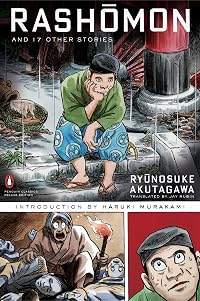
Rashōmon and Seventeen Other Stories
by Ryūnosuke Akutagawa
On This Page
Description
"Akutagawa (1892-1927) was one of Japan's foremost stylists - a modernist master whose stories are marked by original imagery, cynicism, beauty and wild humour. Including both famous and little-known works, some translated into English for the first time, this volume reveals Akutagawa in a new light. In his introduction, Haruki Murakami explores Akutagawa's place in Japanese culture and influence on his own writing, while Jay Rubin's translations capture the spirit of the originals."--Cover.Tags
Recommendations

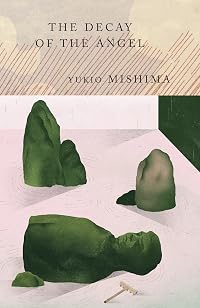
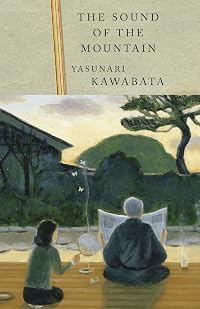
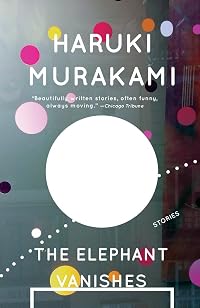
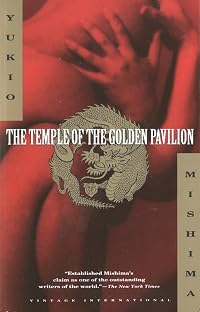

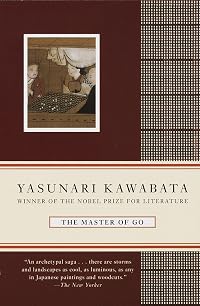
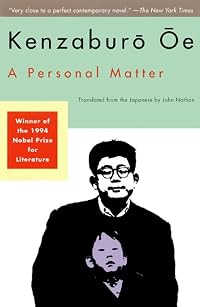
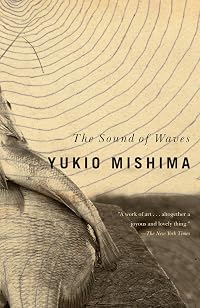
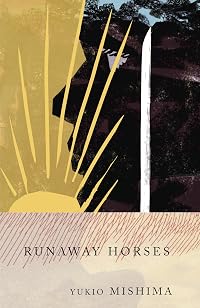
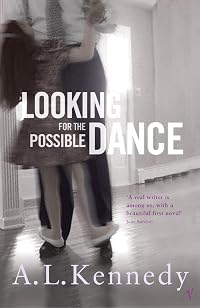
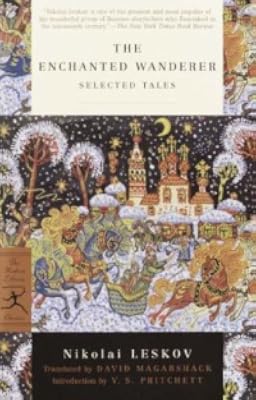

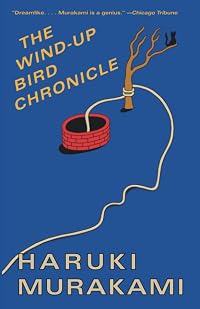
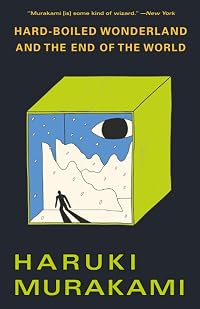
Member Recommendations
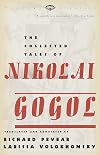
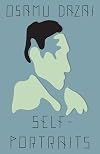

CGlanovsky Similar appreciation for absurdity. Compare "Horse Legs" and "The Nose".
Member Reviews
Akutagawa is one of my favorite writers. He took his own life with barbiturates at age 35 and left behind some 300 stories, sketches, articles and literary experiments. In English he has appeared in over a dozen collections of the same 20-30 most famous stories retranslated a dozen times. This latest collection, translated by the consummate Jay Rubin, has a lovingly detailed introduction by the inimitable Haruki Murakami. It is a mere sampling of 18 stories from his impossibly good body of work. Unlike Toson, Soseki and Tanizaki, Akutagawa did not embark on massive literary projects. Instead, he honed his craft with precision and an appreciation for classic storytelling. I have read some of his stories ten times, and they always elicit show more a strong response from me.
In a lot of ways, he resembles Gogol, and even composed an homage with his story "The Nose." Though different in content, the tone is reminiscent of the Russian master. This is one of the masterpieces contained in this treasury. The others include: "Rashomon, In a Bamboo Grove, Hell Screen, Spinning Gears, Death Register, and the Life of a Stupid Man." Even the ones that are not masterworks per se, are extremely entertaining. "Green Onions, The Story of the Head that Fell Off, Horse Legs, and Loyalty" fall into this category. If you are new to this author, you may not enjoy all of his tales, but I believe you will appreciate many aspects of his singular talent.
He writes a few different types of stories: 1). retellings of classic tales from Chinese and other sources. These read a little like fables. 2.) Autobiographical tales: these are often depressing, taking details of his haunted life and casting them bleakly against the backdrop of his times. 3). Religious tales like "Christ of Nanking" (not included in the collection) and others. Historical tales, taking place well before the author's time but possessing uncanny verisimilitude.
In his stories you will find traces of his influences: Anatole France, Strindberg, Merimee, Goethe, Nagoya Shiga, Soseki, Toson, Tanizaki, Basho, Doppo, Ogai, Pu Songling and dozens of other European and Chinese authors. He has rewritten stories from Pu Songling's collections as well as retold many from the seminal Japanese proto-mythologies.
Akutagawa draws from Buddhism, Shintoism, Christianity and Myth. I think he is one of the most interesting writers I have ever encountered because he processes other literary worlds into new forms. Even when he waxes esoteric, he is charming and insightful. He explores human nature with deep characters and memorable comedy and tragedy.
This brilliant edition includes thorough notes by Rubin explaining the finer points of the stories. There is enough material in this singular Penguin edition to write a dissertation on Akutagawa. Jay Rubin has put in an astounding effort toward accuracy and illumination. I only wish he would continue with further volumes of stories.
If you appreciate the stories of Chekhov, Gogol, Maupassant, and Dostoyevsky, you will find a lot to love about this author. Typically, you can expect tortured artists, explorations of morality and death, futility and hope, love and loss. Very classic themes. "Green Onions" and "O-gin" were odd but welcome selections for this book. Overall, it is the most well-rounded collection of the author's writings in English.
I have so far discovered 107 Akutagawa tales in English. I've read every anthology of Japanese literature, every collection of his tales and tracked down out of print Japanese-American periodicals through JSTOR. I want to thank Ryan C. K. Choi and N. A. Feathers for publishing new translations of his work on their websites. This incredible author has not gotten a full treatment in English and I implore translators to get to work on making his complete works available. So far we have only about 900 pages of stories, when obscure, ancient masters like Pu Songling have been translated more comprehensively. Along with this collection you will want to read two more collections: Mandarins, translated by Charles de Wolf, and The Beautiful and Grotesque, which includes "Kappa," his novella.
Though Akutagawa's accomplishment is profoundly important (far more so, I would argue, than Murakami claims in his indicting introduction), one wonders what heights Akutagawa might have reached had he endured the agonies of his intellectual rigors for decades longer. Was he capable of writing novels? Were the demons he wrote about in "Spinning Gears" exaggerated or as sincerely recorded as in Strindberg's Inferno? These questions will never be answered. But part of his appeal is how digestible and varied his work is.
This is undoubtedly one of the greatest short story collections by any Japanese or non-Western author. show less
In a lot of ways, he resembles Gogol, and even composed an homage with his story "The Nose." Though different in content, the tone is reminiscent of the Russian master. This is one of the masterpieces contained in this treasury. The others include: "Rashomon, In a Bamboo Grove, Hell Screen, Spinning Gears, Death Register, and the Life of a Stupid Man." Even the ones that are not masterworks per se, are extremely entertaining. "Green Onions, The Story of the Head that Fell Off, Horse Legs, and Loyalty" fall into this category. If you are new to this author, you may not enjoy all of his tales, but I believe you will appreciate many aspects of his singular talent.
He writes a few different types of stories: 1). retellings of classic tales from Chinese and other sources. These read a little like fables. 2.) Autobiographical tales: these are often depressing, taking details of his haunted life and casting them bleakly against the backdrop of his times. 3). Religious tales like "Christ of Nanking" (not included in the collection) and others. Historical tales, taking place well before the author's time but possessing uncanny verisimilitude.
In his stories you will find traces of his influences: Anatole France, Strindberg, Merimee, Goethe, Nagoya Shiga, Soseki, Toson, Tanizaki, Basho, Doppo, Ogai, Pu Songling and dozens of other European and Chinese authors. He has rewritten stories from Pu Songling's collections as well as retold many from the seminal Japanese proto-mythologies.
Akutagawa draws from Buddhism, Shintoism, Christianity and Myth. I think he is one of the most interesting writers I have ever encountered because he processes other literary worlds into new forms. Even when he waxes esoteric, he is charming and insightful. He explores human nature with deep characters and memorable comedy and tragedy.
This brilliant edition includes thorough notes by Rubin explaining the finer points of the stories. There is enough material in this singular Penguin edition to write a dissertation on Akutagawa. Jay Rubin has put in an astounding effort toward accuracy and illumination. I only wish he would continue with further volumes of stories.
If you appreciate the stories of Chekhov, Gogol, Maupassant, and Dostoyevsky, you will find a lot to love about this author. Typically, you can expect tortured artists, explorations of morality and death, futility and hope, love and loss. Very classic themes. "Green Onions" and "O-gin" were odd but welcome selections for this book. Overall, it is the most well-rounded collection of the author's writings in English.
I have so far discovered 107 Akutagawa tales in English. I've read every anthology of Japanese literature, every collection of his tales and tracked down out of print Japanese-American periodicals through JSTOR. I want to thank Ryan C. K. Choi and N. A. Feathers for publishing new translations of his work on their websites. This incredible author has not gotten a full treatment in English and I implore translators to get to work on making his complete works available. So far we have only about 900 pages of stories, when obscure, ancient masters like Pu Songling have been translated more comprehensively. Along with this collection you will want to read two more collections: Mandarins, translated by Charles de Wolf, and The Beautiful and Grotesque, which includes "Kappa," his novella.
Though Akutagawa's accomplishment is profoundly important (far more so, I would argue, than Murakami claims in his indicting introduction), one wonders what heights Akutagawa might have reached had he endured the agonies of his intellectual rigors for decades longer. Was he capable of writing novels? Were the demons he wrote about in "Spinning Gears" exaggerated or as sincerely recorded as in Strindberg's Inferno? These questions will never be answered. But part of his appeal is how digestible and varied his work is.
This is undoubtedly one of the greatest short story collections by any Japanese or non-Western author. show less
This is a very eye-catching cover, but it's really misleading. These are not comic book-level stories--even a very good comic book. Haruki Murakami gives a good introduction to this writer and his lasting place in Japanese literature. But his key observation, that the writer couldn't change his style as he got older, is not validated by the evolution in the stories shown in this book--from those based on old legends to highly autobiographical works that remind me of Charles Bukowski. What's true, I think, is that the critics and readers couldn't accept any other style. I actually liked the later "stories" quite a lot. To me, they rounded out the book and gave me a much better appreciation of this doomed, but not forgotten, writer.
There are several stories in this collection well worth 5 stars... and a few that are not. However, and this is a controversial decision in my own mind, the lesser stories still provide a key view into the authors.... disintegration. The last few in the collection, all published posthumously, are in fact difficult to read because of the writing... but also because the writer is clearly in a final downward spiral. It is uncomfortable because you are, essentially, reading someone's diary, and reading that they are going to kill themselves.
For that, I give an overall 5 stars, though perhaps it should be 4.
For that, I give an overall 5 stars, though perhaps it should be 4.
My voyage into Japanese fiction began with the works of Haruki Murakami. (If you have not read his work, do so.) So, when I saw he wrote the introduction to this collection of stories by Ryunosuke Akutagawa, I was intrigued. Akutagawa wrote in the early 20th century and set the tone for much of the Japanese fiction that was to follow. Within this collection is an engrossing set of stories and tales that capture the reader quickly and consistently. The opening stories, set farther back in Japanese history, have a fable-like quality. As the stories move forward in historical setting, the fables transcend to studies of people and the lives they lead. The final six stories are more autobiographical, and suffer some from this. Yet, even show more these slightly over-introspective pieces force a different perspective on the reader. Within this collection, the stories range from an unemployed man exploring where the bodies are buried in a city gate, to a monk who predicts a dragon will emerge from a pond, to an artist who places art above the lives needed to create that art, to a man who is forced to use horses legs, to the artist’s life as a collection of paragraphs. In them all there is a magic that is real or perceived, and each causes the reader to stop and think about what was read and what it means to that reader.
My voyage into Japanese fiction is really just beginning. This book was the first of such I’ve read beyond Murakami’s work. But it is reason enough to propel me into a reading much more. show less
My voyage into Japanese fiction is really just beginning. This book was the first of such I’ve read beyond Murakami’s work. But it is reason enough to propel me into a reading much more. show less
I enjoyed this introduction to the works of Akutagawa Ryūnosuke. The biographical chronology at the beginning was a useful introduction to the man. Haruki Murakami's introduction made me smile - how keen he was to say that Akutagawa isn't his favourite of Japan's "National Writers", before offering an opinion on where Akutagawa had gone wrong as a writer and, perhaps, in life. I enjoyed rereading The Nose, which I'd studied for A Level Japanese, and Dragon: The Old Potter's Tale was fun, but my favourites are Hell Screen and Loyalty, perhaps because they are longer stories that explore human behaviour more fully, and Horse Legs, because it made me think of Kafka's Metamorphosis. The final story included in the collection is Spinning show more Gears, which was published after Akutagawa's death. It is an affecting piece of writing, as Akutagawa documents his inner feelings, particularly his fears of madness. It's a sad note to end the book on, both in the sense that Akutagawa took his own life as this story hints might happen and in the sense that his writing was moving in a new direction but was cut short. show less
I picked this book up on a whim from the Library Book Sale because of the cover. I randomly grabbed this book from when I needed something to read one evening. And, this book exceeds all expectations.
I read and watch a lot of Anime and Manga. Usually the sort that is easily available, the ones with teens at boarding school with very little family. This has skewed my perception of Japanese Culture. The stories in this book, written in the early 1910's, changed all that.
These stories are very modern in tone, even being written at the turn of the century. Even the stories based of Japanese Fairy Tales are modern. I like that they show a much different side of Japanese Culture. The characters here keep in touch with family, even extended. show more The stories show the whole human spectrum of emotion - from Hope to Hate. From Happiness to Depression.
My favorite story in this collection is "Dragon: The Old Potters Tale". Its a simple story that runs deeply. A few of them are not as good as others but as a whole, I loved these stories. show less
I read and watch a lot of Anime and Manga. Usually the sort that is easily available, the ones with teens at boarding school with very little family. This has skewed my perception of Japanese Culture. The stories in this book, written in the early 1910's, changed all that.
These stories are very modern in tone, even being written at the turn of the century. Even the stories based of Japanese Fairy Tales are modern. I like that they show a much different side of Japanese Culture. The characters here keep in touch with family, even extended. show more The stories show the whole human spectrum of emotion - from Hope to Hate. From Happiness to Depression.
My favorite story in this collection is "Dragon: The Old Potters Tale". Its a simple story that runs deeply. A few of them are not as good as others but as a whole, I loved these stories. show less
Akutagawa known as the “Father of Japanese short stories” stays true to his designation with this collection of metaphysically refined stories. The rendered stories: - The Grove, Yam Gruel, Rashomon, Martyr to name a few; highlights Akutagawa’s preference for macabre themes of immortality, depression, virtue, chaos and death. These stories encompass a constant battle of skepticism prevailing over virtue of morality v/s existence of evil.
In Rashomon, the act of the ghoulish old woman picking out long hairs from the skulls of the corpses to make wigs and sell them to buy scraps of food delineate a desperate act to fulfill the demonic perils of life. Similarly, 'Martyr' highlights the thriving soul of hypocrisy in religion and the show more susceptibility to strong gossip.
Akutagawa’s affinity for such themes brings out his real tumultuous relation with mental anxiety and clinical neurotic dwelling of his personal life. (He committed suicide at the age of 35 due to an overdose of Vernol). Furthermore, his description of kimonos/garbs adorning his protagonists illustrates a high usage of the color blue which in Japanese culture is the color of naivety,immaturity and youth.
show less
In Rashomon, the act of the ghoulish old woman picking out long hairs from the skulls of the corpses to make wigs and sell them to buy scraps of food delineate a desperate act to fulfill the demonic perils of life. Similarly, 'Martyr' highlights the thriving soul of hypocrisy in religion and the show more susceptibility to strong gossip.
Akutagawa’s affinity for such themes brings out his real tumultuous relation with mental anxiety and clinical neurotic dwelling of his personal life. (He committed suicide at the age of 35 due to an overdose of Vernol). Furthermore, his description of kimonos/garbs adorning his protagonists illustrates a high usage of the color blue which in Japanese culture is the color of naivety,immaturity and youth.
show less
Members
- Recently Added By
Lists

1001 Books You Must Read Before You Die
1,448 works; 1,134 members

Japanese Literature
230 works; 40 members

Best of World Literature
436 works; 52 members

Magic Realism
371 works; 52 members

Favourite Books
1,820 works; 316 members
Books That Changed Me
158 works; 47 members

Favorite Short Fiction
228 works; 99 members

Books Read in 2015
3,299 works; 127 members

el
1,139 works; 1 member
Author Information

300+ Works 5,720 Members
Brilliant, sensitive, neurotic, Akutagawa Ryunosuke left over 100 stories before his suicide at age 35. Feudal fables are often the source for his tales, but Akutagawa also brought his knowledge of several world literatures to enrich his writing. His best-known story, "In a Grove" ("Yabu no naka"), has become a play and was made into the show more prizewinning movie Rashomon by Kurosawa Akira (see Vol. 3). (Bowker Author Biography) show less
Some Editions
Awards and Honors
Notable Lists
Series
Belongs to Publisher Series
Work Relationships
Contains
Common Knowledge
- Canonical title
- Rashōmon and Seventeen Other Stories
- Alternate titles
- A World in Decay
- Original publication date
- 2006 (English collection) (English collection)
- Important places
- Japan
- Related movies
- Rashômon (1950 | IMDb)
- First words
- Evening, and a lowly servant sat beneath the Rashomon, waiting for the rain to end.
- Original language
- Japanese
- Disambiguation notice
- Do not combine with "Rashomon and Other Stories" - this work contains additional stories
Classifications
- Genres
- General Fiction, Fiction and Literature
- DDC/MDS
- 895.6342 — Literature & rhetoric Literatures of other languages Literatures of East and Southeast Asia Japanese Japanese fiction Meiji/Taishō periods 1868–1945 Meiji period 1868–1912
- LCC
- PL801 .K8 .A2 — Language and Literature Languages and literatures of Eastern Asia, Africa, Oceania Languages of Eastern Asia, Africa, Oceania Japanese language and literature Japanese literature Individual authors and works
- BISAC
Statistics
- Members
- 1,245
- Popularity
- 19,812
- Reviews
- 15
- Rating
- (3.95)
- Languages
- English, Japanese
- Media
- Paper, Ebook
- ISBNs
- 6
- ASINs
- 6