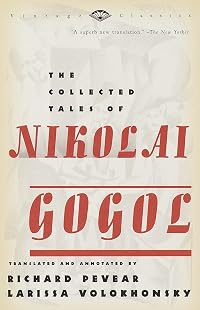
The Collected Tales of Nikolai Gogol
by Nikolai Gogol
On This Page
Description
Using, or rather mimicking, traditional forms of storytelling, Gogol created stories that are complete within themselves and only tangentially connected to a meaning or moral. His work belongs to the school of invention, where each twist and turn of the narrative is a surprise unfettered by obligation to an overarching theme. Selected from Evenings on a Farm Near Dikanka, Mirgorod, and Petersburg Tales and arranged in order of composition, the 13 stories in The Collected Tales of Nikolai show more Gogol encompass the breadth of Gogol's literary achievement. From the demon-haunted "St. John's Eve" to the heartrending humiliations and trials of a titular councilor in "The Overcoat", Gogol's knack for turning literary conventions on their heads, combined with his overt joy in the art of storytelling, shines through in each of the tales. This translation by Richard Pevear and Larissa Volokhonsky is as vigorous and darkly funny as the original Russian. It allows the listener to experience anew the unmistakable genius of a writer who paved the way for Dostoevsky and Kafka. This audio edition is expressively narrated by Peter Batchelor. ©1998 Richard Pevear and Larissa Volokhonsky. Produced and published by Echo Point Books & Media, an independent bookseller in Brattleboro, Vermont. show lessTags
Recommendations
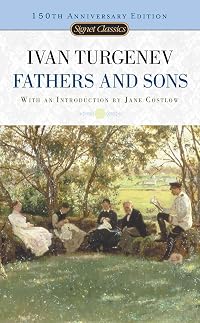
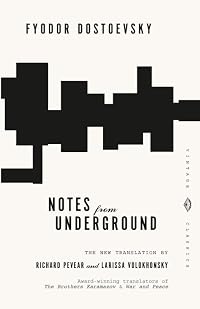
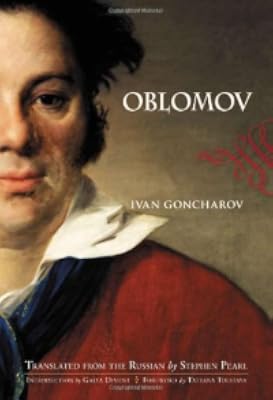


Member Recommendations

Member Reviews
I really loved Dead Souls so I took this book off the TBR with a great deal of anticipation. And a suitably odd collection it is, suitable for Gogol that is to say. Divided into "Ukrainian Tales" and "Petersburg Tales," it of course includes his most famous stories (which I'd read before): "The Nose" and "The Overcoat". Beyond that, supernaturalism vies with surrealism, humor with tragedy, horror with love. I'm glad I read Russian Magical Tales from Pushkin to Platonov first because it introduced me to some of the witches and devils that inhabit Russian folklore -- and that Gogol does with what he will.
Some of the tales collected here are really creepy; "The Terrible Vengeance," "Viy," and "The Portrait" spring to mind, but others have show more elements of creepiness too. Some are humorous, such as "The Story of How Ivan Ivanovich Quarreled with Ivan Nikoforich" and "The Carriage." In the Petersburg stories especially, Gogol satirizes the rankings of clerks and skewers the pretensions of the general class consciousness of Petersburg society.
I read this book over several weeks, so what stands out in mind is a story I read last night, "The Portrait," which as I noted above is very creepy. It tells the tale of a struggling artist who buys (very cheaply) a portrait of a dark man clothed in Asian robes with piercing eyes that seem to follow him everywhere. Later, after a supernatural event, he acquires a bag of gold coins. This, as would seem obvious, changes his life. He squanders his talent and becomes a society portrait painter, gaining ever more wealth. Later, upon viewing the work of a painter who followed the true path of an artist, he questions his decision but finds he can no longer paint the way he used to. He goes mad and dies. In the second part, the true story of the portrait of the man with the piercing eyes comes out. He was a moneylender whose loans to people ended in madness or tragedy for them (and here a tad of antisemitism comes in, because a throwaway line reveals he was Jewish). His portrait was painted by a religious artist in search of a model for the devil. What happens to the artist, and subsequently to all who owned the painting, is horrifying.
But I enjoyed all the stories in this collection. show less
Some of the tales collected here are really creepy; "The Terrible Vengeance," "Viy," and "The Portrait" spring to mind, but others have show more elements of creepiness too. Some are humorous, such as "The Story of How Ivan Ivanovich Quarreled with Ivan Nikoforich" and "The Carriage." In the Petersburg stories especially, Gogol satirizes the rankings of clerks and skewers the pretensions of the general class consciousness of Petersburg society.
I read this book over several weeks, so what stands out in mind is a story I read last night, "The Portrait," which as I noted above is very creepy. It tells the tale of a struggling artist who buys (very cheaply) a portrait of a dark man clothed in Asian robes with piercing eyes that seem to follow him everywhere. Later, after a supernatural event, he acquires a bag of gold coins. This, as would seem obvious, changes his life. He squanders his talent and becomes a society portrait painter, gaining ever more wealth. Later, upon viewing the work of a painter who followed the true path of an artist, he questions his decision but finds he can no longer paint the way he used to. He goes mad and dies. In the second part, the true story of the portrait of the man with the piercing eyes comes out. He was a moneylender whose loans to people ended in madness or tragedy for them (and here a tad of antisemitism comes in, because a throwaway line reveals he was Jewish). His portrait was painted by a religious artist in search of a model for the devil. What happens to the artist, and subsequently to all who owned the painting, is horrifying.
But I enjoyed all the stories in this collection. show less
Utterly engaging, puzzling, delightful, frustrating, and unique. Nabokov writes that "after reading Gogol one's eyes become gogolized and one is apt to see bits of his world in the most unexpected places...It appeals to that secret depth of the human soul where the shadows of other worlds pass like the shadows of nameless and soundless ships." Amen.
As with all short story collections, some stories worked better for me than others, and in general, I found that I prefer Gogol's Petersburg tales to his Ukrainian stories. Gogol is at his weird and wonderful best in some of these. While the Ukrainian tales were interesting, I found myself most drawn to some of the stories I'd read before in various classes - The Nose and Diary of a Madman in particular. What can I say, I like them weird. 4 stars.
I was pleasantly surprised by Gogol's short stories, as they were much more fun to read than I was expecting. Especially when it comes to short stories (not usually my favorite medium) and the great writers of western canon, I expect the pieces to be well-crafted, but also tending toward the more formal, and not necessarily entertaining. Gogol's short stories are not just well-written, but varied in subject matter, creative in execution, and are very entertaining to boot.
Gogol's Dead Souls didn't work for me. It was excellently written, and funny in parts, but the structure was repetitive, and the joke was subject to diminishing returns. These short stories emphasize what is best in Gogol's writing, and avoids many aspects I found show more irritating in his longer work. For one, they are not at all repetitive- on the contrary, they feature impressive variety. The first few stories in this collection focus on folklore, other stories paint a portrait of country life, other stories look at the bustle of cities. Some stories are funny, others creepy (Viy, The Portrait), still others bizarre (The Nose, The Diary of a Madman), and even a couple sad tales are thrown into the mix (Old World Landowners, The Overcoat). Gogol furthermore explores different formats with his stories, as some have a frame narrative (St. John's Eve), others have a chatty narrator (Nevsky Prospect), another is epistolary (Diary, obviously). Every story in this collection is different, and not just on the surface, as the stories have different tones and moods as well. I didn't think there was a dud in the bunch (well, The Carriage was essentially a dozen page long joke, and not a laugh-out-loud funny one at that, but even it managed to be amusing). By the time I finished this collection Gogol's writing had inspired a range of emotions in me, as well as given me a full image of Ukrainian and Russian life in the 1800s, from the corrupting cities to the witch-haunted countryside.
The collection is also great fun to read in that Gogol's stories are a clear inspiration to many of the authors that came after him. Reading The Night Before Christmas can't help but remind you of Bulgakov's The Master and Margarita. The Nose is a less unnerving but still surreal precursor to the works of Kafka. It's easy to imagine that Oscar Wilde read The Portrait sometime prior to writing his own story on the subject. It's equally easy to imagine that Lovecraft read The Portrait, and probably The Terrible Vengeance too given its depiction of man as insignificant pawns toyed with by greater powers that are indifferent to our fate. Gogol is one of the big names in Russian literature, not just for the quality of his writing, but for blazing a trail that many later authors followed, and noticing these influences gave me another layer of enjoyment in his writing.
That isn't to say that his works are flawless, however. A few stories, namely Nevsky Prospect and The Portrait, felt like two tales shoved together despite differences in tone that didn't mesh well together. A few of the stories felt unfinished, like both of the Ivan stories (though one was explicitly left unfinished, and to be honest, what annoyed me the most about that story was that I wanted to know the ending, which is pretty much the weakest criticism there is). As already mentioned, The Carriage wasn't quite up to snuff with the other works in this collection. All that being said, however, the collection was still excellent overall. I haven't read enough Chekhov yet to say for sure, but as of right now I'm putting Gogol above both Tolstoy and Dostoevsky as the finest writer of Russian short stories I've yet come across. Definitely give this collection a read. show less
Gogol's Dead Souls didn't work for me. It was excellently written, and funny in parts, but the structure was repetitive, and the joke was subject to diminishing returns. These short stories emphasize what is best in Gogol's writing, and avoids many aspects I found show more irritating in his longer work. For one, they are not at all repetitive- on the contrary, they feature impressive variety. The first few stories in this collection focus on folklore, other stories paint a portrait of country life, other stories look at the bustle of cities. Some stories are funny, others creepy (Viy, The Portrait), still others bizarre (The Nose, The Diary of a Madman), and even a couple sad tales are thrown into the mix (Old World Landowners, The Overcoat). Gogol furthermore explores different formats with his stories, as some have a frame narrative (St. John's Eve), others have a chatty narrator (Nevsky Prospect), another is epistolary (Diary, obviously). Every story in this collection is different, and not just on the surface, as the stories have different tones and moods as well. I didn't think there was a dud in the bunch (well, The Carriage was essentially a dozen page long joke, and not a laugh-out-loud funny one at that, but even it managed to be amusing). By the time I finished this collection Gogol's writing had inspired a range of emotions in me, as well as given me a full image of Ukrainian and Russian life in the 1800s, from the corrupting cities to the witch-haunted countryside.
The collection is also great fun to read in that Gogol's stories are a clear inspiration to many of the authors that came after him. Reading The Night Before Christmas can't help but remind you of Bulgakov's The Master and Margarita. The Nose is a less unnerving but still surreal precursor to the works of Kafka. It's easy to imagine that Oscar Wilde read The Portrait sometime prior to writing his own story on the subject. It's equally easy to imagine that Lovecraft read The Portrait, and probably The Terrible Vengeance too given its depiction of man as insignificant pawns toyed with by greater powers that are indifferent to our fate. Gogol is one of the big names in Russian literature, not just for the quality of his writing, but for blazing a trail that many later authors followed, and noticing these influences gave me another layer of enjoyment in his writing.
That isn't to say that his works are flawless, however. A few stories, namely Nevsky Prospect and The Portrait, felt like two tales shoved together despite differences in tone that didn't mesh well together. A few of the stories felt unfinished, like both of the Ivan stories (though one was explicitly left unfinished, and to be honest, what annoyed me the most about that story was that I wanted to know the ending, which is pretty much the weakest criticism there is). As already mentioned, The Carriage wasn't quite up to snuff with the other works in this collection. All that being said, however, the collection was still excellent overall. I haven't read enough Chekhov yet to say for sure, but as of right now I'm putting Gogol above both Tolstoy and Dostoevsky as the finest writer of Russian short stories I've yet come across. Definitely give this collection a read. show less
God, what is our life! An eternal discord between dream and reality!This Everyman's Library edition collects all of Nikolai Gogol's short stories. The Ukrainian-born Gogol wrote in the nineteenth century and is considered to be the bridge between Russian romantic fiction and modern realism. He influenced the likes of Dostoevsky, Chekhov, and Kafka. The collection is divided into two sections: Ukrainian Tales and Petersburg Tales.
Given that Gogol came from the rural Ukraine and later moved to the city, one might think the two types of tales reflect these different times in his life. In fact, though, Gogol's portrayal of Ukrainian peasant life is inaccurate and largely made up by the author, despite its authentic-seeming folkloric show more framework. See, Gogol was the type of writer who just kind of winged it as he went along. This can make for entertaining reading, as one is constantly surprised by what happens next in a story.
In these tales, Gogol's prose presents itself as an erratic blend of magical realism, absurdity, and satire. Gogol apparently was unimpressed with Petersburg and, with the inspirational help of his government work, quickly set about lampooning urban society with a gleeful viciousness. Minor officials are openly mocked for their vanity and pettiness. People lose their noses. Dogs talk and even write letters. Plot is tangential to Gogol's prosaic meandering. It's almost as if one can point to the sections of a story where he got bored and decided to shift gears. He doesn't hide this.
One can only imagine the deep impression Gogol's writing must have had on other writers of his time who were beginning to yearn for a break from the staid sentimentality of existing fiction. Gogol was a rule-breaker, and these tales show a writer intent on following his crazed muse far and beyond the existing literary boundaries of the time. Recommended for fans of all the other modernist writers who eschewed literary conventions while indulging in robust satire of the absurd mess we call modern society. show less
There's not a bad story in this batch! But I especially loved "Nevsky Prospect" and "The Story of How Ivan Ivanovich Quarreled with Ivan Nikiforovich". These are long stories, but they are cozy and full-of-life stories that I want to read out loud by a campfire. Nobody alternates between the absurdly comical and the frightfully chilling like Gogol. The first half (Ukrainian Tales) tells more stories that are mystical in nature, sounding sometimes like folktales, dealing with witches and devils. The second half (Petersburg Tales) have some of that as well, but more surreal unexplained occurrences (like "The Nose") and other oddities. Gogol makes hilarious observations about his characters and their hypocrisies. He also inserts his own show more (or his persona's) storyteller voice in almost every story, wedging himself inside of them (sometimes the narrator's voice adds a whole new dimension to the basic story) would hardly work for any other writer but Gogol is not just any other writer. Ah, but before we go on, we should first acquaint the reader somewhat with this remarkable character, Nikolai Gogol... show less
My first reaction to Gogol was bewilderment. It's funny, and engaging to read, but...what the hell is it about? I'm not sure what the point of "Diary of a Madman" is, although I know I enjoyed it.
Pevear and Volokhonsky's intro is helpful, although it contains a number of minor spoilers. Their point is that if you try to understand Gogol, you are failing: Gogol himself didn't understand Gogol. "We still do not know what Gogol is," says some guy they quoted. P&V write that Gogol, as compared to traditional storytellers, "has nothing in mind. Memory plays no part in his work. He does not know where the act of writing will lead him."
Pushkin, an early and ardent supporter, wrote, "Here is real gaiety - honest, unconstrained, without mincing, show more without primness. And in places, what poetry! What sensitivity! All this is so unusual in our present-day literature that I still haven't recovered." And that seems fair to me. It's still unusual now (although at least we have Borges); maybe we should shut up about what it means and just have a good time with it. show less
Pevear and Volokhonsky's intro is helpful, although it contains a number of minor spoilers. Their point is that if you try to understand Gogol, you are failing: Gogol himself didn't understand Gogol. "We still do not know what Gogol is," says some guy they quoted. P&V write that Gogol, as compared to traditional storytellers, "has nothing in mind. Memory plays no part in his work. He does not know where the act of writing will lead him."
Pushkin, an early and ardent supporter, wrote, "Here is real gaiety - honest, unconstrained, without mincing, show more without primness. And in places, what poetry! What sensitivity! All this is so unusual in our present-day literature that I still haven't recovered." And that seems fair to me. It's still unusual now (although at least we have Borges); maybe we should shut up about what it means and just have a good time with it. show less
Members
- Recently Added By
Lists

Russian Literature
184 works; 35 members

Top Five Books of 2013
1,562 works; 721 members

Favourite 19th century fiction
257 works; 62 members

Short Story Collections and Anthologies
261 works; 42 members
Harold Bloom - The Western Canon: C. The Democratic Age
336 works; 15 members

A Reading List
100 works; 3 members

The Luca Guadagnino Universe
62 works; 1 member

Best literature ever!
39 works; 1 member
Author Information

597+ Works 29,013 Members
Nikolai Vasilevich Gogol was born in 1809 in the Ukraine. His father was an amateur playwright who had a small estate with a number of serfs. From the ages of 12 to 19, young Gogol attended a boarding school where he became known for his sharp wit and ability to amuse his classmates. After school he worked as a government clerk. He soon began show more writing memories of his childhood. His quaint depictions of the Ukrainian countryside marked his style and helped to make him famous. Gogol quickly gained fame and formed a friendship with the influential poet, Aleksandr Pushkin. Gogol is largely remembered for his realistic characterizations, his rich imagination, and his humorous style. His works include Mirgorod, a collection of short stories including Taras Bulba. Gogol's wit is evident in his short story, The Nose, where a man's nose wanders off around town in a carriage. Gogol's masterpiece is the novel Dead Souls. In this work, a swindler plots to buy from landowners their dead serfs. Towards the end of Gogol's life, his creative powers faded and he fled to Moscow. Here, he came under the power of a fanatical priest. Ten days before his death he burned some manuscripts of the second part of Dead Souls. He died of starvation in 1852, on the cusp of madness. (Bowker Author Biography) show less
Some Editions
Series
Belongs to Publisher Series
Work Relationships
Contains
Viy by Nikolai Gogol
Inspired
Common Knowledge
- Alternate titles
- The Collected Tales of Nikolai Gogol; Collected Tales; Collected Stories
- Important places
- Ukraine; Russia
- Original language
- Russian
- Disambiguation notice
- Contains:
St. John's Eve, The Night Before Christmas, The Terrible Vengeance, Ivan Fyodorovich Shponka & His Aunt, Old World Landowners, Viy, The Story of How Ivan Ivanovich Quarreled with Ivan Nikiforovich, Nevsky Pro... (show all)spect, The Diary of a Madman, The Nose, The Carriage, The Portrait; The Overcoat.
Please don't combine with any single story or collections containing different story selections!
Classifications
- Genres
- Fiction and Literature, General Fiction
- DDC/MDS
- 891.733 — Literature & rhetoric Literatures of other languages East Indo-European and Celtic literatures Russian and East Slavic languages Russian fiction 1800–1917
- LCC
- PG3333 .A6 — Language and Literature Slavic languages and literatures. Baltic languages. Albanian language Slavic. Baltic. Albanian Russian literature Individual authors and works 1800-1870 Gogol'
- BISAC
Statistics
- Members
- 1,866
- Popularity
- 11,587
- Reviews
- 19
- Rating
- (4.27)
- Languages
- English, Italian, Polish, Russian
- Media
- Paper, Audiobook, Ebook
- ISBNs
- 14
- ASINs
- 7