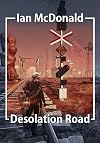
On This Page
Description
It all began thirty years ago on Mars, with a greenperson. But by the time it all finished, the town of Desolation Road had experienced every conceivable abnormality; from Adam Black's Wonderful Travelling Chautauqua and Educational 'Stravaganza (complete with its very own captive angel), to the Astounding Tatterdemalion Air Bazaar. Its inhabitants ranged from Dr. Alimantando, the town's founder and resident genius, to the Babooshka, a barren grandmother who just wants her own child—grown show more in a fruit jar; from Rajendra Das, mechanical hobo who has a mystical way with machines to the Gallacelli brothers, identical triplets who fell in love with—and married—the same woman."Ian McDonald's Desolation Road is one of my most personally influential novels. It's an epic tale of the terraforming of Mars, whose sweep captures the birth and death of mythologies, economics, art, revolution, politics...Desolation Road pays homage to David Byrne's Catherine Wheel, to Ray Bradbury's entire canon and to Jack Vance, blending all these disparate creators in a way that surprises, delights, then surprises and delights again." –Cory Doctorow
"McDonald's first novel, it absolutely bowled me over when it came out, and while I have read everything he's published since, and admire all of it and like most of it, this remains my favourite...some of the most beautiful prose imaginable...If you ever want to demonstrate how different science fiction can be, what an incredible range and sweep of things are published with a little spaceship on the spine, Desolation Road is a shining datapoint, because it isn't like anything else and yet it is coming from a knowledge of what the genre can do and can be and making something new out of it." –Jo Walton
"This is the kind of novel I long to find yet seldom do. Desolation Road is a rara avis...Extraordinary and more than that!" –Philip José Farmer
. show less
Tags
Recommendations
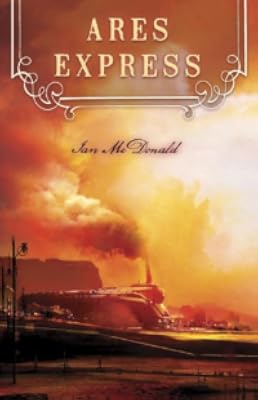
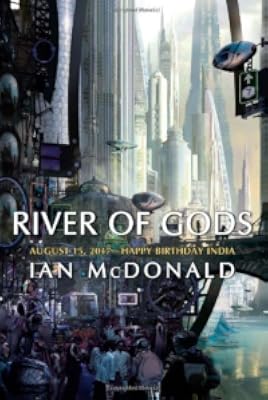


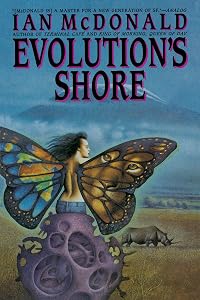
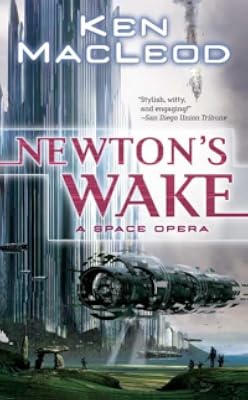
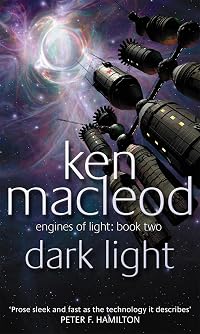
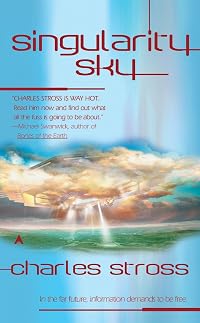
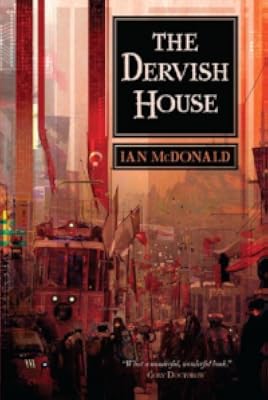





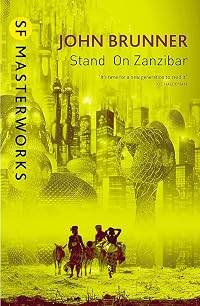
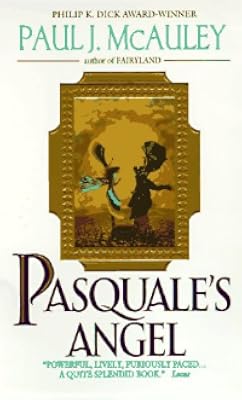
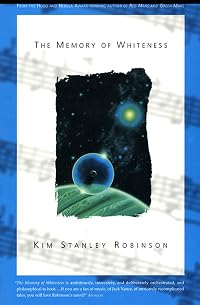
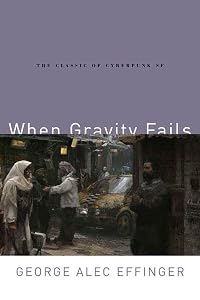


Member Recommendations
Member Reviews
The jacket copy promising "every conceivable abnormality" had me expecting a more comical romp than the wry and profound storytelling McDonald provides in his first novel. Although in many ways the most science-fictiony of science fiction--a story set on Mars during a period of human settlement--there are many other literary veins enriching Desolation Road. The little serendipitous town by the train tracks certainly has a 19th-century-US Western feel to it that gave the book a steampunk vibe (this well before the coinage of the genre label). Some readers have accused McDonald of "magical realism" in this Martian novel, which nevertheless intensely engages religious and political themes. The net effect for me was something like a hybrid show more between Little, Big and Dune.
There must be many influences and allusions that flew past me. Critics commonly point to homages to Jack Vance and Ray Bradbury. The 1985 Terry Gilliam movie Brazil is "sampled," if you will, in chapters 25 and 35. Cory Doctorow notes that the Catherine Wheel in the religion/planetary administration of McDonald's Mars alludes to the music of David Byrne. It's clear that McDonald has taken the old Clarke "indistinguishable from magic" saw to heart, and thus lays himself open to the charge of fantasy in SF drag, but if time travel is acceptable as science fiction, the rest of this kit should pass muster.
Sometime around page 150 I started to wonder, "What's with all the characters being sexually active at the age of nine?" It wasn't until I read about the grandfather of mature grandchildren thinking "the thoughts a man of forty-five thinks" that I realized these are Martian years! There are no C.E. dates in the book, but the story must start in the 28th century at the earliest, given some information about the timescale of "manforming" Mars. It takes place over roughly three human generations, each of which conveniently corresponds to a "decade" in Martian reckoning (i.e. 18.8 of our years).
McDonald very comprehensively adheres to the framing of Mars as "the world," with the word "earth" used only to reference soil and planetary surface, while planet Earth is called "the Motherworld." And still the Martian milieu is full of clever evocations of 20th-century mass culture.
The chapters are short and delicious, the vivid characters abundant, and the plot is so manifold that each of chapters 57 through 63 constitutes an independent climax, leaving room for a further half-dozen chapters of denouement and closure. It is a well-formed independent novel, and it does not in any way beg a sequel. The one McDonald eventually wrote (Ares Express) doubtless leverages the terrific world-building in Desolation Road, but I won't be surprised if it is at a significant remove from the characters and events in its predecessor.
This is one of those books that I devoured rapidly, and then toward the end I started to feel sad that it would soon be over. I recommend it without reservation. show less
There must be many influences and allusions that flew past me. Critics commonly point to homages to Jack Vance and Ray Bradbury. The 1985 Terry Gilliam movie Brazil is "sampled," if you will, in chapters 25 and 35. Cory Doctorow notes that the Catherine Wheel in the religion/planetary administration of McDonald's Mars alludes to the music of David Byrne. It's clear that McDonald has taken the old Clarke "indistinguishable from magic" saw to heart, and thus lays himself open to the charge of fantasy in SF drag, but if time travel is acceptable as science fiction, the rest of this kit should pass muster.
Sometime around page 150 I started to wonder, "What's with all the characters being sexually active at the age of nine?" It wasn't until I read about the grandfather of mature grandchildren thinking "the thoughts a man of forty-five thinks" that I realized these are Martian years! There are no C.E. dates in the book, but the story must start in the 28th century at the earliest, given some information about the timescale of "manforming" Mars. It takes place over roughly three human generations, each of which conveniently corresponds to a "decade" in Martian reckoning (i.e. 18.8 of our years).
McDonald very comprehensively adheres to the framing of Mars as "the world," with the word "earth" used only to reference soil and planetary surface, while planet Earth is called "the Motherworld." And still the Martian milieu is full of clever evocations of 20th-century mass culture.
The chapters are short and delicious, the vivid characters abundant, and the plot is so manifold that each of chapters 57 through 63 constitutes an independent climax, leaving room for a further half-dozen chapters of denouement and closure. It is a well-formed independent novel, and it does not in any way beg a sequel. The one McDonald eventually wrote (Ares Express) doubtless leverages the terrific world-building in Desolation Road, but I won't be surprised if it is at a significant remove from the characters and events in its predecessor.
This is one of those books that I devoured rapidly, and then toward the end I started to feel sad that it would soon be over. I recommend it without reservation. show less
Rating: 4.75* of five
The Publisher Says: It all began thirty years ago on Mars, with a greenperson. But by the time it all finished, the town of Desolation Road had experienced every conceivable abnormality from Adam Black's Wonderful Travelling Chautauqua and Educational 'Stravaganza (complete with its very own captive angel) to the Astounding Tatterdemalion Air Bazaar. Its inhabitants ranged from Dr. Alimantando, the town's founder and resident genius, to the Babooshka, a barren grandmother who just wants her own child-grown in a fruit jar; from Rajendra Das, mechanical hobo who has a mystical way with machines to the Gallacelli brothers, identical triplets who fell in love with-and married-the same woman.
My Review: Earth can't show more sustain its current population in the style to which all 7 billion of us wish to become accustomed, and no one is predicting a sudden outbreak of common sense and birth prevention to bring the numbers down. What are we to do?
Move, of course. Where? More than one place. There's the Metropolis, the geosynchronous city in space reached by fixed space elevators; but that's filling up too; wherever shall we go?
Well, Mars, for one. The Remote Orbital Terraforming and Environmental Control Headquarters (ROTECH for short) consortium is created on the Motherworld, sent into a moonbelt orbit around Mars, and given a thousand years of development, has finally produced a planetary ecosystem that can sustain unsuited humans in the open.
ROTECH governs Mars as lightly as any frontier is governed. People, let loose from cities and rules, pretty much do what comes naturally. They have babies, they make farms, they organize themselves into Us and Them, and they do it all at breakneck speed without worrying too hard about consequences. When Consequences rain down from the Heavens, well, adapt or die.
Ian McDonald does in 363 pages what others do in 1000. He makes Mars come alive, he peoples it with fabulous characters (human and cyborg and robotic), he creates a logical thought experiment...how can humanity survive its inevitable wearing out of the Motherworld?...and uses it to tell us about ourselves, about what we are *actually* made of, and about what triumphs and tragedies flow naturally and inevitably from that.
I adore this book.
There.
No, really, that's it. I adore this book. You should read it, especially if you point your booger-holder at the sky when science fiction is mentioned. I don't read THAT people should read this. If you don't, then you should be ashamed of your inflexibility.
I even re-read Jane Austen recently. And liked it. So. What's that “I don't like THAT” stuff again? show less
The Publisher Says: It all began thirty years ago on Mars, with a greenperson. But by the time it all finished, the town of Desolation Road had experienced every conceivable abnormality from Adam Black's Wonderful Travelling Chautauqua and Educational 'Stravaganza (complete with its very own captive angel) to the Astounding Tatterdemalion Air Bazaar. Its inhabitants ranged from Dr. Alimantando, the town's founder and resident genius, to the Babooshka, a barren grandmother who just wants her own child-grown in a fruit jar; from Rajendra Das, mechanical hobo who has a mystical way with machines to the Gallacelli brothers, identical triplets who fell in love with-and married-the same woman.
My Review: Earth can't show more sustain its current population in the style to which all 7 billion of us wish to become accustomed, and no one is predicting a sudden outbreak of common sense and birth prevention to bring the numbers down. What are we to do?
Move, of course. Where? More than one place. There's the Metropolis, the geosynchronous city in space reached by fixed space elevators; but that's filling up too; wherever shall we go?
Well, Mars, for one. The Remote Orbital Terraforming and Environmental Control Headquarters (ROTECH for short) consortium is created on the Motherworld, sent into a moonbelt orbit around Mars, and given a thousand years of development, has finally produced a planetary ecosystem that can sustain unsuited humans in the open.
ROTECH governs Mars as lightly as any frontier is governed. People, let loose from cities and rules, pretty much do what comes naturally. They have babies, they make farms, they organize themselves into Us and Them, and they do it all at breakneck speed without worrying too hard about consequences. When Consequences rain down from the Heavens, well, adapt or die.
Ian McDonald does in 363 pages what others do in 1000. He makes Mars come alive, he peoples it with fabulous characters (human and cyborg and robotic), he creates a logical thought experiment...how can humanity survive its inevitable wearing out of the Motherworld?...and uses it to tell us about ourselves, about what we are *actually* made of, and about what triumphs and tragedies flow naturally and inevitably from that.
I adore this book.
There.
No, really, that's it. I adore this book. You should read it, especially if you point your booger-holder at the sky when science fiction is mentioned. I don't read THAT people should read this. If you don't, then you should be ashamed of your inflexibility.
I even re-read Jane Austen recently. And liked it. So. What's that “I don't like THAT” stuff again? show less
‘Camino Desolación’ (Desolation Road, 1988) es una de las mejores novelas de ciencia ficción que he leído nunca, pero también hay que añadir que posiblemente no sea una novela para cualquier público. Alejada del marco científico, la opera prima del inglés Ian McDonald fue un soplo de aire fresco para el género. La novela nos cuenta una historia del futuro en Marte, aunque no se trata de un Marte al estilo Kim Stanley Robinson o Greg Bear; estaría más cercano a las ‘Crónicas marcianas’ de Ray Bradbury. Lo que hace McDonald es mezclar la ciencia ficción con el realismo mágico. Sin abandonar el sentido de la maravilla, la historia nos presenta una serie de historias y personajes que se van entremezclando, show more mostrándonos un universo calidoiscópico. De esta manera, la narración se vuelve evocadora y cercana al cuento tradicional.
La historia, que como toda novela-río abarca una serie de años, es imposible de resumir. Todo comienza con el doctor Alimantando atravesando el desierto en su tabla eólica, que va siguiendo las indicaciones de un hombrecillo verde. En un momento dado, se encuentra con una órfica, una máquina terraformadora de la compañía ROTECH, lugar en el que se fundará el pueblo que Alimantando da en llamar Camino Desolación. Y a partir de aquí los personajes, todos ellos memorables, irán añadiéndose, cada uno con su historia personal: el señor Jericó, Rajandra Das, Persis Jirones, los Mandela, Mikal Margolis, Marya Quinsana, la Feria Ambulante y Fantasía Educativa de Adam Black, etc.
La imaginación de McDonald es soberbia y su estilo portentoso. Las breves piezas de que se compone la novela están perfectamente trazadas, y los personajes destilan humanidad y humor, siendo absolutamente creíbles. De esta manera, entre la ciencia ficción, el surrealismo, la sátira y la novela fronteriza, el conjunto convierte ‘Camino Desolación’ en todo un clásico. (Desgraciadamente, la edición en castellano lleva descatalogada desde hace más de veinte años, y solo se encuentra en librerías de viejo, mercado de segunda mano y ediciones digitales pirata.) show less
La historia, que como toda novela-río abarca una serie de años, es imposible de resumir. Todo comienza con el doctor Alimantando atravesando el desierto en su tabla eólica, que va siguiendo las indicaciones de un hombrecillo verde. En un momento dado, se encuentra con una órfica, una máquina terraformadora de la compañía ROTECH, lugar en el que se fundará el pueblo que Alimantando da en llamar Camino Desolación. Y a partir de aquí los personajes, todos ellos memorables, irán añadiéndose, cada uno con su historia personal: el señor Jericó, Rajandra Das, Persis Jirones, los Mandela, Mikal Margolis, Marya Quinsana, la Feria Ambulante y Fantasía Educativa de Adam Black, etc.
La imaginación de McDonald es soberbia y su estilo portentoso. Las breves piezas de que se compone la novela están perfectamente trazadas, y los personajes destilan humanidad y humor, siendo absolutamente creíbles. De esta manera, entre la ciencia ficción, el surrealismo, la sátira y la novela fronteriza, el conjunto convierte ‘Camino Desolación’ en todo un clásico. (Desgraciadamente, la edición en castellano lleva descatalogada desde hace más de veinte años, y solo se encuentra en librerías de viejo, mercado de segunda mano y ediciones digitales pirata.) show less
'Desolation Road' is not easy to characterise. It is epic, with strong elements of both science fiction and fantasy, magical realist in tone and a satire on our species. It also has an element of human soap opera embedded in the planetary opera of a far future Mars.
This is one of those books which requires either a very detailed review of incident or something much shorter to give the prospective reader some idea of what they are in for. On balance, I am going for the latter here.
First of all, you might have to have an inclination towards wry humour in your science fiction. I do not. I usually loathe Pratchettery as a waste of my valuable time but here McDonald rises above the potential for silliness and absurdity because of the show more sharpness of his dark political satire.
The book starts with an obvious homage to Bradbury's Mars. The signal is sent that this Mars, like Bradbury's, is not supposed to be an actual Mars even in the far future but an imaginative counterfoil to our Earth-bound image of ourselves.
If Bradbury was reflecting on post-war America and its origins in the elimination and forgetting of the cultures it had to walk over to create its own modernity, McDonald (in 1988) seems to be reflecting on the patterns of rise and fall inherent in the human project but here translated to Mars.
The introductory fantasy of a settlement founded on the guidance of a mysterious 'green man' (a nice convergence of both earthly folklore and Martian fantasy) only has closure in the final pages which, of course, I will not describe for fear of a spoiler.
The book is like an onion. The tale of Dr Alimentando and the Green Man enfolds a tale about the weaponisation and complexity of time that goes beyond the Moorcockian. This then enfolds the story of the town and its early settlers which then enfolds the often violent human and political satire.
In between the opening and final punctuation points, McDonald's fantasy unfolds with the magical and fantasy elements given (barely at times) some possible far future scientific basis in the sociology and techno-innovation involved in terraforming a planet we certainly know to be a dead one.
There is a futuristic steam punk and 'blade runner' element even if the network of railways criss-crossing the world and its continents are driven by tokamaks and the 'engines' can evolve into a form of ecstatic sentience. Ecstatic violence is central to the novel as if this is also central to us as humans.
The whole thing is a mass of references to past and then-current science fiction in an explosion of creativity that, for once in science fiction that takes this route, holds together because the themes weave like a tapestry (a tapestry plays a role in the tale) that we can view as a whole.
The settlement of Desolation Road starts as a refuge for human flotsam and jetsam (McDonald, although British, is channelling American cultural themes at all times) and grows into something significant only to collapse under its own weight within the settlers' (long) living memory.
There is a brute, wasteful and inept capitalism. There are workers and a community which combines against it only to be crushed. There is a brutal war of resistance against order by a liberation army that is as nasty as its 'democratic enemies'. There are insane religions and irrationalities.
Indeed, if there is an overarching theme to the novel buried in all the incident (a lot happens in short chapters that often read like very short stories) it seems to lie in the conflict (possibly doubly resolved at the end) between scientific reason and the mystical and ecstatic.
McDonald has one skill that is too easily forgotten in this sort of novel. His characters are not just symbols or stereotypes and, if not entirely real either, they are very well drawn and complex so that his symbolisation of the tussle between reason and mysticism becomes plausible.
The weaving of the story is, in fact, exemplary. The dark humour and detachment are appropriate. The ideas may not themselves always be so plausible but the way they flow is. It is up to you to stop and think about whether it all hangs together but, if you do, you will lose the momentum of the tale.
If it has a flaw, it lies in its exuberance. While it does not overwhelm with invented technologies and ideas and it builds a world that we can suspend belief sufficiently in to enjoy, its tale is a fantasy wearing science fiction clothes and any reader should go in expecting that. show less
This is one of those books which requires either a very detailed review of incident or something much shorter to give the prospective reader some idea of what they are in for. On balance, I am going for the latter here.
First of all, you might have to have an inclination towards wry humour in your science fiction. I do not. I usually loathe Pratchettery as a waste of my valuable time but here McDonald rises above the potential for silliness and absurdity because of the show more sharpness of his dark political satire.
The book starts with an obvious homage to Bradbury's Mars. The signal is sent that this Mars, like Bradbury's, is not supposed to be an actual Mars even in the far future but an imaginative counterfoil to our Earth-bound image of ourselves.
If Bradbury was reflecting on post-war America and its origins in the elimination and forgetting of the cultures it had to walk over to create its own modernity, McDonald (in 1988) seems to be reflecting on the patterns of rise and fall inherent in the human project but here translated to Mars.
The introductory fantasy of a settlement founded on the guidance of a mysterious 'green man' (a nice convergence of both earthly folklore and Martian fantasy) only has closure in the final pages which, of course, I will not describe for fear of a spoiler.
The book is like an onion. The tale of Dr Alimentando and the Green Man enfolds a tale about the weaponisation and complexity of time that goes beyond the Moorcockian. This then enfolds the story of the town and its early settlers which then enfolds the often violent human and political satire.
In between the opening and final punctuation points, McDonald's fantasy unfolds with the magical and fantasy elements given (barely at times) some possible far future scientific basis in the sociology and techno-innovation involved in terraforming a planet we certainly know to be a dead one.
There is a futuristic steam punk and 'blade runner' element even if the network of railways criss-crossing the world and its continents are driven by tokamaks and the 'engines' can evolve into a form of ecstatic sentience. Ecstatic violence is central to the novel as if this is also central to us as humans.
The whole thing is a mass of references to past and then-current science fiction in an explosion of creativity that, for once in science fiction that takes this route, holds together because the themes weave like a tapestry (a tapestry plays a role in the tale) that we can view as a whole.
The settlement of Desolation Road starts as a refuge for human flotsam and jetsam (McDonald, although British, is channelling American cultural themes at all times) and grows into something significant only to collapse under its own weight within the settlers' (long) living memory.
There is a brute, wasteful and inept capitalism. There are workers and a community which combines against it only to be crushed. There is a brutal war of resistance against order by a liberation army that is as nasty as its 'democratic enemies'. There are insane religions and irrationalities.
Indeed, if there is an overarching theme to the novel buried in all the incident (a lot happens in short chapters that often read like very short stories) it seems to lie in the conflict (possibly doubly resolved at the end) between scientific reason and the mystical and ecstatic.
McDonald has one skill that is too easily forgotten in this sort of novel. His characters are not just symbols or stereotypes and, if not entirely real either, they are very well drawn and complex so that his symbolisation of the tussle between reason and mysticism becomes plausible.
The weaving of the story is, in fact, exemplary. The dark humour and detachment are appropriate. The ideas may not themselves always be so plausible but the way they flow is. It is up to you to stop and think about whether it all hangs together but, if you do, you will lose the momentum of the tale.
If it has a flaw, it lies in its exuberance. While it does not overwhelm with invented technologies and ideas and it builds a world that we can suspend belief sufficiently in to enjoy, its tale is a fantasy wearing science fiction clothes and any reader should go in expecting that. show less
Desolation Road by Ian McDonald was very good, and well worth reading. I didn't love it as much as some people have (ahem), which I understand puts me in the category of "heretical apostate." Can't tell you how many times I was put into time out for that one when I was young.
Dr. Alimantando unexpectedly has a greenperson emerge from the Martian desert and help him construct, from recently deceased technology, what will become the town of Desolation Road. A little different from your average fare, right? The book then goes through 23 amazingly event-packed years set in Desolation Road or tying back to it (although if my math is right, that'd be something like 46 here). Lust, romance, avarice, power hunger, religious longing, and a whole show more host of other strongly felt human yearnings, bring both growth and calamity to Desolation Road, and also help it dodge dissolution and annihilation. There's some fancy footwork with a localized, time-altering chronometer threaded throughout the story which also helps keep Desolation Road whole.
This book has some beautiful moments. The descriptions of the music played by the extraordinarily gifted The Hand, of the kind I have found pathetically lame in other books, were instead transporting. The scene in which his music tries to draw rain to parched Desolation Road is extraordinary. The rebellious All Swing Music is similarly well-described. A scene in which an elderly town couple explores their strangely enlarging garden, using twine to help them find their way back to the gate, is, well, idyllic and sublime. I hope my wife and I get a chance like that someday.
There were some things that didn't work so well for me. The author has a penchant in the book for long lists of object types or places or people which had me wiping the glaze from my eyes. "There were young men, old men, middle-aged men, tall men, short men, fat men, thin men, sick men, healthy men, bald men, hairy men . . ." This sentence goes on for 16 more lines!
That's a minor quibble in this expansive, creative work. It's filled with memorable characters, including the Greatest Snooker Player in the World and a reluctant goddess of machinery. The author undoubtedly had a good time writing it, and there are a lot of good times for the reader in it as well. show less
Dr. Alimantando unexpectedly has a greenperson emerge from the Martian desert and help him construct, from recently deceased technology, what will become the town of Desolation Road. A little different from your average fare, right? The book then goes through 23 amazingly event-packed years set in Desolation Road or tying back to it (although if my math is right, that'd be something like 46 here). Lust, romance, avarice, power hunger, religious longing, and a whole show more host of other strongly felt human yearnings, bring both growth and calamity to Desolation Road, and also help it dodge dissolution and annihilation. There's some fancy footwork with a localized, time-altering chronometer threaded throughout the story which also helps keep Desolation Road whole.
This book has some beautiful moments. The descriptions of the music played by the extraordinarily gifted The Hand, of the kind I have found pathetically lame in other books, were instead transporting. The scene in which his music tries to draw rain to parched Desolation Road is extraordinary. The rebellious All Swing Music is similarly well-described. A scene in which an elderly town couple explores their strangely enlarging garden, using twine to help them find their way back to the gate, is, well, idyllic and sublime. I hope my wife and I get a chance like that someday.
There were some things that didn't work so well for me. The author has a penchant in the book for long lists of object types or places or people which had me wiping the glaze from my eyes. "There were young men, old men, middle-aged men, tall men, short men, fat men, thin men, sick men, healthy men, bald men, hairy men . . ." This sentence goes on for 16 more lines!
That's a minor quibble in this expansive, creative work. It's filled with memorable characters, including the Greatest Snooker Player in the World and a reluctant goddess of machinery. The author undoubtedly had a good time writing it, and there are a lot of good times for the reader in it as well. show less
An amazingly assured first novel. I've noticed that other online reviews see their favorite "odd" author in this novel, e.g., Jack Vance. For me, the strongest echoes were of R A Lafferty and Bradbury. But unlike Lafferty, who could never quite make the novel form work, or Bradbury, whose Martian Chronicles was clearly no coherent narrative, McDonald is able to weave this collection of tall tales into a cohesive whole. This is a Mars supposedly terraformed to its current livable state, but that's just to make it seem like SF. People travel by railroad or old planes, the traveling side show comes to town periodically, etc. All important points in time have a repeating form, e.g., 12 minutes of 12, 6 minutes of 6, and so on. The stories show more tell of the founding, growth, heyday, and eventual downfall of the town of Desolation Road. I was concerned in the first chapter that archness and distance would make the book a hard slog, but either I or the author learned better. The weakest section for me was the new SF space opera style war that occupies most of the final fifth of the book. Tachyonic beams, giant robots, people never just killed but blown into bloody smears, deaths by the 100's of thousands -- all overkill, literally and figuratively. Fortunately the book's denouement recovers nicely. Recommended. show less
An excellent book. Superbly weird and weirdly superb. It's a sort of magical realist/sci-fi book of a sort I've never read before. Or even heard of. Very original.
The characterization and thematic development are especially outstanding 'for a sci-fi book' as well as in general. If his name was 'Borges', he'd be read in literature departments instead of just winning award in the SF ghetto.
There's no hyperbole in the entire history of hyperboles that can adequately capture how much I appreciated this novel. If I had the time and the money, I'd go out and buy the rest of McDonald's books right now.
The characterization and thematic development are especially outstanding 'for a sci-fi book' as well as in general. If his name was 'Borges', he'd be read in literature departments instead of just winning award in the SF ghetto.
There's no hyperbole in the entire history of hyperboles that can adequately capture how much I appreciated this novel. If I had the time and the money, I'd go out and buy the rest of McDonald's books right now.
Members
- Recently Added By
Published Reviews
ThingScore 100
Within the covers of the book, one finds love and hate, romance and betrayal, rationalism and mysticism. And through it all, the sense of how a place, a real, authentic place, can shape peoples’ lives. For, even when characters leave Desolation Road, they do not escape the town’s influence.
added by paradoxosalpha
Desolation Road ... surprises, delights, then surprises and delights again. Spanning centuries, the book includes transcendent math, alternate realities, corporate dystopias, travelling carnivals, post-singularity godlike AIs, geoengineering, and mechanical hobos, each integral to the plot.
added by paradoxosalpha
Lists

Best Science Fiction Novels
816 works; 430 members

Best Time Travel Novels
165 works; 123 members

Pleasant Surprises: Books That Exceeded Our Expectations
418 works; 143 members

Arthur C. Clarke Award Winners and Shortlisted Books
219 works; 14 members

Books Set on Mars
22 works; 7 members

SF Masterworks
193 works; 8 members

Book Worlds We'd Like To Visit
322 works; 158 members
Author Information

98+ Works 11,076 Members
Some Editions
Awards and Honors
Awards
Series

Belongs to Publisher Series
SF Masterworks (New design)
Work Relationships
Is contained in
Common Knowledge
- Canonical title*
- Straße der Verlassenheit
- Original title
- Desolation Road
- Original publication date
- 1989
- People/Characters
- Dr. Alimantando; Jameson Jericho; Grandfather Haran Mandella; Rael Mandella; Eva Mandella; Limaal Mandella (show all 25); Taasmin Mandella; Rajandra Das; Mikal Margolis; "Babooshka" Margolis; Persis Tatterdemalion; Ed Gallacelli; Louis Gallacelli; Umberto Gallacelli; Marya Quinsana; Gaston Tenebrae; Genevieve Tenebrae; Joseph Stalin; Mrs. Stalin; Johnny Stalin; Meredith Blue Mountain; Ruthie Blue Mountain; Arnie Tenebrae; Rael Mandella Jr; Kaan Mandella
- Important places
- Desolation Road; Mars
- Dedication
- To all the numerous people who helped raise Desolation Road from the dust, and especially to Patricia- architect, constant supporter, and First Lady of the town.
- First words
- For three days Dr. Alimantando had followed the greenperson across the desert.
- Last words
- (Click to show. Warning: May contain spoilers.)So he wrote that book, the son, and it was called Desolation Road: the story of a little town in the middle of the Great Desert of the North West Quartersphere of the planet Mars, and this is the end of it.
- Blurbers
- Farmer, Philip Jose; Doctorow, Cory
*Some information comes from Common Knowledge in other languages. Click "Edit" for more information.
Classifications
Statistics
- Members
- 856
- Popularity
- 31,942
- Reviews
- 32
- Rating
- (3.74)
- Languages
- 5 — English, French, German, Italian, Spanish
- Media
- Paper, Audiobook, Ebook
- ISBNs
- 19
- ASINs
- 5