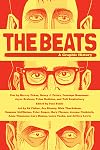
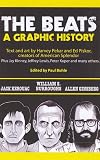
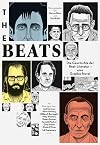
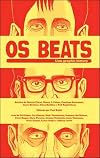
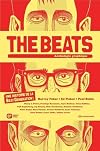
The Beats: A Graphic History
by Paul Buhle (Editor)
On This Page
Description
Details the history of the Beat movement, which began in the 1940s, and describes the lives of Jack Kerouac, Allen Ginsberg, and William Burroughs; along with other writers, artists, and events in a graphic novel format.Tags
Recommendations





















Member Recommendations

Member Reviews
InThe Beats: A Graphic History, those who were mad to live have come back to life through artwork as vibrant as the Beat movement itself. Told by the comic legend Harvey Pekar, his frequent artistic collaborator Ed Piskor, and a range of artists and writers, including the feminist comic creator Trina Robbins and theMadmagazine artist Peter Kuper,The Beatstakes us on a wild tour of a generation that, in the face of mainstream American conformity and conservatism, became known for its determined uprootedness, aggressive addictions, and startling creativity and experimentation. What began among a small circle of friends in New York and San Francisco during the late 1940s and early 1950s laid the groundwork for a literary explosion, and show more this striking anthology captures the storied era in all its incarnations—from the Benzedrine-fueled antics of Kerouac, Ginsberg, and Burroughs to the painting sessions of Jay DeFeo’s disheveled studio, from the jazz hipsters to the beatnik chicks, from Chicago’s College of Complexes to San Francisco’s famed City Lights bookstore. Snapshots of lesser-known poets and writers sit alongside frank and compelling looks at the Beats’ most recognizable faces. What emerges is a brilliant collage of—and tribute to—a generation, in a form and style that is as original as its subject. show less
This comic feels like a celebration to me. Pekar's writing is telling and spare, saying what needs to be said yet leaving room for the artist's visual (and the reader's) interpretation. The history of the 'beats' is fascinating as well as the unsung heroes of the era who finally get some form of recognition in the latter half of the comic. All in all a necessary read for any of the following: Harvey Pekar fans (me), history buffs, counter culture aficionados, jazz enthusiasts, lit enthusiasts, sex enthusiasts....the list goes on and on...
The Beats:A Graphic History🍒🍒🍒
2009
Hill & Wang/ Farrar,Straus & Giroux
This was a fun, simple overview of The Beat writers and their influence on other writers and artists. Focussing mainly on SF and NY, the obvious choices, I was glad to see Chicago mentioned as well.
The bios are brief and look at their lives at large, the graphics are fantastic. My favorites are the first three: Jack Kerouac, Allen Ginsberg and William S. Burroughs. Diana DiPalma and Michael Mc Clure were good also.
The Beat movement was an interesting and intriguing group of thinkers, unfortunately most were cruel to women and abused drugs. The stories they tell fascinate and horrify.
Recommended.
2009
Hill & Wang/ Farrar,Straus & Giroux
This was a fun, simple overview of The Beat writers and their influence on other writers and artists. Focussing mainly on SF and NY, the obvious choices, I was glad to see Chicago mentioned as well.
The bios are brief and look at their lives at large, the graphics are fantastic. My favorites are the first three: Jack Kerouac, Allen Ginsberg and William S. Burroughs. Diana DiPalma and Michael Mc Clure were good also.
The Beat movement was an interesting and intriguing group of thinkers, unfortunately most were cruel to women and abused drugs. The stories they tell fascinate and horrify.
Recommended.
I read On the Road five years ago, my first (and so far only) foray into the collective oeuvre of the Beat Generation. It wasn’t a huge success. But I’ve always had it in my head that I want to explore their work more, and I’m really into graphic biographies right now, so I was pretty excited about this. I liked it a lot, and I think the format was good, but the amount of focus given to the big three (Kerouac, Ginsberg, Burroughs) was a little much. Everyone knows those names already, and there were so many other artists involved in that movement who just got short little blurbs at the end. I especially wish there had been more about the women of the movement, because as it is, they really feel sidelined and lumped together as a show more subset. By which I mean there is a section called “Beat Chicks,” toward the very end of the book, where they are completely sidelined and lumped together as a subset. Obviously women artists weren’t respected in that time, and of course it’s normal for history to ignore them too, but if you’re making a point to include them already, how about really including them? My general impression after having read this: I want to read Ginsberg, Diane di Prima, Hettie Jones, Joyce Johnson, Joanne Kyger, Denise Levertov, Kenneth Patchen, Philip Whalen, and Lawrence Ferlinghetti. I’ll probably give some more of Kerouac’s work a try. And I would really like to not read anything by that asshole William Burroughs, though I might still try Naked Lunch if I feel obligated to. show less
Actually the first "graphic" book (history or otherwise) I've read. I had mixed feelings about it. It's pretty breezy, the graphic aspect means there is not a lot in the book by way of actual words. Some of the illustrations seem kind of dumb. For example, in a panel where Kerouac is in the Merchant Marine, a dialog bubble says "Washing pots and pans isn't my idea of fun, but I'm learning, getting more experience." And there's more like that. The book covers lots of ground and lots of writers, and it seemed pretty shallow at times, but on the other hand I've read worse surveys of literature, and they did work hard to give you at least a superficial feel for each author's work. But I would have liked even more poetry.
Reading this book has been a labor of love. I really really really wanted to like it,and there were definitely parts that stood out but man was it a chore to get through.
The major fault of this book was definitely that it tried to accomplish too much. It tried to provide way too much information, which caused it to lose the "story" and high readability that nonfiction graphic novels usually have going for them. I also just felt overwhelmed by information at some points. The book is divided in two halves which are then further divided into information on different people, places and organizations.
However, it's not all bad. A lot of the book (especially towards the end of the second half) was beautifully illustrated, and the show more illustrations were terrific examples of Beat culture within themselves. Several of the stories near the end made me want to find out more about those particular places or people.
Basically I guess I feel like this book is a mixed bag. Some of it's great and some of it sucks. Also keep in mind who the Beats were and what they exemplified when reccommending this book to younger teens. show less
The major fault of this book was definitely that it tried to accomplish too much. It tried to provide way too much information, which caused it to lose the "story" and high readability that nonfiction graphic novels usually have going for them. I also just felt overwhelmed by information at some points. The book is divided in two halves which are then further divided into information on different people, places and organizations.
However, it's not all bad. A lot of the book (especially towards the end of the second half) was beautifully illustrated, and the show more illustrations were terrific examples of Beat culture within themselves. Several of the stories near the end made me want to find out more about those particular places or people.
Basically I guess I feel like this book is a mixed bag. Some of it's great and some of it sucks. Also keep in mind who the Beats were and what they exemplified when reccommending this book to younger teens. show less
Reading this book has been a labor of love. I really really really wanted to like it,and there were definitely parts that stood out but man was it a chore to get through.
The major fault of this book was definitely that it tried to accomplish too much. It tried to provide way too much information, which caused it to lose the "story" and high readability that nonfiction graphic novels usually have going for them. I also just felt overwhelmed by information at some points. The book is divided in two halves which are then further divided into information on different people, places and organizations.
However, it's not all bad. A lot of the book (especially towards the end of the second half) was beautifully illustrated, and the show more illustrations were terrific examples of Beat culture within themselves. Several of the stories near the end made me want to find out more about those particular places or people.
Basically I guess I feel like this book is a mixed bag. Some of it's great and some of it sucks. Also keep in mind who the Beats were and what they exemplified when reccommending this book to younger teens. show less
The major fault of this book was definitely that it tried to accomplish too much. It tried to provide way too much information, which caused it to lose the "story" and high readability that nonfiction graphic novels usually have going for them. I also just felt overwhelmed by information at some points. The book is divided in two halves which are then further divided into information on different people, places and organizations.
However, it's not all bad. A lot of the book (especially towards the end of the second half) was beautifully illustrated, and the show more illustrations were terrific examples of Beat culture within themselves. Several of the stories near the end made me want to find out more about those particular places or people.
Basically I guess I feel like this book is a mixed bag. Some of it's great and some of it sucks. Also keep in mind who the Beats were and what they exemplified when reccommending this book to younger teens. show less
Members
- Recently Added By
Published Reviews
ThingScore 88
Where Pekar et al succeed is in their addressing the lesser but still important figures of the Beat movement.
added by paradoxosalpha
The Beats: A Graphic History is everything a radical history should be: critical, admiring, quirky and apologetic.
added by lampbane
Author Information

Paul Buhle is the author or editor of more than three-dozen books. Formerly a senior Lecturer at Brown University, he produces radical comics today. He founded the SDS Journal Radical America and the archive Oral History of the American Left and, with Mari Jo Buhle, is coeditor of the Encyclopedia of the American Left. He lives in Madison, show more Wisconsin. Robin D. G. Kelley is Professor of US History at UCLA. His books include Africa Speaks, America Answers!: Modern Jazz in Revolutionary Time. Lawrence Ware is a Lecturer in the Department of Philosophy at Oklahoma State University. show less
All Editions
Awards and Honors
Distinctions
Common Knowledge
- Canonical title
- The Beats: A Graphic History
- Original title
- The Beats - A Graphic History
- People/Characters
- Jack Kerouac; Allen Ginsberg; William S. Burroughs; Michael McClure; Kenneth Rexroth; Philip Whalen (show all 21); Gary Snyder; Robert Duncan; Lawrence Ferlinghetti; Gregory Corso; Amiri Baraka (LeRoi Jones); Charles Olson; Robert Creeley; Kenneth Patchen; Philip Lamantia; Diane di Prima; Slim Brundage; Myron Reed Brundage; Jay DeFeo; d.a. levy; Tuli Kupferberg
- Important places
- California, USA; City Lights Books, San Francisco, California, USA; College of Complexes; Greenwich Village, New York, New York, USA; New York, USA; New York, New York, USA (show all 7); San Francisco, California, USA
- Important events
- Beat Generation
- First words
- There was never anything like them in American literature and American culture, and it is unlikely that there will ever be anything much like them again.
- Last words
- (Click to show. Warning: May contain spoilers.)See www.thefugs.com for more about everything.
Classifications
- Genres
- Literature Studies and Criticism, Graphic Novels & Comics
- DDC/MDS
- 810.9 — Literature & rhetoric American literature in English American literature in English History and criticism of American literature
- LCC
- PS228 .B6 .P45 — Language and Literature American literature American literature By period 20th century
- BISAC
Statistics
- Members
- 434
- Popularity
- 71,285
- Reviews
- 22
- Rating
- (3.46)
- Languages
- 6 — Dutch, English, French, German, Portuguese (Brazil), Spanish
- Media
- Paper
- ISBNs
- 8
- ASINs
- 2