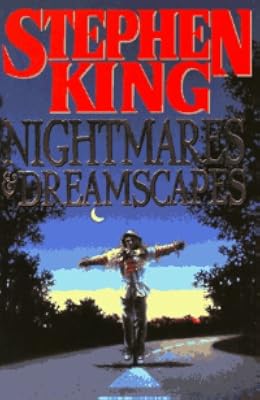
Nightmares and Dreamscapes
by Stephen King
On This Page
Description
Collection of 23 short stories--from classic horror to vampire thrillers, imitations of Sir Arthur Conan Doyle and Raymond Chandler, a teleplay, and a non-fiction bonus, a heartfelt little piece on Little League baseball.Tags
Recommendations



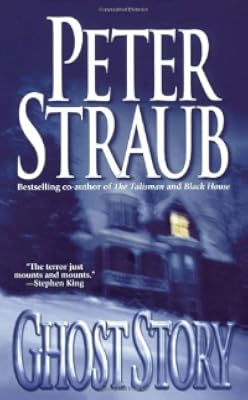
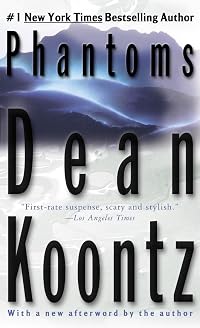
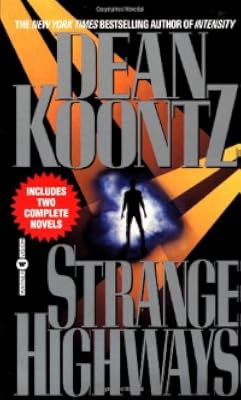
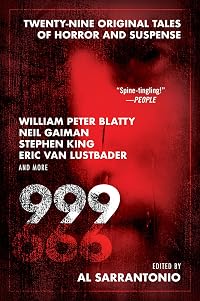



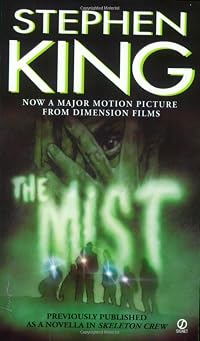





Member Recommendations

Member Reviews
His third collection of short stories is not quite as good as the previous two (Night Shift and Skeleton Crew), but still has a few bangers: The End of the Whole Mess (good-natured apocalypse), Dolan's Cadillac (implausible but satisfying revenge story), and The Ten O'Clock People (bat creatures are taking over the world and only smokers can see them - better than it sounds!). It also has some duds, like Sneakers (ghost story about sneakers in a bathroom stall) and You Know They Got a Hell of a Band (dead celebrities).
And some weird stuff like Chattery Teeth, Rainy Season (but the rain is man-eating frogs), and The Moving Finger.
And some weird stuff like Chattery Teeth, Rainy Season (but the rain is man-eating frogs), and The Moving Finger.
A collection of twenty short stories, one miniature screenplay, one long essay, and one poem. I have to confess that I didn't finish the essay. It's about little league baseball, and I'm sure it's fine if that's something you're interested in, but I personally have trouble imagining a subject I'd find more tedious. As for the stories, with the exception of one or two clunkers they were readable enough, falling somewhere in the okay to pretty good range, but as a whole they lack the polished creepiness that generally marks King's best work. They certainly lack the surprising, insightful poignancy of "The Body," which I'm fully prepared to call the best thing he's ever written, never mind the fact that I haven't actually read everything show more he's ever written. There's a story or two in here where he might be attempting something similar, but those are infinitely less successful. Quite a few of the stories do feature some interesting, imaginative central conceit -- a pair of wind-up novelty teeth with a will of their own, a human finger poking inexplicably out of a bathroom drain, a small town populated by dead rock stars -- that make them quite entertaining, anyway. Others... really don't.
Overall, I'm not sorry to have read it, and, at 700 pages, it went surprisingly fast. But it never quite delivered the pleasant pre-Halloween chills I was hoping for. show less
Overall, I'm not sorry to have read it, and, at 700 pages, it went surprisingly fast. But it never quite delivered the pleasant pre-Halloween chills I was hoping for. show less
I honestly don't know if I want to keep reading after "Dedication." It was disgustingly racist.
(Spoilers ahead.)
All I was hearing from it was the idea that black people are not and cannot be good enough on their own, so he has this black mother eat a lot of good ol' boy semen so her kid can be born with his talent. That sentiment was what grossed me out, much more than semen eating in general. (I've seen much worse just browsing the internet. Plus, I read Clive Barker.)
Maybe I wouldn't think that if his racism was a one off, but it's not. The dude is mad racist whether he means to be or not. He should stick to writing cis, straight, white guys, because he has not done the work to dismantle his racism or otherwise disdain for anyone not show more exactly like himself. People always try to argue the fact, but if he didn't have so much disdain for others, he wouldn't write us like we are some kind of aliens he's never seen up close, because he would be mixing with us like anybody else. Clearly he does not, and he continues not to. I don't care where he lives. He's been around long enough, he has the internet, and he travels. He's got no excuse. No, I'm not going to praise him for the bare minium of disliking Trump. The bar is in Hell.
I mainly picked this up to read "The Night Flier" and "Popsy" (about the same vampire), because I like The Night Flier movie. That, and I figured, how much racism can he really fit into a short story? A lot, apparently. Anyway, I like "The Night Flier" because it's a different sort of portrayal of a vampire, and I like the parallels he draws between vampirism and the exploitation of the suffering of others.
"Popsy," I mainly like for a child abuser getting their comeuppance. Not my preferred method of dispatching child abusers (scaphism), but I'll take it.
I actually didn't hate "Suffer the Little Children," despite hating actual massacres of children, because I've often wondered about why people who hate children choose to work with them. I suppose this was one possibility, and the thought amused me. Of course, I hate his later descriptions of disabled people, but I've already discussed that.
"The End of the Whole Mess," I caught on TV some years back (only that episode), so I was already familiar with the story. I can relate to wishing there was a cure to the world's violence. I can also relate to cognitive decline, because it's been happening to me for years. It really does feel like that.
Unfortunately, "Dedication" was the eighth story in this collection of twenty-four. Maybe I'll try the rest. I haven't decided.
*sigh*
I really like a lot of his ideas, but I've never liked his style of writing (very unfocused meandering) very much, and I despise how he writes minorities. (I also don't like how he focuses on realistic, man-made horrors that much, because I largely use reading as ecapism from reality.) I don't know if I finally give up on him at this point or what. There is still some of his work that I haven't gotten to yet (or have forgotten), which I might at least find interesting. There are so many other authors and books out there and I only have so much time to read them all... show less
(Spoilers ahead.)
All I was hearing from it was the idea that black people are not and cannot be good enough on their own, so he has this black mother eat a lot of good ol' boy semen so her kid can be born with his talent. That sentiment was what grossed me out, much more than semen eating in general. (I've seen much worse just browsing the internet. Plus, I read Clive Barker.)
Maybe I wouldn't think that if his racism was a one off, but it's not. The dude is mad racist whether he means to be or not. He should stick to writing cis, straight, white guys, because he has not done the work to dismantle his racism or otherwise disdain for anyone not show more exactly like himself. People always try to argue the fact, but if he didn't have so much disdain for others, he wouldn't write us like we are some kind of aliens he's never seen up close, because he would be mixing with us like anybody else. Clearly he does not, and he continues not to. I don't care where he lives. He's been around long enough, he has the internet, and he travels. He's got no excuse. No, I'm not going to praise him for the bare minium of disliking Trump. The bar is in Hell.
I mainly picked this up to read "The Night Flier" and "Popsy" (about the same vampire), because I like The Night Flier movie. That, and I figured, how much racism can he really fit into a short story? A lot, apparently. Anyway, I like "The Night Flier" because it's a different sort of portrayal of a vampire, and I like the parallels he draws between vampirism and the exploitation of the suffering of others.
"Popsy," I mainly like for a child abuser getting their comeuppance. Not my preferred method of dispatching child abusers (scaphism), but I'll take it.
I actually didn't hate "Suffer the Little Children," despite hating actual massacres of children, because I've often wondered about why people who hate children choose to work with them. I suppose this was one possibility, and the thought amused me. Of course, I hate his later descriptions of disabled people, but I've already discussed that.
"The End of the Whole Mess," I caught on TV some years back (only that episode), so I was already familiar with the story. I can relate to wishing there was a cure to the world's violence. I can also relate to cognitive decline, because it's been happening to me for years. It really does feel like that.
Unfortunately, "Dedication" was the eighth story in this collection of twenty-four. Maybe I'll try the rest. I haven't decided.
*sigh*
I really like a lot of his ideas, but I've never liked his style of writing (very unfocused meandering) very much, and I despise how he writes minorities. (I also don't like how he focuses on realistic, man-made horrors that much, because I largely use reading as ecapism from reality.) I don't know if I finally give up on him at this point or what. There is still some of his work that I haven't gotten to yet (or have forgotten), which I might at least find interesting. There are so many other authors and books out there and I only have so much time to read them all... show less
Three Stephen King books in one year? I know, right? I'm an animal.
Speaking of threes, Nightmares and Dreamscapes is the third in a loose trilogy of short story collections. Combined with Night Shift and Skeleton Crew King admits that this threesome comprises everything good he'd written up to Nightmares and Dreamscapes' publication in 1992. That description of this collection makes it sound like some barrel scraping might have gone on. I don't think that's really the case: none of the stories herein are particularly lousy. But it's short on the mythical wow! factor too.
That's not to say none of the entries are good, some of them are very good indeed. They're also long enough so that they had time to grow on me. Suitably enough a good show more example of this was It Grows on You, an epilogue to King's Castle Rock saga that ended with 1991's Needful Things. The story is about a bunch of old men sat in a diner talking in that way that old men do. The glacial pace and lack of, you know, anything happening, put me off for a start. But sure enough the story grew on me, and on looking back it's one of my favourite in the whole lot.
Another favourite was Chattery Teeth about a young father who buys an oversized and over-creepy set of those wind up novelty teeth. At first it feels like it's going to be one of those stories that Stephen King gets mocked for, the lamp-monster kind.
Raarh!
Here we go, I thought, he'll buy the teeth, take them home to his wife and adorable kid, and then have to defend himself and his family when the teeth tries to eat them all. But the story — while still being goofy schlock horror — managed to defy expectations and end on a satisfying note, a rarity with Stephen King.
Endings, as always with King, let down several of the stories. The Night Flier and Sneakers are both satisfyingly spooky stories that collapse like poorly made soufflés at their conclusion. And The Ten O'clock People, which was shaping up to be one of my favourite tales in the bunch, seems to lose all direction and stumble to its end rather than stride decisively. Apparently it was written in three days a few months before the collection's publication. The lack of steam by day three shows.
There are quite a few pastiches and homages covering a variety of genres, from Conan Doyle to Lovecraft, via Ray Bradbury and the Chandler–Hammett–Macdonald school of hard-boiled detective noir. I particularly enjoyed the Bradbury and Lovecraft ones despite not being a fan of the former author and never having read the latter. The Sherlock Holmes yarn was less enticing. And the hard-boiled detective one, Umney's Last Case, was… actually I don't know how I feel about that one. It reminded me of the whole Dark Tower series in microcosm, starting off like your average genre fiction with a bit of a twist, then suddenly becoming utterly surreal and playing with meta-fiction and the like. King says in the endnotes that it is his favourite story in the collection, and with time I certainly might come to agree with him.
Of course, the story that really stands out as different is the one that isn't a story at all. Head Down is the article about Little League baseball that King wrote for the New Yorker, prophetically during the season that his son's team made it to the State finals. It's like that film about the Boston Red Sox that was supposed to use them losing in the finals as per The Curse of the Bambino as a plot point, except it was filmed in 2004 when the Red Sox finally beat The Curse and won that important game thing, you know, that one. Oh who am I kidding, I know only the rudiments of baseball and while I was happy to follow the trials and tribulations of this bunch of kids playing a sport and doing better than expected, I really couldn't follow King's enthusiastic and long descriptions of the individual games. I'm not going to penalise the collection for my lack of baseball knowledge, though, that'd hardly be fair.
Of the three King works I've read this year, then, Nightmares and Dreamscapes is probably the least good. But even when he's not amazing, King can write a mean story. Which is why I suspect I'll be squeezing in a fourth visit to his repertoire before the year is out. show less
Speaking of threes, Nightmares and Dreamscapes is the third in a loose trilogy of short story collections. Combined with Night Shift and Skeleton Crew King admits that this threesome comprises everything good he'd written up to Nightmares and Dreamscapes' publication in 1992. That description of this collection makes it sound like some barrel scraping might have gone on. I don't think that's really the case: none of the stories herein are particularly lousy. But it's short on the mythical wow! factor too.
That's not to say none of the entries are good, some of them are very good indeed. They're also long enough so that they had time to grow on me. Suitably enough a good show more example of this was It Grows on You, an epilogue to King's Castle Rock saga that ended with 1991's Needful Things. The story is about a bunch of old men sat in a diner talking in that way that old men do. The glacial pace and lack of, you know, anything happening, put me off for a start. But sure enough the story grew on me, and on looking back it's one of my favourite in the whole lot.
Another favourite was Chattery Teeth about a young father who buys an oversized and over-creepy set of those wind up novelty teeth. At first it feels like it's going to be one of those stories that Stephen King gets mocked for, the lamp-monster kind.
Raarh!
Here we go, I thought, he'll buy the teeth, take them home to his wife and adorable kid, and then have to defend himself and his family when the teeth tries to eat them all. But the story — while still being goofy schlock horror — managed to defy expectations and end on a satisfying note, a rarity with Stephen King.
Endings, as always with King, let down several of the stories. The Night Flier and Sneakers are both satisfyingly spooky stories that collapse like poorly made soufflés at their conclusion. And The Ten O'clock People, which was shaping up to be one of my favourite tales in the bunch, seems to lose all direction and stumble to its end rather than stride decisively. Apparently it was written in three days a few months before the collection's publication. The lack of steam by day three shows.
There are quite a few pastiches and homages covering a variety of genres, from Conan Doyle to Lovecraft, via Ray Bradbury and the Chandler–Hammett–Macdonald school of hard-boiled detective noir. I particularly enjoyed the Bradbury and Lovecraft ones despite not being a fan of the former author and never having read the latter. The Sherlock Holmes yarn was less enticing. And the hard-boiled detective one, Umney's Last Case, was… actually I don't know how I feel about that one. It reminded me of the whole Dark Tower series in microcosm, starting off like your average genre fiction with a bit of a twist, then suddenly becoming utterly surreal and playing with meta-fiction and the like. King says in the endnotes that it is his favourite story in the collection, and with time I certainly might come to agree with him.
Of course, the story that really stands out as different is the one that isn't a story at all. Head Down is the article about Little League baseball that King wrote for the New Yorker, prophetically during the season that his son's team made it to the State finals. It's like that film about the Boston Red Sox that was supposed to use them losing in the finals as per The Curse of the Bambino as a plot point, except it was filmed in 2004 when the Red Sox finally beat The Curse and won that important game thing, you know, that one. Oh who am I kidding, I know only the rudiments of baseball and while I was happy to follow the trials and tribulations of this bunch of kids playing a sport and doing better than expected, I really couldn't follow King's enthusiastic and long descriptions of the individual games. I'm not going to penalise the collection for my lack of baseball knowledge, though, that'd hardly be fair.
Of the three King works I've read this year, then, Nightmares and Dreamscapes is probably the least good. But even when he's not amazing, King can write a mean story. Which is why I suspect I'll be squeezing in a fourth visit to his repertoire before the year is out. show less
Three Stephen King books in one year? I know, right? I'm an animal.
Speaking of threes, Nightmares and Dreamscapes is the third in a loose trilogy of short story collections. Combined with Night Shift and Skeleton Crew King admits that this threesome comprises everything good he'd written up to Nightmares and Dreamscapes' publication in 1992. That description of this collection makes it sound like some barrel scraping might have gone on. I don't think that's really the case: none of the stories herein are particularly lousy. But it's short on the mythical wow! factor too.
That's not to say none of the entries are good, some of them are very good indeed. They're also long enough so that they had time to grow on me. Suitably enough a good show more example of this was It Grows on You, an epilogue to King's Castle Rock saga that ended with 1991's Needful Things. The story is about a bunch of old men sat in a diner talking in that way that old men do. The glacial pace and lack of, you know, anything happening, put me off for a start. But sure enough the story grew on me, and on looking back it's one of my favourite in the whole lot.
Another favourite was Chattery Teeth about a young father who buys an oversized and over-creepy set of those wind up novelty teeth. At first it feels like it's going to be one of those stories that Stephen King gets mocked for, the lamp-monster kind.
Raarh!
Here we go, I thought, he'll buy the teeth, take them home to his wife and adorable kid, and then have to defend himself and his family when the teeth tries to eat them all. But the story — while still being goofy schlock horror — managed to defy expectations and end on a satisfying note, a rarity with Stephen King.
Endings, as always with King, let down several of the stories. The Night Flier and Sneakers are both satisfyingly spooky stories that collapse like poorly made soufflés at their conclusion. And The Ten O'clock People, which was shaping up to be one of my favourite tales in the bunch, seems to lose all direction and stumble to its end rather than stride decisively. Apparently it was written in three days a few months before the collection's publication. The lack of steam by day three shows.
There are quite a few pastiches and homages covering a variety of genres, from Conan Doyle to Lovecraft, via Ray Bradbury and the Chandler–Hammett–Macdonald school of hard-boiled detective noir. I particularly enjoyed the Bradbury and Lovecraft ones despite not being a fan of the former author and never having read the latter. The Sherlock Holmes yarn was less enticing. And the hard-boiled detective one, Umney's Last Case, was… actually I don't know how I feel about that one. It reminded me of the whole Dark Tower series in microcosm, starting off like your average genre fiction with a bit of a twist, then suddenly becoming utterly surreal and playing with meta-fiction and the like. King says in the endnotes that it is his favourite story in the collection, and with time I certainly might come to agree with him.
Of course, the story that really stands out as different is the one that isn't a story at all. Head Down is the article about Little League baseball that King wrote for the New Yorker, prophetically during the season that his son's team made it to the State finals. It's like that film about the Boston Red Sox that was supposed to use them losing in the finals as per The Curse of the Bambino as a plot point, except it was filmed in 2004 when the Red Sox finally beat The Curse and won that important game thing, you know, that one. Oh who am I kidding, I know only the rudiments of baseball and while I was happy to follow the trials and tribulations of this bunch of kids playing a sport and doing better than expected, I really couldn't follow King's enthusiastic and long descriptions of the individual games. I'm not going to penalise the collection for my lack of baseball knowledge, though, that'd hardly be fair.
Of the three King works I've read this year, then, Nightmares and Dreamscapes is probably the least good. But even when he's not amazing, King can write a mean story. Which is why I suspect I'll be squeezing in a fourth visit to his repertoire before the year is out. show less
Speaking of threes, Nightmares and Dreamscapes is the third in a loose trilogy of short story collections. Combined with Night Shift and Skeleton Crew King admits that this threesome comprises everything good he'd written up to Nightmares and Dreamscapes' publication in 1992. That description of this collection makes it sound like some barrel scraping might have gone on. I don't think that's really the case: none of the stories herein are particularly lousy. But it's short on the mythical wow! factor too.
That's not to say none of the entries are good, some of them are very good indeed. They're also long enough so that they had time to grow on me. Suitably enough a good show more example of this was It Grows on You, an epilogue to King's Castle Rock saga that ended with 1991's Needful Things. The story is about a bunch of old men sat in a diner talking in that way that old men do. The glacial pace and lack of, you know, anything happening, put me off for a start. But sure enough the story grew on me, and on looking back it's one of my favourite in the whole lot.
Another favourite was Chattery Teeth about a young father who buys an oversized and over-creepy set of those wind up novelty teeth. At first it feels like it's going to be one of those stories that Stephen King gets mocked for, the lamp-monster kind.
Raarh!
Here we go, I thought, he'll buy the teeth, take them home to his wife and adorable kid, and then have to defend himself and his family when the teeth tries to eat them all. But the story — while still being goofy schlock horror — managed to defy expectations and end on a satisfying note, a rarity with Stephen King.
Endings, as always with King, let down several of the stories. The Night Flier and Sneakers are both satisfyingly spooky stories that collapse like poorly made soufflés at their conclusion. And The Ten O'clock People, which was shaping up to be one of my favourite tales in the bunch, seems to lose all direction and stumble to its end rather than stride decisively. Apparently it was written in three days a few months before the collection's publication. The lack of steam by day three shows.
There are quite a few pastiches and homages covering a variety of genres, from Conan Doyle to Lovecraft, via Ray Bradbury and the Chandler–Hammett–Macdonald school of hard-boiled detective noir. I particularly enjoyed the Bradbury and Lovecraft ones despite not being a fan of the former author and never having read the latter. The Sherlock Holmes yarn was less enticing. And the hard-boiled detective one, Umney's Last Case, was… actually I don't know how I feel about that one. It reminded me of the whole Dark Tower series in microcosm, starting off like your average genre fiction with a bit of a twist, then suddenly becoming utterly surreal and playing with meta-fiction and the like. King says in the endnotes that it is his favourite story in the collection, and with time I certainly might come to agree with him.
Of course, the story that really stands out as different is the one that isn't a story at all. Head Down is the article about Little League baseball that King wrote for the New Yorker, prophetically during the season that his son's team made it to the State finals. It's like that film about the Boston Red Sox that was supposed to use them losing in the finals as per The Curse of the Bambino as a plot point, except it was filmed in 2004 when the Red Sox finally beat The Curse and won that important game thing, you know, that one. Oh who am I kidding, I know only the rudiments of baseball and while I was happy to follow the trials and tribulations of this bunch of kids playing a sport and doing better than expected, I really couldn't follow King's enthusiastic and long descriptions of the individual games. I'm not going to penalise the collection for my lack of baseball knowledge, though, that'd hardly be fair.
Of the three King works I've read this year, then, Nightmares and Dreamscapes is probably the least good. But even when he's not amazing, King can write a mean story. Which is why I suspect I'll be squeezing in a fourth visit to his repertoire before the year is out. show less
Have you ever really been scared by reading a horror book, like the way a movie can make you jump or give you the creeps? I never have and sometimes I wonder if I am "broken" in some way. So, I periodically check by giving something a try like the trusted if formulaic H.P. Lovecraft (King adds to that body of work w/"Crouch End", here) or the commercially validated author here, but I never get the gee willikers off the printed page. Who should I read?
Admittedly, this collection of short stories proved a cornucopia of tales not all horror at all. There is even two baseball pieces (one non-fiction, one a poem)! I do like the King has a notes section on the end commenting on these pieces. Most of these stories strike me like long-walk show more shaggy dog tales - a trek to get to a groaner... Maybe that is the over-writing he has been accused of and defends in the intro here? The collection leads of with a nice revenant tale in "Dolan's Cadillac" (crime story, not horror) and when I got "Suffer the Little Children" I credit King with daring to take us into the mind of an infanticide (would he have published this post Sandy Hook?). My favorite tail is the vampire civil air pilot in "The Night Flier" which dovetails nicely into "Popsy" where a would-be child abuser agent gets his just desserts. I had to read the Wikipedia article on "Dedication" to make sure I was not misconstruing the MacGuffin here... So, he can do gross-out, too. I like the simple weirdness and mania of "The Moving Finger" but several stories like "You Know they got One Hell of a Band" just left me "meh". show less
Admittedly, this collection of short stories proved a cornucopia of tales not all horror at all. There is even two baseball pieces (one non-fiction, one a poem)! I do like the King has a notes section on the end commenting on these pieces. Most of these stories strike me like long-walk show more shaggy dog tales - a trek to get to a groaner... Maybe that is the over-writing he has been accused of and defends in the intro here? The collection leads of with a nice revenant tale in "Dolan's Cadillac" (crime story, not horror) and when I got "Suffer the Little Children" I credit King with daring to take us into the mind of an infanticide (would he have published this post Sandy Hook?). My favorite tail is the vampire civil air pilot in "The Night Flier" which dovetails nicely into "Popsy" where a would-be child abuser agent gets his just desserts. I had to read the Wikipedia article on "Dedication" to make sure I was not misconstruing the MacGuffin here... So, he can do gross-out, too. I like the simple weirdness and mania of "The Moving Finger" but several stories like "You Know they got One Hell of a Band" just left me "meh". show less
Stephen King is a much better short story writer than novelist. In On Writing, he explained that he opposes what he calls "plotting," by which he basically means figuring out ahead of time where the story is going---which explains why the longer the work of his, the weaker (if not outright awful) the ending tends to be.
His short stories tend not to suffer from this problem, both because plot is not as crucial to a good short story as it usually is to longer literary forms; and because, where it is important, structuring a shorter piece does not seem to overtax his ability like a novel does.
There is a more serious dimension to many of King's stories than one might expect, and I like that about them. For one thing, there is a strong moral show more sensibility to his writing, and while I disagree with this moral sensibility (it being strongly informed by his Methodist upbringing), I like the fact that it's there at all. Too many writers these days are amoralists, whether explicitly or by omission, so it's somewhat refreshing to read a collection of stories that contains a little moralizing (though it's usually pretty subtle, almost more a mood pervading the piece than an obvious point to the story).
Another thing I like very much about King's writing is the sort of self-reflective nature of it, the examination of what it is that a writer is doing as an artist---namely, recreating the universe in his own image. This comes across most strongly here in the story "Umney's Last Case" (though King has dealt with it explicitly elsewhere as well, notably in The Dark Tower series). But the implication is present in the rest of the collection, growing out of the interconnectedness of detail and the integrity of style, which communicate the feeling that all of the characters in all of these stories inhabit the same world, and that it's Stephen King's world, a fact of which he is well aware and wants his readers to be aware, as well.
Several of the stories here are attempts to utilize the style of other writers, such as H. P. Lovecraft in "Crouch End" and Arthur Conan Doyle in "The Doctor's Case". These attempts are surprisingly successful. "The Doctor's Case", for instance, is a Sherlock Holmes story in which Watson solves the case---a twist that Conan Doyle himself may never have employed, but which King manages to pull off very much in the spirit of the original Holmes stories. At the same time, King makes these stories his own, bringing them into his own artistic vision.
There are several stories here that are basically adult versions of Scary Stories to Tell in the Dark---stories about downpours of carnivorous toads, incredibly long fingers poking out of bathroom sink drains, and chattery teeth with a will of their own---but even these are pretty fun because King does not take them too seriously, but is perfectly aware of their absurdity and tells them with tongue slightly in cheek. If he tried playing them completely straight, the readers' ability to suspend their disbelief would become a real problem. Thankfully, he does not.
Finally, there is a non-fiction piece about little league baseball, to which King brings his fiction writer's sensibility and makes it surprisingly suspenseful, and meaningful.
All in all, a solid collection of work, and probably one of King's best books. show less
His short stories tend not to suffer from this problem, both because plot is not as crucial to a good short story as it usually is to longer literary forms; and because, where it is important, structuring a shorter piece does not seem to overtax his ability like a novel does.
There is a more serious dimension to many of King's stories than one might expect, and I like that about them. For one thing, there is a strong moral show more sensibility to his writing, and while I disagree with this moral sensibility (it being strongly informed by his Methodist upbringing), I like the fact that it's there at all. Too many writers these days are amoralists, whether explicitly or by omission, so it's somewhat refreshing to read a collection of stories that contains a little moralizing (though it's usually pretty subtle, almost more a mood pervading the piece than an obvious point to the story).
Another thing I like very much about King's writing is the sort of self-reflective nature of it, the examination of what it is that a writer is doing as an artist---namely, recreating the universe in his own image. This comes across most strongly here in the story "Umney's Last Case" (though King has dealt with it explicitly elsewhere as well, notably in The Dark Tower series). But the implication is present in the rest of the collection, growing out of the interconnectedness of detail and the integrity of style, which communicate the feeling that all of the characters in all of these stories inhabit the same world, and that it's Stephen King's world, a fact of which he is well aware and wants his readers to be aware, as well.
Several of the stories here are attempts to utilize the style of other writers, such as H. P. Lovecraft in "Crouch End" and Arthur Conan Doyle in "The Doctor's Case". These attempts are surprisingly successful. "The Doctor's Case", for instance, is a Sherlock Holmes story in which Watson solves the case---a twist that Conan Doyle himself may never have employed, but which King manages to pull off very much in the spirit of the original Holmes stories. At the same time, King makes these stories his own, bringing them into his own artistic vision.
There are several stories here that are basically adult versions of Scary Stories to Tell in the Dark---stories about downpours of carnivorous toads, incredibly long fingers poking out of bathroom sink drains, and chattery teeth with a will of their own---but even these are pretty fun because King does not take them too seriously, but is perfectly aware of their absurdity and tells them with tongue slightly in cheek. If he tried playing them completely straight, the readers' ability to suspend their disbelief would become a real problem. Thankfully, he does not.
Finally, there is a non-fiction piece about little league baseball, to which King brings his fiction writer's sensibility and makes it surprisingly suspenseful, and meaningful.
All in all, a solid collection of work, and probably one of King's best books. show less
Members
- Recently Added By
Published Reviews
ThingScore 100
NIGHTMARES AND DREAMSCAPES BY STEPHEN KING is a series of short& novella stories that goes back to Kings early days . He always has said he likes short stories & in my opinion I think NIGHTMARES AND DREAMSCAPES is one of his best short stories books. So , Constant Reader, as Mr.King calls us fans of his, fasten your seatbelts and enjoy the ride. Of all of his short stories I have to think my show more total favorite is CHATTERY TEETH which is in this book. My son, who is also a King Constant Reader agrees. While on vacation I happened to find a set of Chattery Teeth & brought it home as a gag present for my son! He loved them! So sit back, turn the lights on, put on your favorite tunes & enjoy NIGHTMARES AND DREAMSCAPES BY STEPHEN KING show less
added by sintaindriani77 — edited by rosalita
Lists

Best Horror Books
281 works; 85 members

Read the book and saw the movie
1,170 works; 192 members
Stephen King Bibliography
77 works; 3 members

Derry and Castle Rock Books By Stephen King
21 works; 3 members

Books I Re-read (...and re-read... and re-read)
25 works; 2 members

Nineties
43 works; 10 members

Best Books of the 20th Century
193 works; 5 members

Jarett's Books
86 works; 1 member

Books Read in 2005
174 works; 7 members

Books We Love to Reread
688 works; 296 members
Eerie eTales
192 works; 3 members

Sinister AudioTales
65 works; 1 member

Stephen King books
81 works; 1 member
Talk Discussions
Past Discussions
August 2011's SK Flavor of the Month - Nightmares and Dreamscapes in King's Dear Constant Readers (February 2012)
Author Information

Stephen King was born in Portland, Maine, on September 21, 1947. After graduating with a Bachelor's degree in English from the University of Maine at Orono in 1970, he became a teacher. His spare time was spent writing short stories and novels. King's first novel would never have been published if not for his wife. She removed the first few show more chapters from the garbage after King had thrown them away in frustration. Three months later, he received a $2,500 advance from Doubleday Publishing for the book that went on to sell a modest 13,000 hardcover copies. That book, Carrie, was about a girl with telekinetic powers who is tormented by bullies at school. She uses her power, in turn, to torment and eventually destroy her mean-spirited classmates. When United Artists released the film version in 1976, it was a critical and commercial success. The paperback version of the book, released after the movie, went on to sell more than two-and-a-half million copies. Many of King's other horror novels have been adapted into movies, including The Shining, Firestarter, Pet Semetary, Cujo, Misery, The Stand, and The Tommyknockers. Under the pseudonym Richard Bachman, King has written the books The Running Man, The Regulators, Thinner, The Long Walk, Roadwork, Rage, and It. He is number 2 on the Hollywood Reporter's '25 Most Powerful Authors' 2016 list. King is one of the world's most successful writers, with more than 100 million copies of his works in print. Many of his books have been translated into foreign languages, and he writes new books at a rate of about one per year. In 2003, he received the National Book Foundation Medal for Distinguished Contribution to American Letters. In 2012 his title, The Wind Through the Keyhole made The New York Times Best Seller List. King's title's Mr. Mercedes and Revival made The New York Times Best Seller List in 2014. He won the Edgar Allan Poe Award in 2015 for Best Novel with Mr. Mercedes. King's title Finders Keepers made the New York Times bestseller list in 2015. Sleeping Beauties is his latest 2017 New York Times bestseller. (Bowker Author Biography) Stephen King is the author of more than thirty books, all of them worldwide bestsellers. Among his most recent are "Hearts in Atlantis", "The Girl Who Loved Tom Gordon", "Bag of Bones", & "The Green Mile". "On Writing" is his first book of nonfiction since "Danse Macabre", published in 1981. He served as a judge for Prize Stories: The Best of 1999, The O. Henry Awards. He lives in Bangor, Maine with his wife, novelist Tabitha King. King's book, The Bazaar of Bad Dreams: Stories, made the 2015 New York Times bestseller list. (Publisher Provided) show less
Some Editions
Awards and Honors
Awards
Distinctions
Series
Belongs to Publisher Series
Work Relationships
Is contained in
Contains
Common Knowledge
- Canonical title
- Nightmares and Dreamscapes
- Original title
- Nightmares and Dreamscapes
- Original publication date
- 1993-09-29
- Important places
- Castle Rock, Maine, USA (fictional); Maine, USA; New York, USA; New York, New York, USA; Nevada, USA
- Related movies
- Dolan's Cadillac (2009 | IMDb); Nightmares and Dreamscapes: From the Stories of Stephen King:Umneys Last Case (2006 | IMDb); The Night Flier (1997 | IMDb); Monsters:The Moving Finger (1992 | s3e24 | IMDb); Tales From the Darkside:Sorry, Right Number (1987 | s4e9 | IMDb); Quicksilver Highway:Chattery Teeth (1997 | IMDb) (show all 10); Nightmares and Dreamscapes: From the Stories of Stephen King:You Know They've Got a Hell of a Band (2006 | IMDb); Nightmares and Dreamscapes: From the Stories of Stephen King:The End of the Whole Mess (2006 | IMDb); Nightmares and Dreamscapes: From the Stories of Stephen King: Crouch End (2006 | IMDb); Nightmares and Dreamscapes: From the Stories of Stephen King: The Fifth Quarter (2006 | IMDb)
- Dedication
- In memory of Thomas Williams, 1926–1991: poet, novelist, and great American storyteller.
- First words
- When I was a kid I believed everything I was told, everything I read, and every dispatch sent out by my own overheated imagination. (Introduction)
- Last words
- (Click to show. Warning: May contain spoilers.)After all, next time you might be the one who needs a hand...or a little help getting that pesky finger out of the drain, for that matter.
- Original language
- English
- Canonical DDC/MDS
- 813.54
- Canonical LCC
- PS3561.I483
- Disambiguation notice
- "Alpträume" is used for a German translation of the entire "Nightmares & Dreamscapes" collection, and is also used for the first half of the collection. Check ISBN to make sure an entry is correctly combined.
Classifications
Statistics
- Members
- 9,517
- Popularity
- 1,090
- Reviews
- 68
- Rating
- (3.70)
- Languages
- 14 — Czech, Dutch, English, Finnish, French, German, Greek, Hungarian, Italian, Polish, Portuguese, Russian, Spanish, Turkish
- Media
- Paper, Audiobook, Ebook
- ISBNs
- 74
- UPCs
- 1
- ASINs
- 39