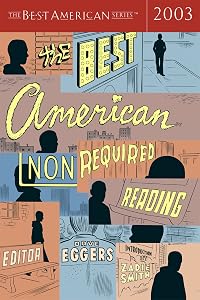
The Best American Nonrequired Reading 2003
by Dave Eggers (Editor)
The Best American Nonrequired Reading (2003), Best American (2003)
On This Page
Description
Writer Dave Eggers chooses twenty-five stories and articles to represent the best writing of 2002 for readers in their early twenties.Tags
Recommendations



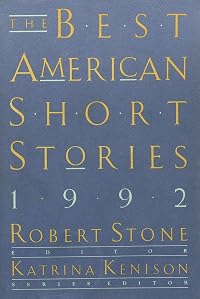
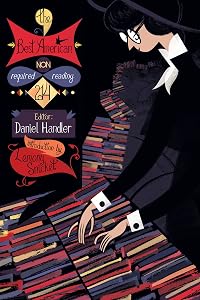
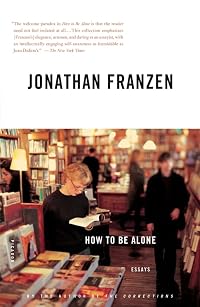
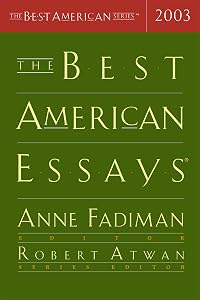
Member Recommendations
Member Reviews
This one I was less impressed with. There are some excellent pieces: Sherman Alexie's on identity, Mark Bowden's profile of Saddam Hussein, Chuck Klosterman on a tribute band, and George Packer's on the discarded-clothing market come to mind. Many of the others didn't do much for me, but I'm still glad I read them to get the full range of the collection.
3.5 stars overall
Individual ratings:
Foreword - Dave Eggars 3
Introduction - Zadie Smith 4
The Guide to Being a Groupie - Lisa Gabriele 2
Things We Knew When the House Caught Fire - David Drury 4
The Pretenders - Chuck Klosterman 4
How To Write Suspense - James Pinkerton 3
Stuff - JT Leroy 4
Saint Chola - K. Kvashay-Bayle 4
I'll Try Anything With a Detached Air of Superiority - The Onion 3
A moderately interesting collection, but more of a mixed bag than I'd expect from anything claiming to be a 'best of' overview. The stand-out stories were the David Drury, JT Leroy and Kvashay-Bayle, respectively about the prejudices expressed against a family that doesn't fit in an exclusive community, a homeless girl findng unexpected artistic comfort and a show more young teenage Muslim girl coming to terms with her place in American society just before the Iraq war. Chuck Klosterman's reportage on the modern phenomenon of the tribute band was funny and insightful, and Zadie Smith intro was an excellent little essay on finding a balance between required and experimental reading, as well as finding one's voice as a writer.
Both the Onion piece and the James Pinkerton story were vaguely amusing but rather slapstick in their approach to satire while Lisa Gabriele's tale of a rebellious teenage girl read like a college creative writing exercise. Both this and 'Saint Chola' used a second person narration, but here it seemed somehow to distance rather than include the reader.
There was something oddly backward-looking about this collection on the whole; all the fiction or memoirs dealt with looking back to childhood or adolescence, while Klosterman's piece is partly about nostalgia and the Onion's oddly old fashioned - although possibly as it is a satire of those awful New Yorker articles that do actually read like that.
I also have the 2004 collection, so am interested to see how that compares. show less
Individual ratings:
Foreword - Dave Eggars 3
Introduction - Zadie Smith 4
The Guide to Being a Groupie - Lisa Gabriele 2
Things We Knew When the House Caught Fire - David Drury 4
The Pretenders - Chuck Klosterman 4
How To Write Suspense - James Pinkerton 3
Stuff - JT Leroy 4
Saint Chola - K. Kvashay-Bayle 4
I'll Try Anything With a Detached Air of Superiority - The Onion 3
A moderately interesting collection, but more of a mixed bag than I'd expect from anything claiming to be a 'best of' overview. The stand-out stories were the David Drury, JT Leroy and Kvashay-Bayle, respectively about the prejudices expressed against a family that doesn't fit in an exclusive community, a homeless girl findng unexpected artistic comfort and a show more young teenage Muslim girl coming to terms with her place in American society just before the Iraq war. Chuck Klosterman's reportage on the modern phenomenon of the tribute band was funny and insightful, and Zadie Smith intro was an excellent little essay on finding a balance between required and experimental reading, as well as finding one's voice as a writer.
Both the Onion piece and the James Pinkerton story were vaguely amusing but rather slapstick in their approach to satire while Lisa Gabriele's tale of a rebellious teenage girl read like a college creative writing exercise. Both this and 'Saint Chola' used a second person narration, but here it seemed somehow to distance rather than include the reader.
There was something oddly backward-looking about this collection on the whole; all the fiction or memoirs dealt with looking back to childhood or adolescence, while Klosterman's piece is partly about nostalgia and the Onion's oddly old fashioned - although possibly as it is a satire of those awful New Yorker articles that do actually read like that.
I also have the 2004 collection, so am interested to see how that compares. show less
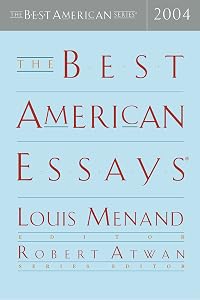
When I read the 2006 Best American Non-required Reading collection, I knew I’d stumbled on something special (see the review). So, when I saw the 2003 version in a bookstore, I grabbed it quickly. And, an interesting set of comparisons ensued. First would be the comparison to its younger sibling. But, a more interesting comparison arises from my just having finished the 2003 Best American Essays (see the review.) Everything that was wrong with that collection – the pretentiousness, the rambling, the “art-or-art’s-sake” feel - disappears when someone just tries to collect good stories, essays, and etc. (And, yes, I meant to say “and etc.”) These collections seem to show that Eggers (whose McSweeney’s I have never been show more able to embrace) does not care so much about what the critics want, instead finding what might be considered popular (in the best spirit of the word) choices that you probably missed.
In this collection, standouts include Ryan Boudinot’s “The Littlest Hitler” about the Halloween he dressed as Hitler; Mark Bowden’s “Tales of the Tyrant”, an insight to Saddam that, while it might be what we expect, is more than we knew; and David Drury’s story “Things we Knew When the House Caught Fire” which works at the level of kids not accepting the new kids, the new kids not accepting their roles, and trying to determine who really is better for their misunderstanding of what is going on around them. By the way, those are just the runners-up. “A Primer for the Punctuation of Heart Disease” mixes symbols with words (aren’t they really the same thing) to tell the story of families and impending deaths. “Touching Him” by Nasdijj is… Look, I can’t come up with the right words. It is about a foster father caring for a foster child with Aids. It talks about the fears and it talks about the pains. But it also talks about the intimacies of the two – about love. If I could explain it, I would have written it.
There’s more, too. David Sedaris is always great, and “Lost Boys” by John Verbos is just strange and, while I’m not sure what it was, I liked visiting it. And all this leads to the comparison to the 2006 version. Would you believe me if I said I didn’t like it as much? I guess that just goes to show the strength of the 2006 version because, this is good. The only real difference I can find is that, the weak items were weaker in 2003 than in 2006. And with the list of standouts I just provided, you can guess that the number of weak items is very small. show less
In this collection, standouts include Ryan Boudinot’s “The Littlest Hitler” about the Halloween he dressed as Hitler; Mark Bowden’s “Tales of the Tyrant”, an insight to Saddam that, while it might be what we expect, is more than we knew; and David Drury’s story “Things we Knew When the House Caught Fire” which works at the level of kids not accepting the new kids, the new kids not accepting their roles, and trying to determine who really is better for their misunderstanding of what is going on around them. By the way, those are just the runners-up. “A Primer for the Punctuation of Heart Disease” mixes symbols with words (aren’t they really the same thing) to tell the story of families and impending deaths. “Touching Him” by Nasdijj is… Look, I can’t come up with the right words. It is about a foster father caring for a foster child with Aids. It talks about the fears and it talks about the pains. But it also talks about the intimacies of the two – about love. If I could explain it, I would have written it.
There’s more, too. David Sedaris is always great, and “Lost Boys” by John Verbos is just strange and, while I’m not sure what it was, I liked visiting it. And all this leads to the comparison to the 2006 version. Would you believe me if I said I didn’t like it as much? I guess that just goes to show the strength of the 2006 version because, this is good. The only real difference I can find is that, the weak items were weaker in 2003 than in 2006. And with the list of standouts I just provided, you can guess that the number of weak items is very small. show less
I was surprised at how TEDIOUS some of the selections are - more like typing than writing. Part of the "writing for the sake of writing" epidemic that Eggers seems to encourage in a certain population of writers.
Some good stuff hidden among the dross, however.
Some good stuff hidden among the dross, however.
This had some really good pieces, and a number of bad ones. I thought Jonathan Safran Foer inventing punctuation to tell his story was pretty silly. I didn't get the point of that at all. Pinkerton's piece on writing a suspense novel was hysterical, and Leroy's piece on Saddam Hussein was a very good piece. Most of the rest of it was somewhere in between.
I really wanted to like all these selections, but to me this was a hit or miss collection. My favorites, which of course includes David Sedaris, were George Packer's story of used clothing and Chuck Klosterman's story about a Guns n' Roses cover band.
this is sort of a mixed bag. the best according to dave eggers. i laughed out loud when i saw JT leroy in evidence. still, there are some good things in here.
Members
- Recently Added By
Author Information

Dave Eggers was born on March 12th, 1970, in Boston, Massachusetts. His family moved to Lake Forest, Illinois when he was a child. Eggers attended the University of Illinois at Urbana-Champaign, until his parents' deaths in 1991 and 1992. The loss left him responsible for his eight-year-old brother and later became the inspiration for his highly show more acclaimed memoir "A Heartbreaking Work of Staggering Genius". Published in 2000, the memoir was nominated for a nonfiction Pulitzer the following year. Eggers edits the popular "The Best American Nonrequired Reading" published annually. In 1998, he founded the independent publishing house, McSweeney's which publishes a variety of magazines and literary journals. Eggers has also opened several nonprofit writing centers for high school students across the United States. Eggers has written several novels and his title, A Hologram for the King, was a finalist for the 2012 National Book Award. His most recent work of fiction, entitled The Circle, was published in 2013. His recent nonfiction books are The Monk of Mokha (January 2018) and What Can a Citizen Do? (Illustrated by Shawn Harris)(September 2018). (Bowker Author Biography) show less
All Editions
Series


Work Relationships
Contains
Stuff by J. T. LeRoy
Common Knowledge
- Canonical title
- The Best American Nonrequired Reading 2003
- Original title
- The Best American Nonrequired Reading 2003
- Original publication date
- 2003-10-10
- First words
- In the future, every U.S. citizen will get to be Sacagawea for fifteen minutes.
- Last words
- (Click to show. Warning: May contain spoilers.)He made the guest list himself.
- Disambiguation notice
- This LT work is for copies of The Best American Nonrequired Reading 2003 only. Please do not combine it with copies from other years, or with copies that cannot be distinguished by year. There are separate LT works fo... (show all)r each year's edition. Thank you.
Classifications
Statistics
- Members
- 776
- Popularity
- 36,147
- Reviews
- 11
- Rating
- (3.72)
- Languages
- English
- Media
- Paper, Audiobook
- ISBNs
- 4
- UPCs
- 3
- ASINs
- 2