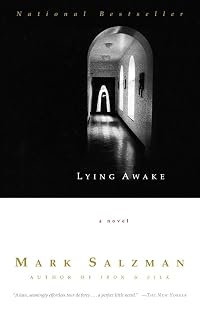
Lying Awake
by Mark Salzman
On This Page
Description
In a Carmelite monastery outside present-day Los Angeles, Sister John of the Cross experiences visions of such dazzling power and insight that she is considered a spiritual master. But they are accompanied by powerful headaches, and when a doctor reveals they may be dangerous, she faces a devastating choice since she fears a "cure" may end her spiritual gifts.Tags
Recommendations



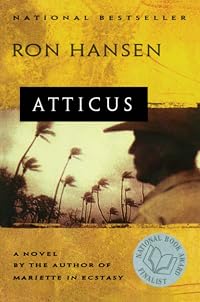
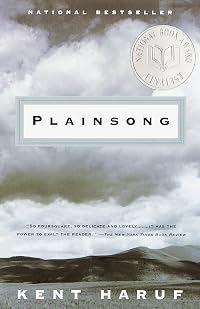


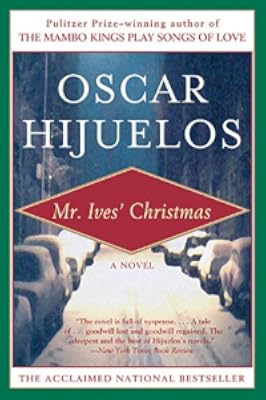

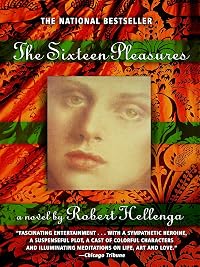







Member Recommendations

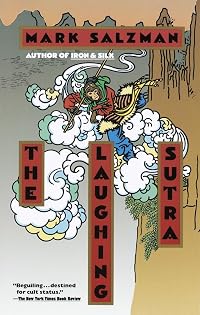
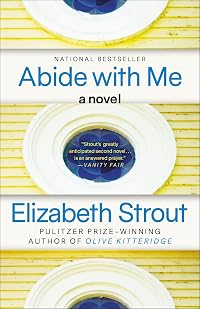
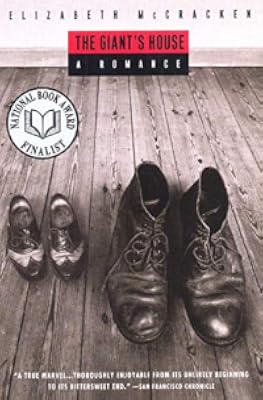
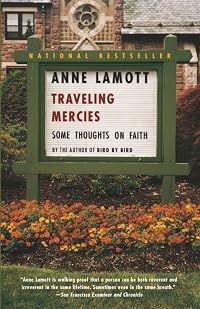
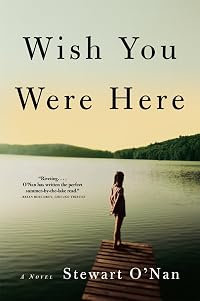
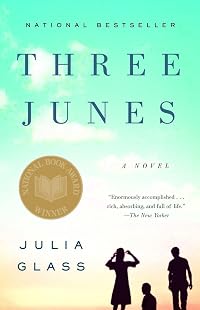
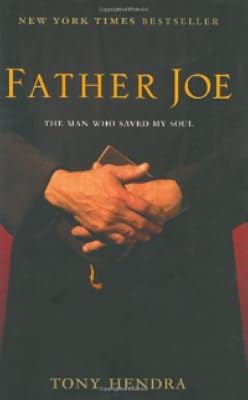
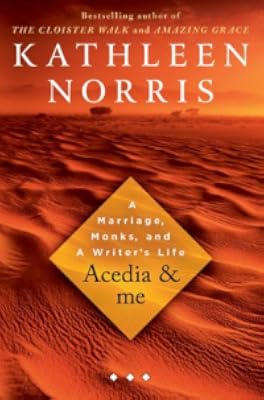
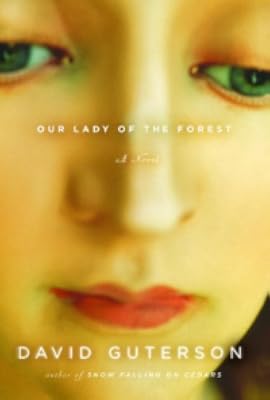
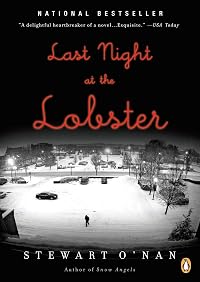
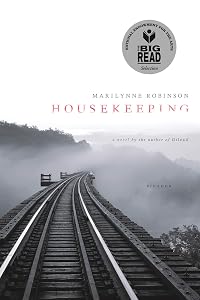
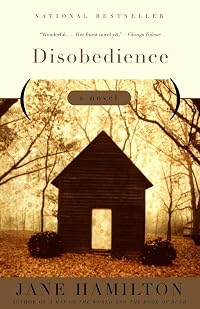
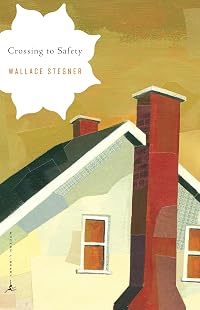
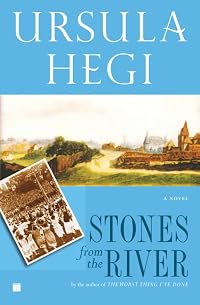
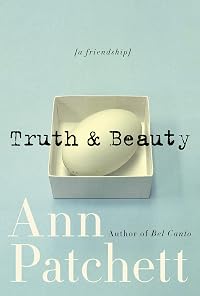
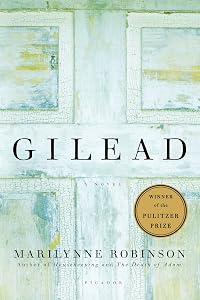
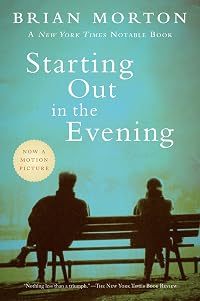
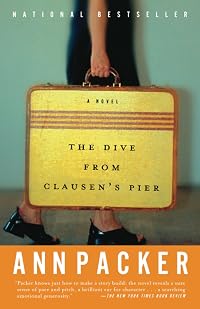
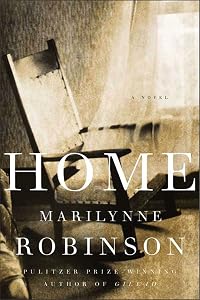
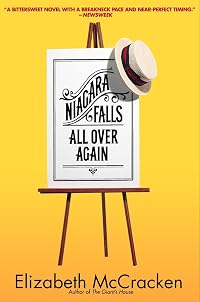
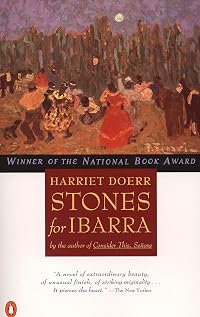
bayougeezer Both of these books explore the fine line between insight and illusion, inspiration and delusion.
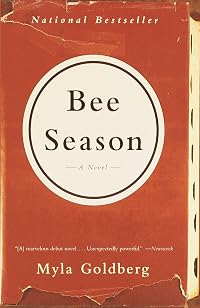
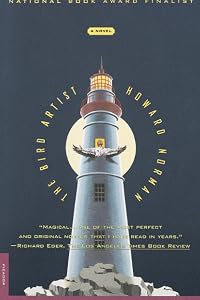
beyondthefourthwall Powerful visions: are they meaningful, or are they merely due to a neurological problem? Both protagonists are up against this very interesting tension.
Member Reviews
Protagonist Sister John of the Cross is a Carmelite nun living in a convent near Los Angeles. In 1982, she has been there for thirteen years and is going through a “spiritual desert.” She then starts experiencing a vast period of creativity, writing poetry for hours at night, and publishing a book on the contemplative life. This is a period of spiritual awakening. Sister John believes these new visions and out of body sensations are a consequence of her faith.
As she pours water into a bowl, ‘‘The motion of the water as it spiraled toward the basin triggered a spell of vertigo. It was a welcome sensation; she experienced it as rising from within, as if her spirit could no longer be contained by her body.’’
This is an unusual show more novel that looks at the relationship between the sense of self, mind, and soul. It explores the relationship between the spiritual self and neural functioning of the brain, as she is eventually diagnosed with a neurological condition. She must then decide whether or not to treat this condition medically, and if she does, whether she risks becoming another person entirely from the person she believes herself to be. She does not want to let go of her mystical experiences, and her creative writing, which she sees as giving meaning to her life.
‘‘I can’t bear the thought of going back to where I was before. I prayed and scrubbed and went through the motions with no feeling of love, only a will to keep busy. If the surgery were to take my dream away, everything I’ve gone through up to now would seem meaningless. I wouldn’t even be able to draw inspiration from the memory of it.’’
She consults a doctor and a priest, but neither is particularly sensitive to her dilemma. It is important to note that Sister John of the Cross decided upon this name after the Spanish mystic and poet, Saint John of the Cross, author of the poem ‘‘Dark Night of the Soul.’ Sister John must navigate her own “dark night” as she decides whether or not to go down the medical path.
From reading psychology, I understand that this is a very real problem for many individuals. Inner life and imagination can be released through many outside influences, including disease and neurological dysfunction. The person’s sense of the self is intimately involved, and it is difficult to separate what is internally originated versus externally imposed. They may resist being “cured.”
This short novel engages readers in exploring the spiritual dimensions of the self. The author has brilliantly illustrated Sister John’s desires, doubts, fears, and internal struggles. It depicts monastic life in a much more realistic manner than some I have read recently. I do not think one needs to be a follower of religion to appreciate this book and empathize with Sister John. I found it extremely thought-provoking. I am stopping now before I write a review that is longer than the book! show less
As she pours water into a bowl, ‘‘The motion of the water as it spiraled toward the basin triggered a spell of vertigo. It was a welcome sensation; she experienced it as rising from within, as if her spirit could no longer be contained by her body.’’
This is an unusual show more novel that looks at the relationship between the sense of self, mind, and soul. It explores the relationship between the spiritual self and neural functioning of the brain, as she is eventually diagnosed with a neurological condition. She must then decide whether or not to treat this condition medically, and if she does, whether she risks becoming another person entirely from the person she believes herself to be. She does not want to let go of her mystical experiences, and her creative writing, which she sees as giving meaning to her life.
‘‘I can’t bear the thought of going back to where I was before. I prayed and scrubbed and went through the motions with no feeling of love, only a will to keep busy. If the surgery were to take my dream away, everything I’ve gone through up to now would seem meaningless. I wouldn’t even be able to draw inspiration from the memory of it.’’
She consults a doctor and a priest, but neither is particularly sensitive to her dilemma. It is important to note that Sister John of the Cross decided upon this name after the Spanish mystic and poet, Saint John of the Cross, author of the poem ‘‘Dark Night of the Soul.’ Sister John must navigate her own “dark night” as she decides whether or not to go down the medical path.
From reading psychology, I understand that this is a very real problem for many individuals. Inner life and imagination can be released through many outside influences, including disease and neurological dysfunction. The person’s sense of the self is intimately involved, and it is difficult to separate what is internally originated versus externally imposed. They may resist being “cured.”
This short novel engages readers in exploring the spiritual dimensions of the self. The author has brilliantly illustrated Sister John’s desires, doubts, fears, and internal struggles. It depicts monastic life in a much more realistic manner than some I have read recently. I do not think one needs to be a follower of religion to appreciate this book and empathize with Sister John. I found it extremely thought-provoking. I am stopping now before I write a review that is longer than the book! show less
This is a beautifully written book that is ultimately sensitive and perceptive about the cloistered life. Yet, as much as it *is* about a nun, it is not. Salzman lets the universal truths of our humanity blossom throughout the book, without being preachy or cliché. Sister John of the Cross's waking dreams are the key not just for the protagonist, but for the reader as well. The end did seem to be abrupt, in terms of narrative flow, but it is one instance where the lack of conclusion seemed apt. A good read for anyone who is devoted to a passion and has crafted a life around that passion.
Mark Salzman's LYING AWAKE is a short but compelling novel about life inside a contemplative order of nuns in Los Angeles. It's "heroine" is Sister John of the Cross, formerly Helen Nye, of Steubenville, Ohio, abandoned by her alcoholic mother, raised by her grandparents, and deeply influenced as an adolescent by a charismatic nun-teacher. Sister John's background is revealed gradually, as we learn of visionary migraine "spells" she has, now twenty years a nun, resulting in in episodes of writing - poetry and essays - which become important sources of income for her convent and Carmelite order. Medical tests find her "condition" can be "cured" by an operation, and therein lies the crux of Sister John's story. The stories of various show more saints are woven into her story, an element that will appeal perhaps to the more devout or knowledgeable.
I was quickly caught up in this slim, tightly constructed little novel and finished it in just a couple of sittings. It brought to mind, of course, Ron Hansen's fine novel, MARIETTE IN ECSTASY. Mark Salzman is a good writer and this is a compelling and absorbing read. I will recommend it highly, especially for Catholics.
- Tim Bazzett, author of the memoir, BOOKLOVER show less
I was quickly caught up in this slim, tightly constructed little novel and finished it in just a couple of sittings. It brought to mind, of course, Ron Hansen's fine novel, MARIETTE IN ECSTASY. Mark Salzman is a good writer and this is a compelling and absorbing read. I will recommend it highly, especially for Catholics.
- Tim Bazzett, author of the memoir, BOOKLOVER show less
Radiant. Salzman has done it again. He's enabled me to be fascinated by, and to learn from, a culture and people I had little interest in.
In [b:Iron and Silk|685391|Iron and Silk|Mark Salzman|https://d.gr-assets.com/books/1324472922s/685391.jpg|144931] and [b:Lost In Place: Growing Up Absurd in Suburbia|105638|Lost In Place Growing Up Absurd in Suburbia|Mark Salzman|https://d.gr-assets.com/books/1320561730s/105638.jpg|2124164] I learned (among other things) to appreciate the motivations of those who subject their bodies to pain and their lives to obsession, in order to embrace the discipline of martial arts. Here, I learned some empathy for those who embrace a remarkably similar discipline in order to know God.
I still don't personally show more value those choices, but Salzman gave me a glimpse of what it might be like to do so. And he did so with grace, beauty, and joy. I am grateful. I will continue to seek out more of his works, even if they're 'about' things of even less personal interest. show less
In [b:Iron and Silk|685391|Iron and Silk|Mark Salzman|https://d.gr-assets.com/books/1324472922s/685391.jpg|144931] and [b:Lost In Place: Growing Up Absurd in Suburbia|105638|Lost In Place Growing Up Absurd in Suburbia|Mark Salzman|https://d.gr-assets.com/books/1320561730s/105638.jpg|2124164] I learned (among other things) to appreciate the motivations of those who subject their bodies to pain and their lives to obsession, in order to embrace the discipline of martial arts. Here, I learned some empathy for those who embrace a remarkably similar discipline in order to know God.
I still don't personally show more value those choices, but Salzman gave me a glimpse of what it might be like to do so. And he did so with grace, beauty, and joy. I am grateful. I will continue to seek out more of his works, even if they're 'about' things of even less personal interest. show less
This concerns a nun who, after years of failing to experience God's presence in the convent, begins to have periods of heightened spiritual awareness in which she receives insight into the nature of God. She writes these down and they are published in a successful book. However, at the same time she experiences frequent migraines and is eventually diagnosed with a form of epilepsy which may account for her spiritual experiences. She then has to decide whether to have the surgery that is offered to "cure" her.
The tone of the novel is gentle, pre-supposing the value of cloistered nuns praying for the forgiveness and salvation of the whole world. However, I found the constant emphasis on self-effacement and the suggestion that it was show more somehow wrong to expect God to invest in a personal, intimate relationship with someone who seeks this above all to be ultimately depressing. show less
The tone of the novel is gentle, pre-supposing the value of cloistered nuns praying for the forgiveness and salvation of the whole world. However, I found the constant emphasis on self-effacement and the suggestion that it was show more somehow wrong to expect God to invest in a personal, intimate relationship with someone who seeks this above all to be ultimately depressing. show less
What a powerful little book, especially since it was written by a self-proclaimed agnostic, writing about the inner mind of a middle-aged nun. You really have to suspend all belief, as you go through this book, that it is a novel and not a memoir. Sr. John of the Cross thinks that she has found the spirituality she has been seeking for decades only to find out that it has been falsified by a brain tumor, the cause of her epilepsy. She is a wonderfully developed character, supported by clear and resonating prose. A wonderfully short and engrossing novel.
Remarkable study in fiction of faith's contrasting underpinnings of mystical experience and pure will—all the more remarkable given Salzman's own atheist orientation, which he shares in his memoirs. Gentle, sensitive, and compelling, this book fits right along works by Graham Greene and Ron Hansen.
Members
- Recently Added By
Lists

Top Five Books of 2020
982 works; 350 members

CONVENTional novels
19 works; 1 member

Blue Pyramid 1,276 Best Books of All Time
1,248 works; 32 members
Author Information

13+ Works 4,622 Members
Mark Salzman is the author of Iron & Silk, an account of his two years in China; Lost in Place, a memoir; and the novels The Laughing Sutra, The Soloist, and Lying Awake. He lives in Los Angeles with his wife and their daughter
Awards and Honors
Awards
Notable Lists
Common Knowledge
- Original publication date
- 2000
- People/Characters
- Sister John of the Cross
- Important places
- California, USA
- Dedication
- To Jessica Yu, my north star
- First words
- Sister John of the Cross pushed her blanket aside, dropped to her knees on the floor of her cell, and offered the day to God.
- Last words
- (Click to show. Warning: May contain spoilers.)The sound cheered her, then vanished into the deep blue air, which seemed to go on forever.
- Blurbers
- Lamott, Anne; Norris, Kathleen
Classifications
Statistics
- Members
- 1,152
- Popularity
- 21,937
- Reviews
- 27
- Rating
- (3.91)
- Languages
- Dutch, English
- Media
- Paper, Audiobook, Ebook
- ISBNs
- 13
- ASINs
- 4