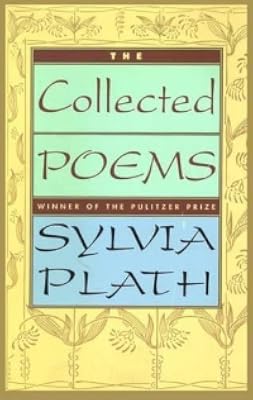
Sylvia Plath: The Collected Poems
by Sylvia Plath 
On This Page
Description
Contains in sequence all the poetry written by the author from 1956 until her suicide in 1963, together with fifty selections from her pre-1956 work.Tags
Recommendations


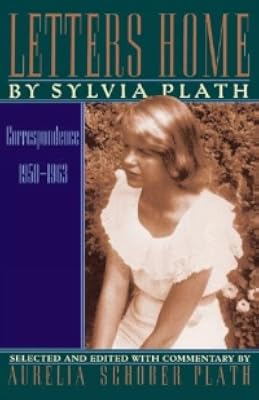
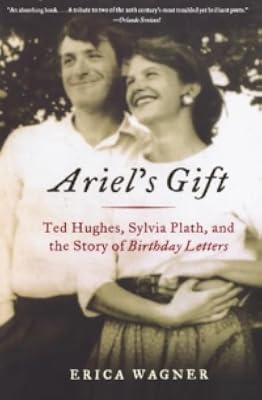
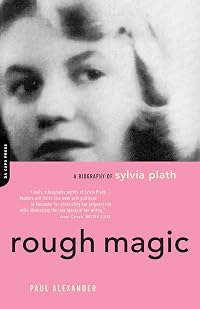
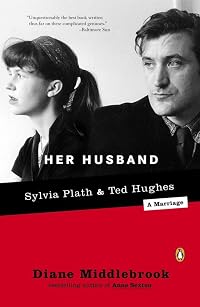
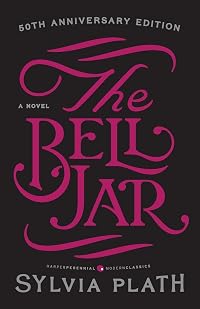





Member Recommendations
Member Reviews
An incredibly powerful poet, and well curated collection. Despite what I've seen from some other reviewers (no hard feelings) I loved the early work. It seems to me like some of the beginning poet are of a poet who is speaking more directly, in messy but powerful terms. Then there's a lagging stretch in the middle, as a more refined voice is being searched for. Of course the ending stretch, in 1962 and 1963, contains some of the most visceral poetry I've read. Plath isn't "just" a confessional poet; the incredible anger in much of her work has a powerful effect.
It's a phenomenal collection to dig through in chunks, I wouldn't recommend skimming simply because a lot of poems really don't land unless you allow it to command your attention.
It's a phenomenal collection to dig through in chunks, I wouldn't recommend skimming simply because a lot of poems really don't land unless you allow it to command your attention.
As explained in the introduction, "the aim of [this book], which contains a numbered sequence of the 224 poems written after 1956 together with a further 50 poems chosen from her pre-1956 work, is to bring Sylvia Plath's poetry together in one volume, including the various uncollected and unpublished pieces, and to set everything in as a true a chronological order as is possible, so that the whole progress and achievement of this unusual poet will become accessible to readers." (p. 15) Viewing her works in chronologically order is indeed very interesting; for instance, you can see in how some years (i.e., 1962) her output far exceeds other years.
As with other collected volumes of Plath's work, knowing something about her life helps show more inform the reading/interpretation of her poems as she seems to pour her whole self into her poetry. For a very specific example, a number of bee-related poems, including “The Bee Meeting,” are reminiscent of Plath’s observations in her prose work (Johnny Panic and the Bible of Dreams) of joining a neighborhood bee-keeping club in England. Or, take for instance, these powerful lines from "Electra on Azalea Path": "My mother said ; you died like any man. How shall I age into that state of mind? I am the ghost of an infamous suicide. My own blue razor rusting in my throat." Knowing not only that she tried to commit suicide when in college, but also that her attempt was well publicized because she was thought missing for a space of several days and knowing that her father had died when she was young all contribute to the understanding of these lines and the poem as a whole. Likewise, in a poem titled “Daddy,” she writes: “I was ten when they buried you. At twenty I tried to die And get back, back, back to you. I thought even the bones would do. But they pulled me out of the sack, And they stuck me together with glue.” Again, this one, as well as another poem titled “Lady Lazarus,” are more relevant when you know more about Plath’s life, particularly her suicide attempt when she was in college and her father’s death when she was still very young.
As is evidenced in some of the lines above and probably by anyone’s basic knowledge of Plath, yes, she can tend toward the macabre at times, but she is also light-hearted, witty, contemplative, and so on and so on at times. Her poems cover a diverse range of topics in a variety of voices. From this particular collection, I really liked these poems: "Channel Crossing" (pulls you into the experience of being a seafaring immigrant or traveler), "Soliloquy of the Solipsist" (witty, clever), "Fiesta" (upbeat, evocative, brightly colorful), "Snakecharmer" (evocative, descriptive), "On the Difficulty of Conjuring Up a Dryad (on writing poems and trying to come up with something supernatural or mythical to write about but being distracted by the beauty of nature instead) and its counterpart "On the Plethora of Dryads" (on how the fantastic rises up just as the poet sits down to write about the natural), "The Eye-mote" (an interesting combination of natural and mythological symbolism), "Suicide off Egg Rock" (painfully realistic, including this line of the suicidal man's "blood beating the old tattoo, I am, I am, I am" - the same words conveying some hope as they conclude Plath's autobiographical novel about her suicide attempt), "Stillborn" (a poem about the poems that don't make it to fruition), and “For a Fatherless Son” (which is all the more poignant and sad for knowing that Plath’s son would also soon by motherless and would eventually take his own life). Still other poems I liked a great deal from this book include: “The Surgeon at 2 a.m.,” “Last Words,” “Mirror,” and “The Babysitters.”
Throughout her work, Plath has beautiful lines here and there that just strike the reader as particularly above par. For instance, the final stanza from "Tale of a Tub" is just remarkable: "In this particular tub, two knees jut up like icebergs, while minute brown hairs rise on arms and legs in a fringe of kelp; green soap navigates the tidal slosh of seas breaking on legendary beaches; in faith we shall board our imagined ship and wildly sail among sacred islands of the mad till death shatters the fabulous stars and make us real." Wow. Powerful stuff. Another set of lines that I couldn't help but a laugh a bit at with the image conjured up (and I think was perhaps the intention) comes from her poem "Wuthering Heights": "The sheep ... stand about in grandmotherly disguise, all wig curls and yellow teeth and hard, marbly baas." Likewise, I was entertained by these great lines from “The Courage of Shutting-Up”: “The courage of the shut mouth, in spite of artillery! The line pink and quiet, a worm, basking. There a black disks behind it, the disks of outrage, And the outrage of a sky, the lined brain of it.” Meanwhile, some sad lines from “A Birthday Present” strike at the heart: “I do not want much of a present, anyway, this year. After all I am alive only by accident. I would have killed myself gladly that time any possibly way. Now there are these veils, shimmering like curtains, The diaphanous satins of a January window White as babies’ bedding and glittering with dead breath.” And, yet another set of powerful lines from the poem “Edge” (written in February 1963, it is the final poem in this collection and thus the last she wrote): “The woman is perfected. Her dead Body wears the smile of accomplishment, The illusion of a Greek necessity Flows in the scrolls of her toga, Her bare Feet seem to be saying: We have come so far, it is over.”
Sometimes, particularly in the earliest poems found in this book (therefore the ones Plath wrote earliest in her life), there is an almost vitriolic attitude toward her own sex. Consider this line from "Strumpet Song": "Mark, I cry, that mouth/Made to do violence on ..." Harsh words indeed! In "Two Sisters of Persephone," the scholarly sister spends all her time indoors studying and is finally described as "wry virgin to the last, Goes graveward with flesh laid waste, worm-husbanded, yet no woman." This is a very harmful view to have toward women who prefer their own intellectual stimulation to marriage (not that it has to be an either/or situation, but it's very dismissive of some women's choices and is perhaps indicative of the cultural attitude of Plath's time, such as the speech at her college graduation).
As this book contains most, if not all, of Plath's poetry, this meant some of the poems were re-reads for me. In many cases, this was just an opportunity to read again something I enjoyed the first time. For instance, I felt the power of the Three Women verse play even more so this second time around. In other cases, I discovered a new-found interest in a poem I had previously dismissed, such as "Hardcastle Crags" from The Colossus.
Oddly, the notes on the poems written between 1956 and 1963 come in bulk at the end of all these poems; it would have been better if they were interspersed as footnotes throughout the poems so that the clarifications and so forth came with the poem and had a context. Still, they were interesting to read in regards to things like finding out about critical times that were tough for Plath’s writing career, etc. Also for some odd reason, there’s an entire verse play contained only here in the fine print of the notes, called “Dialogue over a Ouija Board,” as well as a medium-length poem, “Queen Mary’s Rose Garden,” that for some reason isn’t included with the rest of the poems.
Amongst the juvenilia, many of which were written for college coursework, I really enjoyed “Bitter Strawberries” as a highlight of the works.
The book ends with a few extras, including an essay by Joyce Carol Oates, which I disagreed with overall as she pulls lines from poems out of context to make them say something other than they do. But she's the one who is an expert in literature so if you want to take her word over mine, you are more than justified in doing so.
All in all, this is the definitive guide for the serious Plath reader and/or researcher. show less
As with other collected volumes of Plath's work, knowing something about her life helps show more inform the reading/interpretation of her poems as she seems to pour her whole self into her poetry. For a very specific example, a number of bee-related poems, including “The Bee Meeting,” are reminiscent of Plath’s observations in her prose work (Johnny Panic and the Bible of Dreams) of joining a neighborhood bee-keeping club in England. Or, take for instance, these powerful lines from "Electra on Azalea Path": "My mother said ; you died like any man. How shall I age into that state of mind? I am the ghost of an infamous suicide. My own blue razor rusting in my throat." Knowing not only that she tried to commit suicide when in college, but also that her attempt was well publicized because she was thought missing for a space of several days and knowing that her father had died when she was young all contribute to the understanding of these lines and the poem as a whole. Likewise, in a poem titled “Daddy,” she writes: “I was ten when they buried you. At twenty I tried to die And get back, back, back to you. I thought even the bones would do. But they pulled me out of the sack, And they stuck me together with glue.” Again, this one, as well as another poem titled “Lady Lazarus,” are more relevant when you know more about Plath’s life, particularly her suicide attempt when she was in college and her father’s death when she was still very young.
As is evidenced in some of the lines above and probably by anyone’s basic knowledge of Plath, yes, she can tend toward the macabre at times, but she is also light-hearted, witty, contemplative, and so on and so on at times. Her poems cover a diverse range of topics in a variety of voices. From this particular collection, I really liked these poems: "Channel Crossing" (pulls you into the experience of being a seafaring immigrant or traveler), "Soliloquy of the Solipsist" (witty, clever), "Fiesta" (upbeat, evocative, brightly colorful), "Snakecharmer" (evocative, descriptive), "On the Difficulty of Conjuring Up a Dryad (on writing poems and trying to come up with something supernatural or mythical to write about but being distracted by the beauty of nature instead) and its counterpart "On the Plethora of Dryads" (on how the fantastic rises up just as the poet sits down to write about the natural), "The Eye-mote" (an interesting combination of natural and mythological symbolism), "Suicide off Egg Rock" (painfully realistic, including this line of the suicidal man's "blood beating the old tattoo, I am, I am, I am" - the same words conveying some hope as they conclude Plath's autobiographical novel about her suicide attempt), "Stillborn" (a poem about the poems that don't make it to fruition), and “For a Fatherless Son” (which is all the more poignant and sad for knowing that Plath’s son would also soon by motherless and would eventually take his own life). Still other poems I liked a great deal from this book include: “The Surgeon at 2 a.m.,” “Last Words,” “Mirror,” and “The Babysitters.”
Throughout her work, Plath has beautiful lines here and there that just strike the reader as particularly above par. For instance, the final stanza from "Tale of a Tub" is just remarkable: "In this particular tub, two knees jut up like icebergs, while minute brown hairs rise on arms and legs in a fringe of kelp; green soap navigates the tidal slosh of seas breaking on legendary beaches; in faith we shall board our imagined ship and wildly sail among sacred islands of the mad till death shatters the fabulous stars and make us real." Wow. Powerful stuff. Another set of lines that I couldn't help but a laugh a bit at with the image conjured up (and I think was perhaps the intention) comes from her poem "Wuthering Heights": "The sheep ... stand about in grandmotherly disguise, all wig curls and yellow teeth and hard, marbly baas." Likewise, I was entertained by these great lines from “The Courage of Shutting-Up”: “The courage of the shut mouth, in spite of artillery! The line pink and quiet, a worm, basking. There a black disks behind it, the disks of outrage, And the outrage of a sky, the lined brain of it.” Meanwhile, some sad lines from “A Birthday Present” strike at the heart: “I do not want much of a present, anyway, this year. After all I am alive only by accident. I would have killed myself gladly that time any possibly way. Now there are these veils, shimmering like curtains, The diaphanous satins of a January window White as babies’ bedding and glittering with dead breath.” And, yet another set of powerful lines from the poem “Edge” (written in February 1963, it is the final poem in this collection and thus the last she wrote): “The woman is perfected. Her dead Body wears the smile of accomplishment, The illusion of a Greek necessity Flows in the scrolls of her toga, Her bare Feet seem to be saying: We have come so far, it is over.”
Sometimes, particularly in the earliest poems found in this book (therefore the ones Plath wrote earliest in her life), there is an almost vitriolic attitude toward her own sex. Consider this line from "Strumpet Song": "Mark, I cry, that mouth/Made to do violence on ..." Harsh words indeed! In "Two Sisters of Persephone," the scholarly sister spends all her time indoors studying and is finally described as "wry virgin to the last, Goes graveward with flesh laid waste, worm-husbanded, yet no woman." This is a very harmful view to have toward women who prefer their own intellectual stimulation to marriage (not that it has to be an either/or situation, but it's very dismissive of some women's choices and is perhaps indicative of the cultural attitude of Plath's time, such as the speech at her college graduation).
As this book contains most, if not all, of Plath's poetry, this meant some of the poems were re-reads for me. In many cases, this was just an opportunity to read again something I enjoyed the first time. For instance, I felt the power of the Three Women verse play even more so this second time around. In other cases, I discovered a new-found interest in a poem I had previously dismissed, such as "Hardcastle Crags" from The Colossus.
Oddly, the notes on the poems written between 1956 and 1963 come in bulk at the end of all these poems; it would have been better if they were interspersed as footnotes throughout the poems so that the clarifications and so forth came with the poem and had a context. Still, they were interesting to read in regards to things like finding out about critical times that were tough for Plath’s writing career, etc. Also for some odd reason, there’s an entire verse play contained only here in the fine print of the notes, called “Dialogue over a Ouija Board,” as well as a medium-length poem, “Queen Mary’s Rose Garden,” that for some reason isn’t included with the rest of the poems.
Amongst the juvenilia, many of which were written for college coursework, I really enjoyed “Bitter Strawberries” as a highlight of the works.
The book ends with a few extras, including an essay by Joyce Carol Oates, which I disagreed with overall as she pulls lines from poems out of context to make them say something other than they do. But she's the one who is an expert in literature so if you want to take her word over mine, you are more than justified in doing so.
All in all, this is the definitive guide for the serious Plath reader and/or researcher. show less
I can’t tell you how exactly, but a high school boy discovered poetry through the perspective of a women’s despairing domestic life in the 50’s/60’s. The tone and description of brilliant mundanedeath images was the initial enticement. Beyond the subject matter, her form was an introduction and a revelation for me. “It doesn’t rhyme at the end of the lines and this is poetry!?” When it comes down to it, it’s the assonance and alliteration. They still influence me to this day. I return to some of these regularly and have an audiobook of her reading thepoems that really delivers.
What else can be said about this poor woman that hasn't been said before ad nauseum? Her poetry continues to speak volumes on its own. Gorgeous, life-shattering work. As is the cliche, I read her first in my melancholy teens, but she has echoed within me ever since. She is the reason I still read and love poetry, the reason I know that poetry can transform you.
I bought The Collected Poems Sylvia Plath because I wanted to explore Plath's work. I don't remember reading Plath's work before, but several of the poems had a familiar feel to them so I must have read her at some point. As I read, I often felt an eerie connection to the words on the page. At times they felt like they mirrored thoughts and feelings I'd had about experiences in my own life. At other times I struggled to even make sense of the poems, but even those poems had a haunting essence to them. Plath used life itself to paint emotions and feelings and observations on the words she chose to put on the page. This collection includes a section after the main book of poems she wrote when she was younger. Those poems had a naivete show more that offered an unexpected rawness in their more traditional form and choice of words. I highly recommend The Collected Poems Sylvia Plath for anyone who is interested in Plath's work or in poetry in general. The Collected Poems Sylvia Plath is a great read filled with thought-provoking, emotionally challenging, and overall engaging poetry. show less
What else can be said about this poor woman that hasn't been said before ad nauseum? Her poetry continues to speak volumes on its own. Gorgeous, life-shattering work. As is the cliche, I read her first in my melancholy teens, but she has echoed within me ever since. She is the reason I still read and love poetry, the reason I know that poetry can transform you.
Plath cut through the poetic drowse of the 60's like a knife. I first read her in mimeographed handouts, and then in a spread in the New Yorker..but by then she was dead. Precision, a great ear, a great mythos.
Members
- Recently Added By
Lists

Philip Ward's Lifetime Reading Plan
592 works; 22 members

Best of American Literature
146 works; 9 members

20th Century Literature
1,161 works; 55 members

Books Read in 2012
816 works; 34 members
American Lit for Eng 11 Research Project
368 works; 6 members

Top-Rated Books on LibraryThing
272 works; 117 members
Author Information

131+ Works 55,776 Members
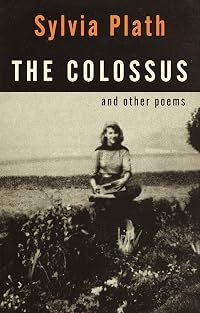
Sylvia Plath's best poetry was produced, tragically, as she pondered self-destruction---in her poems as well as her life---and she eventually committed suicide. She had an extraordinary impact on British as well as American poetry in the few years before her death, and affected many poets, particularly women, in the generation after. She is a show more confessional poet, influenced by the approach of Robert Lowell. Born in Boston, a graduate of Smith College, Plath attended Newnham College, Cambridge University, on a Fulbright Fellowship and married the British poet Ted Hughes. Of her first collection,The Colossus and Other Poems (1962), the Times Literary Supplement remarked, "Plath writes from phrase to phrase as well as with an eye on the larger architecture of the poem; each line, each sentence is put together with a good deal of care for the springy rhythm, the arresting image and---most of all, perhaps---the unusual word." Plath's second book of poetry, Ariel, written in 1962 in a last fever of passionate creative activity, was published posthumously in 1965 and explores dimensions of women's anger and sexuality in groundbreaking new ways. Plath's struggles with women's issues, in the days before the second wave of American feminism, became legendary in the 1970s, when a new generation of women readers and writers turned to her life as well as her work to understand the contradictory pressures of ambitious and talented women in the 1950s. The Bell Jar---first published under a pseudonym in 1963 and later issued under Plath's own name in England in 1966---is an autobiographical novel describing an ambitious young woman's efforts to become a "real New York writer" only to sink into mental illness and despair at her inability to operate within the narrow confines of traditional feminine expectations. Plath was posthumously awarded the Pulitzer Prize for poetry in 1982. In recent years, there have been a number of biographies and critical evaluations of Plath's work. (Bowker Author Biography) show less
Sylvia Plath has a Legacy Library. Legacy libraries are the personal libraries of famous readers, entered by LibraryThing members from the Legacy Libraries group.
All Editions
Some Editions
Awards and Honors
Awards
Distinctions
Notable Lists
Series
Belongs to Publisher Series
Work Relationships
Contains
Common Knowledge
- Canonical title
- Sylvia Plath: The Collected Poems
- Original publication date
- 1981-12-23
- First words
- My thoughts are crabbed and sallow, My tears like vinegar, Or the bitter blinking yellow Of an acetic star
- Last words
- (Click to show. Warning: May contain spoilers.)The moon has nothing to be sad about, staring from her hood of bone. She is used to this sort of thing. Her blacks crackle and drag.
- Original language
- English
- Canonical DDC/MDS
- 811.54
- Canonical LCC
- PS3566.L27
Classifications
Statistics
- Members
- 4,486
- Popularity
- 3,289
- Reviews
- 23
- Rating
- (4.30)
- Languages
- 6 — English, Finnish, Italian, Portuguese, Spanish, Swedish
- Media
- Paper, Ebook
- ISBNs
- 25
- ASINs
- 29