On This Page
Description
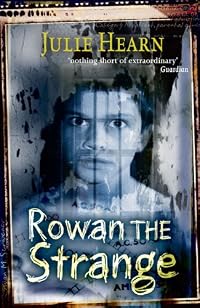
Rowan knows he is strange. But dangerous? He didn't mean to scare his sister. In his right mind, he wouldn't hurt a fly. But there's a place he can go where they say they can fix his mind... This haunting novel about mental illness and family relationships, set at the start of the Second World War, was shortlisted for the 2010 CILIP Carnegie Medal. The Reading Guide provides students with a magazine-format approach to the text, packed with engaging activities and background information.Tags
Recommendations














Member Recommendations
Member Reviews
Rowan Scrivener hears a voice, and sometimes, when stressed or scared, the voice makes him do things he never would normally, like the time he slammed the lid of the piano down on his sister's hand, breaking three of her fingers. It is 1939, war has just broken out, London is under blackout and schizophrenia is poorly understood. Rowan is sent to a hospital where he is to undergo a radical new therapy, administered by a German doctor.
What a brilliant, beautiful, heartrending book. Its power lies in its understated humanity. Rowan's is a tiny, surely insignificant drama in the face of the coming global conflict. He is not treated harshly or cruelly, but by today's standards it is clumsy, callous, insensitive and even contemptuous. Set show more against the scale of human suffering, however, Rowan seems downright lucky. About halfway through, in a scene of quiet devastation, we discover why this book has been set when it has and why the doctor is German, and suddenly every tiny mistreatment is set in sharp relief, not diminished but accentuated, as these vulnerable people are horribly exposed in the face of indifference or fear or spite at the hands of others.
This isn't a tale of plucky rebellion against institutional authority, it's a story of people struggling against an illness they cannot understand trying to get better with the help of people with limited insight, and who do not understand the limits of their vision.
Yeah, I cried. show less
What a brilliant, beautiful, heartrending book. Its power lies in its understated humanity. Rowan's is a tiny, surely insignificant drama in the face of the coming global conflict. He is not treated harshly or cruelly, but by today's standards it is clumsy, callous, insensitive and even contemptuous. Set show more against the scale of human suffering, however, Rowan seems downright lucky. About halfway through, in a scene of quiet devastation, we discover why this book has been set when it has and why the doctor is German, and suddenly every tiny mistreatment is set in sharp relief, not diminished but accentuated, as these vulnerable people are horribly exposed in the face of indifference or fear or spite at the hands of others.
This isn't a tale of plucky rebellion against institutional authority, it's a story of people struggling against an illness they cannot understand trying to get better with the help of people with limited insight, and who do not understand the limits of their vision.
Yeah, I cried. show less
The cover and the description for this book are highly misleading; they make it sound like it's going to be some creepy One Flew Over the Cuckoo's Nest type story, or even science fiction. Instead, although the characters and setting is indeed a troubling one -- the patients and staff at a mental hospital in Britain in 1939 -- the story is, in the end, almost heartwarming.
There were so many characters to appreciate here. Rowan's family, particularly his eccentric dog-loving grandmother, captivated me. Though stressed and bewildered by his illness, they truly wanted what was best for him. The same for his psychiatrist, Dr. von Metzer, a kind and compassionate doctor whose biggest problem was being German in a very xenophobic Britain. show more Dorothea was annoying but refreshingly real, and the other patients in Rowan's unit were fully drawn, not just cardboard cutouts like supporting characters often are. Even the bad people in the story weren't evil, just bigoted and selfish.
The historical details of the early war -- gas masks, blackout curtains, evacuations of children to the countryside -- were authentic and added color to the story without seeming too didactic. I thought the subplot about Germany's T4 program was very well done.
I would recommend Rowan the Strange to junior high schoolers up through adulthood. There's a lot for people to like in this book. show less
There were so many characters to appreciate here. Rowan's family, particularly his eccentric dog-loving grandmother, captivated me. Though stressed and bewildered by his illness, they truly wanted what was best for him. The same for his psychiatrist, Dr. von Metzer, a kind and compassionate doctor whose biggest problem was being German in a very xenophobic Britain. show more Dorothea was annoying but refreshingly real, and the other patients in Rowan's unit were fully drawn, not just cardboard cutouts like supporting characters often are. Even the bad people in the story weren't evil, just bigoted and selfish.
The historical details of the early war -- gas masks, blackout curtains, evacuations of children to the countryside -- were authentic and added color to the story without seeming too didactic. I thought the subplot about Germany's T4 program was very well done.
I would recommend Rowan the Strange to junior high schoolers up through adulthood. There's a lot for people to like in this book. show less
In a classic case of don't judge a book by its cover, Julie Hearn's Rowan The Strange is a moving, emotional and unforgettable read centering around 13-year-old Rowan Scrivener, a British teen battling "voices" in his head. It's 1939 and England is at war -- just as the battles begin in the Scrivener home. When Rowan accidentally harms his young sister, his parents decide it's time to take him where he can get well: an asylum in the countryside.
Under the care of Dr. von Metzer, a German with experience in mental illness, Rowan undergoes electric shock therapy -- and develops interesting new personality traits. While undergoing treatment, he meets Dorothea, a young woman who believes each of us has a guardian angel looking out for us. show more Spirited, angry and sarcastic, Dorothea "runs" the ward where Rowan stays -- which, for a while, includes just the two of them.
The unlikely friends work through their issues together as they prepare for the Christmas pantomime, a play the asylum's attendees put on each holiday season. After Rowan is cast in a major role, he must confront his own fears to perform his part well. And maybe help others in the process.
The book's strength lies in our main character -- a young boy who has no idea what's happening to him and why, who desperately clings to the belief that someday he'll be "normal." Taunted as "Ro the Strange" by classmates and his sister, Rowan tries to control the voice in his head that causes him to have "panics" and do strange things, but he's powerless to stop it. What carried me through the narrative was the belief that Rowan was, in his heart, a good person -- a good son, a good brother. This wasn't his fault. It wasn't anyone's fault, really, but it most especially wasn't his.
Every preconceived notion I had about the plot proved wrong. I assumed the Scriveners would be a surly lot, angry that they had a "damaged" son, embarrassed by him and desperate to send him away. (Wrong.) I assumed Rowan would be an awkward, silly boy, dangerous and scary and just plain weird. (Wrong.) I assumed Dr. Von would be a masochist, a deranged German doctor with no regard for his patients' well-being and only a regard for the "science" of the experiments he performed on them. (Wrong.)
In fact, I was wrong about nearly everything in Hearn's novel -- including my own belief that I would loathe this one, turning the pages as if weights were positioned on my fingers. In reality? I tore through it in record time, eager to find out what happened to Rowan and hopeful that he would find the solace he seeked. I loved his nana, a kindly woman who never once treated Rowan like he was someone to fear, and his parents, who were so supportive. Against the backdrop of World War II in London, the Scriveners managed to stay brave, strong and loving -- even with their children all over the country.
You know? I just loved this book. If you get the chance, I think you'll -- surprisingly! -- really love it, too. show less
Under the care of Dr. von Metzer, a German with experience in mental illness, Rowan undergoes electric shock therapy -- and develops interesting new personality traits. While undergoing treatment, he meets Dorothea, a young woman who believes each of us has a guardian angel looking out for us. show more Spirited, angry and sarcastic, Dorothea "runs" the ward where Rowan stays -- which, for a while, includes just the two of them.
The unlikely friends work through their issues together as they prepare for the Christmas pantomime, a play the asylum's attendees put on each holiday season. After Rowan is cast in a major role, he must confront his own fears to perform his part well. And maybe help others in the process.
The book's strength lies in our main character -- a young boy who has no idea what's happening to him and why, who desperately clings to the belief that someday he'll be "normal." Taunted as "Ro the Strange" by classmates and his sister, Rowan tries to control the voice in his head that causes him to have "panics" and do strange things, but he's powerless to stop it. What carried me through the narrative was the belief that Rowan was, in his heart, a good person -- a good son, a good brother. This wasn't his fault. It wasn't anyone's fault, really, but it most especially wasn't his.
Every preconceived notion I had about the plot proved wrong. I assumed the Scriveners would be a surly lot, angry that they had a "damaged" son, embarrassed by him and desperate to send him away. (Wrong.) I assumed Rowan would be an awkward, silly boy, dangerous and scary and just plain weird. (Wrong.) I assumed Dr. Von would be a masochist, a deranged German doctor with no regard for his patients' well-being and only a regard for the "science" of the experiments he performed on them. (Wrong.)
In fact, I was wrong about nearly everything in Hearn's novel -- including my own belief that I would loathe this one, turning the pages as if weights were positioned on my fingers. In reality? I tore through it in record time, eager to find out what happened to Rowan and hopeful that he would find the solace he seeked. I loved his nana, a kindly woman who never once treated Rowan like he was someone to fear, and his parents, who were so supportive. Against the backdrop of World War II in London, the Scriveners managed to stay brave, strong and loving -- even with their children all over the country.
You know? I just loved this book. If you get the chance, I think you'll -- surprisingly! -- really love it, too. show less
Julie Hearn has written a powerfully compelling story with her latest offering of Rowan the Strange. She has given the reader an insight into mental illness with her compassionate, intelligent tale of a young schizophrenic boy and the experimental treatment he receives at a psychiatric hospital for the insane. Her writing is so eloquent that when she describes Rowan’s first treatment I found myself gasping in horror and had to pause to recollect my thoughts. She skilfully draws parallels between the outside world and the war with the chaos that is occurring in the minds of the patients in hospital. Her characters come to life on the pages and I came to care about every one of them. It was pure genius on her part to have cast the main show more doctor as a German - Doctor von Metzer - and to use him to express the shock and outrage that Germans felt over the euthanasia of the mentally ill that occurred in their country. The book is deep, dark and at times harrowing, but always told in a compassionate and perceptive style.
This is the third in a series and is a sequel to Hazel and Ivy but works very well as a stand alone novel. Indeed, I haven’t read the first two books and didn’t feel this detracted in my enjoyment of it at all. I highly recommend this to anyone interested in mental health, WW11 and historical fiction. show less
This is the third in a series and is a sequel to Hazel and Ivy but works very well as a stand alone novel. Indeed, I haven’t read the first two books and didn’t feel this detracted in my enjoyment of it at all. I highly recommend this to anyone interested in mental health, WW11 and historical fiction. show less
PLUS -
* A story set at the beginning of World War Two, but an unusual approach to a much covered era. Rowan is being sent away by his family but not as an evacuee. He hears disturbing voices in his head, and after hurting his younger sister during one of his 'panics' he is sent to an asylum to be treated.
* There is so much going on in this book. There is the ongoing story of the war and in particulr how it affects Rowans father, scarred by his participation in the previous war. There are interesting issues around the changing treatment of those with mental health issues and learning difficulties (and in the background details of how similar people were being treated by the Nazis). There is a strong theme of overcoming prejudice, not show more ony against the mentally ill but als through the character of Dr von Metzer the German doctor.
* Having said all of that, this is not a 'preachy' book on any of these topics. We are introduced to fascinating characters and they are left to tell the story.
MINUS -
* It's not a light read, and some younger readers may struggle with the more unusual subject matter. I'll be interested to see what teenagers at my school make of it.
OVERALL -
* A good adult / teen crossover novel. I hadn't expected to like it (having not enjoyed Hearn's time-travelling first novel) but I really did. I've only just realised that this has two companion novels about Rowan's mother and grandmother and I'll be reading those at some point. show less
* A story set at the beginning of World War Two, but an unusual approach to a much covered era. Rowan is being sent away by his family but not as an evacuee. He hears disturbing voices in his head, and after hurting his younger sister during one of his 'panics' he is sent to an asylum to be treated.
* There is so much going on in this book. There is the ongoing story of the war and in particulr how it affects Rowans father, scarred by his participation in the previous war. There are interesting issues around the changing treatment of those with mental health issues and learning difficulties (and in the background details of how similar people were being treated by the Nazis). There is a strong theme of overcoming prejudice, not show more ony against the mentally ill but als through the character of Dr von Metzer the German doctor.
* Having said all of that, this is not a 'preachy' book on any of these topics. We are introduced to fascinating characters and they are left to tell the story.
MINUS -
* It's not a light read, and some younger readers may struggle with the more unusual subject matter. I'll be interested to see what teenagers at my school make of it.
OVERALL -
* A good adult / teen crossover novel. I hadn't expected to like it (having not enjoyed Hearn's time-travelling first novel) but I really did. I've only just realised that this has two companion novels about Rowan's mother and grandmother and I'll be reading those at some point. show less
I loved the way this book treated people with mental illness with respect, yet gave a great insight into how a person feels when dealing with not only the illness but the medical institution. Set at the beginning of world war II in Britain, Rowan is diagnosed with schizoprenia after several episodes including violent ones. He becomes a bit of a guinea pig for new treatments in electric therapy. He makes friends and becomes somewhat separated emotionally from his family. When the physician treating him suggests Rowan for a role in the Christmas play things go a bit haywire. Eventually Rowan comesright
An emotional read. Rowan is 13 and it's 1939. The Second World War has just started. The country is gripped by paranoia and fear. Fears of German spies are running wild. Thoughts of threat of invisible killer gas attacks and wondering when the bombs will start to fall occupy the minds of the nation. This is a very bad time to be exhibiting the first signs of schizophrenia as young Rowan does. After an incident where he violently breaks three of his sister's fingers with a piano lid followed by another incident with a knife, the boy is admitted to a place which promises to put him to rights. Unbeknown to his family, he is soon used as an experimental test subject in the use of a new process being trialled in Italy. Electroconvulsive show more therapy.
The book is extremely well handled with some great characters. I loved Dorothea. But there are other fascinating characters to get to know like Doctor Von whose psychological journey is almost as traumatic as some of his test subjects. The passages where the Nazis' policy is revealed to Doctor Von for killing children who are institutionalized disabled or mentally ill by compulsory euthanasia are truly chilling.The story has some clever parallels with The Wizard of Oz, and the physical performance of Peter Pan as the Christmas pantomime has a profound affect on many of the troubled inhabitants of the psychiatric hospital. Very compelling and memorable. There are two other books by Julie Hearn that are about Rowan's mother and grandmother. I shall seek them out.
Review from:Badelynge show less
The book is extremely well handled with some great characters. I loved Dorothea. But there are other fascinating characters to get to know like Doctor Von whose psychological journey is almost as traumatic as some of his test subjects. The passages where the Nazis' policy is revealed to Doctor Von for killing children who are institutionalized disabled or mentally ill by compulsory euthanasia are truly chilling.The story has some clever parallels with The Wizard of Oz, and the physical performance of Peter Pan as the Christmas pantomime has a profound affect on many of the troubled inhabitants of the psychiatric hospital. Very compelling and memorable. There are two other books by Julie Hearn that are about Rowan's mother and grandmother. I shall seek them out.
Review from:Badelynge show less
Members
- Recently Added By
Author Information

7 Works 1,224 Members
Awards and Honors
Series

Common Knowledge
- Canonical title
- Rowan the Strange
- People/Characters
- Rowan Scrivener; Dorothea de Vere; Doctor von Metzer; Nana; Daphne Scrivener; Ivy Scrivener (show all 8); Mr. Scrivener; Sarah Jane Springfield
- Important places
- London, England, UK
- Important events
- World War II; Holocaust
Classifications
Statistics
- Members
- 97
- Popularity
- 330,683
- Reviews
- 7
- Rating
- (4.10)
- Languages
- English
- Media
- Paper, Ebook
- ISBNs
- 6
- ASINs
- 2