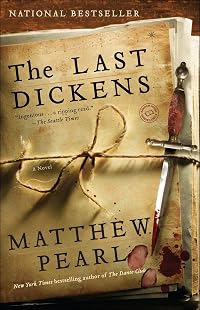
The Last Dickens
by Matthew Pearl 
On This Page
Description
Boston, 1870. When news of Charles Dickens's untimely death reaches the office of his struggling American publisher, Fields & Osgood, partner James Osgood sends Daniel Sand to take possession of the unfinished novel. When Sand is killed, Osgood and Rebecca Sand journey to England determined to recover the manuscript and stop a murderous mastermind.Tags
Recommendations
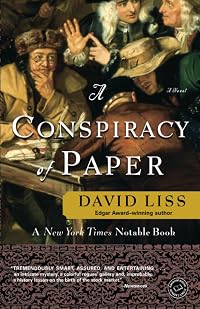
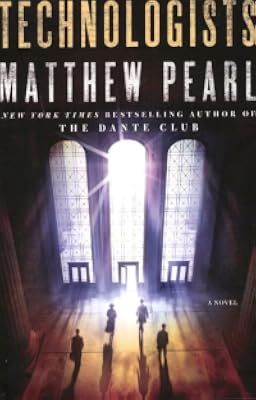
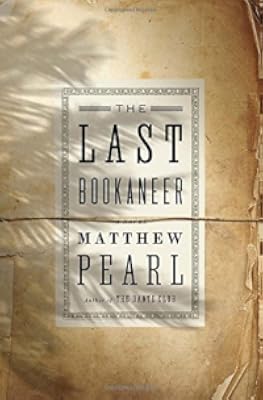



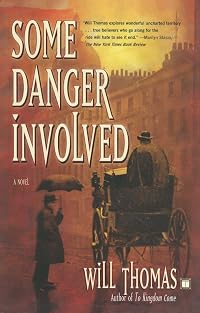
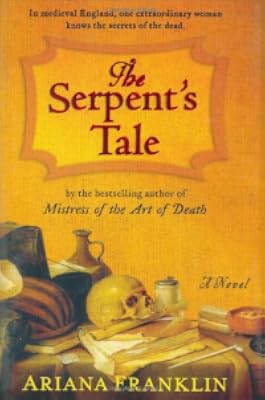
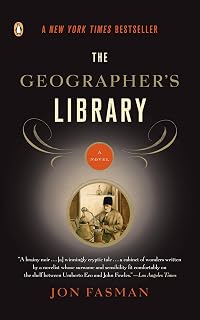
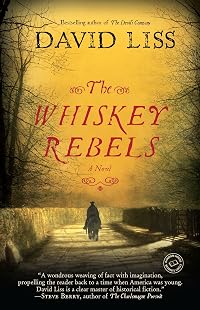
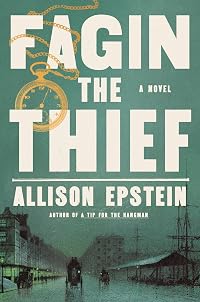
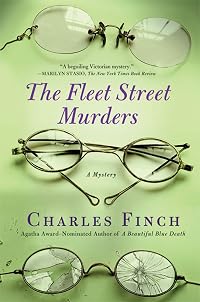
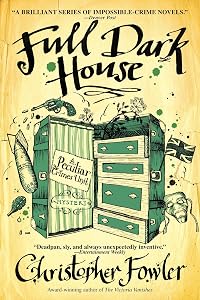
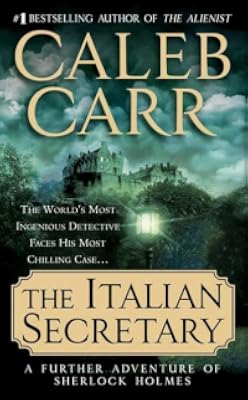

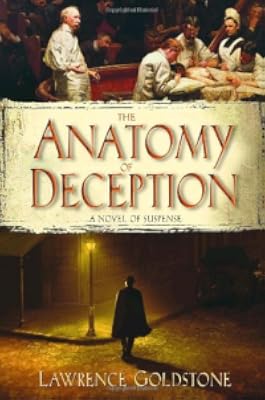
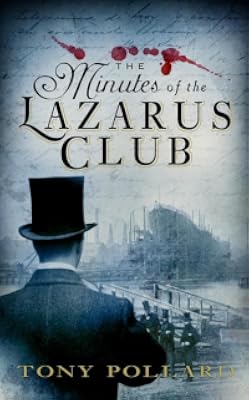
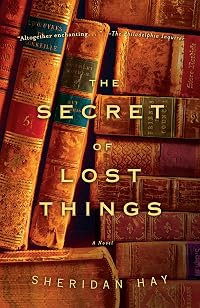
Member Recommendations
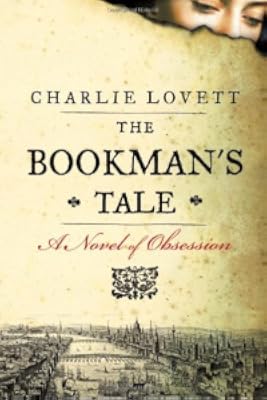
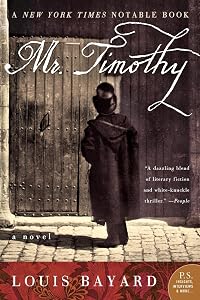
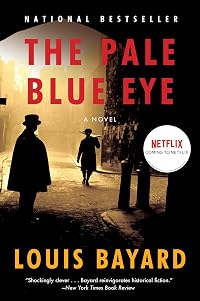
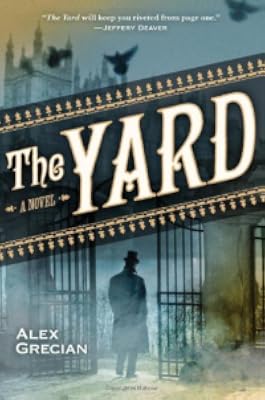
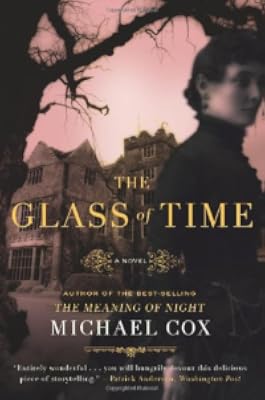
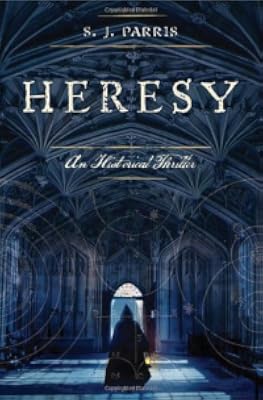
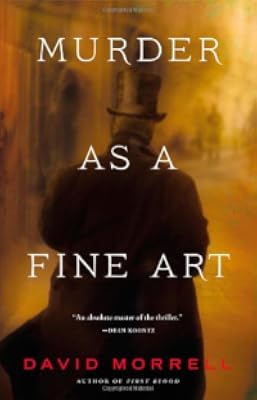
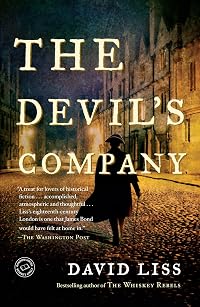
suzecate They're historical mystery/thriller set in Victorian England and involving Charles Dickens.
Member Reviews
I think this is my favorite Matthew Pearl book, so far. I love how his affection for Dickens shows so clearly. His characters - both historic and invented - were well drawn and likable. His theory on the story behind Edwin Drood is compelling and enjoyably revealed.
Possible spoiler, if you don't know anything about Dickens or Drood: it was difficult not to be disappointed by the conclusion, even though you know something like that has to happen to keep history in tact.
The only thing I found puzzling by the end of the tale was Francis Dickens' role in it. I'm not at all sure what the relevance of his cameos was to the central tale.
Possible spoiler, if you don't know anything about Dickens or Drood: it was difficult not to be disappointed by the conclusion, even though you know something like that has to happen to keep history in tact.
The only thing I found puzzling by the end of the tale was Francis Dickens' role in it. I'm not at all sure what the relevance of his cameos was to the central tale.
Couldn’t resist the combination of two of my favorite things: Charles Dickens and a good mystery. Found the parts about Charles Dickens worthwhile, but the mystery was a disappointment.
The plot, such as it is: Charles Dickens has died, and his U.S. publishing house faces a quandary. The young lad who was supposed to deliver to them the initial chapters of Dickens’ last work, The Mystery of Edwin Drood, has himself died under mysterious circumstances, before he could complete the expected delivery. What to do but to send a representative of the publisher (accompanied by a comely young company bookkeeper) to England to retrieve the chapters before they’re pirated by unethical U.S. competitors? And, as long as they’re there, why show more not investigate the possibility that Dickens actually completed the final chapters, but secreted them away?
My favorite chapters of the book re-create Dickens’ final U.S. tour. One thing Pearl has always done well is stuff his novels with authentic period detail, and his depiction of America’s obsession with Dickens is refreshingly faithful to the historical record. As a bibliophile myself, I love imagining a time when Americans stood in block-long lines, sometimes overnight, for tickets to hear authors perform dramatic readings from their canon. Pearl also incorporates some interesting insight into the state of the publishing industry and copywrite law in the mid/late 1800s.
However, the pleasure I derived from these chapters wasn’t enough to reconcile me to the book’s many deficits, to include numerous plot holes (I’m sorry, but seriously – in the real world, there’s no way Osgood & Rebecca arrive in England before the pirated pages are on their way to the U.S. by a ship headed in the opposite direction), tangential subplots (one gets the sense that the bits set in Bengal have more to do with Pearl showing off his scholarship than actual plot development), a pair of protagonists as lively as cardboard cutouts (not much smarter than cardboard cutouts, come to that), a romantic subplot entirely lacking in passion, and an over-reliance on improbability that, by the end of the story, borders on preposterous. I get that Pearl is trying to weave the plot of Edwin Drood into the tale, but instead of a seamless garment, this reads more like a quilt fashioned out of pieces that don't quite fit.
In other words, I can’t in good conscious recommend this as a worthwhile read. I can, however, hope that folks who complete the tale will be inspired to read the real Edwin Drood and draw their own conclusions: is Edwin dead and stuffed in a church crypt, or laying quietly in wait until he can safety expose his uncle’s perfidy? Whatever ending Dickens intended, I’m confident it would have been more satisfying than this uneven outing. show less
The plot, such as it is: Charles Dickens has died, and his U.S. publishing house faces a quandary. The young lad who was supposed to deliver to them the initial chapters of Dickens’ last work, The Mystery of Edwin Drood, has himself died under mysterious circumstances, before he could complete the expected delivery. What to do but to send a representative of the publisher (accompanied by a comely young company bookkeeper) to England to retrieve the chapters before they’re pirated by unethical U.S. competitors? And, as long as they’re there, why show more not investigate the possibility that Dickens actually completed the final chapters, but secreted them away?
My favorite chapters of the book re-create Dickens’ final U.S. tour. One thing Pearl has always done well is stuff his novels with authentic period detail, and his depiction of America’s obsession with Dickens is refreshingly faithful to the historical record. As a bibliophile myself, I love imagining a time when Americans stood in block-long lines, sometimes overnight, for tickets to hear authors perform dramatic readings from their canon. Pearl also incorporates some interesting insight into the state of the publishing industry and copywrite law in the mid/late 1800s.
However, the pleasure I derived from these chapters wasn’t enough to reconcile me to the book’s many deficits, to include numerous plot holes (I’m sorry, but seriously – in the real world, there’s no way Osgood & Rebecca arrive in England before the pirated pages are on their way to the U.S. by a ship headed in the opposite direction), tangential subplots (one gets the sense that the bits set in Bengal have more to do with Pearl showing off his scholarship than actual plot development), a pair of protagonists as lively as cardboard cutouts (not much smarter than cardboard cutouts, come to that), a romantic subplot entirely lacking in passion, and an over-reliance on improbability that, by the end of the story, borders on preposterous. I get that Pearl is trying to weave the plot of Edwin Drood into the tale, but instead of a seamless garment, this reads more like a quilt fashioned out of pieces that don't quite fit.
In other words, I can’t in good conscious recommend this as a worthwhile read. I can, however, hope that folks who complete the tale will be inspired to read the real Edwin Drood and draw their own conclusions: is Edwin dead and stuffed in a church crypt, or laying quietly in wait until he can safety expose his uncle’s perfidy? Whatever ending Dickens intended, I’m confident it would have been more satisfying than this uneven outing. show less
A fast paced look at the cut-throat (literally!) world of book publishing. The Boston publishing house of Fields & Osgood is rightfully proud that author Charles Dickens has chosen them as his US publisher. They sponsored his second US speaking tour to great success. They are in the midst of publishing in serial form his latest, 'The Mystery of Edwin Drood', when word comes that Dickens has died of a stroke. The world is aghast at losing its most popular author. On only a slightly less distressing level, we possess only 6 out of 12 chapters of his last book. How is the mystery resolved? A step ahead of other piratical US publishers, James Osgood travels to England to see if he can find any remaining information as to the end of the show more mystery.
Pearl writes a gripping mystery, which also has resonance to our modern world. Watching the fanatic adoring crowds and stalkers harass Dickens on his US tour, we witness the nascency of celebrity worship. The big business of the opium trade with its underworld characters and impact on world economies presages our current 'War on Drugs'. The lack of copyright protection, and the 'bookaneers' who pirate the work of others mirrors present struggles over music swapping and Google books.
This book loving Bostonian loved this book and would recommend it to others of a similar bent. show less
Pearl writes a gripping mystery, which also has resonance to our modern world. Watching the fanatic adoring crowds and stalkers harass Dickens on his US tour, we witness the nascency of celebrity worship. The big business of the opium trade with its underworld characters and impact on world economies presages our current 'War on Drugs'. The lack of copyright protection, and the 'bookaneers' who pirate the work of others mirrors present struggles over music swapping and Google books.
This book loving Bostonian loved this book and would recommend it to others of a similar bent. show less
This another of Matthew Pearl’s impeccably plausible historical settings for a thoroughly implausible plot – an easy and entertaining read that staggers between apparent documentary effects and much less reliable literary effects, sometimes straight out of Sax Rohmer and Dickens himself.
Apart from the leaden first chapter (which seems to have been tacked on, paradoxically, as an afterthought or perhaps, more cynically, to hook weaker readers into a purchase at the bookshop shelves), it is well written and the characters are engaging.
As with ‘The Poe Shadow’, amazing coincidences and chance encounters compete with Machiavellian arrangements though in a way perhaps less insulting to the reader’s intelligence than in the earlier show more book.
In fact, this is a theatrical rather than a literary work and it is no accident that a good proportion of the book is set around Dickens’ own dramatic readings of his works and that showmanship and fakery are constant companions.
Apart from the occasional histrionics (which are actually pulled off quite well), the plausibility of the scene-setting and the characterisation are offset by a plot that really does require the sort of suspension of disbelief that one must have when the red plush curtains part.
If you cannot suspend your critical faculties and just go with Pearl’s flow, then don’t bother with this book. If you need an educated entertainment to while away the time, then it is well recommended. show less
Apart from the leaden first chapter (which seems to have been tacked on, paradoxically, as an afterthought or perhaps, more cynically, to hook weaker readers into a purchase at the bookshop shelves), it is well written and the characters are engaging.
As with ‘The Poe Shadow’, amazing coincidences and chance encounters compete with Machiavellian arrangements though in a way perhaps less insulting to the reader’s intelligence than in the earlier show more book.
In fact, this is a theatrical rather than a literary work and it is no accident that a good proportion of the book is set around Dickens’ own dramatic readings of his works and that showmanship and fakery are constant companions.
Apart from the occasional histrionics (which are actually pulled off quite well), the plausibility of the scene-setting and the characterisation are offset by a plot that really does require the sort of suspension of disbelief that one must have when the red plush curtains part.
If you cannot suspend your critical faculties and just go with Pearl’s flow, then don’t bother with this book. If you need an educated entertainment to while away the time, then it is well recommended. show less
1870. Charles Dickens is dead. He leaves behind a struggling publisher, a bereaved public, and an unfinished novel. The Mystery of Edwin Drood promised to be Dickens' masterpiece, equally adored and misunderstood, and revolved around the question of whether the young hero was murdered or in hiding. Now the mystery will never be solved; the novel is only half written.
Or is it?
It falls to James Osgood, Dickens' American publisher, to find out the truth. Along the way, he must fight opiate dealers, cutthroat publishers, and Dickens' close friends' diverging opinions about the possible endings to Drood. What he discovers is intriguing: could Drood's missing ending hold the key to a real-life murder mystery?
The novel is intriguing, a show more literary thriller written by a master of suspense. Pearl does an excellent job of incorporating period details without ever slowing the pace. There were facts that I didn't know. Did you know that Dickens offered to tell Queen Victoria the ending of Drood? Or that Dickens was stalked by a female admirer? Or that an American tax collector blackmailed the Dickens staff?
The book is divided into six installments (the same number of installments as Drood had at the time of Dickens' death) and they flip from the present (after his death) and past (while Dickens is on a book tour in America). At times, the structure can be confusing; after one or two of the flashbacks, I had difficulty remembering exactly what had happened in the previous section regarding the present day action. Overall, though, that structure heightened the suspense and revealed Dickens the man and how much the public craved his writings.
I enjoyed the characters, especially Dickens' publisher James Osgood (a historical figure) and Tom Branagan (a fictional character) who acts as Dickens porter on his last American tour. Most of all, I enjoyed learning more about the time period and exploring the possibility of what might have been the ending of the author's last novel. Edwin Drood may be an unsolved mystery, but The Last Dickens' ending is satisfying. show less
Or is it?
It falls to James Osgood, Dickens' American publisher, to find out the truth. Along the way, he must fight opiate dealers, cutthroat publishers, and Dickens' close friends' diverging opinions about the possible endings to Drood. What he discovers is intriguing: could Drood's missing ending hold the key to a real-life murder mystery?
The novel is intriguing, a show more literary thriller written by a master of suspense. Pearl does an excellent job of incorporating period details without ever slowing the pace. There were facts that I didn't know. Did you know that Dickens offered to tell Queen Victoria the ending of Drood? Or that Dickens was stalked by a female admirer? Or that an American tax collector blackmailed the Dickens staff?
The book is divided into six installments (the same number of installments as Drood had at the time of Dickens' death) and they flip from the present (after his death) and past (while Dickens is on a book tour in America). At times, the structure can be confusing; after one or two of the flashbacks, I had difficulty remembering exactly what had happened in the previous section regarding the present day action. Overall, though, that structure heightened the suspense and revealed Dickens the man and how much the public craved his writings.
I enjoyed the characters, especially Dickens' publisher James Osgood (a historical figure) and Tom Branagan (a fictional character) who acts as Dickens porter on his last American tour. Most of all, I enjoyed learning more about the time period and exploring the possibility of what might have been the ending of the author's last novel. Edwin Drood may be an unsolved mystery, but The Last Dickens' ending is satisfying. show less
A fascinating, ingenious novel. Pearl weaves a tale of mystery and intrigue involving a search for the last installments of The Mystery of Edwin Drood, Charles Dickens's unfinished novel. Fields and Osgood, his American publishers, have held off their competitors by being Dickens's publishing firm in North America. Before the protections of international copyright protocols unauthorized, pirate versions of popular English novels meant that those who could first produce legitimate versions had an advantage over knock-off competitors. Fields and Osgood, sensing that their profitable niche as the principal publishers of New England writers is waning, relied on their relationship with Dickens as a foundation of their business. Dickens's show more novels were wildly popular and were first released in chapter installments to his eager readership. When Dickens died halfway through Drood, all publishers were anxious to get their hands on the last six chapters, if they existed.
Ripley Osgood, a firm's partner, embarks on a search in the US and England to find the ending of the work, or to gain intelligence from anyone with whom Dickens might have shared his intended ending. His quest encounters many dangerous characters, including several who are double agents of a sort. The path of investigation takes him into scenes that appeared in Drood, especially involving the opium trade between England, China and America. There are violent encounters with enemies throughout and twists and turns at every stage.
Ripley is accompanied in his searches by Rebecca Sand, a bookkeeper of the firm. The firm has just taken the radical step of hiring female staff and the growing revelation of her competence as the story progresses is a preview of the rise of women in business. There is also a budding romance between Ripley and Rebecca told within the constraints and impediments associated with the Victorian era.
The tale of the search is intermingled with flashbacks of Dickens's final American lecture tour. Here too are many odd characters whose obsession with Dickens creates some havoc and much interest. Dickens's personality is revealed as is the nature of rabid following he engendered. Like other strands in the novel, the chapters about Dickens mix in real personages with fictional characters.
The novel emulates the style of Dickens novels in a very satisfying and clever manner. The plot slowly unfolds the lurk of mysterious forces influencing actions and events just outside the ken of the protagonists while leading to denouement that ties everything together.
This novel, like Pearl's other works -- The Dante Club and The Poe Shadow -- is a lot of fun. show less
Ripley Osgood, a firm's partner, embarks on a search in the US and England to find the ending of the work, or to gain intelligence from anyone with whom Dickens might have shared his intended ending. His quest encounters many dangerous characters, including several who are double agents of a sort. The path of investigation takes him into scenes that appeared in Drood, especially involving the opium trade between England, China and America. There are violent encounters with enemies throughout and twists and turns at every stage.
Ripley is accompanied in his searches by Rebecca Sand, a bookkeeper of the firm. The firm has just taken the radical step of hiring female staff and the growing revelation of her competence as the story progresses is a preview of the rise of women in business. There is also a budding romance between Ripley and Rebecca told within the constraints and impediments associated with the Victorian era.
The tale of the search is intermingled with flashbacks of Dickens's final American lecture tour. Here too are many odd characters whose obsession with Dickens creates some havoc and much interest. Dickens's personality is revealed as is the nature of rabid following he engendered. Like other strands in the novel, the chapters about Dickens mix in real personages with fictional characters.
The novel emulates the style of Dickens novels in a very satisfying and clever manner. The plot slowly unfolds the lurk of mysterious forces influencing actions and events just outside the ken of the protagonists while leading to denouement that ties everything together.
This novel, like Pearl's other works -- The Dante Club and The Poe Shadow -- is a lot of fun. show less
The Last Dickens is a novel about Charles Dickens' last novel search for the ending of the book. The Mystery of Edwin Drood was Charles Dickens only book that was not completed, as he died before completion. The book takes us, the reader, on a journey through opium dens, opium importing, and the competitive world of book publishing during the Victorian era. Four stars are given to The Last Dickens because it is just a well written and researched tale.
Members
- Recently Added By
Lists

Books Read in 2015
3,299 works; 129 members

Best Mysteries With a Historical Setting
292 works; 160 members
Author Information

14+ Works 14,415 Members
Matthew Pearl received a degree in English and American Literature from Harvard University in 1997 and a law degree from Yale Law School in 2000. He writes novels including The Dante Club, The Poe Shadow, and The Last Dickens. He has also taught literature and creative writing at Harvard University and Emerson College. (Bowker Author Biography)
Matthew Pearl is a LibraryThing Author, an author who lists their personal library on LibraryThing.
Some Editions
Awards and Honors
Awards
Series
Belongs to Publisher Series
Columna (807)
Common Knowledge
- Canonical title
- The Last Dickens
- Original publication date
- 2009
- People/Characters
- Charles Dickens; James Ripley Osgood; Rebecca Sand; Major Harper; Frederic Chapman; Georgina Hogarth (show all 12); Frederick Leypoldt; Tom Branagan; Ironhead Herman; Jack Rogers; Marcus Wakefield; Francis Dickens
- Important places
- Boston, Massachusetts, USA; London, England, UK
- First words
- Neither of the young mounted policemen fancied these subdivisions of the Bagirhaut province.
- Last words
- (Click to show. Warning: May contain spoilers.)I have a good feeling that it shall remain ours from this time onward. I have not felt this lighthearted since I was a boy.
- Blurbers
- Brown, Dan; Maguire, Gregory; Carr, Caleb
Classifications
Statistics
- Members
- 1,449
- Popularity
- 16,222
- Reviews
- 63
- Rating
- (3.50)
- Languages
- 8 — Catalan, Chinese, English, German, Italian, Polish, Portuguese, Spanish
- Media
- Paper, Audiobook, Ebook
- ISBNs
- 34
- ASINs
- 8