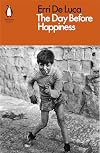
The Day Before Happiness
by Erri De Luca
On This Page
Description
Just after World War II, a young orphan living in Naples comes under the protection of Don Gaetano, the superintendent of an apartment building. He is a generous man and is very attached to the boy, telling him about the war and the liberation of the city by the Neapolitans. He teaches him to play cards, shows him how to do odd jobs for the tenants, and even initiates him into the world of sex by sending him one evening to a widow who lives in the building. But Don Gaetano possesses another show more gift as well: he knows how to read people's thoughts and guesses correctly that his young friend is haunted by the image of a girl he noticed by chance behind a window during a soccer match. Years later, when the girl returns, the orphan will need Don Gaetano's help more than ever. show lessTags
Recommendations

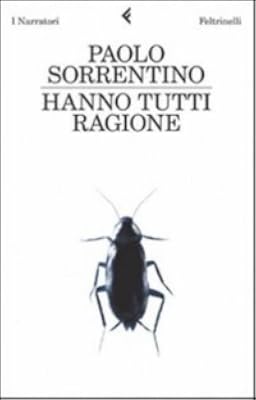
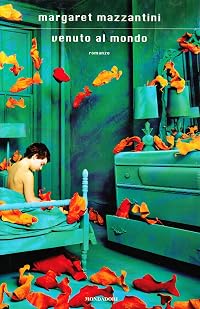
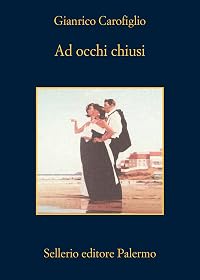
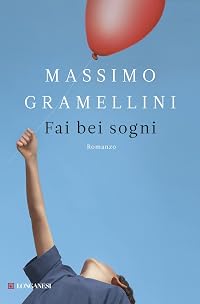



Member Recommendations
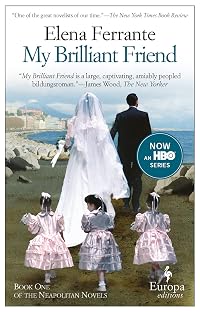
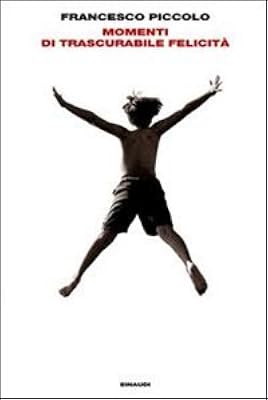
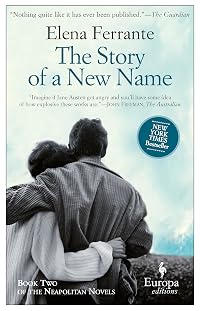
Widsith Two books about growing up in Naples in the 1950s, with illuminating differences – Ferrante writing the start of an epic series following girls from the housing estates, De Luca a short, concise look at a boy in the historical centre… both fascinating in divergent ways.

by anonymous user
Member Reviews
Ugh, this is an exquisite little book. It would make a great companion-piece to Elena Ferrante's My Brilliant Friend, with which it shares both theme and setting – namely, a childhood in Naples in the 1950s. Beyond that, though, the two are polar opposites. Ferrante is writing about girls, De Luca a boy; she is setting up a multi-volume epic, he knocks this one off in just over a hundred pages; and while Ferrante's characters are growing up in one of the interwar housing projects on the edge of the city, De Luca's protagonist is deep in the labyrinthine heart of the old town.
Naples in this book is ancient, freighted with past lives and secrets – the dusty buildings around the courtyard where our narrator spent his childhood were, he show more says, ‘full of walled-up trapdoors, secret passageways, crimes and passions. They were swarming with ghosts.’ The city's ramshackle geography, like the worldview of its inhabitants, is seen as something that has grown out of a specific historical context – especially the Second World War, long stories about which the boy hears from his guardian. These make up some of the best scenes in the book, although there is always a feeling, in De Luca's shimmering sentences, of history stretching back much further than that, far out of living memory. ‘The city contains all eras,’ we're told. ‘Our building and its residents are the Middle Ages in modern dress.’
Having got (disproportionately) huffy about the way the Neapolitan language is skated over in Ferrante, I was psyched to see it get such lavish attention here. Neapolitan phrases are scattered throughout the text, including a bittersweet line from the boy's mentor – T'aggia 'mpara' e t'aggia perdere, I have to teach you, and then I have to let you go – which becomes a kind of emotional refrain, building power as it goes. Neapolitan, we are told,
That line about how it ‘invites fantasy’ connected with especial force, since I just finished Basile's The Tale of Tales, translated from Neapolitan. And that wasn't the only thing in here that struck unexpected chords with other books I've read about Naples – the boy's nickname is 'a scigna, ‘the monkey’, which I remember Roberto Saviano mentioning in Gomorrah as being the nickname of one of the Camorra capos. (A camorrista features as an important secondary character in this book, too.) I do love it when books, all unknowingly, call out to each other like this.
I found De Luca's writing very beautiful, and sensitively translated by Jill Foulston (who handles the male pubescence sections without a stumble). But what's most remarkable about this book – and perhaps that historical context has something to do with it – is how much power it seems to generate with such a restrained word-count. It's a story that comes with a very deeply-felt sense of place; by the time you finish it, you really feel like you've been living there. And our ingenuous scugnizzo narrator – ‘easily bewildered, with faraway eyes’ – is the perfect stand-in to run awestruck through the courtyards, and meet the city's ghosts, on your behalf. show less
Naples in this book is ancient, freighted with past lives and secrets – the dusty buildings around the courtyard where our narrator spent his childhood were, he show more says, ‘full of walled-up trapdoors, secret passageways, crimes and passions. They were swarming with ghosts.’ The city's ramshackle geography, like the worldview of its inhabitants, is seen as something that has grown out of a specific historical context – especially the Second World War, long stories about which the boy hears from his guardian. These make up some of the best scenes in the book, although there is always a feeling, in De Luca's shimmering sentences, of history stretching back much further than that, far out of living memory. ‘The city contains all eras,’ we're told. ‘Our building and its residents are the Middle Ages in modern dress.’
Having got (disproportionately) huffy about the way the Neapolitan language is skated over in Ferrante, I was psyched to see it get such lavish attention here. Neapolitan phrases are scattered throughout the text, including a bittersweet line from the boy's mentor – T'aggia 'mpara' e t'aggia perdere, I have to teach you, and then I have to let you go – which becomes a kind of emotional refrain, building power as it goes. Neapolitan, we are told,
is made for storytelling. You tell someone something and they believe you. In standard Italian there's always some doubt: did I hear that right? Italian is great for writing, when you don't need a voice, but to tell a story, you want our language, which holds it all together and helps you to see it. Neapolitan invites fantasy. It opens up your eyes and ears.
That line about how it ‘invites fantasy’ connected with especial force, since I just finished Basile's The Tale of Tales, translated from Neapolitan. And that wasn't the only thing in here that struck unexpected chords with other books I've read about Naples – the boy's nickname is 'a scigna, ‘the monkey’, which I remember Roberto Saviano mentioning in Gomorrah as being the nickname of one of the Camorra capos. (A camorrista features as an important secondary character in this book, too.) I do love it when books, all unknowingly, call out to each other like this.
I found De Luca's writing very beautiful, and sensitively translated by Jill Foulston (who handles the male pubescence sections without a stumble). But what's most remarkable about this book – and perhaps that historical context has something to do with it – is how much power it seems to generate with such a restrained word-count. It's a story that comes with a very deeply-felt sense of place; by the time you finish it, you really feel like you've been living there. And our ingenuous scugnizzo narrator – ‘easily bewildered, with faraway eyes’ – is the perfect stand-in to run awestruck through the courtyards, and meet the city's ghosts, on your behalf. show less
Great piece of poetic prose about growing up, learning, loving, losing, fighting and leaving. In a word, Living.
I bought this book at the airport on the strength of its first line:
"Scoprii il nascondiglio perché c'era finito il pallone."
"I discovered the hiding place because the ball ended up there." (my translation).
Simple, yet containing multitudes...
I bought this book at the airport on the strength of its first line:
"Scoprii il nascondiglio perché c'era finito il pallone."
"I discovered the hiding place because the ball ended up there." (my translation).
Simple, yet containing multitudes...
Un bambino che cresce orfano nella Napoli del dopoguerra, col portinaio un po' padre putativo e un po' maestro di vita, con i primi amori, la passione per la cultura, lo scontro con l'anima nera della città.
Uno degli incredibili romanzi di formazione di Erri de Luca, com sempre poetico, saggio, irresistibile, scritto in un linguaggio che della semplicità fa autentico lirismo. Un capolavoro.
Uno degli incredibili romanzi di formazione di Erri de Luca, com sempre poetico, saggio, irresistibile, scritto in un linguaggio che della semplicità fa autentico lirismo. Un capolavoro.
Si diventa uomini grazie a uomini che lo sono già.Si diventa uomini quando si impara ad ascoltare i pensieri delle persone, non la chiamare gente,sono persone,una per una.Si diventa uomini e tutti lo vedono,senza alcun rito necessario. Il rito sarà  quello della vita da adulti.
In Naples, immediately after World War II, a young orphan
comes under the protection of Don Gaetano, the porter of an
old building. A generous man, Don Gaetano tells him about
the war and the liberation of the city, teaches him to play
cards and initiates him into the world of sex by sending him to
a widow who lives in the building. But Don Gaetano
possesses another gift as well: he knows how to read
people's thoughts and sees that his young friend is haunted
by the image of a girl he noticed by chance during a football
match. Years later, when the girl returns, the orphan will need
Don Gaetano's help more than ever.
Erri De Luca (Author)
Born in Naples in 1950, Erri De Luca is one of Italy's
bestselling novelists, whose work has been translated show more into
many languages. He was awarded the France Culture Prize in
1994, the Fémina Etranger in 2002 and, in 2013, he received
the European Prize for Literature. He is also a translator from
Ancient Hebrew and Yiddish. A passionate mountain climber,
he currently lives in the countryside near Rome. show less
comes under the protection of Don Gaetano, the porter of an
old building. A generous man, Don Gaetano tells him about
the war and the liberation of the city, teaches him to play
cards and initiates him into the world of sex by sending him to
a widow who lives in the building. But Don Gaetano
possesses another gift as well: he knows how to read
people's thoughts and sees that his young friend is haunted
by the image of a girl he noticed by chance during a football
match. Years later, when the girl returns, the orphan will need
Don Gaetano's help more than ever.
Erri De Luca (Author)
Born in Naples in 1950, Erri De Luca is one of Italy's
bestselling novelists, whose work has been translated show more into
many languages. He was awarded the France Culture Prize in
1994, the Fémina Etranger in 2002 and, in 2013, he received
the European Prize for Literature. He is also a translator from
Ancient Hebrew and Yiddish. A passionate mountain climber,
he currently lives in the countryside near Rome. show less
[a:Erri De Luca|25319|Erri De Luca|http://photo.goodreads.com/authors/1213226032p2/25319.jpg] is one of Italy's most popular authors; he's also garnered critical praise, such as being named "author of the decade" (2001-2010) by the Corriere della Sera. He typically publishes short works, several each year, in fiction, essay, and poetry. This one is only 175 pages in English, but that makes it one of his major novels. It's the third De Luca novel to be translated by [a:Michael F. Moore|467929|Michael F. Moore|http://www.goodreads.com/assets/nophoto/nophoto-U-50x66.jpg], and the fourth to be published by Other Press; they're working to build a name for De Luca in the U.S. commensurate with his stature in Italy. [Disclosure: I was given show more this book by an Other Press rep when I expressed curiosity about De Luca.]
The Day Before Happiness is told by a nameless orphan, growing up in a Naples apartment block in the 1950s, as the city is still recovering from the devastation of World War II. Most of his education to adulthood comes from Don Gaetano, the building's porter: think of the superintendent of an urban American working-class apartment building. During the war, Don Gaeta' hid a Jew from the German occupiers in a cellar under the building, excavated in Naples' volcanic bedrock; during the American occupation, he let smugglers use the cellar as a depository for their contraband. Don Gaeta' teaches the boy to play the Neapolitan card game scopa, takes him to Vesuvius, sends him out to fish with a friend from Ischia, and launches him as a handyman (and as the kind of "handyman" the building's lonely young widow requires). He teaches the boy how to fight with a knife and how to win the love of the little girl he'd admired from afar, now returned to the building as a grown woman.
Don Gaetano's voice thus dominates The Day Before Happiness, and translator Moore makes it distinct, but I don't think he succeeds in making it realistic for an American reader. First of all, the prose throughout—both the narration and the dialogue—is riddled with comma splices and run-on sentences. That may be a customary way of representing informal speech in Italian, but in the U.S., in any writing that's remotely literary, it's a solecism that sticks out like a sore thumb. Moore also makes a great effort to replicate Don Gaetano's wordplay at the expense of the illiterate cobbler La Capa, but the setups for the puns he substitutes in English tend to bog down the scenes and kill the comedy. (Yes, it's incredibly hard to do this well, but we shouldn't just throw up our hands and say only [a:Barbara Wright|225207|Barbara Wright|http://www.goodreads.com/assets/nophoto/nophoto-U-50x66.jpg] translating [a:Raymond Queneau|15957|Raymond Queneau|http://photo.goodreads.com/authors/1225922573p2/15957.jpg] could manage it.) Finally, much of the dialogue is in Neapolitan dialect, the pronunciation of which is so clipped and twisted relative to standard Italian that many consider it a distinct, incomprehensible language. Moore presents these lines in italics in their original language, followed by an em-dash and the English translation; the effect is of suddenly reading subtitles in a movie mainly in English, taking the reader out of the fictional trance and reminding him that the text is translated. All of these translation decisions could be justified as desirable "foreignization" of the translated text for the American reader, but they bring me into the translator's mind rather than the author's..
My other complaint about the novel, which I assume to come from the Italian original (I haven't read it), is its overwritten prose and melodramatic scenes. The narrator comes to sexual maturity as a direct result of climbing Vesuvius: his body surprises him with the unfamiliar urge to masturbate, straight into the volcanic mist at the summit (p. 57). When, later, his childhood love-object Anna inexplicably reappears and offers her body to him, she bites him on the neck, drawing blood (vampire metaphor much?), which mixes on the sheets with the blood from her virginity. She tells him: "It's ours, it is the ink of our pact. You placed inside me your initial, which I awaited intact. I will give it a body and a name" (p. 101). Wince-making scenes and lines like these do their best to spoil an otherwise well-observed story of coming of age in a particularly interesting time and place. (Believe me, the second star of my rating is only grudgingly given.) The novel's climax even approaches the archetypal purity of Borges' tales of Argentine knife fights—but by that point, our experience of the narrator's self-indulgence and introspection has made it impossible to see him as a hero, even a deeply flawed one. I ended up questioning the taste and judgment of the Italian readers who, apparently, loved this book.
Here are notes I took of other problematic passages:
p. 15: "For us it was about stealing freedom, for him it was about his life. And his life was hanging from someone who could betray him or be arrested, murdered, and not come back to him with something to eat." Here, "hanging from" is almost certainly a mistranslation that should be "depended on."
p. 59: "Studied at school, the universe was a table set for guests with a telescope." I can tell what it means, but there's no grammatical way to construe it.
p. 72: On hearing the word "outrage," the illiterate La Capa says—translated from Neapolitan—"No one is raging out here." Explaining the joke doesn't make us laugh.
p. 79: Anna, describing herself, says, "Today someone like that is called autistic." But in the late '50s, when she's speaking, the term autistic certainly was not in common use, in Italy or the U.S.
p. 90: "Except for the few and the worst, no one had a spirit of adventure." Meaning, I think: except for a few, the worst among them.
p. 106: The "true color of the sea" is white—"From within, nature must be white." But then on p. 107, "the wind was stripping the white off the sea." Is the white on the inside, or on the surface?
p. 128: The narrator says: "Since yesterday I've been going around trying to find whom I should resemble." "Whom" here may be, very strictly, correct, but nowadays it's so uncommon it's become marked as a hypercorrection, and it's certainly not appropriate in spoken language.
p. 138: "He needed to separate them..." There's no antecedent for this "he"; it probably should be a generic pronoun, a "he who" or a "someone."
p. 141: Don Gaetano says: "The crèche is for persons with children and are teaching them to love the holy story." Should that be "and who are"? (The resulting sentence is still clumsy and unnatural as dialogue, but at least would make sense.)
p. 149: "By her there was warmth, she opened in a dressing gown..." After a minute, I figured out that the second clause referred to the woman (the lonely widow) opening the door while wearing a dressing gown. But the "By her" still stymies me—it's like the translation, of what I can only assume is a reference to the widow's apartment, took a detour through the German preposition "bei." show less
The Day Before Happiness is told by a nameless orphan, growing up in a Naples apartment block in the 1950s, as the city is still recovering from the devastation of World War II. Most of his education to adulthood comes from Don Gaetano, the building's porter: think of the superintendent of an urban American working-class apartment building. During the war, Don Gaeta' hid a Jew from the German occupiers in a cellar under the building, excavated in Naples' volcanic bedrock; during the American occupation, he let smugglers use the cellar as a depository for their contraband. Don Gaeta' teaches the boy to play the Neapolitan card game scopa, takes him to Vesuvius, sends him out to fish with a friend from Ischia, and launches him as a handyman (and as the kind of "handyman" the building's lonely young widow requires). He teaches the boy how to fight with a knife and how to win the love of the little girl he'd admired from afar, now returned to the building as a grown woman.
Don Gaetano's voice thus dominates The Day Before Happiness, and translator Moore makes it distinct, but I don't think he succeeds in making it realistic for an American reader. First of all, the prose throughout—both the narration and the dialogue—is riddled with comma splices and run-on sentences. That may be a customary way of representing informal speech in Italian, but in the U.S., in any writing that's remotely literary, it's a solecism that sticks out like a sore thumb. Moore also makes a great effort to replicate Don Gaetano's wordplay at the expense of the illiterate cobbler La Capa, but the setups for the puns he substitutes in English tend to bog down the scenes and kill the comedy. (Yes, it's incredibly hard to do this well, but we shouldn't just throw up our hands and say only [a:Barbara Wright|225207|Barbara Wright|http://www.goodreads.com/assets/nophoto/nophoto-U-50x66.jpg] translating [a:Raymond Queneau|15957|Raymond Queneau|http://photo.goodreads.com/authors/1225922573p2/15957.jpg] could manage it.) Finally, much of the dialogue is in Neapolitan dialect, the pronunciation of which is so clipped and twisted relative to standard Italian that many consider it a distinct, incomprehensible language. Moore presents these lines in italics in their original language, followed by an em-dash and the English translation; the effect is of suddenly reading subtitles in a movie mainly in English, taking the reader out of the fictional trance and reminding him that the text is translated. All of these translation decisions could be justified as desirable "foreignization" of the translated text for the American reader, but they bring me into the translator's mind rather than the author's..
My other complaint about the novel, which I assume to come from the Italian original (I haven't read it), is its overwritten prose and melodramatic scenes. The narrator comes to sexual maturity as a direct result of climbing Vesuvius: his body surprises him with the unfamiliar urge to masturbate, straight into the volcanic mist at the summit (p. 57). When, later, his childhood love-object Anna inexplicably reappears and offers her body to him, she bites him on the neck, drawing blood (vampire metaphor much?), which mixes on the sheets with the blood from her virginity. She tells him: "It's ours, it is the ink of our pact. You placed inside me your initial, which I awaited intact. I will give it a body and a name" (p. 101). Wince-making scenes and lines like these do their best to spoil an otherwise well-observed story of coming of age in a particularly interesting time and place. (Believe me, the second star of my rating is only grudgingly given.) The novel's climax even approaches the archetypal purity of Borges' tales of Argentine knife fights—but by that point, our experience of the narrator's self-indulgence and introspection has made it impossible to see him as a hero, even a deeply flawed one. I ended up questioning the taste and judgment of the Italian readers who, apparently, loved this book.
Here are notes I took of other problematic passages:
p. 15: "For us it was about stealing freedom, for him it was about his life. And his life was hanging from someone who could betray him or be arrested, murdered, and not come back to him with something to eat." Here, "hanging from" is almost certainly a mistranslation that should be "depended on."
p. 59: "Studied at school, the universe was a table set for guests with a telescope." I can tell what it means, but there's no grammatical way to construe it.
p. 72: On hearing the word "outrage," the illiterate La Capa says—translated from Neapolitan—"No one is raging out here." Explaining the joke doesn't make us laugh.
p. 79: Anna, describing herself, says, "Today someone like that is called autistic." But in the late '50s, when she's speaking, the term autistic certainly was not in common use, in Italy or the U.S.
p. 90: "Except for the few and the worst, no one had a spirit of adventure." Meaning, I think: except for a few, the worst among them.
p. 106: The "true color of the sea" is white—"From within, nature must be white." But then on p. 107, "the wind was stripping the white off the sea." Is the white on the inside, or on the surface?
p. 128: The narrator says: "Since yesterday I've been going around trying to find whom I should resemble." "Whom" here may be, very strictly, correct, but nowadays it's so uncommon it's become marked as a hypercorrection, and it's certainly not appropriate in spoken language.
p. 138: "He needed to separate them..." There's no antecedent for this "he"; it probably should be a generic pronoun, a "he who" or a "someone."
p. 141: Don Gaetano says: "The crèche is for persons with children and are teaching them to love the holy story." Should that be "and who are"? (The resulting sentence is still clumsy and unnatural as dialogue, but at least would make sense.)
p. 149: "By her there was warmth, she opened in a dressing gown..." After a minute, I figured out that the second clause referred to the woman (the lonely widow) opening the door while wearing a dressing gown. But the "By her" still stymies me—it's like the translation, of what I can only assume is a reference to the widow's apartment, took a detour through the German preposition "bei." show less
I am sorry but I was unable to get through this book. It simply did not hold my interest which was surprising since the readers gave it a 3.89 rating
Members
- Recently Added By
Published Reviews
ThingScore 100
La quête existentielle d'un jeune orphelin napolitain au lendemain de la guerre. Magnifique.
Nous sommes dans la Naples d'après-guerre, une cité fantomatique et délabrée où le jeune narrateur d'Erri De Luca s'escrime à échapper aux coups bas de l'existence. Car cet orphelin est contraint de vivre dans un cagibi miséreux, une prison dont il s'évade pour jouer au foot, escalader le show more Vésuve et, surtout, venir bavarder avec le concierge du quartier, un Nostradamus transalpin dont la loge est le plus précieux des refuges. C'est là que le narrateur apprendra à affronter ses démons avant d'aller frotter son coeur tendre contre la chair dodue d'une veuve fellinienne. Sa confession retrace magnifiquement les tâtonnements et les découvertes de l'adolescence, au fil d'un récit initiatique où l'auteur de Montedidio mêle sa voix flûtée au souffle de la tramontane. Avec, en toile de fond, toute la magie des paysages napolitains, où le narrateur trouvera d'autres jouvences, pour oublier qu'il est "un fils de personne". show less
Nous sommes dans la Naples d'après-guerre, une cité fantomatique et délabrée où le jeune narrateur d'Erri De Luca s'escrime à échapper aux coups bas de l'existence. Car cet orphelin est contraint de vivre dans un cagibi miséreux, une prison dont il s'évade pour jouer au foot, escalader le show more Vésuve et, surtout, venir bavarder avec le concierge du quartier, un Nostradamus transalpin dont la loge est le plus précieux des refuges. C'est là que le narrateur apprendra à affronter ses démons avant d'aller frotter son coeur tendre contre la chair dodue d'une veuve fellinienne. Sa confession retrace magnifiquement les tâtonnements et les découvertes de l'adolescence, au fil d'un récit initiatique où l'auteur de Montedidio mêle sa voix flûtée au souffle de la tramontane. Avec, en toile de fond, toute la magie des paysages napolitains, où le narrateur trouvera d'autres jouvences, pour oublier qu'il est "un fils de personne". show less
added by DelphineM
Le Jour avant le bonheur, fable initiatique et ode galante, raconte l'innocence, les rêves perdus, le besoin de fratrie, et signe surtout la réconciliation de l'auteur avec les lieux de son enfance. Par la voix de son narrateur devenu adulte, Erri De Luca donne à sa ville le premier rôle, fait d'elle une héroïne échevelée et gracieuse, impitoyable et sensuelle. Il lui glisse des show more déclarations de fougue - passion et politique, à la vie, à la mort : « C'est à ce moment-là que j'ai compris la ville : monarchie et anarchie. Elle voulait un roi, mais pas de gouvernement. C'était une ville espagnole. L'Espagne a toujours connu la monarchie, mais aussi le plus fort mouvement anarchiste. Naples est espagnole, elle se trouve en Italie par erreur. » show less
added by DelphineM
Lists

Italian Literature
558 works; 43 members

Llibres que he llegit el 2015
34 works; 1 member

Books Read in 2013
1,630 works; 51 members
Author Information

124+ Works 4,193 Members
Erri De Luca is an Italian author, translator, and poet, born in Naples in 1950. His first book, Non ora, non qui (Not now, not here), was published in 1989. He has published over fifty books including "Il più e il meno", and "La Faccia delle nuvole", in 2016. His awards includes the 2013 European Prize for Literature for his body of work. He was show more the winner of the 2016 Bad S-x in Fiction award for the book, The Day Before Happiness. (Bowker Author Biography) show less
Some Editions
Awards and Honors
Series
Belongs to Publisher Series
Common Knowledge
- Canonical title
- The Day Before Happiness
- Original title
- Il giorno prima della felicità
- Original publication date
- 2009-01-15
- Important places
- Naples, Italy
- Important events
- World War II
- First words*
- Das Versteck entdeckte ich, weil der Ball dort gelandet war.
- Last words*
- (Click to show. Warning: May contain spoilers.)Es heisst, heute Nacht überqueren wir den Äquator.
- Original language
- Italian
*Some information comes from Common Knowledge in other languages. Click "Edit" for more information.
Classifications
Statistics
- Members
- 357
- Popularity
- 88,739
- Reviews
- 22
- Rating
- (3.65)
- Languages
- 8 — Arabic, Catalan, Dutch, English, French, German, Italian, Spanish
- Media
- Paper, Audiobook, Ebook
- ISBNs
- 26
- ASINs
- 9