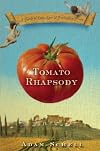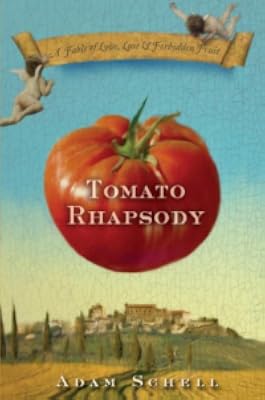
Tomato Rhapsody: A Fable of Love, Lust & Forbidden Fruit
by Adam Schell 
On This Page
Description
The almost-true tale of how the tomato came to 16th century Italy and the forbidden love between Davido, a Jewish tomato farmer, and Mari, a beautiful Catholic girl. But it's not only Davido and Mari who have secrets of the heart. Everyone around them yearns for something--from Davido's grandfather, who tenderly cultivates the tomato plant he stole on his voyages with Columbus, to Mari's villainous stepfather, whose eye is trained on his stepdaughter's virginity and his neighbor's land. show more Caught in the midst of these passions and machinations is a village full of eccentrics who speak in rhyme, celebrate the Feast of the Drunken Saint, and live a life untouched by the passage of time. The schemes and dreams of these men and women are about to change as what is forbidden becomes too delicious to resist. Tradition, religion, and good taste collide in a story about the courage to pursue love and tomato sauce at all costs. show lessTags
Recommendations


Member Recommendations
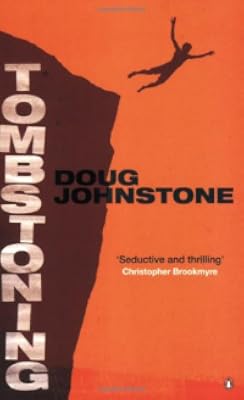
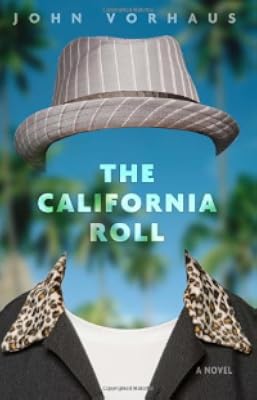
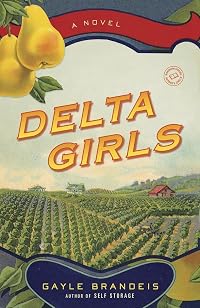
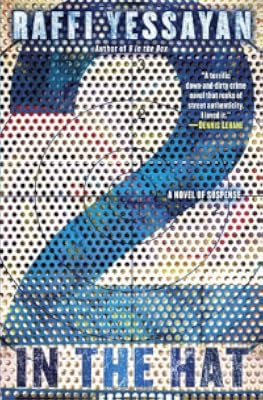
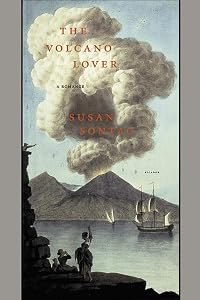
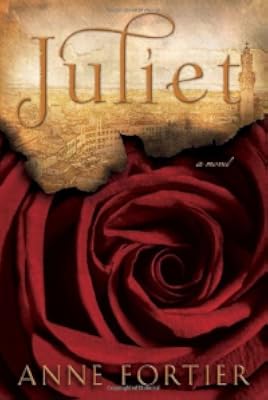
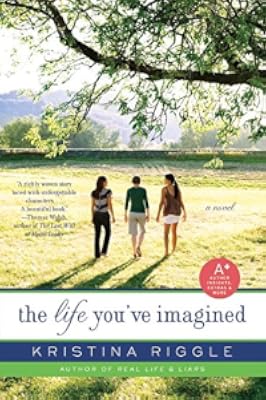
fyrefly98 Another book about the introduction of a particular foodstuff to a resistant small town, with a similar sense of joy to the story and to the writing.
Member Reviews
Tomato Rhapsody by Adam Schell is a historical fable set in a 16th century Tuscan village. As the title suggests, the tomato is very important to this tale. In fact food is front and center throughout the book. Jewish farmer Davido grows the “love apple” with great care and love, cruel Guiseppe and his assistant Benito forage for truffles, the new village priest relishes food and spends much of his time planning his next meal. But when the stepdaughter of Guiseppe, Mari, falls in love with the Jewish farmer, things start to get complicated.
The story plays out much like a Shakespearean comedy which comes to a climax at the Feast of the Drunken Saint donkey race. Throughout the story, there is a puzzlement about the tomato. Although show more many uses of the raw fruit are described, they do not know how to successfully cook the tomato and have yet to discover the wonders of tomato sauce.
High in humor and high-jinx, the reader roots for the young lovers to find happiness and for tomato sauce to be discovered. Tomato Rhapsody was an unusual, clever and engaging story that also manages to shine a light on the oppression of Jews during the Renaissance. The story is both earthy and bawdy and an altogether delightful read. show less
The story plays out much like a Shakespearean comedy which comes to a climax at the Feast of the Drunken Saint donkey race. Throughout the story, there is a puzzlement about the tomato. Although show more many uses of the raw fruit are described, they do not know how to successfully cook the tomato and have yet to discover the wonders of tomato sauce.
High in humor and high-jinx, the reader roots for the young lovers to find happiness and for tomato sauce to be discovered. Tomato Rhapsody was an unusual, clever and engaging story that also manages to shine a light on the oppression of Jews during the Renaissance. The story is both earthy and bawdy and an altogether delightful read. show less
Summary: Tomato Rhapsody is set in Italy in the mid 1500s, when the tomato was commonly known as the "love apple" and was distrusted and feared as being poisonous. In a small Tuscan village, Davido is a young Ebreo (Jewish) farmer who spends his days tending the tomatoes grown from seeds his grandfather stole during his voyages with Christopher Columbus. On the day that Davido and his grandfather first try to bring their fruits to market, he sees and instantly falls in love with Mari, a village girl whose passion for olives and olive oil matches Davido's passion for tomatoes... but unfortunately Mari's family olive groves - and Mari's future - are under the control of her cruel and scheming stepfather. Their love - like the tomatoes - show more are forbidden by the church, and would never be accepted by the local villagers. But some things are too sweet to be denied - whether it's the passion of young love or the flavor of a summer-ripe tomato.
Review: There have been a number of books that have come out in the past year or so that I would call "foodie fiction" - The School of Essential Ingredients and The Book of Unholy Mischief are two from my own reading that come to mind. It's a subgenre I enjoy, but I think there's been enough of an influx that relative newcomer Tomato Rhapsody has gotten somewhat lost in the shuffle... and that's a shame. It's historical fiction, yes, and it's got a very strong foodie element, but it's less of a standard historical fiction and more of a cross between a fable and an Italian commedia dell'arte. In fact, I think it bears the strongest resemblance to Joanne Harris's Chocolat - a similar theme of a bunch of resistant villagers being introduced to a new and suspicious food, a similar sense of joy at the absurdity and wonder of life and the power of food, and a similar tone of not-quite magical realism, of all of the personalities and events and reactions and emotions being more vivid and more immediate than is strictly realistic.
The prose perfectly matches the story it's telling: earthy and bawdy and joyous and full of the flavors of the Tuscan countryside. It manages to be simultaneously operatic in prose and Shakespearean (and rhyming!) in dialogue, while never taking itself entirely seriously, and the result is lyrical and lovely and so charmed by its own cleverness that I couldn't help but smile almost constantly as I was reading - at the words as well as the story.
There were a few things that bothered me. The story takes a while to get going (the young lovers don't even see each other for the first time until almost page 100), so it took me a while to really get interested. Similarly, because it's told more as a fable than as a straight-up story, we're kept at somewhat of a distance from our hero and heroine, and it's hard to become particularly emotionally involved with their plight (especially since the traditional form dictates a happy ending.) Finally, while the rhyming dialogue did definitely add a unique flavor to the book, by the end it started to get a little tiring. Still, once I was able to get settled into the rhythm and style of the story, I enjoyed it immensely, as the smile plastered across my face as I was reading probably could attest. 4 out of 5 stars.
Recommendation: If you like historical fiction and/or foodie fiction (and are not thoroughly put off by bawdy humor), give Tomato Rhapsody a shot. Its style won't be to everyone's taste, but those for whom it works will find it a funny, joyful, and unique read. show less
Review: There have been a number of books that have come out in the past year or so that I would call "foodie fiction" - The School of Essential Ingredients and The Book of Unholy Mischief are two from my own reading that come to mind. It's a subgenre I enjoy, but I think there's been enough of an influx that relative newcomer Tomato Rhapsody has gotten somewhat lost in the shuffle... and that's a shame. It's historical fiction, yes, and it's got a very strong foodie element, but it's less of a standard historical fiction and more of a cross between a fable and an Italian commedia dell'arte. In fact, I think it bears the strongest resemblance to Joanne Harris's Chocolat - a similar theme of a bunch of resistant villagers being introduced to a new and suspicious food, a similar sense of joy at the absurdity and wonder of life and the power of food, and a similar tone of not-quite magical realism, of all of the personalities and events and reactions and emotions being more vivid and more immediate than is strictly realistic.
The prose perfectly matches the story it's telling: earthy and bawdy and joyous and full of the flavors of the Tuscan countryside. It manages to be simultaneously operatic in prose and Shakespearean (and rhyming!) in dialogue, while never taking itself entirely seriously, and the result is lyrical and lovely and so charmed by its own cleverness that I couldn't help but smile almost constantly as I was reading - at the words as well as the story.
There were a few things that bothered me. The story takes a while to get going (the young lovers don't even see each other for the first time until almost page 100), so it took me a while to really get interested. Similarly, because it's told more as a fable than as a straight-up story, we're kept at somewhat of a distance from our hero and heroine, and it's hard to become particularly emotionally involved with their plight (especially since the traditional form dictates a happy ending.) Finally, while the rhyming dialogue did definitely add a unique flavor to the book, by the end it started to get a little tiring. Still, once I was able to get settled into the rhythm and style of the story, I enjoyed it immensely, as the smile plastered across my face as I was reading probably could attest. 4 out of 5 stars.
Recommendation: If you like historical fiction and/or foodie fiction (and are not thoroughly put off by bawdy humor), give Tomato Rhapsody a shot. Its style won't be to everyone's taste, but those for whom it works will find it a funny, joyful, and unique read. show less
Wonderful! I would call it a "fantasia." One of the few books I literally could not put down. Mr. Schell has an extraordinary talent for cramming the pages of his jewel of a novel with historical facts, fictional narrative, wonderful dialog -- and descriptions of food that made me want to make a bee-line to the kitchen (except I don't have those wonderful ingredients) - all in a manner that made me forget about the writer and the writing until I reluctantly turned the last page and read the final words. At which point I said, "Wow!" Please give us more, Mr. Schell.
You'll never look at tomato sauce the same way again.
Tomato Rhapsody was an extraordinary book. It's a fable about how the tomato came to Europe, and how it overcame the strange, popular prejudice that it was extremely and immediately poisonous, to become inseparable from Italian cuisine. It's also about a wicked stepfather, the oppression of Jews in early Renaissance Europe, the curing of olives, Christopher Columbus, Catholic missionaries in Africa, sanitation, copulation, and celebration. It's a romance (not a love story), basically Romeo and Juliet if the lovers had been older and there had been someone sensible in Fair Verona. Everything in the story has meaning and significance: a donkey's bray, a shaft of sunlight, a drop of show more holy water. The story is earthy - sometimes downright crude - as well as golden, rapturous, euphoric - and yes, rhapsodic. It is both sprawling and intimate, with a good-sized cast of characters who do not come across as "characters"; these are people, wildly individual and altogether real.
Some might find the rhyming dialogue cloying, or indeed nothing better than annoying. But I find that the couplets to my inner ear became as natural and simple as, dare I say, Shakespeare. (I was tempted to write an entire review in rhyme, but it would take forever; I just don't have the time.)
Read this book. But first make sure your pantry is well stocked with good olive oil, good bread, eggplant (try the Good Padre's idea in Chapter 3 – it's wonderful), fresh herbs – and tomatoes. Definitely tomatoes. Lots of them.
E cosi bello! show less
Tomato Rhapsody was an extraordinary book. It's a fable about how the tomato came to Europe, and how it overcame the strange, popular prejudice that it was extremely and immediately poisonous, to become inseparable from Italian cuisine. It's also about a wicked stepfather, the oppression of Jews in early Renaissance Europe, the curing of olives, Christopher Columbus, Catholic missionaries in Africa, sanitation, copulation, and celebration. It's a romance (not a love story), basically Romeo and Juliet if the lovers had been older and there had been someone sensible in Fair Verona. Everything in the story has meaning and significance: a donkey's bray, a shaft of sunlight, a drop of show more holy water. The story is earthy - sometimes downright crude - as well as golden, rapturous, euphoric - and yes, rhapsodic. It is both sprawling and intimate, with a good-sized cast of characters who do not come across as "characters"; these are people, wildly individual and altogether real.
Some might find the rhyming dialogue cloying, or indeed nothing better than annoying. But I find that the couplets to my inner ear became as natural and simple as, dare I say, Shakespeare. (I was tempted to write an entire review in rhyme, but it would take forever; I just don't have the time.)
Read this book. But first make sure your pantry is well stocked with good olive oil, good bread, eggplant (try the Good Padre's idea in Chapter 3 – it's wonderful), fresh herbs – and tomatoes. Definitely tomatoes. Lots of them.
E cosi bello! show less
This review was written for LibraryThing Member Giveaways.
Set in Tuscany in the early 1500’s, this bawdy novel tells the story of Davido, a Jewish tomato farmer who falls in love with Mari, a Catholic olive grower, while at the same time, spinning a yarn about how the tomato came to Italy. The author animates his story with a cast of oddball characters, including rhyming villagers, a town fool, a murderous stepfather and his loyal henchman, a duke who wants to be a farmer, lusty barmaids and a priest whose skin has been dyed the purple of an eggplant. The book moves along at a rapid pace, with plenty of action, and witty dialogue including some veiled and not so veiled allusions to various Shakespearean works. My main quibble with the book was the author’s (in my opinion) overuse of show more descriptions of animal genitalia; one or two times, it was funny; ten times, it was just gross. show less
When you’re in love, the whole world is Italian
When you’ve got a novel subtitled, “A Fable of Love, Lust & Forbidden Fruit,” what’s not to like? Well, a few things, actually, but overall this debut novel is a charmer. It is being marketed as a comic romance between Jewish tomato farmer Davido and Catholic olive farmer Mari. And it is—but the star-crossed lovers don’t even lay eyes upon each other for nearly 100 pages. Their story is one of many taking place in an unnamed 16th century Tuscan village.
There we meet Davido’s Nonno (grandfather), who was introduced to the exotic tomato during his travels with Christopher Columbus in the new world. We meet Mari’s disabled mother and villainous stepfather, Giuseppe and show more Giuseppe’s conflicted henchman, Benito. Much of village life revolves around the church, and the Good Padre of this church is truly unique—from his all-embracing heart right down to his purple skin! We meet many other residents of the town: an outspoken housewife, a tolerant cheese maker, an intolerant butcher, a one-testicled tavern owner, and a very wise fool. To this cast of characters add Cosimo di Pucci de Meducci, III, grand Duke of Tuscany, and his chef, Luigi, who find their way to this back water town separately, and who each discover that this little village meets needs in themselves they never knew existed.
Beyond being a mere comedy or romance, this is a story of ignorance and anti-Semitism and of the struggle of good people for tolerance. And it is the story of the comfort and peace found in the Catholic Church. It is a story of village life, and a love song to the joys of Mediterranean food. I defy you to get through this novel without, at the very least, ordering in a pizza.
I found myself smiling throughout this quirky comic novel, but I will acknowledge that Tomato Rhapsody is not without its flaws, and will not be appreciated by all readers. It is Adam Schell’s debut, and he is still learning to use the tools of his craft: exposition, character development, plotting, etc. He’s experimenting a bit wildly with other tools: foreshadowing, flashbacks, direct address, symbolism, archetypes, footnotes, etc. I didn’t agree with all of his choices, but most of the faults were forgivable.
The bigger problems are that this novel is told in archaic-sounding language. Large sections of the dialogue are spoken in rhyme. (A sort of medieval rap, if you will.) And parts of this comic novel are crude or downright lewd. Many readers will find one or more of these elements extremely off-putting. Simply put, this novel is NOT for everyone.
I would suggest as a litmus test that you ask yourself how likely you would be to sit down and read a Shakespearian comedy? That, of course, refers only to style, and isn’t meant to suggest in any way that Schell’s work is in the same ballpark. No, it’s strange, and quirky, and flawed. But I liked it. And I smiled while I read it. I’m being a little generous with my four-star review, but I think there will be critics aplenty. I just wanted to applaud an author going out on a limb. I may never look at a tomato the same way again. show less
When you’ve got a novel subtitled, “A Fable of Love, Lust & Forbidden Fruit,” what’s not to like? Well, a few things, actually, but overall this debut novel is a charmer. It is being marketed as a comic romance between Jewish tomato farmer Davido and Catholic olive farmer Mari. And it is—but the star-crossed lovers don’t even lay eyes upon each other for nearly 100 pages. Their story is one of many taking place in an unnamed 16th century Tuscan village.
There we meet Davido’s Nonno (grandfather), who was introduced to the exotic tomato during his travels with Christopher Columbus in the new world. We meet Mari’s disabled mother and villainous stepfather, Giuseppe and show more Giuseppe’s conflicted henchman, Benito. Much of village life revolves around the church, and the Good Padre of this church is truly unique—from his all-embracing heart right down to his purple skin! We meet many other residents of the town: an outspoken housewife, a tolerant cheese maker, an intolerant butcher, a one-testicled tavern owner, and a very wise fool. To this cast of characters add Cosimo di Pucci de Meducci, III, grand Duke of Tuscany, and his chef, Luigi, who find their way to this back water town separately, and who each discover that this little village meets needs in themselves they never knew existed.
Beyond being a mere comedy or romance, this is a story of ignorance and anti-Semitism and of the struggle of good people for tolerance. And it is the story of the comfort and peace found in the Catholic Church. It is a story of village life, and a love song to the joys of Mediterranean food. I defy you to get through this novel without, at the very least, ordering in a pizza.
I found myself smiling throughout this quirky comic novel, but I will acknowledge that Tomato Rhapsody is not without its flaws, and will not be appreciated by all readers. It is Adam Schell’s debut, and he is still learning to use the tools of his craft: exposition, character development, plotting, etc. He’s experimenting a bit wildly with other tools: foreshadowing, flashbacks, direct address, symbolism, archetypes, footnotes, etc. I didn’t agree with all of his choices, but most of the faults were forgivable.
The bigger problems are that this novel is told in archaic-sounding language. Large sections of the dialogue are spoken in rhyme. (A sort of medieval rap, if you will.) And parts of this comic novel are crude or downright lewd. Many readers will find one or more of these elements extremely off-putting. Simply put, this novel is NOT for everyone.
I would suggest as a litmus test that you ask yourself how likely you would be to sit down and read a Shakespearian comedy? That, of course, refers only to style, and isn’t meant to suggest in any way that Schell’s work is in the same ballpark. No, it’s strange, and quirky, and flawed. But I liked it. And I smiled while I read it. I’m being a little generous with my four-star review, but I think there will be critics aplenty. I just wanted to applaud an author going out on a limb. I may never look at a tomato the same way again. show less
I found this book delightful! It is quite unique...part fable, part history, part Shakespearean opera, part comedy, part romance. It is a work of fiction and is set in Tuscany in the 16th century. The plot is built on the historical information regarding the introduction of the tomato to Italy by the Spanish who brought it from the New World. In this particular case, the Spanish was a Spanish Jew who survived the Inquisition in Spain by traveling with Columbus on a later trip to the New World and ending up in Italy with the tomato, the "Pomo di Amore".
The story reads like a fable with a third party narrator keeping you apprised of what is going on from behind the scenes. What I found most interesting were the historical tidbits that show more the author worked into the story...things I did not know about peasantry in the 16th century...most significantly, the use of the language: "Etruscanato Antiquato...(which the author claims is) an early-Italian dialect that evolved in Tuscany in the centuries after the ancient Etruscan were conquered by Rome. It is largely a rhyming idiom. Linguists and anthropologists theorized that rhyming language developed as a means to facilitate memorization before the emergence and widespread understanding of the written language." So in the novel, much of the dialogue is written in this rhyming format and has a Shakespearean feel to it. (NOTE: after researching on the internet I have decided that most of the footnotes are also evidence of the author's creativity! But they do add to the novel!) Italian words and phrases are used throughout and the bawdy humor is fantastic! The ability to understand the Italian idioms made my enjoyment more pronounced! The cast of characters are bigger than life and I was quickly drawn in to the various personalities and stereotypes. The story line is predictable but knowing what is probably coming even adds to the enjoyment. This story form is reminiscent also of the Comedie del Arte that is improvisational street theater that developed in Italy in the 16th century. If you are an Italophile and can't spend enough time physiclally or mentally in Italy, you will enjoy this book. highly recommend it.
Here is the author's website...I love the introduction and the sound of the donkey!
http://www.adamschell.com/ show less
The story reads like a fable with a third party narrator keeping you apprised of what is going on from behind the scenes. What I found most interesting were the historical tidbits that show more the author worked into the story...things I did not know about peasantry in the 16th century...most significantly, the use of the language: "Etruscanato Antiquato...(which the author claims is) an early-Italian dialect that evolved in Tuscany in the centuries after the ancient Etruscan were conquered by Rome. It is largely a rhyming idiom. Linguists and anthropologists theorized that rhyming language developed as a means to facilitate memorization before the emergence and widespread understanding of the written language." So in the novel, much of the dialogue is written in this rhyming format and has a Shakespearean feel to it. (NOTE: after researching on the internet I have decided that most of the footnotes are also evidence of the author's creativity! But they do add to the novel!) Italian words and phrases are used throughout and the bawdy humor is fantastic! The ability to understand the Italian idioms made my enjoyment more pronounced! The cast of characters are bigger than life and I was quickly drawn in to the various personalities and stereotypes. The story line is predictable but knowing what is probably coming even adds to the enjoyment. This story form is reminiscent also of the Comedie del Arte that is improvisational street theater that developed in Italy in the 16th century. If you are an Italophile and can't spend enough time physiclally or mentally in Italy, you will enjoy this book. highly recommend it.
Here is the author's website...I love the introduction and the sound of the donkey!
http://www.adamschell.com/ show less
Members
- Recently Added By
Author Information

1 Work 225 Members
Adam Schell is a LibraryThing Author, an author who lists their personal library on LibraryThing.
Common Knowledge
- Alternate titles
- Lust and Forbidden Fruit Tomato Rhapsody: A Fable of Love
- Original publication date
- 2009
- People/Characters
- Davido; Mari; Nonno
- Important places
- Tuscany, Italy
- Dedication
- For Noodle and Asher. Truly, my heart is full.
- First words
- Nonno looked east across the roll of his farm at that particular moment in a late-summer dawn when the soon-to-be-risen sun threw an expectant hue of orange and purple across the horizon.
Classifications
Statistics
- Members
- 225
- Popularity
- 145,497
- Reviews
- 26
- Rating
- (3.84)
- Languages
- English
- Media
- Paper, Ebook
- ISBNs
- 3
- ASINs
- 3