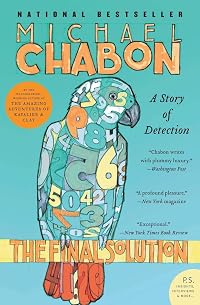
The Final Solution: A Story of Detection
by Michael Chabon
On This Page
Description
In deep retirement in the English countryside, an 89-year-old man, vaguely recollected by the locals as a former detective, is more concerned with his beekeeping than his fellow man. Into his life wanders Linus Steinman, nine years old and mute, who has escaped from Nazi Germany with his sole companion: an African grey parrot. What is the meaning of the mysterious strings of numbers the bird spews out-a top secret SS code? A Swiss bank account? Or do they hold a far more sinister show more significance? Though the solution to this case may be beyond the reach of the once-famed sleuth, the true story of the boy and his parrot is revealed in a wrenching resolution. show lessTags
Recommendations

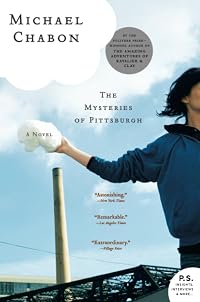
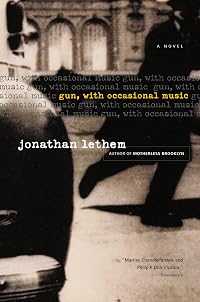
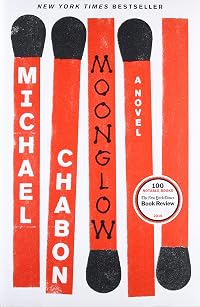
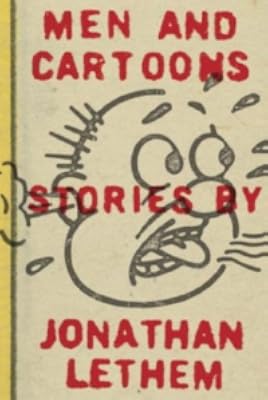


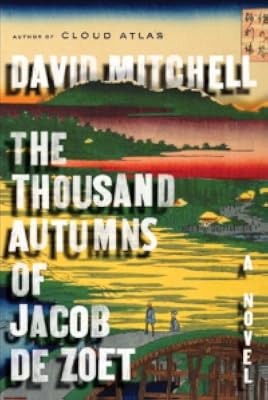
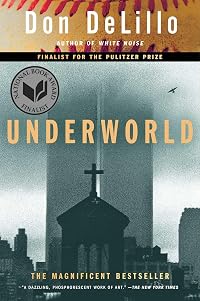
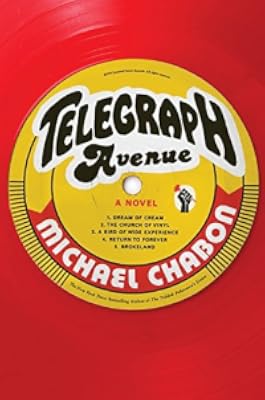
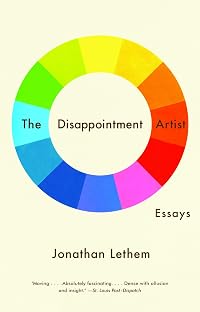
Member Recommendations

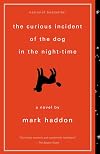
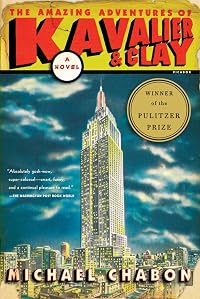
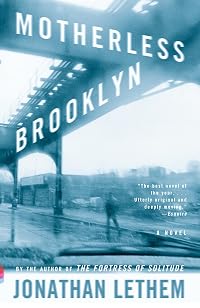
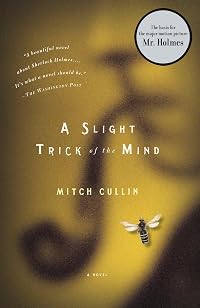
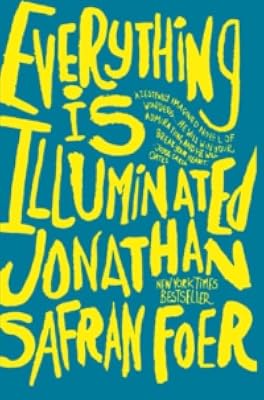
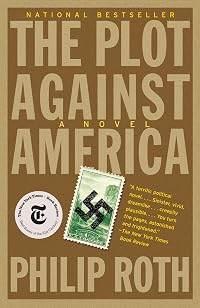
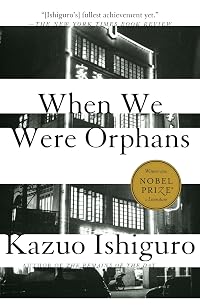
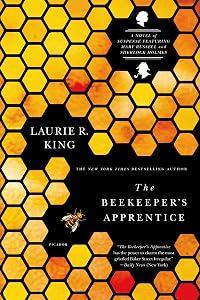
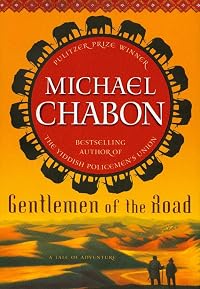
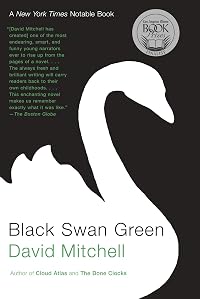
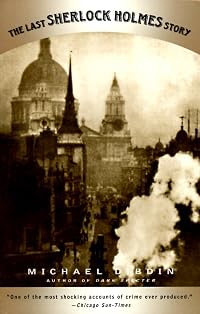
sturlington Both inspired by Sherlock Holmes.
20
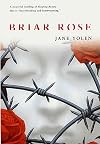
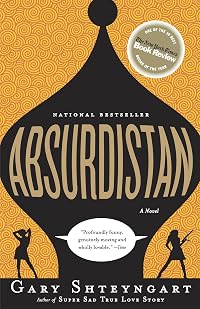
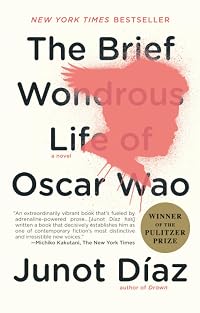
aulsmith Two stories that intertwine characters from elsewhere with the Holocaust. Both are affecting in their own ways.
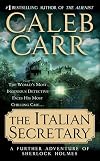
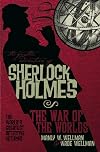
PghDragonMan Modern additions to the annals of the greatest detective ever.
01
Member Reviews
I'm having trouble coming to terms with this book. Add it on the pile of my ambivalence about Michael Chabon. I think the thing that bugs me the most is the potential for greatness here.
An aging Sherlock Holmes is coming to terms with the fact that he is no longer in his prime and preparing himself for death and battling senility? Awesome, awesome premise. As a huge fan of Sherlock Holmes, I usually refuse to touch modern interpretations, because I don't trust authors to give me what Conan Doyle did to make Holmes so compelling. On this aspect, Chabon mostly delivers: he captures Holmes' greatness in his dedication and flashes of brillance and tempers it with his moodiness and self-destructiveness. It's not, by any stretch of the show more imagination, a Holmes mystery, though, failing in the complete lack of explanation of how Holmes deduces anything (and really, failing as a compelling mystery all over.) Holmes is aging, his brain isn't what it used to be, don't tell us that, show us by having Holmes try his famous Holmes deduction. Show us him missing clues, or thinking slowly, or coming to the wrong conclusions. It's an insanely original, compelling idea, that mostly only reaches it's full potential when Holmes reflects on a post-Blitz London with anger that London still exists in the post-Holmes area and that the Blitz and WWI have allowed it to change and grow into something else. I love the idea of what happens to the characters we love when they move past what they once were.
I think the big reason that this book fails is that while Chabon is good at many things, the novella is not an ideal format. His books become compelling over time, as you become more enmeshed with the characters. Pages give his language room to proliferate and his sprawling sentences feel less suffocating in longer books. There are so many ideas here, ripe for the picking. I can't possible imaging saying to myself "I have an idea for a book that's about an aging Holmes, in WWII, meeting a mute orphan, who will act as his foil, who has a parrot, who knows secret numbers, which may be the key to German codes, prompting discussion of the lengths one will go for national loyalty and exploring the tension between commitment to country and commitment to Jewish orphaned refuges in the middle of the holocaust, while also discussing the morally grey characters who form this boy's foster family and I want this story to be an exemplar of the modern mystery novel. That sounds like it can be done in 170 pages!" Everything loses in the brevity.
What really bothers me is that in the author's note, Chabon writes about the respect he has for "genre novels" and that he wants people who normally don't read genre to pick up this book and it to make them want to go back and read more mysteries. It's insulting to authors who frequently write genre. I agree that genre can be the most compelling form of fiction; it's freed from constraints; it can explore the worlds of possibilities and use that to reflect on the way our world is. This is not a great genre novel, and although Chabon has been a great friend to the melding of genre and literature in Kavalier and Clay (superhero/comic book) and Yiddish Policeman's Union (a much better version of mystery/noir), he should have left this one to the mystery writers. show less
An aging Sherlock Holmes is coming to terms with the fact that he is no longer in his prime and preparing himself for death and battling senility? Awesome, awesome premise. As a huge fan of Sherlock Holmes, I usually refuse to touch modern interpretations, because I don't trust authors to give me what Conan Doyle did to make Holmes so compelling. On this aspect, Chabon mostly delivers: he captures Holmes' greatness in his dedication and flashes of brillance and tempers it with his moodiness and self-destructiveness. It's not, by any stretch of the show more imagination, a Holmes mystery, though, failing in the complete lack of explanation of how Holmes deduces anything (and really, failing as a compelling mystery all over.) Holmes is aging, his brain isn't what it used to be, don't tell us that, show us by having Holmes try his famous Holmes deduction. Show us him missing clues, or thinking slowly, or coming to the wrong conclusions. It's an insanely original, compelling idea, that mostly only reaches it's full potential when Holmes reflects on a post-Blitz London with anger that London still exists in the post-Holmes area and that the Blitz and WWI have allowed it to change and grow into something else. I love the idea of what happens to the characters we love when they move past what they once were.
I think the big reason that this book fails is that while Chabon is good at many things, the novella is not an ideal format. His books become compelling over time, as you become more enmeshed with the characters. Pages give his language room to proliferate and his sprawling sentences feel less suffocating in longer books. There are so many ideas here, ripe for the picking. I can't possible imaging saying to myself "I have an idea for a book that's about an aging Holmes, in WWII, meeting a mute orphan, who will act as his foil, who has a parrot, who knows secret numbers, which may be the key to German codes, prompting discussion of the lengths one will go for national loyalty and exploring the tension between commitment to country and commitment to Jewish orphaned refuges in the middle of the holocaust, while also discussing the morally grey characters who form this boy's foster family and I want this story to be an exemplar of the modern mystery novel. That sounds like it can be done in 170 pages!" Everything loses in the brevity.
What really bothers me is that in the author's note, Chabon writes about the respect he has for "genre novels" and that he wants people who normally don't read genre to pick up this book and it to make them want to go back and read more mysteries. It's insulting to authors who frequently write genre. I agree that genre can be the most compelling form of fiction; it's freed from constraints; it can explore the worlds of possibilities and use that to reflect on the way our world is. This is not a great genre novel, and although Chabon has been a great friend to the melding of genre and literature in Kavalier and Clay (superhero/comic book) and Yiddish Policeman's Union (a much better version of mystery/noir), he should have left this one to the mystery writers. show less
Michael Chabon takes on Sherlock Holmes with this excellent mystery involving a young boy who doesn't speak, his stolen parrot (who whispers seemingly random numbers in German), the murder of one man who tried to steal it, and the search for the man who succeeded in the theft.
I love Doyle's Holmes stories with an enthusiastic and enduring adoration, and normally I won't touch remakes, as it were, of favorite stories or characters. But I also absolutely love Chabon, and I'm very glad that I made an exception for this little gem. Chabon's sketch of Holmes in his beekeeping old age is perfectly wonderful.
I love Doyle's Holmes stories with an enthusiastic and enduring adoration, and normally I won't touch remakes, as it were, of favorite stories or characters. But I also absolutely love Chabon, and I'm very glad that I made an exception for this little gem. Chabon's sketch of Holmes in his beekeeping old age is perfectly wonderful.
In a nutshell: a mute boy of nine or ten years old is discovered walking with a large gray parrot through the English countryside. When it is discovered the parrot speaks German (reciting poetry and rattling off strange numbers) it is determined the boy is Jewish and has escaped Nazi Germany. He is taken in by a vicar and his family and all seems well until another boarder in the vicar's home is brutally murdered. Is there a connection between the newly arrived boy with the literate parrot and the untimely death of a fellow boarder? A once famous but now virtually unknown and very elderly detective is pulled out of retirement to find out.
While Final Solution is one of the shorter "detective" stories I have read thus far I enjoyed the show more character development immensely. The very first character you meet is the thinly veiled Sherlock Holmes. Chabon doesn't come right out and say this is the illustrious character of Conan Doyle, but savvy readers can recognize Holmes in the details. What is surprising is how decrepit Chabon makes the retired detective out to be. True, our mysterious sleuth is 89 years old and more interested in bee keeping (even though he doesn't like honey), but from description alone I expected him to fall to pieces any second. He really is a walking bag of bones! show less
While Final Solution is one of the shorter "detective" stories I have read thus far I enjoyed the show more character development immensely. The very first character you meet is the thinly veiled Sherlock Holmes. Chabon doesn't come right out and say this is the illustrious character of Conan Doyle, but savvy readers can recognize Holmes in the details. What is surprising is how decrepit Chabon makes the retired detective out to be. True, our mysterious sleuth is 89 years old and more interested in bee keeping (even though he doesn't like honey), but from description alone I expected him to fall to pieces any second. He really is a walking bag of bones! show less
A fun tale of mystery told more through the nuances of social relationships than of the mysterious powers of deduction. Interesting play on character as the old man (a well known impressionable sleuth in his youth) comes to terms with his reasoning prowess as well as age. My favorite was the chapter presented by Bruno, an African parrot, who describes his world through his understanding of events. Chabon does powerful things with his characters as they interact with one another, often subtle their imperfections kind of wash over the reader as one reaches for the plot. This reflection of our social mores is a powerful tool and may be overlooked by the simplicity of the storytelling.
Michael Chabon's The Final Solution belongs on the shelf right next to "A Study in Emerald" by Neil Gaiman. Both are sidelong additions to the Sherlock Holmes mythos, and neither ever mentions the famous detective by name. Chabon gives us a geriatric Holmes in 1944, referred to only as "the old man." The legendary sleuth is now dedicated to the pursuit of beekeeping, and baited from his retirement by an enigmatic parrot and the mute Jewish refugee boy to whom the parrot belongs. There is a murder, leading the police to seek the old man's aid, but it's not the corpse that intrigues him, nor the hints of espionage surrounding the wartime criminal investigation. The story is a quick read, full of sharply-drawn characters and incisive show more prose, and it eventuates into distinctly 20th-century concerns with which Arthur Conan Doyle never burdened his Victorian detective. show less
The story is fairly simply told. In a small boarding house in Sussex in 1944, the parrot owned by a mute, emotionally damaged Jewish boy is spouting strings of numbers – in German. Are the numbers significant … perhaps even the key to bank accounts stuffed with stolen money hidden away by Nazis? Suddenly, a man is dead, the parrot is missing, and a grumpy, aged retired sleuth who happens to live down the road is forcibly dragged out of dotage to investigate.
Chabon is obviously having some fun here. The story is clearly about Sherlock Holmes but ostensibly NOT about Sherlock Holmes. Chabon never once employs the famous name, referring to his protagonist as “the old man” throughout. The apparent purpose of this is to de-emphasize show more “Holmes the legend” – his history, his methods, his life – in order to focus on the “Holmes the man,” for this is NOT a story about an investigation, but rather a story about how ordinary (and not so ordinary) people cope with the gradual unraveling of their lives (the boy), their families/loves (the wife & her husband), their health/wits (Holmes), and their dreams/desires (the villains in the tale). What’s the Final Solution? In the end it’s the parrot (not Sherlock) who "clues" us in, the only one who has understood from the beginning that our best hope surviving the inevitable ravages of life lies in the connections we make, in the love that we give and accept from others.
This definitely isn’t your typical Sherlock Holmes pastiche. The “great detective” here is doing battle not with Moriarty, but with the indignities of age and obsolescence. Nor does he actually ever “solve” the case of the numbers, though clues are plentiful and some possible solutions are dangled for the reader to choose between. (For instance, is the title “Final Solution” meant to be interpreted figuratively, as I’ve done above, or literally, as in the Nazi’s “Final Solution” ... or both?) I admit the mystery fan in me would love to know if the numbers are actually … but no, I won’t spoil the fun of drawing your own conclusions by disclosing my own! It says something about Chabon’s storytelling that I’m content never to know, having derived sufficient enjoyment from the skillfully-drawn characters, the satisfying themes, the author’s sly sense of humor, and – as always – Chabon’s lovely, lyrical prose. show less
Chabon is obviously having some fun here. The story is clearly about Sherlock Holmes but ostensibly NOT about Sherlock Holmes. Chabon never once employs the famous name, referring to his protagonist as “the old man” throughout. The apparent purpose of this is to de-emphasize show more “Holmes the legend” – his history, his methods, his life – in order to focus on the “Holmes the man,” for this is NOT a story about an investigation, but rather a story about how ordinary (and not so ordinary) people cope with the gradual unraveling of their lives (the boy), their families/loves (the wife & her husband), their health/wits (Holmes), and their dreams/desires (the villains in the tale). What’s the Final Solution? In the end it’s the parrot (not Sherlock) who "clues" us in, the only one who has understood from the beginning that our best hope surviving the inevitable ravages of life lies in the connections we make, in the love that we give and accept from others.
This definitely isn’t your typical Sherlock Holmes pastiche. The “great detective” here is doing battle not with Moriarty, but with the indignities of age and obsolescence. Nor does he actually ever “solve” the case of the numbers, though clues are plentiful and some possible solutions are dangled for the reader to choose between. (For instance, is the title “Final Solution” meant to be interpreted figuratively, as I’ve done above, or literally, as in the Nazi’s “Final Solution” ... or both?) I admit the mystery fan in me would love to know if the numbers are actually … but no, I won’t spoil the fun of drawing your own conclusions by disclosing my own! It says something about Chabon’s storytelling that I’m content never to know, having derived sufficient enjoyment from the skillfully-drawn characters, the satisfying themes, the author’s sly sense of humor, and – as always – Chabon’s lovely, lyrical prose. show less
This homage to the Arthur Conan Doyle Sherlock Holmes mysteries and his famous character didn’t quite live up to the original, in that the mystery part of the story wasn’t all that clever or surprising. However, the writing was thoroughly engaging, and the character of the elderly Holmes as seen through Chabon’s eyes-past his prime and past his time-is very clever indeed.
The title of the novella references Doyle's Sherlock Holmes story "The Final Problem," in which Holmes confronts his greatest enemy, Professor Moriarty, at Reichenbach Falls, and the Final Solution, the Nazis' plan for the genocide of the Jewish people.
The title of the novella references Doyle's Sherlock Holmes story "The Final Problem," in which Holmes confronts his greatest enemy, Professor Moriarty, at Reichenbach Falls, and the Final Solution, the Nazis' plan for the genocide of the Jewish people.
Members
- Recently Added By
Lists

Jewish Books
367 works; 24 members

Favorite Books Based on Sherlock Holmes Stories
20 works; 10 members

Cerebral Mysteries
34 works; 23 members

Books Set in Great Britain
191 works; 13 members

jewish themed novels
25 works; 5 members

Books about World War II
241 works; 22 members

Books Read in 2014
2,343 works; 87 members

Stories Inspired by Other Fiction
127 works; 24 members

Books Read in 2017
4,249 works; 130 members

Books About Older People
50 works; 11 members

Put a Bird On It
75 works; 12 members

Crime and Mysteries to Read
746 works; 31 members

Biggest Disappointments
606 works; 163 members

Sherlock Holmes Reinvented
13 works; 5 members

Best Mysteries With a Historical Setting
292 works; 160 members

Unread books
1,063 works; 86 members

Best of British Literature
226 works; 41 members
Author Information

74+ Works 67,811 Members
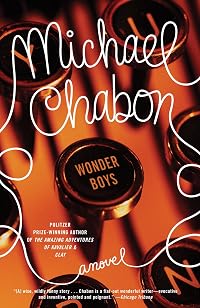
Michael Chabon was born in Washington, D.C. on May 24, 1963. He received a B.A. in English literature from the University of Pittsburgh in 1985 and a Master of Fine Arts degree in English writing at the University of California at Irvine in 1987. Chabon found success at the age of 24, when William Morrow publishing house offered him $155,000, a show more near-record sum, for the rights to his first novel The Mysteries of Pittsburgh, which was his thesis in graduate school. After The Mysteries of Pittsburgh became a national bestseller, he began writing a series of short stories about a little boy dealing with his parents' divorce. The stories, which in part appeared in The New Yorker and G.Q., were bound together in 1991 into a volume titled A Model World and Other Stories. His other works include Wonder Boys, The Astonishing Secret of Awesome Man, Telegraph Avenue, and Pop: Fatherhood in Pieces. In 2001 he won the Pulitzer Prize for fiction for his novel The Amazing Adventures of Kavalier and Clay. He and Ayelet Waldman are co-editors of, Kingdom of Olives and Ash: Writers Confront the Occupation.. (Bowker Author Biography) show less
Some Editions
Awards and Honors
Common Knowledge
- Canonical title
- The Final Solution: A Story of Detection
- Original title
- The Final Solution: A Story of Detection
- Original publication date
- 2004
- People/Characters
- The old man (Sherlock Holmes); Linus Steinman; Bruno (an African gray parrot); Richard Woolsey Shane; Francis Parkins; The Rev. Mr. K. T. Panicker (show all 12); Mrs. Ginny Panicker; Reggie Panicker; DI Michael Bellows; Martin Kalb; Colonel Threadneedle; Sherlock Holmes
- Important places
- The South Downs, England, UK; London, England, UK; Sussex, England, UK
- Important events
- Holocaust (1939 | 1945); World War II (1939 | 1945)
- Epigraph
- The distinction's always fine between detection and invention. - Mary Jo Salter
- Dedication
- To the memory of Amanda Davis, first reader of these pages
- First words
- A boy with a parrot on his shoulder was walking along the railroad tracks.
- Quotations
- His gait was dreamy and he swung a daisy as he went. With each step the boy dragged his toes in the rail bed, as if measuring out his journey with careful ruled marks of his shoetops in the gravel. It was midsummer, and there... (show all) was something about the black hair and pale face of the boy against the green unfurling flag of the downs beyond, the rolling white eye of the daisy, the knobby knees in their short pants, the self-important air of the handsome gray parrot with its savage red tail feather, that charmed the old man as he watched them go by. Charmed him, or aroused his sense – a faculty at one time renowned throughout Europe – of promising anomaly.
- Last words
- (Click to show. Warning: May contain spoilers.)Then the parrot, startled perhaps by the clamor of the passing train, flew up into the rafters of the station roof, where in the flawless mockery of the voice of a woman whom none of them would ever meet or see again, it began, very sweetly, to sing.
Classifications
Statistics
- Members
- 3,941
- Popularity
- 3,987
- Reviews
- 161
- Rating
- (3.40)
- Languages
- 9 — Czech, Dutch, English, French, German, Hebrew, Italian, Japanese, Spanish
- Media
- Paper, Audiobook, Ebook
- ISBNs
- 30
- ASINs
- 11