
The Adventures of Sherlock Holmes
by Arthur Conan Doyle 
There is 1 current discussion about this work.
On This Page
Description
The Adventures of Sherlock Holmes collects Sir Arthur Conan Doyle's first twelve short stories about his famous London detective. It begins with the first meeting of Holmes and his sidekick Watson, who narrates the stories. Doyle was the first to employ the sidekick technique, thereby creating a character in just as much suspense and awe as his readership at the mental escapades of the erratic, terrifyingly intelligent Holmes..
Tags
Recommendations


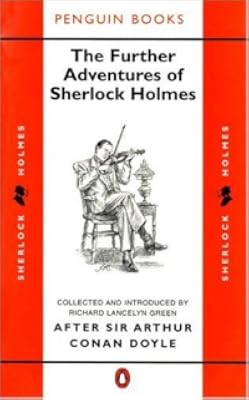


















Member Recommendations


Member Reviews
There's a lot to like in Adventures of Sherlock Holmes; what particularly piques my academic interest, however, is the vision of Sherlock Holmes. There are a lot of good stories here, but when I teach Holmes, I usually stick to three different stories from this volume, because between "A Scandal in Bohemia," "A Case of Identity," and "The Five Orange Pips," I think you get the whole Holmesian theory of vision in theory and in practice.
For my purposes it actually makes the most sense to handle these stories in reverse order. My scholarly interest is in "scientific sight," in the way that scientific reasoning is often figured as a literal visual power. Doyle makes the connection between Holmes's vision and science its most explicit in show more "The Five Orange Pips," where Holmes compares himself to the paleontologist Cuvier: "As Cuvier could correctly describe a whole animal by the contemplation of a single bone, so the observer who has thoroughly understood one link in a series of incidents, should be able to accurately state all the other results which the reason alone can attain to" (108). Holmes utilizes inductive reasoning (I think; I always get these things confused), moving from a part of the system to understanding the whole of the system, through observation and reason. Like Cuvier, he is a scientist.
Holmes sort of undersells himself there, though, because part of his prowess is that he observes the right thing, picking up on the little details that no one else notices. Holmes might be like Cuvier in that he can go from single bone to whole dinosaur, but the problem of other people isn't that they can't perform that inductive logic, it's that they don't even see the bone to perform induction on it! In "A Case of Identity," Watson complains that Holmes sees what is "quite invisible," but Holmes rebuts him: "Not invisible, but unnoticed, Watson. You did not know where to look, and so you missed all that was important. [...] Watson, you are coming along wonderfully. You have really done very well indeed. It is true that you have missed everything of importance, but you have hit upon the method [...]. Never trust to general impressions, my boy, but concentrate yourself upon details" (61). Holmes then proceeds to enumerate a number of details of sleeves, nose, boots, and gloves that allowed him to induce (deduce?) a whole range of truths about the client.
Oddly, Holmes's ability to observe probably reaches its apex in the very first Sherlock Holmes short story, "A Scandal in Bohemia." To a degree, everything after this is anticlimax. But then, Watson does tell us from the story's first line that it is an unusual case for Holmes. Why Doyle started Holmes's (short form) adventures with an exceptional one I don't know, but it makes for one of the best Holmes stories in terms of entertainment, but also in terms of my interests. Again, the story emphasizes the distinctions between Watson's sight and Holmes's: both see, but only Holmes observes (4).
In this story, we're told that Holmes feels no emotions in this "cold, precise, but admirably balanced mind" and that he is the "most perfect reasoning and observing machine that the world has seen" (1). For Holmes, emotions "were admirable things for the observer—excellent for drawing the veil from men's motives and actions. But for the trained observer to admit such intrusions into his own delicate and finely adjusted temperament was to introduce a distracting factor which might throw a doubt upon all his mental results" (1). Holmes does not experience emotion in his observations because, like a scientist, he must remain objective in his work. But unlike (say) Star Trek's Mister Spock, he understands the emotions that he observes, and accounts for them in his reasoning.
However, something I often see in stories of scientific observation is that the keenest observers are able to observe the observations of others. I have a whole article in the Gaskell Journal actually, as regards Wives and Daughters, called "Observing Observation." That happens in "A Scandal in Bohemia": at the climax of the story, Holmes figures out where the incriminating photograph is by faking a fire and making Irene Adler look to where the photograph is hidden; he observes her observations: "The smoke and the shouting were enough to shake nerves of steel. She responded beautifully" (21).
But! It turns out that she was aware that Holmes was watching her, but he was unaware of this. In her letter to Holmes at the story's end, she tells him, "I followed you to your door, and so made sure that I really was an object of interest to the celebrated Mr. Sherlock Holmes" (24). That is to say, Irene Adler was observing Holmes's observations of her observations! So she ends up winning, and Holmes is awed by her.
At the beginning of the story, like I said, Watson claims that Holmes experiences no emotion. But something I've noticed throughout my reading of stories about observation, is not only are keenest observers able to observe observation itself, but that there is a correlation between this and emotion; my Gaskell Journal article ends with the claim that "to observe others carefully is to love them." Watson claims that Holmes knows no emotion, but we know by the story's end that this is untrue. If to observe others carefully is to love them, then to observe others' observations is the highest form of love, and that is why for Holmes, Irene Adler will always be "the woman" (25). show less
For my purposes it actually makes the most sense to handle these stories in reverse order. My scholarly interest is in "scientific sight," in the way that scientific reasoning is often figured as a literal visual power. Doyle makes the connection between Holmes's vision and science its most explicit in show more "The Five Orange Pips," where Holmes compares himself to the paleontologist Cuvier: "As Cuvier could correctly describe a whole animal by the contemplation of a single bone, so the observer who has thoroughly understood one link in a series of incidents, should be able to accurately state all the other results which the reason alone can attain to" (108). Holmes utilizes inductive reasoning (I think; I always get these things confused), moving from a part of the system to understanding the whole of the system, through observation and reason. Like Cuvier, he is a scientist.
Holmes sort of undersells himself there, though, because part of his prowess is that he observes the right thing, picking up on the little details that no one else notices. Holmes might be like Cuvier in that he can go from single bone to whole dinosaur, but the problem of other people isn't that they can't perform that inductive logic, it's that they don't even see the bone to perform induction on it! In "A Case of Identity," Watson complains that Holmes sees what is "quite invisible," but Holmes rebuts him: "Not invisible, but unnoticed, Watson. You did not know where to look, and so you missed all that was important. [...] Watson, you are coming along wonderfully. You have really done very well indeed. It is true that you have missed everything of importance, but you have hit upon the method [...]. Never trust to general impressions, my boy, but concentrate yourself upon details" (61). Holmes then proceeds to enumerate a number of details of sleeves, nose, boots, and gloves that allowed him to induce (deduce?) a whole range of truths about the client.
Oddly, Holmes's ability to observe probably reaches its apex in the very first Sherlock Holmes short story, "A Scandal in Bohemia." To a degree, everything after this is anticlimax. But then, Watson does tell us from the story's first line that it is an unusual case for Holmes. Why Doyle started Holmes's (short form) adventures with an exceptional one I don't know, but it makes for one of the best Holmes stories in terms of entertainment, but also in terms of my interests. Again, the story emphasizes the distinctions between Watson's sight and Holmes's: both see, but only Holmes observes (4).
In this story, we're told that Holmes feels no emotions in this "cold, precise, but admirably balanced mind" and that he is the "most perfect reasoning and observing machine that the world has seen" (1). For Holmes, emotions "were admirable things for the observer—excellent for drawing the veil from men's motives and actions. But for the trained observer to admit such intrusions into his own delicate and finely adjusted temperament was to introduce a distracting factor which might throw a doubt upon all his mental results" (1). Holmes does not experience emotion in his observations because, like a scientist, he must remain objective in his work. But unlike (say) Star Trek's Mister Spock, he understands the emotions that he observes, and accounts for them in his reasoning.
However, something I often see in stories of scientific observation is that the keenest observers are able to observe the observations of others. I have a whole article in the Gaskell Journal actually, as regards Wives and Daughters, called "Observing Observation." That happens in "A Scandal in Bohemia": at the climax of the story, Holmes figures out where the incriminating photograph is by faking a fire and making Irene Adler look to where the photograph is hidden; he observes her observations: "The smoke and the shouting were enough to shake nerves of steel. She responded beautifully" (21).
But! It turns out that she was aware that Holmes was watching her, but he was unaware of this. In her letter to Holmes at the story's end, she tells him, "I followed you to your door, and so made sure that I really was an object of interest to the celebrated Mr. Sherlock Holmes" (24). That is to say, Irene Adler was observing Holmes's observations of her observations! So she ends up winning, and Holmes is awed by her.
At the beginning of the story, like I said, Watson claims that Holmes experiences no emotion. But something I've noticed throughout my reading of stories about observation, is not only are keenest observers able to observe observation itself, but that there is a correlation between this and emotion; my Gaskell Journal article ends with the claim that "to observe others carefully is to love them." Watson claims that Holmes knows no emotion, but we know by the story's end that this is untrue. If to observe others carefully is to love them, then to observe others' observations is the highest form of love, and that is why for Holmes, Irene Adler will always be "the woman" (25). show less
My first collection of Sherlock's shorts and they were super fun. Witty, varied, self-referential, Holmes is a much gentler fellow in these tales than he appears in recent incarnations. He fights for the underdog and cares about the wronged. Some of these stories seem to have been told and retold in every detective series ever imagined but they shine here in their original forms.
“He loved Peace Eagle (Irene Adler) purely, chastely, asexually, exclusively, in a way that put aside the female race most effectively, I dare say; a most proper chap, my imaginary friend—even for the 1890s….”
And yes: ‘Irene Adler’ implies German blood, and a Latin education: the world was the way it should be, (smiles).
It’s amusing…. Adventures are hardly ever about True Liberation (TM), of course, right…. A late Victorian guy dealing with death and murder and moral decay may have actually been unusually beyond-polite for that high noon of repression, you know, actually…. That Lord Dunsany guy’s signature book, for example, came later, a few years into the Jazz Age, right, and he was younger: and they were both show more adventure stories, but LD’s book was more…. Perfunctory; polite and nothing, right: whereas ACD’s first move apparently is to go immediately up to edge of respectability to demonstrate how far it was acceptable to go in ultra-pro-social hero-adventure tales, without straying over into things that should only ever be sung in Italian, rather than printed in English, right…. Which if you think about it, is ALMOST daring, right…. As opposed to just flowery vapid polite nothings, which would have been a dime a dozen back then and for many, many more years, as well, right….
…. (reads a few lines of technobabble discoveries) The adventure-technobabble does seem less stupid, cuter, than “The Martian”, though that’s a three-quarters case of being the difference between my mind-world a few years ago, when I was less sociable and less happy and more susceptible, therefore, to being blown off-course, by seeking fun, but not wanting it, basically: versus today….
Certainly there is that element of ‘a hero for worship’, right: it is curious how you could see one thing and make a few correct sly guesses about it, right—it’s far from impossible…. But sooner or later, you’d make more incorrect guesses than Hero Worship Boy Books would imply, right…. [It is true that, literally speaking, SH does encounter human limitations on a decent number of occasions: but the reader is never made to FEEL a sense that he is limited; it has no emotional meaning in the stories, IMO; it’s just…. I don’t know; it’s put in there for form’s sake, not because you’re meant to take that seriously, SH’s human limitations….], yeah, read poorly as a naive 7th or 8th grader, maybe even several grades earlier than that, whenever it was, this probably wasn’t the best influence on my development, given the context of those times—the 1990s—not that anything too substantial has changed, right…. (shrugs) But I expect it to be amusing…. It’s just so fascinating how the late Victorian times could be the high noon both of sentimental housewives, passive almost to the point of suicide by forgetting when to breathe, and, at the exact same time and place and class/race, the most robotic male super-cyborg intellectuals, right: you see kinda the same thing in the more ‘political/serious’ book ‘Resurrection’ by Tolstoy, although that’s not a book worthy of hero worship, either, really…. [If perhaps it also doesn’t deserve to get put down the memory hole on the sly, which is the treatment it has received, essentially, lol.]
(shrugs) But yeah: I mean, ~EYE~ guess wrong sometimes, why not Sherlock Holmes? I was watching the most putrid propaganda-romance film the other day, “The Proposal” (2009), and although I was taken in by no lie: I did guess incorrectly about what lie Leni Riefenstahl (and I did literally watch it out of curiosity due to the woman-director aspect, lol) had slated for the next scene, lol….
I don’t know. It’s entertainment. Novels are one form of entertainment. I’ll swap out the Dunsany for this, once I’m done: Elf-bride boy didn’t really write anything I’m glad to have read, today, in retrospect, and really nothing in that book rewards the award of time, right; whereas this does promise amusement….
…. It’s amusing how Sherlock both lies and indeed, breaks the law, right. I don’t mean that as criticism, of course. Who doesn’t fantasize about doing just what they like, legal or not? Evidently not people who solve crimes for a living, a-hahaha! 😁
And yeah, it’s funny how being an opera girl was like the next thing to being a high-price….
~”Back then, things were good, children! Women lacked power; men lacked desire! It was the way Jesus intended when he created the world, before there were Democrats!” (rolls eyes) “Yes, Grand-mama[/papa]….”
…. (finishes the Bohemia story) Rather nicely done. It’s very cute, and very aware of the current ideas, in an amusing way. Cute, and yet it could JUST have happened, right…. Sometimes the interpretations of life and society that the characters give are quite questionable: although they’re just what people would have said, at the time, right….
…. (The Red Headed League) I did read this book, I think, as an older-child Millennial 90s youth, right: I guess reading is a good habit to get into, right, but it is amusing how little you get out of it at a certain point in your journey…. (It doesn’t help if people don’t really raise you to see the actual important issues: they just coach you to be loyal—I think that the technical term is, ‘parenting’, lol—and have minimal “improper” behavioral expressions, right…. Although, I got into trouble anyway, because there isn’t a single, one-piece, simplistic sort of system to be loyal to, anymore, right…. Although I don’t know that our way of raising kids has really changed, right….) I thought that a ‘red headed league’ was just the most quixotic, most random thing, right, just take out a coin and flip it random, right: like a club for people whose name starts with A, right…. But this was the 1890s; for us today it would be more like, ‘A club for people whose name is Carlos’, right…. It’s the equivalent of having a Carlos Club, where people who are named Carlos get a chance at a computer programming job, right…. (At the time, encyclopedias were like, technology, right?)…. Although the whole thing wasn’t really what it seemed, right: although I don’t think/I hope that the REAL (criminal) plot wasn’t an ‘ethnic’ one, right; it was the Anglo handlers of the program who were up to a little something something….
…. It’s funny how the first two stories are almost modern, but in the 1890s British way, you know: ‘disreputable’ women, and then one of the ‘disreputable’ ethnicities, and both stories reference the USA, right!…. Not to backtrack, but it is funny, how the gossips talk about opera girls, now vs then, right….
…. “…. and a girl of fourteen, who does a bit of simple cooking, and keeps the place clean….”
Well, I guess that’s the way it should be: the way of the ancestors, right? Wholesome, traditional womanhood, unsullied by feminism, living wholly within its own proper sphere, but not without a certain power, unique to that peculiar sphere, you know…. 😉
👽
…. Sherlock as a lover of music and leisure (and then-legal drugs) is curious. I rather believe it….
I wonder how unusual it was in the 1890s to portray the ‘ethnic’ British man as assimilated and un-harried—a little unimportant, you know….
…. (A Case of Identity) It’s not quite as Freudian as I was expecting; I suppose that even male lovers want more than (failing the other thing), flirting—but that, OTHER, thing, that is relevant to dalliances, right…. [💵….]. I suppose it’s the pre-Freud’s fame, ‘Freudian’ thing, right. It is true that these things do change from time to time, even if the sexy sexist Dr. Sigmund was correct, that they tend not to be ‘respectable’, right. To make a small tangent, Freud himself wanted people to be ‘respectable’, albeit in a non-‘respectable’ way; he wanted to be the superego, reminding people, (especially women, of course), to sacrifice ‘sufficiently’, for ‘love’, right…. But, I digress.
…. Oh, and I’m reading the story on a Kindle, which shows popular lines to underline: and apparently people tend to underline the one line, the callously sexist one, about how, women just love their delusions, right; the cautiously cross-cultural one about how Hafiz is as good as Horace, not so much…. Well, it’s the 21st century, ladies and germs: oppression is over: you can all go home now! That’s right, I said it: scram! Nothing to see here!….
Move along! 🏏 (the ball isn’t as relevant as the bat, lol)
…. (Boscombe Valley Mystery) A little rural murder to investigate…. Good, good: best to get out into the pure air…. ~People always used to talk like that, about country air: and I guess they’re right; I guess during Queen Vicky’s days, people still remembered that their cities produced pollution, right…. Though of course, American (to speak of myself) agriculture grows more and more unnatural every year, I suspect, to speak of only the aspect of society under review…. But yeah: it’s curious; city air versus country air—the thing too obvious to be retained in the popular imagination….
And it is funny how Watson’s wife emerges just long enough to underline her lack of importance, almost like the servant; and Sherlock underlines how they don’t trust country people, it seemed like he was saying, right…. Yes, the urban English male person, with money, right, back in those times…. (smiles, jazz hands)
…. At least there’s a lot of ambiguous woman characters in the story, right. Loads of ambiguous characters, you know: the male characters, you know, are of course not arranged in a hierarchy, right….
It is amusing to think that a man, especially if perhaps not only in the 1890s, (we just wouldn’t have this choice anymore, right), would rather increase his chances of being killed by the state, than disclose the nature of his romantic humiliations, you know….
I certainly believe that part, right?….
…. It is true, that it is amusing, how clever Holmes is.
…. (The Five Orange Pips) A story about the KKK is an unusual choice for 1890s England, so that’s certainly curious; however, ACD seems to have bitten something off without being able to chew and digest properly: he set himself the sort of task he was not adjusted to doing well. [Not exactly a BAD choice, being ‘ambitious’ like that, but it can affect the quality of the work, if you follow.] It’s fascinating, in an idle sort of way, to read these sorts of Technology of the 1890s Sleuthing Stories, but something more is required for an adequate investigation into the story of a white terrorist organization hunting traitors, you know?
…. (The Man with the Twisted Lip) Reading things “from history”, so to speak, can be curious. Nowadays, the “problem” is immigrants—they don’t even look like us! Back then, the “problem” was areas associated with the “emigrant ships”, right: they can’t even make it here!…. The societal attitude towards the districts which peopled emigrant ships, which is echoed, is by no means kind, right….
(smirk) But then, kindness ought to be the attribute of women, right: and not men….
…. And whenever Sherlock has the slightest difficulty with his powers, he is most inhuman with himself—but I suppose that, “all men are like that”, right. [😉]
…. I don’t mean to be precious about the poor—anyone can be greedy; viciousness is here there and everywhere; class lines are blurry; crazy is everywhere, people get used to it, shrug it off—but yeah: the Victorians, the English Victorians~ they told some far-fetched fantasies about the poor, you know. The poor…. They’re rich!…. They’re a real problem!
…. (The Adventure of the Blue Carbuncle) It seems like quite a random, circular, goes-nowhere story, thematically speaking, but, here’s a funny line: ‘My name is Sherlock Holmes. It is my business to know what other people don’t know’—That’s the character, right: right there. And that’s why his name is a byword for the intellectual-who-stirs-up-resentment-in-us: you know, that vaguely [USA] Midwestern phrase, ‘No shit, Sherlock’, all that sort of phraseology; they resent it—and why periodically people plunge however-many millions into Sherlock Holmes Costume Dramas, you know: because he’s the Grand Old Scientist From the Past, and people look up to him, right. [figure it out lol 🤷♂️]
…. (The Adventure of the Speckled Band) Obligatory trashing of the minority ethnic community (Gypsies, as they are sometimes called)….
…. So Sherlock is a strong man: lifts weights, apparently, or: some kind of strength training. Curious. Of course, there’s so little of that shown, as opposed to the (non-romantic) dandyism, and the intellectualism—that there is that possibility of male vanity/beauty; whereas the hero worshipper has even sometimes associated himself with virtue/strength he does not have, out of loyalty, and a sense of the abstract-ideal ‘male’, and fantasy, and all that….
But yeah: that is one of the benefits of a less technological time, (although hopefully one day we will learn the true sort of thought, and not the obsessive sort of thought, and learn to balance the true sort of thought, with the strength of the embodied creature, right): in old times, before powerful technologies—and even the Victorian times was an age of ~~very young~~ technology, right: there was more of a sense of the need of bodily vigor….
People think they can get their bodily vigor back by supporting old-fashioned prejudice: which is a bit like saying…. I don’t know, that learning French will make you a good cook: and I’m not talking about going to Paris, just doing some crazy ass thing like reading Petrarch in French, right; yes, I know where he was from, lol….
…. This isn’t about any of the stories, but, SH isn’t always bad.
~Sherlock in the Future!
“They tell me that this is food, my good man.”
~(examines plastic, then shakes head) An interesting hypothesis, of course…. (returns to him) But, there’s no evidence.
…. (The Adventure of the Engineer’s Thumb) “…. when the facts evolve slowly before your own eyes, and the mystery clears gradually away as each new discovery furnishes a step which leads on to the complete truth.”
…. (a medical patient to a doctor) “Between your brandy and your bandage, I feel a new man….”
Not that I don’t wonder what some medical historians of the future will think we were on about, with some of these chemicals of ours, and some of our ideas, but: but, yeah…. Progress has certainly been made in our civilization, upon certain lines, anyway. And it’s silly to have hero-worship notions about the past, sometimes, right?
…. ~The Cassandra: The men of the 1890s felt unconsciously guilty for sidelining women, and Christianity encouraged guilt as a positive experience, right. They were also naturally enough afraid of the machine of man, that they were a part of, right….
…. (The Adventure of the Noble Bachelor) “As to his dress, it was careful to the verge of foppishness….”
It’s funny, describing clothing style as ‘careful’, nowadays, at least if we were listening to a song (in the unlikely event that the words were non-liquid enough to describe anything as practical as clothing or even, in a concrete way/in any sort of complete way, appearance, even, right), or watching a movie: in something like that, today, ‘careful’ wouldn’t necessarily tend towards the idea of going for the heart-strings, IMO, right—more like, playing to the nostalgics/parents, etc. (Although clearly there is more overlap between the two strategies than either ‘parents’ or ‘children’ sometimes admit, right.)…. But yeah: in person, I do think that you’d get an idea that a ‘careful’ choice of clothes is going in for the kill, albeit by the very weapon of respectability, right. And in the early 21st century, the notion has indeed survived that pleasant appearance is indeed not suitable to Team Adjutant-to-the-Birth-Giver, right (‘foppish’). I’m not sure I want to seem beautiful myself; I’d rather be more like a practical woman (a drudge, lol), than a beautiful one, in order to be of service ‘to a lady’, right: although here the issue is more class, than gender considered in splendid isolation, right….
…. “We can’t command our love, but we can our actions.”
…. Here comes the crazy man, old chap, said Watson with disdainful glee. I wonder that his relatives don’t keep him locked in the attic or the cellar, with the dogs and the servants who have taken ill.
~I’m going to make money today, so that fate will never be mine, Sherlock declared, rubbing his hands together in material delight. But soft! What light from yonder window breaks! It is the customer, who will be properly serviced, and billed. 👻
~But yeah: I’m always so thrilled when my fellow white men take such a kind and egoless concern with my welfare, right. Aside from old white ladies going to church socials and being, correct-human-beings/helpless invalids, Black people being violent and American, white people being violent and American, and the woke people deciding that I am better off feared than engaged with, that has to be one of my absolute ~favorite~ things, when one of my fellow-white-men looks at me like, Hey Jim! It’s that guy! It’s that white kid who looks just like us! Yes, that random stupid kid with the fucked-up resume! The crazy one—the very same!…. (British gaze, from above) Do you think he can do any tricks? (considers this question with all deliberate consideration)
~(shrugs) I mean, they’re amusing stories, don’t get me wrong…. But they’re not about, me, even, you know…. I don’t know how to describe it….
…. ‘The only disadvantage to the girl, is that she is pretty, and men like her: but really she is a fine servant, truly serviceable and adequate.’
Oh, to be a girl in those times: just to ~live~ in those times!…. And all that has only been slightly changed: everything is loosened from its fixtures and changed, but not healed or at all different in essence: merely dislodged from its security, and risen up, therefore, in wrath!
…. Girl receives suitor, unknown person—get snippy at both of them
Girl has suitor, known felon, runs away—write her off, we have enough problems
But yeah: the information processing is indeed pretty remarkable. It’s the moral values, lol, that are lacking….
…. (The Adventure of the Copper Beeches)
~(SH) To the lover of art for its own sake, sometimes the less-prestigious art is of greater merit or interest….
~I’m surprised to hear him say that, given of what one takes his character to be, and of course the date: but it is true. It is very true. The prestigious things, the sort of things that cannot be avoided because they flow down from on high into everything else, are sometimes well, but prestige, and merit or interest are different things, and sometimes place ought to be yielded to that which also cannot be avoided, the flower of the ever-fertile valley, which abounds greatly, and as the air is clean and true up on high, so too is the earth soft and living down in the valley, wouldn’t you say?
Prestige, and merit or interest are different things, though not many of Queen Victoria’s subjects necessarily agreed, right…. But there was a lot of Aquarian energy on Arthur Conan Doyle’s chart: and God knows we’re strange people, we Aquarius sorts….
…. (SH) “Crime is common. Logic is rare.”
It’s not that he has a perfect personality, or is without a personality, or is never bent on receiving pride of place—a useless sort of location, right. (Though perhaps I don’t know that either; but then, it is hard to forget sometimes that “Sherlock” has entered the folklore memory as, at least in part, the caricature of an intellectual, and I hope I am not THAT, though I am quite sure that I have, some, at least, of the character defects of my general type.)
But yeah, there is, still, a sort of truth to that striking sentence, right: crime is common…. I have never been the logician sort of intellectual, even at the times when I have been most studious and withdrawn, right. But they too, have a certain claim to truth, right: the logic-finders…. Crime is common…. Logic is rare…. You could draw false inferences from that dictum; but it is, itself, true, you know?….
…. A man with money offering you way above the market value of your services is, “a philanthropist or a villain”, that’s so true, and in a book of crime and/or general misconduct adventures, we know which it is, right…. God, sometimes I feel like I’d get in trouble, you know, for tipping a girl ‘too much’, right…. What a world, gentlemen and gentlewomen! What a world! 🤪
…. This last story is wonderful. Obviously there is the issue of upper-class solidarity, and then too, it wasn’t at all uncommon, wouldn’t you say, for Victorian popular opinion to be awake to the issue of sexual abuse, albeit in its own peculiar way, right…. But it does seem to be very tuned in with sympathy to a woman with agency: ACD seems far more touched by needs of the woman with intellectual training, than many men of the 1890s would have been, right…. It seems almost to anticipate the good as well as the bad points, of a Betty Friedan, right….
…. So yeah: it is kinda a story about a polite society man making a fetish out of polite beauty (women’s hair); it’s a very good premise….
…. (SH) “I have frequently gained my first real insight into the character of parents by studying their children.”
It does indeed go both ways…. Not to be laboriously autobiographical, although naturally what I, as well as what everyone else writes or says is under-written by lived experience: but it’s always curious when the parent is “normal” or “successful” or at least, I don’t know, “not too different from everyone else; just another working adult”, and the child, much less so, right: not that individuals are not distinguished, but often a line of thought that leads to madness was pursued in the child until the consequences flowered, that they learnt from the parent(s), as the parents possessed it, but which they themselves, (the elders), in a fit of instinct, extinguished partially just in time, or else by sheer whim did not pursue (their error, that is) in any sort of ‘logical’ way: thereby escaping the lion’s share of the consequences, or the ‘price’, so to speak.
Although it appears that the plot does not bear out my previous supposition, (“a fetish out of polite beauty”), at least, literally, although on psychoanalytic grounds, it would appear (vis a vis politeness and ordinariness) very strange a story indeed, substituting the one idea for the other….
So much of men’s lives is ruined by having power, right…. Our greatest wish, in our moments of bravery, is to show what powers of women overshadow us: but if women are nothing but passive vulnerability only, then our desires themselves are lies, and our lives, though surely spent and worn out, by and by, one way or another, burn out, but only in a half-lived way, right….
…. Yes, a drop of gore is the thing, right. It’s obviously kin—a sort of older cousin—to the sort of ‘crime’ reporting that often fascinates people who in fevers and delusions imagine that the fears it stokes benefits them: not infrequently even by those populations most obviously disadvantaged by that sort of thing, right; drops of gore, and pounds of foolishness…. Still, it is true that there are violences and wars and battles, in our so-called peaceful, unified, and rational society, right….
The themes in the stories are usually almost entirely laid out in their first half: with the second half being largely mechanical and more a matter of ‘cleaning up’, so to speak…. But he’s not a bad writer at all, ACD: competent, and also, amusing. show less
And yes: ‘Irene Adler’ implies German blood, and a Latin education: the world was the way it should be, (smiles).
It’s amusing…. Adventures are hardly ever about True Liberation (TM), of course, right…. A late Victorian guy dealing with death and murder and moral decay may have actually been unusually beyond-polite for that high noon of repression, you know, actually…. That Lord Dunsany guy’s signature book, for example, came later, a few years into the Jazz Age, right, and he was younger: and they were both show more adventure stories, but LD’s book was more…. Perfunctory; polite and nothing, right: whereas ACD’s first move apparently is to go immediately up to edge of respectability to demonstrate how far it was acceptable to go in ultra-pro-social hero-adventure tales, without straying over into things that should only ever be sung in Italian, rather than printed in English, right…. Which if you think about it, is ALMOST daring, right…. As opposed to just flowery vapid polite nothings, which would have been a dime a dozen back then and for many, many more years, as well, right….
…. (reads a few lines of technobabble discoveries) The adventure-technobabble does seem less stupid, cuter, than “The Martian”, though that’s a three-quarters case of being the difference between my mind-world a few years ago, when I was less sociable and less happy and more susceptible, therefore, to being blown off-course, by seeking fun, but not wanting it, basically: versus today….
Certainly there is that element of ‘a hero for worship’, right: it is curious how you could see one thing and make a few correct sly guesses about it, right—it’s far from impossible…. But sooner or later, you’d make more incorrect guesses than Hero Worship Boy Books would imply, right…. [It is true that, literally speaking, SH does encounter human limitations on a decent number of occasions: but the reader is never made to FEEL a sense that he is limited; it has no emotional meaning in the stories, IMO; it’s just…. I don’t know; it’s put in there for form’s sake, not because you’re meant to take that seriously, SH’s human limitations….], yeah, read poorly as a naive 7th or 8th grader, maybe even several grades earlier than that, whenever it was, this probably wasn’t the best influence on my development, given the context of those times—the 1990s—not that anything too substantial has changed, right…. (shrugs) But I expect it to be amusing…. It’s just so fascinating how the late Victorian times could be the high noon both of sentimental housewives, passive almost to the point of suicide by forgetting when to breathe, and, at the exact same time and place and class/race, the most robotic male super-cyborg intellectuals, right: you see kinda the same thing in the more ‘political/serious’ book ‘Resurrection’ by Tolstoy, although that’s not a book worthy of hero worship, either, really…. [If perhaps it also doesn’t deserve to get put down the memory hole on the sly, which is the treatment it has received, essentially, lol.]
(shrugs) But yeah: I mean, ~EYE~ guess wrong sometimes, why not Sherlock Holmes? I was watching the most putrid propaganda-romance film the other day, “The Proposal” (2009), and although I was taken in by no lie: I did guess incorrectly about what lie Leni Riefenstahl (and I did literally watch it out of curiosity due to the woman-director aspect, lol) had slated for the next scene, lol….
I don’t know. It’s entertainment. Novels are one form of entertainment. I’ll swap out the Dunsany for this, once I’m done: Elf-bride boy didn’t really write anything I’m glad to have read, today, in retrospect, and really nothing in that book rewards the award of time, right; whereas this does promise amusement….
…. It’s amusing how Sherlock both lies and indeed, breaks the law, right. I don’t mean that as criticism, of course. Who doesn’t fantasize about doing just what they like, legal or not? Evidently not people who solve crimes for a living, a-hahaha! 😁
And yeah, it’s funny how being an opera girl was like the next thing to being a high-price….
~”Back then, things were good, children! Women lacked power; men lacked desire! It was the way Jesus intended when he created the world, before there were Democrats!” (rolls eyes) “Yes, Grand-mama[/papa]….”
…. (finishes the Bohemia story) Rather nicely done. It’s very cute, and very aware of the current ideas, in an amusing way. Cute, and yet it could JUST have happened, right…. Sometimes the interpretations of life and society that the characters give are quite questionable: although they’re just what people would have said, at the time, right….
…. (The Red Headed League) I did read this book, I think, as an older-child Millennial 90s youth, right: I guess reading is a good habit to get into, right, but it is amusing how little you get out of it at a certain point in your journey…. (It doesn’t help if people don’t really raise you to see the actual important issues: they just coach you to be loyal—I think that the technical term is, ‘parenting’, lol—and have minimal “improper” behavioral expressions, right…. Although, I got into trouble anyway, because there isn’t a single, one-piece, simplistic sort of system to be loyal to, anymore, right…. Although I don’t know that our way of raising kids has really changed, right….) I thought that a ‘red headed league’ was just the most quixotic, most random thing, right, just take out a coin and flip it random, right: like a club for people whose name starts with A, right…. But this was the 1890s; for us today it would be more like, ‘A club for people whose name is Carlos’, right…. It’s the equivalent of having a Carlos Club, where people who are named Carlos get a chance at a computer programming job, right…. (At the time, encyclopedias were like, technology, right?)…. Although the whole thing wasn’t really what it seemed, right: although I don’t think/I hope that the REAL (criminal) plot wasn’t an ‘ethnic’ one, right; it was the Anglo handlers of the program who were up to a little something something….
…. It’s funny how the first two stories are almost modern, but in the 1890s British way, you know: ‘disreputable’ women, and then one of the ‘disreputable’ ethnicities, and both stories reference the USA, right!…. Not to backtrack, but it is funny, how the gossips talk about opera girls, now vs then, right….
…. “…. and a girl of fourteen, who does a bit of simple cooking, and keeps the place clean….”
Well, I guess that’s the way it should be: the way of the ancestors, right? Wholesome, traditional womanhood, unsullied by feminism, living wholly within its own proper sphere, but not without a certain power, unique to that peculiar sphere, you know…. 😉
👽
…. Sherlock as a lover of music and leisure (and then-legal drugs) is curious. I rather believe it….
I wonder how unusual it was in the 1890s to portray the ‘ethnic’ British man as assimilated and un-harried—a little unimportant, you know….
…. (A Case of Identity) It’s not quite as Freudian as I was expecting; I suppose that even male lovers want more than (failing the other thing), flirting—but that, OTHER, thing, that is relevant to dalliances, right…. [💵….]. I suppose it’s the pre-Freud’s fame, ‘Freudian’ thing, right. It is true that these things do change from time to time, even if the sexy sexist Dr. Sigmund was correct, that they tend not to be ‘respectable’, right. To make a small tangent, Freud himself wanted people to be ‘respectable’, albeit in a non-‘respectable’ way; he wanted to be the superego, reminding people, (especially women, of course), to sacrifice ‘sufficiently’, for ‘love’, right…. But, I digress.
…. Oh, and I’m reading the story on a Kindle, which shows popular lines to underline: and apparently people tend to underline the one line, the callously sexist one, about how, women just love their delusions, right; the cautiously cross-cultural one about how Hafiz is as good as Horace, not so much…. Well, it’s the 21st century, ladies and germs: oppression is over: you can all go home now! That’s right, I said it: scram! Nothing to see here!….
Move along! 🏏 (the ball isn’t as relevant as the bat, lol)
…. (Boscombe Valley Mystery) A little rural murder to investigate…. Good, good: best to get out into the pure air…. ~People always used to talk like that, about country air: and I guess they’re right; I guess during Queen Vicky’s days, people still remembered that their cities produced pollution, right…. Though of course, American (to speak of myself) agriculture grows more and more unnatural every year, I suspect, to speak of only the aspect of society under review…. But yeah: it’s curious; city air versus country air—the thing too obvious to be retained in the popular imagination….
And it is funny how Watson’s wife emerges just long enough to underline her lack of importance, almost like the servant; and Sherlock underlines how they don’t trust country people, it seemed like he was saying, right…. Yes, the urban English male person, with money, right, back in those times…. (smiles, jazz hands)
…. At least there’s a lot of ambiguous woman characters in the story, right. Loads of ambiguous characters, you know: the male characters, you know, are of course not arranged in a hierarchy, right….
It is amusing to think that a man, especially if perhaps not only in the 1890s, (we just wouldn’t have this choice anymore, right), would rather increase his chances of being killed by the state, than disclose the nature of his romantic humiliations, you know….
I certainly believe that part, right?….
…. It is true, that it is amusing, how clever Holmes is.
…. (The Five Orange Pips) A story about the KKK is an unusual choice for 1890s England, so that’s certainly curious; however, ACD seems to have bitten something off without being able to chew and digest properly: he set himself the sort of task he was not adjusted to doing well. [Not exactly a BAD choice, being ‘ambitious’ like that, but it can affect the quality of the work, if you follow.] It’s fascinating, in an idle sort of way, to read these sorts of Technology of the 1890s Sleuthing Stories, but something more is required for an adequate investigation into the story of a white terrorist organization hunting traitors, you know?
…. (The Man with the Twisted Lip) Reading things “from history”, so to speak, can be curious. Nowadays, the “problem” is immigrants—they don’t even look like us! Back then, the “problem” was areas associated with the “emigrant ships”, right: they can’t even make it here!…. The societal attitude towards the districts which peopled emigrant ships, which is echoed, is by no means kind, right….
(smirk) But then, kindness ought to be the attribute of women, right: and not men….
…. And whenever Sherlock has the slightest difficulty with his powers, he is most inhuman with himself—but I suppose that, “all men are like that”, right. [😉]
…. I don’t mean to be precious about the poor—anyone can be greedy; viciousness is here there and everywhere; class lines are blurry; crazy is everywhere, people get used to it, shrug it off—but yeah: the Victorians, the English Victorians~ they told some far-fetched fantasies about the poor, you know. The poor…. They’re rich!…. They’re a real problem!
…. (The Adventure of the Blue Carbuncle) It seems like quite a random, circular, goes-nowhere story, thematically speaking, but, here’s a funny line: ‘My name is Sherlock Holmes. It is my business to know what other people don’t know’—That’s the character, right: right there. And that’s why his name is a byword for the intellectual-who-stirs-up-resentment-in-us: you know, that vaguely [USA] Midwestern phrase, ‘No shit, Sherlock’, all that sort of phraseology; they resent it—and why periodically people plunge however-many millions into Sherlock Holmes Costume Dramas, you know: because he’s the Grand Old Scientist From the Past, and people look up to him, right. [figure it out lol 🤷♂️]
…. (The Adventure of the Speckled Band) Obligatory trashing of the minority ethnic community (Gypsies, as they are sometimes called)….
…. So Sherlock is a strong man: lifts weights, apparently, or: some kind of strength training. Curious. Of course, there’s so little of that shown, as opposed to the (non-romantic) dandyism, and the intellectualism—that there is that possibility of male vanity/beauty; whereas the hero worshipper has even sometimes associated himself with virtue/strength he does not have, out of loyalty, and a sense of the abstract-ideal ‘male’, and fantasy, and all that….
But yeah: that is one of the benefits of a less technological time, (although hopefully one day we will learn the true sort of thought, and not the obsessive sort of thought, and learn to balance the true sort of thought, with the strength of the embodied creature, right): in old times, before powerful technologies—and even the Victorian times was an age of ~~very young~~ technology, right: there was more of a sense of the need of bodily vigor….
People think they can get their bodily vigor back by supporting old-fashioned prejudice: which is a bit like saying…. I don’t know, that learning French will make you a good cook: and I’m not talking about going to Paris, just doing some crazy ass thing like reading Petrarch in French, right; yes, I know where he was from, lol….
…. This isn’t about any of the stories, but, SH isn’t always bad.
~Sherlock in the Future!
“They tell me that this is food, my good man.”
~(examines plastic, then shakes head) An interesting hypothesis, of course…. (returns to him) But, there’s no evidence.
…. (The Adventure of the Engineer’s Thumb) “…. when the facts evolve slowly before your own eyes, and the mystery clears gradually away as each new discovery furnishes a step which leads on to the complete truth.”
…. (a medical patient to a doctor) “Between your brandy and your bandage, I feel a new man….”
Not that I don’t wonder what some medical historians of the future will think we were on about, with some of these chemicals of ours, and some of our ideas, but: but, yeah…. Progress has certainly been made in our civilization, upon certain lines, anyway. And it’s silly to have hero-worship notions about the past, sometimes, right?
…. ~The Cassandra: The men of the 1890s felt unconsciously guilty for sidelining women, and Christianity encouraged guilt as a positive experience, right. They were also naturally enough afraid of the machine of man, that they were a part of, right….
…. (The Adventure of the Noble Bachelor) “As to his dress, it was careful to the verge of foppishness….”
It’s funny, describing clothing style as ‘careful’, nowadays, at least if we were listening to a song (in the unlikely event that the words were non-liquid enough to describe anything as practical as clothing or even, in a concrete way/in any sort of complete way, appearance, even, right), or watching a movie: in something like that, today, ‘careful’ wouldn’t necessarily tend towards the idea of going for the heart-strings, IMO, right—more like, playing to the nostalgics/parents, etc. (Although clearly there is more overlap between the two strategies than either ‘parents’ or ‘children’ sometimes admit, right.)…. But yeah: in person, I do think that you’d get an idea that a ‘careful’ choice of clothes is going in for the kill, albeit by the very weapon of respectability, right. And in the early 21st century, the notion has indeed survived that pleasant appearance is indeed not suitable to Team Adjutant-to-the-Birth-Giver, right (‘foppish’). I’m not sure I want to seem beautiful myself; I’d rather be more like a practical woman (a drudge, lol), than a beautiful one, in order to be of service ‘to a lady’, right: although here the issue is more class, than gender considered in splendid isolation, right….
…. “We can’t command our love, but we can our actions.”
…. Here comes the crazy man, old chap, said Watson with disdainful glee. I wonder that his relatives don’t keep him locked in the attic or the cellar, with the dogs and the servants who have taken ill.
~I’m going to make money today, so that fate will never be mine, Sherlock declared, rubbing his hands together in material delight. But soft! What light from yonder window breaks! It is the customer, who will be properly serviced, and billed. 👻
~But yeah: I’m always so thrilled when my fellow white men take such a kind and egoless concern with my welfare, right. Aside from old white ladies going to church socials and being, correct-human-beings/helpless invalids, Black people being violent and American, white people being violent and American, and the woke people deciding that I am better off feared than engaged with, that has to be one of my absolute ~favorite~ things, when one of my fellow-white-men looks at me like, Hey Jim! It’s that guy! It’s that white kid who looks just like us! Yes, that random stupid kid with the fucked-up resume! The crazy one—the very same!…. (British gaze, from above) Do you think he can do any tricks? (considers this question with all deliberate consideration)
~(shrugs) I mean, they’re amusing stories, don’t get me wrong…. But they’re not about, me, even, you know…. I don’t know how to describe it….
…. ‘The only disadvantage to the girl, is that she is pretty, and men like her: but really she is a fine servant, truly serviceable and adequate.’
Oh, to be a girl in those times: just to ~live~ in those times!…. And all that has only been slightly changed: everything is loosened from its fixtures and changed, but not healed or at all different in essence: merely dislodged from its security, and risen up, therefore, in wrath!
…. Girl receives suitor, unknown person—get snippy at both of them
Girl has suitor, known felon, runs away—write her off, we have enough problems
But yeah: the information processing is indeed pretty remarkable. It’s the moral values, lol, that are lacking….
…. (The Adventure of the Copper Beeches)
~(SH) To the lover of art for its own sake, sometimes the less-prestigious art is of greater merit or interest….
~I’m surprised to hear him say that, given of what one takes his character to be, and of course the date: but it is true. It is very true. The prestigious things, the sort of things that cannot be avoided because they flow down from on high into everything else, are sometimes well, but prestige, and merit or interest are different things, and sometimes place ought to be yielded to that which also cannot be avoided, the flower of the ever-fertile valley, which abounds greatly, and as the air is clean and true up on high, so too is the earth soft and living down in the valley, wouldn’t you say?
Prestige, and merit or interest are different things, though not many of Queen Victoria’s subjects necessarily agreed, right…. But there was a lot of Aquarian energy on Arthur Conan Doyle’s chart: and God knows we’re strange people, we Aquarius sorts….
…. (SH) “Crime is common. Logic is rare.”
It’s not that he has a perfect personality, or is without a personality, or is never bent on receiving pride of place—a useless sort of location, right. (Though perhaps I don’t know that either; but then, it is hard to forget sometimes that “Sherlock” has entered the folklore memory as, at least in part, the caricature of an intellectual, and I hope I am not THAT, though I am quite sure that I have, some, at least, of the character defects of my general type.)
But yeah, there is, still, a sort of truth to that striking sentence, right: crime is common…. I have never been the logician sort of intellectual, even at the times when I have been most studious and withdrawn, right. But they too, have a certain claim to truth, right: the logic-finders…. Crime is common…. Logic is rare…. You could draw false inferences from that dictum; but it is, itself, true, you know?….
…. A man with money offering you way above the market value of your services is, “a philanthropist or a villain”, that’s so true, and in a book of crime and/or general misconduct adventures, we know which it is, right…. God, sometimes I feel like I’d get in trouble, you know, for tipping a girl ‘too much’, right…. What a world, gentlemen and gentlewomen! What a world! 🤪
…. This last story is wonderful. Obviously there is the issue of upper-class solidarity, and then too, it wasn’t at all uncommon, wouldn’t you say, for Victorian popular opinion to be awake to the issue of sexual abuse, albeit in its own peculiar way, right…. But it does seem to be very tuned in with sympathy to a woman with agency: ACD seems far more touched by needs of the woman with intellectual training, than many men of the 1890s would have been, right…. It seems almost to anticipate the good as well as the bad points, of a Betty Friedan, right….
…. So yeah: it is kinda a story about a polite society man making a fetish out of polite beauty (women’s hair); it’s a very good premise….
…. (SH) “I have frequently gained my first real insight into the character of parents by studying their children.”
It does indeed go both ways…. Not to be laboriously autobiographical, although naturally what I, as well as what everyone else writes or says is under-written by lived experience: but it’s always curious when the parent is “normal” or “successful” or at least, I don’t know, “not too different from everyone else; just another working adult”, and the child, much less so, right: not that individuals are not distinguished, but often a line of thought that leads to madness was pursued in the child until the consequences flowered, that they learnt from the parent(s), as the parents possessed it, but which they themselves, (the elders), in a fit of instinct, extinguished partially just in time, or else by sheer whim did not pursue (their error, that is) in any sort of ‘logical’ way: thereby escaping the lion’s share of the consequences, or the ‘price’, so to speak.
Although it appears that the plot does not bear out my previous supposition, (“a fetish out of polite beauty”), at least, literally, although on psychoanalytic grounds, it would appear (vis a vis politeness and ordinariness) very strange a story indeed, substituting the one idea for the other….
So much of men’s lives is ruined by having power, right…. Our greatest wish, in our moments of bravery, is to show what powers of women overshadow us: but if women are nothing but passive vulnerability only, then our desires themselves are lies, and our lives, though surely spent and worn out, by and by, one way or another, burn out, but only in a half-lived way, right….
…. Yes, a drop of gore is the thing, right. It’s obviously kin—a sort of older cousin—to the sort of ‘crime’ reporting that often fascinates people who in fevers and delusions imagine that the fears it stokes benefits them: not infrequently even by those populations most obviously disadvantaged by that sort of thing, right; drops of gore, and pounds of foolishness…. Still, it is true that there are violences and wars and battles, in our so-called peaceful, unified, and rational society, right….
The themes in the stories are usually almost entirely laid out in their first half: with the second half being largely mechanical and more a matter of ‘cleaning up’, so to speak…. But he’s not a bad writer at all, ACD: competent, and also, amusing. show less
A strong collection of Holmes stories, highlighted by the powerfully creepy “The Speckled Band,” the modestly gothic “The Copper Beeches,” and the delightful “A Scandal in Bohemia.”
The only story that was substandard for me was “The Blue Carbuncle,” in which the plot was too fantastic to be believed. But even that story is full of the late Victorian atmosphere and Holmes at his best.
We tend to forget how much mystery stories and novels owe to Conan Doyle. His ideas and plots are being used even today as inspiration for authors.
If you long for gas-lit London, hansom cabs, fog, and excellent detecting, try this volume, either for the first or fifth time. You’ll be glad you did.
The only story that was substandard for me was “The Blue Carbuncle,” in which the plot was too fantastic to be believed. But even that story is full of the late Victorian atmosphere and Holmes at his best.
We tend to forget how much mystery stories and novels owe to Conan Doyle. His ideas and plots are being used even today as inspiration for authors.
If you long for gas-lit London, hansom cabs, fog, and excellent detecting, try this volume, either for the first or fifth time. You’ll be glad you did.
These are the classic Sherlock tales, and they’re probably the best known of all the short stories. I remember my dad reading these aloud to my brother and me when we were children. These stories are distinctive and quite enjoyable, and in my opinion, some of Sherlock’s most memorable moments occur within these pages. I liked that not all of these stories involved traditional crimes, and I also liked that several of them featured strong women. Holmes fails in at least two of these stories, and it really was something to see the great detective in his lower moments as well. He is still a very human character, for all his powers, and he’s very well fleshed-out here. On the whole, a wonderful collection of tales.
This is the third book featuring master detective Sherlock Holmes. Unlike the first two, which were stand-alone novellas, this collects twelve short stories. Among them are such memorable tales as “The Adventure of the Speckled Band” and “A Scandal in Bohemia,” which leads off the collection. It also contains some lesser achievements. Even Holmes remarks in the final story about Watson’s tendency to write up the more trivial cases. However, he concedes that these sometimes present the most curious puzzles. Nothing delights him more than what he calls a three-pipe problem.
Throughout, Holmes displays his attention to detail, often mystifying Watson, who sees but does not observe. Many cases feature beautiful young females of show more pure character in mortal danger. This chivalrous view of womanhood somehow includes the seeming exception, Irene Adler. Other hallmarks of a Holmes yarn recur, such as the love of disguise; not only does Holmes adopt one in several stories, but he expresses his admiration of someone else’s use of one. There are instances of maiming; the engineer’s thumb is a particularly gruesome instance. Oddly, Doyle doesn’t seem to have settled on the identity of their housekeeper; Mrs. Hudson appears in only one story.
I continue to be struck by the frequent plot device of a crime (set in an exotic locale) before the local crime recounted in the story itself. This backstory often makes Holmes indifferent to whether the culprit has to face justice.
Holmesians sometimes ponder the incompatibility of Holmes, whose powers of rational deduction match those of his detection, as a creation of Doyle, who in later years championed spiritualism. But Holmes remarks: “Life is infinitely stranger than anything which the mind of man could invent. . . . There is nothing so unnatural as the commonplace.”
I enjoy becoming reacquainted with these tales sixty years after first devouring them. show less
Throughout, Holmes displays his attention to detail, often mystifying Watson, who sees but does not observe. Many cases feature beautiful young females of show more pure character in mortal danger. This chivalrous view of womanhood somehow includes the seeming exception, Irene Adler. Other hallmarks of a Holmes yarn recur, such as the love of disguise; not only does Holmes adopt one in several stories, but he expresses his admiration of someone else’s use of one. There are instances of maiming; the engineer’s thumb is a particularly gruesome instance. Oddly, Doyle doesn’t seem to have settled on the identity of their housekeeper; Mrs. Hudson appears in only one story.
I continue to be struck by the frequent plot device of a crime (set in an exotic locale) before the local crime recounted in the story itself. This backstory often makes Holmes indifferent to whether the culprit has to face justice.
Holmesians sometimes ponder the incompatibility of Holmes, whose powers of rational deduction match those of his detection, as a creation of Doyle, who in later years championed spiritualism. But Holmes remarks: “Life is infinitely stranger than anything which the mind of man could invent. . . . There is nothing so unnatural as the commonplace.”
I enjoy becoming reacquainted with these tales sixty years after first devouring them. show less
Add my name.
After a weekend of binge-listening, I've now read the first as well as the last collection of the cases of Sherlock Holmes. Add my name to the infinite list of admirers.
These are a few random thoughts that are rattling around in my head:
❧It's unfathomable how the creator of Sherlock Holmes was duped by the incredibly obviously fake photos of fairies.
❧While Jeremy Brett certainly made a memorable Holmes, he did overdo it a tad, a bit, just a touch.
❧Holmes was not so brusque or anti-social as I had assumed. He actually could be actually quite polite, respectful, and sympathetic to clients.
❧Holmes was never directly rude but I did enjoy when he would take the wind out of pompous sails (especially Lord St. show more Simon).
❧Holmes employed a Common Place book. According to YT videos I've seen, these are making a comeback even in this Age of Information and AI.
❧Every time a woman appeared as a main character, she would be the most beautiful or lovely creature according to Watson.
❧Men were not so universally admired as handsome or lovely.
❧As time progressed, Holmes expressed more appreciation toward Watson. See? He is feeling.
Now I want to read all the Holmes stories. Where was Moriarty?! (And when he does appear, will he be as chilling as Andrew Scott's rendition?)
Listened via Librivox, narrated by the FANTASTIC Ruth Golding.
https://librivox.org/the-adventures-of-sherlock-holmes-by-sir-arthur-conan-doyle.... show less
After a weekend of binge-listening, I've now read the first as well as the last collection of the cases of Sherlock Holmes. Add my name to the infinite list of admirers.
These are a few random thoughts that are rattling around in my head:
❧It's unfathomable how the creator of Sherlock Holmes was duped by the incredibly obviously fake photos of fairies.
❧While Jeremy Brett certainly made a memorable Holmes, he did overdo it a tad, a bit, just a touch.
❧Holmes was not so brusque or anti-social as I had assumed. He actually could be actually quite polite, respectful, and sympathetic to clients.
❧Holmes was never directly rude but I did enjoy when he would take the wind out of pompous sails (especially Lord St. show more Simon).
❧Holmes employed a Common Place book. According to YT videos I've seen, these are making a comeback even in this Age of Information and AI.
❧Every time a woman appeared as a main character, she would be the most beautiful or lovely creature according to Watson.
❧Men were not so universally admired as handsome or lovely.
❧As time progressed, Holmes expressed more appreciation toward Watson. See? He is feeling.
Now I want to read all the Holmes stories. Where was Moriarty?! (And when he does appear, will he be as chilling as Andrew Scott's rendition?)
Listened via Librivox, narrated by the FANTASTIC Ruth Golding.
https://librivox.org/the-adventures-of-sherlock-holmes-by-sir-arthur-conan-doyle.... show less
Members
- Recently Added By
Lists

1001 Books You Must Read Before You Die
1,448 works; 1,134 members

100 Mysteries and Thrillers to Read in a Lifetime
99 works; 22 members

Top Cops (Detectives in Fiction)
86 works; 24 members
Best Books Set in London
157 works; 42 members

Recommend the 20 best books you've read in the last five years
2,168 works; 606 members

Survey of Mysteries and Crime Fiction
96 works; 17 members

Survey of Classic Crime
39 works; 7 members

Crime and Mysteries to Read
746 works; 31 members
British Mystery
469 works; 14 members
H.R.F. Keating's 100 Best Crime & Mystery Books
100 works; 8 members

Haycraft Queen Cornerstones
181 works; 3 members

Books About Murder
313 works; 7 members
Detective Stories
343 works; 5 members

Books Read in 2012 (Numbered)
168 works; 6 members

BBC Big Read
100 works; 10 members

Top 100 to Read before you Die
109 works; 7 members

Favourite Books
1,819 works; 316 members
Mind Expanding Books by hackerkid
581 works; 8 members

Publisher's Weekly Bestsellers Prior to 1895 in Chronological Order
95 works; 6 members

Novels/Poems/Short Stories/Anything Storytelling Related
112 works; 2 members

Tagged 19th Century
104 works; 7 members

Books Read in 2008
335 works; 8 members

Favorite Short Fiction
228 works; 99 members

Book Titles Mentioned In Newberry Medal And Honor Books
884 works; 3 members

Books Read in 2022
5,226 works; 115 members

Greatest Books, allegedly
484 works; 9 members

Books You Read For University
184 works; 3 members

Best Mysteries With a Historical Setting
292 works; 160 members
BitLife
212 works; 4 members

Recommended Reading : 600 Classics Reviewed, Editors of Salem Press, 2015
634 works; 6 members
Tozai Mystery Best 100 | The Top 100 Mystery Novels
111 works; 3 members

Books in The Club Dumas
72 works; 1 member

ebooks_TBR_Kindle
600 works; 1 member

Books We Loved As Children
603 works; 252 members

Vlogbrothers Book Recommendations
307 works; 4 members
Books We Want To Read Again For The First Time
384 works; 160 members

Favorite Kids Books (chapter, middle grade)
170 works; 4 members

Read For Your Life
157 works; 1 member

Books Read in 2020
4,379 works; 124 members

Books Read in 2018
4,360 works; 110 members
1,001 BYMRBYD Concensus
723 works; 27 members

1890s
49 works; 6 members

Short Story Collections and Anthologies
261 works; 42 members

Unread books
1,063 works; 87 members
One Book, Many Authors
441 works; 40 members

Out of Copyright
244 works; 14 members

Books Read in 2013
1,630 works; 51 members

Books tagged favorites
390 works; 30 members

Favorite Childhood Books
1,651 works; 515 members
Victorian Period
113 works; 10 members

Mind-Benders: Fiction that Hurts Your Head
34 works; 8 members

Sonlight Books
1,487 works; 25 members

Hayao Miyazaki's 50 Recommended Children's Books
48 works; 6 members
Mensa for Kids Excellence in Reading Award Program (Grades 7-8)
62 works; 1 member
Best Friendship Stories
205 works; 16 members

Most Frequently Tagged "Read in 2015"
70 works; 1 member

Western World's Greatest Books - Project Gutenberg
295 works; 15 members
LibraryThingers' 1001 Books You Must Read Before You Die
442 works; 30 members
Books on my Kindle
162 works; 3 members
Fiction with Men's Given Names in the Title
302 works; 11 members

Top Five Books of 2017
757 works; 231 members

Mensa for Kids Excellence in Reading Award Program (Grades 7-8)
62 works; 3 members
My TBR
371 works; 3 members
Readable Classics
110 works; 15 members
Newark Public Library's 1904 List of a Thousand of the Best Novels
95 works; 5 members

Books referenced in the Astral Library
60 works; 1 member
Talk Discussions
Current Discussions
Help- Sherlock Holmes 1st Edition Points in Talk about LibraryThing (January 9)
Author Information

4,017+ Works 170,129 Members
The most famous fictional detective in the world is Arthur Conan Doyle's Sherlock Holmes. However, Doyle was, at best, ambivalent about his immensely successful literary creation and, at worst, resentful that his more "serious" fiction was relatively ignored. Born in Edinburgh, Doyle studied medicine from 1876 to 1881 and received his M.D. in show more 1885. He worked as a military physician in South Africa during the Boer War and was knighted in 1902 for his exceptional service. Doyle was drawn to writing at an early age. Although he attempted to enter private practice in Southsea, Portsmouth, in 1882, he soon turned to writing in his spare time; it eventually became his profession. As a Liberal Unionist, Doyle ran, unsuccessfully, for Parliament in 1903. During his later years, Doyle became an avowed spiritualist. Doyle sold his first story, "The Mystery of the Sasassa Valley," to Chambers' Journal in 1879. When Doyle published the novel, A Study in Scarlet in 1887, Sherlock Holmes was introduced to an avid public. Doyle is reputed to have used one of his medical professors, Dr. Joseph Bell, as a model for Holmes's character. Eventually, Doyle wrote three additional Holmes novels and five collections of Holmes short stories. A brilliant, though somewhat eccentric, detective, Holmes employs scientific methods of observation and deduction to solve the mysteries that he investigates. Although an "amateur" private detective, he is frequently called upon by Scotland Yard for assistance. Holmes's assistant, the faithful Dr. Watson, provides a striking contrast to Holmes's brilliant intellect and, in Doyle's day at least, serves as a character with whom the reader can readily identify. Having tired of Holmes's popularity, Doyle even tried to kill the great detective in "The Final Problem" but was forced by an outraged public to resurrect him in 1903. Although Holmes remained Doyle's most popular literary creation, Doyle wrote prolifically in other genres, including historical adventure, science fiction, and supernatural fiction. Despite Doyle's sometimes careless writing, he was a superb storyteller. His great skill as a popular author lay in his technique of involving readers in his highly entertaining adventures. (Bowker Author Biography) show less
Arthur Conan Doyle has a Legacy Library. Legacy libraries are the personal libraries of famous readers, entered by LibraryThing members from the Legacy Libraries group.
Some Editions
Awards and Honors
Notable Lists
Queen's Quorum (The Doyle Decade – 16)
Series
Belongs to Publisher Series
Work Relationships
Is contained in
Sherlock Holmes: The Complete Novels and Stories, Vol. 1 (Bantam Classics 1/2) by Arthur Conan Doyle
Sherlock Holmes: The Complete Novels and Stories, Vol. 1 and 2 (Bantam) by Arthur Conan Doyle (indirect)
The New Annotated Sherlock Holmes: The Short Stories, Volume 1 of 2 (The Adventures of Sherlock Holmes + The Memoirs of Sherlock Holmes) by Arthur Conan Doyle
Las Aventuras de Sherlock Holmes ; Sherlock Holmes sigue en pie ; El archivo de Sherlock Holmes by Sir Arthur Conan Doyle
A Study in Scarlet / The Adventures of Sherlock Holmes / The Hound of the Baskervilles / Sign of Four by Arthur Conan Doyle
The Sherlock Holmes illustrated omnibus : The adventures of Sherlock Holmes, The memoirs of Sherlock Holmes, The hound of the Baskervilles, The return of Sherlock Holmes : a facsimile of the stories and the adventure as they were first published in the Strand magazine, London by Sir Arthur Conan Doyle
A Study In Scarlet, The Sign of the Four, The Adventures of Sherlock Holmes, The Memoirs of Sherlock Holmes, The Return of Sherlock Holmes (Sherlock Holmes - Bouquin Complete works - volume 1/2) by Arthur Conan Doyle
The Adventures of Sherlock Holmes, The Memoirs of Sherlock Holmes, The Return of Sherlock Holmes (Classics Omnibus) by Arthur Conan Doyle
The adventures of Sherlock Holmes ; The memoirs of Sherlock Holmes ; The return of Sherlock Holmes ; The hound of the Baskervilles ; A study in ... the Bruce-Partington plans (Masters Library) by Arthur Conan Doyle (indirect)
Contains
BBC Sherlock Holmes Short Stories: The Boscombe Valley Mystery: Part 1 by Arthur Conan Doyle (indirect)
BBC Sherlock Holmes Short Stories: The Boscombe Valley Mystery: Part 2 by Arthur Conan Doyle (indirect)
BBC Sherlock Holmes Short Stories: The Adventure of the Engineer's Thumb: Part 1 by Arthur Conan Doyle (indirect)
BBC Sherlock Holmes Short Stories: The Adventure of the Engineer's Thumb: Part 2 by Arthur Conan Doyle (indirect)
BBC Sherlock Holmes Short Stories: The Adventure of the Noble Bachelor: Part 1 by Arthur Conan Doyle (indirect)
BBC Sherlock Holmes Short Stories: The Adventure of the Noble Bachelor: Part 2 by Arthur Conan Doyle (indirect)
BBC Sherlock Holmes Short Stories: The Adventure of the Beryl Coronet: Part 1 by Arthur Conan Doyle (indirect)
BBC Sherlock Holmes Short Stories: The Adventure of the Beryl Coronet: Part 2 by Arthur Conan Doyle (indirect)
BBC Sherlock Holmes Short Stories: The Adventure of the Copper Beeches: Part 1 by Arthur Conan Doyle (indirect)
BBC Sherlock Holmes Short Stories: The Adventure of the Copper Beeches: Part 2 by Arthur Conan Doyle (indirect)
Is abridged in
Inspired
Common Knowledge
- Canonical title
- The Adventures of Sherlock Holmes
- Original title
- The Adventures of Sherlock Holmes
- Alternate titles
- Adventures of Sherlock Holmes
- Original publication date
- 1892
- People/Characters
- Sherlock Holmes; John H. Watson; Irene Adler; Inspector G. Lestrade; Godfrey Norton; Mary Sutherland (show all 50); Hosmer Angel; James Windibank; Jabez Wilson; Vincent Spaulding; Duncan Ross; William Morris; Peter Jones; John Clay; John Turner; Charles McCarthy; William Crowder; James McCarthy; John Cobb; Alice Turner; John Openshaw; Elias Openshaw; Isa Whitney; Kate Whitney; Neville St. Clair; Hugh Boone; John Horner; James Ryder; Henry Baker; John Robinson; Catherine Cusack; Helen Stoner; Percy Armitage; Grimesby Roylott; Victor Hatherley; Lysander Stark; Lord Robert St. Simon; Hatty Doran; Flora Millar; Francis Hay Moulton; Alexander Holder; Arthur Holder; Lucy Parr; Mary Holder; George Burnwell; Francis Prosper; Violet Hunter; Jephro Rucastle; Alice Rucastle; Edward Rucastle
- Important places
- 221B Baker Street, London, England, UK; London, England, UK; England, UK
- Related movies
- The Adventures of Sherlock Holmes (1939 | IMDb); The Man Who Was Sherlock Holmes (1937 | IMDb); Sherlock Holmes Faces Death (1943 | IMDb); The Adventures of Sherlock Holmes (1984&ndash | 1985 | IMDb); Sherlock Holmes (2009 | IMDb)
- First words
- To Sherlock Holmes she is always the woman.
- Quotations
- 'You have the grand gift of silence, Watson,' said he. 'It makes you quite invaluable as a companion.'
'I think, Watson, that you are now standing in the presence of one of the most absolute fools in Europe. I deserve to be kicked from here to Charing Cross.'
'Crime is common. Logic is rare.'
'Data! data! data!' he cried impatiently. 'I can't make bricks without clay.'
'If I claim full justice for my art, it is because it is an impersonal thing – a thing beyond myself. Crime is common. Logic is rare. Therefore it is upon the logic rather than upon the crime that you should dwell. You have... (show all) degraded what should have been a course of lectures into a series of tales.' - Last words
- (Click to show. Warning: May contain spoilers.)As to Miss Violet Hunter, my friend Holmes, rather to my disappointment, manifested no further interest in her when once she had ceased to be the centre of one of his problems, and she is now the head of a private school at Walsall, where I believe that she has met with considerable success.
- Blurbers*
- Deze editie bevat de complete tekst van Sir Arthur Conan Doyles in 1894 gepubliceerde boek " De memoires van Sherlock Holmes" ,voorafgegaan door verhalen uit het eerder in 1892, verschenen "De avonturen van Sherlock Holmes".
- Original language
- English UK
- Disambiguation notice
- This is the main work for The Adventures of Sherlock Holmes, the original collection of 12 short stories. Examples of this work include the Oxford World's Classics edition (ISBN 0192835084), the Scholastic Class... (show all)ics edition (ISBN 0439574285), Books of Wonder #0001 (ISBN 9780688107826). Be careful not to combine with omnibus editions that contain other works, as they sometimes carry the same title as this work, or with adaptations, abridgements, etc.
*Some information comes from Common Knowledge in other languages. Click "Edit" for more information.
Classifications
Statistics
- Members
- 18,519
- Popularity
- 329
- Reviews
- 276
- Rating
- (4.11)
- Languages
- 20 — Afrikaans, Catalan, Chinese, Czech, Dutch, English, French, German, Galician, Greek, Gujarati, Hungarian, Italian, Japanese, Polish, Russian, Spanish, Swedish, Turkish, Portuguese (Brazil)
- Media
- Paper, Audiobook, Ebook
- ISBNs
- 987
- UPCs
- 8
- ASINs
- 326