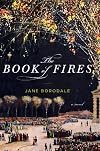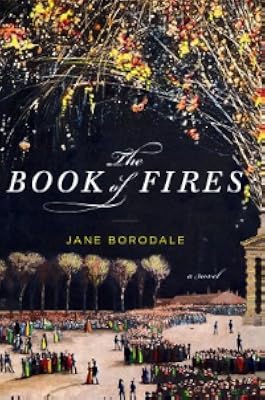
The Book of Fires
by Jane Borodale
On This Page
Description
The year is 1752, and 17-year-old Agnes Trussel arrives in London pregnant with an unwanted child. Lost and frightened, she lands work as an apprentice to a fireworks maker. As she learns the trade, she joins in his quest to make the most spectacular fireworks the world has ever seen.Tags
Recommendations














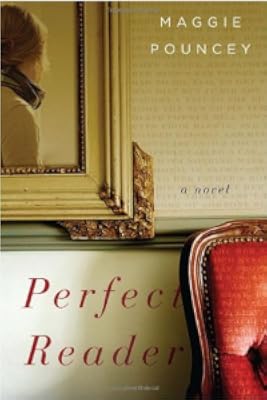
Member Recommendations
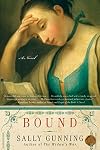
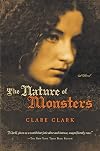
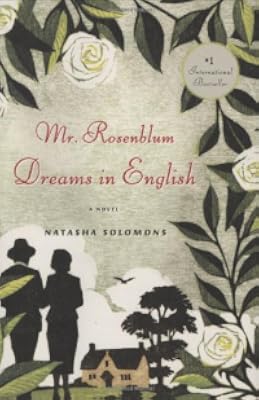
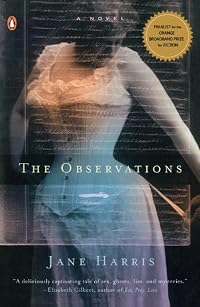
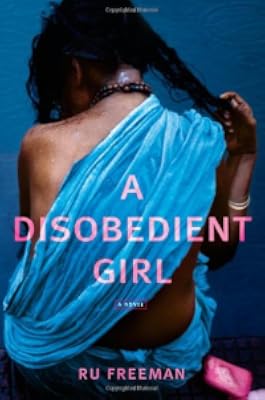
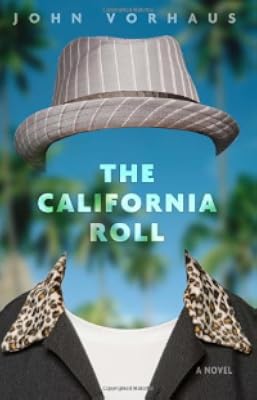
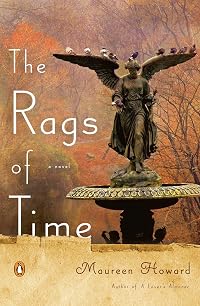
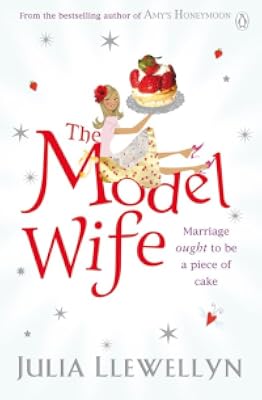
Litrvixen Both are about young pregnant women who run away to London.
Member Reviews
This is (sorry for the pun) a dreamy slow-burner of a novel. The prose is lyrical and intensely descriptive, but also provides a powerful picture of the novel's main character, Agnes Trussel, as she comes to terms with the crisis she experiences.
Agnes is a fascinating and clear-sighted woman, with a touching innocence about the people she encounters. Her quiet strength of mind is also a driving factor of her story. Not a great deal happens, but the key events which do take place are absolutely crucial and a turning point for Agnes' life. The historical settings are keenly felt and, indeed, London becomes a character in its own right within the book.
I very much enjoyed the relationship of pupil and teacher (and, later and subtly, more) show more between Agnes and the firework-maker, Blacklock, who takes her in and teaches her his trade. Perhaps the various methods of creating fireworks might be - for me - rather too much depicted in the story and I didn't need to know that level of information, but Agnes remains strong enough to carry me through the occasional plot weakness.
The final chapters are very powerful indeed, and I appreciated the open-ended and ultimately hopeful conclusion. A novel to savour. show less
Agnes is a fascinating and clear-sighted woman, with a touching innocence about the people she encounters. Her quiet strength of mind is also a driving factor of her story. Not a great deal happens, but the key events which do take place are absolutely crucial and a turning point for Agnes' life. The historical settings are keenly felt and, indeed, London becomes a character in its own right within the book.
I very much enjoyed the relationship of pupil and teacher (and, later and subtly, more) show more between Agnes and the firework-maker, Blacklock, who takes her in and teaches her his trade. Perhaps the various methods of creating fireworks might be - for me - rather too much depicted in the story and I didn't need to know that level of information, but Agnes remains strong enough to carry me through the occasional plot weakness.
The final chapters are very powerful indeed, and I appreciated the open-ended and ultimately hopeful conclusion. A novel to savour. show less
Choose to read this book and send it out to the winner of my 1000-books-registered RABCK.
When I bought this book, I was intrigued by the title and the blurp on the back cover.
It sat on my to-read shelf for quite some time, because there was alsways something else to read. Now I finally got to read it, I wonder, why I didn't pick it up before.
I enjoyed this book a lot, like I enjoyed "Girl with a Pearl Earring". Both books give insight in how it was to live in the 18th century, from the point of view from an ordinary person, more specific, a young woman.
The story itself got me captured, the despair of Agnes Trussel, how she flees home to try her luck / start all over again in London, not knowing a soul. She is so green, she doesn't show more recognise the offer a fellow passenger, Lettice Talbot, makes her to go to a house where she'll find a place to live and work.
I must admit, that I was relieved when she got lost on the way there.... So much for 'it's only a book'.
What I liked most of all is, that the book is not a proper love story. There is some sparks of something between Agnes and John Blacklock, the man she comes to work for, but not more than that. Since she's desperate, she tries to find a man to marry her, before it gets out she's pregnant. The way that part of the story is solved, was a big surprise to me. I didn't see it coming. Well written :-)
The stories that are told after that form a sort of explanation of how things got to end like this. But to me it didn't feel contructed at all. It seems logical seen in the time frame, considering the behaviour of the main characters.
Since I do not have much knowledge of the (grammar of the) English that was spoken then, I decided that it was either the way people spoke then "I says" etc., it was the local dialect, or it is a sign of how the poor people spoke. That was a bit disturbing from time to time.
This novel gave me what I like most in a book: a good story, information about times long gone, 'just' a good feeling when reading and after finishing the book.
Makes me curious to read another book by this author. show less
When I bought this book, I was intrigued by the title and the blurp on the back cover.
It sat on my to-read shelf for quite some time, because there was alsways something else to read. Now I finally got to read it, I wonder, why I didn't pick it up before.
I enjoyed this book a lot, like I enjoyed "Girl with a Pearl Earring". Both books give insight in how it was to live in the 18th century, from the point of view from an ordinary person, more specific, a young woman.
The story itself got me captured, the despair of Agnes Trussel, how she flees home to try her luck / start all over again in London, not knowing a soul. She is so green, she doesn't show more recognise the offer a fellow passenger, Lettice Talbot, makes her to go to a house where she'll find a place to live and work.
I must admit, that I was relieved when she got lost on the way there.... So much for 'it's only a book'.
What I liked most of all is, that the book is not a proper love story. There is some sparks of something between Agnes and John Blacklock, the man she comes to work for, but not more than that. Since she's desperate, she tries to find a man to marry her, before it gets out she's pregnant. The way that part of the story is solved, was a big surprise to me. I didn't see it coming. Well written :-)
The stories that are told after that form a sort of explanation of how things got to end like this. But to me it didn't feel contructed at all. It seems logical seen in the time frame, considering the behaviour of the main characters.
Since I do not have much knowledge of the (grammar of the) English that was spoken then, I decided that it was either the way people spoke then "I says" etc., it was the local dialect, or it is a sign of how the poor people spoke. That was a bit disturbing from time to time.
This novel gave me what I like most in a book: a good story, information about times long gone, 'just' a good feeling when reading and after finishing the book.
Makes me curious to read another book by this author. show less
A really excellent read!
The characters and settings are evocatively described, with even the 'minor' characters having depth: there are no 'good' or 'bad' people in this story; all have subtlety and convincing motivations.
I was surprised to discover how historically late the development of 'coloured fire' was; I'd rather expected it to be something that the alchemists would have discovered centuries earlier. But that's one of the charms of this book: it's history as well as story, and both are very well handled.
I'm eagerly awaiting Borodale's second book!
The characters and settings are evocatively described, with even the 'minor' characters having depth: there are no 'good' or 'bad' people in this story; all have subtlety and convincing motivations.
I was surprised to discover how historically late the development of 'coloured fire' was; I'd rather expected it to be something that the alchemists would have discovered centuries earlier. But that's one of the charms of this book: it's history as well as story, and both are very well handled.
I'm eagerly awaiting Borodale's second book!
It’s rare for me to read without eating sunflower seeds in the shell at the same time. I can only eat so many before my lips begin to wither from the salt, and in this way, I limit the amount of time I spend reading. Once I’ve had my fill of seeds, I invariably set the book aside.
Not so with The Book of Fires. I can’t remember the last time an author held me so enthralled that I continued on long after the seeds were gone. I began the book on Saturday, picked it back up on Sunday and found myself ignoring a rather pressing list of chores and obligations just to finish it.
I tend to keep my reading light, so I generally stick to genre fiction. Literary fiction often hits too close to home for me; I do not like to cry, but am easily show more susceptible. And there is often a surplus of description to be found in serious works. Description can make or break a book for me. I prefer to find it sprinkled in among the action so my imagination can fill in the blanks. If it gets too heavy-handed, it becomes tedious and I begin flipping past entire sections. Jane Borodale’s debut novel is brimming with detail that I would find annoying in a lesser work. It takes an uncommonly well-written book for the minutia to fascinate me.
This story begins in England in 1752, after Parliamentary Enclosure has begun fencing off property and raising rent. In the country, the poor are forced to work harder for less. The narrative is told first-person-present by seventeen-year-old Agnes Trussel, a country girl with a large family. Immediately Agnes plunges into meticulous detail of place; sights, sounds, smells. Her family is forced to slaughter the pig early this year. It is a family event that most everyone participates in; a grim, specific series of tasks. Throughout the rest of the novel, small incidents cause Agnes to recall the particulars of the slaughter, a theme depicting how commonplace the gruesome was in those times.
Agnes is unmarried and hiding an early pregnancy that came about from what would be considered rape in this day and age. To prevent her family suffering from her shame, she runs away to London with gold coins she stole from a dead neighbor. The theft haunts her both as a morally reprehensible thing to have done, and as fear that she will be caught and hung.
Lost in London, she has a great stroke of luck securing employment as assistant to Mr. John Blacklock, pyrotechnist. A widower, he is aloof, gruff, and consumed by his work. Agnes, who was taught to read but cannot write, is eager to learn. The reader learns along with her about fireworks in the eighteenth century, an indulgence of the rich; how they were made; the alchemy and danger. She works hard, impressing Blacklock with her enthusiasm and understanding of his obsession. She has no illusions about her future there—when the pregnancy is discovered she expects to be turned out into the street.
This is not a romance novel. Agnes is young and naïve, but has no romantic flights of fancy. Her example of love is a mother harried by country life and worn down from having babies and a mercurial father who drinks. As the fetus grows within her, Agnes is consumed by fear. There is no one she can turn to. Within the Blacklock household, she knows she’ll be able to conceal her pregnancy from the blowsy, death-obsessed housekeeper and the dim-witted but watchful maid for only so long. Blacklock is chronically ill and nursing the agony of losing his wife in childbirth. Agnes’ one acquaintance is a young woman of questionable means who directs her to an abortionist. Her one chance for salvation is the flirtatious Cornelius Soul, a gunpowder distributor with loose business ethics. Agnes is faced with choices, none of them good.
If I haven’t made myself clear, let me reiterate: this is an exceptional novel. There is nothing I found lacking, not in characterization or motivation or even in the description which immerses the reader in Agnes’ world. The ending is ultimately satisfying and strangely plausible despite the way the narrative spirals down, down into a despair that seems insurmountable.
HIGHLY recommended.
(Review originally posted to Booksquawk) show less
Not so with The Book of Fires. I can’t remember the last time an author held me so enthralled that I continued on long after the seeds were gone. I began the book on Saturday, picked it back up on Sunday and found myself ignoring a rather pressing list of chores and obligations just to finish it.
I tend to keep my reading light, so I generally stick to genre fiction. Literary fiction often hits too close to home for me; I do not like to cry, but am easily show more susceptible. And there is often a surplus of description to be found in serious works. Description can make or break a book for me. I prefer to find it sprinkled in among the action so my imagination can fill in the blanks. If it gets too heavy-handed, it becomes tedious and I begin flipping past entire sections. Jane Borodale’s debut novel is brimming with detail that I would find annoying in a lesser work. It takes an uncommonly well-written book for the minutia to fascinate me.
This story begins in England in 1752, after Parliamentary Enclosure has begun fencing off property and raising rent. In the country, the poor are forced to work harder for less. The narrative is told first-person-present by seventeen-year-old Agnes Trussel, a country girl with a large family. Immediately Agnes plunges into meticulous detail of place; sights, sounds, smells. Her family is forced to slaughter the pig early this year. It is a family event that most everyone participates in; a grim, specific series of tasks. Throughout the rest of the novel, small incidents cause Agnes to recall the particulars of the slaughter, a theme depicting how commonplace the gruesome was in those times.
Agnes is unmarried and hiding an early pregnancy that came about from what would be considered rape in this day and age. To prevent her family suffering from her shame, she runs away to London with gold coins she stole from a dead neighbor. The theft haunts her both as a morally reprehensible thing to have done, and as fear that she will be caught and hung.
Lost in London, she has a great stroke of luck securing employment as assistant to Mr. John Blacklock, pyrotechnist. A widower, he is aloof, gruff, and consumed by his work. Agnes, who was taught to read but cannot write, is eager to learn. The reader learns along with her about fireworks in the eighteenth century, an indulgence of the rich; how they were made; the alchemy and danger. She works hard, impressing Blacklock with her enthusiasm and understanding of his obsession. She has no illusions about her future there—when the pregnancy is discovered she expects to be turned out into the street.
This is not a romance novel. Agnes is young and naïve, but has no romantic flights of fancy. Her example of love is a mother harried by country life and worn down from having babies and a mercurial father who drinks. As the fetus grows within her, Agnes is consumed by fear. There is no one she can turn to. Within the Blacklock household, she knows she’ll be able to conceal her pregnancy from the blowsy, death-obsessed housekeeper and the dim-witted but watchful maid for only so long. Blacklock is chronically ill and nursing the agony of losing his wife in childbirth. Agnes’ one acquaintance is a young woman of questionable means who directs her to an abortionist. Her one chance for salvation is the flirtatious Cornelius Soul, a gunpowder distributor with loose business ethics. Agnes is faced with choices, none of them good.
If I haven’t made myself clear, let me reiterate: this is an exceptional novel. There is nothing I found lacking, not in characterization or motivation or even in the description which immerses the reader in Agnes’ world. The ending is ultimately satisfying and strangely plausible despite the way the narrative spirals down, down into a despair that seems insurmountable.
HIGHLY recommended.
(Review originally posted to Booksquawk) show less
When I first read the blurb on the back comparing this book to Tracy Chevalier's "Girl With A Pearl Earring", my first reaction was, "Yeah right".
My, was I wrong!
But I can see the resemblance. Both "Girl With A Pearl Earring" and "The Book Of Fires" are not your average historical fiction novel. They both have strong heroines and intriguing male counterparts.
But there, the comparisons end. You have a great deal more sympathy for Agnes, as a penniless impregnated girl who is fleeing her rapist when she arrives in London in 1753.
In a typical historical fiction novel, nearly the same two things always happen to a pregnant heroine.
One: She miscarries
or Two: she is "rescued" and married to a man in the nick of time.
Well, lets just say one show more of these things happens, but in an extraordinarily fresh way that makes for a wonderfully different and fully realized story.
I'll reread this book over and over again! show less
My, was I wrong!
But I can see the resemblance. Both "Girl With A Pearl Earring" and "The Book Of Fires" are not your average historical fiction novel. They both have strong heroines and intriguing male counterparts.
But there, the comparisons end. You have a great deal more sympathy for Agnes, as a penniless impregnated girl who is fleeing her rapist when she arrives in London in 1753.
In a typical historical fiction novel, nearly the same two things always happen to a pregnant heroine.
One: She miscarries
or Two: she is "rescued" and married to a man in the nick of time.
Well, lets just say one show more of these things happens, but in an extraordinarily fresh way that makes for a wonderfully different and fully realized story.
I'll reread this book over and over again! show less
 This review was written for LibraryThing Early Reviewers.
I have just finished The Book of Fires and it is a 5 star read for me!! I don't generally do reviews, but I have to give this one a go since I liked it so well. **I also have to note that although I have not usually been a huge fan of historical fiction, this book may have changed my mindset.
The Book of Fires by Jane Borodale is set in 18th century England. The narrator -- and unlikely heroine -- is Agnes, a country dwelling girl with an incredibly tough life. Early in the book she is raped (my word, not the author's) and becomes pregnant. In this century, her fate is unimaginable so she runs away from home after stealing money from a dead neighbor. Sounds odd? It was.... but an interesting sort of odd. In London, she walks until she show more can no longer bear to move and knocks on a random door. She begs to do any type of work and the home / business owner (Mr. Blacklock) agrees to a temporary arrangement. Mr. Blacklock is a pyrotechnician -- a maker of fireworks. Agnes becomes his apprentice and shows remarkable talent for the craft.
The characters in the tale are real; some likeable, some not but Borodale gives each character a great voice and personality. I fell in love with Agnes, faults and all. I also fell in love with Borodale's writing style. Here, Agnes describes the first time she sees fireworks (keep in mind this is in the days before the science of colored fireworks was discovered)...
"It is so close that I can hear the hiss of the quick match rush to the lifting charge of each flight of rockets, before the pound and roar of the ignition, and then the burst, and the sky is riddled with twists of fire, feathers of fire, billhooks of light, snakes of fire and smoke. The breaks are a spill of prickling white light across my eye, crackling the glaze of the sky into bitter shards. I blink. I cannot breathe for whiteness everywhere. I am blinded by it. The sky is burnt with purple shadows when the whiteness is done, when there is a pause for darkness, though the smoke swirls about, and then more gerbes start up, pulsing sheaves of orange sparks, with stars shooting out like grains of polished light that lift, drift, stop and then fall slowly, smooth as glass, winking out into the darkness. The world is either fire, or water, or darkness, nothing else. An unformed sob gathers in my chest."
I was hoping for a happy ending.... I'm not giving any spoilers but the book doesn't end as you might imagine. However, the ending was nice -- although it does not meet my definition of "happily ever after", I would categorize the ending as leaving me 'comfortably contented.' show less
The Book of Fires by Jane Borodale is set in 18th century England. The narrator -- and unlikely heroine -- is Agnes, a country dwelling girl with an incredibly tough life. Early in the book she is raped (my word, not the author's) and becomes pregnant. In this century, her fate is unimaginable so she runs away from home after stealing money from a dead neighbor. Sounds odd? It was.... but an interesting sort of odd. In London, she walks until she show more can no longer bear to move and knocks on a random door. She begs to do any type of work and the home / business owner (Mr. Blacklock) agrees to a temporary arrangement. Mr. Blacklock is a pyrotechnician -- a maker of fireworks. Agnes becomes his apprentice and shows remarkable talent for the craft.
The characters in the tale are real; some likeable, some not but Borodale gives each character a great voice and personality. I fell in love with Agnes, faults and all. I also fell in love with Borodale's writing style. Here, Agnes describes the first time she sees fireworks (keep in mind this is in the days before the science of colored fireworks was discovered)...
"It is so close that I can hear the hiss of the quick match rush to the lifting charge of each flight of rockets, before the pound and roar of the ignition, and then the burst, and the sky is riddled with twists of fire, feathers of fire, billhooks of light, snakes of fire and smoke. The breaks are a spill of prickling white light across my eye, crackling the glaze of the sky into bitter shards. I blink. I cannot breathe for whiteness everywhere. I am blinded by it. The sky is burnt with purple shadows when the whiteness is done, when there is a pause for darkness, though the smoke swirls about, and then more gerbes start up, pulsing sheaves of orange sparks, with stars shooting out like grains of polished light that lift, drift, stop and then fall slowly, smooth as glass, winking out into the darkness. The world is either fire, or water, or darkness, nothing else. An unformed sob gathers in my chest."
I was hoping for a happy ending.... I'm not giving any spoilers but the book doesn't end as you might imagine. However, the ending was nice -- although it does not meet my definition of "happily ever after", I would categorize the ending as leaving me 'comfortably contented.' show less
The Book of Fires takes us back to 18th century England. We are introduced to Agnes Trussel who is a 17-year-old living a simple country life. Agnes is raped and then finds herself pregnant. She runs away because she knows she will be forced to marry her rapist and she doesn’t want to shame her family. Agnes travels to London and is introduced to elements of it’s darker side. She is fortunate to find a respectable job making fireworks for Mr. Blacklock. What will happen once he finds out about her pregnancy? Will she wind up out on the streets and become a victim of London’s dark side? In a strange twist of fate her boss dies and a secret that will change her life is revealed. A fascinating book with a strong intelligent woman show more character and a happy ending.
I thought that this was well written and easy to follow. I liked the character Agnes. She is such an innocent, naive, victim of circumstances. While this book is not a major page turner, it has a really good story line. The ending is the best part of the book. It allows the reader to conclude why Mr. Blacklock did what he did. I give this book a 4 out of 5 stars. show less
I thought that this was well written and easy to follow. I liked the character Agnes. She is such an innocent, naive, victim of circumstances. While this book is not a major page turner, it has a really good story line. The ending is the best part of the book. It allows the reader to conclude why Mr. Blacklock did what he did. I give this book a 4 out of 5 stars. show less
Members
- Recently Added By
Lists

Best Books Set in London
157 works; 42 members

Authors from England
147 works; 4 members
Author Information
4 Works 543 Members
Awards and Honors
Awards
Distinctions
Common Knowledge
- Canonical title
- The Book of Fires
- Original publication date
- 2010-01-21
- People/Characters
- Agnes Trussel; John Blacklock; Cornelius Soul; Lettice Talbot; John Glincy; Mary Spurren (show all 7); Joe Thomazin
- Important places
- London, England, UK; Sussex, England, UK
- Epigraph
- With thought spared for all those condemned to death by hanging at Tyburn
- Dedication
- For Sean, Orlando and Louis
- First words
- There is a regular rasp of a blade on a stone as he sharpens the knives.
- Last words
- (Click to show. Warning: May contain spoilers.)And how new she is, I think; so new that I can see her heartbeat pulsing in her head.
- Blurbers
- Smith, Anne Easter; Groff, Lauren
Classifications
Statistics
- Members
- 514
- Popularity
- 58,611
- Reviews
- 42
- Rating
- (3.78)
- Languages
- 5 — Dutch, English, German, Italian, Norwegian (Bokmål)
- Media
- Paper, Ebook
- ISBNs
- 18
- ASINs
- 7