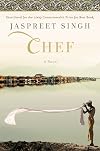
Chef
by Jaspreet Singh
On This Page
Description
Kirpal Singh is travelling on the slow train to Kashmir. As India passes by the window in a stream of tiny lights, glistening fields and huddled, noisy towns, he reflects on his destination, which is also his past- a military camp to which he has not returned for fourteen years ... Kirpal, Kip to his friends, is timorous and barely twenty when he arrives for the first time at General Kumar's camp, nestled in the shadow of the mighty Siachen Glacier that claimed his father's life. He is show more placed under the supervision of Chef Kishen, a fiery, anarchic mentor with long earlobes and a caustic tongue, who guides Kip towards the heady spheres of food and women. 'The smell of a woman is a thousand times better than cooking the most sumptuous dinner, kid', he muses, over an evening beer. Kip is embarrassed - he has never slept with a woman, though a loose-limbed nurse in the local hospital has caught his eye. In Srinagar, Kashmir, a contradictory place of erratic violence, extremes of temperature and high-altitude privilege, Kip learns to prepare indulgent Kashmiri dishes such as Mughlai mutton and slow-cooked Nahari, as well as delicacies from Florence, Madrid, Athens and tokyo. Months pass and, though he is Sikh, Kip feels secure in his allegiance to India, the right side of this interminable conflict. The, one muggy day, a Pakistani 'terrorist' with long flowing hair is swept up on the banks of the river, and changes everything. Mesmeric, mournful and intensely lyrical, Chef is a brave and compassionate debut about hope, love and memory, set against the devastatingly beautiful, war-scarred backdrop of occupied Kashmir. show lessTags
Recommendations









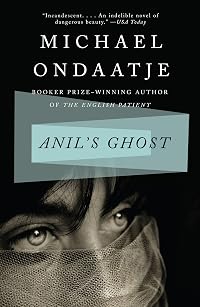








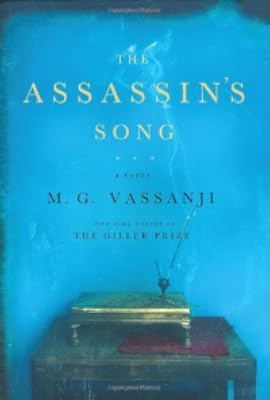



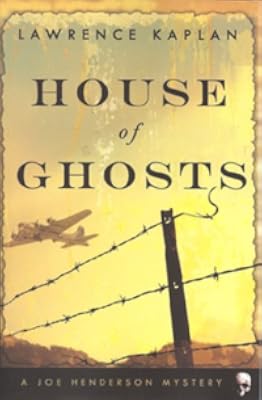







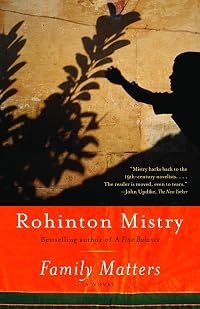















Member Recommendations

Member Reviews
More often than not, for me, if the first page grabs my attention - it is going to be a good read. This novel moved me from the start. And the more I read it the more it moved me. Written from the first person, with the author skillfully placing himself in the protagonist's shoes, the story, going back and forth in time, portrays the inner mind workings of a young Sikh coming of age on the background of the harsh reality of Kashmiri conflict. The idea how vulnerable we all are comes through with touching poignancy. Infused with unforgettable allegory of cooking terminology (for the young man is a General's private chef), interlaced with lovely and yet abused Kashmiri landscape ("Kashmir was a beautiful place and we have made a bloody show more mess of it"), the story flows with pain (and yet reads effortlessly) through the mind of a man returning to Kashmir after many years of absence, with questions to be answered and a heavy load of doom due to a merciless diagnosis he has just received.... "It is a waste of time to be prejudiced. A waste of breath". show less
 This review was written for LibraryThing Early Reviewers.
"There are two kinds of chefs in this world. Those who disturb the universe with their cooking, and those who do not dare to do so. "
This book is told in two interwoven threads about 15 years apart. Kirpal 'Kip' Singh joins the Indian army and is sent to Srinigar, Kashmir as an apprentice chef in the kitchen of the commanding general in the 1980s. Kip’s father, a military hero, has died in a plane crash over the nearby Siachen glacier. Kip forms a close mentor-apprentice friendship with his immediate boss Chef Kishen. Kip has been given this posting as a fast track to promotion to officer rank like his father but instead, he finds his true calling within the kitchen. Chef Kishen is court-martialed and posted to the Siachen glacier as show more punishment whilst Kip takes over his kitchen duties but is becoming disillusioned with the Army.
Some 15 later years Kip is no longer serving in the Army and has recently diagnosed with a terminal brain tumour. He finds himself invited to return to Srinigar to oversee the preparations of the wedding feast for the daughter of his former commanding officer who is now Governor of the region.
Both threads are told against a backdrop of the on-going terrorist attacks by the indigent Muslim Kashmiris as well as fighting between Indian and Pakistani forces based either side of the nearby border. Kip is a Sikh and as such despite his father's reputation,is an outsider of the Hindu dominated Indian society. He is spoken at, usually by way of comparison to him and his dead father, rather than talked to.
Jaspreet Singh grew up in Kashmir thus giving his novel a ring of authenticity. In particular he does a fine job recreating the conflicts in an area of the world which may never find peace. The author keeps his plots relatively simple leaving the reader know where the author stands but also allowing them to draw some important conclusions on their own.
This novel has a broad reach and the author does a remarkable job of holding together his plots. His images of the colour and certain extent smell of Indian society he meets is very vivid. However, when I picked up the book I was hoping to learn a little more about an area and conflict that I am fairly ignorant of and on level it didn't quite fit the bill. That said given that this is the author's first novel it is a remarkable achievement. show less
This book is told in two interwoven threads about 15 years apart. Kirpal 'Kip' Singh joins the Indian army and is sent to Srinigar, Kashmir as an apprentice chef in the kitchen of the commanding general in the 1980s. Kip’s father, a military hero, has died in a plane crash over the nearby Siachen glacier. Kip forms a close mentor-apprentice friendship with his immediate boss Chef Kishen. Kip has been given this posting as a fast track to promotion to officer rank like his father but instead, he finds his true calling within the kitchen. Chef Kishen is court-martialed and posted to the Siachen glacier as show more punishment whilst Kip takes over his kitchen duties but is becoming disillusioned with the Army.
Some 15 later years Kip is no longer serving in the Army and has recently diagnosed with a terminal brain tumour. He finds himself invited to return to Srinigar to oversee the preparations of the wedding feast for the daughter of his former commanding officer who is now Governor of the region.
Both threads are told against a backdrop of the on-going terrorist attacks by the indigent Muslim Kashmiris as well as fighting between Indian and Pakistani forces based either side of the nearby border. Kip is a Sikh and as such despite his father's reputation,is an outsider of the Hindu dominated Indian society. He is spoken at, usually by way of comparison to him and his dead father, rather than talked to.
Jaspreet Singh grew up in Kashmir thus giving his novel a ring of authenticity. In particular he does a fine job recreating the conflicts in an area of the world which may never find peace. The author keeps his plots relatively simple leaving the reader know where the author stands but also allowing them to draw some important conclusions on their own.
This novel has a broad reach and the author does a remarkable job of holding together his plots. His images of the colour and certain extent smell of Indian society he meets is very vivid. However, when I picked up the book I was hoping to learn a little more about an area and conflict that I am fairly ignorant of and on level it didn't quite fit the bill. That said given that this is the author's first novel it is a remarkable achievement. show less
It is difficult for me to characterize why I came away with a positive impression of this book. The plot is not memorable, nor are the characters ones to which I am naturally drawn. The time sequence is challenging - it is not linear or always easy to follow - which occasionally had me initially wondering when particular events were occurring. Nothing is tied up with neat little bows. There are many loose ends, many unanswered questions, many aspects which allow interpretation and supposition. Perhaps it was the language used and images conveyed. By the end I was won over - again, not by plot or characters, but by the feelings evoked, the sensations experienced as I read. There is a sadness to this book that felt real - a sadness for show more Kashmir, for those at war and experiencing war, for those with desires and dreams that do not match their reality. Fitting that a book about a chef may be an acquired taste, but I believe it is. Not for everyone, but I, for one, am glad to have invested the time in reading it. show less
This review was written for LibraryThing Early Reviewers.Well written tale about the trouble between Pakistan and India in the province of Kashmir as seen by a chef who cooks for a general in the indian army. I didn't know much about that part of the world and now I know a bit more, thanks to this moving story....
[Chef] is an intriguing and deceptive little story told with that very subtle rhythmic language so often found in stories by Indian writers. The book takes us back with Kip as he reflects on events that, although they are long past, have left him scarred and scared. The writing is elliptic and creates a certain distance between the reader and the characters, although I felt that I got to know Kip quite well.
On the surface, it seems that since Kip is a cook, the book is mostly about cooking and how it relates to life. That, I think, is a misreading of the text.
There is a quote at the beginning of the book: "They make a desolation and call it peace." And that's what is at the heart of [Chef]: the destruction and misery left behind by show more war. "Did they all die for a big nothing?" is asked repeatedly by different characters. The reader is left believing that maybe, indeed, all wars are fought for a big nothing. Singh gives the reader a lot to think about.
Edited to add: The major drawback to this book is the extremely obscure plotline. One is hardput to follow the line of the action, or to relate one character's arc to another's. Still, a good first effort.
Recommended. show less
On the surface, it seems that since Kip is a cook, the book is mostly about cooking and how it relates to life. That, I think, is a misreading of the text.
There is a quote at the beginning of the book: "They make a desolation and call it peace." And that's what is at the heart of [Chef]: the destruction and misery left behind by show more war. "Did they all die for a big nothing?" is asked repeatedly by different characters. The reader is left believing that maybe, indeed, all wars are fought for a big nothing. Singh gives the reader a lot to think about.
Edited to add: The major drawback to this book is the extremely obscure plotline. One is hardput to follow the line of the action, or to relate one character's arc to another's. Still, a good first effort.
Recommended. show less
This review was written for LibraryThing Early Reviewers.Kashmir is one of those place names that carries contradictory meanings. It symbolizes decades of conflict between India and Pakistan and is a region of seemingly unending strife. But, the famed Vale of Kashmir and the Himalayas are also symbols and their beauty has been described by travelers over many centuries.
This is Kirpal’s story, of his apprenticeship when he was a teenager, to Chef, the cook for an Indian military official in Srinigar, capital of Kashmir. Kirpal, called “Kip”, learns more than cooking in Chef’s kitchen. This is his introduction to a larger life and to Kashmir itself. Kashmir is in truth an occupied country and the shellfire between Indian and Pakistani forces on the nearby Siachen Glacier is background show more to the activities of daily life. Hindus and Muslims live side by side, but the Hindus are the occupiers and the Muslims the occupied.
Though from Delhi, Kip has a connection to this landscape through his father, a military officer who died while serving in Kashmir. During his apprenticeship he comes in contact with a Kashmiri woman, Irem, who is suspected of being a terrorist. He is drawn to her beauty, her reserve, her story, but he is unable to do more than visit her in the hospital and later in prison.
The story opens though, when Kip is middle-aged and returning to Kashmir as a favor to the military officer who originally employed him. With lyrical language, Singh lets Kip’s story unfold, almost as if told to a fellow passenger on one of the long train rides that figure in the story.
With the recent popularity of Indian authors in recent years, it is refreshing to read this spare, well-written first novel. Jaspreet Singh writes with impressive confidence about Kip and about this fascinating landscape. show less
This is Kirpal’s story, of his apprenticeship when he was a teenager, to Chef, the cook for an Indian military official in Srinigar, capital of Kashmir. Kirpal, called “Kip”, learns more than cooking in Chef’s kitchen. This is his introduction to a larger life and to Kashmir itself. Kashmir is in truth an occupied country and the shellfire between Indian and Pakistani forces on the nearby Siachen Glacier is background show more to the activities of daily life. Hindus and Muslims live side by side, but the Hindus are the occupiers and the Muslims the occupied.
Though from Delhi, Kip has a connection to this landscape through his father, a military officer who died while serving in Kashmir. During his apprenticeship he comes in contact with a Kashmiri woman, Irem, who is suspected of being a terrorist. He is drawn to her beauty, her reserve, her story, but he is unable to do more than visit her in the hospital and later in prison.
The story opens though, when Kip is middle-aged and returning to Kashmir as a favor to the military officer who originally employed him. With lyrical language, Singh lets Kip’s story unfold, almost as if told to a fellow passenger on one of the long train rides that figure in the story.
With the recent popularity of Indian authors in recent years, it is refreshing to read this spare, well-written first novel. Jaspreet Singh writes with impressive confidence about Kip and about this fascinating landscape. show less
This review was written for LibraryThing Early Reviewers.Chef is, among other things, a reflection on memory, death, and regret. The narrator is Kirpal Singh (Kip), a former cook for the Indian army. In his youth, Kip was stationed in Kashmir, near the Siachen Glacier (the highest battlefield in the Indian-Pakistani conflict). Fourteen years later, Kip is traveling back to Kashmir for one last time, to cook for the wedding of the General’s daughter. On the long train from Delhi, Kip recalls his previous time in Kashmir. This is a meditative book, not always strictly linear: as Kip says, “When I think about my past, time begins flowing in a different way…” Kip's mind weaves between past and present, memories intermingling with impressions of the passing scenery and his fellow show more passengers, and reflections on his own state of mind.
Death hangs over the novel: Kip’s father’s death in battle, years before; the suicides of friends; the many seemingly senseless deaths in the conflict over Kashmir; and Kip’s own brain tumor, just diagnosed. There is a palpable sense of regret and sadness throughout, both for Kip and for the other characters. For Kip it seems to be an unspecific but overwhelming remorse about things not done, things he was unable to change, opportunities missed. Yet however much the novel puts us inside Kip’s head, he still reveals relatively little of himself. Many of his memories focus on others rather than himself. He seems, throughout his life, to have kept himself at a distance, to have lived vicariously through others, always on the sidelines, with others more important to him than he ultimately was to them. We rarely know what exactly motivates his actions or inactions. What is it that captivates him about Irem or the other women to whom he is drawn? Why does he join the army, or later quit? We can guess, but he never really tells us. The reader has the sense of a man trying to come to terms with his life, but whose thoughts avoid dwelling directly on the most painful and decisive moments.
It is, at the same time, a very rich and sensory novel. Kip is constantly attentive to the texture of the world around him: the smells and tastes of food, the changing seasons, the sights of the city and the surrounding landscape. Perhaps then, the novel could also be read as a reflection on the small delights of life, the ways people make meaning in the face of meaninglessness, in the face of death. In the end, though, despite the lines of poetry, the snowflakes, the yellow plane leaves, and the rogan josh, it is hard not to be overwhelmed more by the unforgiving cold of the glacier, by the senselessness of violence and the inability to stop it. The impressionistic, non-linear narration conveys well the messiness of the human experience of memory and regret: how the mind struggles to make sense of what it can and can’t control, and to come to terms with loss and failure. show less
Death hangs over the novel: Kip’s father’s death in battle, years before; the suicides of friends; the many seemingly senseless deaths in the conflict over Kashmir; and Kip’s own brain tumor, just diagnosed. There is a palpable sense of regret and sadness throughout, both for Kip and for the other characters. For Kip it seems to be an unspecific but overwhelming remorse about things not done, things he was unable to change, opportunities missed. Yet however much the novel puts us inside Kip’s head, he still reveals relatively little of himself. Many of his memories focus on others rather than himself. He seems, throughout his life, to have kept himself at a distance, to have lived vicariously through others, always on the sidelines, with others more important to him than he ultimately was to them. We rarely know what exactly motivates his actions or inactions. What is it that captivates him about Irem or the other women to whom he is drawn? Why does he join the army, or later quit? We can guess, but he never really tells us. The reader has the sense of a man trying to come to terms with his life, but whose thoughts avoid dwelling directly on the most painful and decisive moments.
It is, at the same time, a very rich and sensory novel. Kip is constantly attentive to the texture of the world around him: the smells and tastes of food, the changing seasons, the sights of the city and the surrounding landscape. Perhaps then, the novel could also be read as a reflection on the small delights of life, the ways people make meaning in the face of meaninglessness, in the face of death. In the end, though, despite the lines of poetry, the snowflakes, the yellow plane leaves, and the rogan josh, it is hard not to be overwhelmed more by the unforgiving cold of the glacier, by the senselessness of violence and the inability to stop it. The impressionistic, non-linear narration conveys well the messiness of the human experience of memory and regret: how the mind struggles to make sense of what it can and can’t control, and to come to terms with loss and failure. show less
This review was written for LibraryThing Early Reviewers.Members
- Recently Added By
Published Reviews
ThingScore 75
To write about Kashmir is to enter contested territory. Calgary-based Jaspreet Singh (author of the short story collection Seventeen Tomatoes) sets his first novel, Chef, there in 2006, amongst an Indian general’s staff as the army faces its enemies on both sides of the mountainous border. After a 14-year absence, chef Kirpal Singh receives a summons from the General to cook at his show more daughter’s wedding to a Pakistani. Newly diagnosed with cancer, Kirpal decides to return from New Delhi to Kashmir, hoping to face his past.
Singh intersperses poetry, journal entries, Kashmiri script, and, yes, recipes to create a melancholic world where death is forever hovering. The writing is spare, with a tendency to veer toward the fantastic. Singh writes like a poet but has difficulty maintaining such an ambitious style. Glimpses of India from the train read like a checklist, and food similes – an easy cliché when writing about India – get pushed too far: “Her face resembles a plate of samosas left overnight in rain”; “peaks flash like the inside of a tandoori”; etc. show less
Singh intersperses poetry, journal entries, Kashmiri script, and, yes, recipes to create a melancholic world where death is forever hovering. The writing is spare, with a tendency to veer toward the fantastic. Singh writes like a poet but has difficulty maintaining such an ambitious style. Glimpses of India from the train read like a checklist, and food similes – an easy cliché when writing about India – get pushed too far: “Her face resembles a plate of samosas left overnight in rain”; “peaks flash like the inside of a tandoori”; etc. show less
added by kidzdoc
The disputed region of Kashmir forms the elegiac backdrop to an episodic, image-rich work. Kirpal "Kip" Singh is a terminally ill chef summoned by his former employer, General Kumar, to cook one last feast for the wedding of his daughter. During the long train journey from Delhi to Srinigar, Kip recalls when, as a young, unassuming Sikh, he became trainee to eccentric Chef Kishen in the show more general's camp near the Siachen glacier, where Kip's soldier father had died years before. The chef becomes more than a mentor, and Kip's culinary awakening is a baptism of fire. When the chef is dismissed for a recipe gaffe, Kip takes over, but his subsequent involvement with a Muslim prisoner compromises his allegiance. The story is choppy and complex, the time sequences confusing, but there is much heady beauty and serious intent. show less
added by kidzdoc
Brutality and violence, the politics tearing asunder India and Pakistan, and between them Kashmir, seethe and fester in a novel of stark beauty. Unusual and slow-moving, Chef , longlisted for the 2010 International Impac Dublin Literary Award, is written with eerie grace and quiet courage. Late in the novel, the narrator recalls a conversation he had had on the bus with the woman sitting in show more the seat beside him: “For five and a half hours, almost half of the way, we were silent to each other, lost in our own worlds, and then suddenly we started talking . . . She was a Kashmiri Hindu . . . she said her situation was a bit like the exiles in the epic Mahabharata . I apologised for my limited knowledge of Hindu epics. I grew up in the Sikh tradition, I confessed. She studied my face carefully. So why, sardar-ji , have you cut your hair and removed your turban?” show less
added by kidzdoc
Lists

All Things India
95 works; 21 members

feasting on fiction
24 works; 5 members

Books whose title names an object usually found in the kitchen
171 works; 14 members

Asia
178 works; 7 members

Books Read in 2010
631 works; 10 members

A Smorgasbord of Culinary Fiction
221 works; 94 members
Author Information

14+ Works 409 Members
Awards and Honors
Common Knowledge
- Canonical title
- Chef
- Original publication date
- 2008
- People/Characters
- Kirpal Singh; Chef Kishen
- Important places
- Kashmir; India; Pakistan
- Epigraph
- They make a desolation and call it peace. Galgacus, 84 AD
The cold is eating into the center of my brain. Thomas Bernhard. - First words
- For a long time now I have stayed away from certain people.
- Last words
- (Click to show. Warning: May contain spoilers.)Then it began to snow.
- Blurbers
- Suri, Manil; Kurlansky, Mark
Classifications
Statistics
- Members
- 306
- Popularity
- 104,564
- Reviews
- 69
- Rating
- (3.35)
- Languages
- English, French, Spanish
- Media
- Paper, Audiobook, Ebook
- ISBNs
- 16
- ASINs
- 6