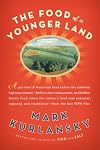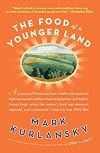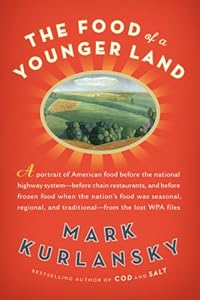
The Food of a Younger Land: A Portrait of American Food--Before the National Highway System, Before Chain Restaurants, and Before Frozen Food, When the Nation's Food Was Seasonal
by Mark Kurlansky, Works Progress Administration
The Food of a Younger Land
On This Page
Description
Using long-forgotten WPA files archived in the Library of Congress, bestselling author Mark Kurlansky paints a detailed picture of Depression Era Americans through the food that they ate and the local traditions and customs they observed when planning and preparing meals.Tags
Recommendations













Member Recommendations
Member Reviews
"A Portrait of American Food -before the national highway system, before chain restaurants, and before frozen food, when the nation's food was seasonal, regional, and traditional -- from the lost WPA Files.
During the Great Depression, President Roosevelt's Works Progress Administration (WPA) created the Federal Writer's Program (FWP) to provide work for unemployed authors. There were a number of projects that evolved, including a series of guidebooks for the different states. Late in the 30's, the "America Eats" project began. There were actually a series of projects in different sections of the country, which were intended to be combined in one huge report. WWII intervened, and the reports from individual writers were never collated or show more published.
Enter Mark Kurlansky, researcher extraordinaire. He has taken the long abandoned manuscripts, culled out the best and put them together in this delightful look at how our parents and grandparents ate.
The book is divided into the original five geographic sections envisioned by the FWP. Each section features representative essays, stories, recipes, anecdotes, reports of festivals and church suppers, along with photographs and drawings. I started this book as an audio, which while well done, did not lend itself to savoring all the information, so I borrowed a print edition from the local library. It is such a fun read, that it is now on my wishlist to purchase so that I can add it to my food collection. It is part history, part social memoir, and part cookbook. All of it interesting and enticing. Some of my favorites include
From the Northeast:
* the North Whitefield Maine Game Supper,
* the almost infinite discussion of the variations of clam chowder,
* the glorious reminiscences of the New York Automat (complete with 5 page glossary of slang and jargon for short order cooks in New York);
* the "Italian Feed" in Vermont;
From the South:
* recipes for possum, squirrel, rabbit, rattlesnake and chitterlings;
* a good recipe for crab imperial (an outstanding and scrumptious chesapeake bay dish well remembered from MY youth--it was THE dish for banquets, weddings, and any big celebration--no girl left home in Maryland without knowing how to make it).
* The introduction to Mississippi food written by Eudora Welty is one of her earliest works and representative of the kind of work the FWP engendered.
From the Middle West:
* recipes and stories about food favored by various Indian tribes such as buffalo tongue as a delicacy favored by the Sioux (who incidentally never used salt until they were introduced to it by white men in the early 1900's);
* the Lutefisk favored by the Scandanavians who settled in the Great Lakes region;
* recipes from the cooks serving the vast lumberjack camps in Michigan---
"At night they came into camp stamping with cold and grim with hunger. In the cookhouse the long tables were loaded with food; smoking platters of fresh mush, bowls of mashed potatoes, piles of pancakes and pitchers of corn syrup, kettles of rich brown beans, pans of prunes, dried peaches, rice puddings, rows of apple pies." pg. 269.
From the Far West
"The life of these people is not entirely one monotonous round of fried beans, baked beans, boiled beans, and just beans,varied only by an occasional jack rabbit or two...";
* there were numerous recipes and essays about salmon, smelts, clams, Montana Beaver Tail, and Washington Wildcat parties.
* This fascinating section also included a list of Colorado superstitions (pg. 296) of which my favorite is #12: " You will receive mail from the direction in which your pie is pointing, when it is set down at your place at the table."
* The recipe for Depression Cake is almost identical to one I inherited from my gram (via my mom) which is known in our family as "YUM YUM Cake"--I still make it every Christmas.
* And the essay by Claire Warner Churchill entitled "An Oregon Protest Against Mashed Potatoes" had me rolling on the floor.
The Southwest section was the shortest--for some reason the WPA lumped only Arizona, New Mexico, Oklahoma, Texas and Southern California into this section. Most of the recipes were heavily influenced by the Spanish American presence so prevalent in that area.
* Don Dolan contributed an essay entitled " A Los Angeles Sandwich called a Taco."
* There were also several essays and discussions of the food (and customs) of the Choctaw and Hopi Indian tribes, and
* A story about Oklahoma prairie oysters (aka the results of 'cattle neutering'.)
The book concludes with lists of cookbooks available during the era, and a current bibliography for more up-to-date resources. This is a tour de force. Kurlansky has done a yeoman job of taking a ton of material and getting it down to a manageable and enjoyable volume. A great read for anyone interested in social history and food. show less
During the Great Depression, President Roosevelt's Works Progress Administration (WPA) created the Federal Writer's Program (FWP) to provide work for unemployed authors. There were a number of projects that evolved, including a series of guidebooks for the different states. Late in the 30's, the "America Eats" project began. There were actually a series of projects in different sections of the country, which were intended to be combined in one huge report. WWII intervened, and the reports from individual writers were never collated or show more published.
Enter Mark Kurlansky, researcher extraordinaire. He has taken the long abandoned manuscripts, culled out the best and put them together in this delightful look at how our parents and grandparents ate.
The book is divided into the original five geographic sections envisioned by the FWP. Each section features representative essays, stories, recipes, anecdotes, reports of festivals and church suppers, along with photographs and drawings. I started this book as an audio, which while well done, did not lend itself to savoring all the information, so I borrowed a print edition from the local library. It is such a fun read, that it is now on my wishlist to purchase so that I can add it to my food collection. It is part history, part social memoir, and part cookbook. All of it interesting and enticing. Some of my favorites include
From the Northeast:
* the North Whitefield Maine Game Supper,
* the almost infinite discussion of the variations of clam chowder,
* the glorious reminiscences of the New York Automat (complete with 5 page glossary of slang and jargon for short order cooks in New York);
* the "Italian Feed" in Vermont;
From the South:
* recipes for possum, squirrel, rabbit, rattlesnake and chitterlings;
* a good recipe for crab imperial (an outstanding and scrumptious chesapeake bay dish well remembered from MY youth--it was THE dish for banquets, weddings, and any big celebration--no girl left home in Maryland without knowing how to make it).
* The introduction to Mississippi food written by Eudora Welty is one of her earliest works and representative of the kind of work the FWP engendered.
From the Middle West:
* recipes and stories about food favored by various Indian tribes such as buffalo tongue as a delicacy favored by the Sioux (who incidentally never used salt until they were introduced to it by white men in the early 1900's);
* the Lutefisk favored by the Scandanavians who settled in the Great Lakes region;
* recipes from the cooks serving the vast lumberjack camps in Michigan---
"At night they came into camp stamping with cold and grim with hunger. In the cookhouse the long tables were loaded with food; smoking platters of fresh mush, bowls of mashed potatoes, piles of pancakes and pitchers of corn syrup, kettles of rich brown beans, pans of prunes, dried peaches, rice puddings, rows of apple pies." pg. 269.
From the Far West
"The life of these people is not entirely one monotonous round of fried beans, baked beans, boiled beans, and just beans,varied only by an occasional jack rabbit or two...";
* there were numerous recipes and essays about salmon, smelts, clams, Montana Beaver Tail, and Washington Wildcat parties.
* This fascinating section also included a list of Colorado superstitions (pg. 296) of which my favorite is #12: " You will receive mail from the direction in which your pie is pointing, when it is set down at your place at the table."
* The recipe for Depression Cake is almost identical to one I inherited from my gram (via my mom) which is known in our family as "YUM YUM Cake"--I still make it every Christmas.
* And the essay by Claire Warner Churchill entitled "An Oregon Protest Against Mashed Potatoes" had me rolling on the floor.
The Southwest section was the shortest--for some reason the WPA lumped only Arizona, New Mexico, Oklahoma, Texas and Southern California into this section. Most of the recipes were heavily influenced by the Spanish American presence so prevalent in that area.
* Don Dolan contributed an essay entitled " A Los Angeles Sandwich called a Taco."
* There were also several essays and discussions of the food (and customs) of the Choctaw and Hopi Indian tribes, and
* A story about Oklahoma prairie oysters (aka the results of 'cattle neutering'.)
The book concludes with lists of cookbooks available during the era, and a current bibliography for more up-to-date resources. This is a tour de force. Kurlansky has done a yeoman job of taking a ton of material and getting it down to a manageable and enjoyable volume. A great read for anyone interested in social history and food. show less
Fitfully interesting collection. The pieces here, as Kurlansky's introduction explains, were submissions to a series of planned food guides; however, for reasons both editorial and political, the WPA ended up canceling the project, and much of the material was lost. What survived is serviceable prose, but a lot drier than one would expect, especially given that several of the writers went on to become names, and sometimes the essays resort to cliches and overdone lyricism. Also, as with any hodgepodge, the pieces vary widely in quality and interest. It might have been better to use the essays as primary material for a book that's really about the project, rather than publish these very unpolished essays themselves in anthology form.
Everyone knows about how the US government supported artists during the Great Depression through the New Deal, although most people only know about the photographers who worked with the WPA. A lesser known organization within the WPA was the Federal Writers' Project, which employed over 6000 new and established writers during those hard times.
The first major project of the FWP was to write travel guides for all the states (as well as DC and some territories). Some of these are apparently still in print. The second major project was a book titled "America Eats." Unfortunately, work on the book was slowed and eventually abandoned as the situation with WWII made the economy turn. The files for "America Eats" (at least, the bits that were show more collected and basically dumped into a box in the Library of Congress) were forgotten for years. Author Mark Kurlansky came across the file while researching another book at LC. In this book, he has compiled what was in that LC file (whether the pieces are good or bad), but most importantly, he puts in some context for the pieces, describing the FWP, the WPA, and pre-war America.
I was really struck with how different this country has become in such a short time. This entire book revolves around home-cooking. Very few restaurants are mentioned, and these pieces were written before convenience foods were available like they are today. The country is also divided into regions that seem a little strange today (New York paired off with New England? California split, so Los Angeles and south goes with the Southwest, while San Francisco and the north go with the Far West?) The book shows an absolutely fascinating slice of life - I don't know if I would use the term "a simpler time," but definitely a different time.
There a few famous names in here too (Eudora Welty, Zora Neale Hurston, Nelson Algren) and it's interesting to get a little background on how writers (whether they were already famous or became so later) were part of the FWP. show less
The first major project of the FWP was to write travel guides for all the states (as well as DC and some territories). Some of these are apparently still in print. The second major project was a book titled "America Eats." Unfortunately, work on the book was slowed and eventually abandoned as the situation with WWII made the economy turn. The files for "America Eats" (at least, the bits that were show more collected and basically dumped into a box in the Library of Congress) were forgotten for years. Author Mark Kurlansky came across the file while researching another book at LC. In this book, he has compiled what was in that LC file (whether the pieces are good or bad), but most importantly, he puts in some context for the pieces, describing the FWP, the WPA, and pre-war America.
I was really struck with how different this country has become in such a short time. This entire book revolves around home-cooking. Very few restaurants are mentioned, and these pieces were written before convenience foods were available like they are today. The country is also divided into regions that seem a little strange today (New York paired off with New England? California split, so Los Angeles and south goes with the Southwest, while San Francisco and the north go with the Far West?) The book shows an absolutely fascinating slice of life - I don't know if I would use the term "a simpler time," but definitely a different time.
There a few famous names in here too (Eudora Welty, Zora Neale Hurston, Nelson Algren) and it's interesting to get a little background on how writers (whether they were already famous or became so later) were part of the FWP. show less
Gee, I am most surprised that I have not logged in this book with a review. I could swear I wrote about it at length. Yes, I RARELY do write about any book at length, but this is such a terrific book that it merits a lot of words. This book chronicles the foodways of regional America before they were eroded or totally replaced by homogeneous foods, courtesy of chain restaurants and the increased ability to preserve and transport foods all over the country, and even from other countries. It makes one yearn for a simpler time and the REAL food and camaraderie of days of yore. I will have to reread this so I can write a better review. In the meantime, if you have ANY interest in the topic, I urge you to read this book--and even to buy it show more for your own library. show less
Spotty is the kindest word I can use to describe this patchwork quilt of a book, drawn from source material gathered by FDR's Federal Writer's Project during the heyday of the Great Depression. It's great fun for the most part. Kurlansky's section and piece introductions are wonderful, of course. Eudora Welty's piece is, well, Eudora Welty. There are some passages from the Deep South that read as shockingly racist today. There are passages that make one understand how we have abused our fisheries, to the sorrow of the modern epicure. Parts made me laugh but there were also parts I flipped through in a hurry. The description of the Oregon Pioneer dinner was purely joyful and hilarious. Some of the recipes for beans sound better than show more anything modern. Mint julep recipes call for four ounces of bourbon, imagine drinking four ounces of bourbon. At breakfast. *shudder*
Overall it was a fascinating portrait, a moment in time, and well worth a read if you are at all interested in the junction between food and history. show less
Overall it was a fascinating portrait, a moment in time, and well worth a read if you are at all interested in the junction between food and history. show less
This book is an excellent social history of the eating and cooking habits of America in the period before and including the 1930s. Kurlansky didn't write this, he edited the raw manuscripts from the 1940 Federal Writers' Project of the WPA, rescued these essays, recipes, and poems on food, cooking, and eating, from their Library of Congress oblivion, and wrote the introductory material.
While the social history aspect is fascinating (there is not even a mention of wine until you get to the Southwest and the Mexican/Spanish population -- almost all of America drank coffee with all their meals), after getting the gist of it, I found the recipes and descriptions of the food somewhat boring.
The US has had, and in fact, among many people, show more still has the reputation for being a country that has no cuisine and that doesn't know how to cook -- a country that eats hot dogs and hamburgers, and maybe some pie that is worth notice. And the truth is, this book, doesn't dispel that myth to any great degree. If people were eating and cooking the way described by the WPA writers (and there is no reason to believe they were not) than it's a good thing Julia Child came back from Europe to save the country. show less
While the social history aspect is fascinating (there is not even a mention of wine until you get to the Southwest and the Mexican/Spanish population -- almost all of America drank coffee with all their meals), after getting the gist of it, I found the recipes and descriptions of the food somewhat boring.
The US has had, and in fact, among many people, show more still has the reputation for being a country that has no cuisine and that doesn't know how to cook -- a country that eats hot dogs and hamburgers, and maybe some pie that is worth notice. And the truth is, this book, doesn't dispel that myth to any great degree. If people were eating and cooking the way described by the WPA writers (and there is no reason to believe they were not) than it's a good thing Julia Child came back from Europe to save the country. show less
One of my favorite Kurlansky books. The author went through some old archives of a government sponsored project right before World War II broke out. Writers from all over the USA were commissioned to collect recipes and write descriptive articles on how people in different regions cooked food; what ingredients they used, what special traditions they had. Because of WWII, the project was stopped and most of the articles were never printed. Kurlansky basically edits and summarizes some of the articles and even includes recipes in the book. As the title indicates, you discover a whole new food world before frozen food and fresh vegetables from other countries could be found everywhere...some people in the older generation will probably be show more nostalgicand the younger generation inspired to think more about what and how they eat. It definitely inspired me to cook some of the older recipes. show less
Members
- Recently Added By
Published Reviews
In The Food of a Younger Land, Kurlansky has selected some of the most interesting rough copy — including eating rituals, recipes, and even poems about food — and grouped them according to the proposed America Eats plan in five broad regional categories. He's also supplied short commentaries about the entries and some of their lesser-known authors. All together, the pieces Kurlansky has show more collected here constitute a marvelous goulash of gastronomical oddities and antiques; a remembrance of tastes and customs past. show less
added by John_Vaughan
Lists

Best "Foodie" Books
114 works; 40 members

The Cookbooks of Home
163 works; 86 members

Odd cook books
8 works; 2 members

Books Set in Small Towns and Villages
278 works; 16 members

Sense of place
156 works; 13 members

Penguin Random House
458 works; 4 members

Books Read in 2021
5,361 works; 114 members
Author Information

46+ Works 21,410 Members
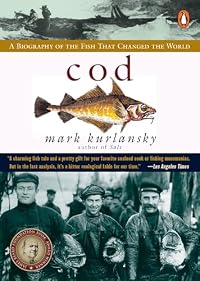
Mark Kurlansky is the author of The Basque History of the World, the New York Times bestseller Cod: A Biography of the Fish that Changed the World (among the New York Public Library's Best Books of the Year in 1998), as well as A Chosen Few: The Resurrection of European Jewry; A Continent of Islands: Searching for the Caribbean Destiny, and show more several acclaimed works of short fiction and journalism about the Caribbean. He spent seven years as the Caribbean correspondent for the Chicago Tribune. He lives in New York City. (Bowker Author Biography) show less
149 Works 1,058 Members
Series

Work Relationships
Has as a supplement
The Food of a Younger Land: The Far West Eats Wyoming, Idaho, Colorado, Utah, Nevada, Northern California, Oregon, Washington by Mark Kurlansky
The Food of a Younger Land: The Middle West Eats Ohio, Indiana, Michigan, Minnesota, Wisconsin, Iowa, Nebras ka, Kansas, Missouri, South Dakota, North Dakota by Mark Kurlansky
The Food of a Younger Land: The Northeast Eats Maine, New Hampshire, Vermont, Massachusetts, Rhode Island, Connecticut, New York City, New York State, Pennsylvania by Mark Kurlansky
Common Knowledge
- Original publication date
- 2009
- People/Characters
- Eudora Welty; Zora Neale Hurston
- Important events
- Great Depression (1930's)
- Epigraph
- Never play cards with a man called Doc. Never eat at a place called Mom's. Never sleep with a woman whose troubles are greater than your own.
—NELSON ALGREN, A Walk on the Wild Side, 1956
Never play cards with a man called Doc. Never eat at a place called Mom's. Never sleep with a woman whose troubles are greater than your own. -- Nelson Algren, A Walk on the Wild Side, 1956. - Dedication
- To the memory of Studs Terkel, one of the last of them, who talked, listened, mixed a martini, told a story, cracked a joke, thought through an issue, and fought the good fight better than most anyone else. Studs, you left ju... (show all)st as I began to hope you would live forever. Maybe you will.
- First words
- This book is not an attempt to produce what America Eats might have been if it had been edited and pieces selected.
When someone says to me, "I went to Chicago last week" or "I went down to Virginia this summer," a question always come into my mind, though I often resist asking it: "What did you eat? Anything interesting?" - Last words
- (Click to show. Warning: May contain spoilers.)Liver loaf, chicken (Creole style), and Swedish layer cake are only a few of the tempting recipes given.
Classifications
- Genres
- Nonfiction, General Nonfiction, History, Food & Cooking
- DDC/MDS
- 394.120973 — Social sciences Customs, etiquette & folklore General customs Eating, drinking, using drugs Eating and drinking standard subdivisions History, geographic treatment, biography
- LCC
- TX715 .F685 — Technology Home economics Home economics Cooking
- BISAC
Statistics
- Members
- 906
- Popularity
- 29,479
- Reviews
- 30
- Rating
- (3.34)
- Languages
- English
- Media
- Paper, Audiobook, Ebook
- ISBNs
- 11
- ASINs
- 10