On This Page
Description
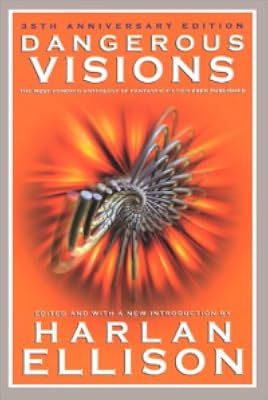
Dubbed "the most significant and controversial SF book" of its generation, Harlan Ellison's groundbreaking collection launched an entire subgenre: New Wave science fiction. With contributions from legendary authors and multiple Hugo and Nebula Awards, "Dangerous Visions" returns to print in a stunning new edition perfect for new and returning fans alike. A landmark short story collection that put the more character-based New Wave science fiction on the map, "Dangerous Visions" won several show more prestigious awards and was nominated for many others. This now-classic anthology includes thirty-three stories by thirty-two award-winning authors, over half of whom have won multiple Hugo and Nebula Awards. Contributing authors include: Robert Silverberg, Frederik Pohl, Brian W. Aldiss, Philip K. Dick, Larry Niven, Fritz Leiber, Poul Anderson, Theodore Sturgeon, J.G. Ballard, Samuel R. Delany, and Ellison himself. As relevant now as it was when first published, "Dangerous Visions" is a phenomenal collection that deserves a place on every bookshelf. show lessTags
Recommendations




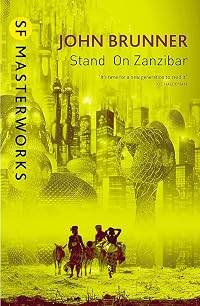


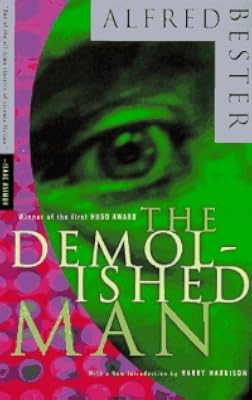
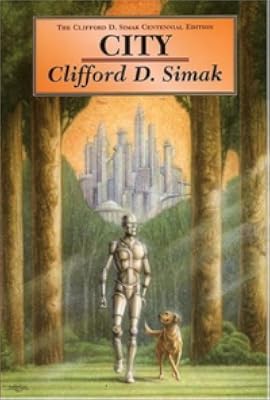
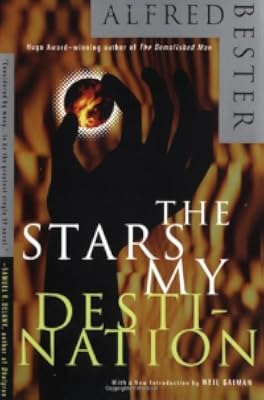


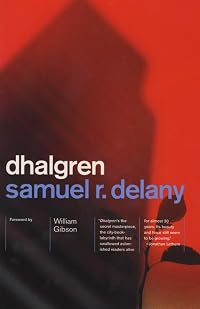
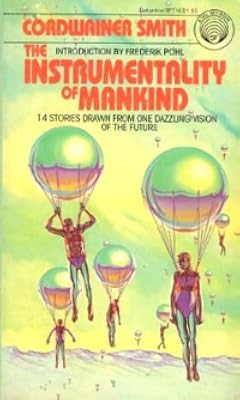


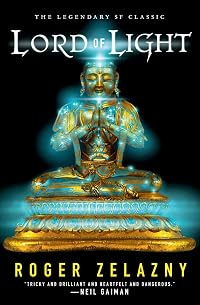


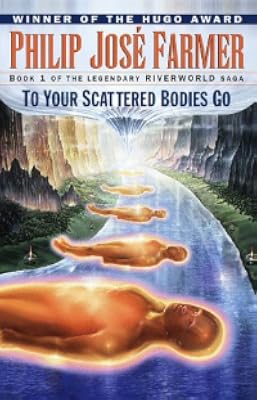
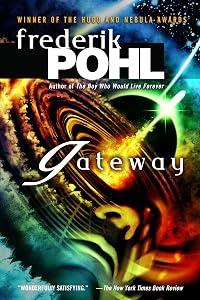


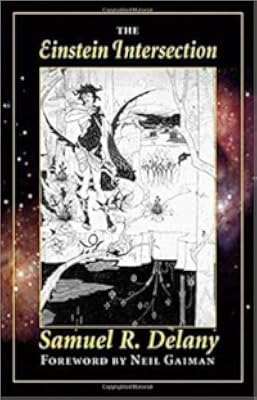
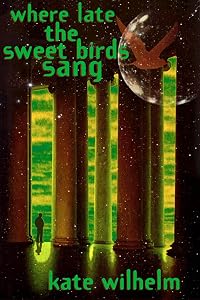


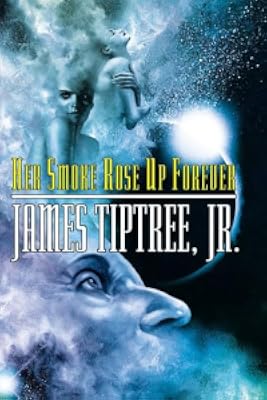






Member Recommendations

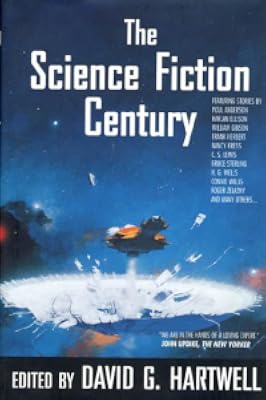
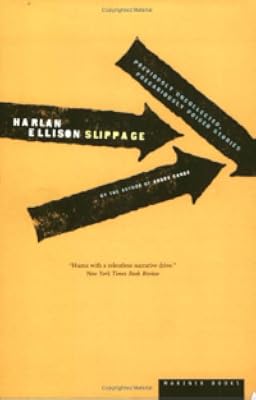
AlanPoulter Both contain original stories showing the best work at the time...
Member Reviews
2/5
Dangerous Visions is a historically significant anthology that arrived on the scene in 1967. The central shtick of this enormous anthology is that every story (all of them published here for the first time) would have been too 'dangerous' to publish elsewhere, mostly because of their graphic and/or sexual content. Dangerous Visions apparently had a large impact on the genre at the time, changing the way that readers perceived the genre, opening new doors for what was acceptable for publishers to print. I have no doubt that this is so even though I was born almost 30 years after its publication. While I appreciate this historical context, I'll be talking about Dangerous Visions within the context of the present day from here on.
In show more this current day context, it's a rough read. Lets start with the stories themselves. Overall I found them on average to be unremarkable and forgettable. There were no standout masterpieces, though certainly there are some that are above average. PKD's story Faith of Our Fathers was very readable if not his best work, Gonna Roll the Bones by Leiber was a great exercise in evocative language, Laumer's Test to Destruction was a well paced action story, Carcinoma Angels by Spinrad was humorous and a different take on the 'dangerous' theme, and Delaney's Aye, and Gomorrah... was perhaps the best written, if not the best idea. The anthology strengthens over the last hundred or so pages, perhaps because it contains a lot of contributions from noteworthy authors.
However, like I said, a lot of the stories aren't up the standard that I expected for such a highly praised anthology. A large number are simply so unremarkable that I had to return to them immediately after finishing the book simply to refresh remember what they were about. A bad sign. Even worse, many of the stories were downright terrible. Many stories are unbearably dated in social outlooks with plenty of sexism, homophobic, casual incest, and pedophilia to go around. Sometimes these topics were brought up seemingly out of nowhere, which left them feeling auxiliary to everything else. The stories from Aldiss, Anderson, Silverberg, and Sturgeon are all like this. I began to believe that many of the stories were 'punched-up' to fit the 'dangerous' theme of the book, rather than finding works that relied on their 'dangerous' idea as a crucial structural component. Other stories were simply confusing, poorly written, and out of place. Ellison included a lot of stories from his personal friends in the anthology (Howard Rodman, Joe L. Hensley, Henry Slesar), who may have had writing careers or hobbies, but certainly did not seem to have background in writing SF. This is frustrating because in 1967, at the height of the new wave, there was such a wealth of excellent writers. It doesn't seem like you'd be forced to reach into your personal connections to fill out an anthology (which is already too long).
The other part of Dangerous Visions that stands out is how much Ellison inserts himself into the anthology beyond his one literary contribution. There are introductions before every story, which is common for anthologies. In Dangerous Visions these introductions are typically very long, sometimes longer than the stories themselves. Ellison spends a lot of time talking about himself in these introductions, typically in self-aggrandizing ways. Regardless of how you feel about his writing, Ellison comes off as a contemptible person, arrogant and self-involved to the point of delusion in some of these introductions. It's clear that Ellison was a much better writer than an editor or person. I wish that Ellison had done some self -reflection before publication, and let the work of the writers speak for themselves a bit more. Ellison also insisted that every writer make an afterword about their work. This could be a good idea, but if half the writers make it clear that they don't really want to be writing it, either with a lack of substance or directly with their words, maybe you should scrap the whole idea. I can see this concept being good if done with more willing participants. Readers so rarely get firsthand perspective from writers about their work unless they go seeking it from outside sources. However, there is an argument to be made that the work should speak for itself, and any afterword writers make would just be rehashing something that doesn't need to be rehashed.
In the year 2024 Dangerous Visions just doesn't hold up any more. It's a book of shaky structural integrity due to its quality issues, that ultimately gets blown down by the person who put it together in the first place. It took me over a year to finish it, in no small part because I struggled to gain any momentum moving through the dated material. I think that Dangerous Visions is best left behind the glass of its museum display case. Sometimes we should acknowledge the importance of a work historically, while also understanding that the material itself is well past its expiration date. show less
Dangerous Visions is a historically significant anthology that arrived on the scene in 1967. The central shtick of this enormous anthology is that every story (all of them published here for the first time) would have been too 'dangerous' to publish elsewhere, mostly because of their graphic and/or sexual content. Dangerous Visions apparently had a large impact on the genre at the time, changing the way that readers perceived the genre, opening new doors for what was acceptable for publishers to print. I have no doubt that this is so even though I was born almost 30 years after its publication. While I appreciate this historical context, I'll be talking about Dangerous Visions within the context of the present day from here on.
In show more this current day context, it's a rough read. Lets start with the stories themselves. Overall I found them on average to be unremarkable and forgettable. There were no standout masterpieces, though certainly there are some that are above average. PKD's story Faith of Our Fathers was very readable if not his best work, Gonna Roll the Bones by Leiber was a great exercise in evocative language, Laumer's Test to Destruction was a well paced action story, Carcinoma Angels by Spinrad was humorous and a different take on the 'dangerous' theme, and Delaney's Aye, and Gomorrah... was perhaps the best written, if not the best idea. The anthology strengthens over the last hundred or so pages, perhaps because it contains a lot of contributions from noteworthy authors.
However, like I said, a lot of the stories aren't up the standard that I expected for such a highly praised anthology. A large number are simply so unremarkable that I had to return to them immediately after finishing the book simply to refresh remember what they were about. A bad sign. Even worse, many of the stories were downright terrible. Many stories are unbearably dated in social outlooks with plenty of sexism, homophobic, casual incest, and pedophilia to go around. Sometimes these topics were brought up seemingly out of nowhere, which left them feeling auxiliary to everything else. The stories from Aldiss, Anderson, Silverberg, and Sturgeon are all like this. I began to believe that many of the stories were 'punched-up' to fit the 'dangerous' theme of the book, rather than finding works that relied on their 'dangerous' idea as a crucial structural component. Other stories were simply confusing, poorly written, and out of place. Ellison included a lot of stories from his personal friends in the anthology (Howard Rodman, Joe L. Hensley, Henry Slesar), who may have had writing careers or hobbies, but certainly did not seem to have background in writing SF. This is frustrating because in 1967, at the height of the new wave, there was such a wealth of excellent writers. It doesn't seem like you'd be forced to reach into your personal connections to fill out an anthology (which is already too long).
The other part of Dangerous Visions that stands out is how much Ellison inserts himself into the anthology beyond his one literary contribution. There are introductions before every story, which is common for anthologies. In Dangerous Visions these introductions are typically very long, sometimes longer than the stories themselves. Ellison spends a lot of time talking about himself in these introductions, typically in self-aggrandizing ways. Regardless of how you feel about his writing, Ellison comes off as a contemptible person, arrogant and self-involved to the point of delusion in some of these introductions. It's clear that Ellison was a much better writer than an editor or person. I wish that Ellison had done some self -reflection before publication, and let the work of the writers speak for themselves a bit more. Ellison also insisted that every writer make an afterword about their work. This could be a good idea, but if half the writers make it clear that they don't really want to be writing it, either with a lack of substance or directly with their words, maybe you should scrap the whole idea. I can see this concept being good if done with more willing participants. Readers so rarely get firsthand perspective from writers about their work unless they go seeking it from outside sources. However, there is an argument to be made that the work should speak for itself, and any afterword writers make would just be rehashing something that doesn't need to be rehashed.
In the year 2024 Dangerous Visions just doesn't hold up any more. It's a book of shaky structural integrity due to its quality issues, that ultimately gets blown down by the person who put it together in the first place. It took me over a year to finish it, in no small part because I struggled to gain any momentum moving through the dated material. I think that Dangerous Visions is best left behind the glass of its museum display case. Sometimes we should acknowledge the importance of a work historically, while also understanding that the material itself is well past its expiration date. show less
Like any fan of print sf, I am familiar with the long saga of the never-printed third Dangerous Visions anthology from Harlan Ellison. It was finally released last year, alongside new editions of the first two volumes. Though I've read some of the stories from Dangerous Visions in other collections (a couple were reprinted in The Science Fiction Hall of Fame, for example), I'd never actually read them, so I asked for (and received) the whole set for my birthday this year.
I will say that the book gets off to a rough start, because it has four forewords and three introductions. A full seven things to read, totally forty pages, before you even get to a story! Well, no, because then each story has its own introduction from Ellison, so you show more have another four pages to go before you get to the first story. Geeze. I get that each new edition presumably needed new stuff to justify its existence, but it's just too much to slog through, and a bit too self-congratulatory on the whole. Seven introductions or forewords, really!?
Like any anthology, you are going to find good stories here and bad ones. Though there are some very good ones, I didn't find the hit rate here as high I would have liked—or would have expected, given the reputation of the book. Many are gratuitous in some way, pushing "boundaries" I suppose, but not saying anything interesting. I thought the duo about the Jack the Ripper, Robert Bloch's "A Toy for Juliette" and Ellison's own "The Prowler in the City at the Edge of the World," were particularly uninteresting for example. Perhaps the most disappointing was "If All Men Were Brothers, Would You Let One Marry Your Sister?" by Theodore Sturgeon, which has a great title, and starts very strongly with some fun meta genre stuff, but fifty pages later is inexplicably still going on.
Still, there was some good stuff. Stories I particularly enjoyed included "The Day after the Day the Martians Came" by Frederick Pohl, a very well-written and grounded story about how the discovery of aliens might affect our society; "The Doll-House" by James Cross, a surprisingly successful cautionary tale about getting greedy with prophecy; and "Sex and/or Mr. Morrison" by Carol Emshwiller, a very weird but captivating story. Also of note, though I didn't love the story itself, is Larry Niven's "The Jigsaw Man," a cautionary tale about how far people will go for immortality.
One of the very best was, not surprisingly, by Philip K. Dick; I've been reading my way through his collected short stories, but I haven't got to "Faith of Our Fathers" yet, and it's a particularly potent distillation of some of his most common themes: the need for conformity and the inescapable feeling that it's all bullshit underneath. My other favorite was one of the rereads, "Aye, and Gomorrah..." by Samuel R. Delany, which is sort of a queer rewrite of Cordwainer Smith's "Scanners Live in Vain." A great story about sexual desires and the self-loathing that can come with them. show less
I will say that the book gets off to a rough start, because it has four forewords and three introductions. A full seven things to read, totally forty pages, before you even get to a story! Well, no, because then each story has its own introduction from Ellison, so you show more have another four pages to go before you get to the first story. Geeze. I get that each new edition presumably needed new stuff to justify its existence, but it's just too much to slog through, and a bit too self-congratulatory on the whole. Seven introductions or forewords, really!?
Like any anthology, you are going to find good stories here and bad ones. Though there are some very good ones, I didn't find the hit rate here as high I would have liked—or would have expected, given the reputation of the book. Many are gratuitous in some way, pushing "boundaries" I suppose, but not saying anything interesting. I thought the duo about the Jack the Ripper, Robert Bloch's "A Toy for Juliette" and Ellison's own "The Prowler in the City at the Edge of the World," were particularly uninteresting for example. Perhaps the most disappointing was "If All Men Were Brothers, Would You Let One Marry Your Sister?" by Theodore Sturgeon, which has a great title, and starts very strongly with some fun meta genre stuff, but fifty pages later is inexplicably still going on.
Still, there was some good stuff. Stories I particularly enjoyed included "The Day after the Day the Martians Came" by Frederick Pohl, a very well-written and grounded story about how the discovery of aliens might affect our society; "The Doll-House" by James Cross, a surprisingly successful cautionary tale about getting greedy with prophecy; and "Sex and/or Mr. Morrison" by Carol Emshwiller, a very weird but captivating story. Also of note, though I didn't love the story itself, is Larry Niven's "The Jigsaw Man," a cautionary tale about how far people will go for immortality.
One of the very best was, not surprisingly, by Philip K. Dick; I've been reading my way through his collected short stories, but I haven't got to "Faith of Our Fathers" yet, and it's a particularly potent distillation of some of his most common themes: the need for conformity and the inescapable feeling that it's all bullshit underneath. My other favorite was one of the rereads, "Aye, and Gomorrah..." by Samuel R. Delany, which is sort of a queer rewrite of Cordwainer Smith's "Scanners Live in Vain." A great story about sexual desires and the self-loathing that can come with them. show less
http://nhw.livejournal.com/260159.html
It's a great collection, 33 stories, the majority of them still fresh.
However, only the Anderson and the Sturgeon stories still qualify as "dangerous"; although homosexuality is now much less of a taboo subject than when Anderson wrote, his portrayal of it in the context of a clash of cultures I think remains valid. Likewise Sturgeon's portrayal of incest, though that if anything is probably even more of a taboo than it was in 1967.
Perhaps my brain has turned to mush, but I found both the Farmer and Emshwiller stories incomprehensible.
I'd classify the Del Rey, Hensley, and Knight stories as of the "Shaggy God" category, along with the Brand; making points about religion and/or God that seem pretty show more trivial now, but perhaps were more "dangerous" at the time of writing. Perhaps I have just been spoiled by Philip Pullman.
I would rate the Aldiss, Ballard, Brunner, Delany, Dick, Lafferty, Leiber, Pohl, Sladek, Spinrad and Zelazny stories as good to excellent samples of their writing, if not necessarily "dangerous". I also thought the Bunch, "Cross", Dorman, Eisenberg, and Rodman stories were pretty good though I'm less familiar with the authors' oeuvres (indeed the various databases assert that these were the only sf short stories ever published by "Cross" and Rodman, though both published other material).
I did not enjoy the Silverberg and DeFord stories (which both turned out to be about the same future development in the criminal justice system), nor the Bloch/Ellison riffs on Jack the Ripper, because the violence was too gratuitously nasty for my taste.
I thought the Laumer, Neville, Niven and Slesar stories were very weak, taking in each case a silly premise and then failing to do much with it. Actually the Niven is promising enough for most of its length but is then killed by the punchline.
But basically, money well spent. The standout stories for me were Howard Rodman's "The Doll's House", Anderson's "Eutopia" and Dick's "Faith of Our Fathers". show less
It's a great collection, 33 stories, the majority of them still fresh.
However, only the Anderson and the Sturgeon stories still qualify as "dangerous"; although homosexuality is now much less of a taboo subject than when Anderson wrote, his portrayal of it in the context of a clash of cultures I think remains valid. Likewise Sturgeon's portrayal of incest, though that if anything is probably even more of a taboo than it was in 1967.
Perhaps my brain has turned to mush, but I found both the Farmer and Emshwiller stories incomprehensible.
I'd classify the Del Rey, Hensley, and Knight stories as of the "Shaggy God" category, along with the Brand; making points about religion and/or God that seem pretty show more trivial now, but perhaps were more "dangerous" at the time of writing. Perhaps I have just been spoiled by Philip Pullman.
I would rate the Aldiss, Ballard, Brunner, Delany, Dick, Lafferty, Leiber, Pohl, Sladek, Spinrad and Zelazny stories as good to excellent samples of their writing, if not necessarily "dangerous". I also thought the Bunch, "Cross", Dorman, Eisenberg, and Rodman stories were pretty good though I'm less familiar with the authors' oeuvres (indeed the various databases assert that these were the only sf short stories ever published by "Cross" and Rodman, though both published other material).
I did not enjoy the Silverberg and DeFord stories (which both turned out to be about the same future development in the criminal justice system), nor the Bloch/Ellison riffs on Jack the Ripper, because the violence was too gratuitously nasty for my taste.
I thought the Laumer, Neville, Niven and Slesar stories were very weak, taking in each case a silly premise and then failing to do much with it. Actually the Niven is promising enough for most of its length but is then killed by the punchline.
But basically, money well spent. The standout stories for me were Howard Rodman's "The Doll's House", Anderson's "Eutopia" and Dick's "Faith of Our Fathers". show less
An extremely influential anthology in 1967 that doesn't age particularly well. Harlan Ellison took on the epic task of collecting 35 never-before-published stories that were too "dangerous" for any other publisher to publish, and then brought them together with two forwards by Isaac Asimov, and a very extensive introduction by Ellison. Just in case you didn't get enough of our editor, he also gives us a gushing, clubby, and Ellison-focused introduction for every story in the volume. Finally, each story includes an afterward by the author. That is a lot of writing about the writing, and the nearly 600 page behemoth would probably be a little more approachable if we could have stuck to the stories. The stories themselves are written by show more some very recognizable names in mid-20th century sci-fi, but are a bit of a mixed bag. Some of the "Dangerous Visions" feel very mild in 2022. Others are stories that probably never needed to be told (do we really need so much incest?). Philip José Farmer's "Riders of the Purple Wage" almost made me give up on the whole enterprise (that it was very long and Ellison's favorite story in the collection didn't inspire confidence). The whole thing was worth it, though, for introducing me to "Sex and/or Mr. Morrison" by Carol Emshwiller, and J.G. Ballard's "The Recognition" was pretty amazing as well. An important book and an interesting time capsule for that mid-60s stylistic shift in sci-fi, but maybe just skim the Ellison parts. show less
Really unsettling, like I can't finish it. A series of Sci Fi stories which are actually horrifying. They ask 'important philosophical questions' and do actually show why the genre is not to be forgotten, but my god. Could you be more of a mind-fuck?
First published in 1967, Dangerous Visions was editor Harlan Ellison's attempt to make the case for science fiction as a literary genre and to shake up the genre itself in order to push it towards something new and better. At the time Dangerous Visions was the largest collection of original science fiction short stories. It has become something of a legend in the 40 plus years since it was published. By insisting on all original work, no reprints of earlier material, Mr. Ellison hoped to provide a platform for ideas and stories that could not find a home in the periodicals of the day, visions of the future too dangerous for ordinary publications.
Reading the anthology some 40 years later most of the stories struck me as largely show more pedestrian, the kind of stuff one typically found in early science fiction magazines. They are all well-written; they are all entertaining, but only a handful struck me as dangerous or visionary. Some make contain very mild social critique. A few suggest there is no God. One creates a future society where incest is the norm. Most of them are material that would comfortably find a home on the Syfy channel today.
Samuel R. Delany provides the only truly dangerous vision in his story "Aye, and Gamorrah..." Mr. Delany imagines a future full of space travel that comes at a very high price. In order to survive the harsh conditions of space, "spacers" must be surgically altered to resist high levels of radiation including a process which renders them genderless. "Aye, and Gamorrah..." is the story of one such "spacer" on a visit to earth where he must face the advances of "frelks" unaltered humans who are sexually attracted to the genderless and passionless spacers. Readers of Mr. Delany know that he never shied away from discussion of sex and sexuality and the possible forms it might take in humanity's future. The rest of the stories in Dangerous Visions seem afraid of sex by comparison.
But the real reason to read Dangerous Visions in 2012 is the introductions Mr. Ellison wrote to each of the 33 stories, which are the only introductions I've really enjoyed reading. Gossipy, opinionated, intended to reveal the authors of each story, they succeed in creating a portrait of the editor who wrote them by creating portraits of the authors in the book. Many of the authors in Mr. Ellison's book did go on to do great work, but most of them are people I've never heard of before, in spite of Mr. Ellison's assurance that this was an author to watch. However, through his introductions, some of which are as long as the story that follows, Mr. Ellison brings each author to life as a character in an ensemble piece which is the world of science fiction circa mid-1960's. For that alone, Dangerous Visions is a useful and entertaining record.
Which is one reason why I found it such a shame that none of these visionary authors saw a future with a place for gay/lesbian people. References to LGBT people are limited to a few bits of casual homophobia both in the stories and in the introductions. I'm willing to cut people in history a little slack, but even in 1967 this was a backwards looking view. Pro-gay social movements were already visible in the major cities of America if not the countryside in the 1960's. Since so much of the publishing world at that time was centered in New York City, I find it difficult to accept that none of the writers in Mr. Ellison's book were aware of LGBT people. They're supposed to be visionaries. They're supposed to imagine the future. We would have to wait several more years for writers like Samuel R. Delany, Ursula K LeGuin, Octvia Butler to make room for gay and lesbian characters in science fiction. You can see a hint of his future in Mr. Delany's story, but that's the only one in Dangerous Visions that sees a future with anything other than fully heterosexual people in it. show less
Reading the anthology some 40 years later most of the stories struck me as largely show more pedestrian, the kind of stuff one typically found in early science fiction magazines. They are all well-written; they are all entertaining, but only a handful struck me as dangerous or visionary. Some make contain very mild social critique. A few suggest there is no God. One creates a future society where incest is the norm. Most of them are material that would comfortably find a home on the Syfy channel today.
Samuel R. Delany provides the only truly dangerous vision in his story "Aye, and Gamorrah..." Mr. Delany imagines a future full of space travel that comes at a very high price. In order to survive the harsh conditions of space, "spacers" must be surgically altered to resist high levels of radiation including a process which renders them genderless. "Aye, and Gamorrah..." is the story of one such "spacer" on a visit to earth where he must face the advances of "frelks" unaltered humans who are sexually attracted to the genderless and passionless spacers. Readers of Mr. Delany know that he never shied away from discussion of sex and sexuality and the possible forms it might take in humanity's future. The rest of the stories in Dangerous Visions seem afraid of sex by comparison.
But the real reason to read Dangerous Visions in 2012 is the introductions Mr. Ellison wrote to each of the 33 stories, which are the only introductions I've really enjoyed reading. Gossipy, opinionated, intended to reveal the authors of each story, they succeed in creating a portrait of the editor who wrote them by creating portraits of the authors in the book. Many of the authors in Mr. Ellison's book did go on to do great work, but most of them are people I've never heard of before, in spite of Mr. Ellison's assurance that this was an author to watch. However, through his introductions, some of which are as long as the story that follows, Mr. Ellison brings each author to life as a character in an ensemble piece which is the world of science fiction circa mid-1960's. For that alone, Dangerous Visions is a useful and entertaining record.
Which is one reason why I found it such a shame that none of these visionary authors saw a future with a place for gay/lesbian people. References to LGBT people are limited to a few bits of casual homophobia both in the stories and in the introductions. I'm willing to cut people in history a little slack, but even in 1967 this was a backwards looking view. Pro-gay social movements were already visible in the major cities of America if not the countryside in the 1960's. Since so much of the publishing world at that time was centered in New York City, I find it difficult to accept that none of the writers in Mr. Ellison's book were aware of LGBT people. They're supposed to be visionaries. They're supposed to imagine the future. We would have to wait several more years for writers like Samuel R. Delany, Ursula K LeGuin, Octvia Butler to make room for gay and lesbian characters in science fiction. You can see a hint of his future in Mr. Delany's story, but that's the only one in Dangerous Visions that sees a future with anything other than fully heterosexual people in it. show less
Well, this was a surprising read. Of the 33 stories maybe 5 were what I'd call science fiction - most of the rest were a weird and often toxic mixture of sex, drugs and pointless violence. And by some of my otherwise favorite SF authors, too! If I had read Philip Jose Farmer or Phillip K. Dick here first I never would have picked up their other works. These aren't "dangerous" visions, the title should've been "Disturbing Visions". Egad. Truly awful.
Members
- Recently Added By
Lists

Survey of Classic Science Fiction
171 works; 48 members

SF Masterworks
193 works; 8 members

The 5 Parsec Shelf
50 works; 7 members

Short Story Collections and Anthologies
261 works; 42 members

New wave science fiction
23 works; 2 members

Speculative Fiction: The Classics
36 works; 5 members

Books Read in 2023
5,547 works; 145 members

Yet another list
67 works; 1 member

Books Read in 2024
4,623 works; 126 members

Physical TBR List
68 works; 1 member
Author Information

Harlan Ellison was born in Cleveland, Ohio on May 27, 1934. He was the author of numerous short story collections including Strange Wine; The Beast that Shouted Love at the Heart of the World; Harlan Ellison's Watching; Deathbird Stories; Repent Harlequin! Said the Ticktockman; I Have No Mouth and I Must Scream; and Stalking the Nightmare: Stories show more and Essays. He received numerous awards including the Hugo Award, the Nebula Award, the Bram Stoker Award, the Lifetime Achievement Award from the Horror Writer's Association, the Edgar Allen Poe Award, and the Grand Master Award for lifetime achievement from the Science Fiction and Fantasy Writers of America. He was inducted into the Science Fiction Hall of Fame in 2011. He published two collections of his columns on television for the Los Angeles Free Press entitled The Glass Teat and The Other Glass Teat. He edited several anthologies including Dangerous Visions: 33 Original Stories and Medea: Harlan's World. He received the Milford Award for Lifetime Achievement in Editing. He also wrote scripts for TV series including Burke's Law, The Alfred Hitchcock Hour, Voyage to the Bottom of the Sea, and The Man from U.N.C.L.E. He served as creative consultant on the new version of The Twilight Zone in the 1980s and as conceptual consultant on Babylon 5. He won the Writer's Guild of America's Award for Most Outstanding Teleplay four times. He died on June 27, 2018 at the age of 84. (Bowker Author Biography) show less
All Editions
Some Editions
Awards and Honors
Distinctions
Series

Belongs to Publisher Series
Science Fiction Book Club (1179)
SF Masterworks (New design)
Work Relationships
Common Knowledge
- Canonical title*
- Dangerous Visions
- Original title
- Dangerous Visions
- Original publication date
- 1967
- Dedication
- The compassionate learn from wiser others what they
know of themselves, of the world in which they must live,
and of the world in which they would like to live.
This book is dedicated with love, respect and a... (show all)dmiration to
LEO & DIANE DILLON
who painstakingly, out of friendship, showed the Editor
that black is black, white is white, and that goodness
can come from either; but never from gray.
And to their son, LIONEL III, now known as Lee, with a
silent prayer that his world will not resemble our world. - Blurbers
- Knight, Damon; Blish, James
- Original language
- English
*Some information comes from Common Knowledge in other languages. Click "Edit" for more information.
Classifications
- Genres
- Science Fiction, Fiction and Literature, Horror
- DDC/MDS
- 813.54 — Literature & rhetoric American literature in English American fiction in English 1900-1999 1945-1999
- LCC
- PS648 .F3 .D36 — Language and Literature American literature American literature Collections of American literature Prose (General)
- BISAC
Statistics
- Members
- 2,240
- Popularity
- 8,978
- Reviews
- 41
- Rating
- (3.91)
- Languages
- 9 — Czech, English, French, German, Hebrew, Italian, Polish, Romanian, Spanish
- Media
- Paper, Audiobook, Ebook
- ISBNs
- 32
- UPCs
- 1
- ASINs
- 32