
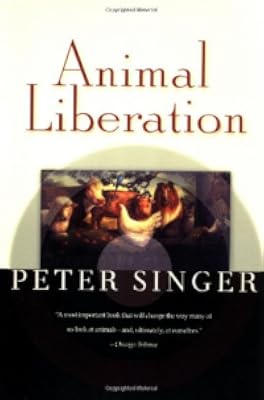
Animal Liberation
by Peter Singer
On This Page
Description
Since its original publication in 1975, Animal Liberation has awakened millions of people to the existence of "speciesism"-our systematic disregard of nonhuman animals-inspiring a worldwide movement to transform our attitudes to animals and eliminate the cruelty we inflict on them. In Animal Liberation Now, Singer exposes the chilling realities of today's "factory farms" and product-testing procedures, destroying the spurious justifications behind them and showing us just how woefully we show more have been misled. Now, for the first time since its original publication, Singer returns to the major arguments and examples and brings us to the current moment. This edition, revised from top to bottom, covers important reforms in the European Union, and now in various US states, but on the flip side, Singer shows us the impact of the huge expansion of factory farming due to the exploding demand for animal products in China. Further, meat consumption is taking a toll on the environment, and factory farms pose a profound risk for spreading new viruses even worse than COVID-19. Animal Liberation Now includes alternatives to what has become a profound environmental and social as well as moral issue. An important and persuasive appeal to conscience, fairness, decency, and justice, it is essential listening for the supporter and the skeptic alike. show lessTags
Recommendations



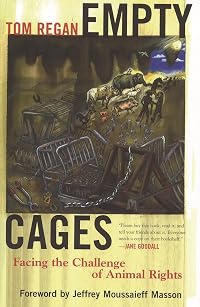
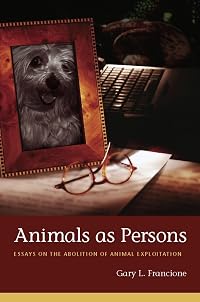
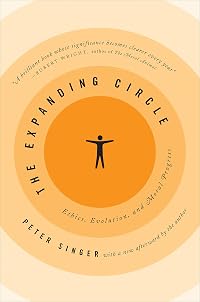
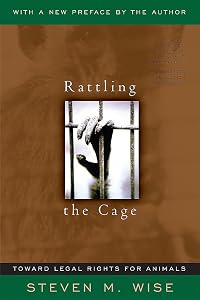
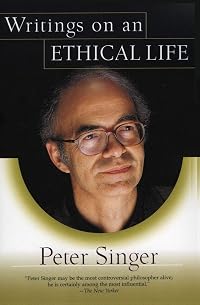
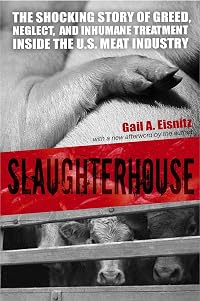

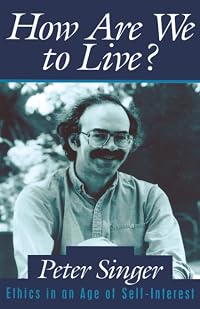
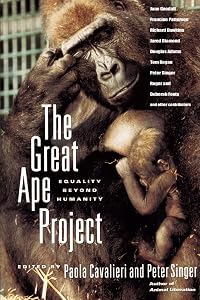
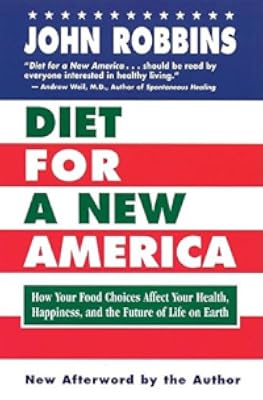




Member Recommendations
abclaret Eschews the liberalism of animal rights movement and looks at the economic reasons behind their exploitation.
Member Reviews
Classic of the animal rights movement. I have had this book on my shelf for many years but always hesitated to read it- it’s written by a philosopher who specializes in ethics and I thought it would be difficult material. Not so. I was surprised to find it very readable and easy to understand. I also assumed it would be full of absurdly extremist ideas or overly sentimental appeals. Quite the contrary. Although at the end Singer makes a few conclusions and suggestions for future action that sound extreme and impossible (doing away with all carnivorous animals in the world to eliminate animal suffering!! what??) he doesn’t explore those any further and admits they are likely untenable. He does think zoos and farms that raise animals show more for consumption should disappear though.
Getting ahead of myself. The main premise of the book is: animals feel just like we do and can suffer pain and emotional distress (wow, see my previous read for a lot more detail on that point). Singer makes many clear and logical arguments that humans should not cause suffering, or think we are “better than” animals, or control their lives so completely as we often do. They should just be allowed to live and do their own thing. I have to agree with some of that. He doesn’t just point out that we shouldn’t cause animals pain or treat them like objects to create meals for us at the lowest possible monetary cost, but also argues that meat from animals that were terrified or in pain when they died is of lesser quality, that raising animals for food is more costly to the environment, and that plants give us more energy return. There’s a lot more of course, I’m just mentioning some bits that stood out to me. I found of most interest (unexpectedly) the chapter that explores historically the beliefs that cemented in western thought this idea that we as humans have a right to rule over the rest of sentient life. Starting with the bible and going through Greek and Roman thinkers. I have to say it sounds like Descartes is hugely to blame for the idea many people still firmly: that animals are instinctive automatons without any feeling.
There are parts of this book that discuss the horrors of factory farming, animal experimentation and product testing. I would hope that many of the things described are now of the past. I know that at least nowadays you can easily find beauty products that were not tested on animals and buy eggs laid by chickens that roamed free outside (whatever that actually means) for example. There are photos in this book which disturbingly make the point of how much animals suffered in labs and factory farms, thankfully they are few (the book could have easily stuffed a ton more in there to make its point).
Personally, I am not a strict vegetarian though this book makes very good points on why one should be. I have for many years now made an effort to eat less meat and to choose it as wisely as I can- milk from “grass-fed” cows, meat from pasture-raised beef or bison, fish that was “sustainably harvested”. My conundrum is twofold: how do I know those labels are factual? If I don’t go visit the farm where those cows grazed to see for myself, does “pasture-raised” really mean what I think it does?
My other issue: what about all the other life that dies to make a field profitable for growing plants we eat? I have read reports that vast fields of crops which use large machinery to harvest kill billions of small wild animals- rabbits, mice, birds, snakes, etc etc.- but then there’s arguments that those numbers are not what they seem- I just read six different articles on it, so now I don’t know what to think. Eating strictly plants does not mean we are causing less harm to living things, or to the environment. I would like to think I am making the best choices, standing there in the grocery store staring at packages, but sometimes I feel like I have to go home and do more research- and it just gives me a headache. I try to eat local, in-season, raised-as-humanely-as-possible foods, but sometimes it’s hard to know what to choose. I don’t think eschewing all animal products is the answer. I do think we should avoid supporting companies that perform needlessly cruel experiments on animals or raise them for food in appallingly stressful, crowded and unhygienic conditions. It’s hard to know which reports are truthful, though.
Definitely this is a book I think everyone should read.
more at the Dogear Diary show less
Getting ahead of myself. The main premise of the book is: animals feel just like we do and can suffer pain and emotional distress (wow, see my previous read for a lot more detail on that point). Singer makes many clear and logical arguments that humans should not cause suffering, or think we are “better than” animals, or control their lives so completely as we often do. They should just be allowed to live and do their own thing. I have to agree with some of that. He doesn’t just point out that we shouldn’t cause animals pain or treat them like objects to create meals for us at the lowest possible monetary cost, but also argues that meat from animals that were terrified or in pain when they died is of lesser quality, that raising animals for food is more costly to the environment, and that plants give us more energy return. There’s a lot more of course, I’m just mentioning some bits that stood out to me. I found of most interest (unexpectedly) the chapter that explores historically the beliefs that cemented in western thought this idea that we as humans have a right to rule over the rest of sentient life. Starting with the bible and going through Greek and Roman thinkers. I have to say it sounds like Descartes is hugely to blame for the idea many people still firmly: that animals are instinctive automatons without any feeling.
There are parts of this book that discuss the horrors of factory farming, animal experimentation and product testing. I would hope that many of the things described are now of the past. I know that at least nowadays you can easily find beauty products that were not tested on animals and buy eggs laid by chickens that roamed free outside (whatever that actually means) for example. There are photos in this book which disturbingly make the point of how much animals suffered in labs and factory farms, thankfully they are few (the book could have easily stuffed a ton more in there to make its point).
Personally, I am not a strict vegetarian though this book makes very good points on why one should be. I have for many years now made an effort to eat less meat and to choose it as wisely as I can- milk from “grass-fed” cows, meat from pasture-raised beef or bison, fish that was “sustainably harvested”. My conundrum is twofold: how do I know those labels are factual? If I don’t go visit the farm where those cows grazed to see for myself, does “pasture-raised” really mean what I think it does?
My other issue: what about all the other life that dies to make a field profitable for growing plants we eat? I have read reports that vast fields of crops which use large machinery to harvest kill billions of small wild animals- rabbits, mice, birds, snakes, etc etc.- but then there’s arguments that those numbers are not what they seem- I just read six different articles on it, so now I don’t know what to think. Eating strictly plants does not mean we are causing less harm to living things, or to the environment. I would like to think I am making the best choices, standing there in the grocery store staring at packages, but sometimes I feel like I have to go home and do more research- and it just gives me a headache. I try to eat local, in-season, raised-as-humanely-as-possible foods, but sometimes it’s hard to know what to choose. I don’t think eschewing all animal products is the answer. I do think we should avoid supporting companies that perform needlessly cruel experiments on animals or raise them for food in appallingly stressful, crowded and unhygienic conditions. It’s hard to know which reports are truthful, though.
Definitely this is a book I think everyone should read.
more at the Dogear Diary show less
This book is now 50 years old and a bit dated in terms of society's pushback to many of the cruelties inflicted upon animals in the raising of our food and in product, medical and behavior research. We now have easy access to free-range eggs and meat, along with many more choices in vegetarian and vegan choices that are becoming mainstream, rather than only found in hippy health food stores in the 1970s. The book was updated in 2023 and it might be better to read that version than the original.
Still Singer's philosophical and ethical arguments that speciesism is on par with racism and sexism are convincing. His endless examples of the horrors inflicted upon animals in research and food production are at times overwhelming and show more repetitious, but perhaps necessary, to get the reader to consider changing their behavior and becoming vegetarian.
Singer is a careful, clear writer and presents the case against speciesism strongly and defends it against historical and cultural rebuttals. This was a groundbreaking book in 1975, and the author should be proud his book has actually made a dent in our view of animals as only tools and food. There's a long way to go yet but perhaps after reading it, you'll make some changes to your eating and buying habits like millions have already done. show less
Still Singer's philosophical and ethical arguments that speciesism is on par with racism and sexism are convincing. His endless examples of the horrors inflicted upon animals in research and food production are at times overwhelming and show more repetitious, but perhaps necessary, to get the reader to consider changing their behavior and becoming vegetarian.
Singer is a careful, clear writer and presents the case against speciesism strongly and defends it against historical and cultural rebuttals. This was a groundbreaking book in 1975, and the author should be proud his book has actually made a dent in our view of animals as only tools and food. There's a long way to go yet but perhaps after reading it, you'll make some changes to your eating and buying habits like millions have already done. show less
This is an incredibly eye-opening book and the most widely read on this subject. It starts with the a priori assumption that all beings deserve equal consideration, from which follows the axiom of Utilitarianism that the interest of any one individual is of no more importance than the interest of another. "At an absolute minimum," Singer says, all beings have "an interest in not suffering." Because all animals (or at the very least all mammals) can suffer, there is as much reason to prevent their suffering as to prevent human suffering. The fact that this principle of the equal consideration of interests is usually not extended to non-humans indicates that "speciesism" is a social problem at least as pernicious as racism or sexism.
He show more illustrates this point with the example of our consideration and treatment of human infants, or adult humans with permanent brain damage or with severe learning disabilities. It is generally assumed that we should consider the interests of humans such as these as no less important than our own, though their cognitive abilities are at most no greater the most intelligent nonhumans. Thus, it follows that if we are consistent we cannot deny the same considerations to any being with the same interests. Or we may also decide that it is acceptable to eat or perform scientific experiments on brain damaged humans, too. But we cannot arbitrarily exclude nonhumans from consideration, unless we baldly admit that we are guilty of speciesism, for reasons no better than the prejudice of racists and sexists.
The biggest part of the book is dedicated to exposing the atrocities that are being committed in animal research labs and in factory farms. Singer's research on these issues is thoroughly documented, based on objective and original sources, and provides many little-known mind-blowing statistics. (Around 60 million mice, rats, guinea pigs, hamsters, and rabbits were used in labs in 1965; of 1.6 million animals reported by the USDA in 1988, over 90,000 were reported to have experienced "unrelieved pain or distress;" p.37) Citing this book, Derrick Jensen rightly says it is not for the faint of heart, but its information is incredibly important given the dismal ignorance about (denial of?) these realities.
Striking a weird note, Singer says that in a totally vegetarian world he hopes that eventually "the only herds of cattle and pigs to be found will be on large reservations" but the question remains whether they should be born at all. He doesn't go into any more detail than this, but the reserve idea strikes me as pretty absurd. I don't see cattle and pigs acquiring the status of pets; their domestication was exclusively agricultural. Their companionship was neither the intent nor a consequence of their breeding, and zoo animals are only interesting for their lack of domestication. (The only tenable alternatives seem to be extinction or readaptation to the forces of natural selection.)
He also raises the issue of nonhuman carnivores, and goes so far as to consider whether humans might have an obligation to eliminate carnivorous species in order to reduce suffering. Thankfully he dismisses this idea, but disturbingly not because he finds it inherently wrong (no joke!); he just thinks that humans have thus far demonstrated a practical inability to police all of nature. Taken to its logical conclusion here, it's obvious to me his whole utilitarian system falls apart, and even a logically less airtight ecological ethic (that values whole species and communities) aligns much better with the larger reality. Nevertheless, there is no doubt that the plight of animals used in labs and factory farms can hardly be represented better than Singer does.
In the final chapter Singer responds to his detractors. He includes a great refutation of the Carrot juice is murder! claim that that we must either cause suffering or starve, which is too clever not to share: Even if plants can feel pain just like animals, it still makes more sense not to eat flesh if we don't want to inflict pain. This is because, by eating an animal, we are "responsible for the indirect destruction of at least ten times as many plants" (100 calories of an animal's flesh required his/her consumption of at least 1000 calories). If carrot juice is murder, then rabbit stew is genocide. show less
He show more illustrates this point with the example of our consideration and treatment of human infants, or adult humans with permanent brain damage or with severe learning disabilities. It is generally assumed that we should consider the interests of humans such as these as no less important than our own, though their cognitive abilities are at most no greater the most intelligent nonhumans. Thus, it follows that if we are consistent we cannot deny the same considerations to any being with the same interests. Or we may also decide that it is acceptable to eat or perform scientific experiments on brain damaged humans, too. But we cannot arbitrarily exclude nonhumans from consideration, unless we baldly admit that we are guilty of speciesism, for reasons no better than the prejudice of racists and sexists.
The biggest part of the book is dedicated to exposing the atrocities that are being committed in animal research labs and in factory farms. Singer's research on these issues is thoroughly documented, based on objective and original sources, and provides many little-known mind-blowing statistics. (Around 60 million mice, rats, guinea pigs, hamsters, and rabbits were used in labs in 1965; of 1.6 million animals reported by the USDA in 1988, over 90,000 were reported to have experienced "unrelieved pain or distress;" p.37) Citing this book, Derrick Jensen rightly says it is not for the faint of heart, but its information is incredibly important given the dismal ignorance about (denial of?) these realities.
Striking a weird note, Singer says that in a totally vegetarian world he hopes that eventually "the only herds of cattle and pigs to be found will be on large reservations" but the question remains whether they should be born at all. He doesn't go into any more detail than this, but the reserve idea strikes me as pretty absurd. I don't see cattle and pigs acquiring the status of pets; their domestication was exclusively agricultural. Their companionship was neither the intent nor a consequence of their breeding, and zoo animals are only interesting for their lack of domestication. (The only tenable alternatives seem to be extinction or readaptation to the forces of natural selection.)
He also raises the issue of nonhuman carnivores, and goes so far as to consider whether humans might have an obligation to eliminate carnivorous species in order to reduce suffering. Thankfully he dismisses this idea, but disturbingly not because he finds it inherently wrong (no joke!); he just thinks that humans have thus far demonstrated a practical inability to police all of nature. Taken to its logical conclusion here, it's obvious to me his whole utilitarian system falls apart, and even a logically less airtight ecological ethic (that values whole species and communities) aligns much better with the larger reality. Nevertheless, there is no doubt that the plight of animals used in labs and factory farms can hardly be represented better than Singer does.
In the final chapter Singer responds to his detractors. He includes a great refutation of the Carrot juice is murder! claim that that we must either cause suffering or starve, which is too clever not to share: Even if plants can feel pain just like animals, it still makes more sense not to eat flesh if we don't want to inflict pain. This is because, by eating an animal, we are "responsible for the indirect destruction of at least ten times as many plants" (100 calories of an animal's flesh required his/her consumption of at least 1000 calories). If carrot juice is murder, then rabbit stew is genocide. show less
'Animal Liberation' (first published in 1975) surely was one of the most important book ever written. It became a classic, that publicly brought to light the appalling cruelty that some animals have been subjected to and by certain sectors of our society. This, though, is an updated edition. As such, it takes into account our scientific knowledge as it has progressed since the 1970s, and how things have evolved (if at all!) when it comes to the fate of animals in laboratories and in the meat industry. I will, then, judge it as it is here updated that is, for its relevance (or not) to us as of the 2010s-2020s.
My note (3 stars out of 5) may seem severe for such an impactful read. That's because I had 3 main issues with it: timeframe, show more geography, and some personal disagreements (not much, but enough for me to have been an issue).
First, timeframe. When it comes to experiment on animals in laboratories, for instance, the author takes his time in detailing -in full chapters- the shocking, horrific, and, quite frankly, inhuman treatments of our fellow animals (other great apes especially) subjected to all sorts of barbaric practices, supposedly to learn about various psychopathologies, addictions, or, again, learned helplessness. As it turned out, these experiments were indeed completely irrelevant, since their premises were not applicable to humans! The root causes of mental disorders in human, for example, are nothing like that of those manufactured on monkeys in labs, which made such experiments nothing but useless. Now, their detailing surely makes for a gruesome read. The thing is, these experiments were mostly performed in the 1950s and 1960s (Solomon on dogs; Harlow on monkeys etc.) and so belong to a past long gone. Of course, this is not to say that cruelty to animals is, by itself, long gone! As he acknowledges, the USA ultimately banned experiments on monkeys in 2015, and testing on animals for cosmetics has been completely outlawed in Europe. What I mean here is that, portraying medical science as it was 70 years ago is unfair; even if I fully agree otherwise with his point that, most experiments now performed supposedly for 'medical reasons' are nothing of the sort, since most medication being manufactured and launched onto our markets are but so-called 'me too drugs'.
My second issue was geography. The author, being American, focuses mainly on the USA. I, as a reader, live in Europe. It's common knowledge that, in the USA, a corporate, capitalistic mentality is far deeper entrenched that in Europe, making profits a far more important priority and so the lobbying groups battling for profit-making far more powerful. Laws in America, as opposed to that in Europe, can therefore be very lax indeed -no matter the consequences on the environment, the general public, or, like here, animal welfare. This is particularly true of the meat industry; and in fact, the constant parallels that the author makes between legislations in the EU as opposed to his country make for appalling illustrations to that effect. This, here, is certainly not to say that the meat industry in Europe is devoid of malpractices, cruelty and (if you believe the animals we eat to be sentient) unethical behaviours! This is merely to say that, as a European, I didn't feel as if most of the book was relevant to me.
My last issue had to do with small disagreements. First, I appreciate the author not being a proselytist. For example, he sees so-called 'conscientious omnivores' as allies, and is quite warry of the self-righteousness of some vegans. As he puts it:
'there may be more at stake than worrying about such details as whether the cake you are offered at a party contains eggs. We are more likely to persuade others to share our attitude if we temper our ideals with common sense than if we strive for the kind of purity that is more appropriate to a religious dietary law than to an ethical and political movement.'
The thing is, I personally don't believe that 'conscientious omnivores' have a moral position. If you accept that animals are sentient, then their treatment as a commodity to feed on their flesh is nothing but mass murder -and that's that. I'm not being judgemental (I was a meat eater once, and I was a pescatarian before becoming a vegetarian). I just think that the path to an ethical life cannot be made by resorting to excuses to carry on adopting behaviours inflicting pain on others.
Then (and this might seem paradoxical, considering what I just wrote) there is the issue of the author believing that vegetarians/ vegans hold some sort of higher moral grounds. It shows, for instance, in his argument that eating plants is not as harmful to the environment as eating animals, even if he reckons that plants may be sentient too (the question is open as far as science goes...). I disagree. If plants turn out to be sentient, then eating a salad is no less problematic as eating beef. As far as I am personally concerned, this, here, has nothing to do with environmental concerns, but with whether a living organism, with a metabolism, has the ability (or not) to experience pain, or, at least, harm. Synthetic biology has made considerable progress when it comes to producing artificial meat (which, really, makes the use of real meat even more irrelevant). Why shouldn't we have artificial vegetables and fruits as well?
All in all, it still is a very good read when it comes to animal welfare and why we should care. I just felt that it was too sensationalist at times; more relevant to readers based in the USA than those in Europe (where, again, legislations are far more stricter, and will be even stricter over time); and not without being guilty of moral wriggling of its own. show less
My note (3 stars out of 5) may seem severe for such an impactful read. That's because I had 3 main issues with it: timeframe, show more geography, and some personal disagreements (not much, but enough for me to have been an issue).
First, timeframe. When it comes to experiment on animals in laboratories, for instance, the author takes his time in detailing -in full chapters- the shocking, horrific, and, quite frankly, inhuman treatments of our fellow animals (other great apes especially) subjected to all sorts of barbaric practices, supposedly to learn about various psychopathologies, addictions, or, again, learned helplessness. As it turned out, these experiments were indeed completely irrelevant, since their premises were not applicable to humans! The root causes of mental disorders in human, for example, are nothing like that of those manufactured on monkeys in labs, which made such experiments nothing but useless. Now, their detailing surely makes for a gruesome read. The thing is, these experiments were mostly performed in the 1950s and 1960s (Solomon on dogs; Harlow on monkeys etc.) and so belong to a past long gone. Of course, this is not to say that cruelty to animals is, by itself, long gone! As he acknowledges, the USA ultimately banned experiments on monkeys in 2015, and testing on animals for cosmetics has been completely outlawed in Europe. What I mean here is that, portraying medical science as it was 70 years ago is unfair; even if I fully agree otherwise with his point that, most experiments now performed supposedly for 'medical reasons' are nothing of the sort, since most medication being manufactured and launched onto our markets are but so-called 'me too drugs'.
My second issue was geography. The author, being American, focuses mainly on the USA. I, as a reader, live in Europe. It's common knowledge that, in the USA, a corporate, capitalistic mentality is far deeper entrenched that in Europe, making profits a far more important priority and so the lobbying groups battling for profit-making far more powerful. Laws in America, as opposed to that in Europe, can therefore be very lax indeed -no matter the consequences on the environment, the general public, or, like here, animal welfare. This is particularly true of the meat industry; and in fact, the constant parallels that the author makes between legislations in the EU as opposed to his country make for appalling illustrations to that effect. This, here, is certainly not to say that the meat industry in Europe is devoid of malpractices, cruelty and (if you believe the animals we eat to be sentient) unethical behaviours! This is merely to say that, as a European, I didn't feel as if most of the book was relevant to me.
My last issue had to do with small disagreements. First, I appreciate the author not being a proselytist. For example, he sees so-called 'conscientious omnivores' as allies, and is quite warry of the self-righteousness of some vegans. As he puts it:
'there may be more at stake than worrying about such details as whether the cake you are offered at a party contains eggs. We are more likely to persuade others to share our attitude if we temper our ideals with common sense than if we strive for the kind of purity that is more appropriate to a religious dietary law than to an ethical and political movement.'
The thing is, I personally don't believe that 'conscientious omnivores' have a moral position. If you accept that animals are sentient, then their treatment as a commodity to feed on their flesh is nothing but mass murder -and that's that. I'm not being judgemental (I was a meat eater once, and I was a pescatarian before becoming a vegetarian). I just think that the path to an ethical life cannot be made by resorting to excuses to carry on adopting behaviours inflicting pain on others.
Then (and this might seem paradoxical, considering what I just wrote) there is the issue of the author believing that vegetarians/ vegans hold some sort of higher moral grounds. It shows, for instance, in his argument that eating plants is not as harmful to the environment as eating animals, even if he reckons that plants may be sentient too (the question is open as far as science goes...). I disagree. If plants turn out to be sentient, then eating a salad is no less problematic as eating beef. As far as I am personally concerned, this, here, has nothing to do with environmental concerns, but with whether a living organism, with a metabolism, has the ability (or not) to experience pain, or, at least, harm. Synthetic biology has made considerable progress when it comes to producing artificial meat (which, really, makes the use of real meat even more irrelevant). Why shouldn't we have artificial vegetables and fruits as well?
All in all, it still is a very good read when it comes to animal welfare and why we should care. I just felt that it was too sensationalist at times; more relevant to readers based in the USA than those in Europe (where, again, legislations are far more stricter, and will be even stricter over time); and not without being guilty of moral wriggling of its own. show less
Singer, Peter. Animal Liberation. 1975. 40th Anniversary edition. Open Road Media, 2015.
There is an irony in the fact that Peter Singer’s Animal Liberation popularize the animal rights movement, even though Singer specifically rejects rights-based arguments for the treatment of animals. Instead, he invokes a Utilitarian principle of equality based on the ability of the animal to feel pain. It is an argument that would be right at home in the work of Jeremy Bentham (1748-1832). It is significant that Singer never mentions Bentham’s godson, John Stuart Mill (1806-1873), a disciple of Bentham who argued that human beings matter more than animals in that humans are capable of pleasures other animals cannot experience. These arguments show more lead Singer to advocate ethical vegetarianism, an end to animal testing for products like cosmetics, and other practices that mistreat animals. He did not go so far as advocating an end to all use of animals in medical testing, because as Star Trek’s Spock once said, the needs of the many may outweigh the needs of the one. He also rejects the violence sometimes advocated by animal rights groups. The book is a must-read for anyone interested in the ethical treatment of animals. 5 stars. show less
There is an irony in the fact that Peter Singer’s Animal Liberation popularize the animal rights movement, even though Singer specifically rejects rights-based arguments for the treatment of animals. Instead, he invokes a Utilitarian principle of equality based on the ability of the animal to feel pain. It is an argument that would be right at home in the work of Jeremy Bentham (1748-1832). It is significant that Singer never mentions Bentham’s godson, John Stuart Mill (1806-1873), a disciple of Bentham who argued that human beings matter more than animals in that humans are capable of pleasures other animals cannot experience. These arguments show more lead Singer to advocate ethical vegetarianism, an end to animal testing for products like cosmetics, and other practices that mistreat animals. He did not go so far as advocating an end to all use of animals in medical testing, because as Star Trek’s Spock once said, the needs of the many may outweigh the needs of the one. He also rejects the violence sometimes advocated by animal rights groups. The book is a must-read for anyone interested in the ethical treatment of animals. 5 stars. show less
This book is about the Animal Rights moment which everyone knows about by now. It's hard to argue with the author's point but I would suggest everyone read for themselves. I had adopted vegetarianism before I even started this book but I would say for someone who might be struggling with that transition, some of the chapters can be helpful.
I would give a warning for chapter 2 and 3 though, which deal with animal experimentation in laboratories and factory farming practices respectively. The author has provided a lot of details some of which are disturbing but it's absolutely necessary to know about them.
This book does not advocate hardcore veganism as the author understands how difficult the transition can be for some people especially show more where alternate resources aren't readily available.
The philosophical aspects of this book I found to be stronger. The speciesim that has been prevailing in our society throughout history is explained really well. Practically all the arguments that I personally thought against the author's position, were covered.
It may not be the most definitive or complete work in this area but is an essential one for sure. show less
I would give a warning for chapter 2 and 3 though, which deal with animal experimentation in laboratories and factory farming practices respectively. The author has provided a lot of details some of which are disturbing but it's absolutely necessary to know about them.
This book does not advocate hardcore veganism as the author understands how difficult the transition can be for some people especially show more where alternate resources aren't readily available.
The philosophical aspects of this book I found to be stronger. The speciesim that has been prevailing in our society throughout history is explained really well. Practically all the arguments that I personally thought against the author's position, were covered.
It may not be the most definitive or complete work in this area but is an essential one for sure. show less
Members
- Recently Added By
Lists

Read These Too
458 works; 9 members

The Joe Rogan Experience Library
254 works; 3 members

Favorite Animal Non-Fiction
293 works; 144 members

Books Cited in Blueprint by Nicholas Christakis
261 works; 1 member
Author Information

45+ Works 10,667 Members
Series
Belongs to Publisher Series
Common Knowledge
- Canonical title*
- Pro mens, pro dier : een nieuwe ethiek voor onze behandeling van dieren
- Original publication date
- 1975; 2015
- People/Characters
- Peter Singer
- First words
- This book is about the tyranny of human over non-human animals.
- Quotations
- The English language, like other languages, reflects the prejudices of its users. So authors who wish to challenge these prejudices are in a well known type of bind: either they use language that reinforces the very prejudice... (show all)s they wish to challenge, or else they fail to communicate with their audience.
- Last words
- (Click to show. Warning: May contain spoilers.)The way in which we answer this question depends on the way in which each one of us, individually, answers it.
*Some information comes from Common Knowledge in other languages. Click "Edit" for more information.
Classifications
- Genres
- Philosophy, Nonfiction, General Nonfiction, Science & Nature
- DDC/MDS
- 179.3 — Philosophy & psychology Ethics Other ethical norms Treatment of animals
- LCC
- HV4708 .S56 — Social sciences Social pathology. Social and public welfare. Criminology Social pathology. Social and public welfare. Protection, assistance and relief Protection of animals. Animal rights. Animal
- BISAC
Statistics
- Members
- 1,975
- Popularity
- 10,663
- Reviews
- 27
- Rating
- (4.13)
- Languages
- 14 — Dutch, English, Estonian, Finnish, French, German, Italian, Norwegian, Polish, Portuguese, Croatian, Spanish, Swedish, Turkish
- Media
- Paper, Audiobook, Ebook
- ISBNs
- 61
- ASINs
- 17