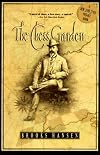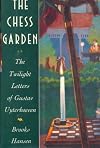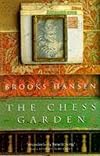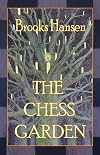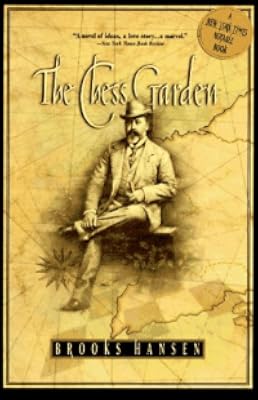
The Chess Garden
by Brooks Hansen
On This Page
Description
This novel weaves an Alice in Wonderland-like adventure into the life story of an eccentric 19th century doctor. Gradually the story of his life unfolds, his youth and marriage in Holland, his troubled career in Berlin and his unusual philosophy.Tags
Recommendations







Member Reviews
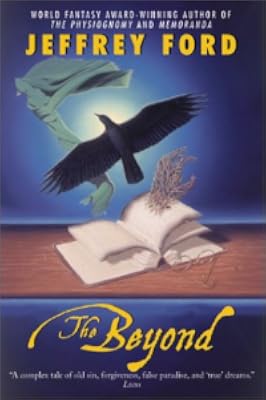
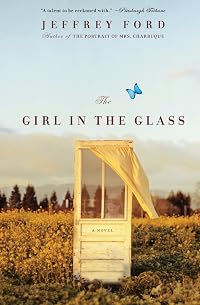
This book contains one of the best religio-philosophical ("spiritual," if you must) fantasy allegories I've read -- I'd class it with the Well-built City Trilogy of Jeffrey Ford, George MacDonald's Lilith, and the Renaissance Hypnerotomachia Poliphili. It takes place in the "Antipodes," an island country populated by animate game pieces (and thus evocative of Through the Looking Glass).
But the allegorical fantasy is framed by a modern novel that recounts a philosophical/theological quest on the part of a Dutch pathologist-cum-mystic, and the community that he inspires after settling in Dayton, Ohio. It provides a compelling human story set firmly in the real world of "American metaphysical religion" detailed in Catherine Albanese's show more excellent history A Republic of Mind and Spirit, and motivated by some of the fundamental dilemmas involved with scientific and humanitarian impulses.
The most powerful allegories are bearers of real human pain and struggle. I didn't cry over the Hypnerotomachia until I had completed months of study following my first full reading of the book. For The Chess Garden it took only until I started to consider this review and to reflect back on the identities of some of the figures in the allegory.
The settings and characters of the fantasy's frame--or foundation, rather--are so well-researched and so credible that I ended up exploring reference materials out of curiosity to know which of the supporting characters were from the actual history of medicine, belles lettres, and alternative religion. Many of them were. There was a little comparative weakness in the treatment of gaming details. The text's only anachronism that was obvious to me was the mention of the game Pente (first published in 1971) in a letter supposedly written in 1901.
Ultimately, an important reflection of this book concerns the power of fantasy narrative to effect spiritual growth and healing, and to that extent, it might be classed with such works as The Neverending Story and The Princess Bride. In both of those books, there is a recognition of how such stories can be a bridge between children and the wisdom of their elders, but the emphasis there is decidedly on the subjectivity of the children. In these "Twilight Letters," it is the subjectivity of the elderly Dr. Uyterhoeven that takes the foremost place, with significant implications also for his wife-then-widow.
I can see how this book escaped my notice for twenty years. Despite the comparisons I've made here, it is unique in the way that it combines the quotidian and the fantastic, and it could be challenging or even off-putting for readers who depend on the immersive conventions of either fantasy or realistic narrative. The rewards of reading it, however, far exceed the challenges. show less
But the allegorical fantasy is framed by a modern novel that recounts a philosophical/theological quest on the part of a Dutch pathologist-cum-mystic, and the community that he inspires after settling in Dayton, Ohio. It provides a compelling human story set firmly in the real world of "American metaphysical religion" detailed in Catherine Albanese's show more excellent history A Republic of Mind and Spirit, and motivated by some of the fundamental dilemmas involved with scientific and humanitarian impulses.
The most powerful allegories are bearers of real human pain and struggle. I didn't cry over the Hypnerotomachia until I had completed months of study following my first full reading of the book. For The Chess Garden it took only until I started to consider this review and to reflect back on the identities of some of the figures in the allegory.
The settings and characters of the fantasy's frame--or foundation, rather--are so well-researched and so credible that I ended up exploring reference materials out of curiosity to know which of the supporting characters were from the actual history of medicine, belles lettres, and alternative religion. Many of them were. There was a little comparative weakness in the treatment of gaming details. The text's only anachronism that was obvious to me was the mention of the game Pente (first published in 1971) in a letter supposedly written in 1901.
Ultimately, an important reflection of this book concerns the power of fantasy narrative to effect spiritual growth and healing, and to that extent, it might be classed with such works as The Neverending Story and The Princess Bride. In both of those books, there is a recognition of how such stories can be a bridge between children and the wisdom of their elders, but the emphasis there is decidedly on the subjectivity of the children. In these "Twilight Letters," it is the subjectivity of the elderly Dr. Uyterhoeven that takes the foremost place, with significant implications also for his wife-then-widow.
I can see how this book escaped my notice for twenty years. Despite the comparisons I've made here, it is unique in the way that it combines the quotidian and the fantastic, and it could be challenging or even off-putting for readers who depend on the immersive conventions of either fantasy or realistic narrative. The rewards of reading it, however, far exceed the challenges. show less
This is a remarkable love story that is also a fantasy and a story of one man’s philosophy. Sometimes the different elements don’t exactly seem to jive, but it kept me going despite having gotten a bit bogged down in the philosophical aspects. Wasn’t quite sure where I was headed or where I ended up, but the main character reminded me of my father and that pulled me through.
This book is why I read. Bought a copy and sent it to my Dad in Florida.
I remember reading this in the lobby of a run down hotel while under house arrest in the Bahamas waiting for my work visa to come in.
I remember reading this in the lobby of a run down hotel while under house arrest in the Bahamas waiting for my work visa to come in.
In Ohio at the turn of this century, the wife of Dr Uyterhoeven receives a series of strange letters from her husband, who reports being shipwrecked on his way to South Africa, and landing in a fantastical country inhabited by chess pieces, dominoes and dice.
Intercut with these letters, the story of his life unfolds: his youth and marriage in Holland, his troubled scientific career in Berlin, the genesis of his unusual philosophy and of the chess garden. History and allegory are expertly interwoven in this tale of spiritual progress, a novel of dazzling imagination.
A wonderfully bewitching compendium of stories told in a lucid prose that is free of any stylistic gimmickry. A highly absorbing and endlessly inventive antipodean show more adventure.
*note to self. Copy from A. show less
Intercut with these letters, the story of his life unfolds: his youth and marriage in Holland, his troubled scientific career in Berlin, the genesis of his unusual philosophy and of the chess garden. History and allegory are expertly interwoven in this tale of spiritual progress, a novel of dazzling imagination.
A wonderfully bewitching compendium of stories told in a lucid prose that is free of any stylistic gimmickry. A highly absorbing and endlessly inventive antipodean show more adventure.
*note to self. Copy from A. show less
Ratings
Members
- Recently Added By
Lists

Books That Made Me Cry
199 works; 105 members

Pleasant Surprises: Books That Exceeded Our Expectations
418 works; 142 members

Books with "Living Chess"
17 works; 12 members

Fiction Featuring Real People
81 works; 17 members

Daria Morgendorffer's Bookshelf
70 works; 5 members

Toy Stories: Living Dolls, Bears and Other Toys
129 works; 7 members

Favorite Epistolary Fiction
143 works; 144 members

Books That Made Us Cry
278 works; 145 members
Author Information

10+ Works 687 Members
Some Editions
Awards and Honors
Awards
Common Knowledge
- Canonical title
- The Chess Garden
- People/Characters
- Gustav Uyterhoeven; Hermann Lebert; Rudolf Ludwig Carl Virchow; John Bigelow
- Important places
- Dayton, Ohio, USA; Ohio, USA; South Africa
Classifications
- Genres
- Fiction and Literature, General Fiction, Fantasy, Historical Fiction
- DDC/MDS
- 813.54 — Literature & rhetoric American literature in English American fiction in English 1900-1999 1945-1999
- LCC
- PS3558 .A5126 .C48 — Language and Literature American literature American literature Individual authors 1961-
- BISAC
Statistics
- Members
- 408
- Popularity
- 76,010
- Reviews
- 6
- Rating
- (4.14)
- Languages
- Dutch, English
- Media
- Paper, Ebook
- ISBNs
- 7
- ASINs
- 3