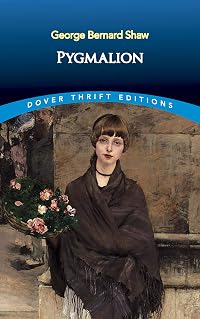
Pygmalion
by George Bernard Shaw
On This Page
Description
In George Bernard Shaw's play Pygmalion a phonetician believes the power of speech is such that he can introduce a Cockney flower girl to polite society after careful language and etiquette training, and no one will discern her true roots. The professor and the flower girl grown close, but after her successful debut she rejects the professor and his overbearing ways for a poor gentleman.The most famous adaptation of the play is the 1964 film My Fair Lady, starring Audrey Hepburn and Rex show more Harrison.
. show less
Tags
Recommendations












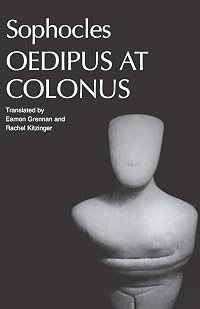
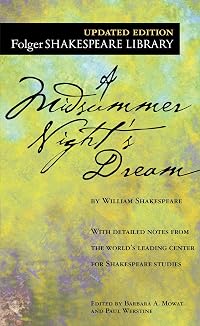
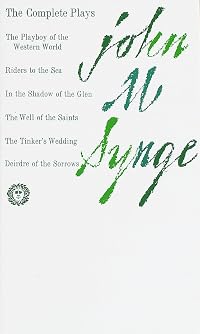
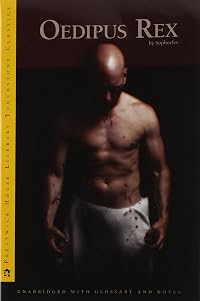

Member Recommendations
Member Reviews
A thinking parrot? Oh dear! Eliza is fed up selling flowers down the streets. She dreams of working in a posh shop. Fair enough! BUT, young girl raised by an alcoholic and from the lower classes of the London Est End, poor Eliza only speaks the dialect of her class, and with a strong accent reflecting her social roots that is, a resounding cockney absolutely unacceptable to serve ladies and gentlemen in a posh shop! Imagine that... ! Oh dear. Fortunately, she will meet Mr Higgins, expert in linguistic and speech therapy who will change all that...
Don't be fooled by the title. The link with Ovid's myth is rather shallow. Eliza is far from being a silly girl, and the rest is more a punchy criticism of English society before WWI (it was show more staged for the first time in 1914) than a naïve romantic little story.
The cruel relationships between the characters, Higgins' tyranny, barely counter-balanced by the curiosity of a Colonel Pickering intrigued by this weird bet to change a poor street seller into a lady, hide in fact a violent slap given right into the face of a arrogant class society, where each is judged, snobbishly, for their language. At the time indeed, to be educated was to speak a 'proper' English that is, the English of London's social elite. To don't abide by it was to risk ridicule, and stigma. An accent carried, after all, a lot of prejudices; Shaw, Irishman in England, knew very well what he was speaking about (no pun intended!).
Oh! Did I write 'at the time'... ? Ha! Yes. We are way above that nowadays, aren't we? We don't judge people anymore solely on their way of speaking, do we?... Gnark gnark^^
Timely, and pure genius! show less
Don't be fooled by the title. The link with Ovid's myth is rather shallow. Eliza is far from being a silly girl, and the rest is more a punchy criticism of English society before WWI (it was show more staged for the first time in 1914) than a naïve romantic little story.
The cruel relationships between the characters, Higgins' tyranny, barely counter-balanced by the curiosity of a Colonel Pickering intrigued by this weird bet to change a poor street seller into a lady, hide in fact a violent slap given right into the face of a arrogant class society, where each is judged, snobbishly, for their language. At the time indeed, to be educated was to speak a 'proper' English that is, the English of London's social elite. To don't abide by it was to risk ridicule, and stigma. An accent carried, after all, a lot of prejudices; Shaw, Irishman in England, knew very well what he was speaking about (no pun intended!).
Oh! Did I write 'at the time'... ? Ha! Yes. We are way above that nowadays, aren't we? We don't judge people anymore solely on their way of speaking, do we?... Gnark gnark^^
Timely, and pure genius! show less
I wasn't crazy about Pygmalion, but I liked it well enough, so it gets a solid three stars from me. I was expecting the story to be more about the process of Liza's transformation from flower girl to lady, but in actually it focused on the way she was treated by others.
That being said, I think it's fascinating to look at how Liza views herself and her worth, and that she's so conscious of the importance of how others view her. She flat-out says as much to Pickering towards the end of the play. So often women are portrayed as self-deprecating and humble to the point of shaming themselves, but not so with Liza. From the very beginning she holds herself in high esteem, and gives Higgins the what-for when he doesn't see her as worth much.
I show more am bothered by the fact that Higgins never apologizes for the way he objectifies and uses Liza, but I'm bothered even more so by his lack of even really seeing the problem. Liza explains how she feels to Higgins, but he just doesn't get it, saying that he treats everyone the same, so what does it matter? He has a deeply ingrained sense of self-importance and righteousness that got under my skin for the entire story and left me fuming when he never seemed to feel bad about any of it. But, that's life I guess, and it probably would have felt inauthentic if he had changed.
I would recommend this if you're looking for:
*a short read
*something that's referenced a lot
*a strong female character who steals the spotlight show less
That being said, I think it's fascinating to look at how Liza views herself and her worth, and that she's so conscious of the importance of how others view her. She flat-out says as much to Pickering towards the end of the play. So often women are portrayed as self-deprecating and humble to the point of shaming themselves, but not so with Liza. From the very beginning she holds herself in high esteem, and gives Higgins the what-for when he doesn't see her as worth much.
I show more am bothered by the fact that Higgins never apologizes for the way he objectifies and uses Liza, but I'm bothered even more so by his lack of even really seeing the problem. Liza explains how she feels to Higgins, but he just doesn't get it, saying that he treats everyone the same, so what does it matter? He has a deeply ingrained sense of self-importance and righteousness that got under my skin for the entire story and left me fuming when he never seemed to feel bad about any of it. But, that's life I guess, and it probably would have felt inauthentic if he had changed.
I would recommend this if you're looking for:
*a short read
*something that's referenced a lot
*a strong female character who steals the spotlight show less
The play opens with Henry Higgins, a professor of linguistics, at Covent Garden sheltering with a crowd from the pouring rain. He amuses himself by taking down people's accents and telling them where they're from - much to their irritation and the fascination of Colonel Pickering. At one point as he leaves, Higgins tells Pickering that if he had a month or so, he could turn flower girl Eliza Doolittle into a duchess. But no one could be more surprised when she decides to take him up on his offer.
The later musical, My Fair Lady, is actually remarkably faithful to its source (aside from all the singing, of course), except for one crucial thing. The ending. In Shaw's play, Eliza is very much aware that Higgins takes her for granted and show more shows her no real kindness. And thank goodness, in this version when Higgins tells her to run errands for him, she tells him to do them himself. The author even appends an essay to the end of the play explaining the many ways that it is impossible for Eliza and Higgins to have any sort of romantic happy ending. All I have to say to that is Thank Goodness.
The play itself is a quick read, especially since most of the scenes are familiar from My Fair Lady. My favorites are the ones involving Higgins' mother - the only one who sees both the drama and the outcome in advance. She takes Eliza under her wing and does her best to set her son straight. Besides it is at Mrs. Higgins' tea that we see Eliza's disastrous (though perfectly pronounced) first venture into society. Both funny and hinting at deeper truths - the play is well worth a read. And don't leave out the essay at the end!
More at my blog. show less
The later musical, My Fair Lady, is actually remarkably faithful to its source (aside from all the singing, of course), except for one crucial thing. The ending. In Shaw's play, Eliza is very much aware that Higgins takes her for granted and show more shows her no real kindness. And thank goodness, in this version when Higgins tells her to run errands for him, she tells him to do them himself. The author even appends an essay to the end of the play explaining the many ways that it is impossible for Eliza and Higgins to have any sort of romantic happy ending. All I have to say to that is Thank Goodness.
The play itself is a quick read, especially since most of the scenes are familiar from My Fair Lady. My favorites are the ones involving Higgins' mother - the only one who sees both the drama and the outcome in advance. She takes Eliza under her wing and does her best to set her son straight. Besides it is at Mrs. Higgins' tea that we see Eliza's disastrous (though perfectly pronounced) first venture into society. Both funny and hinting at deeper truths - the play is well worth a read. And don't leave out the essay at the end!
More at my blog. show less
Shaw’s laugh-out-loud comedy centers on the bet between a pair of scientists that they can turn a poor flower-girl into a lady simply by teaching her to speak proper English. If the plot sounds familiar, that’s because it’s based on a famous Greek myth and went on to inspire films like My Fair Lady and Pretty Woman. But Shaw does it better than anyone before or after. He provokes laugh after laugh while slowly revealing an unsettling set of issues that underpin the plot. Fans were so upset by the ending, they forced him to write a sequel.
https://nwhyte.livejournal.com/3300868.html
I was so struck by the misogyny of the film of My Fair Lady that I went back and watched the 1938 Pygmalion, starring Leslie Howard (in Gone With The Wind the following year) and Wendy Hiller, for which George Bernard Shaw won an Oscar for Best Screenplay (making him the first person to win both an Oscar and a Nobel Prize; he has now been joined by Bob Dylan and arguably Al Gore). I also consulted the original 1913 theatre script - written 25 years before the 1938 film and 51 years before My Fair Lady hit the screens.
It's really striking that in the original play, Higgins is clearly directed to be "entirely frank and void of malice that he remains likeable even in his least reasonable moments", show more whereas Harrison's portrayal is not at all likeable at any time; and even more striking that the 1938 version actually tones down Higgins' chauvinism from the original script, some of the nastier passages about Eliza removed entirely and some of the epithets he uses softened. Both are still pretty bad, but the 1964 film is the worst. The 1938 film, like the musical and the 1964 film, has Eliza returning to Higgins in the end, but given that he has not been as nasty to her it's a bit more plausible. Shaw, of course, disapproved and wrote a long postscript to the original play, explaining how Eliza successfully manages her relationships with Higgins and Pickering after marrying Freddie. show less
I was so struck by the misogyny of the film of My Fair Lady that I went back and watched the 1938 Pygmalion, starring Leslie Howard (in Gone With The Wind the following year) and Wendy Hiller, for which George Bernard Shaw won an Oscar for Best Screenplay (making him the first person to win both an Oscar and a Nobel Prize; he has now been joined by Bob Dylan and arguably Al Gore). I also consulted the original 1913 theatre script - written 25 years before the 1938 film and 51 years before My Fair Lady hit the screens.
It's really striking that in the original play, Higgins is clearly directed to be "entirely frank and void of malice that he remains likeable even in his least reasonable moments", show more whereas Harrison's portrayal is not at all likeable at any time; and even more striking that the 1938 version actually tones down Higgins' chauvinism from the original script, some of the nastier passages about Eliza removed entirely and some of the epithets he uses softened. Both are still pretty bad, but the 1964 film is the worst. The 1938 film, like the musical and the 1964 film, has Eliza returning to Higgins in the end, but given that he has not been as nasty to her it's a bit more plausible. Shaw, of course, disapproved and wrote a long postscript to the original play, explaining how Eliza successfully manages her relationships with Higgins and Pickering after marrying Freddie. show less
Shaw, George Bernard. Pygmalion: A Romance in Five Acts. Edited by Dan H. Laurence. Penguin, 1987.
This month Netflix is streaming My Fair Lady (1964) and HBO Max and Turner Classic Movies are streaming Pygmalion (1937). So, what better time to reread Shaw’s play, the source material for both films. The play, itself, of course was a treatment of the Greek story of the sculptor (Pygmalion) who creates a statue of a woman (Galatea) so perfectly, she comes to life. It was Shaw’s most popular play, and I can’t think of one on which he did more tinkering over a longer time. The play premiered in 1913, and Shaw was around long enough to work on the screenplay in 1937, winning an Oscar for his efforts. From here on in there are spoilers, show more so be warned. When Eliza marches out and does not return, at the end of the play, audiences and producers felt cheated of the kiss and make up they expected from Higgins and the feminine subservience they expected from Eliza. Both films play to the crowd by having Eliza bring Higgins his slippers. But that was not what Shaw wanted. When one early production had Higgins throw Eliza a flower from the balcony, Shaw was so steamed he wrote a long prose epilog in which he explains that Eliza’s decision to marry Freddy was rational and in line with her feminine instincts. She knew Freddy would never dominate her the way Higgins would. Galatea, Shaw concludes, "never does quite like Pygmalion: his relation to her is too godlike to be altogether agreeable." A recent feminist retelling of the Greek myth by Madeline Miller agrees and ends with Galatea taking their child and leaving town. Shaw describes the lives of the characters going on in predictably unromantic ways, none of them ever changing in any significant way. Eliza and Freddy run a flower shop, underwritten by Colonel Pickering, which only succeeds when they turn the management of it over to the hired help. Significantly, Shaw says nothing about Freddy and Eliza having a child. One can hardly blame romcom fans for being nonplussed. show less
This month Netflix is streaming My Fair Lady (1964) and HBO Max and Turner Classic Movies are streaming Pygmalion (1937). So, what better time to reread Shaw’s play, the source material for both films. The play, itself, of course was a treatment of the Greek story of the sculptor (Pygmalion) who creates a statue of a woman (Galatea) so perfectly, she comes to life. It was Shaw’s most popular play, and I can’t think of one on which he did more tinkering over a longer time. The play premiered in 1913, and Shaw was around long enough to work on the screenplay in 1937, winning an Oscar for his efforts. From here on in there are spoilers, show more so be warned. When Eliza marches out and does not return, at the end of the play, audiences and producers felt cheated of the kiss and make up they expected from Higgins and the feminine subservience they expected from Eliza. Both films play to the crowd by having Eliza bring Higgins his slippers. But that was not what Shaw wanted. When one early production had Higgins throw Eliza a flower from the balcony, Shaw was so steamed he wrote a long prose epilog in which he explains that Eliza’s decision to marry Freddy was rational and in line with her feminine instincts. She knew Freddy would never dominate her the way Higgins would. Galatea, Shaw concludes, "never does quite like Pygmalion: his relation to her is too godlike to be altogether agreeable." A recent feminist retelling of the Greek myth by Madeline Miller agrees and ends with Galatea taking their child and leaving town. Shaw describes the lives of the characters going on in predictably unromantic ways, none of them ever changing in any significant way. Eliza and Freddy run a flower shop, underwritten by Colonel Pickering, which only succeeds when they turn the management of it over to the hired help. Significantly, Shaw says nothing about Freddy and Eliza having a child. One can hardly blame romcom fans for being nonplussed. show less
Pygmalion is not a romance. Rather, it is a snarky, witty examination of "middle class morality", the ethics of playing with a person's life and feelings; also, that of transformation, gaining self-respect, and strength of character. Shaw also examines class, the station of women, and the skewed morality it brings: “I sold flowers. I didn't sell myself. Now you've made a lady of me I'm not fit to sell anything else.”
I listened first on audio. I got the inkling I was missing details, so I read it, too - and I am glad I did. The preface, and especially the afterword, explains a lot about Shaw's motivations; and offers a brilliant analysis of Eliza's character and the relationship between her and Higgins. They are friends, complement show more and respect each other, but are not romantically suited or involved. Eliza is too smart to marry Higgins - she would never want to spend her life fetching slippers, but would rather have someone fetching them for her.
Take that, My Fair Lady. show less
I listened first on audio. I got the inkling I was missing details, so I read it, too - and I am glad I did. The preface, and especially the afterword, explains a lot about Shaw's motivations; and offers a brilliant analysis of Eliza's character and the relationship between her and Higgins. They are friends, complement show more and respect each other, but are not romantically suited or involved. Eliza is too smart to marry Higgins - she would never want to spend her life fetching slippers, but would rather have someone fetching them for her.
Take that, My Fair Lady. show less
Members
- Recently Added By
Lists

You Couldn't Pay Me to Read That (Take 2)
213 works; 87 members

1:28 p.m.'s 350 Stage Plays Challenge
94 works; 3 members

Mensa for Kids Excellence in Reading Award Program (Grades 9-12)
116 works; 5 members
Mensa for Kids Excellence in Reading Award Program (Grades 9-12)
116 works; 3 members

1964 College Preparatory Reading List
202 works; 8 members

Books Read in 2020
4,379 works; 123 members

Best 20th Century Books as of 1924
100 works; 6 members

Books Read in 2021
5,361 works; 114 members
Stage Plays/Screenplays/Dialogues/Anything Dialogue-Storytelling Related
81 works; 2 members

Hulk's Essential Reading List
38 works; 1 member

Shaykh Hamza's Book Recommendations
439 works; 3 members
How to Read a Book's Recommended Reading List
309 works; 10 members

Greatest Books, allegedly
484 works; 9 members

United Kingdom
82 works; 4 members

AP Lit
363 works; 6 members

Books Read in 2023
5,638 works; 147 members

Mustich's 1000 Books to Read Before You Die: A Life Changing List
1,001 works; 20 members
Essential/Recognized Stage Plays
115 works; 4 members

Book wishlist
78 works; 1 member
New Lifetime Reading Plan by Fadiman and Major
225 works; 5 members

Recommended Reading : 600 Classics Reviewed, Editors of Salem Press, 2015
634 works; 6 members
My Play Collection
769 works; 3 members

The Complete Rory Gilmore Reading List
506 works; 5 members

Authors mentioned in The World of Yesterday
68 works; 1 member

The Plays of Bernard Shaw
18 works; 1 member

Best books set in London
26 works; 1 member
Plays I Like
230 works; 31 members

Books Featured on Gilmore Girls
307 works; 21 members
Best of British Literature
226 works; 41 members

Books You Read During High School (For School)
301 works; 52 members

Best Books Set in London
157 works; 42 members

Best Satire
188 works; 26 members

Literature About Social Class
134 works; 19 members

Best of Irish Literature
37 works; 7 members
20th Century Literature
1,161 works; 55 members

New York Public Library's Books of the Century
120 works; 20 members

New York Public Library's Books of the Century - All
170 works; 14 members

Sonlight Books
1,487 works; 25 members

University literature
145 works; 5 members

Books Read in 2017
4,249 works; 130 members

Antiheroes
17 works; 3 members

BingoDOG - Language in Fiction
35 works; 12 members
1910s
90 works; 16 members
Western World's Greatest Books - Project Gutenberg
295 works; 15 members

Nobel Price Winners
222 works; 20 members
Harold Bloom - The Western Canon: D. The Chaotic Age
833 works; 24 members
Overdue Podcast
808 works; 9 members

100 Most Recommended Works
100 works; 11 members
The College Board: 101 Great Books Recommended for College-Bound Readers
111 works; 7 members
Favourite Books
1,820 works; 316 members

bound
100 works; 1 member
Author Information

Renowned literary genius George Bernard Shaw was born on July 26, 1856 in Dublin, Ireland. He later moved to London and educated himself at the British Museum while several of his novels were published in small socialist magazines. Shaw later became a music critic for the Star and for the World. He was a drama critic for the Saturday Review and show more later began to have some of his early plays produced. Shaw wrote the plays Man and Superman, Major Barbara, and Pygmalion, which was later adapted as My Fair Lady in both the musical and film form. He also transformed his works into screenplays for Saint Joan, How He Lied to Her Husband, Arms and the Man, Pygmalion, and Major Barbara. Shaw won the Nobel Prize for Literature in 1925. George Bernard Shaw died on November 2, 1950 at Ayot St. Lawrence, Hertfordshire, England. (Bowker Author Biography) show less
Some Editions
Awards and Honors
Awards
Notable Lists
Series
Belongs to Publisher Series
Penguin Plays (PL3)
Warbler Classics (man and superman shaw)
Nobelpreisträger Coron-Verlag (weiß) (1925 (Irland))
Reader's Enrichment Series (RE 128)
Centopaginemillelire (238)
Zwarte Beertjes (776)
suhrkamp taschenbuch (1859)
Reclams Universal-Bibliothek (8204)
Work Relationships
Is contained in
Has the (non-series) sequel
Has the adaptation
Has as a commentary on the text
Has as a student's study guide
Common Knowledge
- Canonical title
- Pygmalion
- Original title
- Pygmalion: A Romance in Five Acts
- Alternate titles*
- Pygmalion : Komödie in fünf Akten
- Original publication date
- 1913
- People/Characters
- Henry Higgins; Colonel Pickering; Eliza Doolittle; Mrs. Pearce
- Important places
- London, England, UK
- Related movies
- Pygmalion (1938 | IMDb); My Fair Lady (1964 | IMDb); Hallmark Hall of Fame: Pygmalion (1963 | IMDb); Pygmalion (1983 | IMDb); She's All That (1999 | IMDb)
- First words
- The Daughter: I'm getting chilled to the bone.
- Quotations
- Women upset everything. When you let them into your life, you find that the woman is driving at one thing and you're driving at another.
It is impossible for an Englishman to open his mouth without making some other Englishman hate or despise him.
The English have no respect for their language, and will not teach their children to speak it.
What is life but a series of inspired follies? The difficulty is to find them to do. Never lose a chance: it doesn't come every day.
Mrs. Higgins. You certainly are a pretty pair of babies, playing with your live doll.
[from the sequel] And so it came about that Eliza's luck held, and the expected opposition to the flower shop melted away. The shop is in the arcade of a railway station not very far from the Victoria and Albert Museum; and i... (show all)f you live in that neighbourhood you may go there any day and buy a buttonhole from Eliza.
You see, really and truly, apart from the things anyone can pick up (the dressing and the proper way of speaking, and so on), the difference between a lady and a flower girl is not how she behaves, but how she's treated. I s... (show all)hall always be a flower girl to Professor Higgins, because he always treats me as a flower girl, and always will; but I know I can be a lady to you, because you always treat me as a lady, and always will. - Last words
- (Click to show. Warning: May contain spoilers.)Galatea never does quite like Pygmalian: his relation to her is too godlike to be altogether agreeable.
- Original language
- English
- Canonical DDC/MDS
- 822.912
- Canonical LCC
- PR5363
- Disambiguation notice
- 3150082048 1974 Reclam
3150092663 1990 Reclam Fremdsprachentexte 9266 (Rote Reihe)
*Some information comes from Common Knowledge in other languages. Click "Edit" for more information.
Classifications
Statistics
- Members
- 7,732
- Popularity
- 1,470
- Reviews
- 95
- Rating
- (3.85)
- Languages
- 13 — Catalan, Czech, Dutch, English, French, German, Hungarian, Italian, Korean, Polish, Portuguese, Spanish, Swedish
- Media
- Paper, Audiobook, Ebook
- ISBNs
- 300
- UPCs
- 9
- ASINs
- 153