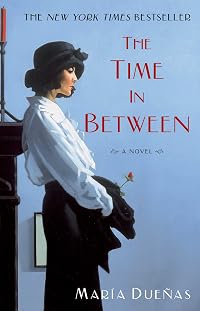
The Time in Between
by María Dueñas
On This Page
Description
"The Time In Between follows the story of a seamstress who becomes the most sought-after couturiere during the Spanish Civil War and World War II"--Provided by publisher.Tags
Recommendations
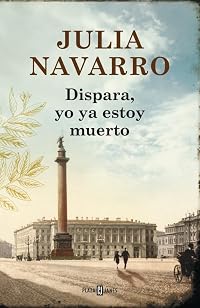
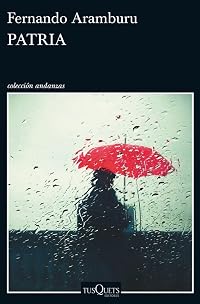
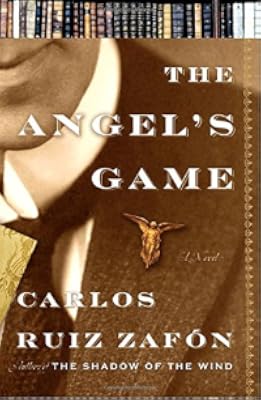

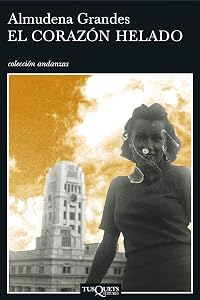

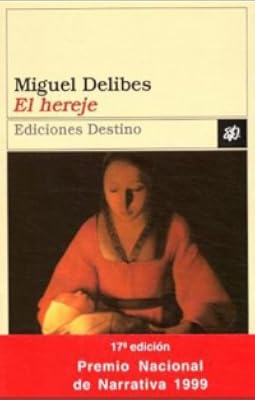
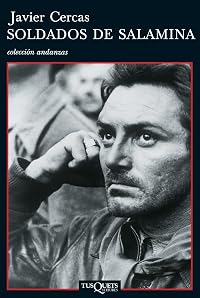
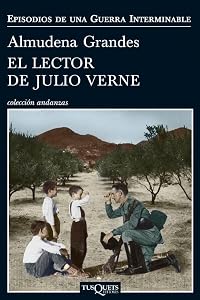
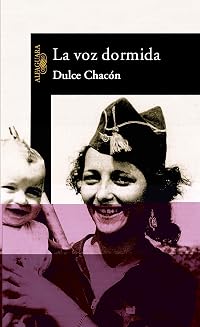
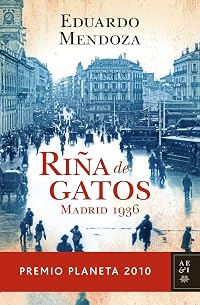
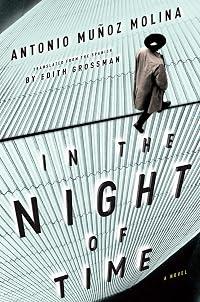
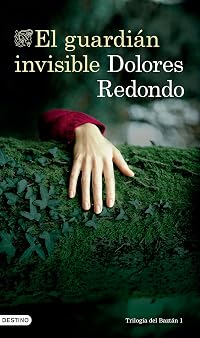
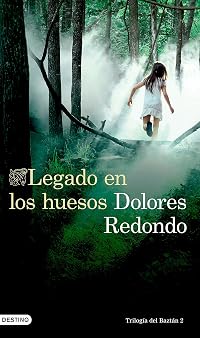










Member Recommendations

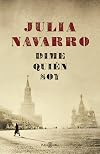
albavirtual Una historia de pasión, espionaje, intriga, en los años de la Guerra Civil española
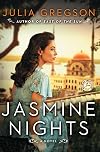
soffitta1 Both books have a heroine whose life is changed through meeting a man, taking them on journeys far from home and into a world that is both exotic, but fraught with danger.

Member Reviews
A sweeping historical novel featuring the young Sira Quiroga, who begins by cleaning the floors of the atelier where her mother is a seamstress and ends up as a sought-after fashion designer in World War II. Using her skills as a dressmaker to connect with the high society ladies, she ferrets out Nazi secrets and passes that information on to the British via Morse code embedded in dress patterns.
Wow … what a fascinating and engaging read. This is Dueñas’s debut work, but it sure reads like the work of an accomplished storyteller. The novel starts off slowly and I was pretty disappointed in the young Sira and the poor choices she made with respect to men. But once she was forced to make her own way (abandoned and penniless in show more Morocco of all places), the story really picked up.
I loved the way that she grew as a character, coming into her own while carefully observing and learning from her friends, neighbors and clients. Her relationships are wonderfully complex – from the police inspector, to her landlady, to her neighbor and friend, Felix, to the glamorous Rosalinda Fox, and her stoic mother.
I’ve read many novels set in WW2 but only one previous one set in Spain (Hemingway’s For Whom the Bell Tolls). What sets this apart is that is mostly deals with the “women left behind.” The ways in which women and men who were not at the forefront of the fighting dealt with the ramifications of the wars, both the Spanish Civil War and WW2. Dueñas fills the novel with details of life “at home” during this time frame: in Madrid, Morocco and Lisbon. The shortages, the black market, the unusual alliances.
Of course, there are real-life people in the book; you cannot set a novel at this place and during this time frame and completely avoid mentioning Hitler or Franco. But I was surprised to discover that Rosalinda Fox was a real woman. Sira is a totally fictitious character, but Dueñas inserts her into the history of the time in a way that is believable.
I understand that there is a Spanish telenovela (soap opera / mini-series) available on Netflix (with subtitles). One of my friends commented that she was hooked on it and loved the ending when Sirais reunited with her mother . Once I told her that the soap opera ending is barely at the half-way point in the novel, she set out to get the book.
I recommend this to anyone who loves a fast-paced novel, with fascinating characters, and a strong female lead. The final scene when she decides to take matters into her own hands and go forward on her own terms is marvelous. I wanted to stand up and cheer! show less
Wow … what a fascinating and engaging read. This is Dueñas’s debut work, but it sure reads like the work of an accomplished storyteller. The novel starts off slowly and I was pretty disappointed in the young Sira and the poor choices she made with respect to men. But once she was forced to make her own way (abandoned and penniless in show more Morocco of all places), the story really picked up.
I loved the way that she grew as a character, coming into her own while carefully observing and learning from her friends, neighbors and clients. Her relationships are wonderfully complex – from the police inspector, to her landlady, to her neighbor and friend, Felix, to the glamorous Rosalinda Fox, and her stoic mother.
I’ve read many novels set in WW2 but only one previous one set in Spain (Hemingway’s For Whom the Bell Tolls). What sets this apart is that is mostly deals with the “women left behind.” The ways in which women and men who were not at the forefront of the fighting dealt with the ramifications of the wars, both the Spanish Civil War and WW2. Dueñas fills the novel with details of life “at home” during this time frame: in Madrid, Morocco and Lisbon. The shortages, the black market, the unusual alliances.
Of course, there are real-life people in the book; you cannot set a novel at this place and during this time frame and completely avoid mentioning Hitler or Franco. But I was surprised to discover that Rosalinda Fox was a real woman. Sira is a totally fictitious character, but Dueñas inserts her into the history of the time in a way that is believable.
I understand that there is a Spanish telenovela (soap opera / mini-series) available on Netflix (with subtitles). One of my friends commented that she was hooked on it and loved the ending when Sira
I recommend this to anyone who loves a fast-paced novel, with fascinating characters, and a strong female lead. The final scene when she decides to take matters into her own hands and go forward on her own terms is marvelous. I wanted to stand up and cheer! show less
Set in Spain, Morocco, and Portugal during the Spanish Civil War and World War II, this book tells the story of Sira, a poor seamstress born in Madrid, who transforms into an acclaimed designer. Sira falls in love and migrates to Morocco during the Spanish Civil War, where she endures many hardships and must remake her life. She is swept up in the turbulent events of the era, including politics and espionage.
This is the type of historical fiction I enjoy. The author sets the story around fictional characters and supplements the narrative with real people. It feels authentic to the time period. The story includes romantic relationships, but it is not primarily a romance. Sira must find an inner core of strength to overcome many show more obstacles, and her character growth is noticeable. The storyline is stitched together in segments that portray the main events in Sira’s life, which seems appropriate in a novel about a seamstress. There is a lot going on in this novel and it offers a pleasing mix of character development and plot. The pace ramps up in the second half when the espionage storyline kicks in.
The story is narrated by Sira, looking back on her life. “And that is my story, or at least that’s how I remember it, perhaps varnished over with the sheen that decades and nostalgia give to things. What happened in Spain after the European war, as well as the traces of many people who have passed through this account—Beigbeder, Rosalinda Fox, Serrano Suñer, and others—can be found in history books and archives, and in the memories of older generations. Their comings and goings, their glories and miseries were objective facts that in their day filled newspapers and fed the salons and the clusters of people gossiping on street corners.”
I particularly enjoyed the depiction of life in Tétouan , Morocco. The author does a great job of establishing an ambiance of color and activity. The writing style is detailed, perhaps occasionally too detailed, but overall, it is an entertaining piece of historical fiction. show less
This is the type of historical fiction I enjoy. The author sets the story around fictional characters and supplements the narrative with real people. It feels authentic to the time period. The story includes romantic relationships, but it is not primarily a romance. Sira must find an inner core of strength to overcome many show more obstacles, and her character growth is noticeable. The storyline is stitched together in segments that portray the main events in Sira’s life, which seems appropriate in a novel about a seamstress. There is a lot going on in this novel and it offers a pleasing mix of character development and plot. The pace ramps up in the second half when the espionage storyline kicks in.
The story is narrated by Sira, looking back on her life. “And that is my story, or at least that’s how I remember it, perhaps varnished over with the sheen that decades and nostalgia give to things. What happened in Spain after the European war, as well as the traces of many people who have passed through this account—Beigbeder, Rosalinda Fox, Serrano Suñer, and others—can be found in history books and archives, and in the memories of older generations. Their comings and goings, their glories and miseries were objective facts that in their day filled newspapers and fed the salons and the clusters of people gossiping on street corners.”
I particularly enjoyed the depiction of life in Tétouan , Morocco. The author does a great job of establishing an ambiance of color and activity. The writing style is detailed, perhaps occasionally too detailed, but overall, it is an entertaining piece of historical fiction. show less
WOW! The Time In Between is an amazing saga of a young woman caught in the turmoil of the Spanish civil war, it's as much a story of a woman's survival during wartime as was Scarlett O'Hara's saga in Gone With The Wind. Author Maria Duenas has created a new literary heroine in Sira Quiroga.
The reader watches Sira's growth and struggle to not only survive, but to come out ahead of those around her. This is a fantastic example of historical fiction at its best! I didn't know much about the Spanish civil war, and this was an incredible learning experience disguised as a great read! Ms. Duenas brings the sights, smells and textures of the 1930s Madrid and Morocco to live. her descriptive phrases are so multi-layered that as a reader, I show more could "see" the cities as if I were there.
I do have a couple of issues with this book, even as much as I loved it, it was just about thirty percent too long. I loved the descriptions and the background given each situation, character and locale, but there was more than enough and I found myself skimming over bits that brought nothing to the story. In all honesty, the descriptive verbiage took away from the story. You really don't get to the meat of the book until about half way into the story. I don't know if the flowery prose was a product of translation from the original Spanish to English, but for me, it didn't add to the plot. It detracted from it.
I will say that once we got to the part where Sira is approached by her friend to work with the British counterintelligence (about half way through) the story seemed to just race through the last half. Maria Duenas' ability to build supporting characters as real and multi-layered people is just brilliant! If The Time In Between is ever made into a film, the supporting actors could steal the story! In fact, in some places in this book, they did just that!
All that being said, I LOVE this book!! It's one that I'll give to friends as gifts.
I give it a big 5 out of 5 stars! Buy them in quantities to give to everyone on your gift list! You won't be sorry and they will love you for it!
**This e-galley was provided to me by the publisher through NetGalley, and that in no way affected my ability to write an honest review of this book. show less
The reader watches Sira's growth and struggle to not only survive, but to come out ahead of those around her. This is a fantastic example of historical fiction at its best! I didn't know much about the Spanish civil war, and this was an incredible learning experience disguised as a great read! Ms. Duenas brings the sights, smells and textures of the 1930s Madrid and Morocco to live. her descriptive phrases are so multi-layered that as a reader, I show more could "see" the cities as if I were there.
I do have a couple of issues with this book, even as much as I loved it, it was just about thirty percent too long. I loved the descriptions and the background given each situation, character and locale, but there was more than enough and I found myself skimming over bits that brought nothing to the story. In all honesty, the descriptive verbiage took away from the story. You really don't get to the meat of the book until about half way into the story. I don't know if the flowery prose was a product of translation from the original Spanish to English, but for me, it didn't add to the plot. It detracted from it.
I will say that once we got to the part where Sira is approached by her friend to work with the British counterintelligence (about half way through) the story seemed to just race through the last half. Maria Duenas' ability to build supporting characters as real and multi-layered people is just brilliant! If The Time In Between is ever made into a film, the supporting actors could steal the story! In fact, in some places in this book, they did just that!
All that being said, I LOVE this book!! It's one that I'll give to friends as gifts.
I give it a big 5 out of 5 stars! Buy them in quantities to give to everyone on your gift list! You won't be sorry and they will love you for it!
**This e-galley was provided to me by the publisher through NetGalley, and that in no way affected my ability to write an honest review of this book. show less
Looking at any book, a reader never has an idea of whether it is going to be a pleasing gift from the author or a slog of monumental proportions. When the book is a long one, this crap shoot has the potential to be exponentially better or worse. Maria Duenas' fantastic and epic, long novel The Time in Between definitely falls into the gift to the reader category. It is a completely riveting and fascinating tale of self-determination, espionage, and intrigue.
Sira Quiroga is a young woman learning her trade as a seamstress from her mother, engaged to a kind and constant if less than exciting man, and living in Madrid on the eve of the civil war that rent the country asunder. A chance encounter with a typewriter salesman sets Sira on a new show more course, breaking her engagement, meeting her father for the first time, and following her lover to an unexpected life in Morocco. Starting out innocent, naive, and stupidly trusting, Sira is forced by circumstances to adapt, mature, and take control of her own life. She makes influential friends and gains entre into a world she never imagined, one of politics and intrigue in the Spanish Protectorate in Morocco. As the dressmaker to the wives and mistresses of the Spanish officials and the leading Nazis in Africa, she has a front row seat to the rise of Franco and to the machinations behind the scenes as World War Two devastates Europe. Sweeping from Madrid to Morocco and back to Madrid, the scope of the novel is vast and complete.
Duenas' blending of fictional characters and actual historical characters gives a weight to Sira, later known as Arish's, trajectory and character development. The time and places of the novel are fascinating and the truth behind the creation of new spies, people previously unconnected with MI5, is engrossing. The plot is riveting and the narrative tension stays steady throughout the first half, ratcheting up as the stakes increase in the second half of the novel. The secondary characters are appealing and if their functions are sometimes a tad too coincidental with Sira's needs, the appeal and attraction of the story as a whole completely forgives this. Readers may find it takes a while to get into the story but once they do, they will be richly rewarded by this tale of a self-made woman who ultimately helps to plot the course of history. show less
Sira Quiroga is a young woman learning her trade as a seamstress from her mother, engaged to a kind and constant if less than exciting man, and living in Madrid on the eve of the civil war that rent the country asunder. A chance encounter with a typewriter salesman sets Sira on a new show more course, breaking her engagement, meeting her father for the first time, and following her lover to an unexpected life in Morocco. Starting out innocent, naive, and stupidly trusting, Sira is forced by circumstances to adapt, mature, and take control of her own life. She makes influential friends and gains entre into a world she never imagined, one of politics and intrigue in the Spanish Protectorate in Morocco. As the dressmaker to the wives and mistresses of the Spanish officials and the leading Nazis in Africa, she has a front row seat to the rise of Franco and to the machinations behind the scenes as World War Two devastates Europe. Sweeping from Madrid to Morocco and back to Madrid, the scope of the novel is vast and complete.
Duenas' blending of fictional characters and actual historical characters gives a weight to Sira, later known as Arish's, trajectory and character development. The time and places of the novel are fascinating and the truth behind the creation of new spies, people previously unconnected with MI5, is engrossing. The plot is riveting and the narrative tension stays steady throughout the first half, ratcheting up as the stakes increase in the second half of the novel. The secondary characters are appealing and if their functions are sometimes a tad too coincidental with Sira's needs, the appeal and attraction of the story as a whole completely forgives this. Readers may find it takes a while to get into the story but once they do, they will be richly rewarded by this tale of a self-made woman who ultimately helps to plot the course of history. show less
Set in Spain, Morocco, and Portugal during the Spanish Civil War and World War II, this book tells the story of Sira, a poor seamstress born in Madrid, who transforms into an acclaimed designer. Sira falls in love and migrates to Morocco during the Spanish Civil War, where she endures many hardships and must remake her life. She is swept up in the turbulent events of the era, including politics and espionage.
This is the type of historical fiction I enjoy. The author sets the story around fictional characters and supplements the narrative with real people. It feels authentic to the time period. The story includes romantic relationships, but it is not primarily a romance. Sira must find an inner core of strength to overcome many show more obstacles, and her character growth is noticeable. The storyline is stitched together in segments that portray the main events in Sira’s life, which seems appropriate in a novel about a seamstress. There is a lot going on in this novel and it offers a pleasing mix of character development and plot. The pace ramps up in the second half when the espionage storyline kicks in.
The story is narrated by Sira, looking back on her life. “And that is my story, or at least that’s how I remember it, perhaps varnished over with the sheen that decades and nostalgia give to things. What happened in Spain after the European war, as well as the traces of many people who have passed through this account—Beigbeder, Rosalinda Fox, Serrano Suñer, and others—can be found in history books and archives, and in the memories of older generations. Their comings and goings, their glories and miseries were objective facts that in their day filled newspapers and fed the salons and the clusters of people gossiping on street corners.”
I particularly enjoyed the depiction of life in Tétouan , Morocco. The author does a great job of establishing an ambiance of color and activity. The writing style is detailed, perhaps occasionally too detailed, but overall, it is an entertaining piece of historical fiction. show less
This is the type of historical fiction I enjoy. The author sets the story around fictional characters and supplements the narrative with real people. It feels authentic to the time period. The story includes romantic relationships, but it is not primarily a romance. Sira must find an inner core of strength to overcome many show more obstacles, and her character growth is noticeable. The storyline is stitched together in segments that portray the main events in Sira’s life, which seems appropriate in a novel about a seamstress. There is a lot going on in this novel and it offers a pleasing mix of character development and plot. The pace ramps up in the second half when the espionage storyline kicks in.
The story is narrated by Sira, looking back on her life. “And that is my story, or at least that’s how I remember it, perhaps varnished over with the sheen that decades and nostalgia give to things. What happened in Spain after the European war, as well as the traces of many people who have passed through this account—Beigbeder, Rosalinda Fox, Serrano Suñer, and others—can be found in history books and archives, and in the memories of older generations. Their comings and goings, their glories and miseries were objective facts that in their day filled newspapers and fed the salons and the clusters of people gossiping on street corners.”
I particularly enjoyed the depiction of life in Tétouan , Morocco. The author does a great job of establishing an ambiance of color and activity. The writing style is detailed, perhaps occasionally too detailed, but overall, it is an entertaining piece of historical fiction. show less
The beginning paragraph pulled me in and kept me intrigued through the first slow paced pages. Setting the foundation for her story, Sira, the fatherless daughter of a seamstress, tells us what she could expect from her life in Madrid. She seems to be a woman of little ambition. She meets a stable man and becomes happily engaged.
While planning her wedding and her life she makes a life altering decision. With the Spainish Civil War seeming inevitable, she finds herself in Morocco abandoned, penniless, pregnant, and with serious legal troubles. Falling back on a trade she learned at her mother's hem, she rises out of the ashes of a ruined life to payback debts, build confidences and a new life, albeit a dangerous one, as she is pulled show more into the world of the fashion conscious rich, the politically powerful, and the British Secret Service.
Filled with well developed characters, a beautifully designed plot and lusciously descriptive language we are taken on a journey through the Spanish Civil War and carried to the doorstep of a Nazi occupied Madrid via Morocco and Portugal. Lines are drawn and sides taken. Sira finds herself dangerously caught up in secrets, schemes and betrayals not knowing who is friend or foe. You will find yourself holding your breath to the end.
Six hundred plus pages...it seemed far less. show less
While planning her wedding and her life she makes a life altering decision. With the Spainish Civil War seeming inevitable, she finds herself in Morocco abandoned, penniless, pregnant, and with serious legal troubles. Falling back on a trade she learned at her mother's hem, she rises out of the ashes of a ruined life to payback debts, build confidences and a new life, albeit a dangerous one, as she is pulled show more into the world of the fashion conscious rich, the politically powerful, and the British Secret Service.
Filled with well developed characters, a beautifully designed plot and lusciously descriptive language we are taken on a journey through the Spanish Civil War and carried to the doorstep of a Nazi occupied Madrid via Morocco and Portugal. Lines are drawn and sides taken. Sira finds herself dangerously caught up in secrets, schemes and betrayals not knowing who is friend or foe. You will find yourself holding your breath to the end.
Six hundred plus pages...it seemed far less. show less
Written in first person, The Time In Between is set in 1930s Spain (initially) and follows Sira Quiroga, daughter and apprentice to a seamstress. By her twenties, she’s learned a great deal about the business which, unbeknownst to her, will help her immensely in the near future.
The novel opens splendidly: “A typewriter shattered my destiny.” Immediately, you want to know how this could possibly be. From there, the story is completely engaging.
Sira is already engaged to a government clerk at the beginning, but things go terribly awry when she meets a particularly charming salesman. Unfortunately, she decides to leave her fiancé for Señor Suave and her life is completely turned upside down. She later ends up stranded in Morocco show more with her father’s inheritance in the hands of the conniving salesman, who’s gone off to God knows where, though perhaps this was a blessing in disguise; back home there’s a civil war a-brewing, and WWII is just around the corner…
With no means of leaving Morocco, fate has left Sira with no other choice but to depend on the one thing she knows well: how to sew clothes. With the help of a weary commissioner and a landlady of questionable repute, Sira decides to reinvent herself and open her own haute couture studio. Word starts to spread about her work, and before she knows it she’s developed quite the reputation.
What she wasn’t expecting by now was to become a target of a British intelligence recruiter. And that’s where things get really interesting…
Why I Love This Novel
First off, Dueñas really knows how to keep you turning the pages. There were several times throughout the story where I simply did not want to put my e-reader down. Interested writers could learn a thing or two on where to end their scenes and chapters from this author.
Another thing I mentioned before that was done well was the characters. Sira doesn’t especially grab me until the latter half of the book–which is, btw, over 600 pages long–so initially, the secondary characters were what really caught my interest. Some are smoldering, some are quirky, and some are suspiciously plucky. In any case, these characters add a lot of spice to Sira’s adventures.
Something else I liked was the way Dueñas tied in the whole espionage thread. It developed slowly over time and when it arrived, it made sense. Sira’s skills as a seamstress were brilliantly incorporated into the plot, both in the methods she used to pass on coded messages and her cover story for relocating to Spain in order to spy on a certain businessman. Overall, I thought this was done well.
There were very few things I did not like about this novel.
The Nit-Picky Cons
Genre writers are forever encouraged to “show, don’t tell”; put the reader in the center of the story rather than making them watch. It’s practically been drilled into our brains. In any case, historical fiction tends to follow different rules than, say, fantasy does. I tend to see a lot more telling with historical and for some reason, it seems a bit more acceptable there than it would in sf/f. (But maybe that’s just my skewed opinion.) In any case, I think The Time In Between does a lot of telling, but you know what? I actually didn’t mind it, for the most part. At first, I was aware of it, but over time it didn’t matter because Dueñas tells the parts that need to be told, never more. And she does it interestingly.
This is really comparing apples to oranges, I realize, so it’s not so much a criticism as it is pointing out an observation.
The only real “con” I can think of with this novel is that sometimes Dueñas makes unnecessary long lists of things that have already happened–I presume for the purpose of reminding the reader. But we really don’t need to be reminded of all the details, just the major ones. And even then not all that often. I guess it’s just a matter of balance, is all.
…And maybe Sira could have been more interesting in the first half, as the secondary characters fairly outshined her.
Conclusion
Besides those things, I pretty much loved everything else about this novel and would give it 5/5 stars. Or how about hearts. show less
The novel opens splendidly: “A typewriter shattered my destiny.” Immediately, you want to know how this could possibly be. From there, the story is completely engaging.
Sira is already engaged to a government clerk at the beginning, but things go terribly awry when she meets a particularly charming salesman. Unfortunately, she decides to leave her fiancé for Señor Suave and her life is completely turned upside down. She later ends up stranded in Morocco show more with her father’s inheritance in the hands of the conniving salesman, who’s gone off to God knows where, though perhaps this was a blessing in disguise; back home there’s a civil war a-brewing, and WWII is just around the corner…
With no means of leaving Morocco, fate has left Sira with no other choice but to depend on the one thing she knows well: how to sew clothes. With the help of a weary commissioner and a landlady of questionable repute, Sira decides to reinvent herself and open her own haute couture studio. Word starts to spread about her work, and before she knows it she’s developed quite the reputation.
What she wasn’t expecting by now was to become a target of a British intelligence recruiter. And that’s where things get really interesting…
Why I Love This Novel
First off, Dueñas really knows how to keep you turning the pages. There were several times throughout the story where I simply did not want to put my e-reader down. Interested writers could learn a thing or two on where to end their scenes and chapters from this author.
Another thing I mentioned before that was done well was the characters. Sira doesn’t especially grab me until the latter half of the book–which is, btw, over 600 pages long–so initially, the secondary characters were what really caught my interest. Some are smoldering, some are quirky, and some are suspiciously plucky. In any case, these characters add a lot of spice to Sira’s adventures.
Something else I liked was the way Dueñas tied in the whole espionage thread. It developed slowly over time and when it arrived, it made sense. Sira’s skills as a seamstress were brilliantly incorporated into the plot, both in the methods she used to pass on coded messages and her cover story for relocating to Spain in order to spy on a certain businessman. Overall, I thought this was done well.
There were very few things I did not like about this novel.
The Nit-Picky Cons
Genre writers are forever encouraged to “show, don’t tell”; put the reader in the center of the story rather than making them watch. It’s practically been drilled into our brains. In any case, historical fiction tends to follow different rules than, say, fantasy does. I tend to see a lot more telling with historical and for some reason, it seems a bit more acceptable there than it would in sf/f. (But maybe that’s just my skewed opinion.) In any case, I think The Time In Between does a lot of telling, but you know what? I actually didn’t mind it, for the most part. At first, I was aware of it, but over time it didn’t matter because Dueñas tells the parts that need to be told, never more. And she does it interestingly.
This is really comparing apples to oranges, I realize, so it’s not so much a criticism as it is pointing out an observation.
The only real “con” I can think of with this novel is that sometimes Dueñas makes unnecessary long lists of things that have already happened–I presume for the purpose of reminding the reader. But we really don’t need to be reminded of all the details, just the major ones. And even then not all that often. I guess it’s just a matter of balance, is all.
…And maybe Sira could have been more interesting in the first half, as the secondary characters fairly outshined her.
Conclusion
Besides those things, I pretty much loved everything else about this novel and would give it 5/5 stars. Or how about hearts. show less
Members
- Recently Added By
Published Reviews
ThingScore 92
Such a worthy adversary requires worthy derring-do, and Sira, now hooked up with British intelligence—for by now we’ve gone from gothic romance to espionage thriller—is just the person for the gig. Will Beigbeder, Franco and Uncle Adolf prevail, or will the good triumph? Well, you’ll just have to read Dueñas’ well-crafted but decidedly chick-lit effort to find out.
Middlebrow and show more breezy. A perfect beach read, if a touch off-season, unless you’re headed for Casablanca and its waters. show less
Middlebrow and show more breezy. A perfect beach read, if a touch off-season, unless you’re headed for Casablanca and its waters. show less
added by srdr
Originally published in Spain in 2009, Maria Duenas's novel The Time in Between (translated into English by Daniel Hahn) has now become an international bestseller. The tale of Sira Quiroga, a humble dressmaker from Madrid who eventually becomes a spy for the British, is a detailed, exciting, evocative look at the time before and between the Spanish Civil War and the Second World War.
added by srdr
This thrilling debut is marked by immaculate prose and a driving narrative, establishing Dueñas as a writer to watch
See also the author profile in PW Oct 2011
See also the author profile in PW Oct 2011
added by 4leschats
Lists

Books translated from Romance Languages into English
102 works; 7 members

Books about the Spanish Civil War
57 works; 3 members

Mind Expanding Books by hackerkid
581 works; 8 members
Author Information

33 Works 3,460 Members
Some Editions
Awards and Honors
Awards
Distinctions
Common Knowledge
- Canonical title
- The Time in Between
- Original title
- El tiempo entre costuras
- Alternate titles
- The Seamstress
- Original publication date
- 2011-11
- People/Characters
- Sira Quiroga; Ramiro Arribas; Dolores Quiroga; Gonzalo Alvarado; don Claudio; Candelaria (show all 12); Félix Aranda; Rosalinda Fox; Juan Luis Beigbeder; Marcus Logan [The Time in Between]; Ramón Serrano Súñer; Alan Hillgarth
- Important places
- Spain; Morocco; Madrid, Spain; Tétouan, Morocco
- Important events
- Spanish Civil War; World War II
- Related movies*
- El tiempo entre costuras (2013 | IMDb)
- Dedication
- TK
- First words
- A typewriter shattered my destiny.
- Last words
- (Click to show. Warning: May contain spoilers.)Our destinies might have gone in any direction, as we succeeded in remaining unnoticed, forever on the reverse side of history, crisscrossed by stitches, invisible lines from the time in between.
- Blurbers
- Sierra, Javier; Gomez-Jurado, Juan; Arago, Daniel
- Original language
- Spanish
*Some information comes from Common Knowledge in other languages. Click "Edit" for more information.
Classifications
Statistics
- Members
- 2,187
- Popularity
- 9,314
- Reviews
- 118
- Rating
- (3.79)
- Languages
- 17 — Catalan, Danish, Dutch, English, Estonian, Finnish, French, German, Greek, Hungarian, Italian, Norwegian (Bokmål), Romanian, Spanish, Swedish, Turkish, Portuguese (Portugal)
- Media
- Paper, Audiobook, Ebook
- ISBNs
- 76
- ASINs
- 19