On This Page
Description
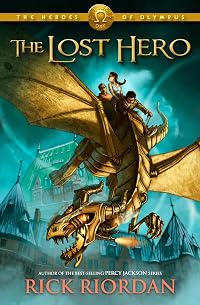
Jason, Piper, and Leo, three students from a school for "bad kids," find themselves at Camp Half-Blood, where they learn that they are demigods and begin a quest to free Hera, who has been imprisoned by Mother Earth herself.Tags
Recommendations
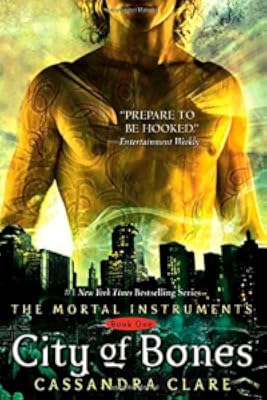
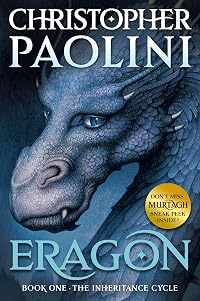
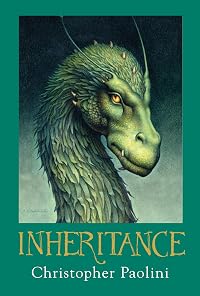
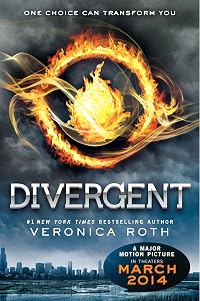
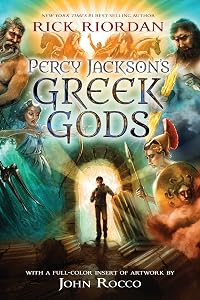

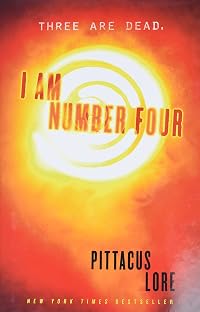
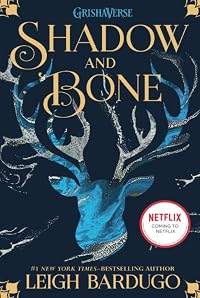
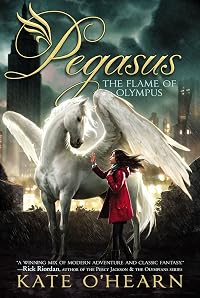
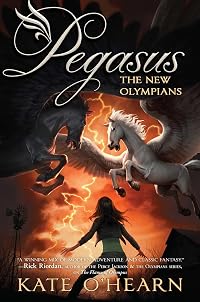

Member Recommendations
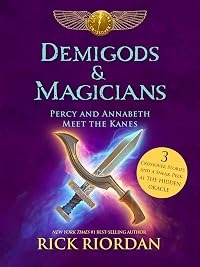
deslivres5 Riordan works his mythology magic again, but this time with
the Egyptian gods and myths.
90
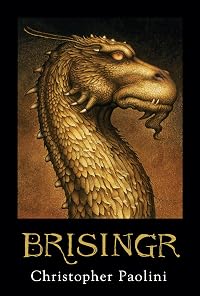
hermionewannabe If you enjoy fantasy works than you will love the Eragon series.
31
Member Reviews
This was my second time reading this book, but because I originally read it around the time of its release, 2010, when I was 11 year old, I didn't remember much about it. I only remember not really liking it at the time. I found the conflict to devalue Percy and company's journey and struggle. I found that the villain's motivations lacked profound themes, and had no character analogous to Luke. I missed the first person and the chapter headers. But most of all, I found that a book without Percy in it was not something I wanted. Essentially, this was just too YA for my MG mind.
And I was also completely wrong.
Rereading this was a really special treat. It was like opening a time capsule almost a decade later. I've changed, and therefore my show more priorities and preferences have also changed. What I found lacking in my reread of the original series was present here, and even better than I'd hoped.
The thing I loved about this the most was the atmosphere. The original series had an atmosphere, but not a strong one, and it wasn't very apparent until the 4th book in the 5-book franchise. This atmosphere was palpable; strong and intense and full of tension. It had an eerie quality to it, both mysterious and a little scary. I felt pulled in and held there. It gave me everything I didn't know I wanted.
Most of the atmosphere was thanks to Boreas and his icy fam (who were honestly the greatest thing ever — forget Apollo spin-off, I want a book series about Boreas). They delivered what only Hades had hinted at (and Calypso had implied): non-human, morally dubious gods. They were powerful, a little glamorous, and I never quite knew what direction their mood would take. They weren't caricatures like a lot of the gods in the original series. They had an ancient, primordial feel to them. I absolutely loved them.
A problem that did sort of carry over from my initial reading all those years ago was Jason's character. The amnesia element never really stopped annoying me, but I did manage to ignore how cliche it is for most of the story. But the biggest issue with his character was this: he was literally just Percy. I can't even imagine them in the same room. They'd literally be doing the exact same things, making the exact same comments. Now, don't get me wrong; I love Percy. But I only need one of him. Obviously Riordan is capable of making more than like three different personalities, so I just don't understand why Jason was the way he was. Whenever it wasn't Jason's perspective, I actually kind of liked him, but whenever it was, I got a little annoyed.
The other characters didn't have that problem at all! I liked Piper a lot; she was really great. Leo was my absolute favorite. (Though it's a little funny that a woman of Spanish-language heritage would name her son "Leo" when that means "I read" in Spanish. Maybe Riordan is trying to subliminally message us to read more, though why he'd need to convince people already reading his book to read, I don't know.) He was a perfect mix of emotional vulnerability and comic relief. He really carried most of the plot and I loved him.
The villain was actually pretty great! They were frightening and effective, with a paranoia-inducing creepiness that Kronos never had. While their motivations still seem pretty weak (and therefore their theme as well), especially when compared against Luke, I actually really like them. 11 year old Faith wanted answers now, especially since the villain revealed themselves a lot sooner than in the original series, but there are a lot more books to expand and build the themes. And I'm excited to discover what their endgame is.
The plot, pacing, tension, and expansion of the world were all done really well. The penultimate climax was a lot better done than the actual climax, but I'll let that slide. While this book was significantly longer than any of the original series' books, it didn't feel too long. It was always perfectly balanced (as all things should be).
Read this review and more on my blog here! show less
And I was also completely wrong.
Rereading this was a really special treat. It was like opening a time capsule almost a decade later. I've changed, and therefore my show more priorities and preferences have also changed. What I found lacking in my reread of the original series was present here, and even better than I'd hoped.
The thing I loved about this the most was the atmosphere. The original series had an atmosphere, but not a strong one, and it wasn't very apparent until the 4th book in the 5-book franchise. This atmosphere was palpable; strong and intense and full of tension. It had an eerie quality to it, both mysterious and a little scary. I felt pulled in and held there. It gave me everything I didn't know I wanted.
Most of the atmosphere was thanks to Boreas and his icy fam (who were honestly the greatest thing ever — forget Apollo spin-off, I want a book series about Boreas). They delivered what only Hades had hinted at (and Calypso had implied): non-human, morally dubious gods. They were powerful, a little glamorous, and I never quite knew what direction their mood would take. They weren't caricatures like a lot of the gods in the original series. They had an ancient, primordial feel to them. I absolutely loved them.
A problem that did sort of carry over from my initial reading all those years ago was Jason's character. The amnesia element never really stopped annoying me, but I did manage to ignore how cliche it is for most of the story. But the biggest issue with his character was this: he was literally just Percy. I can't even imagine them in the same room. They'd literally be doing the exact same things, making the exact same comments. Now, don't get me wrong; I love Percy. But I only need one of him. Obviously Riordan is capable of making more than like three different personalities, so I just don't understand why Jason was the way he was. Whenever it wasn't Jason's perspective, I actually kind of liked him, but whenever it was, I got a little annoyed.
The other characters didn't have that problem at all! I liked Piper a lot; she was really great. Leo was my absolute favorite. (Though it's a little funny that a woman of Spanish-language heritage would name her son "Leo" when that means "I read" in Spanish. Maybe Riordan is trying to subliminally message us to read more, though why he'd need to convince people already reading his book to read, I don't know.) He was a perfect mix of emotional vulnerability and comic relief. He really carried most of the plot and I loved him.
The villain was actually pretty great! They were frightening and effective, with a paranoia-inducing creepiness that Kronos never had. While their motivations still seem pretty weak (and therefore their theme as well), especially when compared against Luke, I actually really like them. 11 year old Faith wanted answers now, especially since the villain revealed themselves a lot sooner than in the original series, but there are a lot more books to expand and build the themes. And I'm excited to discover what their endgame is.
The plot, pacing, tension, and expansion of the world were all done really well. The penultimate climax was a lot better done than the actual climax, but I'll let that slide. While this book was significantly longer than any of the original series' books, it didn't feel too long. It was always perfectly balanced (as all things should be).
Read this review and more on my blog here! show less
The Good: When I first heard of this series, I had wondered how Riordan wold make it work after bringing the Greek gods to life. I couldn't see how it would possibly work, as the mythologies are so interrelated. I shouldn't have worried. If I know anything by now, I know that Riordan has an uncanny ability to make world work within one another. That he can take something as huge as an entire cultural mythology and make it work in relation to our world. If he can do that, of course he can mess Greek and Roman mythology into something connected, yet existing outside one another. Going in, I at least thought I knew how Riordan would portray his hero Jason. I was wrong there as well. Jason isn't another Percy Jackson. He's someone else show more entirely and his journey seems to be working out in an wholly different fashion. The continuation of Camp Halfblood didn't seem all that possibly when the Percy Jackson series ended, but again, I was wrong. Riordan continues the world he created, yet makes it more - adding to it in unexpected ways and only enriching it. Fans of Percy Jackson will be blown away by this series if this initial book is any indication. I plan on devouring the entire thing at once.
The Bad: Not a thing. show less
The Bad: Not a thing. show less
Ok, first of all… I probably shouldn’t say this, but I’m going to. Rick Riordan is freaking making bank on these novels. Kids eat them up like candy. He completely deserves it though. I love that he is making Greek mythology fun again and popular in mainstream MG culture. I remember learning about Greek mythology in 5th grade. My teacher just happened to be amazing and made it so interesting for us. He’s doing that for students now. My class is actually begging me to bring in non-fiction reference books about the gods. Wow!
The Lost Hero is a companion series to Percy Jackson. It will work on it’s own, but it is much better and easier to understand if you’ve already read the PJ series. It has some of the same characters, show more though the main focus is on a different group of demigod heroes. The three main characters, Jason, Piper, and Leo were completely lovable, but realistically flawed at the same time. They are three seemingly average kids who get thrown into a pretty unbelievable situation. Another thing I love that Riordan does, is he creates main characters who aren’t perfect, even after their transformations into demigod. He doesn’t take a middle class kid who makes straight As and transforms him. He uses the “troublemakers” of society. I think for that reason, students who wouldn’t normally be interested in reading this gigantic book (the hardcover is over 550 pages) are so captivated by the storyline that they can’t put it down.
Admittedly and embarrassingly, this book took me 2 weeks to read. I picked it up right in a super-hectic time (hello first week of grad school!). It really isn’t a difficult or dragging read, though, so don’t judge it because of me. If you’re a fan of MG fantasy, or just a fun read, this is a great book. show less
The Lost Hero is a companion series to Percy Jackson. It will work on it’s own, but it is much better and easier to understand if you’ve already read the PJ series. It has some of the same characters, show more though the main focus is on a different group of demigod heroes. The three main characters, Jason, Piper, and Leo were completely lovable, but realistically flawed at the same time. They are three seemingly average kids who get thrown into a pretty unbelievable situation. Another thing I love that Riordan does, is he creates main characters who aren’t perfect, even after their transformations into demigod. He doesn’t take a middle class kid who makes straight As and transforms him. He uses the “troublemakers” of society. I think for that reason, students who wouldn’t normally be interested in reading this gigantic book (the hardcover is over 550 pages) are so captivated by the storyline that they can’t put it down.
Admittedly and embarrassingly, this book took me 2 weeks to read. I picked it up right in a super-hectic time (hello first week of grad school!). It really isn’t a difficult or dragging read, though, so don’t judge it because of me. If you’re a fan of MG fantasy, or just a fun read, this is a great book. show less
I think this is one of my favorite books in the Heroes of Olympus series. It felt a little weird starting a new series with a familiar setting but unknown protagonists, but starting the books in this way after Percy Jackson and the Olympians was a good choice, and a successful one. I really love Jason, Piper, and Leo and their adventure is fun and interesting to read about. They have a weird starting point, since they know each other but not really, and then begin to find out about this world they have been thrown into while at the same time getting to properly know one another and bringing their own knowledge and talents to the table. The book moves around a lot but I felt like it all came together pretty well, and even though its show more significantly longer than the first book of the previous series I liked having the extra material and time to know the characters and there isnt really anything I would cut out. show less
Medusa, hydras, cyclops, Hercules, winged shoes, magical trickery--what's not to love about Greek myths? Being a mythology geek, I was naturally drawn to the 'Percy Jackson and the Olympians' series that focused on the modern demi-god children of the Olympian gods. While interesting conceptually and done well, it wasn't particularly remarkable storytelling. Riordan's new series, however, looks to surpass the old, seizing the golden apple. It's classic coming-of-age disguised as adventure novel, this time reaching out to include the Roman pantheon as well.
Briefest of summaries: Three teens are at a Wilderness Camp for miscreant youth when they are attacked by wind spirits. Their abrasive coach is carried away, and they make a near show more escape on a chariot pulled by Pegasii (plural for Pegasus?). Leo, a fiery Latino; Piper, a beautiful charmer of Native American and Hollywood heritage; and Jason, a guy with a magical sword and virtually no conscious memory of his life before that fatal day at camp; are taken to Camp Half-Blood, into a series of self-discoveries and a quest. Spoilery part (how else do you expect me to remember these kind of details?): They ride a mechanical dragon to the North wind (in Quebec, of course), end up sidetracked at Monocole Motors in Detroit, quickly head to the Windy City and go bargain basement hunting at Medea's, make a quick golden deal with Midas, confront Lycaon and his wolves, and visit a tv weather station in Colorado.
I enjoyed Riordan's triumvirate narrative (I know, anyone who reads my reviews regularly is shocked to hear it) that gives back-story, character growth and plot development in large enough chunks to stay coherent. Narrative seamlessly flows from one teen to the next, even during action sequences. Integrated nicely are sparkling little flashes of humor, even as the teens land in challenging situations. Make no mistake, these are not wise-cracking detectives always ready with a quip; they are scared and desperate and grappling with serious issues of identity and family. Rather the humor comes from pop culture references (Coach's megaphone alternates between Darth Vader and "the duck says 'quack'"), laughable imagery (the statue of Hippie Zeus, hallucinating dragon drivers), or the old standby, goat-humor ("Waitress! Six double espressos, and whatever these guys want. Put it on the girl's tab."). The satyr, a master of trash-talk, provides needed relief as tension is built toward the end of the story.
Two small complaints: one, while there is some sophistication of issues the teens are grappling with, I prefer my prose a little more purplish, capable of grappling with larger ideas and scenery. Word choice doesn't feel entirely up to the challenge. Second, there's the whiff of the stereotypical surrounding our heroes. Must the leader of Aphrodite's cabin be a Mean Girl? There's more along the Aphrodite line, mostly centering on looks and beauty, an emphasis on clothes and the ability to manipulate using charm. Likewise, Leo is given more of a ghetto-speak attitude that feels forced within the story, but he shines most when Riordan drops the pretense and he's allowed to act without the dialogue.
Still, those are small points, and Riordan does well compensating, fleshing out the characters beyond the limited boundaries. Though characters tend towards stereotypical, they are given enough nuance to be palatable. If the female lead isn't the physical hero in this book, the women characters can certainly said to be strong, particularly Leo's mom. Villains are male and female alike. A note on character creation: by nature of one parent being a god, there are absent mothers and fathers everywhere in this book, and blame and angst is shared out equally, with both parents and gods representing the full range of humanity. No one is infallible, not even gods, and almost everyone is redeemable (except perhaps northern cyclopes), an appreciably humanistic theme in the modern YA book.
Overall, enjoyable characters, nice integration of Greek and Roman myths and fast-paced action. While I thought the original Jason more than a bit of an ass (the original Greek one), Riordan did a nice job re-inventing. I bought a copy for my reading-resistant nephew, and will be checking out the next book for myself.
Cross posted at http://clsiewert.wordpress.com/2013/03/07/embassytown-by-china-mieville-or-limbo... show less
Briefest of summaries: Three teens are at a Wilderness Camp for miscreant youth when they are attacked by wind spirits. Their abrasive coach is carried away, and they make a near show more escape on a chariot pulled by Pegasii (plural for Pegasus?). Leo, a fiery Latino; Piper, a beautiful charmer of Native American and Hollywood heritage; and Jason, a guy with a magical sword and virtually no conscious memory of his life before that fatal day at camp; are taken to Camp Half-Blood, into a series of self-discoveries and a quest. Spoilery part (how else do you expect me to remember these kind of details?):
I enjoyed Riordan's triumvirate narrative (I know, anyone who reads my reviews regularly is shocked to hear it) that gives back-story, character growth and plot development in large enough chunks to stay coherent. Narrative seamlessly flows from one teen to the next, even during action sequences. Integrated nicely are sparkling little flashes of humor, even as the teens land in challenging situations. Make no mistake, these are not wise-cracking detectives always ready with a quip; they are scared and desperate and grappling with serious issues of identity and family. Rather the humor comes from pop culture references (Coach's megaphone alternates between Darth Vader and "the duck says 'quack'"), laughable imagery (the statue of Hippie Zeus, hallucinating dragon drivers), or the old standby, goat-humor ("Waitress! Six double espressos, and whatever these guys want. Put it on the girl's tab."). The satyr, a master of trash-talk, provides needed relief as tension is built toward the end of the story.
Two small complaints: one, while there is some sophistication of issues the teens are grappling with, I prefer my prose a little more purplish, capable of grappling with larger ideas and scenery. Word choice doesn't feel entirely up to the challenge. Second, there's the whiff of the stereotypical surrounding our heroes. Must the leader of Aphrodite's cabin be a Mean Girl? There's more along the Aphrodite line, mostly centering on looks and beauty, an emphasis on clothes and the ability to manipulate using charm. Likewise, Leo is given more of a ghetto-speak attitude that feels forced within the story, but he shines most when Riordan drops the pretense and he's allowed to act without the dialogue.
Still, those are small points, and Riordan does well compensating, fleshing out the characters beyond the limited boundaries. Though characters tend towards stereotypical, they are given enough nuance to be palatable. If the female lead isn't the physical hero in this book, the women characters can certainly said to be strong, particularly Leo's mom. Villains are male and female alike. A note on character creation: by nature of one parent being a god, there are absent mothers and fathers everywhere in this book, and blame and angst is shared out equally, with both parents and gods representing the full range of humanity. No one is infallible, not even gods, and almost everyone is redeemable (except perhaps northern cyclopes), an appreciably humanistic theme in the modern YA book.
Overall, enjoyable characters, nice integration of Greek and Roman myths and fast-paced action. While I thought the original Jason more than a bit of an ass (the original Greek one), Riordan did a nice job re-inventing. I bought a copy for my reading-resistant nephew, and will be checking out the next book for myself.
Cross posted at http://clsiewert.wordpress.com/2013/03/07/embassytown-by-china-mieville-or-limbo... show less
I listened to the Percy Jackson books I enjoyed the stories and how Riordan had created a believable world. I thought it would be good to actually read the next in the series. Thus allowing the characters develop in my imagination.
It is pretty clear that this series is set in the world of Percy Jackson (PJ) as it is boldly printed on the front cover. This serves as a warning that if you are thinking this is all Percy and Annabeth then you will be disappointed. Riordan has introduced three new heroes into the series and they have their own quest. You are offered the hope that the series will eventually link into the Percy Jackson story.
The book starts off at a cracking pace, with Jason waking up on the back of a school bus having no show more idea what he is doing there or who he is. Jason is holding the hand of Piper, she believes they are boyfriend/girlfriend and also there is his best friend Leo. The trio are attacked on the school excursion by a bunch of wind monsters and Annabeth comes to the rescue. Yet Annabeth’s rescue is also about trying to find out where Percy is as we learn he has disappeared. The group arrive at Camp Half Blood where their parentage is revealed, the prophecy is retold (it is mentioned in the last PJ book 5) and the trio head off to discover their destiny. Jason wants Annabeth to accompany them but she is off to find Percy.
Before I continue with the review – Riordan do not tell us Percy is missing in the first 50 odd pages of the novel and then completely neglect that story arch for the next 400 odd pages. I mean you offer next to nothing and that is a major disappointment. Plus providing a really lame cliff-hanger in the last 50 odd pages is not making amends.
The problem I had with the characters was that they were almost carbon copies of Percy, Annabeth, Grover and Nico. At one stage Jason is having an internal monologue lamenting how he has led his friends into danger, who made him a leader and he sounded exactly like Percy. Piper was a little bit too perfect but it was good that a daughter of Aphrodite was more than an airhead worried about her looks. Before Piper is claimed she hopes to be in Annabeth’s cabin as the two of them are so alike and I wondered if that was Riordan having his own little joke. Leo is the innovator, the joker and your annoying kid brother at times. I found it interesting that Leo seemed to fall in love with every pretty girl his path crossed but not Annabeth or Piper? To be honest Leo came across as a mixture of Grover and Nico. I am leaning to Leo being more like Nico before he became all serious and moody over his sister’s disappearance. One of the difficulties with the characters is that they come pretty much ready-made and did not seem to have any difficulties understanding their new circumstances in life. The characters need more shade as they were too predictable in their actions.
It is an easy read and unfortunately a little bit too obvious. I cannot understand why no one picked up a purple t-shirt and read the camp name that should have been printed on it. That Hera’s little amnesia trick might impact two demi gods and it is not too hard to guess who.
For an establishment novel for a series it was not bad, it is fast paced, has some humour, teenage angst but what lets down the story is a lack of complexity. show less
It is pretty clear that this series is set in the world of Percy Jackson (PJ) as it is boldly printed on the front cover. This serves as a warning that if you are thinking this is all Percy and Annabeth then you will be disappointed. Riordan has introduced three new heroes into the series and they have their own quest. You are offered the hope that the series will eventually link into the Percy Jackson story.
The book starts off at a cracking pace, with Jason waking up on the back of a school bus having no show more idea what he is doing there or who he is. Jason is holding the hand of Piper, she believes they are boyfriend/girlfriend and also there is his best friend Leo. The trio are attacked on the school excursion by a bunch of wind monsters and Annabeth comes to the rescue. Yet Annabeth’s rescue is also about trying to find out where Percy is as we learn he has disappeared. The group arrive at Camp Half Blood where their parentage is revealed, the prophecy is retold (it is mentioned in the last PJ book 5) and the trio head off to discover their destiny. Jason wants Annabeth to accompany them but she is off to find Percy.
Before I continue with the review – Riordan do not tell us Percy is missing in the first 50 odd pages of the novel and then completely neglect that story arch for the next 400 odd pages. I mean you offer next to nothing and that is a major disappointment. Plus providing a really lame cliff-hanger in the last 50 odd pages is not making amends.
The problem I had with the characters was that they were almost carbon copies of Percy, Annabeth, Grover and Nico. At one stage Jason is having an internal monologue lamenting how he has led his friends into danger, who made him a leader and he sounded exactly like Percy. Piper was a little bit too perfect but it was good that a daughter of Aphrodite was more than an airhead worried about her looks. Before Piper is claimed she hopes to be in Annabeth’s cabin as the two of them are so alike and I wondered if that was Riordan having his own little joke. Leo is the innovator, the joker and your annoying kid brother at times. I found it interesting that Leo seemed to fall in love with every pretty girl his path crossed but not Annabeth or Piper? To be honest Leo came across as a mixture of Grover and Nico. I am leaning to Leo being more like Nico before he became all serious and moody over his sister’s disappearance. One of the difficulties with the characters is that they come pretty much ready-made and did not seem to have any difficulties understanding their new circumstances in life. The characters need more shade as they were too predictable in their actions.
It is an easy read and unfortunately a little bit too obvious. I cannot understand why no one picked up a purple t-shirt and read the camp name that should have been printed on it. That Hera’s little amnesia trick might impact two demi gods and it is not too hard to guess who.
For an establishment novel for a series it was not bad, it is fast paced, has some humour, teenage angst but what lets down the story is a lack of complexity. show less
I recently reread this because it had been a while since I read it and I wanted to finally read The Blood of Olympus so I could move on to the Trials of Apollo. I may have loved it even more than I did the first time I read it. Though the book follows the same formula of the Percy Jackson books, meaning a group of kids at camp half-blood get a prophecy and go on a quest to essentially prevent the end of the world, the new characters and the dynamic they brought to the story made it just as engaging and entertaining as the previous series. I am still not the biggest fan of Jason, though I definitely don't hate him, Leo is one of my favorite Riordanverse characters and I also liked Piper a little as well. Looking back there isn't anything show more about the book I outright hated, even if not knowing where Percy was was incredibly frustrating as someone who loves him, and I definitely recommend for anyone who loved the Percy Jackson books. show less
Members
- Recently Added By
Lists

Best Fantasy Novels
821 works; 361 members

Best Young Adult
399 works; 101 members

Most popular YA Fiction in Charles City
25 works; 1 member

Sunny Summer Reads!
13 works; 1 member

KayStJ's to-read list
1,616 works; 11 members

4th Grade Books
312 works; 5 members

Books Read in 2023
5,638 works; 147 members

Read in 2023
44 works; 1 member

Kindle Action/Adventure - Junior and Teenage Re-Read
247 works; 1 member

el
1,139 works; 1 member

Top-Rated Books on LibraryThing
272 works; 116 members
Author Information

256+ Works 338,578 Members
Rick Riordan was born on June 5, 1964, in San Antonio, Texas. After graduating from the University of Texas at Austin with a double major in English and history, he taught in public and private middle schools for many years. He writes several children's series including Percy Jackson and the Olympians, The Kane Chronicles, and The Heroes of show more Olympus, Magnus Chase and the Gods of Asgard, and The Trials of Apollo. He also writes the Tres Navarre mystery series for adults. He has won Edgar, Anthony, and Shamus Awards for his mystery novels. . (Bowker Author Biography) show less
Some Editions
Awards and Honors
Awards
Distinctions
Series

Belongs to Publisher Series
Carlsen (1318)
Work Relationships
Is contained in
Contains
Has the adaptation
Common Knowledge
- Canonical title
- The Lost Hero
- Original title
- The Lost Hero
- Original publication date
- 2010-10-12
- People/Characters
- Jason Grace; Piper McLean; Leo Valdez; Gleeson Hedge; Annabeth Chase; Will Solace (show all 31); Drew Tanaka; Chiron; Rachel Elizabeth Dare; Jake Mason; Enceladus; Argus; Hera; Boreas; Calais; Zethes; Khione; Gaea; Tristan McLean; Medea; Aphrodite; Midas; Porphyrion; Juno; Hephaestus; Festus; Thalia Grace; Clovis; Dylan; Butch; Nyssa Barrera
- Important places
- Grand Canyon National Park, Arizona, USA; Camp Half-Blood, Long Island, USA; Long Island, New York, USA; Québec City, Québec, Canada; Chicago, Illinois, USA; Detroit, Michigan, USA (show all 17); Omaha, Nebraska, USA; Pikes Peak, Colorado, USA; Walnut Creek, California, USA; Arizona, USA; California, USA; Colorado, USA; Illinois, USA; Michigan, USA; Nebraska, USA; New York, USA; Québec, Canada
- Dedication
- For Haley and Patrick, always the first to hear stories. Without them, Camp Half-Blood would not exist.
- First words
- Even before he got electrocuted, Jason was having a rotten day.
- Last words
- (Click to show. Warning: May contain spoilers.)Percy Jackson is at the other camp, and he probably doesn't even remember who he is.
- Original language
- English
Classifications
Statistics
- Members
- 17,320
- Popularity
- 382
- Reviews
- 364
- Rating
- (4.16)
- Languages
- 18 — Catalan, Chinese, Czech, Danish, Dutch, English, Finnish, French, German, Hebrew, Hungarian, Italian, Polish, Portuguese, Russian, Spanish, Swedish, Thai
- Media
- Paper, Audiobook, Ebook
- ISBNs
- 100
- ASINs
- 39