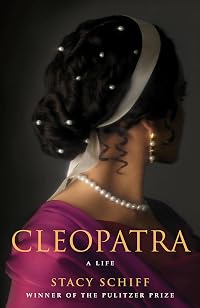
Cleopatra: A Life
by Stacy Schiff
On This Page
Description
The Pulitzer Prize-winning biographer brings to life the most intriguing woman in the history of the world: Cleopatra, the last queen of Egypt. Though her life spanned fewer than 40 years, it reshaped the contours of the ancient world.Tags
Recommendations

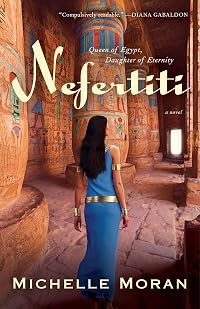
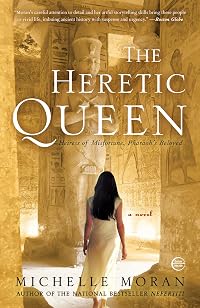
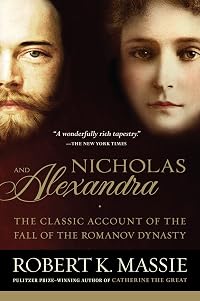
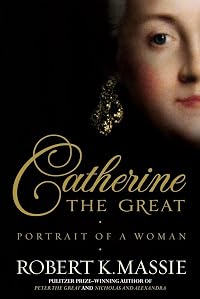

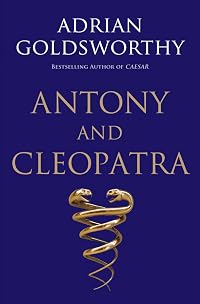

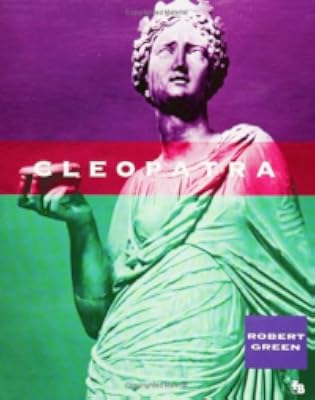

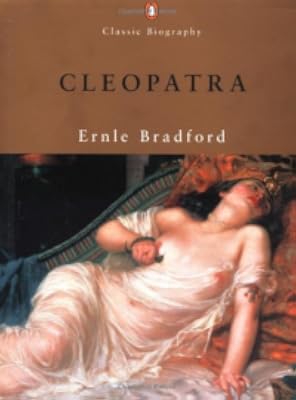
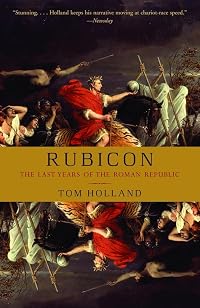
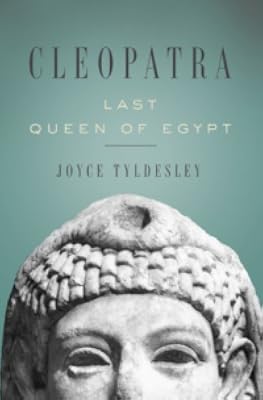

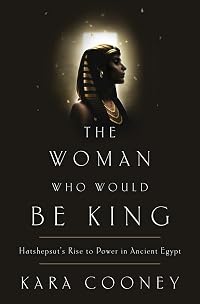

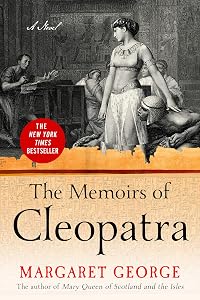



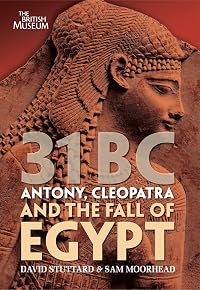
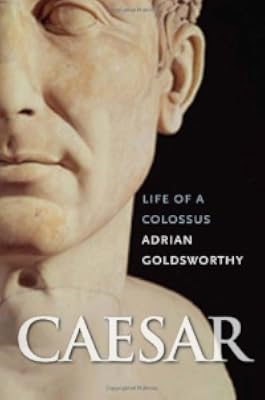



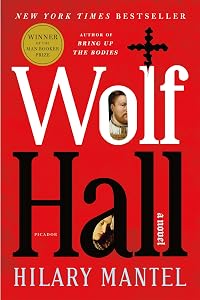
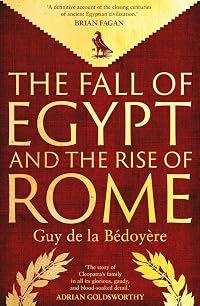

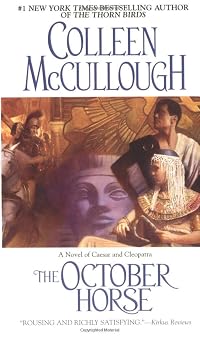

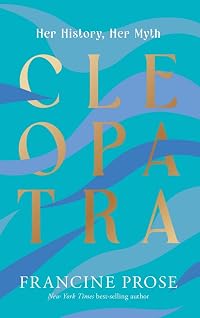
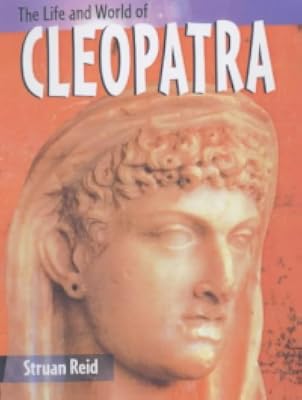

Member Recommendations
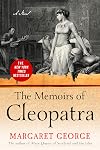
anonymous user Although long, this is an excellent book. Written in first person and thoroughly researched, it really opens your eyes to what an outstanding person Cleopatra was.
20
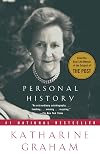
Menagerie Two strong women that lived centuries apart but faced many of the same obstacles.
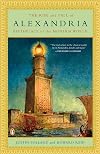

CGlanovsky Both offer an outsider's (and antagonist's) perspective on Roman history.
Member Reviews
Until reading this book I knew little about Cleopatra beyond the word on the street, which is based more on Elizabeth Taylor's portrayal than on Cleopatra. Schiff's meticulous biography is fascinating. She covers all kinds of detail: life, culture, medicine, politics, government, warfare, and education. She also describes a lavish opulence that is - and was at the time - astonishing. But what Schiff does best is to disparage the image of Cleopatra as a wicked temptress, instead showing the reader a more credible picture of a remarkably intelligent woman and powerful monarch who brought prosperity to her country. This is a compelling book with balanced opinions that I will keep to read again, and for reference. Highly recommended.
"Her show more power has been made to derive from her sexuality... It has always been preferable to attribute a woman's success to her beauty rather than to her brains, to reduce her to the sum of her sex life. Against a powerful enchantress there is no contest, against a woman who ensnares a man in the coils of her serpentine intelligence, in her ropes of pearls, there should at least be some kind of antidote. Cleopatra unsettles more as sage than as seductress. It is less threatening to believe her fatally attractive than fatally intelligent."
"There was a glamour and a grandeur to her story well before Octavian or Shakespeare got his hands on it." show less
"Her show more power has been made to derive from her sexuality... It has always been preferable to attribute a woman's success to her beauty rather than to her brains, to reduce her to the sum of her sex life. Against a powerful enchantress there is no contest, against a woman who ensnares a man in the coils of her serpentine intelligence, in her ropes of pearls, there should at least be some kind of antidote. Cleopatra unsettles more as sage than as seductress. It is less threatening to believe her fatally attractive than fatally intelligent."
"There was a glamour and a grandeur to her story well before Octavian or Shakespeare got his hands on it." show less
The turbulent times of the last century BC and the varied cultures, wars, and characters of the period spring to life in Stacy Schiff's fascinating biography, making Cleopatra, as compelling and remarkable a woman as she was (and not in the ways you may imagine), almost a hook for a book about the classical world at a time of dramatic change. Schiff is a wonderful writer who packs a lot of detail and research into a very readable writing style; while there are, alas, no contemporary sources for Cleopatra's life, she has delved into both the classical authors who wrote within a few centuries of the period as well as modern scholarly works, and is careful to discuss difference among these close-to-primary sources and how she believes show more politics may have influenced what they wrote.
The outlines of Cleopatra's life are well known, that she inherited the throne of Egypt as a teenager but had to outsmart her brother to claim it, met and became lovers with Julius Caesar and subsequently Mark Antony, and ultimately killed herself. In the course of the book, Schiff makes the claim that Cleopatra has been misinterpreted all these centuries, maligned as "the wickedest woman in the world" and the seductress who caused men to throw away their kingdoms, because it is easier and more comfortable for people (read: men, mostly) to think of powerful men being undone by a woman's sexual power than by her intellectual and political power. And she provides strong evidence for this.
In the last century BC, Alexandria, where Cleopatra reigned, was a cosmopolitan city, a center of intellectual life (the famed library was there and people knew that the earth was round, that the moon controlled tides, and much more that was lost to the west for centuries), art and the decorative arts, music and entertainment, great wealth and excesses of hospitality, and people who appreciated and expected all of these. As Schiff writes, "it was a scholarly paradise with a quick business pulse and a languorous resort culture, where the Greek penchant for commerce met the Egyptian mania for hospitality, a city of cool raspberry dawns and pearly late afternoons, with the hustle of heterodoxy and the aroma of opportunity thick in the air. Even the people watching was best there." As a side note, some of the most interesting aspects of this book for me were the differences between the Roman system and culture and the Alexandrian system and culture, and the turbulence of the times, with civil wars in Rome and shifting loyalties among the varied rulers who were part of the far-flung Roman empire
Furthermore, women had for centuries had rights in Egypt that were unheard of in the west, among them the right to make their own marriages, to be supported after divorcing, and to inherit and hold property. And Cleopatra was a Ptolemy, descended from Macedonian aristocrats who had ruled Egypt for centuries by the time she was born and the inheritor of a strong tradition of Ptolemaic queens: she was educated and groomed to rule. All evidence suggests that she was an extremely competent, politically savvy, and ultimately beloved queen, who as ruler of Egypt had powers almost unimaginable today: not only did she determine military strategy, oversee all commerce, issue currency, receive petitioners of all sorts, put on fabulous entertainments, travel among and gain the support of the Egyptian population who, through a bureaucratic taxing system of immense proportions, essentially worked for her, but she also aligned herself with goddess Isis and was worshiped almost as a goddess herself.
Schiff portrays Cleopatra as an extremely intelligent and politically accomplished woman, yet writes: "The personal inevitably trumps the political, and the erotic trumps all. We will remember that Cleopatra slept with Julius Caesar and Mark Antony long after we have forgotten what she accomplished in doing so, that she sustained a vast, rich, densely populated empire in its troubled twilight, in the name of a proud and cultivated dynasty." show less
The outlines of Cleopatra's life are well known, that she inherited the throne of Egypt as a teenager but had to outsmart her brother to claim it, met and became lovers with Julius Caesar and subsequently Mark Antony, and ultimately killed herself. In the course of the book, Schiff makes the claim that Cleopatra has been misinterpreted all these centuries, maligned as "the wickedest woman in the world" and the seductress who caused men to throw away their kingdoms, because it is easier and more comfortable for people (read: men, mostly) to think of powerful men being undone by a woman's sexual power than by her intellectual and political power. And she provides strong evidence for this.
In the last century BC, Alexandria, where Cleopatra reigned, was a cosmopolitan city, a center of intellectual life (the famed library was there and people knew that the earth was round, that the moon controlled tides, and much more that was lost to the west for centuries), art and the decorative arts, music and entertainment, great wealth and excesses of hospitality, and people who appreciated and expected all of these. As Schiff writes, "it was a scholarly paradise with a quick business pulse and a languorous resort culture, where the Greek penchant for commerce met the Egyptian mania for hospitality, a city of cool raspberry dawns and pearly late afternoons, with the hustle of heterodoxy and the aroma of opportunity thick in the air. Even the people watching was best there." As a side note, some of the most interesting aspects of this book for me were the differences between the Roman system and culture and the Alexandrian system and culture, and the turbulence of the times, with civil wars in Rome and shifting loyalties among the varied rulers who were part of the far-flung Roman empire
Furthermore, women had for centuries had rights in Egypt that were unheard of in the west, among them the right to make their own marriages, to be supported after divorcing, and to inherit and hold property. And Cleopatra was a Ptolemy, descended from Macedonian aristocrats who had ruled Egypt for centuries by the time she was born and the inheritor of a strong tradition of Ptolemaic queens: she was educated and groomed to rule. All evidence suggests that she was an extremely competent, politically savvy, and ultimately beloved queen, who as ruler of Egypt had powers almost unimaginable today: not only did she determine military strategy, oversee all commerce, issue currency, receive petitioners of all sorts, put on fabulous entertainments, travel among and gain the support of the Egyptian population who, through a bureaucratic taxing system of immense proportions, essentially worked for her, but she also aligned herself with goddess Isis and was worshiped almost as a goddess herself.
Schiff portrays Cleopatra as an extremely intelligent and politically accomplished woman, yet writes: "The personal inevitably trumps the political, and the erotic trumps all. We will remember that Cleopatra slept with Julius Caesar and Mark Antony long after we have forgotten what she accomplished in doing so, that she sustained a vast, rich, densely populated empire in its troubled twilight, in the name of a proud and cultivated dynasty." show less
This book was recommended to me by a friend whose opinion I trust. When it first arrived I will admit to doubts. The cover looks like a ‘chick lit’ version of the supposedly passionate love affairs of a beautiful ancient queen, and nothing like an academic book of any weight. On opening it, however, I found not only some beautiful photographic illustrations, but also a Selected Bibliography. A good start.
It got better. Schiff manages to be both readable and accurate. She tells the story in the third person, but from Cleopatra’s point of view. For the reader this could be an eye opener. Cleopatra is one of those historic characters everybody knows about, either from Shakespeare or from the famous (infamous?) film with Elizabeth show more Taylor. She was a stunningly beautiful Egyptian queen who had passionate love affairs with both Julius Caesar and Mark Antony. Or was she? Schiff sets the record straight. Her Cleopatra is a fiercely intelligent, politically astute queen fighting for her throne and her people, at a time of huge turmoil. The major power, Rome, was in the throes of a civil war, and in order to survive, Cleopatra had to choose sides not once, but twice. The first time was easy; she was fighting for her own throne and Caesar appeared in Egypt at just the right time to come to her aid. Schiff does a very good job of explaining the complexities of the Egyptian system, including the fact that Cleopatra, being a Ptolemy, is Greek, not actually Egyptian. Schiff also explains how ‘love’ was probably not a motivation on either side; they both had something to gain. Caesar had his army, and Cleopatra had the money, something Caesar needed desperately. A match made in heaven one might say. After the death of Caesar the second choice was a little more difficult. Mark Antony or Octavian? At the time Mark Antony was the stronger of the two. Cleopatra could not have known how politically astute Octavian was, at least as good as she was, and how haphazard Mark Antony could be. He chose with his heart, Octavian always with his head. Schiff manages to make this clear. Also the fact that Cleopatra had given birth to Caesar’s only son, Caesarion, a potential, and very dangerous, rival to Octavian. Schiff does make clear, however, that the nail in the coffin of Mark Antony, and by association Cleopatra, was her very un-Romanness. Cleopatra’s death is full of romantic myth, which Schiff brushes aside. The asp probably didn’t exist. As for her suicide, it was definitely a suicide, but how much Octavian ‘engineered’ it is a subject of much debate. Schiff describes both sides, and leave the reader to make up their own mind. This is not a light read, but it is an enjoyable one. Schiff uses her sources well, and throws light on a turbulent time, and a fascinating and intelligent woman. show less
It got better. Schiff manages to be both readable and accurate. She tells the story in the third person, but from Cleopatra’s point of view. For the reader this could be an eye opener. Cleopatra is one of those historic characters everybody knows about, either from Shakespeare or from the famous (infamous?) film with Elizabeth show more Taylor. She was a stunningly beautiful Egyptian queen who had passionate love affairs with both Julius Caesar and Mark Antony. Or was she? Schiff sets the record straight. Her Cleopatra is a fiercely intelligent, politically astute queen fighting for her throne and her people, at a time of huge turmoil. The major power, Rome, was in the throes of a civil war, and in order to survive, Cleopatra had to choose sides not once, but twice. The first time was easy; she was fighting for her own throne and Caesar appeared in Egypt at just the right time to come to her aid. Schiff does a very good job of explaining the complexities of the Egyptian system, including the fact that Cleopatra, being a Ptolemy, is Greek, not actually Egyptian. Schiff also explains how ‘love’ was probably not a motivation on either side; they both had something to gain. Caesar had his army, and Cleopatra had the money, something Caesar needed desperately. A match made in heaven one might say. After the death of Caesar the second choice was a little more difficult. Mark Antony or Octavian? At the time Mark Antony was the stronger of the two. Cleopatra could not have known how politically astute Octavian was, at least as good as she was, and how haphazard Mark Antony could be. He chose with his heart, Octavian always with his head. Schiff manages to make this clear. Also the fact that Cleopatra had given birth to Caesar’s only son, Caesarion, a potential, and very dangerous, rival to Octavian. Schiff does make clear, however, that the nail in the coffin of Mark Antony, and by association Cleopatra, was her very un-Romanness. Cleopatra’s death is full of romantic myth, which Schiff brushes aside. The asp probably didn’t exist. As for her suicide, it was definitely a suicide, but how much Octavian ‘engineered’ it is a subject of much debate. Schiff describes both sides, and leave the reader to make up their own mind. This is not a light read, but it is an enjoyable one. Schiff uses her sources well, and throws light on a turbulent time, and a fascinating and intelligent woman. show less
In one word, fascinating. This biography delves into the world's most "wicked woman"and arguably the least understood woman. What little survives of her was written by men, Romans who would eventually annex Egypt and misremember, misattribute, and slander Cleopatra. What people remember about this bad-ass queen, is not her wit, fierceness, and shrewd leadership; rather they remember her as a beautiful seductress who managed to snag two of the most powerful men in the world. Stacy Schiff delves deep to set the record straight in this amazing (admittedly a little dense at times) biography. I always thought Cleopatra was cool (what little I knew about her), but after reading this I realized that she is the feminist boss babe I needed in my show more life right now. In her lifetime she sat a table of leaders, all men - and reigned supreme. show less
I am learning from this book but cannot recommend it. It begins with a presumption that the reader understands Roman politics of the time. I was able to follow this portion only because I am watching HBO's Rome. Then midway through the book it starts providing detail on Roman politicians, but not in chronological order. For example, at one point, I went to the index to remind myself who I was reading about (Donabello), and found out that his first mention was his suicide, several pages earlier.
One thing I learned was how the Romans used Cleopatra's gender as propaganda against Mark Antony; and how that sexism has been continued by historians, etc., when she should have been judged like any other ruler of that time. For example, if show more Octavian has Octavia (his sister) have children with Mark Antony that's what is done to attempt to unite rival families. So if Cleopatra has herself have children with Mark Antony, that should also be seen as what is done to attempt to unite rival families, not as a woman's misuse of her sexuality.
I also learned how very, very violent all the ruling actors were.
Although I am pretty confused about how they all end up with with Roman legions to control.
One last observation: The author and the men she quotes all seem to assume that Caesar and Mark Antony are drawn to Cleopatra for romantic purposes; but it seems just as likely to me that what they were really seduced by was the over-the-top luxury they could enjoy in Egypt vs. more conservative Rome. show less
One thing I learned was how the Romans used Cleopatra's gender as propaganda against Mark Antony; and how that sexism has been continued by historians, etc., when she should have been judged like any other ruler of that time. For example, if show more Octavian has Octavia (his sister) have children with Mark Antony that's what is done to attempt to unite rival families. So if Cleopatra has herself have children with Mark Antony, that should also be seen as what is done to attempt to unite rival families, not as a woman's misuse of her sexuality.
I also learned how very, very violent all the ruling actors were.
Although I am pretty confused about how they all end up with with Roman legions to control.
One last observation: The author and the men she quotes all seem to assume that Caesar and Mark Antony are drawn to Cleopatra for romantic purposes; but it seems just as likely to me that what they were really seduced by was the over-the-top luxury they could enjoy in Egypt vs. more conservative Rome. show less
4/5
Cleopatra is two-thirds a general history of the late Hellenistic Mediterranean, and one-third a loose collection of inferences that can be made of Cleopatra's mindset based on her circumstances. Schiff makes it clear off the jump that there are few, if any, reliable sources of information on Cleopatra's life, and even those were written about 100 years after her death. Virtually nothing remains that was written during her life, and the city/empire that she ruled over has since been lost to conquest and time. One of the main focusing points of the biography is the not only how history is written by the winners, so for Cleopatra to be as well remembered as she is is a testimony to her influence, but also just how remarkable it is that show more a woman in this age was perhaps the most powerful person on the planet. She stalled the inevitable decline of her linage and city another twenty years, despite enormous odds to the contrary. She was ruthless, cutthroat, and privileged beyond comprehending, but has captivated us for centuries past her death.
This is a compellingly written biography, of a character from history that I wish more was known about concretely. Much of the historical texts that Schiff uses are, understandable, written from perspectives that demonize powerful women, determined to minimize or aggrandize her powers where it suited their interests. Schiff did an excellent job of acknowledging these lapses and trying to provide a well balanced story that incorporates texts that make the most sense for the time and place. Schiff was also able to, for the most part, keep my attention and make me much more interested in this period of world history. I see why it has gotten so much praise over the years, and perhaps I will see it in even more favorable light if/when I read some more biographies. show less
Cleopatra is two-thirds a general history of the late Hellenistic Mediterranean, and one-third a loose collection of inferences that can be made of Cleopatra's mindset based on her circumstances. Schiff makes it clear off the jump that there are few, if any, reliable sources of information on Cleopatra's life, and even those were written about 100 years after her death. Virtually nothing remains that was written during her life, and the city/empire that she ruled over has since been lost to conquest and time. One of the main focusing points of the biography is the not only how history is written by the winners, so for Cleopatra to be as well remembered as she is is a testimony to her influence, but also just how remarkable it is that show more a woman in this age was perhaps the most powerful person on the planet. She stalled the inevitable decline of her linage and city another twenty years, despite enormous odds to the contrary. She was ruthless, cutthroat, and privileged beyond comprehending, but has captivated us for centuries past her death.
This is a compellingly written biography, of a character from history that I wish more was known about concretely. Much of the historical texts that Schiff uses are, understandable, written from perspectives that demonize powerful women, determined to minimize or aggrandize her powers where it suited their interests. Schiff did an excellent job of acknowledging these lapses and trying to provide a well balanced story that incorporates texts that make the most sense for the time and place. Schiff was also able to, for the most part, keep my attention and make me much more interested in this period of world history. I see why it has gotten so much praise over the years, and perhaps I will see it in even more favorable light if/when I read some more biographies. show less
Given that I know very little about Cleopatra, Caesar, Marc Antony, or the time in which they lived, this was a fascinating book. Despite the paucity of sources, and the known bias of many of those sources, Schiff is able to pull together a convincing portrait of a woman who, like so many other historical women, has often been reduced to a caricature of herself. Cleopatra, the wanton, highly-sexed temptress of myth and drama, was in fact a shrewd and incredibly intelligent woman who won back her throne and held it through a combination of wit, wiles, and, yes, sexuality. The final showdown between Antony and Cleopatra's forces and those of Octavian makes for high drama, and the two lovers' suicides provide a fitting end to the story show more (and, by the way, there was likely no snake involved in Cleopatra's death). As Schiff points out, Marc Antony was as much Cleopatra's undoing as she was his.
This audio book was well read by Robin Miles. show less
This audio book was well read by Robin Miles. show less
Members
- Recently Added By
Published Reviews
ThingScore 92
" Ideally, as Stacy Schiff observes in her magnificent re-creation of both an extraordinary woman, and her times, our sense of Cleopatra would be heightened by her dramatic appearance as the doomed heroine of a sumptuous opera (Puccini, preferably)."
added by bookfitz
Her life of Cleopatra is slightly soft-focused, as if she has applied Vaseline to the lens. It leaves the impression that, like a student taking an exam, she knows only a little more than what she writes. Sometimes she nods; to say, as she does, that Roman women were without legal rights is incorrect, although they were not allowed to hold political office. That said, she has done her homework show more and writes elegantly and wittily, creating truly evocative word pictures. show less
added by jburlinson
"Successfully dissipating all the perfume, Schiff finds a remarkably complex woman—brutal and loving, dependent and independent, immensely strong but finally vulnerable."
added by bookfitz
Lists

Best Biographies
216 works; 26 members

Recommend the 20 best books you've read in the last five years
2,168 works; 606 members

Perspectives Book Club Picks
49 works; 3 members

Books Read in 2012
816 works; 34 members

Books Read in 2014
2,343 works; 89 members

Most Frequently Tagged "Read in 2015"
70 works; 1 member

Islam & the Middle East
127 works; 1 member

Club Read's Recommended Nonfiction Written by Women
618 works; 30 members
Talk Discussions
Past Discussions
Cleopatra; A Life by Stacy Schiff in Ancient History (August 2013)
Author Information

10+ Works 10,949 Members
Stacy Schiff was born on October 26, 1961 in Adams, Massachusetts. She received a B.A. degree from Williams College in 1982. She was a Senior Editor at Simon and Schuster until 1990. She is the author of several nonfiction books including Saint-Exupéry: A Biography about Antoine de Saint Exupéry, Cleopatra: A Life, and The Witches: Salem 1692. show more She won the Pulitzer Prize for biography for Véra: Mrs. Vladimir Nabokov in 2000. (Bowker Author Biography) show less
Some Editions
Awards and Honors
Distinctions
Series
Belongs to Publisher Series
Common Knowledge
- Canonical title
- Cleopatra: A Life
- Original title
- Cleopatra. A Life
- Original publication date
- 2010
- People/Characters
- Cleopatra VII; Julius Caesar; Marcus Antonius
- Important places
- Macedonia; Alexandria, Egypt; Ancient Rome
- Important events
- Battle of Actium; 1st century BCE; Reign of Cleopatra VII; Ptolemaic Dynasty; Hellenistic Period; Roman Empire
- Related movies
- Cleopatra (2013 | IMDb)
- Epigraph*
- I
L'Egyprienne
« Sagesse et méfiance, il n’est rien ici-bas qui soit plus profitable ! »
Euripide, Hélène - Dedication
- Finally, for Max, Millie, and Jo
- First words
- Among the most famous women to have lived, Cleopatra VII ruled Egypt for twenty-two years.
- Last words
- (Click to show. Warning: May contain spoilers.)For her monumental loss there were no consolations, including—assuming she believed in one—a brilliant afterlife.
- Blurbers
- Ellis, Joseph J.; Thomas, Evan; Kelley, Kitty; Nafisi, Azar; Meacham, Jon; Kidder, Tracy (show all 10); Chernow, Ron; Winchester, Simon; Gordon, Mary; Riordan, Rick
- Original language
- English
*Some information comes from Common Knowledge in other languages. Click "Edit" for more information.
Classifications
- Genres
- Biography & Memoir, History, General Nonfiction, Nonfiction
- DDC/MDS
- 932.021092 — History & geography History of ancient world (to ca. 499) Egypt to 640 Hellenistic, Roman, Byzantine periods, 332 b.c-640 ad. Hellenistic period, 332-30 b.c.
- LCC
- DT92.7 .S35 — History of Europe, Asia, Africa and Oceania Africa History of Africa Egypt History
- BISAC
Statistics
- Members
- 5,027
- Popularity
- 2,769
- Reviews
- 198
- Rating
- (3.69)
- Languages
- 17 — Czech, Danish, Dutch, English, Estonian, Finnish, French, German, Indonesian, Italian, Norwegian (Bokmål), Polish, Portuguese, Romanian, Serbian, Spanish, Swedish
- Media
- Paper, Audiobook, Ebook
- ISBNs
- 52
- ASINs
- 23