
Mitsuyo Kakuta
Author of Woman on the Other Shore
About the Author
Works by Mitsuyo Kakuta
Tôi Bị Bố Tôi Bắt Cóc 1 copy
方舟を燃やす 1 copy
Associated Works
Tagged
Common Knowledge
- Legal name
- 角田光代
- Birthdate
- 1967-03-08
- Gender
- female
- Nationality
- Japan
- Associated Place (for map)
- Japan
Members
Reviews
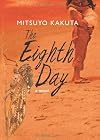
''I left the house and turned to the alley. No shops insight. This was a strange corner of the city, a row of uninhabited houses. Shutters closed, a rusty bike lying next to a shut door. The entire neighborhood looked like a ghost town. The steel tower rising looked fake, like a missing piece of a poorly-made backdrop in an impoverished theatre.''
A young woman flees from an apartment in Tokyo, carrying a baby girl, a child that isn't hers. Is she trying to save the child? And if she is, what show more is the danger? What makes her accept the dubious help of a mad woman? What drives her into the arms of a suspicious pseudo-religious cult? How can she create a home for her and the girl on a remote island? How can she escape from those who are after her?
This is the story of a woman who was weak and foolish enough to destroy her life because of a man. And yet, it was impossible for me not to sympathize with her. Kakuta has created a character that sees the wrong in her actions but is unable to withdraw because of a strange and powerful mixture of love and revenge.
Her quest is a troubled journey across Japan, its traditions, its values, its cities, and sleepy villages. In beautiful prose, Kakuta takes us into the world of neighborhoods that need to follow a controversial dogma of modernization in contrast to the island communities where the residents are there to support one another. Myths of deities, ghosts and demons, beautiful festivals and fables create an extraordinary setting in a story where motherhood takes the spotlight. Kakuta stresses two important questions regarding the theme of motherhood. Is every woman capable of being a true mother to a child and do we have the right to project our own mistakes to our children? In the end, it is certain that they will pay the prize.
The construction of the novel and the prose were satisfying. Even though the main theme isn't one I am interested in, my love for Japanese Literature prompted me to read it. But for the last 100 pages, I'd say I was satisfied. Unfortunately, the last chapters managed to disappoint me. First of all, the chapters that were based on the girl's point of view were boring. Why? Because choosing to have your two main characters committing the same mistakes in an attempt to show that life moves in inevitable circles is the epitome of lazy writing. Certain parts of the plot didn't make sense and the questions were answered in an extremely neat way. Too convenient, too organized, too unrealistic. The contrast was so intense that I found myself turning the last pages too fast…
Melodrama isn't my cup of tea. It doesn't appeal to me in the slightest. I am not a sentimental person and I consider the women who sacrifice their choices and their life for the sake of a man to be devoid of personality and ideals. The moment a novel takes a turn into the soap-opera territory, I'm out. This one takes 3 stars for the beautiful writing and an interesting main character. Unfortunately, the last 20% of the novel was so bad that in the end I was left with a bitter taste in my mouth.
*Extract translated by me, taken from the Greek edition translated by Irene Papakyriakou.*
My reviews can also be found https://theopinionatedreaderblog.wordpress.com/ show less
A young woman flees from an apartment in Tokyo, carrying a baby girl, a child that isn't hers. Is she trying to save the child? And if she is, what show more is the danger? What makes her accept the dubious help of a mad woman? What drives her into the arms of a suspicious pseudo-religious cult? How can she create a home for her and the girl on a remote island? How can she escape from those who are after her?
This is the story of a woman who was weak and foolish enough to destroy her life because of a man. And yet, it was impossible for me not to sympathize with her. Kakuta has created a character that sees the wrong in her actions but is unable to withdraw because of a strange and powerful mixture of love and revenge.
Her quest is a troubled journey across Japan, its traditions, its values, its cities, and sleepy villages. In beautiful prose, Kakuta takes us into the world of neighborhoods that need to follow a controversial dogma of modernization in contrast to the island communities where the residents are there to support one another. Myths of deities, ghosts and demons, beautiful festivals and fables create an extraordinary setting in a story where motherhood takes the spotlight. Kakuta stresses two important questions regarding the theme of motherhood. Is every woman capable of being a true mother to a child and do we have the right to project our own mistakes to our children? In the end, it is certain that they will pay the prize.
The construction of the novel and the prose were satisfying. Even though the main theme isn't one I am interested in, my love for Japanese Literature prompted me to read it. But for the last 100 pages, I'd say I was satisfied. Unfortunately, the last chapters managed to disappoint me. First of all, the chapters that were based on the girl's point of view were boring. Why? Because choosing to have your two main characters committing the same mistakes in an attempt to show that life moves in inevitable circles is the epitome of lazy writing. Certain parts of the plot didn't make sense and the questions were answered in an extremely neat way. Too convenient, too organized, too unrealistic. The contrast was so intense that I found myself turning the last pages too fast…
Melodrama isn't my cup of tea. It doesn't appeal to me in the slightest. I am not a sentimental person and I consider the women who sacrifice their choices and their life for the sake of a man to be devoid of personality and ideals. The moment a novel takes a turn into the soap-opera territory, I'm out. This one takes 3 stars for the beautiful writing and an interesting main character. Unfortunately, the last 20% of the novel was so bad that in the end I was left with a bitter taste in my mouth.
*Extract translated by me, taken from the Greek edition translated by Irene Papakyriakou.*
My reviews can also be found https://theopinionatedreaderblog.wordpress.com/ show less
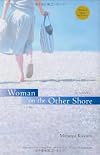
In "The Woman on the Other Shore," Mitsuyo Kakuta’s Naoki Prize winning novel, the reader is placed into contemporary Japan. The novel provides an intimate account of the difficulties growing up in a society where the simple act of opening oneself up to friendship is filled with dangers. Tracking the stories of the two main characters, the adventurous unmarried president of her own company, Aoi Narahashi, and the timid housewife, Sayoko Tamura.
Sayoko’s story is set in the novel’s show more present. Saddened at watching her young child grow up with the same timid fears that plagued her all her life, Sayoko decides to place her child in a nursery and get a job, two decisions that are counter to the desires of her somewhat useless husband and nagging mother-in-law. That decision changes everything in her life, bringing her into contact with Aoi.
Aoi’s story is set in the novel’s past. There the reader learns of her unorthodox friendship with Nanako Noguchi during her first year at high school. The friendship is unusual because the entire girls’ high school has broken into cliques. This cliquish behavior includes a serious measure of bullying and cruelty. In fact, Aoi’s parents have moved out of Yokohama to live in a backwaters community to help Aoi get away from the cruelty she’d experienced in junior high school. Unlike all the other students in the high school, Nanako flits from clique to clique, never belonging to any of them. She and Aoi form a friendship that changes Aoi from a shy young lady, not too different from Sayoko, into the more dynamic woman she has become by the novel’s opening chapter.
Kakuta mixes these two stories masterfully, letting each add resonance to the other until they finally come together as the book closes. The characterizations are very real, the pacing exquisite, and the insight into human character illuminating. The place is one we in the west barely know and cannot penetrate, but that is no obstacle to enjoying this fine novel since the characters and their motivations are universal.
I strongly recommend this book, though some men might find its being set almost completely in the world of women to be a drawback. I urge them to give the book a chance by reading two chapters since the story transcends gender to become a finely drawn story of striving and achievement. show less
Sayoko’s story is set in the novel’s show more present. Saddened at watching her young child grow up with the same timid fears that plagued her all her life, Sayoko decides to place her child in a nursery and get a job, two decisions that are counter to the desires of her somewhat useless husband and nagging mother-in-law. That decision changes everything in her life, bringing her into contact with Aoi.
Aoi’s story is set in the novel’s past. There the reader learns of her unorthodox friendship with Nanako Noguchi during her first year at high school. The friendship is unusual because the entire girls’ high school has broken into cliques. This cliquish behavior includes a serious measure of bullying and cruelty. In fact, Aoi’s parents have moved out of Yokohama to live in a backwaters community to help Aoi get away from the cruelty she’d experienced in junior high school. Unlike all the other students in the high school, Nanako flits from clique to clique, never belonging to any of them. She and Aoi form a friendship that changes Aoi from a shy young lady, not too different from Sayoko, into the more dynamic woman she has become by the novel’s opening chapter.
Kakuta mixes these two stories masterfully, letting each add resonance to the other until they finally come together as the book closes. The characterizations are very real, the pacing exquisite, and the insight into human character illuminating. The place is one we in the west barely know and cannot penetrate, but that is no obstacle to enjoying this fine novel since the characters and their motivations are universal.
I strongly recommend this book, though some men might find its being set almost completely in the world of women to be a drawback. I urge them to give the book a chance by reading two chapters since the story transcends gender to become a finely drawn story of striving and achievement. show less
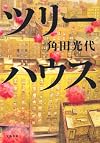
内容(「BOOK」データベースより)
謎の多い祖父の戸籍、沈黙が隠した家族の過去。すべての家庭の床下には、戦争の記憶が埋まっている。新宿角筈『翡翠飯店』クロニクル。
謎の多い祖父の戸籍、沈黙が隠した家族の過去。すべての家庭の床下には、戦争の記憶が埋まっている。新宿角筈『翡翠飯店』クロニクル。
Lists
Awards


You May Also Like


Associated Authors
Statistics
- Works
- 31
- Also by
- 6
- Members
- 267
- Popularity
- #86,453
- Rating
- 3.3
- Reviews
- 9
- ISBNs
- 43
- Languages
- 6
- Favorited
- 1