
Ashok K. Banker
Author of Prince of Ayodhya
About the Author
Series
Works by Ashok K. Banker
Asimov's Science Fiction: Vol. 48, No. 3 & 4 [March/April 2024] — Contributor — 5 copies
Rise as One (Rise, #1) 2 copies
The Sadhu #3 1 copy
In the Shadow of Her Wings 1 copy
Vortal : shockwave 1 copy
Vengeance of Ravan 1 copy
Associated Works
A People's Future of the United States: Speculative Fiction from 25 Extraordinary Writers (2019) — Contributor — 539 copies, 20 reviews
Lightspeed Magazine, Issue 107 • April 2019 (2019) — Contributor, some editions — 11 copies, 2 reviews
Tagged
Common Knowledge
- Legal name
- Banker, Ashok Kumar
- Birthdate
- 1964-02-07
- Gender
- male
- Nationality
- India
- Birthplace
- Mumbai, India
- Places of residence
- Mumbai, India
Los Angeles, California, USA - Associated Place (for map)
- India
Members
Reviews
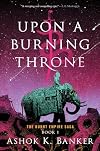
Upon a Burning Throne starts out with potential. It tells the story of the succession of a kingdom - two children born to the royal family. One child is born blind, the other a child with albinism. The nobility is at first aghast, for these are not "normal" children. Nonetheless, the burning throne claims both children as heirs. A third child, the daughter of an outcast brother of the regent, is presented. The burning throne accepts her too, but the royal family doesn't, and her father show more swears revenge.
The story sets itself to be a fight for the throne between the three children, but that's not what happens. The little girl is never seen again, although her father causes some level of trouble. Adri and Shvate grow up, but are generally not hindered by their blindness or albinism, respectively. In fact, there doesn't seem to be much point in attributing these things, save to illustrate the fact that the daughter would have been, by this society's values, a more apt choice for ruler.
The rest of the tale ambles along. There are random time jumps, and a lot of the events seem to take place off-screen, per se. We find out many events by listening to characters be reminded after a period of amnesia, or by switching perspectives and having two different characters talk about it. It's nearly 800 pages, but I'd say only 30% of that comprises actual action.
I'd also like to talk about the treatment of female characters. Banker builds up exciting characters in Karni and Mayla, strong women with a fighting spirit and intelligence. Then he reduces them both to babymaking machines. The mothers of demigods, maybe, but suited to be mothers only. Even Jilana, who helps rule as co-regent, is reduced to a bumbling, illogical mess when it comes to the safety of her grandsons. It's just... disappointing. A step in the wrong direction for modernity.
Between the disappointment of the characters, the fantastic setup that went nowhere, and the disjointed jumping around, I didn't care for this novel. It bills itself as an Indian Game of Thrones, and it very well could have gone that way, but there were too many people who didn't want the throne alongside characters being shoved in stereotypical social roles... at the end of nearly an 800 page book, I felt like nothing had happened and I didn't care what would happen next. show less
The story sets itself to be a fight for the throne between the three children, but that's not what happens. The little girl is never seen again, although her father causes some level of trouble. Adri and Shvate grow up, but are generally not hindered by their blindness or albinism, respectively. In fact, there doesn't seem to be much point in attributing these things, save to illustrate the fact that the daughter would have been, by this society's values, a more apt choice for ruler.
The rest of the tale ambles along. There are random time jumps, and a lot of the events seem to take place off-screen, per se. We find out many events by listening to characters be reminded after a period of amnesia, or by switching perspectives and having two different characters talk about it. It's nearly 800 pages, but I'd say only 30% of that comprises actual action.
I'd also like to talk about the treatment of female characters. Banker builds up exciting characters in Karni and Mayla, strong women with a fighting spirit and intelligence. Then he reduces them both to babymaking machines. The mothers of demigods, maybe, but suited to be mothers only. Even Jilana, who helps rule as co-regent, is reduced to a bumbling, illogical mess when it comes to the safety of her grandsons. It's just... disappointing. A step in the wrong direction for modernity.
Between the disappointment of the characters, the fantastic setup that went nowhere, and the disjointed jumping around, I didn't care for this novel. It bills itself as an Indian Game of Thrones, and it very well could have gone that way, but there were too many people who didn't want the throne alongside characters being shoved in stereotypical social roles... at the end of nearly an 800 page book, I felt like nothing had happened and I didn't care what would happen next. show less
I debated rating this three stars because it isn't a favorite and didn't resonate with me, but upon reflection this is an amazingly well written book and the first book in this saga sets up an intricate world of politics spanning from mortals to gods to demons. The style feels like reading mythologies so it is sweeping and grand in scale but leaves the reader a bit more distant from the characters. If that style can be enjoyable to you then I HIGHLY recommend giving this a read!
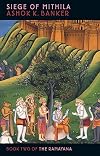
This is the second book out of six in Ashok K. Banker’s Ramayana series. The goal of the series is to take everything written in the original Ramayana, and epic Hindu story written roughly 3,000 years ago, and cast it into the Big Fat Fantasy mold: stay true to all the events and characters and the culture of the time, but add characterization, and additional narration and explanation and make it easier for the modern audience to read. Although I have never read the original, I have to say show more that Mr. Banker seems to be succeeding beautifully, and “Siege of Mithila” is smoother and more accessible than its predecessor.
In the first book “Prince of Ayodhya,” too much of the focus was on Rama himself, the hero of the epic. This is the natural place to put the focus, of course. However, Rama is a little too perfect, a little too much of a paragon to be a character that you can really empathize with. He is confronted with a situation, and basically follows his dharma (duty/right conduct) exactly perfectly, every time. While ideal for an enjoyable, instructional parable on right living, this isn’t really the way we do fantasy nowadays.
So in “Siege of Mithila,” Banker puts more emphasis on the supporting cast of characters: his brother Lakshman, his bodyguard Bejoo, the princess Sita and others. This makes the story more accessible, by giving us the POVs of more human “Joe Schmoe” characters to follow, even if all the “Joe Schmoes” are heroes in their own right.
The scenery in the book and the introduction to Hindu culture and history is invaluable. Now more than ever I am motivated to say that I want to visit India at least once in my life. To be introduced to all this from a person within the culture, instead of Westerners writing about them from the outside is a gift, and in such an enjoyable format! The story itself is engaging, with very clear prose that pulls you along. Be warned: this book doesn’t really end, it simply stops. I moved directly onto book three from here, just to know what happens next, so be prepared. And don’t be afraid to make frequent use of the glossary in the back! You’ll be surprised at how much extra texture and education it adds to the story. show less
In the first book “Prince of Ayodhya,” too much of the focus was on Rama himself, the hero of the epic. This is the natural place to put the focus, of course. However, Rama is a little too perfect, a little too much of a paragon to be a character that you can really empathize with. He is confronted with a situation, and basically follows his dharma (duty/right conduct) exactly perfectly, every time. While ideal for an enjoyable, instructional parable on right living, this isn’t really the way we do fantasy nowadays.
So in “Siege of Mithila,” Banker puts more emphasis on the supporting cast of characters: his brother Lakshman, his bodyguard Bejoo, the princess Sita and others. This makes the story more accessible, by giving us the POVs of more human “Joe Schmoe” characters to follow, even if all the “Joe Schmoes” are heroes in their own right.
The scenery in the book and the introduction to Hindu culture and history is invaluable. Now more than ever I am motivated to say that I want to visit India at least once in my life. To be introduced to all this from a person within the culture, instead of Westerners writing about them from the outside is a gift, and in such an enjoyable format! The story itself is engaging, with very clear prose that pulls you along. Be warned: this book doesn’t really end, it simply stops. I moved directly onto book three from here, just to know what happens next, so be prepared. And don’t be afraid to make frequent use of the glossary in the back! You’ll be surprised at how much extra texture and education it adds to the story. show less
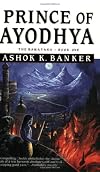
As a big fan of the Ramayana, I have to admit being predisposed to liking this book.
The book does move slowly, as other reviewers have commented, but all for the purpose of becoming acquainted with a large cast of characters at the beginning of a large story and a long series of books. This is epic storytelling, at an epic pace, which is not at all to say that it is a tedious read; you just can't be expecting that the major villain, Ravana, will be defeated, or that he will even make much of show more an appearance, in this first book.
As a fantasy novel, I like that Prince of Ayodhya has grown out of a different genealogy than the Celtic/Tolkien tradition that still informs so much of the genre, at least for English-speaking markets. This is one story that has helped me realize how much our imaginations can be limited by hearing the same kind of tales over and over again. show less
The book does move slowly, as other reviewers have commented, but all for the purpose of becoming acquainted with a large cast of characters at the beginning of a large story and a long series of books. This is epic storytelling, at an epic pace, which is not at all to say that it is a tedious read; you just can't be expecting that the major villain, Ravana, will be defeated, or that he will even make much of show more an appearance, in this first book.
As a fantasy novel, I like that Prince of Ayodhya has grown out of a different genealogy than the Celtic/Tolkien tradition that still informs so much of the genre, at least for English-speaking markets. This is one story that has helped me realize how much our imaginations can be limited by hearing the same kind of tales over and over again. show less
Awards


You May Also Like


Associated Authors
Statistics
- Works
- 65
- Also by
- 12
- Members
- 1,707
- Popularity
- #15,030
- Rating
- 3.7
- Reviews
- 30
- ISBNs
- 106
- Languages
- 5