
Edward Hoagland (1932–2026)
Author of The Best American Essays 1999
About the Author
Edward Hoagland has written more than twenty books, including the travel memoirs African Calliope and Notes from the Century Before, the essay collections Walking the Dead Diamond River, The Tugman's Passage, and Sex and River Styx, and the novels Cat Man and Seven Rivers West. He has received show more numerous prestigious literary awards and taught at many American colleges and universities. He is a native New Yorker, who now divides his time between Martha's Vineyard and his farmhouse in the mountains of northern, Vermont. show less
Image credit: http://www.edwardhoagland.com/
Works by Edward Hoagland
Notes from the Century Before: A Journal from British Columbia (Modern Library Exploration) (1969) 161 copies, 2 reviews
The Courage of Turtles: 15 Essays About Compassion, Pain and Love, About Being at Home, About Rodeos, the Circus, and Boxing, About Being a Wasp, Abo (1970) 66 copies
Associated Works
A Sense of History: The Best Writing from the Pages of American Heritage (1985) — Contributor — 490 copies, 4 reviews
For the Love of Books: 115 Celebrated Writers on the Books They Love Most (1999) — Contributor — 478 copies, 4 reviews
About Us: Essays from the Disability Series of the New York Times (2019) — Contributor — 92 copies, 1 review
Here Lies My Heart: Essays on Why We Marry, Why We Don't, and What We Find There (1999) — Contributor — 62 copies, 3 reviews
The shameless diary of an explorer : a story of failure on Mt. McKinley (1907) — Introduction, some editions — 58 copies, 2 reviews
Published and Perished: Memoria, Eulogies, and Remembrances of American Writers (2002) — Contributor — 41 copies, 1 review
Antaeus No. 61, Autumn 1988 - Journals, Notebooks & Diaries (1988) — Contributor — 37 copies, 2 reviews
Tagged
Common Knowledge
- Birthdate
- 1932-12-21
- Date of death
- 2026-02-24
- Gender
- male
- Education
- Harvard University
- Occupations
- novelist
travel writer
essayist - Organizations
- American Academy of Arts and Letters (Literature, 1982)
- Awards and honors
- Lannan Literary Award (Nonfiction, 1993)
- Relationships
- Magid, Marion (echtg.)
- Nationality
- USA
- Birthplace
- New York, New York, USA
- Places of residence
- New York, New York, USA (birth)
- Associated Place (for map)
- New York, New York, USA
Members
Reviews
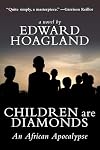
“Disasters can swallow you up in Africa, and yet, the disasters too, get swallowed up, which may be why we rolling stones roll there.” Hickey, the narrator, sums up much of his motivation and behavior in the novel with this revealing statement. Hoagland depicts Africa as a beautiful, but dangerous and corrupt place. Hickey is a complicated, but likeable character filled with contradictions. He smuggles diamonds and gold, but tries to save children from disease, war and starvation. “The show more joke, if you can call it that, among us expatriates is that if you feel a hand grope for your wallet, the second thing to do is to try and save the life of the pickpocket.” He is a womanizer. “Her color is different from mine but that distinction has vanished. I carry condoms of course, but with an African woman, just thinking of the odds can distract and unman you, even if you theoretically have protection.” But risks everything to save Ruth Parker, a committed medical missionary, working for an NGO called Protestants Against Famine, who is trapped when the civil war breaks out in Sudan. Hickey stays at a place he calls the Arabs in Nairobi, just across the street from the Stanley Hotel. He bribes people at the Stanley to let him use their rooftop pool and café. He also has a strongbox there. He works at any job–some quite risky– to make money, like transporting supplies, guiding tourists, etc. He carries a lot of money on him in money belts.
The Africans are depicted in a balanced way. Some are corrupt, many are disease-ridden (especially with AIDS) and most are poor and uneducated. Hickey is empathic, and tries to help when he can, but often is faced with the reality of how big the problems are. He meets Ruth while delivering supplies to her hospital and quickly sees in her a level of commitment to the people that he relates to and may aspire to emulate. “Joy is what is partly needed, especially at first, and joy, I think, is like photosynthesis for plants, an evidence of God.”
Hoagland writes with long complex sentences dripping with sarcasm. Often there are abrupt shifts from things that are actually happening to memories and backstory. This can be quite confusing, and often required me to reread passages.
The CIA is a mysterious dark presence in the novel but Hoagland does not explore this to any great extent, except to lampoon a couple of supposed agents–Herbert and Craig–a couple of guys who reminded me of the intelligence officer in the TV version of MASH. The Russians, Arabs and Israelis also don’t escape unscathed.
The chaos starts slowly, but builds to a climax at the end of the novel that is riveting. While he is away, Hickey finds out that Ruth has been raped and left abandoned and naked to get back to her compound. He rationalizes that “Wartime rape is motivated by unexpended adrenaline and sadism, not because there are any ‘dolls’ around.” A friend, Ed, who is a pilot, dies in a crash while trying to transport one of Ruth’s workers. Father Leo, an Irish priest brings a little boy to the compound and Ruth develops an affection for him. A young man, Bol arrives at the compound, seeking escape to the West. He is multilingual and acts as a teacher for group of refugee children. Otim, a 10 year old soldier, who has escaped the army also arrives at the compound. The whole thing seems chaotic enough, but gets much worse when the civil war breaks out. Attlee, Ruth’s long-time assistant and friend is killed by rebels who attempt to search for someone during the night.
Hickey takes a number of children to Nairobi with him, especially 2 girls with eye problems, and Otim, but not before developing an intimate relationship with Ruth.
The latter half of the novel deals with Hickey’s return to rescue Ruth, but incidentally also many children. This is so harrowing that I can’t describe it without spoiling it.
This excellent novel is part noir and part thriller, depicting the complexities of Africa as it existed then, especially how the innocents were brutalized by the conflicts that involved tribal difference and manipulation by world powers. The evil was overwhelming. show less
The Africans are depicted in a balanced way. Some are corrupt, many are disease-ridden (especially with AIDS) and most are poor and uneducated. Hickey is empathic, and tries to help when he can, but often is faced with the reality of how big the problems are. He meets Ruth while delivering supplies to her hospital and quickly sees in her a level of commitment to the people that he relates to and may aspire to emulate. “Joy is what is partly needed, especially at first, and joy, I think, is like photosynthesis for plants, an evidence of God.”
Hoagland writes with long complex sentences dripping with sarcasm. Often there are abrupt shifts from things that are actually happening to memories and backstory. This can be quite confusing, and often required me to reread passages.
The CIA is a mysterious dark presence in the novel but Hoagland does not explore this to any great extent, except to lampoon a couple of supposed agents–Herbert and Craig–a couple of guys who reminded me of the intelligence officer in the TV version of MASH. The Russians, Arabs and Israelis also don’t escape unscathed.
The chaos starts slowly, but builds to a climax at the end of the novel that is riveting. While he is away, Hickey finds out that Ruth has been raped and left abandoned and naked to get back to her compound. He rationalizes that “Wartime rape is motivated by unexpended adrenaline and sadism, not because there are any ‘dolls’ around.” A friend, Ed, who is a pilot, dies in a crash while trying to transport one of Ruth’s workers. Father Leo, an Irish priest brings a little boy to the compound and Ruth develops an affection for him. A young man, Bol arrives at the compound, seeking escape to the West. He is multilingual and acts as a teacher for group of refugee children. Otim, a 10 year old soldier, who has escaped the army also arrives at the compound. The whole thing seems chaotic enough, but gets much worse when the civil war breaks out. Attlee, Ruth’s long-time assistant and friend is killed by rebels who attempt to search for someone during the night.
Hickey takes a number of children to Nairobi with him, especially 2 girls with eye problems, and Otim, but not before developing an intimate relationship with Ruth.
The latter half of the novel deals with Hickey’s return to rescue Ruth, but incidentally also many children. This is so harrowing that I can’t describe it without spoiling it.
This excellent novel is part noir and part thriller, depicting the complexities of Africa as it existed then, especially how the innocents were brutalized by the conflicts that involved tribal difference and manipulation by world powers. The evil was overwhelming. show less

Edward Hoagland’s book Sex and the River Styx is a collection of essays about nature, travel, and what he has learned from life. He self-consciously situates himself as someone nearing the end of his life looking back and taking stock. This is the first Hoagland book I’ve read (which I got from the publisher on NetGalley), although I’ve read single essays of his from various collections before. It’s an interesting book and a number of things stand out about it, most obviously the show more quality of the writing, as in this passage, where he writes about his own death:
. . . accepting death as a process of disassembly into humus, then brook, and finally seawater demystifies it for me. I don’t mean I comprehend bidding consciousness goodbye. But I love the rich smell of humus, of true woods soil, and of course the sea — love rivulets and brooks, lying earthbound, on the ground. The question of decomposition is not pressing or frightening. From the top of the food chain I’ll reenter the bottom. Be a bug; then a shiner shimmering in the closest stream … or partially mineralized — does one need retinas and a hippocampus? Because I don’t particularly want to be me, my theory is no. A green shoot a woodchuck might munch seems okay. I believe in continuity through conductivity: that the seething underpinnings of life’s flash and filigree, its igniting chemistry, may, like fertilizer, appear temporarily dead, but spark across species like the electricity of empathy, or as though paralleling the posthumous alchemy of art.
His descriptions are so specific, so precise, that you can imagine exactly what he’s describing. even if you haven’t actually seen it with your own eyes. I also admired the strong sense of joy that runs through the book, alongside the equally strong (or stronger, perhaps?) sense of doom. As one who loves nature deeply, Hoagland mourns over all that we’ve lost on the earth and all that we will lose in the future. When he says he’s glad he won’t be around to witness the future destruction that is inevitably on the way, I sympathize.
Read the rest of the review at Of Books and Bicycles. show less
. . . accepting death as a process of disassembly into humus, then brook, and finally seawater demystifies it for me. I don’t mean I comprehend bidding consciousness goodbye. But I love the rich smell of humus, of true woods soil, and of course the sea — love rivulets and brooks, lying earthbound, on the ground. The question of decomposition is not pressing or frightening. From the top of the food chain I’ll reenter the bottom. Be a bug; then a shiner shimmering in the closest stream … or partially mineralized — does one need retinas and a hippocampus? Because I don’t particularly want to be me, my theory is no. A green shoot a woodchuck might munch seems okay. I believe in continuity through conductivity: that the seething underpinnings of life’s flash and filigree, its igniting chemistry, may, like fertilizer, appear temporarily dead, but spark across species like the electricity of empathy, or as though paralleling the posthumous alchemy of art.
His descriptions are so specific, so precise, that you can imagine exactly what he’s describing. even if you haven’t actually seen it with your own eyes. I also admired the strong sense of joy that runs through the book, alongside the equally strong (or stronger, perhaps?) sense of doom. As one who loves nature deeply, Hoagland mourns over all that we’ve lost on the earth and all that we will lose in the future. When he says he’s glad he won’t be around to witness the future destruction that is inevitably on the way, I sympathize.
Read the rest of the review at Of Books and Bicycles. show less
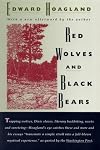
Though many of these essays have undoubtedly dated since their writing in the '70s, Hoagland is a scrupulous enquirer of the world he sees around him. He considers, investigates, and reports on his subjects with a meticulous eye for the circumstances.
In this fast-paced and apparently ever-changing world we inhabit, many of the subjects he broaches are surprisingly very relevant today - on nature, environmentalism, private lives, and the quest for personal fulfilment, these are constant show more topics for discussion still in the 21st century. One or two of the essays in this collection lost my interest along the way, but on the whole, the way he expresses his enquiries and the subject matter he covers was of great interest to me and mostly very thought provoking. show less
In this fast-paced and apparently ever-changing world we inhabit, many of the subjects he broaches are surprisingly very relevant today - on nature, environmentalism, private lives, and the quest for personal fulfilment, these are constant show more topics for discussion still in the 21st century. One or two of the essays in this collection lost my interest along the way, but on the whole, the way he expresses his enquiries and the subject matter he covers was of great interest to me and mostly very thought provoking. show less

In 1966, Edward Hoagland, journalist, took a three month trip through the wilds of British Columbia. “I would be talking to the doers themselves, the men whom no one pays any attention to until they are dead, who give the mountains their names and who pick the passes that become the freeways.”
And so this book is filled with his encounters with these characters whose chosen home is life in the wild. Hunting, fishing, living off the land, making-do, trapping, homesteading, cooking, keeping show more warm, bringing babies into the world, their interactions with one another – native and white.
He sets his scenes beautifully. I can't get over the evenings – the balmy air, the late, late daylight. Life catches a perfervid quality, although nothing happens. The sky and the lake are the color of mercury; the moon is a slice of copper plate; the trees blow whimsically. The moments seem intense and precious.
I enjoyed this look back in time and place. show less
And so this book is filled with his encounters with these characters whose chosen home is life in the wild. Hunting, fishing, living off the land, making-do, trapping, homesteading, cooking, keeping show more warm, bringing babies into the world, their interactions with one another – native and white.
He sets his scenes beautifully. I can't get over the evenings – the balmy air, the late, late daylight. Life catches a perfervid quality, although nothing happens. The sky and the lake are the color of mercury; the moon is a slice of copper plate; the trees blow whimsically. The moments seem intense and precious.
I enjoyed this look back in time and place. show less
Awards


You May Also Like


Associated Authors
Statistics
- Works
- 36
- Also by
- 32
- Members
- 1,378
- Popularity
- #18,656
- Rating
- 3.8
- Reviews
- 14
- ISBNs
- 84
- Languages
- 3
- Favorited
- 3