
Alice McDermott
Author of Charming Billy
About the Author
Alice McDermott was born in Brooklyn, New York on June 27, 1953. She received a B.A. from the State University of New York at Oswego in 1975 and an M.A. from the University of New Hampshire in 1978. After graduating college, she got a job reading unsolicited manuscripts for Redbook magazine and did show more some freelance reading for Esquire. She has taught writing at American University, the University of New Hampshire, and the University of California at San Diego. Currently, she is the Writing Seminars Professor of the Johns Hopkins University Writing Department. Her short stories and articles have appeared in numerous publications including Ms., Redbook, Mademoiselle, The New Yorker, Seventeen, the New York Times and the Washington Post. She has written several novels including A Bigamist's Daughter, At Weddings and Wakes, Child of My Heart, After This, Someone, and The Ninth Hour. That Night was made into a film starring C. Thomas Howell and Juliette Lewis in 1992. She has won several awards including the National Book Award for fiction in 1998 for Charming Billy, a Whiting Writers Award, and the 2008 Corrington Award for Literature. (Bowker Author Biography) show less
Works by Alice McDermott
Associated Works
Secret Ingredients: The New Yorker Book of Food and Drink (2007) — Contributor — 593 copies, 10 reviews
More Stories We Tell: The Best Contemporary Short Stories by North American Women (2004) — Contributor — 66 copies
Selected Shorts: Food Fictions (Selected Shorts: A Celebration of the Short Story) (2007) — Contributor — 11 copies, 3 reviews
Tagged
Common Knowledge
- Canonical name
- McDermott, Alice
- Birthdate
- 1953-06-27
- Gender
- female
- Education
- St. Boniface School, Elmont, Long Island, New York, USA (1967)
Sacred Heart Academy, Hempstead New York, USA (1971)
State University of New York, Oswego (BA|1975)
University of New Hampshire (MA | 1978) - Occupations
- novelist
professor - Organizations
- University of California, San Diego
American University - Awards and honors
- Whiting Writers' Award (1987)
F. Scott Fitzgerald Award for Outstanding Achievement in American Fiction (2010) - Agent
- Harriet Wasserman (Harriet Wasserman Literary Agency)
- Relationships
- Turco, Lewis (teacher)
- Short biography
- McDermott was born in Brooklyn, New York. She attended St. Boniface School in Elmont, New York, on Long Island (1967), Sacred Heart Academy in Hempstead (1971), and the State University of New York at Oswego, receiving her BA in 1975, and received her MA from the University of New Hampshire in 1978.
She has taught at UCSD and American University, has been a writer-in-residence at Lynchburg College and Hollins College in Virginia, and was lecturer in English at the University of New Hampshire. Her short stories have appeared in Ms., Redbook, Mademoiselle, The New Yorker and Seventeen. She has also published articles in The New York Times and The Washington Post.
Ms. McDermott lives outside Washington, D.C. with her husband, a neuroscientist, and three children. She is Catholic, though she once deemed herself "not a very good Catholic - Nationality
- USA
- Birthplace
- Brooklyn, New York, USA
- Places of residence
- Brooklyn, New York, USA
Bethesda, Maryland, USA - Associated Place (for map)
- USA
Members
Discussions
novel, 50s-60s era, family, four kids? Catholic, one son dies in Vietnam in Name that Book (November 2016)
Reviews
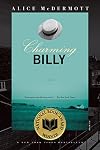
A slow, sad book that describes the way that a sudden romantic disappointment changes the life of a likeable Irish-American drinker. McDermott's skilled at conveying the essence of character: after finishing "Charming Billy," I felt like I knew him, along with many of his friends, relatives and associates. Still, the parts of this novel I enjoyed most were, paradoxically, some of the elements that had least to do with any particular character. The book's got some lovely descriptions of the show more Long Island shoreline and skilfully traces its development from a sparsely populated wilderness to an ordinary suburb. She's also good at conveying the relative isolation that the Irish community once lived in. Most of the lives described in "Charming Billy" are unambitious and constrained, and this provides a welcome contrast to the content-free nostalgia that's seems so common among many latter-day Irish Americans. For all its focus on its titular character, McDermott's book is really the story of a whole community, and, in its way, an elegy for a way of life. It's narrated by a daughter of one of Billy's cousins, someone working her way out of the Irish-American experience, and I think that this was a wise choice on the author's part, since it provides a certain necessary distance from Billy's experience.
At the same time, I'm not sure that I really enjoyed this one. I feel that, in portraying the Irish-American community that could sometimes be as claustrophobic as it was supportive, McDermott is making a conscious effort to write against some well-worn sentimental ethnic tropes. The problem is that I'm not sure that she always succeeds: Billy himself is a silver-tongued charmer with a drinking problem, after all, and we meet a full complement of suffering Irish mothers and dashing Irish hellraisers, too. Also, while she writes well, the author also tends to hold on to both her sentences and her scenes a bit too long. In short, this book drags in places, and I think that many readers will find the scenes of extended post-funeral mourning as hard to get through as I did. For all this, its not a bad read, or a bad novel, but I'm not sure it screams "prize-winner." Apparently, someone over at the National Book Foundation feels differently. show less
At the same time, I'm not sure that I really enjoyed this one. I feel that, in portraying the Irish-American community that could sometimes be as claustrophobic as it was supportive, McDermott is making a conscious effort to write against some well-worn sentimental ethnic tropes. The problem is that I'm not sure that she always succeeds: Billy himself is a silver-tongued charmer with a drinking problem, after all, and we meet a full complement of suffering Irish mothers and dashing Irish hellraisers, too. Also, while she writes well, the author also tends to hold on to both her sentences and her scenes a bit too long. In short, this book drags in places, and I think that many readers will find the scenes of extended post-funeral mourning as hard to get through as I did. For all this, its not a bad read, or a bad novel, but I'm not sure it screams "prize-winner." Apparently, someone over at the National Book Foundation feels differently. show less

Tricia is a young wife who accompanied her husband to Saigon. It's 1963, and the expat life of garden parties, evening drinks and children attending the international school while living in lavish homes cared for by local help is still normal. Tricia, by nature a good girl who grew up working class Catholic in Yonkers, is ready to do her part to help her husband's career. She's naturally shy, but keenly observant and she falls in easily with Charlene, a woman with goals and plans and the show more forceful nature needed to carry them out. She's quickly co-opted into Charlene's work, at first bringing toys to hospitalized children (and cigarettes to their parents), then into a plan that involves trips out to a leper colony. But the war is becoming something that can't be ignored and Tricia is forced into looking at how the very best of intentions can do harm.
The novel takes the form of letters written between Tricia and Charlene's daughter, in which Tricia explains how people thought and acted in that time and place, through the lens of what we now know. It's a balancing act, to tell the story of a woman in 1963, through her eyes then and now and McDermott is able to make that work. Charlene's actions, and therefore many of Tricia's were what we would look at now with a critical eye, as does the present day Tricia, looking closely at how what they were doing was just feel-good work for a large part, but also work that sometimes did real good and sometimes real harm. McDermott's characters seem fairly simple on the surface, but there's a lot of complexity under the surface. I will be thinking about the characters and the choices they made for some time. I recommend going into this book knowing as little as possible about it ahead of time. show less
The novel takes the form of letters written between Tricia and Charlene's daughter, in which Tricia explains how people thought and acted in that time and place, through the lens of what we now know. It's a balancing act, to tell the story of a woman in 1963, through her eyes then and now and McDermott is able to make that work. Charlene's actions, and therefore many of Tricia's were what we would look at now with a critical eye, as does the present day Tricia, looking closely at how what they were doing was just feel-good work for a large part, but also work that sometimes did real good and sometimes real harm. McDermott's characters seem fairly simple on the surface, but there's a lot of complexity under the surface. I will be thinking about the characters and the choices they made for some time. I recommend going into this book knowing as little as possible about it ahead of time. show less
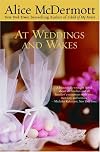
Time is handled in a "This Is Us" fashion: time goes backwards and forwards in At Weddings and Wakes. Time moves through memory and observation and seems incrementally slow. This is the story of what it means to be Irish-American in New York, told from the point of view of Lucy Dailey's school-aged children. Again, I was reminded of "This Is Us." The viewpoints are poignant and sad, tender and true to life. This Is Life. Lucy dutifully brings her children from Long Island to see her sisters show more and stepmother in Brooklyn. The three generations of family all have a rich bittersweet history to tell. Aunt Veronica needs alcohol to numb her grief. Aunt Agnes is nothing but sharp-tongued and career driven. But, the sweetness and light is found with Aunt May, a former nun in the midst of a romance with mailman.
McDermott is a master at displaying human emotions and behaviors in a way that you swear the characters are in your life; just ghosts who have just passed into another room while you weren't looking.
As an aside, can I just say how much I love the slug scene that appears in the beginning of the book and then returns at the end? show less
McDermott is a master at displaying human emotions and behaviors in a way that you swear the characters are in your life; just ghosts who have just passed into another room while you weren't looking.
As an aside, can I just say how much I love the slug scene that appears in the beginning of the book and then returns at the end? show less
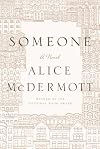
Although Someone has a couple of tiny editing issues (a powerful phrase or two repeated when it seemed clear that they shouldn't be), it deserves five stars anyway. Alice McDermott strings together slices of character Marie's life beautifully and to heartbreaking effect in these slender 232 pages, but it's mostly an ordinary sort of heartbreak--the accumulated losses and sadnesses of any long life. Someone echoed several other novels I've read (A Tree Grows in Brooklyn, On Canaan's Side, show more Brooklyn, and even Olive Kitteredge a bit, though that one isn't an Irish-American tale), but McDermott manages to make Marie's story original, and all her own. Lovely, lovely, lovely. show less
Lists
Awards


You May Also Like


Associated Authors
Statistics
- Works
- 16
- Also by
- 6
- Members
- 8,499
- Popularity
- #2,832
- Rating
- 3.7
- Reviews
- 293
- ISBNs
- 208
- Languages
- 8
- Favorited
- 22