
Alice Sebold
Author of The Lovely Bones
About the Author
Alice Sebold was born in Madison, Wisconsin on September 6, 1963. She attended college at Syracuse University. She was raped as a freshman. Her first book, Lucky, is a memoir which tells the story of that event in her life and its aftermath. Following graduation from Syracuse, she went to the show more University of Houston for her graduate degree and received an MFA from the University of California, Irvine. Her other books include The Lovely Bones and The Almost Moon. She won the American Booksellers Association Book of the Year Award for Adult Fiction in 2003 for The Lovely Bones and the Bram Stoker Award for First Novel in 2002. In 2009 a feature film was released of The Lovely Bones starring Mark Wahlberg and Rachel Weisz. (Bowker Author Biography) show less
Works by Alice Sebold
Sebold, Alice 2 copies
Lucky 2 copies
Associated Works
The Lovely Bones AND The Time Traveller's Wife — Contributor — 2 copies
Tagged
Common Knowledge
- Legal name
- Sebold, Alice
- Birthdate
- 1963-09-06
- Gender
- female
- Education
- Syracuse University (BA|1984)
University of Houston
University of California, Irvine (MFA|1998)
Great Valley High School, Malvern, Pennsylvania (class of 1980) - Occupations
- author
- Awards and honors
- Bram Stoker Award (2002)
Heartland Prize (2002) - Agent
- Anthony Goff (David Higham Associates)
- Relationships
- Gold, Glen David (ex-husband)
- Nationality
- USA
- Birthplace
- Madison, Wisconsin, USA
- Places of residence
- Madison, Wisconsin, USA
Malvern, Pennsylvania, USA
Syracuse, New York, USA - Associated Place (for map)
- USA
Members
Reviews
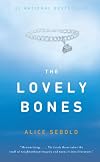
The Lovely Bones is a remarkable and gently moving feat of POI sustained by an omniscience that, at the beginning, I suspected would run its course and fall flat – but it didn't. We not only watch a murderer at work but also see the consequences of the crime on family, friends and community.
It's a story where love and presence are the binding forces in a world where absence is manifestly present. Where people and ordinary things, even suburban lives, can vanish in literal or metaphorical sinkholes. Where relationships matter
The more I reflect on this book, the more intricately constructed it becomes. Some writers don’t know how to end a book Alice Sebold does: powerful yet understated. A masterpiece! show less
These were the lovely bones that had grown round my absence: the connections – sometimes tenuous, sometimes made at great cost, but often magnificent – that happened after I was gone. (p. 320)show more
It's a story where love and presence are the binding forces in a world where absence is manifestly present. Where people and ordinary things, even suburban lives, can vanish in literal or metaphorical sinkholes. Where relationships matter
Her journal was her most important relationship. It held everything. (p.252)
The more I reflect on this book, the more intricately constructed it becomes. Some writers don’t know how to end a book Alice Sebold does: powerful yet understated. A masterpiece! show less
This book was well timed in my life. It's been on my list for almost three years, and I finally picked it up from the library just before my husband got laid off. Watching Sebold's characters navigate the new terrain of their lives without Susie helped me to identify what I was feeling in the wake of that personal crisis as grief.
I do not want to imply that the loss of a job and the loss of a child are anything near the same level of experience, but I think they have some common elements. show more There's a redefining of one's role and meaning, like Abigail said she told people she had two children but said in her mind that she had three (and hoped that wasn't disrespectful to Susie). There's coping with a change in routine, as when Buckley began spending so much time at his friend Nate's house, and at the same time coping with all of the things that continue on regardless of how we feel, like Jack going to work every day and trying to act normal. There's trying to explain these differences to young children while also trying to deal with one's own emotions, which left Abigail wanting to just escape her children and her family.
While it wasn't an entirely analogous situation, it felt familiar to me.
Not only was this story poignant to me on a personal level, but it was beautifully written. Using the deceased's point of view allowed Sebold to employ both a first-person narrator and omniscient perspective. I can't think of any other books that employ this perspective.
Sebold's language painted a vivid image of Pennsylvania as corporate development began encroaching on open spaces and historic locations. Throughout the book, the landscape is one of both familiarity and danger: gathering wildflowers along the edges of a massive sinkhole. The juxtaposition helps build tension and makes the resolution all the more effective.
I find myself conflicted about the ending. Some things happened that I thought were either just wacky or rather contrived, and other things that I wanted to happen didn't. It wasn't bad, though. I don't know how I would have ended it differently.
Overall this was a rich and satisfying read. show less
I do not want to imply that the loss of a job and the loss of a child are anything near the same level of experience, but I think they have some common elements. show more There's a redefining of one's role and meaning, like Abigail said she told people she had two children but said in her mind that she had three (and hoped that wasn't disrespectful to Susie). There's coping with a change in routine, as when Buckley began spending so much time at his friend Nate's house, and at the same time coping with all of the things that continue on regardless of how we feel, like Jack going to work every day and trying to act normal. There's trying to explain these differences to young children while also trying to deal with one's own emotions, which left Abigail wanting to just escape her children and her family.
While it wasn't an entirely analogous situation, it felt familiar to me.
Not only was this story poignant to me on a personal level, but it was beautifully written. Using the deceased's point of view allowed Sebold to employ both a first-person narrator and omniscient perspective. I can't think of any other books that employ this perspective.
Sebold's language painted a vivid image of Pennsylvania as corporate development began encroaching on open spaces and historic locations. Throughout the book, the landscape is one of both familiarity and danger: gathering wildflowers along the edges of a massive sinkhole. The juxtaposition helps build tension and makes the resolution all the more effective.
I find myself conflicted about the ending. Some things happened that I thought were either just wacky or rather contrived, and other things that I wanted to happen didn't. It wasn't bad, though. I don't know how I would have ended it differently.
Overall this was a rich and satisfying read. show less

Alice Sebold was a self-described "weirdo" college girl from an even quirkier family when she was raped by a stranger. All at once, everyone's perception of her changed. She coped with her new identity as "the raped girl" as best she could. Then one day, months later, she thought she saw her rapist in the street. He spoke to her as if he knew her. This brief encounter ended with a prosecution and conviction.
This memoir has been controversial ever since the 2021 exoneration of the Black man show more convicted of Sebold’s rape. I tried to read the book on its own terms and concluded that, as the story of a horrific crime and its aftermath, it works despite its narrow focus and occasional stretches of dull writing. As Sebold writes in the afterword, the narrative has gained a following among survivors of sexual violence. However, when reading this book, it is impossible not to think of the injustice that the author and the legal system unwittingly brought to pass. show less
This memoir has been controversial ever since the 2021 exoneration of the Black man show more convicted of Sebold’s rape. I tried to read the book on its own terms and concluded that, as the story of a horrific crime and its aftermath, it works despite its narrow focus and occasional stretches of dull writing. As Sebold writes in the afterword, the narrative has gained a following among survivors of sexual violence. However, when reading this book, it is impossible not to think of the injustice that the author and the legal system unwittingly brought to pass. show less
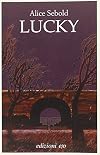
Alice Sebold's memoir and account of her brutal rape and beating as a college student precedes her internationally acclaimed and well-read novel The Lovely Bones. A difficult text to swallow, but an important one in its honest presentation of the harsh realities rape victims face, both those who report it and those who do not. Sebold does not mince words in her retelling of her altered relationships with friends and family and her treatment a warped court system. Her reality often seems show more bleak but she offers a quietly hopeful picture of life after rape. Lucky hurts, but it triumphs. show less
Lists
BBC Big Read (1)
Carole's List (1)
100 New Classics (1)
2000s decade (1)
First Novels (1)
Gen X Library (1)
Magic Realism (1)
Dead narrators (1)
Female Author (1)
Recovery (1)
B-B to Get (1)
A Novel Cure (1)
Unread books (1)
Women Writers (1)
Awards


You May Also Like


Associated Authors
Statistics
- Works
- 6
- Also by
- 5
- Members
- 49,740
- Popularity
- #306
- Rating
- 3.8
- Reviews
- 1,285
- ISBNs
- 255
- Languages
- 22
- Favorited
- 82


