
Edith Sitwell (1887–1964)
Author of English Eccentrics
About the Author
The first child of Sir George Sitwell and Lady Ida Sitwell, Edith Sitwell became famous both as poet and bohemian. Reacting against what she called the "dim bucolics" of the Georgians, she and her brothers Osbert and Sacheverell constituted a kind of aristocratic bohemian vanguard after World War show more I. Sergei Diaghilev's (see Vol. 3) Russian Ballet joined T. S. Eliot and, improbably, Alexander Pope among the early influences on her work. A skilled publicist as well as poet, Sitwell exploited her upper-class nonconformity in numerous public controversies. Her collaboration with William Walton to produce musical settings of the Facade poems (1923) created an uproar when the work was performed. Sitwell also put her talents to work for young writers in whom she believed, chief among them Dylan Thomas, whose reputation she helped launch. Despite later public honors---Elizabeth II created her a Dame Grand Cross of the British Empire, and Oxford and Cambridge bestowed honorary degrees---she remained proudly eccentric throughout her celebrated career. Sitwell's early poetry displayed a pyrotechnic surface of dazzling images and leaps. She saw Eliot's Prufrock and Other Observations (1917) as heralding "a new era in poetry," which would lead to poets seeing the world with new eyes. Breakthroughs in perception often became the themes as well as goals of her poetry. Interested particularly in French symbolist theories of sound, she developed an intricate tonal play of verbal patterns in her verse. Her work displayed an increasingly religious orientation, and during World War II, she engaged such public themes as politics more overtly in works like Three Poems for an Atomic Age. Besides her own verse, she wrote several books of prose and edited numerous anthologies of poetry. (Bowker Author Biography) show less
Series
Works by Edith Sitwell
Holst : The planets + Walton : Facade {excerpts} {sound recording} {1961 Ormandy/Philadelphia, 1971 Bernstein/New York Philharmonic} (1961) — Text [Façade] — 8 copies
The sleeping beauty 6 copies
Troy Park 6 copies
Walton : Anon in Love + A song for the Lord Mayor's table + Three Façade Settings + Three Façade Settings {sound recording} (2002) — Text [Facade] — 6 copies
Walton : Façade : An entertainment : Verses of Dame Edith Sitwell {sound recording} {1971 Marriner/Academy of St. Martin-in-the-Fields} (1971) — Text — 4 copies
Arnold : English Dances + Walton : Façade + Portsmouth Point + Scapino + Siesta {sound recording} {1953 Collins/English Opera} (1953) — Narrator [Façade] — 4 copies
Walton : Façade : An entertainment with poems {sound recording} {1954 Collins/English Opera Group} (1954) — Text, Narrator — 3 copies
Walton : Façade : The complete version {1922 - 1928} {sound recording} {1993 Van Den Broeck/elologos Ensemble} (1993) — Text — 3 copies
Walton : Façade : 1 & 2 {complete} {sound recording} {1990 Hickox/City of London Sinfonia} (1990) — Text — 3 copies
The Poetry Of Dame Edith Sitwell: "I am patient with stupidity but not with those who are proud of it." (2014) 3 copies
Lambert : Suite from an Incidental Music to Salome + Walton : Façade: The Complete Extant Numbers {sound recording} {2000 Lloyd-Jones/Nash Ensemble} (2000) — Text [Facade] — 3 copies
Look! The sun 3 copies
Epithalamium 3 copies
Five variations on a theme 3 copies
Poor men's music 3 copies
Five poems 2 copies
Bliss : Checkmate + Lambert : Horoscope + Walton : Façade {sound recording} (2003) — Text [Façade] — 2 copies
Wheels : an anthology of verse 2 copies
In spring 2 copies
The mother : and other poems 2 copies
The Early Unpublished Poems of Edith Sitwell (American University Studies Series 4: English Language and Literature) (1994) 2 copies
Walton : Façade {score : full} — Text — 1 copy
Gardeners and astronomers 1 copy
惑星の蔓―イーディス・シットウェル詩集 1 copy
Wheels, fifth cycle. 1 copy
(Poems) 1 copy
Berners : The Triumph of Neptune : Suite from the ballet + Walton : Façade + Façade : An Entertainment {sound recording} {1929,1952,1953} (1929) — Text, Narrator [Façade] — 1 copy
Walton : The voice of Edith Sitwell reading her own poems Façade to the music of William Walton {sound recording} — Text, Narrator — 1 copy
The Russian ballet gift book 1 copy
Contact collection of contemporary writers — Contributor — 1 copy
Edith Sitwell's Anthology — Composer — 1 copy
WHEELS, 1919: FOURTH CYCLE 1 copy
凍る〔モー〕―イーディス・シットウェル詩集 1 copy
Associated Works
The Norton Anthology of English Literature, 4th Edition, Volume 2 (1979) — Contributor — 272 copies, 1 review
New World Writing: Third Mentor Selection - Poetry, Fiction, Drama, Criticism (1953) — Contributor — 8 copies
Tagged
Common Knowledge
- Canonical name
- Sitwell, Edith
- Legal name
- Sitwell, Dame Edith Louisa
- Birthdate
- 1887-09-07
- Date of death
- 1964-12-09
- Gender
- female
- Education
- privately educated
- Occupations
- poet
editor
biographer
literary critic
novelist - Organizations
- American Academy of Arts and Letters (Foreign Honorary, Literature, 1949)
- Awards and honors
- Royal Society of Literature (Companion of Literature, 1963)
Order of the British Empire (Dame Commander, 1954)
Benson Medal - Relationships
- Sitwell, Sir George (father)
Sitwell, Sir Osbert (brother)
Sitwell, Sir Sacheverell (brother)
Stein, Gertrude (friend) - Short biography
- Edith Sitwell, the author of The English Eccentrics (1933), was herself the daughter of an eccentric, Sir George Sitwell, and his wife Lady Ida Emily Augusta Denison. In her autobiography, Edith said that her parents had always been strangers to her. She had two younger brothers, Osbert and Sacheverell Sitwell, both of whom grew up to be well-known literary figures and long-term collaborators. In 1912, at age 25, Edith moved to London, where she lived in a small, shabby flat in Bayswater with Helen Rootham, her former governess. Edith published her first poem, The Drowned Suns, in the Daily Mirror in 1913. Between 1916 and 1921 she edited Wheels, an annual poetic anthology compiled with her brothers. She also wrote nonfiction, including a biography, Victoria of England (1936). After Rootham become an invalid, the two went to live with her younger sister in Paris; Rootham died in 1938. Edith's only novel, I Live under a Black Sun (1937), was based on the life of Jonathan Swift. During World War II, Edith Sitwell returned from France and retired to the family's country house, Renishaw Hall in Derbyshire, with her brother Osbert and his lover, David Horner. She wrote by the light of oil lamps when the electricity went out and knitted clothes for their friends serving in the armed forces. The poems she wrote during the war, which included Street Songs (1942), The Song of the Cold (1945) and The Shadow of Cain (1947), were greatly praised. Still Falls the Rain, about the London blitz, remains perhaps her best-known poem. It was set to music by Benjamin Britten. In 1948 Sitwell toured the USA with her brothers, reciting her poetry and giving a reading of Lady Macbeth's sleepwalking scene. She made recordings of her poems, including two recordings of Façade (1922). She never married. Edith Sitwell was named a Dame Commander (DBE) in 1954. The following year, she converted to the Roman Catholic faith. She produced two successful books about Queen Elizabeth I of England, Fanfare for Elizabeth (1946) and The Queens and the Hive (1962).
- Nationality
- UK
- Birthplace
- Scarborough, North Yorkshire, England, UK
- Places of residence
- Scarborough, Yorkshire, England, UK
London, Middlesex, England, UK
Renishaw Hall, Derbyshire, England, UK - Place of death
- London, Middlesex, England, UK
- Burial location
- St. Mary's Churchyard, Weedon Lois, Northamptonshire, England, UK
- Map Location
- England, UK
Members
Reviews

The English Eccentrics is quite entertaining, although sometimes reading Edith Sitwell's prose is rather like eating spaghetti with your hands. A lovely example is the following sentence:
Having read nothing else by Sitwell, I don't know whether this was her normal style, or whether she was mimicking the 18th and 19th century biographers from whom she copiously quoted.
I found some of her subjects interesting, and some not at all, but the most fascinating character in the book was the author herself. She would describe some highly improbable situations in a completely non-judgmental manner, and she clearly had a soft spot for some of the frauds, but then she would treat some relatively innocuous character with biting sarcasm. Her opinion of misers was especially low.
While I have no desire to read any of the biographies she has written, I would like to learn more about Edith Sitwell. show less
"That queer irascible old rascal, Captain Thicknesse, who, in spite of his violent temper (which may have been due in part to the fact that he suffered from gallstones and was in the habit of drinking large quantities of laudanum in order to soothe the pain), had a real, if strangely constituted heart, andshow more
his descriptions of his sufferings when his wife and daughters died, is moving--all the more so, perhaps, because it is an artless production, for Captain Thicknesse was no writer."
Having read nothing else by Sitwell, I don't know whether this was her normal style, or whether she was mimicking the 18th and 19th century biographers from whom she copiously quoted.
I found some of her subjects interesting, and some not at all, but the most fascinating character in the book was the author herself. She would describe some highly improbable situations in a completely non-judgmental manner, and she clearly had a soft spot for some of the frauds, but then she would treat some relatively innocuous character with biting sarcasm. Her opinion of misers was especially low.
While I have no desire to read any of the biographies she has written, I would like to learn more about Edith Sitwell. show less

Fun to read aloud, but don't hope for any clarity of meaning while doing so. If you can just enjoy the sound play and not mind the obscurity, you'll get the best there is to be gotten out of these poems. It's obvious Sitwell could have done more than play with sounds and build up vague impressions of meaning, which makes me willing to try other collections of her work to see if she ever moved beyond this sort of thing while retaining her virtuosity.

"Eccentricity exists particularly in the English", June 8, 2014
This review is from: English Eccentrics a Gallery of Weird (Paperback)
A variable collection of characters, from the true eccentrics to those who would hardly seem to qualify.
The former include such individuals as the 'amphibious' lord Rokeby ; the 'not entirely pleasing' Celestina Collins, who shared her bed with thirty fowls; Squire Mytton, who frightened his hiccups away by setting his nightshirt on fire...
I was entertained by show more the account of Mr Coates, a Shakespearean actor who never quite cut the mustard: 'Mr Coates appeared at The Theatre Royal, Richmond...and again no attempt was made upon his life. indeed, the only lives that were in danger were those of certain unfeeling young gentlemen, who, in the scene where the hero poisons himself, were seized with such immoderate paroxysms of laughter that a doctor who was present became alarmed at their condition, and ordered them to be carried into the open air, where they received medical attention.'
Edith Sitwell's sarcastic tone adds to the narrative: 'Others of Miss Martineau's neighbours were hardly respectable, but like a comfortable Christian woman Miss Martineau said no more about them than would destroy their reputation for respectability and enhance her own.' I found her writing extremely hard to get into on the first page, but soon got used to it.
The last 60 pages or so I found less interesting: a lengthy investigation into people exhuming the (reported) grave of Milton, and removing parts of the body to sell; a description of the Carlyles. Neither seemed really relevant to the theme of the book.
In conclusion then, interesting in parts. show less
This review is from: English Eccentrics a Gallery of Weird (Paperback)
A variable collection of characters, from the true eccentrics to those who would hardly seem to qualify.
The former include such individuals as the 'amphibious' lord Rokeby ; the 'not entirely pleasing' Celestina Collins, who shared her bed with thirty fowls; Squire Mytton, who frightened his hiccups away by setting his nightshirt on fire...
I was entertained by show more the account of Mr Coates, a Shakespearean actor who never quite cut the mustard: 'Mr Coates appeared at The Theatre Royal, Richmond...and again no attempt was made upon his life. indeed, the only lives that were in danger were those of certain unfeeling young gentlemen, who, in the scene where the hero poisons himself, were seized with such immoderate paroxysms of laughter that a doctor who was present became alarmed at their condition, and ordered them to be carried into the open air, where they received medical attention.'
Edith Sitwell's sarcastic tone adds to the narrative: 'Others of Miss Martineau's neighbours were hardly respectable, but like a comfortable Christian woman Miss Martineau said no more about them than would destroy their reputation for respectability and enhance her own.' I found her writing extremely hard to get into on the first page, but soon got used to it.
The last 60 pages or so I found less interesting: a lengthy investigation into people exhuming the (reported) grave of Milton, and removing parts of the body to sell; a description of the Carlyles. Neither seemed really relevant to the theme of the book.
In conclusion then, interesting in parts. show less
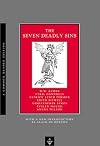
Apparently, it was Ian Fleming's idea to ask 7 noted British authors to write essays on the 7 deadly sins: one sin per author. Although he suggested each author/sin pair, except for W.H. Auden on Anger (he preferred Malcolm Muggeridge), Fleming left it to others to carry out his plan, deciding to focus his attention on James Bond, who embodies at least 6 of the 7, sloth not being conspicuous in the makeup of the superspy. Nearly all the authors seem to think that in order to do a good job show more with their assigned subject, they must first diminish its damnability, with at least one (Sitwell on Pride) making a case for promoting the vice to a virtue. The exception is Cyril Connelly, whose little tale of Covetousness entertains while it instructs: surely the expectation for all the contributors. show less
Lists
Awards


You May Also Like


Associated Authors
Statistics
- Works
- 103
- Also by
- 19
- Members
- 2,157
- Popularity
- #11,915
- Rating
- 4.0
- Reviews
- 16
- ISBNs
- 130
- Languages
- 8
- Favorited
- 4

