
Bryher (1894–1983)
Author of Visa for Avalon
About the Author
Works by Bryher
Bryher: Two Novels: Development and Two Selves (Living Out: Gay and Lesbian Autobiographies) (2000) 20 copies
The colors of Vaud 11 copies
West 3 copies
Development, a novel 3 copies
Associated Works
Gender in Modernism: New Geographies, Complex Intersections (2007) — Contributor — 12 copies, 1 review
Contact collection of contemporary writers — Contributor — 1 copy
Tagged
Common Knowledge
- Canonical name
- Bryher
- Other names
- Ellerman, Annie Winifred
- Birthdate
- 1894-09-02
- Date of death
- 1983-01-28
- Gender
- female
- Occupations
- patron of the arts
historical novelist
memoirist
magazine editor
writer
filmmaker - Relationships
- McAlmon, Robert (husband)
Macpherson, Kenneth (husband)
H.D. (partner)
Schaffner, Perdita (daughter)
Ellerman, J. R. (brother) - Short biography
- Annie Winifred Ellerman, the daughter of a wealthy British shipping magnate, traveled extensively throughout Europe, the Middle East, and the Mediterranean with her parents. She took her pen name Bryher from one of the Isles of Scilly. She became a close friend of the "Lost Generation" of writers and artists in Paris in the 1920s and helped support some of them financially. Her first husband was American writer Robert McAlmon, who later wrote a memoir of those years called Being Geniuses Together (1938). In 1927, she joined her lover Hilda Doolittle (who wrote under the name H.D.) and second husband Kenneth Macpherson to launch The Pool Group, which made silent avant-garde films and published a progressive and opinionated monthly film journal called Close Up. Bryher and Macpherson formally adopted H.D.'s daughter Perdita, and lived and raised her together with her mother in Switzerland, London, and Paris. In 1933, Bryher began using her home on Lake Geneva in Switzerland to help Jewish refugees escape from Nazi Germany. She herself then had to flee to England, where she managed a literary magazine. She later wrote acclaimed historical novels and a memoir of her years in London before and during World War II.
- Nationality
- UK
- Birthplace
- Margate, England, UK
- Places of residence
- Paris, France
Montreux, Switzerland
London, England, UK - Place of death
- Vevey, Switzerland
- Map Location
- UK
Members
Reviews
Roman Wall by Bryher
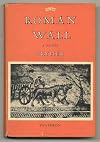
1952. Set in A.D. 265, as the Roman Empire declines, the people in the farthest reaches are gradually pushed back by the Alemanni Barbarian hordes. In this short, accessible novel, Roman governors, greek merchants, and native Helvetians must decide when to fight for, or abandon, their homes near Aventicun and Orba. Does a fairly good job of making you feel like you were there, but I felt like the characters were kind of flat.
The act of departure during an uprising, perfectly rendered. The final chapter brought me to tears by the beauty of the writing alone.
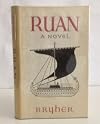
Beautifully written novel of a young man, Ruan, in late 6th century Cornwall. When we meet him he is training as a Celtic priest [the author never uses the actual word Druid]. Ruan feels he is not fitted for that life and runs away to sea. He becomes a crew member of the ship Seagull ; has many adventures; makes new friends; an old friend from his childhood betrays him; and he makes an exciting escape with a Welsh slave from the bogs of Ireland to the forests of Wales. Should he join a show more Finnish captain and his crew in searching for a fabulous island lying somewhere to the west of Ireland?
I enjoyed this novel very much and read it in a matter of hours. The story was mediocre; Bryher's talents lie in her turns of phrase and her gorgeous evocations of Cornwall, the Scillys, Ireland, and Wales. I felt as though I were there. [Bryher's own nom de plume is the name of one of the Scillys.] Ruan himself was likeable; the other characters not really memorable. I liked his visit to a country fair, where a harper told the story of the folk hero Gawain. As Gawain sails on the most perilous voyage of his life at the end of his story, so Ruan realizes the sea is his life and follows his heart. show less
I enjoyed this novel very much and read it in a matter of hours. The story was mediocre; Bryher's talents lie in her turns of phrase and her gorgeous evocations of Cornwall, the Scillys, Ireland, and Wales. I felt as though I were there. [Bryher's own nom de plume is the name of one of the Scillys.] Ruan himself was likeable; the other characters not really memorable. I liked his visit to a country fair, where a harper told the story of the folk hero Gawain. As Gawain sails on the most perilous voyage of his life at the end of his story, so Ruan realizes the sea is his life and follows his heart. show less
Roman Wall by Bryher

review 5*****. I loved this book, which was published in 1954! This novel told of Helvetia, 265 AD and "its destruction, of the disappearance of its roads, and walls, and peace" [cf. back cover] because of the barbarian Alemanni.
The story begins with Valerius, a retired centurion, living on a farm near the city of Orba. He is asked by Governor/Military Commander Vinodius of Helvetia, who lives in the capital, Aventicum, to remain in active service. The frontier outposts are severely show more undermanned. Rome...more 5*****. I loved this book, which was published in 1954! This novel told of Helvetia, 265 AD and "its destruction, of the disappearance of its roads, and walls, and peace" [cf. back cover] because of the barbarian Alemanni.
The story begins with Valerius, a retired centurion, living on a farm near the city of Orba. He is asked by Governor/Military Commander Vinodius of Helvetia, who lives in the capital, Aventicum, to remain in active service. The frontier outposts are severely undermanned. Rome and Emperor Gallien don't seem to care about the limes. We are introduced to Julia, Valerius' widowed sister and her two wards, Veria and Nennius. Then we meet Demetrius, a travelling trader, his freedman "surly" Felix, various other legionaries, military officers, and civilians. We get to know and care about these people. The threat of invasion from the barbarian Alemanni quickly turns from rumor into reality, as city after city is burned and people are killed. The novel takes us through how all the characters cope with the violent upheaval in their lives.
What was outstanding was the character portraits the author painted, through the actions and dialogue of a whole cast of characters. The descriptions of the Swiss countryside were marvellous and so evocative. I could almost see the landscapes and lakes and smell the flowers. The defense of Aventicum was exciting, told to us through the eyes and actions of a young auxiliary, Plinius. [From his backstory, I'm assuming he was Pliny the Younger, moved to this time period]. The very basic facts of history were accurate, but I think the author used much literary license. Bryher's style was often lyrical. I did have to write out a rough 'List of Characters' along with what part each played in the story; the only factual information in the book was modern equivalents for the Latin names. I had to find a map of Roman Helvetia to find the locations of the various places named in the story; I wish the author had included even a simple map. This one was the best I could find: http://en.wikipedia.org/wiki/File:His...
I am eager to read more historical fiction by Bryher.
Most highly recommended for lovers of Roman historical fiction in the later Empire!! show less
The story begins with Valerius, a retired centurion, living on a farm near the city of Orba. He is asked by Governor/Military Commander Vinodius of Helvetia, who lives in the capital, Aventicum, to remain in active service. The frontier outposts are severely show more undermanned. Rome...more 5*****. I loved this book, which was published in 1954! This novel told of Helvetia, 265 AD and "its destruction, of the disappearance of its roads, and walls, and peace" [cf. back cover] because of the barbarian Alemanni.
The story begins with Valerius, a retired centurion, living on a farm near the city of Orba. He is asked by Governor/Military Commander Vinodius of Helvetia, who lives in the capital, Aventicum, to remain in active service. The frontier outposts are severely undermanned. Rome and Emperor Gallien don't seem to care about the limes. We are introduced to Julia, Valerius' widowed sister and her two wards, Veria and Nennius. Then we meet Demetrius, a travelling trader, his freedman "surly" Felix, various other legionaries, military officers, and civilians. We get to know and care about these people. The threat of invasion from the barbarian Alemanni quickly turns from rumor into reality, as city after city is burned and people are killed. The novel takes us through how all the characters cope with the violent upheaval in their lives.
What was outstanding was the character portraits the author painted, through the actions and dialogue of a whole cast of characters. The descriptions of the Swiss countryside were marvellous and so evocative. I could almost see the landscapes and lakes and smell the flowers. The defense of Aventicum was exciting, told to us through the eyes and actions of a young auxiliary, Plinius. [From his backstory, I'm assuming he was Pliny the Younger, moved to this time period]. The very basic facts of history were accurate, but I think the author used much literary license. Bryher's style was often lyrical. I did have to write out a rough 'List of Characters' along with what part each played in the story; the only factual information in the book was modern equivalents for the Latin names. I had to find a map of Roman Helvetia to find the locations of the various places named in the story; I wish the author had included even a simple map. This one was the best I could find: http://en.wikipedia.org/wiki/File:His...
I am eager to read more historical fiction by Bryher.
Most highly recommended for lovers of Roman historical fiction in the later Empire!! show less
Lists
Awards

You May Also Like


Associated Authors
Statistics
- Works
- 26
- Also by
- 3
- Members
- 488
- Popularity
- #50,612
- Rating
- 3.7
- Reviews
- 10
- ISBNs
- 31
- Languages
- 2
- Favorited
- 3
