
Jim Lehrer (1934–2020)
Author of No Certain Rest
About the Author
James Charles Lehrer was born in Wichita, Kan., on May 19, 1934, to Harry Lehrer, who ran a small bus line and Lois (Chapman) Lehrer, a teacher. He earned an associate degree from Victoria College in Texas in 1954 and a bachelor¿s degree in journalism from the University of Missouri in 1956. From show more 1959 to 1961, Mr. Lehrer was a reporter for The Dallas Morning News. He joined the rival Dallas Times Herald, where over nine years he was a reporter, columnist and city editor. He also began writing fiction. His first novel was Viva Max! (1966). In 1970, Mr. Lehrer joined KERA-TV, the Dallas public broadcasting station, where he delivered a nightly newscast. In 1972, he became PBS¿s coordinator of public affairs programming in Washington. In 1973 he joined WETA-TV in Washington, became a PBS correspondent and met Mr. MacNeil, a Canadian who had reported for NBC-TV and the BBC. Mr. Lehrer won numerous Emmys, a George Foster Peabody Award and a National Humanities Medal. He and Mr. MacNeil were inducted into the Academy of Television Arts and Sciences Hall of Fame in 1999. His memoirs were: We Were Dreamers(1975), A Bus of My Own(1992) and Tension City: Inside the Presidential Debates (2011). His plays were Chili Queen (1986), a farce about a media circus at a hostage situation; Church Key Charlie Blue (1988), a dark comedy on a bar flare-up over a televised football game; The Will and Bart Show (1992), about two cabinet officials who loathe each other; and Bell (2013), a one-man show about Alexander Graham Bell. James Lehrer passed away on Thursday 01/23/2020 at the age of 85. show less
Image credit: Credit: Larry D. Moore,2007 Texas Book Festival, Austin, Texas
Series
Works by Jim Lehrer
The Franklin Affair: A Novel 2 copies
My Heart Your Heart [VHS] 1 copy
Associated Works
Reader's Digest Today's Best Nonfiction 22 1993: A Bus of My Own / Kissinger / The Happy Isles of Oceania / Marrying the Hangman (1993) — Author — 9 copies, 1 review
Tagged
Common Knowledge
- Canonical name
- Lehrer, Jim
- Legal name
- Lehrer, James Charles
- Other names
- LEHRER, James Charles
LEHRER, Jim - Birthdate
- 1934-05-19
- Date of death
- 2020-01-23
- Gender
- male
- Education
- Victoria College (Texas)
Missouri School of Journalism (University of Missouri) - Occupations
- soldier
reporter
news anchor
public affairs coordinator
writer
novelist (show all 7)
debate moderator - Organizations
- Public Broadcasting Service
US Marine Corps
Dallas Morning News - Awards and honors
- National Humanities Medal (1999)
- Relationships
- MacNeil, Robert (colleague)
- Nationality
- USA
- Birthplace
- Wichita, Kansas, USA
- Places of residence
- Beaumont, Texas, USA
San Antonio, Texas, USA
Dallas, Texas, USA
Washington, D.C., USA - Place of death
- Washington, D.C., USA
- Associated Place (for map)
- USA
Members
Reviews
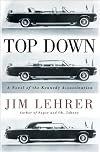
With the 50th anniversary of JFK’s assassination this past month, I’ve heard many, many theories, personal stories, “What If’s?” One that grabbed my attention was a radio interview with Jim Lehrer…because his was a personal story (he was working at a Dallas newspaper that fateful day) combined with a “what if”. What if the bubble top HAD been on the car the president was riding in that day?
“Top Down” does a good job exploring the personal reactions of a Secret Service show more agent who is consumed with guilt about his part in that horrible day. How a seemingly minor decision may or may not have been a factor in what happened to the president – and then to the country. Agent Van Walters cannot let go of his fateful decision to have the top removed from JFK’s convertible, and starts to fall apart. Reporter Jack Gilmore, whose question about the top may have led to the decision, is enlisted by Van’s daughter to help.
“And so, I, too, became one of the many people connected to the Kennedy Texas trip who were plagued by varying levels of what-if guilt. A guilt that would stay with us forever.”
A guilt that then has an effect on his daughter and his wife. “I’m a ricochet in this little family drama, Jack. That’s what I am. The shrapnel hit Van front and center and then glanced off and came right at me.”
The book doesn’t go down the conspiracy theory rabbit hole or look at any other possible outcomes had Kennedy lived, but it does do a good job of looking at the impact of that day on people who may not have been considered before. A reporter asks a Secret Service agent a seemingly innocuous question…and possibly changed history.
“Yes, one man really did fire three rifle shots out a Dallas window in a few seconds and change the course of history – forever. For me, the fragility of what we all come to think of as order and normality has been the permanent lesson of the Kennedy assassination. Since that awful day we’ve known we are always only three shots away from chaos.”
Chaos as a country and as a society…and for those who will relive that day over and over again…and ask, “What if?” show less
“Top Down” does a good job exploring the personal reactions of a Secret Service show more agent who is consumed with guilt about his part in that horrible day. How a seemingly minor decision may or may not have been a factor in what happened to the president – and then to the country. Agent Van Walters cannot let go of his fateful decision to have the top removed from JFK’s convertible, and starts to fall apart. Reporter Jack Gilmore, whose question about the top may have led to the decision, is enlisted by Van’s daughter to help.
“And so, I, too, became one of the many people connected to the Kennedy Texas trip who were plagued by varying levels of what-if guilt. A guilt that would stay with us forever.”
A guilt that then has an effect on his daughter and his wife. “I’m a ricochet in this little family drama, Jack. That’s what I am. The shrapnel hit Van front and center and then glanced off and came right at me.”
The book doesn’t go down the conspiracy theory rabbit hole or look at any other possible outcomes had Kennedy lived, but it does do a good job of looking at the impact of that day on people who may not have been considered before. A reporter asks a Secret Service agent a seemingly innocuous question…and possibly changed history.
“Yes, one man really did fire three rifle shots out a Dallas window in a few seconds and change the course of history – forever. For me, the fragility of what we all come to think of as order and normality has been the permanent lesson of the Kennedy assassination. Since that awful day we’ve known we are always only three shots away from chaos.”
Chaos as a country and as a society…and for those who will relive that day over and over again…and ask, “What if?” show less
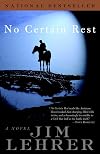
This was a selection of a book discussion group I belong to, and from its reviews and ratings, I didn't think I would like it. But I actually enjoyed the read. True, Lehrer isn't a very good novelist, if this is a typical novel of his, but I enjoyed the history, the mystery, the CSI parts, and that it was about both the Civil War and how history resonates down the decades and centuries. The others in our book group liked it less than I did, and they liked neither the protagonist, National show more Park Service archeologist Don Spaniel, nor the ending. But I found the account of the work of government historians and archeologists very interesting. show less
Top Down is a short novel that reads like the embryo of a really good idea, exploring one man's guilt for perceived but not actual responsibility, and the effects on his family, that to my mind was an egg that only partially hatched, and definitely did not fledge or fly. In a cynical mood I suggest there may have been too much of a desire to publish in time for the 50th anniversary of Kennedy's death.
The coincidental (I'm sure) newspaper reporter hero is a rather conceited man well matched show more by a jejune but oh so intelligent potential love interest; both were fairly tedious and predictable. There are some fragments that are very effective, such as the descriptions of PTSD and the withdrawel associated with depression. The book also achieves a bit of suspense towards the end, which I will not describe further to avoid spoilers for those who want to read so far. I would place this squarely in the bin marked "airplane read, for a one hour forty five minute (max) flight." show less
The coincidental (I'm sure) newspaper reporter hero is a rather conceited man well matched show more by a jejune but oh so intelligent potential love interest; both were fairly tedious and predictable. There are some fragments that are very effective, such as the descriptions of PTSD and the withdrawel associated with depression. The book also achieves a bit of suspense towards the end, which I will not describe further to avoid spoilers for those who want to read so far. I would place this squarely in the bin marked "airplane read, for a one hour forty five minute (max) flight." show less
 This review was written for LibraryThing Early Reviewers.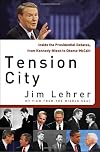
While as a Washingtonian I have always considered myself a political person, this is not a subject I have ever chosen to read about in books. It was hearing Jim Lehrer speak about Tension City at a conference, I think, that got me to pick it up. That, and the unintimidating page count. Still, I’m almost surprised by how much I enjoyed the book.
One of the things that worked for me is how personal the subject matter is to journalist Lehrer. This isn’t just a book about famous moments (and show more their aftermaths) in the last 40-some years of political debates; it’s about Lehrer’s personal experiences as moderator of 11 presidential or vice-presidential debates since 1988. To that extent, Tension City has elements of memoir, and a strong undercurrent of journalism within the subject matter. Lehrer reflects on the highs and lows of his performances and those of his colleagues over the years. I now have a far greater appreciation of the role of a debate moderator, and doubt I will watch future presidential debates with the same eyes.
Still, it’s the politics and history that were most riveting, because these debates did change history. Had he answered one question differently, might Michael Dukakis have had a shot at the White House? We can never know, but there is room for speculation. I so clearly remember so many of the moments that Lehrer singles out over the past several decades. They were the water cooler moments that the entire nation was talking about the next day. But here we have the added perspective of time as we look at these famous exchanges. Plus, Lehrer has the prestige and the relationships to get the major players to speak frankly about events of the past. So, for example, Lloyd Bentsen and Dan Quayle share recollections of “Senator, you’re no Jack Kennedy.”
This is the history of my lifetime. I was fascinated. Tension City is a brief book, and many serious political and history junkies will be looking for something more in-depth. For them, this book might work as a light companion volume. But for this reader, Mr. Lehrer’s book was the perfect introduction to uncharted literary territory. show less
One of the things that worked for me is how personal the subject matter is to journalist Lehrer. This isn’t just a book about famous moments (and show more their aftermaths) in the last 40-some years of political debates; it’s about Lehrer’s personal experiences as moderator of 11 presidential or vice-presidential debates since 1988. To that extent, Tension City has elements of memoir, and a strong undercurrent of journalism within the subject matter. Lehrer reflects on the highs and lows of his performances and those of his colleagues over the years. I now have a far greater appreciation of the role of a debate moderator, and doubt I will watch future presidential debates with the same eyes.
Still, it’s the politics and history that were most riveting, because these debates did change history. Had he answered one question differently, might Michael Dukakis have had a shot at the White House? We can never know, but there is room for speculation. I so clearly remember so many of the moments that Lehrer singles out over the past several decades. They were the water cooler moments that the entire nation was talking about the next day. But here we have the added perspective of time as we look at these famous exchanges. Plus, Lehrer has the prestige and the relationships to get the major players to speak frankly about events of the past. So, for example, Lloyd Bentsen and Dan Quayle share recollections of “Senator, you’re no Jack Kennedy.”
This is the history of my lifetime. I was fascinated. Tension City is a brief book, and many serious political and history junkies will be looking for something more in-depth. For them, this book might work as a light companion volume. But for this reader, Mr. Lehrer’s book was the perfect introduction to uncharted literary territory. show less
Awards

You May Also Like


Associated Authors
Statistics
- Works
- 31
- Also by
- 3
- Members
- 1,659
- Popularity
- #15,495
- Rating
- 3.1
- Reviews
- 67
- ISBNs
- 96
- Favorited
- 2


