
Rupert Isaacson
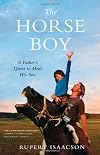
Author of The Horse Boy: A Father's Quest to Heal His Son
About the Author
Rupert Isaacson was born in London and has traveled extensively in Africa, Asia, and North America for the British press. He lives in Austin, Texas, with his wife, Kristin, and their son, Rowan.
Works by Rupert Isaacson
Tagged
Common Knowledge
- Birthdate
- 1966
- Gender
- male
- Occupations
- journalist
travel writer
horse trainer - Agent
- Inkwell Management
- Nationality
- UK
- Birthplace
- London, UK
- Places of residence
- London, England, UK
Austin, Texas, USA - Associated Place (for map)
- UK
Members
Reviews

I approached this book with equal measures of curiosity and trepidation. My eight-year-old son is autistic. The subject of autism is personal for me. I was concerned that this book would be New Agey and wishy-washy and that they were trying to cure their child. There is a world of difference between "healing" and "curing," and I was relieved right away when Isaacson made that distinction. They didn't want to take away their son's autism and make him a stranger, but they did want Rowan to show more cope with and exist in the world. They wanted a child who wouldn't tantrum in frightening ways or defecate all over himself.
I get that. My son's autism isn't as severe as their Rowan's condition, but I spent two years going through that potty training hell. I get that desperation.
Therefore, I understood that when their son connected in a profound way with their neighbor's horse, that they were willing to explore that in a spiritual way and do something beyond the standard therapy. Their journey leads them to Mongolia and out into Siberia. Some of the things done by the shamans made me wince, as they seemed abusive--the whole family gets flogged by one shaman, though their son gets the gentlest measure--but the journey is utterly fascinating. That's really one of the amazing things about the book. It's not merely about a family's struggle with autism. It's a journey into one of the most remote areas of the world, where Soviet concrete crumbles and Reindeer People wander the taiga. It's about how shamanism hid away during the communist years but didn't die completely. Sure, some of their traditions aren't quite so appealing (like medicine made of every part of the reindeer, including poop) but it's still just plain fascinating.
The take away at the end is very rational, too. The journey completely changed their son. Rowan emerged as a boy who could make friends with other children, who could ride his own horse, and could handle his own bowel movements. Isaacson doesn't make any grand claims that the shamanism or magic did it; it may have been the journey itself was the turning point, and what an incredible journey it was.
Now I want to watch the documentary about their experience to see how well it matches what's in my mind. show less
I get that. My son's autism isn't as severe as their Rowan's condition, but I spent two years going through that potty training hell. I get that desperation.
Therefore, I understood that when their son connected in a profound way with their neighbor's horse, that they were willing to explore that in a spiritual way and do something beyond the standard therapy. Their journey leads them to Mongolia and out into Siberia. Some of the things done by the shamans made me wince, as they seemed abusive--the whole family gets flogged by one shaman, though their son gets the gentlest measure--but the journey is utterly fascinating. That's really one of the amazing things about the book. It's not merely about a family's struggle with autism. It's a journey into one of the most remote areas of the world, where Soviet concrete crumbles and Reindeer People wander the taiga. It's about how shamanism hid away during the communist years but didn't die completely. Sure, some of their traditions aren't quite so appealing (like medicine made of every part of the reindeer, including poop) but it's still just plain fascinating.
The take away at the end is very rational, too. The journey completely changed their son. Rowan emerged as a boy who could make friends with other children, who could ride his own horse, and could handle his own bowel movements. Isaacson doesn't make any grand claims that the shamanism or magic did it; it may have been the journey itself was the turning point, and what an incredible journey it was.
Now I want to watch the documentary about their experience to see how well it matches what's in my mind. show less
Rupert Isaacson is a travel writer, who happens to have a son with autism. His memoir of their efforts to heal Rowan is a beautiful piece of writing, taking the reader along their journey from a neighbor’s land in Texas, where they discovered a link between horses and autists, to Outer Mongolia, the birthplace of horses and shamanism. From rude people, depressed economies, to helpful, caring people, and the beauty of the land, the author’s writing shines through.
”… the view required show more more than mere looking at. Homage had to be given, for here was where one great ecosystem ended and another began. At this mountaintop the great grasslands of the steppe gave way to the beginning of the taiga, the great Siberian forest, the largest forest in the world which stretches all the way from the Pacific Ocean in the east clear across Russia to Scandinavia in the west. I stood in the last of the great, continent-sized meadow that is the steppe and gazed at the forest wall. It was like facing an army. An ancient army. Its charge, its presence, was palpable. The sound of the wind in the trees was like the sighing of God’s breath.”
About shamanism, I don’t know what to think; I have not walked in his shoes. Mr. Isaacson believes that it was a great help for his son. And for this reader, who knew only the very most rudimentary facts about autism, his quest was very interesting to read about – from educating themselves about what to expect with autism, how to deal with the problems that accompany the condition, to his quest for a cure.
”Healed or cured? There was a difference. Long ago I’d given up wanting him to be cured. Cured as in not being autistic anymore – for that was part of his essence. But I did want him healed. If there was anything Kristin and I wanted to say to the shamans, it was Please let him come back toilet-trained. Please let him no longer be held at the mercy of his tantrums, of his wild-storm nervous system. No longer hyperactive, with that incessant edge of anxiety that was like a fist around the heart, always ready to close suddenly and hard.”
Informational and beautifully written. 3.6 stars show less
”… the view required show more more than mere looking at. Homage had to be given, for here was where one great ecosystem ended and another began. At this mountaintop the great grasslands of the steppe gave way to the beginning of the taiga, the great Siberian forest, the largest forest in the world which stretches all the way from the Pacific Ocean in the east clear across Russia to Scandinavia in the west. I stood in the last of the great, continent-sized meadow that is the steppe and gazed at the forest wall. It was like facing an army. An ancient army. Its charge, its presence, was palpable. The sound of the wind in the trees was like the sighing of God’s breath.”
About shamanism, I don’t know what to think; I have not walked in his shoes. Mr. Isaacson believes that it was a great help for his son. And for this reader, who knew only the very most rudimentary facts about autism, his quest was very interesting to read about – from educating themselves about what to expect with autism, how to deal with the problems that accompany the condition, to his quest for a cure.
”Healed or cured? There was a difference. Long ago I’d given up wanting him to be cured. Cured as in not being autistic anymore – for that was part of his essence. But I did want him healed. If there was anything Kristin and I wanted to say to the shamans, it was Please let him come back toilet-trained. Please let him no longer be held at the mercy of his tantrums, of his wild-storm nervous system. No longer hyperactive, with that incessant edge of anxiety that was like a fist around the heart, always ready to close suddenly and hard.”
Informational and beautifully written. 3.6 stars show less
An interesting story of how one family dealt with their autistic son. The decision to travel Mongolia on horseback and visit local shamans was certainly an unconventional treatment. I was a little uneasy about the attitude toward the shamans -- it felt like they were just being used, without any attempt to understand or internalize the spirituality of the religion the author was so blithely ready to appropriate as a purely functional, therapeutic treatment.
However, it was interesting to get show more an inside look into the desperation of a parent with an uncontrollable child, the hopes and disappointments, the sense of shame and guilt, the need to stand up for their child when other people are condemning them as bad parents. I will have more sympathy, I think, with the families who include children with autism.
This was a fast-moving, attention-grabbing book. There were really no places where I felt, as I so often do with memoirs, "move it along, already!" show less
However, it was interesting to get show more an inside look into the desperation of a parent with an uncontrollable child, the hopes and disappointments, the sense of shame and guilt, the need to stand up for their child when other people are condemning them as bad parents. I will have more sympathy, I think, with the families who include children with autism.
This was a fast-moving, attention-grabbing book. There were really no places where I felt, as I so often do with memoirs, "move it along, already!" show less
I liked this book more than I thought I would. It was very well-written. From the first page I was into the story. And what a story! I won't recount the story line as that's been done before, but I will say that it was an interesting read, to say the least. It's part medical story/mystery, part travel journal, part adventure story, and ALWAYS an unflinchingly honest personal account of a family's efforts to help their son. Anyone interested in autism, non-Western healing,the beauty of show more Mongolia, or who just loves memoires will enjoy this book. show less
Awards

You May Also Like


Associated Authors
Statistics
- Works
- 14
- Members
- 582
- Popularity
- #43,089
- Rating
- 4.1
- Reviews
- 32
- ISBNs
- 62
- Languages
- 8