
Wendy Shalit
Author of A Return to Modesty: Discovering the Lost Virtue
About the Author
Wendy Shalit began writing A Return to Modesty as an undergrad at Williams College, where she received her B.A. in philosophy in 1997. Shalit's essays have appeared in The Wall Street Journal, The New York Times, and other publications. She currently lives with her husband and children in Toronto.
Image credit: Helen Tansey
Works by Wendy Shalit
Girls Gone Mild: Young Women Reclaim Self-Respect and Find It's Not Bad to Be Good (2007) 103 copies, 3 reviews
Tagged
Common Knowledge
Members
Reviews

In the well-written and well-argued Girls Gone Mild, Wendy Shalit examines the repercussions of the '60s sexual revolution on today’s girls and women. Like Ariel Levy’s Female Chauvinist Pigs, Girls Gone Mild questions whether women have truly been “liberated” in the past few decades, or whether they have simply been given a new script from which to read: what Shalit dubs the “bad-girl script,” which often dictates that young women prove their “empowerment” through show more promiscuous behavior, regardless of the toll on their emotions and psyches.
Among other topics, Shalit investigates the effectiveness of various sex education curricula, debates the wisdom of coed dorms and bathrooms, and examines the attempted reclamation by feminists of the word “bitch.” The author is at her most compelling, however, when censuring the modern derogation of modest girls and women as “prudes,” and asking how the pressure on girls to engage in promiscuous behavior (in order not to appear sexually “repressed”) differs from the demands of yesteryear, when a woman might have felt just as straitjacketed by a society eager to call her a “slut” for being overtly sexual.
In a chapter titled “People-Pleasing Bad Girls and Rebellious Good Girls,” Shalit posits that in a sex-saturated society, modest young women are the true rebels, refusing to conform to cultural norms upholding the hyper sexual as ideal even in the face of often vitriolic opposition. Shalit calls these young modesty-advocates the “fourth wave” of feminism and hypothesizes that their variation on the movement will ultimately strike a balance between extreme promiscuity and strictest modesty. This interesting premise, along with insightful and genuinely moving anecdotes about real girls and women, makes Girls Gone Mild worthwhile for readers interested in feminism, modern cultural trends and messages, and/or today’s young people. show less
Among other topics, Shalit investigates the effectiveness of various sex education curricula, debates the wisdom of coed dorms and bathrooms, and examines the attempted reclamation by feminists of the word “bitch.” The author is at her most compelling, however, when censuring the modern derogation of modest girls and women as “prudes,” and asking how the pressure on girls to engage in promiscuous behavior (in order not to appear sexually “repressed”) differs from the demands of yesteryear, when a woman might have felt just as straitjacketed by a society eager to call her a “slut” for being overtly sexual.
In a chapter titled “People-Pleasing Bad Girls and Rebellious Good Girls,” Shalit posits that in a sex-saturated society, modest young women are the true rebels, refusing to conform to cultural norms upholding the hyper sexual as ideal even in the face of often vitriolic opposition. Shalit calls these young modesty-advocates the “fourth wave” of feminism and hypothesizes that their variation on the movement will ultimately strike a balance between extreme promiscuity and strictest modesty. This interesting premise, along with insightful and genuinely moving anecdotes about real girls and women, makes Girls Gone Mild worthwhile for readers interested in feminism, modern cultural trends and messages, and/or today’s young people. show less
This book starts off well, pointing out that the measure of adulthood or of being a worthwhile human being shouldn't be sluttiness. Where I must part company with it with absolute horror is in its support for abstinence-only education and in its apparent denigration of all premarital sex. Starting sex-related conversations with young girls by saying, "When God sends you a husband..." (p.54) is at least as wrongheaded and damaging as pushing them towards unwanted sexual experiences. I fail to show more see how keeping girls (or boys, for that matter) ignorant, as abstinence-only education recommends, can possibly be helpful. The author suggests that a girl confront a parent pressuring her into sex by saying, "I ... want to preserve my sensitivity for my future spouse, and not become jaded and cynical" (p.50). The implication that premarital sex must inevitably make one "jaded and cynical" shocks me. It would be best for young women to feel that they have the option not to have sex if they don't want to, certainly. But why must that come with outright prudishness, the misinformation of the abstinence-only people, and knee-jerk religiosity? Furthermore, the book assumes that the only sex women have is with men, which seems a rather limited way to approach the issue. I couldn't finish this book, largely because I cannot in any way support the abstinence-only message. It gets two stars only for its strong start. show less
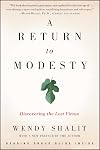
There were a lot of good things about this book, but I often found myself wishing she had written it about fifteen years later. She was young and a bit naive when she wrote this and some parts felt more like a rant rather than an informed and researched argument. I had a hard time following her reasoning sometimes, but I appreciate that there is a book out there defending modesty. I especially appreciated that she addressed issues of gender differences, natural consequences, and accountability.
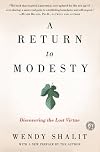
This book is basically a rant. It’s a very pained rant, although not very true. I suppose that at that age, kids tend to either rant or screw around, but she really placed herself above them.
For some theologians, there are Seven Deadly Sins, but for much of the culture, “sin” means “lust”, end of story, and lying and bullying don’t count as sins— and pride is *good*! It’s a strategy, not the truth, and it’s hard to win over the other side when you’re so obviously lying show more to them.
I don’t think she understands the harm that she does to her argument. After explaining that everyone is a whore and nobody wants to shut the whores down: “What! Afraid to sound like me! I’m the greatest!”
I think the highlight for me was when she defended bars—yes, alcohol bars. Sometimes the right has this issue where they’re not sure if conservative means the Bible or conservative means ‘like folks’, not academic, so they simply assume that the two must be the same. So being clingy and possessive must be biblical because it’s the opposite of being liberated. Liberals hate something—must be great!.... Duels are great! Guys used to shoot each other down, must be romantic!
But my favorite is this: bars are “sexist”—let me pay for that beautiful— therefore they are places where women will be “treated well”, never mind all the 18th-century novels about disastrous seduction that she likes so much, and the ***whole fucking point of a book about sexual purity***! Whoops!
Enemy! Me Tarzan! Me have enemy!
And I’m going to cut it there, because I actually feel kinda bad for her. show less
For some theologians, there are Seven Deadly Sins, but for much of the culture, “sin” means “lust”, end of story, and lying and bullying don’t count as sins— and pride is *good*! It’s a strategy, not the truth, and it’s hard to win over the other side when you’re so obviously lying show more to them.
I don’t think she understands the harm that she does to her argument. After explaining that everyone is a whore and nobody wants to shut the whores down: “What! Afraid to sound like me! I’m the greatest!”
I think the highlight for me was when she defended bars—yes, alcohol bars. Sometimes the right has this issue where they’re not sure if conservative means the Bible or conservative means ‘like folks’, not academic, so they simply assume that the two must be the same. So being clingy and possessive must be biblical because it’s the opposite of being liberated. Liberals hate something—must be great!.... Duels are great! Guys used to shoot each other down, must be romantic!
But my favorite is this: bars are “sexist”—let me pay for that beautiful— therefore they are places where women will be “treated well”, never mind all the 18th-century novels about disastrous seduction that she likes so much, and the ***whole fucking point of a book about sexual purity***! Whoops!
Enemy! Me Tarzan! Me have enemy!
And I’m going to cut it there, because I actually feel kinda bad for her. show less
You May Also Like


Statistics
- Works
- 4
- Members
- 739
- Popularity
- #34,364
- Rating
- 3.9
- Reviews
- 11
- ISBNs
- 13
- Languages
- 2
- Favorited
- 2