
Peter Hayes (1) (1946–)
Author of Why?: Explaining the Holocaust
For other authors named Peter Hayes, see the disambiguation page.
About the Author
Peter Hayes is professor of history and German and Theodore Zev Weiss Holocaust Educational Foundation Professor of Holocaust Studies emeritus at Northwestern University, and chair of the Academic Committee of the United States Holocaust Memorial Museum.
Works by Peter Hayes
Das Amt und die Vergangenheit: Deutsche Diplomaten im Dritten Reich und in der Bundesrepublik (2010) — Author — 33 copies, 1 review
Warum? 1 copy
Associated Works
Tagged
Common Knowledge
- Birthdate
- 1946-09-07
- Gender
- male
- Nationality
- USA
- Associated Place (for map)
- USA
Members
Reviews

After I graduated from college in 2007, I ended up with a temp office job at a paint colorants factory in Lockland, Ohio, which was owned by the Degussa Corporation. It was an easy job if you knew how to use Microsoft Word, and I usually found myself with twenty hours worth of work to get done in my forty-hour work week. One day early on when I was bored, I googled the name of the company and ended up reading the Wikipedia article, where I found out that the company was German-owned... and show more that during World War II, they had manufactured Zyklon-B for the Nazis. You know, the stuff used to gas Jews in concentration camps!
Wikipedia told me this led to some controversy when Degussa had been hired to provide concrete sealant (something like that) for the Holocaust Memorial in Germany: this company had profited both from committing the Holocaust and from apologizing for it. A public outcry had sprung up, but ultimately Degussa completed its contract for the Holocaust Memorial because the project was so far along it would have cost too much money to undo its work and get someone else to do it.
In the short ten months I worked there, the company rebranded itself to "Evonik Industries." There were all sorts of official reasons, but it seemed to me that this was an attempt to divorce itself from its 1940s predecessor.
I went straight from this job into grad school, so my time working for the "Nazi company" was a common grad school anecdote. Thus, when one of my officemates discovered this book, he told me about; I added it to my reading list, and some eleven years later, I've finally gotten around to reading it.
Peter Hayes is a Holocaust scholar; in the wake of the Holocaust Memorial scandal, he was given access to the Degussa archives to write and publish this book, which attempts to determine to what extent Degussa profited across the Holocaust.
I think probably Hayes is attempting to do something very worthy here, but I found that the book is an onslaught of detail with very little of an overarching narrative. Perhaps this was intentional: I think maybe Hayes wanted you to look at all the evidence he'd amassed and draw your own conclusions. But unfortunately, it makes it a very hard, very dull read. You are given so much information, but it seemed to me, very few answers. We see the results of decisions made, but not how the decisions actually got made, who made them, or why. I found it, ultimately, not a very interesting read, and in its detached, clinical tone, perhaps even a bit of a whitewash. show less
Wikipedia told me this led to some controversy when Degussa had been hired to provide concrete sealant (something like that) for the Holocaust Memorial in Germany: this company had profited both from committing the Holocaust and from apologizing for it. A public outcry had sprung up, but ultimately Degussa completed its contract for the Holocaust Memorial because the project was so far along it would have cost too much money to undo its work and get someone else to do it.
In the short ten months I worked there, the company rebranded itself to "Evonik Industries." There were all sorts of official reasons, but it seemed to me that this was an attempt to divorce itself from its 1940s predecessor.
I went straight from this job into grad school, so my time working for the "Nazi company" was a common grad school anecdote. Thus, when one of my officemates discovered this book, he told me about; I added it to my reading list, and some eleven years later, I've finally gotten around to reading it.
Peter Hayes is a Holocaust scholar; in the wake of the Holocaust Memorial scandal, he was given access to the Degussa archives to write and publish this book, which attempts to determine to what extent Degussa profited across the Holocaust.
I think probably Hayes is attempting to do something very worthy here, but I found that the book is an onslaught of detail with very little of an overarching narrative. Perhaps this was intentional: I think maybe Hayes wanted you to look at all the evidence he'd amassed and draw your own conclusions. But unfortunately, it makes it a very hard, very dull read. You are given so much information, but it seemed to me, very few answers. We see the results of decisions made, but not how the decisions actually got made, who made them, or why. I found it, ultimately, not a very interesting read, and in its detached, clinical tone, perhaps even a bit of a whitewash. show less
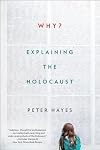
While visiting the Holocaust museum in Israel last year, I often asked myself "Why?" And as I exited through the gift shop (some things never change) I saw this book and hoped it would answer my question.
The book is extremely well written and explains how and why the Holocaust happened from examining key questions: Why the Jews? Why the Germans? Why murder? Why so fast and sweeping? Why didn't more victims fight back? Why such limited help from outside? I learned so much!
One strength of the show more book is the final chapter which examines legacies and lessons that are relevant to our time in a very thoughtful and thought-provoking manner.
Why? I understand much more than before I read this book, but in a fundamental way, that question remains partly unanswerable in my mind. show less
The book is extremely well written and explains how and why the Holocaust happened from examining key questions: Why the Jews? Why the Germans? Why murder? Why so fast and sweeping? Why didn't more victims fight back? Why such limited help from outside? I learned so much!
One strength of the show more book is the final chapter which examines legacies and lessons that are relevant to our time in a very thoughtful and thought-provoking manner.
Why? I understand much more than before I read this book, but in a fundamental way, that question remains partly unanswerable in my mind. show less
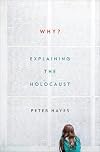
Reading this book is like having gauze removed from your eyes. Even if you are familiar with the Holocaust, Hayes, by using a multidisciplinary approach, provides an acuity with is astounding. Importantly, many of his observations have applications to any culture in which authoritarianism threatens empathy and diversity. Thus, he dates the beginning of the Holocaust to a day in 1933 when Germany's leading industrialists caved in to Hitler's demand that they fire all Jewish employees. If they show more had refused, history might have taken a different course. Which is why he ends his work with a German proverb: "Beware the beginnings." Hayes writes beautifully, and having been trained as an economic historian, he often frames his arguments in a numerical fashion--which aids understanding. This is a magnificent work. show less
Very sober and unsentimental book, which is a rarity for this subject. Isn't afraid to bust myths that were created with the best of intentions, or to review controversial topics like the lack of real resistance. Still, for a book that sets itself the premise of answering why, there's a lot more how, & the concluding wrap-up that attempts to use the established facts to establish the why falls short of the aim. Perhaps fundamentally an unanswerable question, I still got a lot closer to the show more why reading Ryback's Hitler's Private Library which lays out some of the fundamental influences in his thinking and the antisemitism of the era. show less
Lists
Awards


You May Also Like


Associated Authors
Statistics
- Works
- 16
- Also by
- 1
- Members
- 441
- Popularity
- #55,515
- Rating
- 4.1
- Reviews
- 7
- ISBNs
- 90
- Languages
- 5
- Favorited
- 1