
Philip Warner (1914–2000)
Author of The Medieval Castle
About the Author
Philip Warner (1914-2000) enlisted in the Royal Corps of Signals after graduating from St Catharine's, Cambridge in 1939. He fought in Malaya and spent 1,100 days as 'a guest of the Emperor' in Changi, on the Railway of Death and in the mines of Japan, an experience he never discussed. A legendary show more figure to generations of cadets during his thirty years as a Senior Lecturer at the Royal Military Academy, Sandhurst, he will also be long remembered for his contribution to more than 2,000 obituaries of prominent army figures to The Daily Telegraph. In addition he wrote fifty-four books on all aspects of military history, ranging from castles and battlefields in Britain, to biographies of prominent military, figures (such as Kitchener: The Man Behind. The Legend, Field. Marshal Earl Haig, Horrocks: The General Who Led From the Front (Pen Sword, 2018) and Auchinleck: The Lonely Soldier (Pen Sword, 2006) to major histories of the SAS, the Special Boat Services, Phantom and the Royal Corps of Signals. The D Day Landings, here republished to commemorate the 75th Anniversary of this historic event, ranked high among Philip's favourite books. As a former solider, he naturally empathised with the cheerful, uncomplaining nature of the Allied soldier, fighting in 'the fog of battle'. He also greatly, respected the occupied. French and drew on their heroic stories, modestly related during his many, visits to their homes. show less
Series
Works by Philip Warner
The Daily Telegraph British Battlefields: The definitive guide to warfare in England and Scotland (CASSELL MILITARY PAPERBACKS) (2002) 11 copies
British battlefields: The Midlands. Where Battles Were Fought, Why They Were Fought, How They Were Won and Lost (1973) 4 copies, 1 review
The Fields of War 2 copies
The Fields of War 1 copy
A Batalha de França Livro 1 1 copy
A Retrospective of Empire 1 copy
Tagged
Common Knowledge
- Legal name
- Warner, Philip Arthur William
- Birthdate
- 1914-05-19
- Date of death
- 2000
- Gender
- male
- Education
- University of Oxford (Christ Church)
University of Cambridge (St Catherine's College) - Occupations
- historian
obituary writer - Organizations
- Royal Military Academy, Sandhurst
- Nationality
- England
UK - Birthplace
- Nuneaton, Warwickshire, England, UK
- Associated Place (for map)
- England, UK
Members
Reviews

More than just an account of noteworthy medieval sieges, this book provides a potted history of the intricate politics surrounding the English kings of the middle ages. Warner is a well-informed, succint and often witty writer who makes this potentially unweildy subject thoroughly accessible.

In 1844, on an island in the Nile, a son was born to a carpenter - something of a tradition for Middle Eastern prophets. Mohammed Ahmed ibn al-Sayid Abdullah grew up to be an exceptional Koranic student. He also had a gap between his front teeth and a birthmark on one cheek, which turned out to be important later. Disgusted by the secular ways of his contemporaries, he took up the life of a wandering teacher. In 1880 he announced (or someone else announced for him) that he was the Mahdi - show more The Expected Guide, a descendant of The Prophet recognized by his spiritual ways, a gap between his front teeth and a birthmark on his cheek - who would bring Muslims back to the True Religion and prepare for the Last Days.
Sudan was in a strange political position at the time; it was a protectorate of Egypt, which in turn was a protectorate of Great Britain (well, technically not until 1882) (hence the name Anglo-Egyptian Sudan). Egypt was still de jure part of the Ottoman Empire, although it had not been de facto since the 1830s. Egypt had only recently (1874) annexed the Sudan, and the Khedive Ismail (under pressure from the British) decided one of the first orders of business for his new territory was suppressing the slave trade - a dicey prospect, since 7/8 of the population of the Sudan were slaves. The man for the job was Charles “Chinese” Gordon, who promptly went to work bustling all over the place, freeing slaves and arresting slave traders. Enter the Mahdi and his Dervishes
.
To be fair, although slavery has always been tolerated by Islam, it probably wasn’t this issue alone that set off the Mahdist Revolt, but just the desire not to be pushed around by those people from the north. At any rate, the Mahdi and his followers proceeded to annihilate first a small contingent of Egyptian troops, then (1883) a much larger column (also mostly Egyptian) lead by General Hicks Pasha, and another force lead by General Valentine Baker, and finally an all-British force lead by Sir Gerald Graham (during which the Mahdists “bruk a British square.”) In the meantime, Gordon was in Khartoum, supposedly to organize the evacuation. Instead, he organized a defense. It’s never been clear why he disobeyed orders - that the orders were not framed clearly enough, or that he couldn’t leave native civilians behind as Mahdi fodder, or some personal desire for martyrdom have all been suggested. At any rate, he didn’t leave, and a relief column pushing down the river in nearly 1885 got close enough the see the Mahdi’s flag flying over the Khartoum citadel, then turned around and went home, leaving the Sudan until 1896.
The Mahdi died in 1885, only a few months after Gordon; his successor, the Khalifa, was much more interested in empire-building than religion (although that remained the primary troop motivator). The Khalifa destroyed a couple of Sudanese tribes who disagreed with him, took over the Darfur region, made some desultory and unsuccessful attacks on Egyptian border posts, and engaged in a generally successful war with Ethiopia. Nemesis eventually arrived in the form of General Horatio Kitchener, who pushed down the Nile, building a parallel railroad as he went, and crushed the Dervish army with Maxim guns and massed infantry fire at Omdurman, where the young Lieutenant Winston Churchill distinguished himself. Churchill had himself seconded from the 9th Hussars to the 21st Lancers, correctly deducing that since the 21st Lancers were the only regiment in the Royal Army never to have won battle honors they would be looking for trouble at Omdurman; they found it, charging into a trap and cutting their way out. One bullet more or less and the 20th Century would have been very different. The war wasn’t quite over; the Khalifa wasn’t hunted down and finished off until later and his principal lieutenant, Osman Dinga, wasn’t picked up until 1900. In a postscript, Kitchener learned that a small French force had established themselves up the Nile a Fashoda. After considerable diplomatic wrangling, the French withdrew.
This book is part of the Wordsworth Military Library series; I haven’t been much impressed with earlier books from the series but I rather liked this one. It goes to considerable effort to present both sides of the story, including using diary entries from the Dervish side, and has the right mix of narrative and quotation from participants. There are excellent maps of all the major engagements and a pretty good historical background (although slightly more detail on British politics would have been useful.
For a relatively minor war, the Dervish campaign has attracted a lot of literary and cinematic attention; see
The River War, Winston Churchill
The Tragedy of the Korosko, Arthur Conan Doyle
The Four Feathers, A.E.W. Mason, and its movie versions:
1939
,
1978
and
2002, and, of course,
Khartoum. show less
Sudan was in a strange political position at the time; it was a protectorate of Egypt, which in turn was a protectorate of Great Britain (well, technically not until 1882) (hence the name Anglo-Egyptian Sudan). Egypt was still de jure part of the Ottoman Empire, although it had not been de facto since the 1830s. Egypt had only recently (1874) annexed the Sudan, and the Khedive Ismail (under pressure from the British) decided one of the first orders of business for his new territory was suppressing the slave trade - a dicey prospect, since 7/8 of the population of the Sudan were slaves. The man for the job was Charles “Chinese” Gordon, who promptly went to work bustling all over the place, freeing slaves and arresting slave traders. Enter the Mahdi and his Dervishes
.
To be fair, although slavery has always been tolerated by Islam, it probably wasn’t this issue alone that set off the Mahdist Revolt, but just the desire not to be pushed around by those people from the north. At any rate, the Mahdi and his followers proceeded to annihilate first a small contingent of Egyptian troops, then (1883) a much larger column (also mostly Egyptian) lead by General Hicks Pasha, and another force lead by General Valentine Baker, and finally an all-British force lead by Sir Gerald Graham (during which the Mahdists “bruk a British square.”) In the meantime, Gordon was in Khartoum, supposedly to organize the evacuation. Instead, he organized a defense. It’s never been clear why he disobeyed orders - that the orders were not framed clearly enough, or that he couldn’t leave native civilians behind as Mahdi fodder, or some personal desire for martyrdom have all been suggested. At any rate, he didn’t leave, and a relief column pushing down the river in nearly 1885 got close enough the see the Mahdi’s flag flying over the Khartoum citadel, then turned around and went home, leaving the Sudan until 1896.
The Mahdi died in 1885, only a few months after Gordon; his successor, the Khalifa, was much more interested in empire-building than religion (although that remained the primary troop motivator). The Khalifa destroyed a couple of Sudanese tribes who disagreed with him, took over the Darfur region, made some desultory and unsuccessful attacks on Egyptian border posts, and engaged in a generally successful war with Ethiopia. Nemesis eventually arrived in the form of General Horatio Kitchener, who pushed down the Nile, building a parallel railroad as he went, and crushed the Dervish army with Maxim guns and massed infantry fire at Omdurman, where the young Lieutenant Winston Churchill distinguished himself. Churchill had himself seconded from the 9th Hussars to the 21st Lancers, correctly deducing that since the 21st Lancers were the only regiment in the Royal Army never to have won battle honors they would be looking for trouble at Omdurman; they found it, charging into a trap and cutting their way out. One bullet more or less and the 20th Century would have been very different. The war wasn’t quite over; the Khalifa wasn’t hunted down and finished off until later and his principal lieutenant, Osman Dinga, wasn’t picked up until 1900. In a postscript, Kitchener learned that a small French force had established themselves up the Nile a Fashoda. After considerable diplomatic wrangling, the French withdrew.
This book is part of the Wordsworth Military Library series; I haven’t been much impressed with earlier books from the series but I rather liked this one. It goes to considerable effort to present both sides of the story, including using diary entries from the Dervish side, and has the right mix of narrative and quotation from participants. There are excellent maps of all the major engagements and a pretty good historical background (although slightly more detail on British politics would have been useful.
For a relatively minor war, the Dervish campaign has attracted a lot of literary and cinematic attention; see
The River War, Winston Churchill
The Tragedy of the Korosko, Arthur Conan Doyle
The Four Feathers, A.E.W. Mason, and its movie versions:
1939
,
1978
and
2002, and, of course,
Khartoum. show less
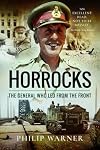
Reading this book of this general's career reminded me in an odd way of my own military experience, how awfully boring and uneventful it was. First Horrocks was captured by the Germans in WWI, then he was sent to Poland in the 1920s and he was taken prisoner again. Of course, back home the bureaucracy is grinding along, cutting his pay checks and promoting him on schedule. Then WWII rolls around and he waits for the Phony War to end. Then he is wounded in North Africa and has to recuperate show more for a year or so. But after that he did get the boot in, so good for him. After the war he was the sergeant-at-arms for the House of Lords; not exactly a job requiring a cosh or brass knuckles, I would guess. He would be seen on TV in the chamber with his head bent forward and the assumption was that he was engrossed in heady affairs of state but he was just working the day's crossword puzzle. show less

While it is a good book and well written, it makes hard reading. The suffering of the armies comes through all too clearly. That both sides persisted is remarkable and speaks to just what human beings are capable of enduring.
You May Also Like


Statistics
- Works
- 61
- Members
- 1,526
- Popularity
- #16,855
- Rating
- 3.4
- Reviews
- 18
- ISBNs
- 159
- Languages
- 4