
Mark W. Moffett
Author of Adventures Among Ants: A Global Safari with a Cast of Trillions
About the Author
Works by Mark W. Moffett
Associated Works
Adrenaline 2000: The Year's Best Stories of Adventure and Survival 2000 (2000) — Contributor — 55 copies
National Geographic Magazine 1990 v177 #1 January (1990) — Contributor & Photographer — 27 copies, 1 review
Tagged
Common Knowledge
- Canonical name
- Mark W. Moffett
- Birthdate
- 1958
- Gender
- male
- Education
- Beloit College (BA)
Harvard University (PhD) - Occupations
- entomologist
photographer - Awards and honors
- Bowdoin Prize (1986)
Lowell Thomas Medal for Exploration (2006) - Nationality
- USA
- Map Location
- USA
Members
Reviews
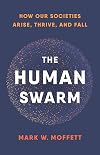
In most accounts of world or macro history, you get a few introductory sections or chapters on our hunter-gather past before moving on to the civilizations of written history. Yet 6,000 years of written history represents only three percent of our collective 200,000 year history as a species. Surely this span of time has more relevance and deserves more attention than it is typically given.
The Human Swarm by biologist Mark Moffett does not suffer from this limitation; it takes 21 chapters show more and 275 pages before the author gets to the societies of written history. In what truly represents a biologist’s take on the history of our species and societies, the majority of the book discusses our deep evolutionary past and our connections to other social species, including chimpanzees, bonobos, dolphins, elephants, and even ants.
We like to think of ourselves as distinct from and superior to nature, yet there is significant continuity between us and other species in both our genes and behavior, most notably in comparison to our closest relatives, chimpanzees and bonobos. As Moffet points out, the behavior of chimps can be uncomfortably similar to our own. But the point of the book is not to show how similar we are to the other great apes; rather, it is to compare and contrast our knowledge of animal behavior with that of hunter-gatherer bands and other primitive societies to understand the deep roots of our societies, including their formation, rise, and fall.
Moffet first notes that most animals are not social; the Jaguar, for example, is a solitary animal that lives and hunts alone, associating with other Jaguars only during mating season. In the relatively few species that do form societies, the jump to sociality requires that individuals somehow identify each other as distinct from “outsiders.”
Typically, cooperation is thought to be the key factor in the formation of societies, but as Moffett points out, this is not a good way to think about it. First, cooperation is found in some asocial species, so by itself cooperation is not sufficient for the emergence of society. Additionally, conflict is often a large part of functioning societies, making cooperation only part of the picture. The key element in the formation and maintenance of a society, therefore, is not cooperation, but identity.
Without ingroups and outgroups, and the ability to tell the difference, societies cannot exist. To form societies, different species have developed different mechanisms to distinguish individual members of the ingroup. With chimpanzees, this requires more or less intimate knowledge of each member (via facial recognition, vocal characteristics, and other markers). This requirement means that chimpanzee societies must remain relatively small (15-150 members).
While violence exists within chimpanzee societies, violence between societies is more frequent and much more extreme, clearly demonstrating that chimps can identify society-mates versus outsiders and think in terms of us versus them.
Ants adopt a different approach; Argentine ants, for example, identify members of its society by scent, and attack Argentine ants of a different society and with a different scent when encountered. The use of chemical markers of identity means that ants can develop massively larger anonymous societies that number in the millions. While these ants are peaceful within their own society, they are very aggressive with ants in other societies.
In between the strategy of intimate acquaintance found in chimps and impersonal chemical markers found in ants is the middle-ground strategy found in humans. Following the chimpanzees and bonobos, we develop intimate social connections with a limited number of individuals, but following the ants, we also develop societal markers that allow us to function peacefully within a society of anonymous strangers that we, for the most part, don’t have to worry about as threats.
These societal markers can be large and small, and encompass the vast number of languages, dialects, dress codes, hair styles, body adornments, ideas, religions, and cultural practices found throughout the world and throughout history. These collective markers are a double-edged sword; they enable us to live peacefully within large anonymous societies while at the same time creating a xenophobic predisposition toward foreigners or outsiders. The history of our species is largely the consequences of this groupish psychology, and our efforts to either exploit it or find ways to overcome it.
Slavery is a prominent example of the exploitation of differences, viewing members of the slave race as less than human and deserving of their own subjugation. Conversely, the various human rights movements represent the rational counteracting forces to our psychological tendency to see those with different social markers as inferior. Human history is largely the continual alternation between our base urges to separate and dehumanize groups and the rational forces seeking to universalize humanity. This is why the Enlightenment, with its emphasis on universalizing human rights, was a majorly important period in human history, despite the modern vogue to question its significance.
Moffet leaves the reader with the question of whether or not we can ever dispense with societies entirely or outgrow our proclivity for ingroup bias and the dehumanization of outgroups. He doesn’t seem to be optimistic in this regard, and he may be right. But he also points out that we are the only species that can use our intelligence to overcome the aspects of our biology and history that we don’t like. In this respect I’m more optimistic.
Our deep evolutionary past predisposes us to xenophobia, distrust of strangers, ingroup bias, and racism. It compels us to judge individuals by the perceived characteristics of a group, even when those perceptions are inaccurate. It’s not hard to be a bigot; you simply need to suspend all of your critical faculties and become a slave to your biology.
But we need not become slaves to our biology. Reason can show us that individual variation within a group means that you cannot judge an individual by group averages; that our genetic and behavioral similarities transcend superficial differences; that there is nothing special about us simply because we were born in a particular place with a specific skin color; and that human cooperation across time and place is what is responsible for all the technological and scientific progress we take for granted.
Moffett proposes the idea that for societies to bond and function optimally, they require an adversarial outside group. Maybe this is true. I’d like to think it’s not, but history seems to give us conflicting information. History is rife with examples of bigotry, nationalism, war, violence, racism, and oppression. At the same time, rational countervailing forces have eliminated slavery, expanded human rights, and increased toleration for diversity. The question is, will the trend continue or will we backslide into our old patterns of behavior, allowing our deepest psychological tendencies to override our reason? For what it’s worth, and despite the current political environment, in the long run, I’m betting on reason—not to create a perfect society, but to continue to make slow and steady progress in the battle against the inner demons of our psychology. show less
The Human Swarm by biologist Mark Moffett does not suffer from this limitation; it takes 21 chapters show more and 275 pages before the author gets to the societies of written history. In what truly represents a biologist’s take on the history of our species and societies, the majority of the book discusses our deep evolutionary past and our connections to other social species, including chimpanzees, bonobos, dolphins, elephants, and even ants.
We like to think of ourselves as distinct from and superior to nature, yet there is significant continuity between us and other species in both our genes and behavior, most notably in comparison to our closest relatives, chimpanzees and bonobos. As Moffet points out, the behavior of chimps can be uncomfortably similar to our own. But the point of the book is not to show how similar we are to the other great apes; rather, it is to compare and contrast our knowledge of animal behavior with that of hunter-gatherer bands and other primitive societies to understand the deep roots of our societies, including their formation, rise, and fall.
Moffet first notes that most animals are not social; the Jaguar, for example, is a solitary animal that lives and hunts alone, associating with other Jaguars only during mating season. In the relatively few species that do form societies, the jump to sociality requires that individuals somehow identify each other as distinct from “outsiders.”
Typically, cooperation is thought to be the key factor in the formation of societies, but as Moffett points out, this is not a good way to think about it. First, cooperation is found in some asocial species, so by itself cooperation is not sufficient for the emergence of society. Additionally, conflict is often a large part of functioning societies, making cooperation only part of the picture. The key element in the formation and maintenance of a society, therefore, is not cooperation, but identity.
Without ingroups and outgroups, and the ability to tell the difference, societies cannot exist. To form societies, different species have developed different mechanisms to distinguish individual members of the ingroup. With chimpanzees, this requires more or less intimate knowledge of each member (via facial recognition, vocal characteristics, and other markers). This requirement means that chimpanzee societies must remain relatively small (15-150 members).
While violence exists within chimpanzee societies, violence between societies is more frequent and much more extreme, clearly demonstrating that chimps can identify society-mates versus outsiders and think in terms of us versus them.
Ants adopt a different approach; Argentine ants, for example, identify members of its society by scent, and attack Argentine ants of a different society and with a different scent when encountered. The use of chemical markers of identity means that ants can develop massively larger anonymous societies that number in the millions. While these ants are peaceful within their own society, they are very aggressive with ants in other societies.
In between the strategy of intimate acquaintance found in chimps and impersonal chemical markers found in ants is the middle-ground strategy found in humans. Following the chimpanzees and bonobos, we develop intimate social connections with a limited number of individuals, but following the ants, we also develop societal markers that allow us to function peacefully within a society of anonymous strangers that we, for the most part, don’t have to worry about as threats.
These societal markers can be large and small, and encompass the vast number of languages, dialects, dress codes, hair styles, body adornments, ideas, religions, and cultural practices found throughout the world and throughout history. These collective markers are a double-edged sword; they enable us to live peacefully within large anonymous societies while at the same time creating a xenophobic predisposition toward foreigners or outsiders. The history of our species is largely the consequences of this groupish psychology, and our efforts to either exploit it or find ways to overcome it.
Slavery is a prominent example of the exploitation of differences, viewing members of the slave race as less than human and deserving of their own subjugation. Conversely, the various human rights movements represent the rational counteracting forces to our psychological tendency to see those with different social markers as inferior. Human history is largely the continual alternation between our base urges to separate and dehumanize groups and the rational forces seeking to universalize humanity. This is why the Enlightenment, with its emphasis on universalizing human rights, was a majorly important period in human history, despite the modern vogue to question its significance.
Moffet leaves the reader with the question of whether or not we can ever dispense with societies entirely or outgrow our proclivity for ingroup bias and the dehumanization of outgroups. He doesn’t seem to be optimistic in this regard, and he may be right. But he also points out that we are the only species that can use our intelligence to overcome the aspects of our biology and history that we don’t like. In this respect I’m more optimistic.
Our deep evolutionary past predisposes us to xenophobia, distrust of strangers, ingroup bias, and racism. It compels us to judge individuals by the perceived characteristics of a group, even when those perceptions are inaccurate. It’s not hard to be a bigot; you simply need to suspend all of your critical faculties and become a slave to your biology.
But we need not become slaves to our biology. Reason can show us that individual variation within a group means that you cannot judge an individual by group averages; that our genetic and behavioral similarities transcend superficial differences; that there is nothing special about us simply because we were born in a particular place with a specific skin color; and that human cooperation across time and place is what is responsible for all the technological and scientific progress we take for granted.
Moffett proposes the idea that for societies to bond and function optimally, they require an adversarial outside group. Maybe this is true. I’d like to think it’s not, but history seems to give us conflicting information. History is rife with examples of bigotry, nationalism, war, violence, racism, and oppression. At the same time, rational countervailing forces have eliminated slavery, expanded human rights, and increased toleration for diversity. The question is, will the trend continue or will we backslide into our old patterns of behavior, allowing our deepest psychological tendencies to override our reason? For what it’s worth, and despite the current political environment, in the long run, I’m betting on reason—not to create a perfect society, but to continue to make slow and steady progress in the battle against the inner demons of our psychology. show less
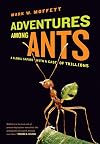
Ants are fucking fascinating. His description of the superorganism and how from small to large colonies they confront and solve the problems of sustenance (foraging, agriculture, slavery), defense, nest building/finding, and procreation largely by division of labor is amazing. I knew ants were cool, but not this cool. The prose is never dull and the photos are exquisite.
A Global Safari with a cast of Trillions
Flat out, this is the most fascinating non-fiction title I’ve read this year. Ants are seldom seen as fascinating, more like a nuisance! However, this book makes me almost wish for an ant invasion, just to try and observe some of the details the Moffett describes in his worldwide studies on ants.
The text contains lots of surprises as it covers various species of ants, and I can’t scratch the surface of all the funny and also disquieting details show more about these creatures. He first discusses marauder ants, who can be classified in three sizes: the largest is 50 times larger than the smallest, and often serves as a ‘bus’ to carry smaller ants to new locations. Most ants are female, they can live upwards of two years, and their behavior as workers for the colony is altruistic. The worker ants do not reproduce, and thus do not compete for food. In fact, he describes the male ants (that resemble wasps) as ‘socially useless’, and confined to being sperm donors.
Their travel in columns is well-known, but how they find food and relay the information to the workers is unique. They emit a “recruitment” pheromone that immediately tells ants in the vicinity that food is near, and within seconds a full swarm goes into attack mode, retrieving the food and taking it back for storage. But what is more fascinating is the Pharoah ant that also has a “don’t bother” pheromone that it emits when the food is gone, so that no ants waste their time.
The paths that ants use are actually ant roads, they reuse them as needed, rather than just randomly traveling over earth (as it would appear). Some ants have coordinated group attacks that allow them to overcome much larger prey simply by virtue of their large numbers rather than a stinger Army ants are useful in some ways because they clear out vermin, such as roaches and mice, from the vicinity. Driver ants can overtake a monkey corpse and reduce it to bone in just a few days. More interesting is that driver ants can play dead, for sufficiently long periods of time to allow them to escape.
Weaver ants were possibly the most fascinating to me, as they literally sew leaves together (see photo at right). The ants grab a leaf as a team, and another ant picks up a larva (basically a baby ant) that exudes silk and uses the silk as thread to create nests that can last for years. Argentine ants are battling a dangerous war in Southern California, as the colonies actually raise and “herd” aphids. Aphids in oversized numbers then attack local plants. This leads to the death of important indigenous plants that serve to provide pollen to the region, and upwards through the food chain different species are affected by the invasive species.
The writing style is witty and fast-paced. The author’s enthusiasm is contagious, and the details never get too cumbersome or so overly scientific that you end up bored. Great photographs that enlarge the ants to a bigger size make the details that much more fascinating show less
Flat out, this is the most fascinating non-fiction title I’ve read this year. Ants are seldom seen as fascinating, more like a nuisance! However, this book makes me almost wish for an ant invasion, just to try and observe some of the details the Moffett describes in his worldwide studies on ants.
The text contains lots of surprises as it covers various species of ants, and I can’t scratch the surface of all the funny and also disquieting details show more about these creatures. He first discusses marauder ants, who can be classified in three sizes: the largest is 50 times larger than the smallest, and often serves as a ‘bus’ to carry smaller ants to new locations. Most ants are female, they can live upwards of two years, and their behavior as workers for the colony is altruistic. The worker ants do not reproduce, and thus do not compete for food. In fact, he describes the male ants (that resemble wasps) as ‘socially useless’, and confined to being sperm donors.
Their travel in columns is well-known, but how they find food and relay the information to the workers is unique. They emit a “recruitment” pheromone that immediately tells ants in the vicinity that food is near, and within seconds a full swarm goes into attack mode, retrieving the food and taking it back for storage. But what is more fascinating is the Pharoah ant that also has a “don’t bother” pheromone that it emits when the food is gone, so that no ants waste their time.
The paths that ants use are actually ant roads, they reuse them as needed, rather than just randomly traveling over earth (as it would appear). Some ants have coordinated group attacks that allow them to overcome much larger prey simply by virtue of their large numbers rather than a stinger Army ants are useful in some ways because they clear out vermin, such as roaches and mice, from the vicinity. Driver ants can overtake a monkey corpse and reduce it to bone in just a few days. More interesting is that driver ants can play dead, for sufficiently long periods of time to allow them to escape.
Weaver ants were possibly the most fascinating to me, as they literally sew leaves together (see photo at right). The ants grab a leaf as a team, and another ant picks up a larva (basically a baby ant) that exudes silk and uses the silk as thread to create nests that can last for years. Argentine ants are battling a dangerous war in Southern California, as the colonies actually raise and “herd” aphids. Aphids in oversized numbers then attack local plants. This leads to the death of important indigenous plants that serve to provide pollen to the region, and upwards through the food chain different species are affected by the invasive species.
The writing style is witty and fast-paced. The author’s enthusiasm is contagious, and the details never get too cumbersome or so overly scientific that you end up bored. Great photographs that enlarge the ants to a bigger size make the details that much more fascinating show less
Wonderful tour into the world of ants. They are an extraordinary species with breathtaking variety. Wish he avoided the comparisons to human societies, though.
Lists
Awards


You May Also Like


Associated Authors
Statistics
- Works
- 16
- Also by
- 9
- Members
- 595
- Popularity
- #42,222
- Rating
- 4.1
- Reviews
- 8
- ISBNs
- 33
- Languages
- 6
