
H. Paul Jeffers (1934–2009)
Author of Freemasons: A History and Exploration of the World's Oldest Secret Society
About the Author
H. Paul Jeffers was the author of more than fifty books, including Colonel Roosevelt, Freemasons, and Dark Mysteries of the Vatican. He appeared on C-SPAN, For News, and the History Channel. He passed away in 2009.
Works by H. Paul Jeffers
Freemasons: A History and Exploration of the World's Oldest Secret Society (2005) 202 copies, 2 reviews
Taking Command: General J. Lawton Collins From Guadalcanal to Utah Beach and Victory in Europe (2009) 44 copies, 1 review
Commissioner Roosevelt: The Story of Theodore Roosevelt and the New York City Police, 1895-1897 (1994) 34 copies, 1 review
The Forgotten Adventures of Sherlock Holmes: Based on the Original Radio Plays by Anthony Boucher and Denis Green (2005) 33 copies, 1 review
Roosevelt the Explorer: T.R.'s Amazing Adventures as a Naturalist, Conservationist, and Explorer (2002) 28 copies
Burning Cold: The Cruise Ship Prinsendam and the Greatest Sea Rescue of all Time (2006) 16 copies, 1 review
Gentleman Gerald: The Crimes and Times of Gerald Chapman America's First "Public Enemy No. 1" (1995) 5 copies
Az amerikai szabadkőművesek 1 copy
FRIMASONËT 1 copy
Associated Works
Tagged
Common Knowledge
- Legal name
- Jeffers, Harry Paul
- Birthdate
- 1934
- Date of death
- 2009-12-04
- Gender
- male
- Organizations
- Baker Street Irregulars
- Awards and honors
- Fulbright Fellowship
- Nationality
- USA
- Birthplace
- Phoenixville, Pennsylvania, USA
- Places of residence
- New York, New York, USA
- Associated Place (for map)
- USA
Members
Reviews
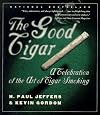
The cigar is almost as old as Columbus’s landing in the Americas. Indigenous peoples would smoke the dried leaves of the tobacco plant in clay pipes and every European explorer to reach the Americas brought some back with them. Modern cigars have been around since the early 19th century and come in many different varieties, shapes, and qualities. H. Paul Jeffers’s The Good Cigar is an ode to the cigar aficionado that explores the history, manufacture, and personalities surrounding the show more classic cigar.
First off, there’s a great deal more information here than I expected. Cigars from all over the world are categorized and subcategorized by many different factors. The outer wrapper (where most of the flavor comes from) determines the taste and the market. Then, there’s the type of filler (long versus short), the shapes, and the dimensions. For each cigar company, there are subtle differences in each of these areas used to make their offerings different from other companies. And for the cigar enthusiast, these differences mean the world.
Jeffers’s history covers a lot of the different companies and how they measure up against each other. But beyond that, he looks at the individuals throughout history that brandished a cigar and tried to popularize them. From Winston Churchill to Groucho Marx to Arnold Schwarzenegger, Jeffers presents a virtual who’s who of famous cigar smokers. On the whole, there’s a lot of information here, but the catalog of famous cigar smokers was a bit tedious. I’d appreciate more history and less paparazzi. An interesting read. show less
First off, there’s a great deal more information here than I expected. Cigars from all over the world are categorized and subcategorized by many different factors. The outer wrapper (where most of the flavor comes from) determines the taste and the market. Then, there’s the type of filler (long versus short), the shapes, and the dimensions. For each cigar company, there are subtle differences in each of these areas used to make their offerings different from other companies. And for the cigar enthusiast, these differences mean the world.
Jeffers’s history covers a lot of the different companies and how they measure up against each other. But beyond that, he looks at the individuals throughout history that brandished a cigar and tried to popularize them. From Winston Churchill to Groucho Marx to Arnold Schwarzenegger, Jeffers presents a virtual who’s who of famous cigar smokers. On the whole, there’s a lot of information here, but the catalog of famous cigar smokers was a bit tedious. I’d appreciate more history and less paparazzi. An interesting read. show less
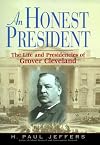
An enjoyable read that helped clearly explain the politics of the late 19th Century, and why voters seemed to insist on electing presidents outside the normal political establishment. Cleveland's honesty does stand out as unusual in political history. I do wish Jeffers had spent more time on Cleveland's troubling attitudes towards race -- it's difficult to write him off as a "man of his time" when the 5 consecutive Republican presidents before him were pretty progressive on civil rights.
Only one of the US Presidents has ever won, lost, then won an election as President, and that's primarily what Grover Cleveland is remembered for. Part of that is because momentous struggles like the Great Depression or the Civil War didn't happen during his time. The Gilded Age was mostly a time of relative peace and it's not common to concentrate on that period during history classes, for instance. That's unfortunate, because during this time some particularly interesting social and show more economic issues were in play - the question of the gold standard for the dollar and the role of silver in the money supply, relations between Capital and Labor and the role of organized labor in the workplace, the use of Federal troops in responding to strikes of national effect such as the Pullman strike that crippled rail travel, relations with Britain and Spain and the tole of the Monroe Doctrine in US foreign policy. And that's just to name a few!
H. P. Jeffers shows in An Honest President: The Life and Presidencies of Grover Cleveland, a man who was scrupulously honest, outside the political machine of the day, and an able administrator. He tackled the big problems of the day, was mostly right, and was mostly able to make progress in solving some big problems. Yet Jeffers also shows a Cleveland that wasn't the inspiring leader others have been, especially as the nation went through a pretty severe economic downturn. In the end, the assessment of most historians seems to be that Cleveland is one of the "near-greats" in the presidential rankings.
An Honest President is a very readable biography of an interesting man. Jeffers certainly has a high opinion of Cleveland, almost to the point of excess. And that's my main concern about the book - whether Jeffers was able to maintain a good balance in writing about his subject. Certainly Cleveland deserves at least most of the good things said about him, but Jeffers seems to gloss over matters like Cleveland's opinions on race and race relations (which admittedly were the majority opinion of the time) or his conflicts with the press (Jeffers pretty much solely blames the press for this sorry state of affairs), It's not a reason to avoid the book, but a grain of salt seems merited here. I was also quite happy to see Jeffers' evaluation of the various, generally more scholarly, biographies of Cleveland that have been published over the years - the evaluations form a decent jumping-off point for further reading. show less
H. P. Jeffers shows in An Honest President: The Life and Presidencies of Grover Cleveland, a man who was scrupulously honest, outside the political machine of the day, and an able administrator. He tackled the big problems of the day, was mostly right, and was mostly able to make progress in solving some big problems. Yet Jeffers also shows a Cleveland that wasn't the inspiring leader others have been, especially as the nation went through a pretty severe economic downturn. In the end, the assessment of most historians seems to be that Cleveland is one of the "near-greats" in the presidential rankings.
An Honest President is a very readable biography of an interesting man. Jeffers certainly has a high opinion of Cleveland, almost to the point of excess. And that's my main concern about the book - whether Jeffers was able to maintain a good balance in writing about his subject. Certainly Cleveland deserves at least most of the good things said about him, but Jeffers seems to gloss over matters like Cleveland's opinions on race and race relations (which admittedly were the majority opinion of the time) or his conflicts with the press (Jeffers pretty much solely blames the press for this sorry state of affairs), It's not a reason to avoid the book, but a grain of salt seems merited here. I was also quite happy to see Jeffers' evaluation of the various, generally more scholarly, biographies of Cleveland that have been published over the years - the evaluations form a decent jumping-off point for further reading. show less
I received this book from audible for ?? but I enjoyed it immensely. I have set a goal of reading at least 2 biographies of each President, and have many yet to go. As I finished listening to _Eleanor in the Village_ (okay, so she wasn't actually an elected President), this book showed up in my library feed. I must have missed the memo from Audible.com!
Overall, I am left with that "who knew" feeling. Cleveland wasn't perfect, in fact, we would consider him a bit of a pedophile today, I show more think, but we've seen worse in the White House. Cleveland did, or tried to do, several things that I would applaud, as well as several things not so laudable. In many ways he was forward-looking; in some ways he was quite extraordinary.
One anecdote the author left out of the book was one I learned from the annual collection of White House ornaments.
Cleveland's wedding to Frances Folsom was the first to take place in the White House. Cleveland had been named guardian of Frances by his best friend's last will and testament. Ok, he was a bit older (twice as?) than she...had known her since birth. So glad was he to marry this young virginal girl he had the wedding cake made in the shape of a ship...and its name was written on the bow: "S.S. Hymen." No kidding.
The narrator read through the book as if time was of the essence. No doubt that was at the behest of the producer. show less
Overall, I am left with that "who knew" feeling. Cleveland wasn't perfect, in fact, we would consider him a bit of a pedophile today, I show more think, but we've seen worse in the White House. Cleveland did, or tried to do, several things that I would applaud, as well as several things not so laudable. In many ways he was forward-looking; in some ways he was quite extraordinary.
One anecdote the author left out of the book was one I learned from the annual collection of White House ornaments.
Cleveland's wedding to Frances Folsom was the first to take place in the White House. Cleveland had been named guardian of Frances by his best friend's last will and testament. Ok, he was a bit older (twice as?) than she...had known her since birth. So glad was he to marry this young virginal girl he had the wedding cake made in the shape of a ship...and its name was written on the bow: "S.S. Hymen." No kidding.
The narrator read through the book as if time was of the essence. No doubt that was at the behest of the producer. show less
Lists
THE WAR ROOM (1)
You May Also Like


Associated Authors
Statistics
- Works
- 63
- Also by
- 4
- Members
- 2,085
- Popularity
- #12,325
- Rating
- 3.6
- Reviews
- 22
- ISBNs
- 114
- Languages
- 5
- Favorited
- 2