
Robyn Annear
Author of Bearbrass : imagining early Melbourne
About the Author
Works by Robyn Annear
Corners of Melbourne: The great orange-peel panic and other stories from the streets (2023) 16 copies, 1 review
Mrs Bradley's Melbourne 1 copy
A City Lost and Found 1 copy
Tagged
Common Knowledge
- Birthdate
- 1960
- Gender
- female
- Awards and honors
- A A Philips Prize for Australian Studies in the 1995 Victorian Premier's Literary Awards
- Nationality
- Australia
- Places of residence
- Melbourne, Victoria, Australia
- Associated Place (for map)
- Victoria, Australia
Members
Reviews
Corners of Melbourne: The great orange-peel panic and other stories from the streets by Robyn Annear
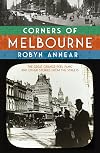
In Corners of Melbourne - The Great Orange-Peel Panic and Other Stories from the Streets, Australian author Robyn Annear takes us through some of the interesting early history of the intersecting streets and corners of Melbourne.
Right out of the gate, the subtitle of this book introduced me to the nuisance and hazard of orange peel on the newly laid flagstone paving on Melbourne's footpaths. As a street food, oranges were healthy, cheap and nourishing, but when:
"...leather-soled shoes met show more orange peel dropped on flagstones, a diabolical hazard to pedestrians ensued." Page 5
But how much orange peel are we talking about here? A correspondent writing to the Argus stated that one afternoon he removed 17 pieces of orange peel from the west side of Elizabeth street over the course of one hour. Okay, that sounds like a lot!
"At issue was how the 'peripatetic orange-eater' (a distinct urban type) disposed of the empty wrapper, which was often by scattering peel on the footpath as they went along. There were no bins back then, but there was a 'proper receptacle' for street waste - namely, the gutter. Bluestone channels, wide and deep enough to require footbridges for crossing, ran along either side of Melbourne's main streets." Page 6
Broken limbs, concussions and even deaths resulted from these nasty falls but orange peel wasn't the only danger.
"All it took was a stray spark from a discarded match or cigar butt on the footpath for a woman to be engulfed in flames. Skirts lanterned out by crinoline cages or billowing cotton petticoats were so frightfully flammable that accounts of women killed or maimed by dress fires were almost daily news." Page 17
This brings to mind my review of Fashion Victims - The Dangers of Dress Past and Present by Alison Matthews David, so be sure to check that out if you have an interest in how your clothes could kill you in the past. Remember those bluestone channels? When it rained in Melbourne, flash flooding could cause those deep gutters to flow with a very fast rushing current, often flooding the corner of Elizabeth Street and Flinders Street. Pedestrians couldn't see the footbridges, were swept off or fell into the waters and some even found themselves trapped and drowned beneath the footbridges. Hard to imagine isn't it, drowning in the street?
If you managed to dodge the orange peel, avoid being set alight or drowning on the early streets of Melbourne, you might be hard pressed to avoid being startled or trampled by a horse.
"When trains first ran from Flinders Street, the train whistle had 'a very terrifying effect' on horses - young ones in particular. With the advent of trams, it was the clang of the gripman's bell. The scrape of a street sweeper's shovel, an umbrella being shaken, a dog's bark, a thunderclap: any sudden noise or movement might set a horse off." Page 48
Annear follows with many accounts of horses being spooked, with or without their rider as well as with or without their cart, buggy or coach. Good samaritans trying to slow or stop a runaway horse/s were often hurt or killed in the process and pedestrians, passengers and cart drivers themselves were frequently knocked down, bowled over, trampled or crushed.
The installation of an elaborately designed fountain at the intersection of Swanston and Collins Streets seems impossible to imagine now. Installed in 1859 and named the Victoria Fountain, it was designed to provide water to the public and included a horse trough, making it a convenient place to stop. The water and subsequent animal droppings made the area muddy and the watering of horses and livestock regularly disrupted the flow of traffic in both directions. Reading the resistance from the public and efforts from the council reminded me that some things don't change and the fountain was swiftly relocated to Carlton Gardens, a 'poorly cultivated pleasure-ground' at the time.
Understandably, sanitation was a problem, and the city's laneways became public urinals. Annear tells us we can still see remnants of this time:
"There are a couple of laneways in central Melbourne where an injunction to Commit No Nuisance can still be seen, painted on the wall at eye level. Translated from Victorian bureaucratese, it means: Do Not Piss Here." Page 77
I thought those signs meant no graffiti, or keep the noise down. The first public urinals in the city were immediately popular and rapidly exceeded all expectations. (No facilities for women mind you!) These urinals provided privacy but directed the urine down into the gutters, hence saving the alleyways, but still stinking out the public. One such urinal close to the Theatre Royal was allegedly visited by 1,897 men over a six hour period on a Saturday night. Imagine the volume of urine produced! Unfortunately this was nothing compared to the estimated 10,000 patrons utilising the urinals located on Bourke Street every week.
"The gutters were sluiced regularly - if not often enough - by sanitation workers authorised to uncork the fireplugs that stood at intervals on the edge of city streets." Page 87
According to an article in the Herald from January 1822:
"Truly Melbourne might be fairly called the city of stinks. Last night the stench arising from the gutters in Elizabeth Street was particularly noseable...Even those well accustomed to the malodorous atmosphere of this particular thoroughfare stood aghast, and ultimately fled." Page 87
Changing topics, and another aspect from the Corners of Melbourne was that of what to do with foundlings left on doorsteps and street corners. Unwanted children born to poor families, unwedded mothers, mistresses or victims of abuse were a significant problem:
"If a foundling's identity and parents couldn't be traced, the infant would be 'charged' with being a neglected child and presented at the local court. There, a bench of three magistrates would decide not only the child's fate, but its name." Page 119
The author goes on to tell us about the naming of Cecil Nicholson, Alexander South, August Studley, Henry Street, Ellen Park, Frances Wellington and more. I don't know why, but reading these names and hearing their stories makes me sad. Not knowing a child's identity somehow seems such a cruel and a lonely beginning for these and many more babies abandoned in this way.
On learning neglected children were committed to industrial schools by the court for up to 16 years, thankfully the author declares:
"But that's enough shit and misery for one chapter. Suffice it to know that the industrial schools - overcrowded, disease-ridden; short on privies and shorter on love - were no place for a child." Page 121
What a breath of fresh air! Annear seems to know when the reader has had enough of a topic, while her anecdotes and case histories gave me the feeling she was spinning yarns at a bar, or a campfire.
Stories of larrikins and gangs of boys spitting, throwing stones, stealing, harassing people and causing mischief somehow didn't engage my imagination as fiercely. Nor did the information around bill posting and advertising, and the rise and curse of hoardings in Melbourne. Having said that, I've been paying closer attention to hoardings and advertising since reading the book, and am able to 'see' with fresh eyes, noticing for the first time that the section of road underneath Richmond Station crossing over Punt Road now has organised and numbered billboards. When did that happen?
I was more interested in the history of pedestrian foot traffic and the changing of rules from 'keep to the right' and 'keep to the left'. A great one on escalators, did you know that prior to 1925, the city council had a regulation for pedestrians to 'keep to the right'. This rule meant that pedestrians had their backs to the road traffic - that was keeping to the left - essentially blinding them to hazards approaching them from behind.
"In Melbourne the change took effect in 1925. But there was resistance, with traditionalists calling the new rule 'absurd', 'farcical' and 'pettifogging'. Too bad: it was law. Now Keep to the Left was stencilled on the surface of city footpaths, with a continuous white line painted down the middle so there could be no mistaking where the left side became right (or wrong)." Page 237
Pettifogging means placing undue emphasis on petty or trivial details (thanks Google) and I found myself marvelling that white lines were ever drawn on the footpath to indicate a mandatory direction for pedestrians. That is, until I remembered the white lines and circles that appeared on pavements and floors during the pandemic telling us all where to stand and queue. It's interesting how some things change and others stay the same.
Overall, the material contained within Corners of Melbourne was thoughtfully collated and gave me a sense of what I might encounter walking the early streets of Melbourne as it was expanding and developing into the city I now call home.
Recommended for history buffs and those with a non fiction interest in urban planning, social history, architecture or economic development. You can check out the first 72 pages for free on the publisher's website.
For more, you can also check out my review of Adrift in Melbourne by Robyn Annear.
* Copy courtesy of Text Publishing * show less
Right out of the gate, the subtitle of this book introduced me to the nuisance and hazard of orange peel on the newly laid flagstone paving on Melbourne's footpaths. As a street food, oranges were healthy, cheap and nourishing, but when:
"...leather-soled shoes met show more orange peel dropped on flagstones, a diabolical hazard to pedestrians ensued." Page 5
But how much orange peel are we talking about here? A correspondent writing to the Argus stated that one afternoon he removed 17 pieces of orange peel from the west side of Elizabeth street over the course of one hour. Okay, that sounds like a lot!
"At issue was how the 'peripatetic orange-eater' (a distinct urban type) disposed of the empty wrapper, which was often by scattering peel on the footpath as they went along. There were no bins back then, but there was a 'proper receptacle' for street waste - namely, the gutter. Bluestone channels, wide and deep enough to require footbridges for crossing, ran along either side of Melbourne's main streets." Page 6
Broken limbs, concussions and even deaths resulted from these nasty falls but orange peel wasn't the only danger.
"All it took was a stray spark from a discarded match or cigar butt on the footpath for a woman to be engulfed in flames. Skirts lanterned out by crinoline cages or billowing cotton petticoats were so frightfully flammable that accounts of women killed or maimed by dress fires were almost daily news." Page 17
This brings to mind my review of Fashion Victims - The Dangers of Dress Past and Present by Alison Matthews David, so be sure to check that out if you have an interest in how your clothes could kill you in the past. Remember those bluestone channels? When it rained in Melbourne, flash flooding could cause those deep gutters to flow with a very fast rushing current, often flooding the corner of Elizabeth Street and Flinders Street. Pedestrians couldn't see the footbridges, were swept off or fell into the waters and some even found themselves trapped and drowned beneath the footbridges. Hard to imagine isn't it, drowning in the street?
If you managed to dodge the orange peel, avoid being set alight or drowning on the early streets of Melbourne, you might be hard pressed to avoid being startled or trampled by a horse.
"When trains first ran from Flinders Street, the train whistle had 'a very terrifying effect' on horses - young ones in particular. With the advent of trams, it was the clang of the gripman's bell. The scrape of a street sweeper's shovel, an umbrella being shaken, a dog's bark, a thunderclap: any sudden noise or movement might set a horse off." Page 48
Annear follows with many accounts of horses being spooked, with or without their rider as well as with or without their cart, buggy or coach. Good samaritans trying to slow or stop a runaway horse/s were often hurt or killed in the process and pedestrians, passengers and cart drivers themselves were frequently knocked down, bowled over, trampled or crushed.
The installation of an elaborately designed fountain at the intersection of Swanston and Collins Streets seems impossible to imagine now. Installed in 1859 and named the Victoria Fountain, it was designed to provide water to the public and included a horse trough, making it a convenient place to stop. The water and subsequent animal droppings made the area muddy and the watering of horses and livestock regularly disrupted the flow of traffic in both directions. Reading the resistance from the public and efforts from the council reminded me that some things don't change and the fountain was swiftly relocated to Carlton Gardens, a 'poorly cultivated pleasure-ground' at the time.
Understandably, sanitation was a problem, and the city's laneways became public urinals. Annear tells us we can still see remnants of this time:
"There are a couple of laneways in central Melbourne where an injunction to Commit No Nuisance can still be seen, painted on the wall at eye level. Translated from Victorian bureaucratese, it means: Do Not Piss Here." Page 77
I thought those signs meant no graffiti, or keep the noise down. The first public urinals in the city were immediately popular and rapidly exceeded all expectations. (No facilities for women mind you!) These urinals provided privacy but directed the urine down into the gutters, hence saving the alleyways, but still stinking out the public. One such urinal close to the Theatre Royal was allegedly visited by 1,897 men over a six hour period on a Saturday night. Imagine the volume of urine produced! Unfortunately this was nothing compared to the estimated 10,000 patrons utilising the urinals located on Bourke Street every week.
"The gutters were sluiced regularly - if not often enough - by sanitation workers authorised to uncork the fireplugs that stood at intervals on the edge of city streets." Page 87
According to an article in the Herald from January 1822:
"Truly Melbourne might be fairly called the city of stinks. Last night the stench arising from the gutters in Elizabeth Street was particularly noseable...Even those well accustomed to the malodorous atmosphere of this particular thoroughfare stood aghast, and ultimately fled." Page 87
Changing topics, and another aspect from the Corners of Melbourne was that of what to do with foundlings left on doorsteps and street corners. Unwanted children born to poor families, unwedded mothers, mistresses or victims of abuse were a significant problem:
"If a foundling's identity and parents couldn't be traced, the infant would be 'charged' with being a neglected child and presented at the local court. There, a bench of three magistrates would decide not only the child's fate, but its name." Page 119
The author goes on to tell us about the naming of Cecil Nicholson, Alexander South, August Studley, Henry Street, Ellen Park, Frances Wellington and more. I don't know why, but reading these names and hearing their stories makes me sad. Not knowing a child's identity somehow seems such a cruel and a lonely beginning for these and many more babies abandoned in this way.
On learning neglected children were committed to industrial schools by the court for up to 16 years, thankfully the author declares:
"But that's enough shit and misery for one chapter. Suffice it to know that the industrial schools - overcrowded, disease-ridden; short on privies and shorter on love - were no place for a child." Page 121
What a breath of fresh air! Annear seems to know when the reader has had enough of a topic, while her anecdotes and case histories gave me the feeling she was spinning yarns at a bar, or a campfire.
Stories of larrikins and gangs of boys spitting, throwing stones, stealing, harassing people and causing mischief somehow didn't engage my imagination as fiercely. Nor did the information around bill posting and advertising, and the rise and curse of hoardings in Melbourne. Having said that, I've been paying closer attention to hoardings and advertising since reading the book, and am able to 'see' with fresh eyes, noticing for the first time that the section of road underneath Richmond Station crossing over Punt Road now has organised and numbered billboards. When did that happen?
I was more interested in the history of pedestrian foot traffic and the changing of rules from 'keep to the right' and 'keep to the left'. A great one on escalators, did you know that prior to 1925, the city council had a regulation for pedestrians to 'keep to the right'. This rule meant that pedestrians had their backs to the road traffic - that was keeping to the left - essentially blinding them to hazards approaching them from behind.
"In Melbourne the change took effect in 1925. But there was resistance, with traditionalists calling the new rule 'absurd', 'farcical' and 'pettifogging'. Too bad: it was law. Now Keep to the Left was stencilled on the surface of city footpaths, with a continuous white line painted down the middle so there could be no mistaking where the left side became right (or wrong)." Page 237
Pettifogging means placing undue emphasis on petty or trivial details (thanks Google) and I found myself marvelling that white lines were ever drawn on the footpath to indicate a mandatory direction for pedestrians. That is, until I remembered the white lines and circles that appeared on pavements and floors during the pandemic telling us all where to stand and queue. It's interesting how some things change and others stay the same.
Overall, the material contained within Corners of Melbourne was thoughtfully collated and gave me a sense of what I might encounter walking the early streets of Melbourne as it was expanding and developing into the city I now call home.
Recommended for history buffs and those with a non fiction interest in urban planning, social history, architecture or economic development. You can check out the first 72 pages for free on the publisher's website.
For more, you can also check out my review of Adrift in Melbourne by Robyn Annear.
* Copy courtesy of Text Publishing * show less
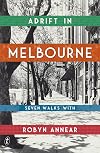
I'm a proud resident of Melbourne and live close to the CBD where I've witnessed extraordinary changes to the city over the years. I've seen the tallest building in Melbourne erected from a dusty carpark, and then seen the title of Melbourne's tallest building Eureka eclipsed. I've witnessed the opening of Federation Square, the beginning of the metro tunnel, the establishment of new galleries and more. The city of Melbourne is continually evolving and I'm certain we're going to continue show more seeing further change and development in the future.
Having enjoyed Old Vintage Melbourne by Chris Macheras so much last year, the chance to explore the city further with Robyn Annear was too tempting an opportunity to pass up.
In Adrift in Melbourne - Seven Walks with Robyn Annear, the author guides us through the city of Melbourne and the reader can recreate the tours on the ground or experience them via Google Maps or from the comfort of home. I chose the armchair traveller option but had to keep my device handy as I was constantly looking up images of buildings still present and those lost to the bulldozers of time and progress.
Annear's sense of humour and personal touch accompanies us on every tour and while largely focussed on the history of buildings and locations, here's a funny story from the intersection of Franklin and William streets:
"During a lull in traffic one weekday morning in 1952, a large grey shag landed in the middle of this intersection and disgorged two live fish. A city-bound cyclist, without even dismounting, scooped up both fish and kept riding." Page 255
Can you imagine your astonishment on seeing this today? I imagine it would have been exactly the same for those pedestrians 70 years ago. What a hoot!
Reading Adrift in Melbourne, I was continually learning and marvelling, did you know:
"By the 1930s, Flinders Street Station was the busiest in the world, swallowing and disgorging more than twice as many passengers weekly as Grand Central station in New York." Page 40
I've just started researching Docklands and re-acquainting myself with the well established suburb it is today, and laughed when I read this:
"Take a tram west... and you'll arrive at the intersection of Collins and Bourke streets. Talk about a mind-fuck. Welcome to Docklands." Page 74
Indeed! The meeting of two parallel streets is a complete mind-fuck and Annear couldn't have said it better.
Phrases and sayings snuck into the book occasionally and they were always entertaining. How's this one:
'Latrobe had a smile that might ripen a banana'. Meaning, presumably, that it was radiant like the tropical sun. Page 159-160
What a classic description! I had no idea that 448 Queen Street was once home to Holt's Melbourne Matrimonial Agency, or that thousands of residents would mill around the GPO when a 'flag raised over the clock tower signalled the arrival of a mail ship from England.' Anyone wanting to collect or post a letter had to queue at the GPO for hours, with observations of staff being knee deep in mail. I can't imagine it, can you?
In 1850:
"Something like two hundred thousand letters and three hundred thousand newspapers passed through the Melbourne post office, and within three years, those numbers would increase ten-fold." Page 192
The process for the cleaning of straw bonnets was absolutely remarkable, and I was exhausted just reading about the detailed process that took days to complete on page 146. I just dearly wished the book included some photographs of the sites mentioned. I constantly had to set the book aside and dive into Google in order to bring up images of the buildings and sites mentioned.
The author's love of history is evident and even her casual reference to the veranda blitz of 1954 opened my eyes to periods in our history where heritage features weren't valued and instead residents preferred the new to the old.
I think Annear sums it up best at the end of her guided tours, when she writes:
"Surely the best argument for keeping old buildings in a modern city is one of scale, human scale. That, and the sense they convey of someone having been here before us. I'm not talking about memory: memory can outlive brick and stone. But the solid presence of old places, made and kept at human scale, gives a city and its inhabitants their bearings across time. Lose that and your city's a machine." Page 260-261
Adrift in Melbourne by Robyn Annear is highly recommended for history lovers, non fiction readers and those with even a passing interest in Australian history and the evolution of Melbourne, Victoria.
* Copy courtesy of Text Publishing * show less
Having enjoyed Old Vintage Melbourne by Chris Macheras so much last year, the chance to explore the city further with Robyn Annear was too tempting an opportunity to pass up.
In Adrift in Melbourne - Seven Walks with Robyn Annear, the author guides us through the city of Melbourne and the reader can recreate the tours on the ground or experience them via Google Maps or from the comfort of home. I chose the armchair traveller option but had to keep my device handy as I was constantly looking up images of buildings still present and those lost to the bulldozers of time and progress.
Annear's sense of humour and personal touch accompanies us on every tour and while largely focussed on the history of buildings and locations, here's a funny story from the intersection of Franklin and William streets:
"During a lull in traffic one weekday morning in 1952, a large grey shag landed in the middle of this intersection and disgorged two live fish. A city-bound cyclist, without even dismounting, scooped up both fish and kept riding." Page 255
Can you imagine your astonishment on seeing this today? I imagine it would have been exactly the same for those pedestrians 70 years ago. What a hoot!
Reading Adrift in Melbourne, I was continually learning and marvelling, did you know:
"By the 1930s, Flinders Street Station was the busiest in the world, swallowing and disgorging more than twice as many passengers weekly as Grand Central station in New York." Page 40
I've just started researching Docklands and re-acquainting myself with the well established suburb it is today, and laughed when I read this:
"Take a tram west... and you'll arrive at the intersection of Collins and Bourke streets. Talk about a mind-fuck. Welcome to Docklands." Page 74
Indeed! The meeting of two parallel streets is a complete mind-fuck and Annear couldn't have said it better.
Phrases and sayings snuck into the book occasionally and they were always entertaining. How's this one:
'Latrobe had a smile that might ripen a banana'. Meaning, presumably, that it was radiant like the tropical sun. Page 159-160
What a classic description! I had no idea that 448 Queen Street was once home to Holt's Melbourne Matrimonial Agency, or that thousands of residents would mill around the GPO when a 'flag raised over the clock tower signalled the arrival of a mail ship from England.' Anyone wanting to collect or post a letter had to queue at the GPO for hours, with observations of staff being knee deep in mail. I can't imagine it, can you?
In 1850:
"Something like two hundred thousand letters and three hundred thousand newspapers passed through the Melbourne post office, and within three years, those numbers would increase ten-fold." Page 192
The process for the cleaning of straw bonnets was absolutely remarkable, and I was exhausted just reading about the detailed process that took days to complete on page 146. I just dearly wished the book included some photographs of the sites mentioned. I constantly had to set the book aside and dive into Google in order to bring up images of the buildings and sites mentioned.
The author's love of history is evident and even her casual reference to the veranda blitz of 1954 opened my eyes to periods in our history where heritage features weren't valued and instead residents preferred the new to the old.
I think Annear sums it up best at the end of her guided tours, when she writes:
"Surely the best argument for keeping old buildings in a modern city is one of scale, human scale. That, and the sense they convey of someone having been here before us. I'm not talking about memory: memory can outlive brick and stone. But the solid presence of old places, made and kept at human scale, gives a city and its inhabitants their bearings across time. Lose that and your city's a machine." Page 260-261
Adrift in Melbourne by Robyn Annear is highly recommended for history lovers, non fiction readers and those with even a passing interest in Australian history and the evolution of Melbourne, Victoria.
* Copy courtesy of Text Publishing * show less
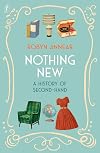
Nothing New, a History of Second-Hand is a beaut book, perfect for Christmas gifts or a present at any other time. It is a comprehensive history lightened by quirky details and fascinating trivia, and Robyn Annear's off-beat sense of humour will have you chuckling over all sorts of things while you wonder about a story you were never told before. But if someone doesn't give the book to you this festive season, then you will have to buy a copy for yourself because it is also an insight into show more how we have created our current waste problem. It took the ABC's TV program War on Waste coupled with China's refusal to accept imports of Australia's waste for us to realise that our buy-now-throw-away economy has created a massive problem that we have to solve. If the system could manage waste in the past, then we with our superior technologies can surely manage it now. But what it will take, as Annear shows us, is not merely for individuals to take responsibility for their own domestic behaviours, but for corporate Australia to redesign its processes so that nothing is wasted. And that involves a much bigger change in attitudes and values.
As well as all that, Nothing New is also an indispensable reference for writers of historical fiction. Read it from cover-to-cover to catch the atmosphere of domestic life in past times, and to discover not just the minutiae of what Robyn Annear rightly describes as the circular economy' but also the values of the times, and how nothing—nothing!—was wasted.
There's just so much here that's interesting! For example, people had no problem with the idea of second-hand until the discovery of germs. Germ theory was a game changer. It is for me too. I can come at the idea of items that couldn't possibly still be hosting germs, but then there are bugs: I know that you can come a cropper with second-hand furniture if it's got woodworm in it.
And then there's a fascinating discussion about the role of charities. Annear is a social historian, and she's alert to all kinds of patronising kinds of charities such as the missionaries who were only willing to help the 'deserving' poor with their second-hand gear. Prior to the rise of consumer culture, barter was how many people got along, but now charity shops are part of the waste collection system and in many places they sell 'vintage' clothes at high prices to people who consider themselves 'custodians' of the article. The charity then uses the profits to supply the needy with food and other services rather than make the goods available at low prices.
Did you know that there are over 2500 Op Shops in Australia, one in nearly every suburb?
For those of us with nostalgic memories of the ABCTV program Collectors there's a whole chapter called 'The Antiquarian Thicket'.
Then the middle classes took it up, even inventing the whatnot, a spindly stand with shelves specially designed for the display of bijou ornaments. But however modest, collecting was a still a luxury until it became popular in the 20th century. Annear says that the rise of collecting in the 1920s and 30s gave value to second-hand goods, and may have been a reaction to the soullessness of the times.
(I'm not sure that the books I collect are a symbol of glamour... more a sign of nerdiness, I suspect!)
The chapter about clothing is a real eye-opener.
To read the rest of my review please visit https://anzlitlovers.com/2019/11/02/nothing-new-a-history-of-second-hand-by-roby... show less
As well as all that, Nothing New is also an indispensable reference for writers of historical fiction. Read it from cover-to-cover to catch the atmosphere of domestic life in past times, and to discover not just the minutiae of what Robyn Annear rightly describes as the circular economy' but also the values of the times, and how nothing—nothing!—was wasted.
There's just so much here that's interesting! For example, people had no problem with the idea of second-hand until the discovery of germs. Germ theory was a game changer. It is for me too. I can come at the idea of items that couldn't possibly still be hosting germs, but then there are bugs: I know that you can come a cropper with second-hand furniture if it's got woodworm in it.
And then there's a fascinating discussion about the role of charities. Annear is a social historian, and she's alert to all kinds of patronising kinds of charities such as the missionaries who were only willing to help the 'deserving' poor with their second-hand gear. Prior to the rise of consumer culture, barter was how many people got along, but now charity shops are part of the waste collection system and in many places they sell 'vintage' clothes at high prices to people who consider themselves 'custodians' of the article. The charity then uses the profits to supply the needy with food and other services rather than make the goods available at low prices.
Did you know that there are over 2500 Op Shops in Australia, one in nearly every suburb?
For those of us with nostalgic memories of the ABCTV program Collectors there's a whole chapter called 'The Antiquarian Thicket'.
As the past—or a romantic ideal of it—was commodified by consumer culture, the antique endowed status on its acolytes. With the exception of a few parson-antiquarians who dug up their own treasures, it was the moneyed and aspirational who were the collectors to begin with. (p.170)
Then the middle classes took it up, even inventing the whatnot, a spindly stand with shelves specially designed for the display of bijou ornaments. But however modest, collecting was a still a luxury until it became popular in the 20th century. Annear says that the rise of collecting in the 1920s and 30s gave value to second-hand goods, and may have been a reaction to the soullessness of the times.
Religion was on the wane and urbanism on the rise, while mass consumerism promoted homogeneity and change for the sake of it. Collecting things 'old and beautiful', on the other hand, satisfied 'a deeply held need for enchantment, glamour and poetry in everyday life.' And by valorising the old over the new, the collector was asserting nonconformity, rejecting the easy and the ordinary in favour of self-expression. (p.173)
(I'm not sure that the books I collect are a symbol of glamour... more a sign of nerdiness, I suspect!)
The chapter about clothing is a real eye-opener.
To read the rest of my review please visit https://anzlitlovers.com/2019/11/02/nothing-new-a-history-of-second-hand-by-roby... show less
I've got all of Robyn Annear's (adult) books. I was there at the 1995 Melbourne Writers Festival at the Malthouse to buy her first: Bearbrass, Imagining Early Melbourne, a book created using the shoe-box system of research. That is, find all the interesting stuff that you can, and put it on cards in a shoe-box. When it's full, that's enough. Then there was Nothing But Gold: The diggers of 1852 (1999); and The Man Who Lost Himself (2002). Fly a Rebel Flag: The Eureka stockade (2004) was for show more younger readers; but in 2005 there was A City Lost and Found: Whelan the Wrecker's Melbourne (on my TBR); and then there was a long wait for Nothing New, A History of Second-Hand (2019). And now there is Adrift in Melbourne, Seven walks with Robyn Annear, (2021) which I like for the same reason I liked Bearbrass. Because it's a quirky, humorous view of my city, offering an alternative history that lies behind our respectable façade. And because Robyn Annear likes to remind us that gone doesn't mean lost forever:
A glimpse at the Table of Contents gives some idea of the style:
There are seven more walks to enjoy. All I need is a nice autumn day and a new pair of walking shoes since the demise of my Eccos, victims of all those hours of lockdown-approved exercise.
Annear calls herself an unfluencer:
Well so do I...
Do It Yourself Lockdown is no barrier to enjoying this book:
To read the rest of my review please visit https://anzlitlovers.com/2022/03/13/adrift-in-melbourne-seven-walks-with-robyn-a... show less
Vanished doesn't mean gone. In Melbourne — in any place — things change all the time. Yet, the way I see it, nothing's ever really gone.
Like other books of mine, this one deals largely in absences — of people, buildings, institutions and even lions that were here before us. Lately we've been absent too. But absence is no obstacle to memory. This book is proof. (p.1)
A glimpse at the Table of Contents gives some idea of the style:
- WALK 1: WALTZ IN SIX LESSONS
In which we encounter women tight-laced,
in pieces and seeking a place to sit down
Collins Street east to Swanston Street via Flinders Street - WALK 2: COMPLETE WITH ASPIDISTRA
In which we stick close to the Yarra without
ever seeing it and climb a hill that's not there
Federation Square to Little Collins Street west
via Wurundjeri Way overpass - WALK 3: MORE BY LAND THAN WATER
In which we weave through Theatre-land, Chinatown
and the 'back slums' with guest appearances by Joe Cocker
and the ghost of James Brown
Tivoli Arcade to Exhibition Street via Lonsdale Street
and Parliament House
There are seven more walks to enjoy. All I need is a nice autumn day and a new pair of walking shoes since the demise of my Eccos, victims of all those hours of lockdown-approved exercise.
Annear calls herself an unfluencer:
I make no special claims for Melbourne: only that it's the city I know best, having dug deep into it and walked it over and over. Besides, I like the place. (p. 1)
Well so do I...
Do It Yourself Lockdown is no barrier to enjoying this book:
This book is ostensibly a walking guide, but you can drift just as well from a couch. Armchair city-walkers can get their bearings using Google Maps and Street View. Plus, there's a Melbourne mobility map online (or in any Melways) showing the relative steepness of the city streets, so you can chart how much legwork you're missing out on. (p.2)
To read the rest of my review please visit https://anzlitlovers.com/2022/03/13/adrift-in-melbourne-seven-walks-with-robyn-a... show less
Awards


You May Also Like


Associated Authors
Statistics
- Works
- 13
- Members
- 307
- Popularity
- #76,699
- Rating
- 4.1
- Reviews
- 19
- ISBNs
- 31
- Favorited
- 1